
Best Envelope Modules for Complex Envelopes 2026
So, you're chasing those evolving textures, those weird rhythmic pulses, that sound that's just different? Forget your basic attack-decay envelopes. We're talking complex envelopes - stepped shapes, looping sequences, weird modulation destinations. Getting there takes a serious envelope module, something that can do more than just a simple fade. Let's dive into the ones that actually deliver.
Last updated: July 15, 2026 • Next update: July 22, 2026
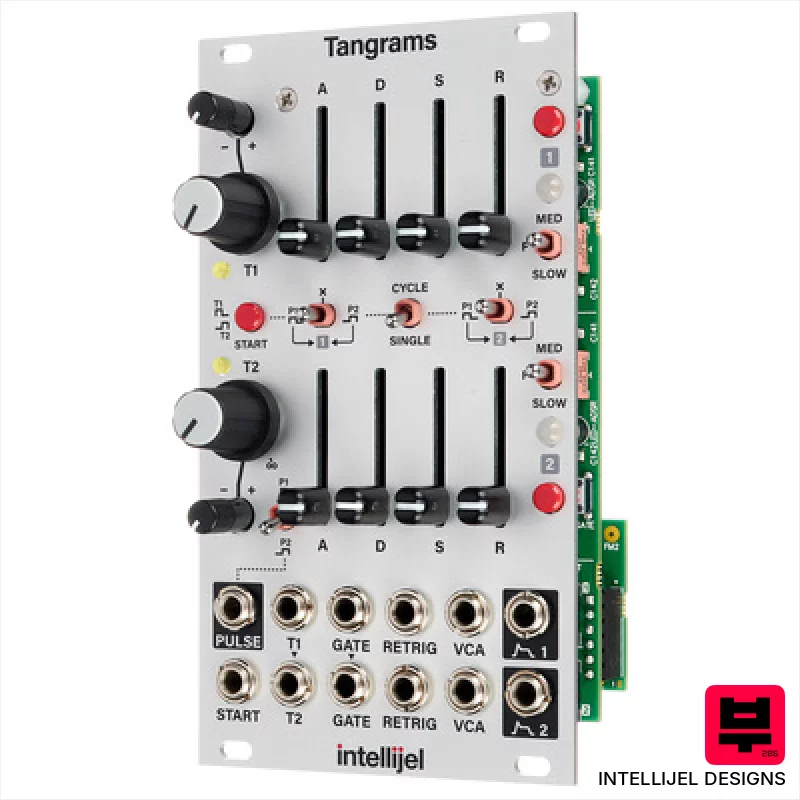
Intellijel Designs Tangrams
- • Excellent dynamic response, particularly with fast attack times.
- • The dual design significantly expands sound design possibilities.
- • Retrigger inputs offer unique rhythmic and sequencing capabilities.
- • Intelligent gate handling prevents clicks and unwanted artifacts.
- • 14HP can be tight in smaller Eurorack cases, demanding careful patching.
- • Limited modulation destinations compared to more complex envelope solutions.
- • The single cycle switch can be unintuitive for beginners.
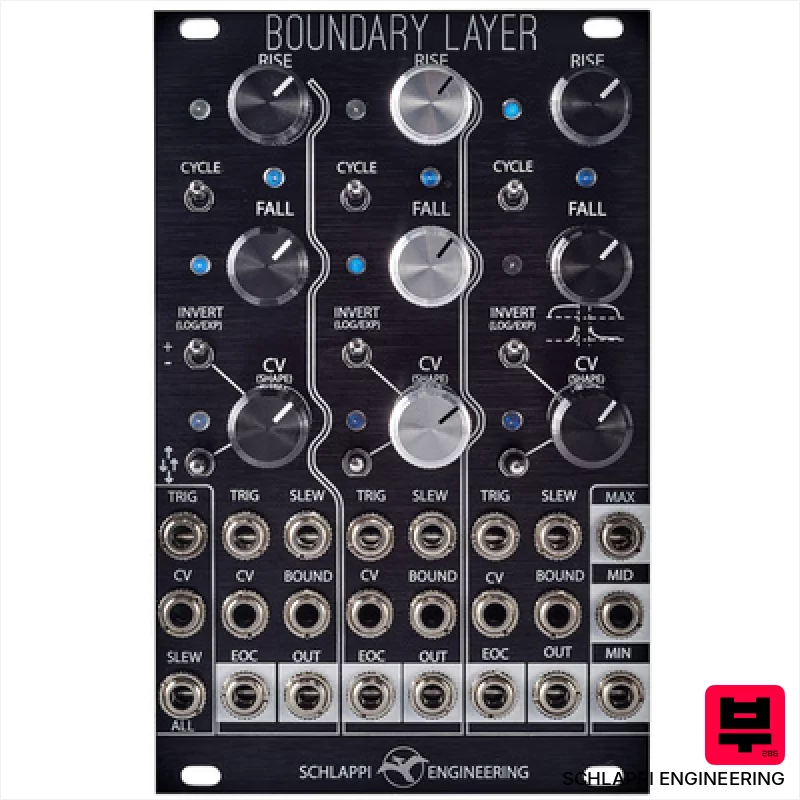
Schlappi Engineering Boundary Layer Black
- • Three independent channels offer exceptional routing flexibility for complex modulation.
- • The adjustable characteristic curves provide nuanced envelope shaping possibilities.
- • Schlappi’s build quality is evident – robust panel and tight component tolerances.
- • Cycle mode allows for rhythmic patterns and stepped modulation sequences easily.
- • 16HP footprint can be restrictive in smaller Eurorack cases.
- • The sheer number of controls can feel overwhelming for beginners.
- • Limited input options – lacks dedicated attenuators or offset for CV signals.
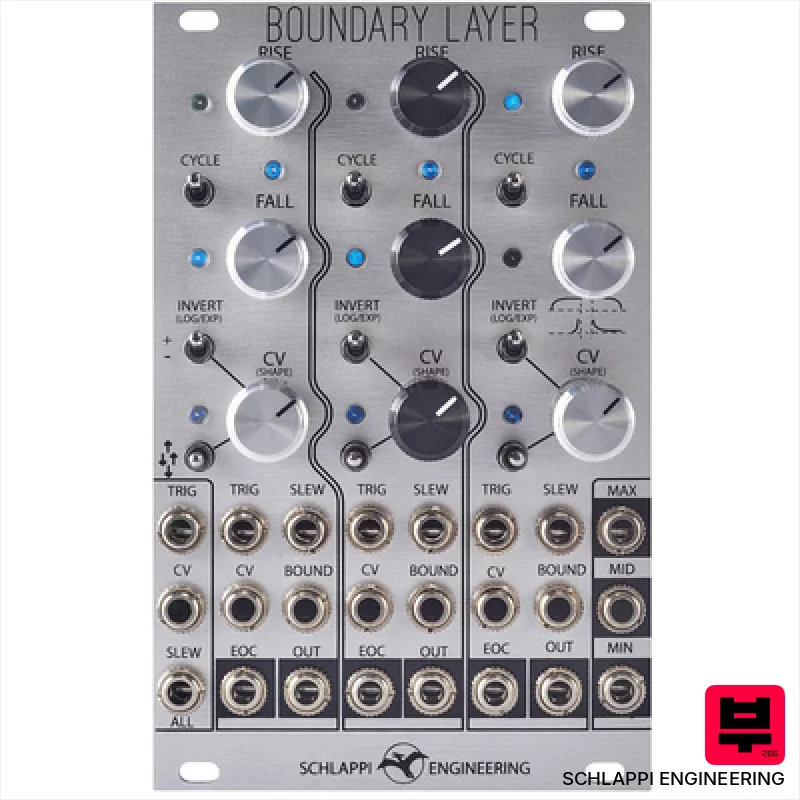
Schlappi Engineering Boundary Layer
- • Remarkable flexibility for complex modulation routing and shaping.
- • The characteristic curve adjustment adds nuanced envelope possibilities.
- • Solid build quality; feels robust despite the compact 16HP footprint.
- • Three channels offer a surprising amount of functionality in a small space.
- • The learning curve is steep for those unfamiliar with function generators.
- • Power draw is a bit higher than average, impacting PSU capacity.
- • Bound input functionality could be more clearly explained in the manual.

Tiptop Audio Octostages
- • Excellent polyphonic envelope shaping capabilities for complex textures.
- • The Polytip system streamlines patching and reduces cable clutter significantly.
- • Robust build quality; Tiptop's known for durable enclosures and reliable components.
- • Sliders offer precise, tactile control over envelope parameters.
- • 20HP footprint can be limiting in smaller modular setups.
- • Limited modulation options beyond the CV input – more advanced modulation needs external sources.
- • The Polytip system, while efficient, requires dedicated cables and can be a commitment.
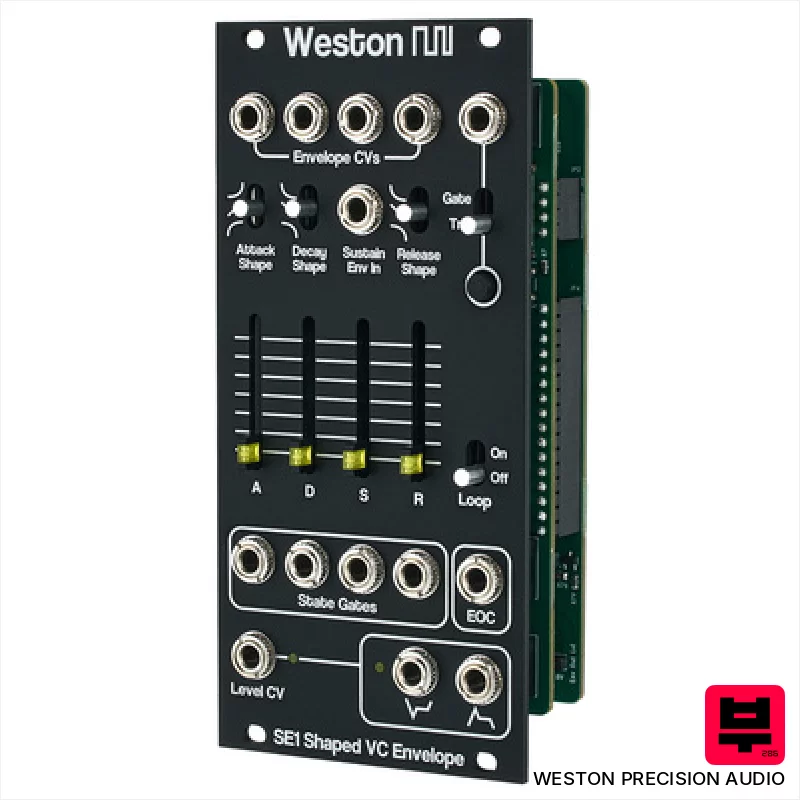
Weston Precision Audio SE1 Shaped VC Envelope
- • Exceptional shaping flexibility with independent exponential, linear, and logarithmic curves.
- • The dedicated VCA for sustain provides nuanced control over the envelope's output.
- • Multiple outputs (positive, inverted, EOC, gate) offer extensive patching possibilities.
- • Solid build quality; Weston’s known for reliable, robust analog circuitry.
- • 12HP footprint can be restrictive in smaller modular systems.
- • Limited sustain time range might not suit extremely long, evolving sounds.
- • The button-based trigger can feel less precise than a dedicated trigger input.
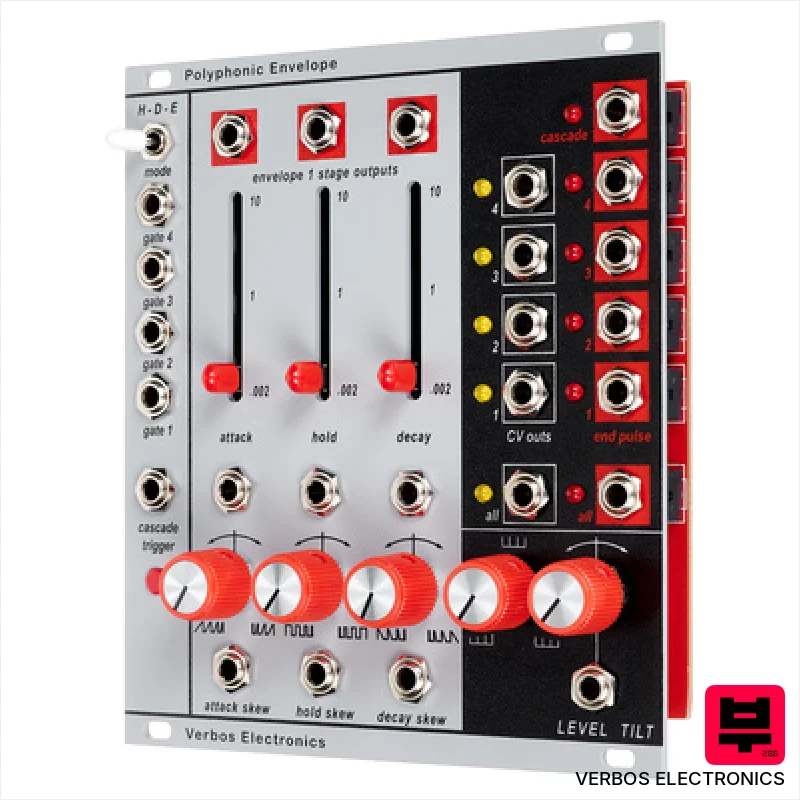
Verbos Electronics Polyphonic Envelope
- • Exceptional dynamic shaping across multiple voices, truly unique sound.
- • The fader control offers immediate, intuitive envelope time adjustments.
- • Skew control introduces complex, evolving textures with CV modulation.
- • Cascade mode enables intricate rhythmic patterns and generative sequences.
- • The power draw might strain smaller or older power supplies.
- • The learning curve for complex cascading and skew manipulation is steep.
- • The relatively small form factor can feel cramped for extensive patching.
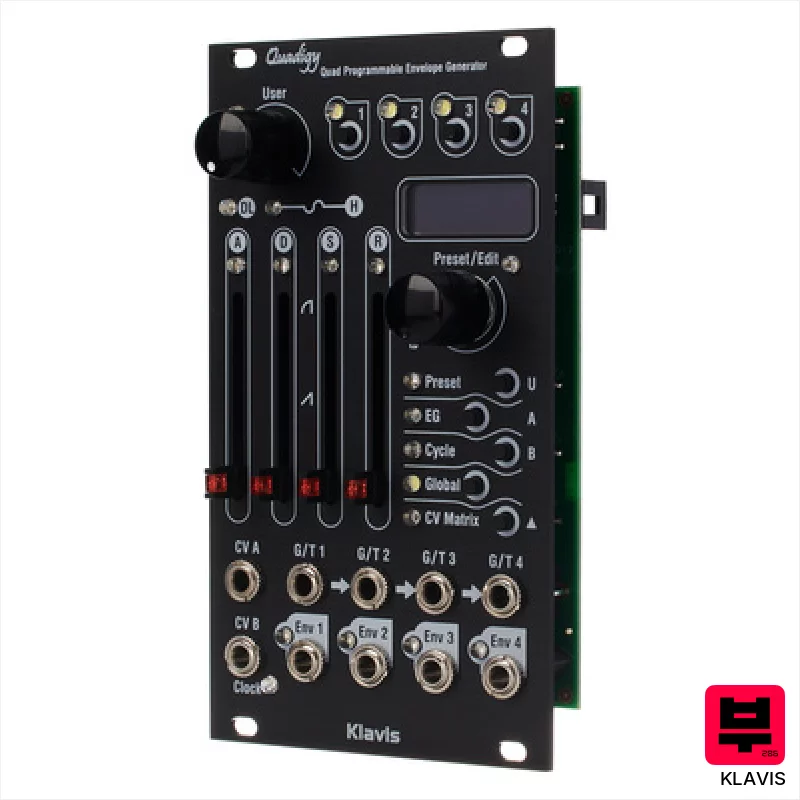
Klavis Quadigy Black
- • Exceptional envelope shaping flexibility across all seven stages.
- • Cycle mode offers unique rhythmic possibilities and sync capabilities.
- • Intuitive graphic display simplifies complex parameter adjustments.
- • Multi-editing drastically streamlines polyphonic envelope programming.
- • The 14HP width demands significant space in a Eurorack setup.
- • The learning curve is steep for those unfamiliar with envelope generators.
- • Limited modulation options beyond the built-in CV matrix.

Expert Sleepers Aloysius
- • Excellent curve shaping provides nuanced envelope possibilities.
- • Compact 8HP footprint maximizes modular space efficiency.
- • Robust Expert Sleepers build quality ensures long-term reliability.
- • Multiple operating modes offer flexibility for varied patching scenarios.
- • Limited stage count restricts complex envelope shaping.
- • Signal output voltage (+8V) may be limiting for some modules.
- • Fast time range can feel a bit rushed for slower, evolving sounds.
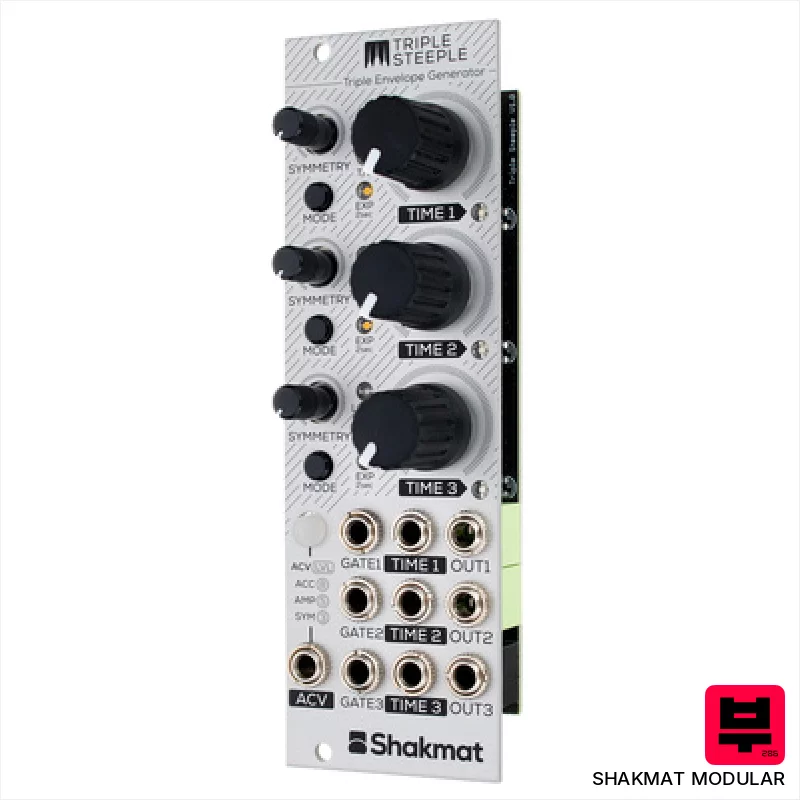
Shakmat Modular Triple Steeple
- • Excellent time/symmetry control offers nuanced envelope shaping.
- • Five selectable modes provide impressive versatility for diverse sound design.
- • Shakmat's robust build quality feels solid and dependable for modular use.
- • Adjustable output voltage expands the module's utility for various applications.
- • 8HP width can be restrictive in smaller Eurorack cases.
- • Limited modulation destinations compared to some higher-end envelope modules.
- • The stepped controls can feel less precise for subtle adjustments.
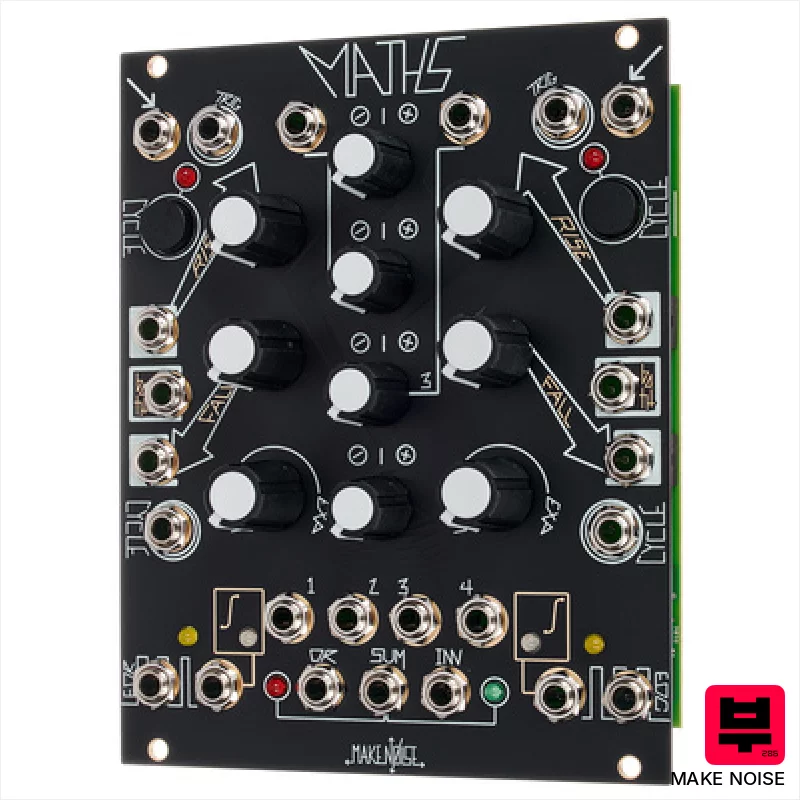
Make Noise Maths Black & Gold
- • Robust black anodized aluminum faceplate feels incredibly solid and premium.
- • The gold knobs offer excellent tactile feedback and a luxurious aesthetic.
- • Extremely versatile – capable of complex modulation sequences and dynamic envelopes.
- • The discrete analog design delivers a uniquely rich, organic sound character.
- • Can be overwhelming for beginners due to its many routing options.
- • Relatively high power draw necessitates a robust power supply.
- • Limited CV outputs restrict complex multi-destination modulation.

ADDAC 506 VC Stochastic Function Gen
- • Four channels offer incredible flexibility for complex textures.
- • Internal random generators add organic, unpredictable movement.
- • Comprehensive CV routing allows deep modulation possibilities.
- • Expandability with the 506B unlocks even more creative avenues.
- • 20HP footprint can be restrictive in smaller modular systems.
- • Steep learning curve; requires a solid understanding of modular synthesis.
- • Price point positions it as a premium investment for serious users.

Erica Synths Black EG2
- • Excellent ADSR shaping with a noticeable, warm analog character.
- • Loop mode offers creative rhythmic possibilities beyond standard envelopes.
- • Compact 8HP footprint maximizes space in dense modular racks.
- • Robust build quality; Erica Synths consistently delivers durable modules.
- • Limited CV output flexibility compared to more complex envelope modules.
- • Sustain level can be tricky to dial in precisely for certain sounds.
- • Gate length adjustment lacks fine-grained resolution; can feel a bit abrupt.

Vostok Instruments Fuji
- • Six channels offer impressive routing flexibility for complex modulation.
- • Attack/Decay controls provide precise envelope shaping capabilities.
- • Normalised trigger simplifies sequencing and cascading effects.
- • Compact 10HP footprint saves valuable space in tight racks.
- • Limited waveform options compared to more expensive function generators.
- • Bipolar LFO range (+/-8V) might be restrictive for some applications.
- • Plastic knobs feel slightly less premium than metal alternatives.

NANO Modules ARC
- • Incredibly versatile dual-functionality allows for complex modulation shaping.
- • Wide slew rate adjustment offers everything from subtle fades to aggressive clicks.
- • The logarithmic curve control adds unique and organic envelope shaping possibilities.
- • Logic outputs provide creative routing options for intricate modular patches.
- • 24HP footprint might be restrictive for smaller Eurorack cases.
- • Steep learning curve for users unfamiliar with envelope/LFO modulation concepts.
- • Limited waveform options compared to dedicated VCOs or LFOs.
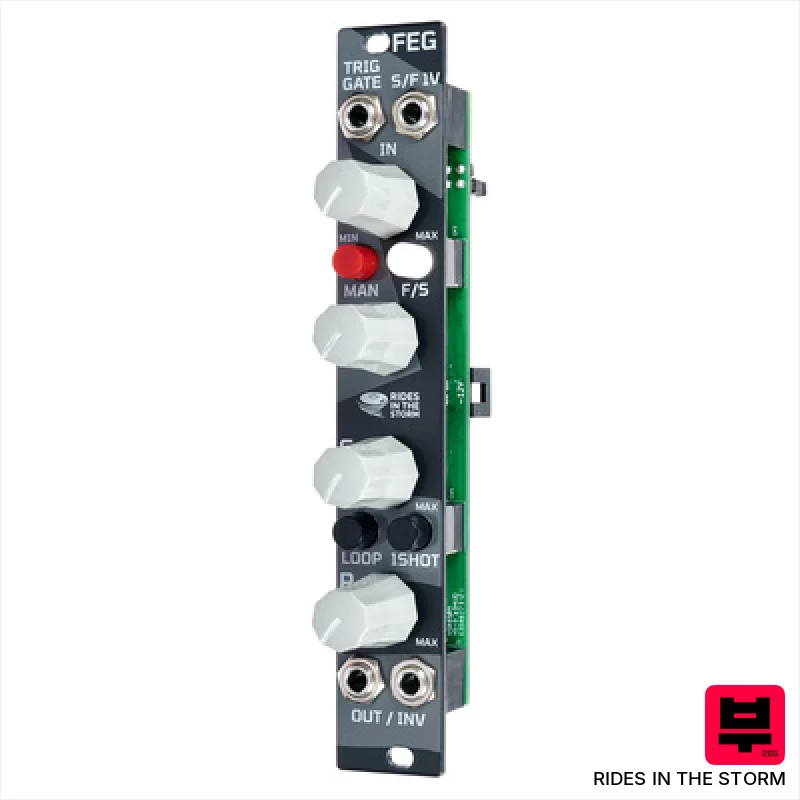
Rides In The Storm FEG
- • Excellent time range flexibility for diverse envelope shaping.
- • Compact 4TE width maximizes space in tight Eurorack setups.
- • Loop and one-shot modes offer creative rhythmic possibilities.
- • Robust build quality; feels solid and well-assembled.
- • Limited voltage output (8.5V) might need amplification in some applications.
- • 30mA current draw could be a concern in power-constrained systems.
- • Reset behavior jumper adds a minor complexity for initial setup.
How to Choose the Best Envelope Modules
Shape Flexibility
Complex envelopes aren't about simple ADSR. Look for stepped shapes, looping options, or even the ability to draw your own curves. A module stuck with just a few preset shapes is going to limit your sonic palette.
Modulation Inputs
This is crucial. You need dedicated CV inputs for attack, decay, sustain, and release - ideally with attenuators and offsets. Being able to modulate those parameters with LFOs, sequencers, or other modules is what unlocks the real complexity.
Timing Resolution
A coarse timing resolution will make your complex envelopes sound jerky and quantized. Fine grain control over those ADSR stages is vital for smooth, evolving textures - especially when syncing to external clocks.
Looping Capabilities
True looping envelopes, where the envelope cycles continuously, are a game-changer for drones, rhythms, and evolving pads. Look for modules that offer stable looping without drift or artifacts.
Output Options
Beyond a simple envelope output, consider modules with multiple outputs, inverted outputs, or even trigger outputs. These extra options open up possibilities for modulating other modules or triggering events in your patch.
Buying Guide
Complex envelope modules can get pricey fast. The cheap ones often skimp on timing resolution or shape options, resulting in envelopes that sound more like stair steps than smooth curves. Don't be afraid to look at Eurorack clones - some offer surprisingly good value - but be prepared to potentially tweak trimpots to dial in the perfect timing. Paying extra for a module with a wide range of shapes, precise modulation, and solid looping is almost always worth it if you're serious about complex textures.
Our Methodology
We're not looking at spec sheets here. We've spent the last few months patching these modules into various systems - from subtle textural shifts to full-blown chaotic soundscapes - and A/B'd them against each other in both recording and live situations. We've got a few vintage units, some current hotshots, and a few under-the-radar gems to cover. It's about how they feel and what they let you do, not just what the manual says.

