
Best Envelope Modules for Professional 2026
Alright, let's talk envelopes. You're not a beginner anymore; you're chasing nuance, sculpting sounds, and wanting that attack to be just so. A basic ADSR won't cut it when you need a percussive smack, a slowly swelling pad, or something weird and evolving for sound design. We're diving into envelope modules that actually deliver for serious modular work, not just the pretty lights.
Last updated: April 11, 2026
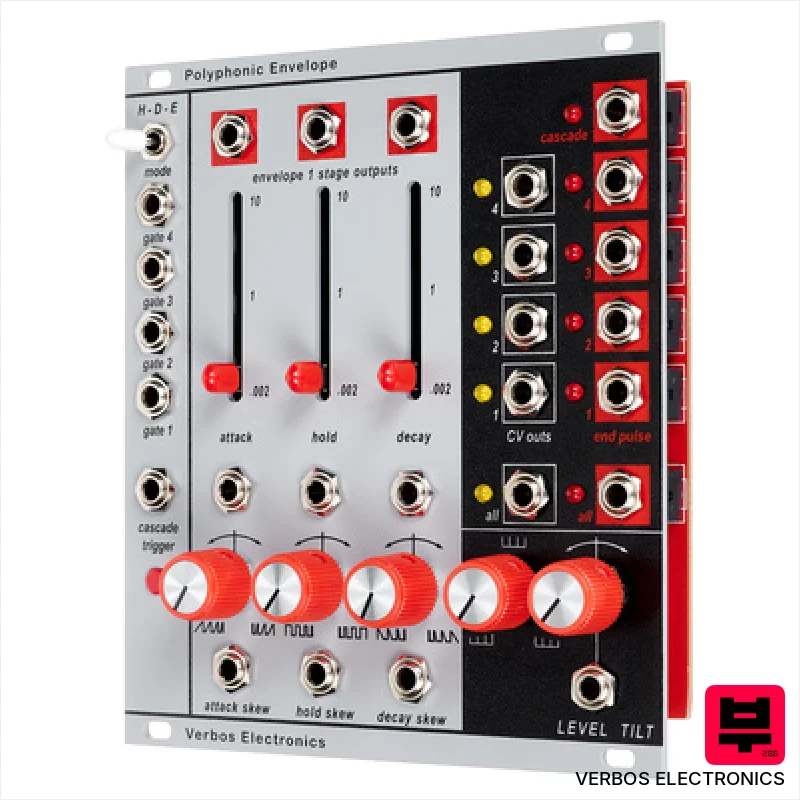
Verbos Electronics Polyphonic Envelope
- • Exceptional dynamic shaping across multiple voices, truly unique sound.
- • The fader control offers immediate, intuitive envelope time adjustments.
- • Skew control introduces complex, evolving textures with CV modulation.
- • Cascade mode enables intricate rhythmic patterns and generative sequences.
- • The power draw might strain smaller or older power supplies.
- • The learning curve for complex cascading and skew manipulation is steep.
- • The relatively small form factor can feel cramped for extensive patching.
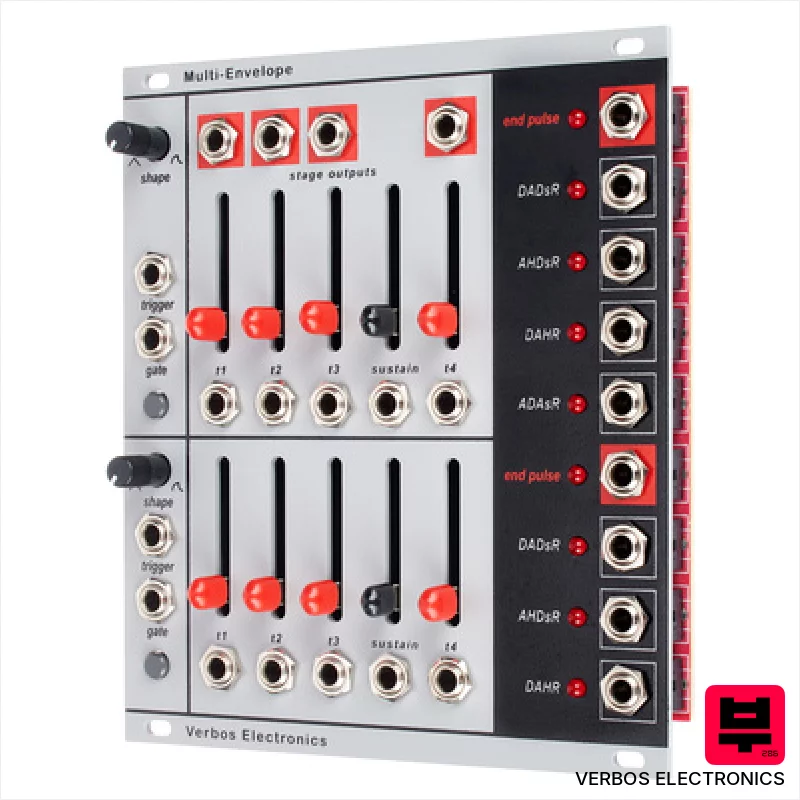
Verbos Electronics Multi-Envelope
- • Exceptional flexibility for complex rhythmic and textural sculpting
- • Phase-tapped outputs unlock uniquely evolving envelope shapes
- • The Shape slider provides a subtle but impactful tonal shift
- • Verbos’s signature build quality and robust panel finish inspire confidence
- • The sheer number of outputs can be overwhelming for beginners
- • High current draw demands a powerful PSU, limiting module choices
- • The module’s size (22HP) can be restrictive in smaller racks

Tiptop Audio Octostages
- • Excellent polyphonic envelope shaping capabilities for complex textures.
- • The Polytip system streamlines patching and reduces cable clutter significantly.
- • Robust build quality; Tiptop's known for durable enclosures and reliable components.
- • Sliders offer precise, tactile control over envelope parameters.
- • 20HP footprint can be limiting in smaller modular setups.
- • Limited modulation options beyond the CV input – more advanced modulation needs external sources.
- • The Polytip system, while efficient, requires dedicated cables and can be a commitment.

ADDAC 506 VC Stochastic Function Gen
- • Four channels offer incredible flexibility for complex textures.
- • Internal random generators add organic, unpredictable movement.
- • Comprehensive CV routing allows deep modulation possibilities.
- • Expandability with the 506B unlocks even more creative avenues.
- • 20HP footprint can be restrictive in smaller modular systems.
- • Steep learning curve; requires a solid understanding of modular synthesis.
- • Price point positions it as a premium investment for serious users.
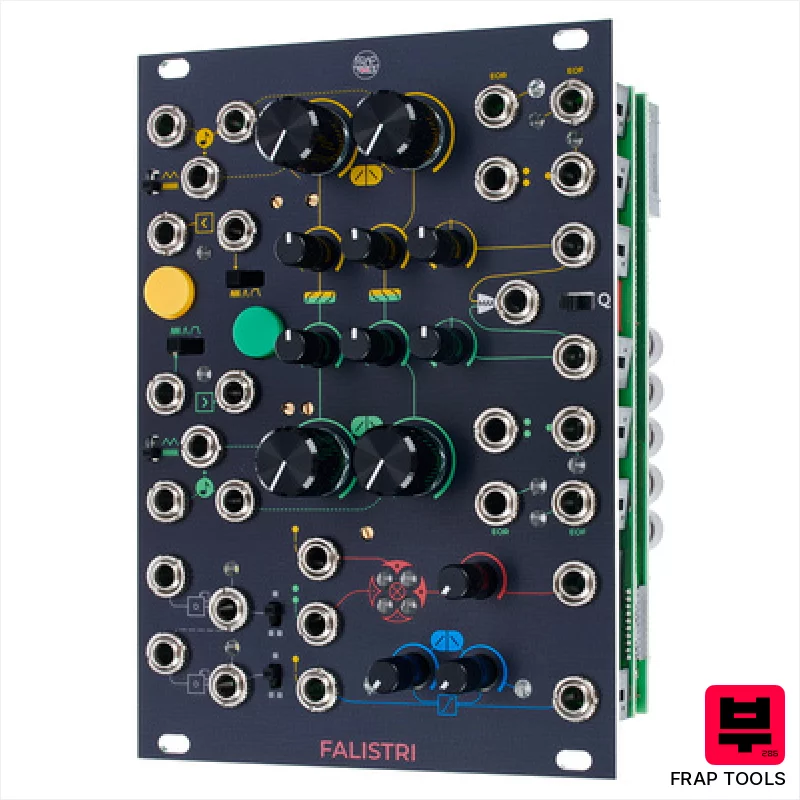
Frap Tools Falistri
- • Dual function generators offer immense flexibility for complex modulation.
- • DC-coupled multiplier provides unique and nuanced amplitude/FM capabilities.
- • Cascaded flip-flops create useful sub-oscillators and clock division.
- • Characteristic curve shaping allows for truly custom envelope/LFO responses.
- • Power consumption is relatively high, demanding a robust power supply.
- • The interface, while functional, can feel a little cramped for intricate patching.
- • Learning curve is steeper than simpler envelope modules; requires experimentation.

Intellijel Designs Quadrax
- • Exceptional flexibility with five distinct envelope modes per channel
- • Morphing LFO mode offers unique rhythmic possibilities and textures
- • CV inputs provide precise control over attack and decay times
- • Chainable design allows for crafting incredibly complex envelope shapes
- • 14HP footprint can be limiting in smaller Eurorack cases
- • Steep learning curve for mastering all operational modes
- • Qx expander is required for full chaining capabilities, adding to cost
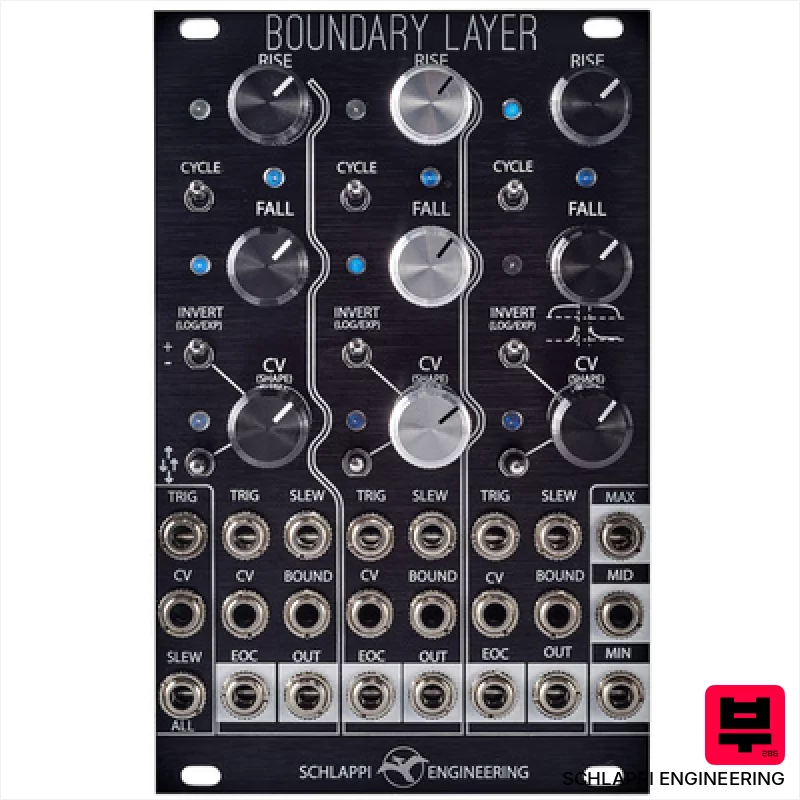
Schlappi Engineering Boundary Layer Black
- • Three independent channels offer exceptional routing flexibility for complex modulation.
- • The adjustable characteristic curves provide nuanced envelope shaping possibilities.
- • Schlappi’s build quality is evident – robust panel and tight component tolerances.
- • Cycle mode allows for rhythmic patterns and stepped modulation sequences easily.
- • 16HP footprint can be restrictive in smaller Eurorack cases.
- • The sheer number of controls can feel overwhelming for beginners.
- • Limited input options – lacks dedicated attenuators or offset for CV signals.
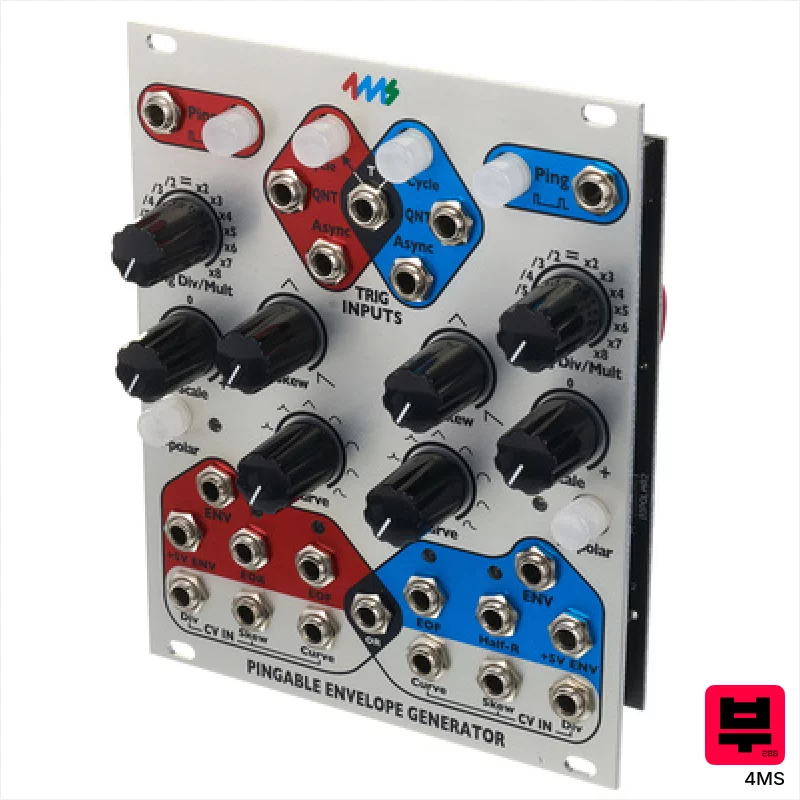
4ms Pingable Envelope Generator
- • Unique 'pingable' design offers incredibly dynamic envelope shaping.
- • Skew and Curve controls provide extensive sonic sculpting possibilities.
- • Dual-channel operation doubles envelope generation potential and routing options.
- • Robust 4ms build quality ensures long-term reliability in a modular environment.
- • Relatively high power draw might strain smaller power supplies.
- • The 'ping' timing concept requires experimentation to master fully.
- • Limited modulation destinations compared to more complex multi-function modules.
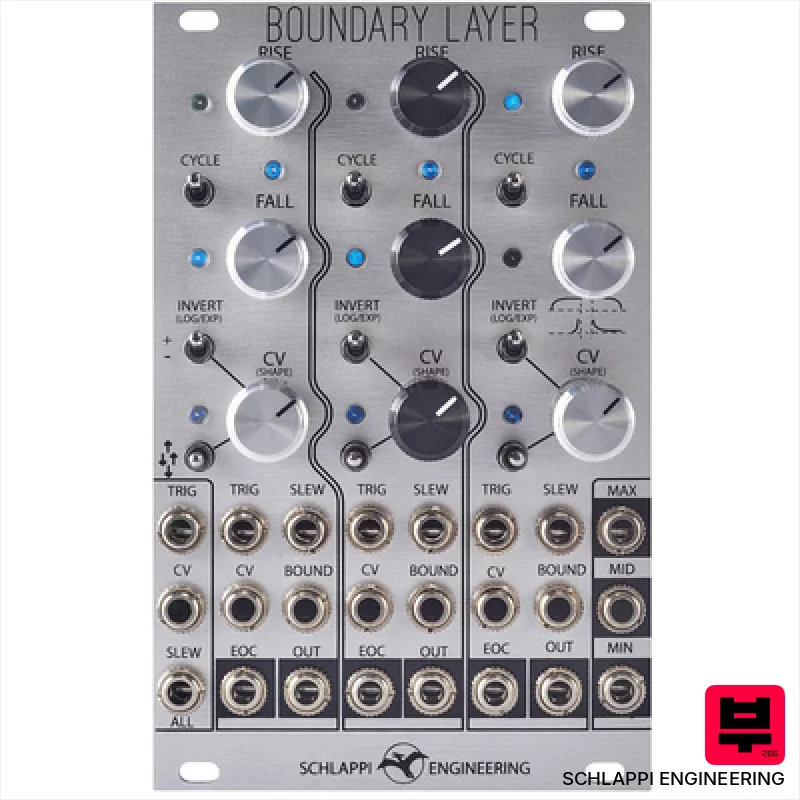
Schlappi Engineering Boundary Layer
- • Remarkable flexibility for complex modulation routing and shaping.
- • The characteristic curve adjustment adds nuanced envelope possibilities.
- • Solid build quality; feels robust despite the compact 16HP footprint.
- • Three channels offer a surprising amount of functionality in a small space.
- • The learning curve is steep for those unfamiliar with function generators.
- • Power draw is a bit higher than average, impacting PSU capacity.
- • Bound input functionality could be more clearly explained in the manual.
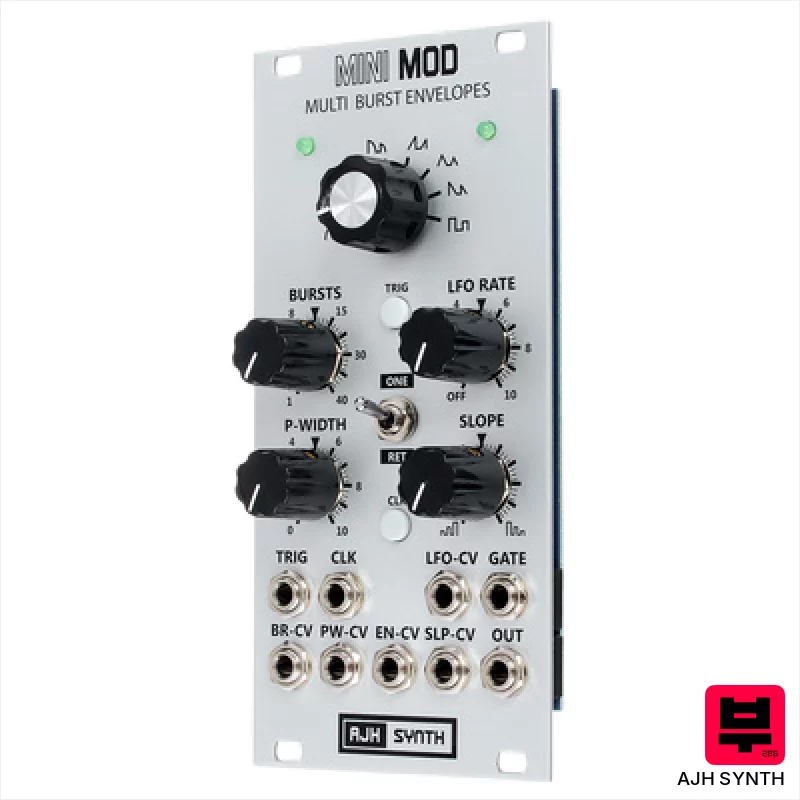
AJH Synth Multi Burst Envelopes Silver
- • Excellent burst waveform variety offers unique rhythmic possibilities.
- • Adjustable burst repetition (up to 40) is genuinely useful.
- • Internal LFO adds organic modulation to burst timing.
- • Solid build quality; the silver faceplate feels premium.
- • 12TE width might be restrictive in smaller Eurorack cases.
- • Pulsewidth control, while powerful, requires careful tweaking.
- • Limited burst shaping beyond the provided waveforms.
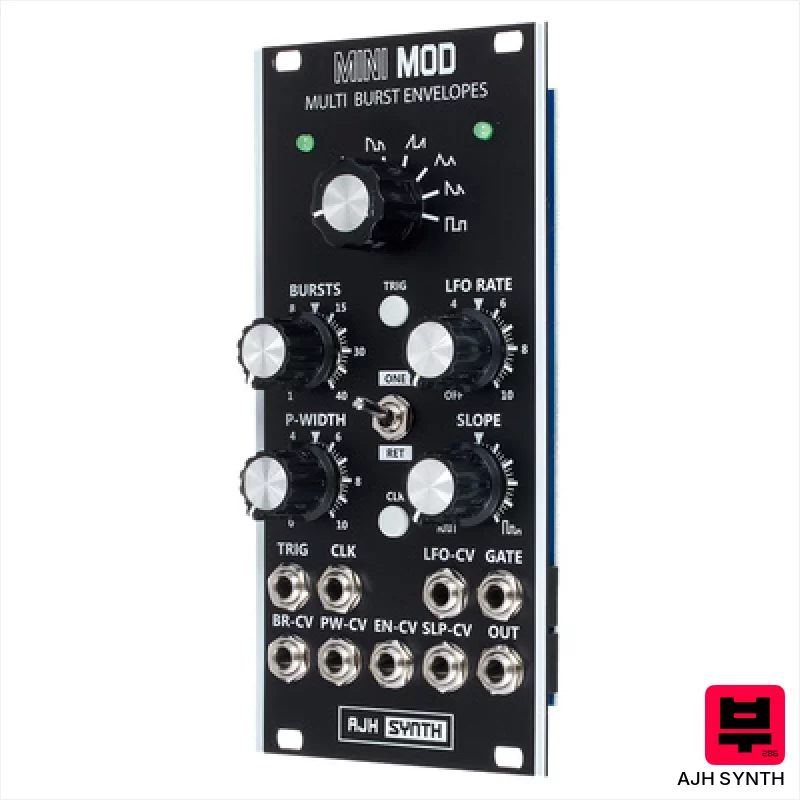
AJH Synth Multi Burst Envelopes
- • Exceptional burst waveform variety provides unique rhythmic textures.
- • Internal LFO offers nuanced, self-modulating envelope possibilities.
- • Comprehensive CV control allows for deep integration within modular systems.
- • Robust build quality; AJH’s reputation for durability is evident.
- • 12TE width can be restrictive in smaller Eurorack cases.
- • Complex parameter interactions require a steeper learning curve.
- • Limited output headroom might be a concern for some applications.

4ms Shaped Dual EnvVCA
- • Exceptional shaping flexibility with the curve fader and CV input.
- • Dual-channel design dramatically expands patching possibilities.
- • The AD/ASR/Loop modes offer diverse envelope generation.
- • Robust build quality consistent with 4ms's reputation.
- • The complex interface can be initially daunting for beginners.
- • Power draw is relatively high, impacting Eurorack PSU capacity.
- • Normalization, while convenient, limits some routing options.
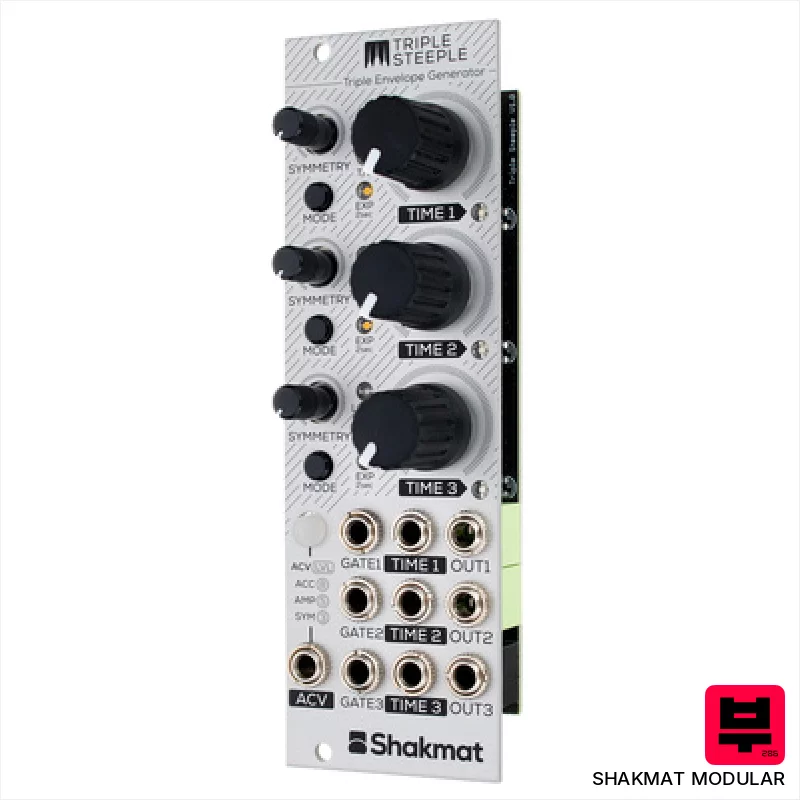
Shakmat Modular Triple Steeple
- • Excellent time/symmetry control offers nuanced envelope shaping.
- • Five selectable modes provide impressive versatility for diverse sound design.
- • Shakmat's robust build quality feels solid and dependable for modular use.
- • Adjustable output voltage expands the module's utility for various applications.
- • 8HP width can be restrictive in smaller Eurorack cases.
- • Limited modulation destinations compared to some higher-end envelope modules.
- • The stepped controls can feel less precise for subtle adjustments.
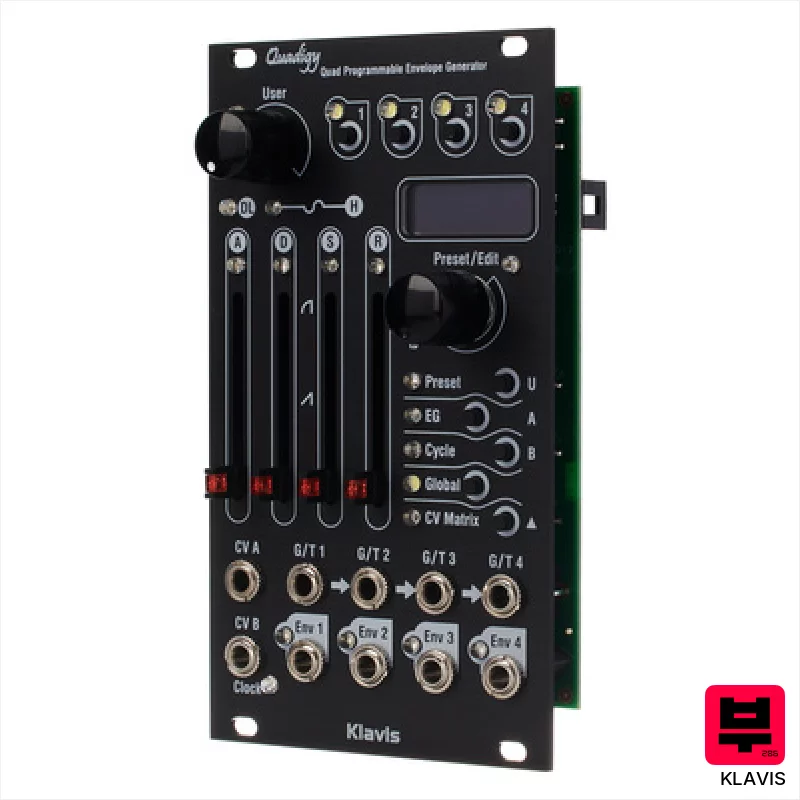
Klavis Quadigy Black
- • Exceptional envelope shaping flexibility across all seven stages.
- • Cycle mode offers unique rhythmic possibilities and sync capabilities.
- • Intuitive graphic display simplifies complex parameter adjustments.
- • Multi-editing drastically streamlines polyphonic envelope programming.
- • The 14HP width demands significant space in a Eurorack setup.
- • The learning curve is steep for those unfamiliar with envelope generators.
- • Limited modulation options beyond the built-in CV matrix.
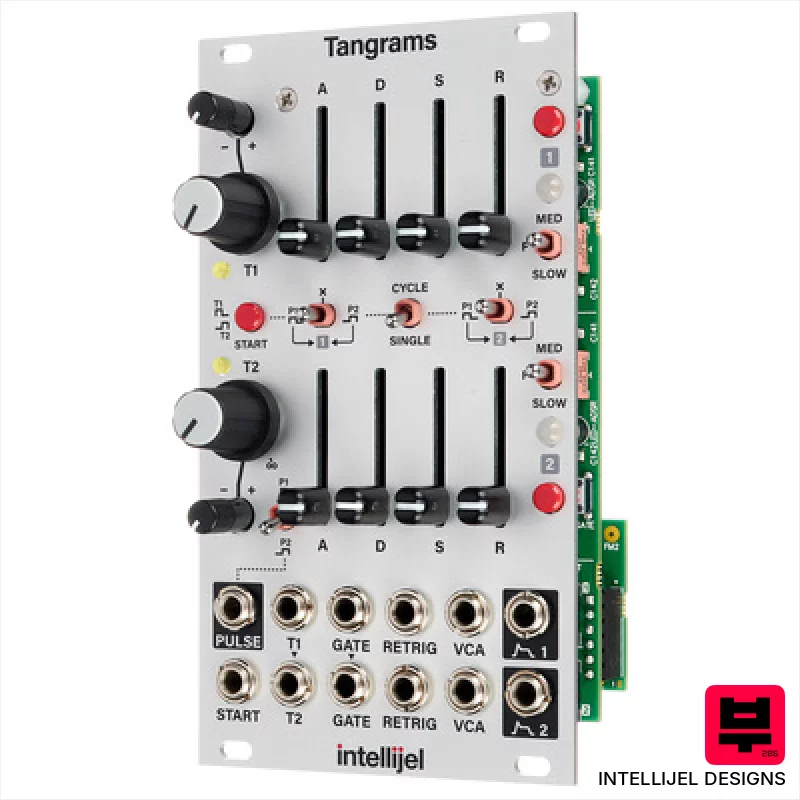
Intellijel Designs Tangrams
- • Excellent dynamic response, particularly with fast attack times.
- • The dual design significantly expands sound design possibilities.
- • Retrigger inputs offer unique rhythmic and sequencing capabilities.
- • Intelligent gate handling prevents clicks and unwanted artifacts.
- • 14HP can be tight in smaller Eurorack cases, demanding careful patching.
- • Limited modulation destinations compared to more complex envelope solutions.
- • The single cycle switch can be unintuitive for beginners.
How to Choose the Best Envelope Modules
Attack Time Range
Too short, and everything sounds brittle. Too long, and you lose that initial punch. Pro envelopes need a seriously wide range to handle everything from snappy transients to glacial swells - think sub-millisecond to several seconds.
Sustain Characteristics
It's not just about a number. How does the sustain level react to input? Does it hold steady, or does it subtly shift? This impacts how your sound sits in a mix and whether it can cut through without becoming muddy.
Release Behavior
A sloppy release can ruin a pad or leave a lingering tail on a percussive sound. We're looking for modules with a clean, defined release, ideally with options for exponential or logarithmic curves to shape the decay.
Modulation Input
A good envelope isn't just a static controller. Flexible modulation inputs (attenuators, offsets, bipolar) allow you to warp the envelope's shape with LFOs, sequencers, or even audio signals - crucial for evolving textures and complex rhythms.
Circuit Design/Stability
Cheap envelopes often suffer from noisy components or voltage instability, leading to unpredictable results. Professional modules use quality parts and robust designs to ensure consistent, reliable performance, even under heavy modulation.
Buying Guide
Don't fall for the hype. A ton of modules look pretty but don't offer the control you need. Paying more usually gets you better components and more nuanced response curves, but check reviews from other players - not just marketing copy. Watch out for modules with limited attack/release ranges or a lack of modulation input - those are a dead end for serious sound design.
How This List Is Built
We don't play these instruments — we're a catalog, not a review desk, and we'd rather say so than pretend otherwise. This page ranks 15 envelope modules from the Thomann catalogue, which is the largest single source of specification data in this category.
Position is computed, not curated. Four signals, in order of weight: how completely the manufacturer documents the instrument (number of published specifications), where it sits in the price range, how specific the model designation is — which filters out generic accessories — and whether a product image exists. The same inputs always produce the same order, so nothing here is shuffled to look fresh.
What this list is good for: narrowing a category down to a shortlist by spec and budget. What it isn't: a substitute for hearing an instrument. Before you buy, read hands-on reviews and, where you can, play it. Full methodology.

