
Best Envelope Modules for Synthesis Control 2026
Alright, so you're diving into modular and realizing that shaping sounds isn't just about oscillators. Envelope generators, or ADSRs, are the heartbeat of your patches - they dictate how sounds evolve over time. A weak envelope can make a gnarly oscillator sound flat and lifeless, while a well-crafted one can breathe incredible dynamics and character into even the simplest waveforms. Let's break down some of the best options for synthesis control, and what to look for.
Last updated: July 15, 2026 • Next update: July 22, 2026
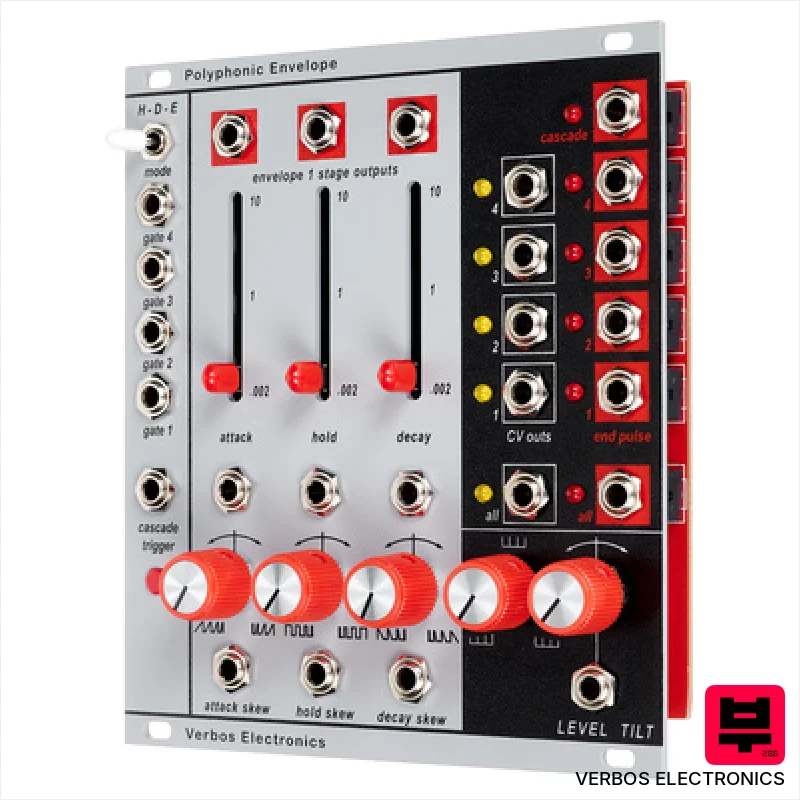
Verbos Electronics Polyphonic Envelope
- • Exceptional dynamic shaping across multiple voices, truly unique sound.
- • The fader control offers immediate, intuitive envelope time adjustments.
- • Skew control introduces complex, evolving textures with CV modulation.
- • Cascade mode enables intricate rhythmic patterns and generative sequences.
- • The power draw might strain smaller or older power supplies.
- • The learning curve for complex cascading and skew manipulation is steep.
- • The relatively small form factor can feel cramped for extensive patching.

Tiptop Audio Octostages
- • Excellent polyphonic envelope shaping capabilities for complex textures.
- • The Polytip system streamlines patching and reduces cable clutter significantly.
- • Robust build quality; Tiptop's known for durable enclosures and reliable components.
- • Sliders offer precise, tactile control over envelope parameters.
- • 20HP footprint can be limiting in smaller modular setups.
- • Limited modulation options beyond the CV input – more advanced modulation needs external sources.
- • The Polytip system, while efficient, requires dedicated cables and can be a commitment.
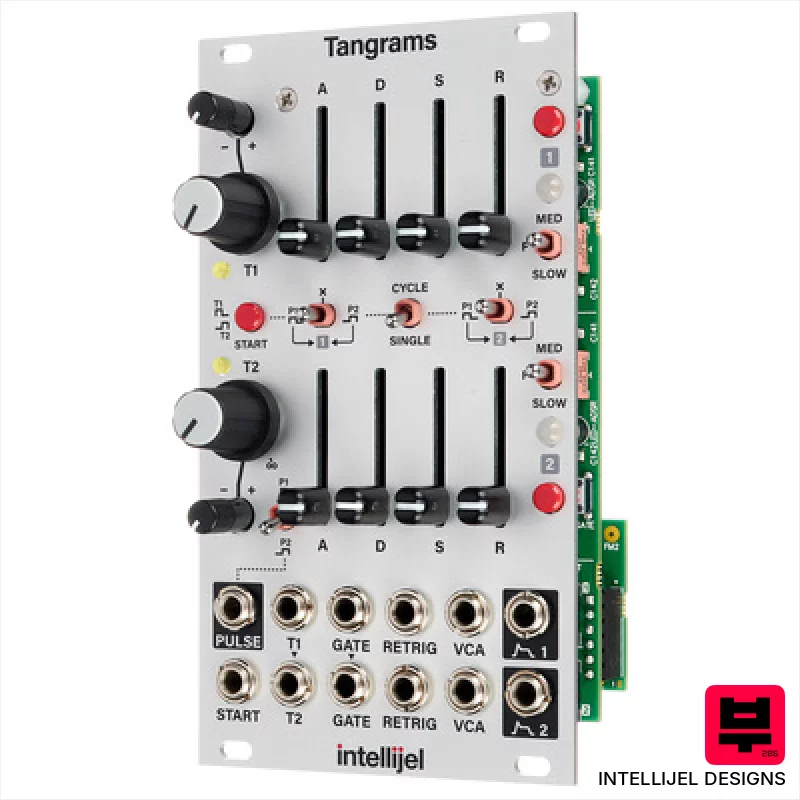
Intellijel Designs Tangrams
- • Excellent dynamic response, particularly with fast attack times.
- • The dual design significantly expands sound design possibilities.
- • Retrigger inputs offer unique rhythmic and sequencing capabilities.
- • Intelligent gate handling prevents clicks and unwanted artifacts.
- • 14HP can be tight in smaller Eurorack cases, demanding careful patching.
- • Limited modulation destinations compared to more complex envelope solutions.
- • The single cycle switch can be unintuitive for beginners.
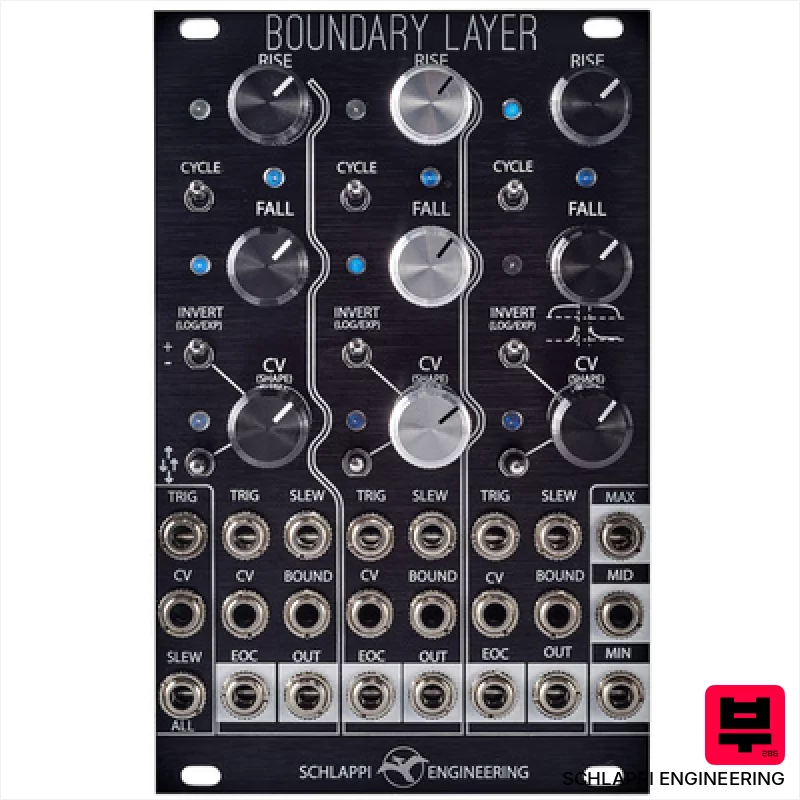
Schlappi Engineering Boundary Layer Black
- • Three independent channels offer exceptional routing flexibility for complex modulation.
- • The adjustable characteristic curves provide nuanced envelope shaping possibilities.
- • Schlappi’s build quality is evident – robust panel and tight component tolerances.
- • Cycle mode allows for rhythmic patterns and stepped modulation sequences easily.
- • 16HP footprint can be restrictive in smaller Eurorack cases.
- • The sheer number of controls can feel overwhelming for beginners.
- • Limited input options – lacks dedicated attenuators or offset for CV signals.
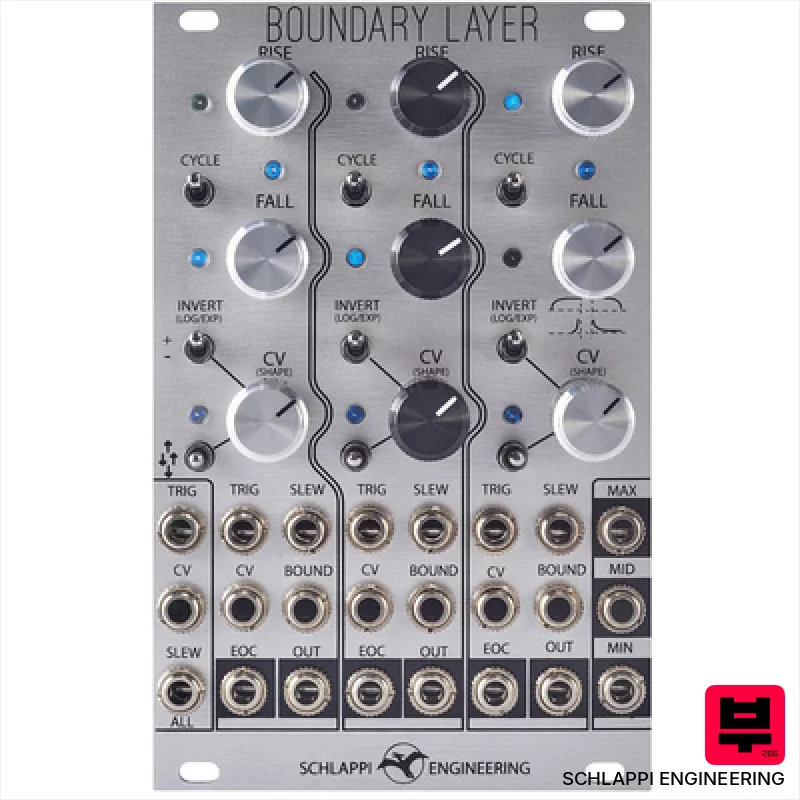
Schlappi Engineering Boundary Layer
- • Remarkable flexibility for complex modulation routing and shaping.
- • The characteristic curve adjustment adds nuanced envelope possibilities.
- • Solid build quality; feels robust despite the compact 16HP footprint.
- • Three channels offer a surprising amount of functionality in a small space.
- • The learning curve is steep for those unfamiliar with function generators.
- • Power draw is a bit higher than average, impacting PSU capacity.
- • Bound input functionality could be more clearly explained in the manual.
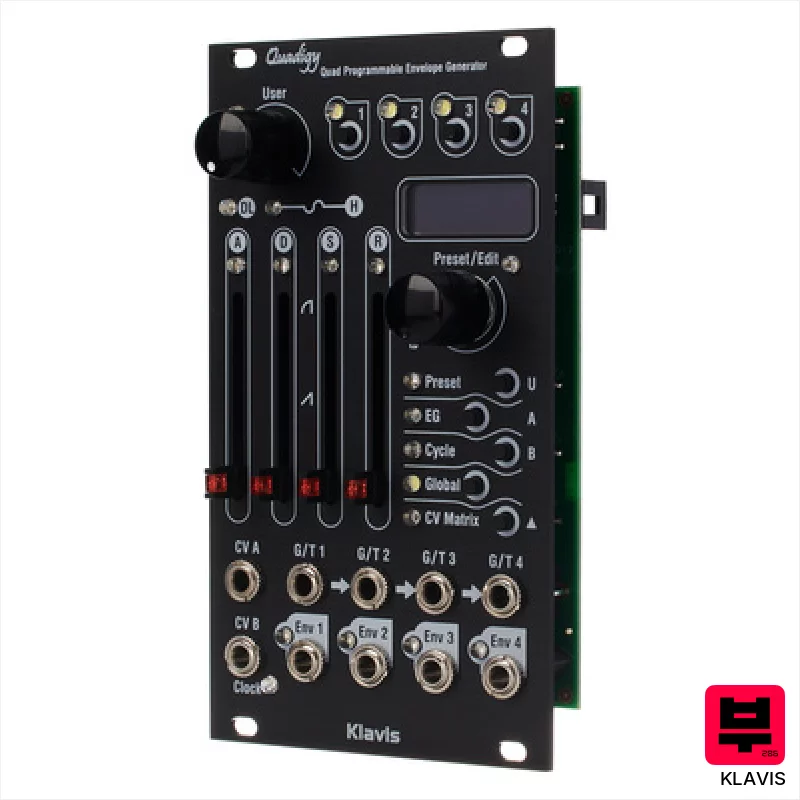
Klavis Quadigy Black
- • Exceptional envelope shaping flexibility across all seven stages.
- • Cycle mode offers unique rhythmic possibilities and sync capabilities.
- • Intuitive graphic display simplifies complex parameter adjustments.
- • Multi-editing drastically streamlines polyphonic envelope programming.
- • The 14HP width demands significant space in a Eurorack setup.
- • The learning curve is steep for those unfamiliar with envelope generators.
- • Limited modulation options beyond the built-in CV matrix.
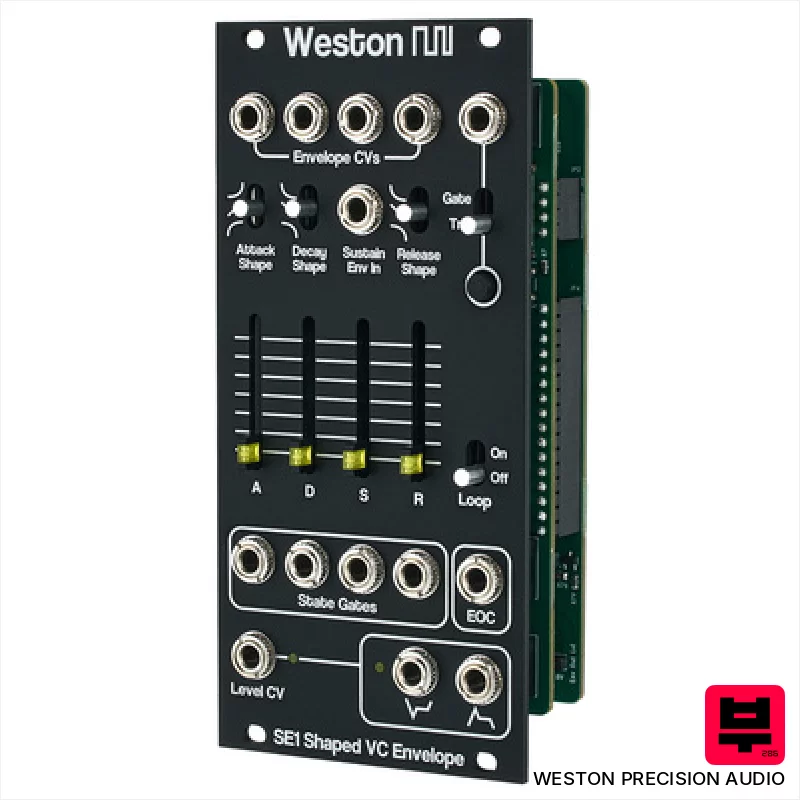
Weston Precision Audio SE1 Shaped VC Envelope
- • Exceptional shaping flexibility with independent exponential, linear, and logarithmic curves.
- • The dedicated VCA for sustain provides nuanced control over the envelope's output.
- • Multiple outputs (positive, inverted, EOC, gate) offer extensive patching possibilities.
- • Solid build quality; Weston’s known for reliable, robust analog circuitry.
- • 12HP footprint can be restrictive in smaller modular systems.
- • Limited sustain time range might not suit extremely long, evolving sounds.
- • The button-based trigger can feel less precise than a dedicated trigger input.

4ms Shaped Dual EnvVCA
- • Exceptional shaping flexibility with the curve fader and CV input.
- • Dual-channel design dramatically expands patching possibilities.
- • The AD/ASR/Loop modes offer diverse envelope generation.
- • Robust build quality consistent with 4ms's reputation.
- • The complex interface can be initially daunting for beginners.
- • Power draw is relatively high, impacting Eurorack PSU capacity.
- • Normalization, while convenient, limits some routing options.
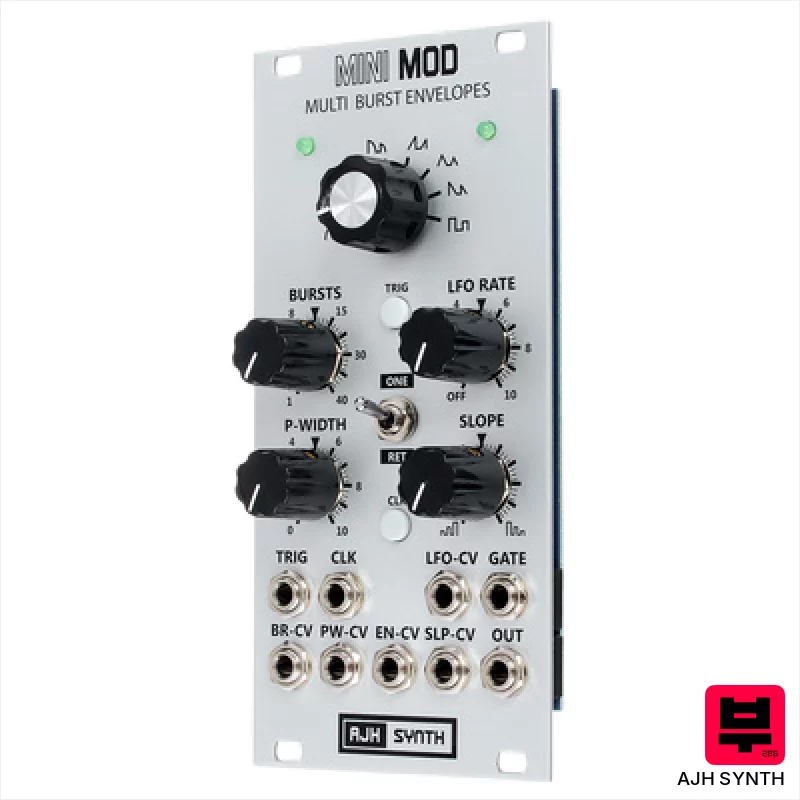
AJH Synth Multi Burst Envelopes Silver
- • Excellent burst waveform variety offers unique rhythmic possibilities.
- • Adjustable burst repetition (up to 40) is genuinely useful.
- • Internal LFO adds organic modulation to burst timing.
- • Solid build quality; the silver faceplate feels premium.
- • 12TE width might be restrictive in smaller Eurorack cases.
- • Pulsewidth control, while powerful, requires careful tweaking.
- • Limited burst shaping beyond the provided waveforms.
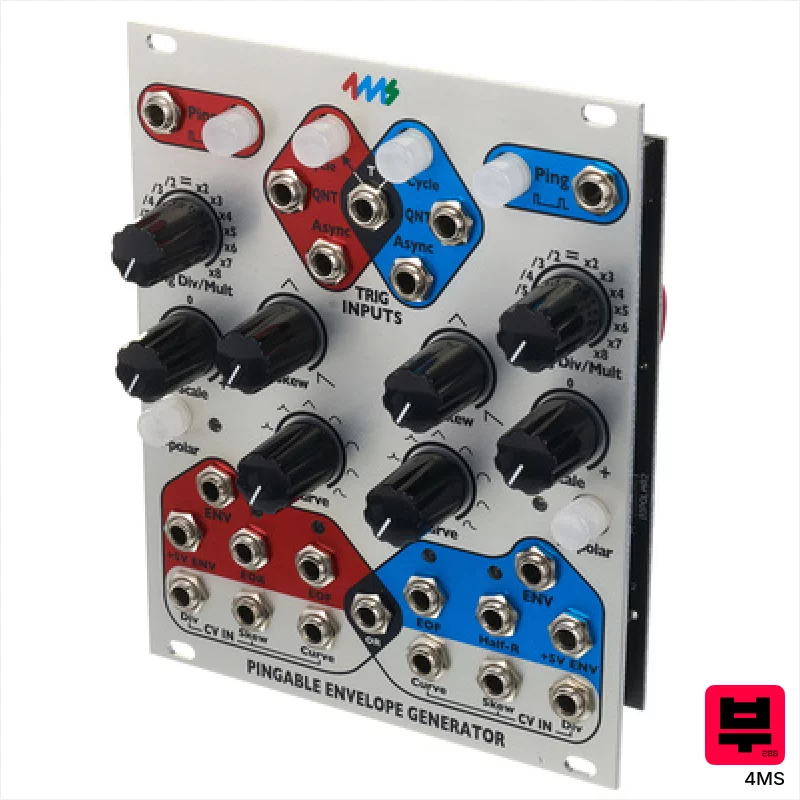
4ms Pingable Envelope Generator
- • Unique 'pingable' design offers incredibly dynamic envelope shaping.
- • Skew and Curve controls provide extensive sonic sculpting possibilities.
- • Dual-channel operation doubles envelope generation potential and routing options.
- • Robust 4ms build quality ensures long-term reliability in a modular environment.
- • Relatively high power draw might strain smaller power supplies.
- • The 'ping' timing concept requires experimentation to master fully.
- • Limited modulation destinations compared to more complex multi-function modules.
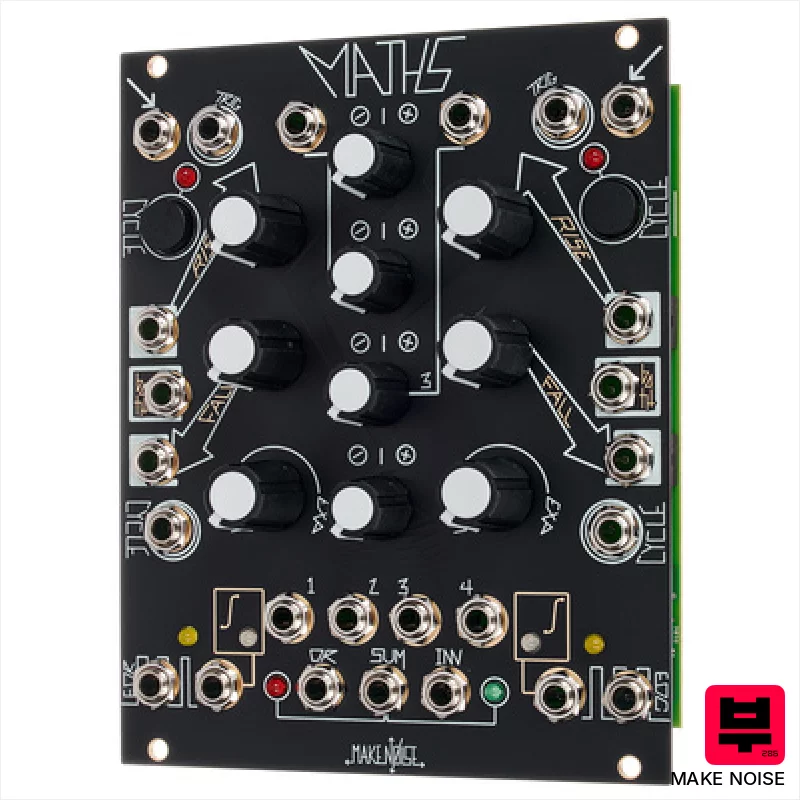
Make Noise Maths Black & Gold
- • Robust black anodized aluminum faceplate feels incredibly solid and premium.
- • The gold knobs offer excellent tactile feedback and a luxurious aesthetic.
- • Extremely versatile – capable of complex modulation sequences and dynamic envelopes.
- • The discrete analog design delivers a uniquely rich, organic sound character.
- • Can be overwhelming for beginners due to its many routing options.
- • Relatively high power draw necessitates a robust power supply.
- • Limited CV outputs restrict complex multi-destination modulation.
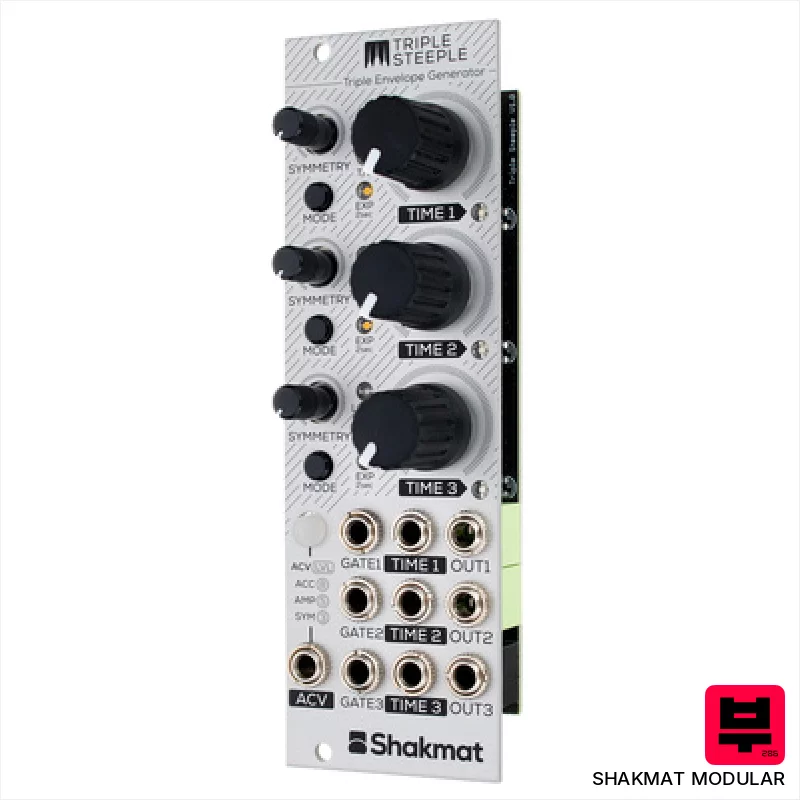
Shakmat Modular Triple Steeple
- • Excellent time/symmetry control offers nuanced envelope shaping.
- • Five selectable modes provide impressive versatility for diverse sound design.
- • Shakmat's robust build quality feels solid and dependable for modular use.
- • Adjustable output voltage expands the module's utility for various applications.
- • 8HP width can be restrictive in smaller Eurorack cases.
- • Limited modulation destinations compared to some higher-end envelope modules.
- • The stepped controls can feel less precise for subtle adjustments.
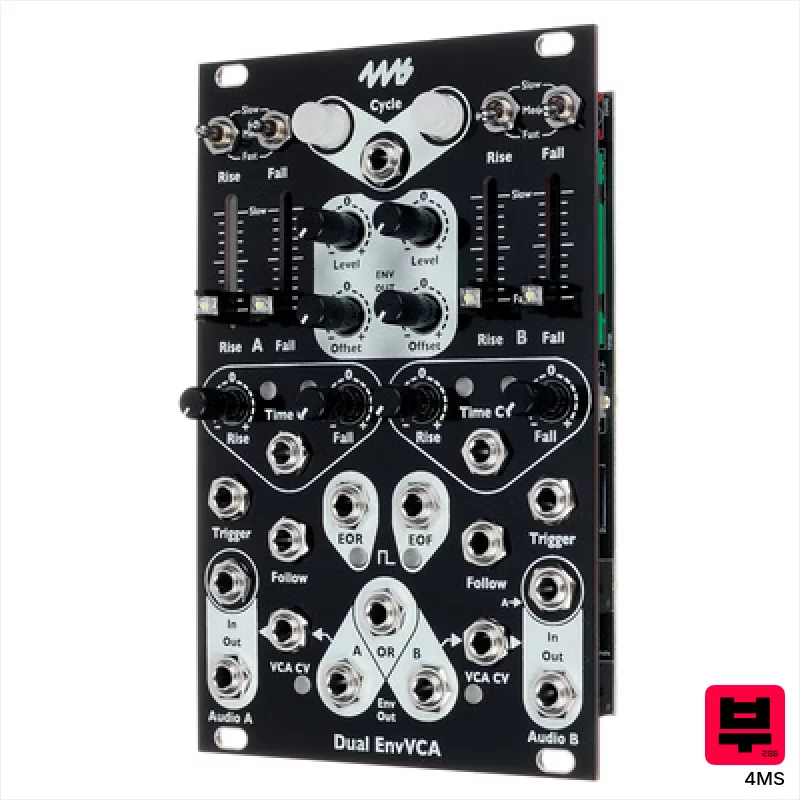
4ms Dual EnvVCA
- • Dual channels offer incredible flexibility for complex modulation.
- • Fader-based time control is intuitive and provides tactile precision.
- • OR logic output expands routing possibilities significantly.
- • Robust 4ms build quality ensures longevity and reliable performance.
- • Wide output voltage range (-10V to +10V) provides ample headroom.
- • End-of-rise/fall triggers enable precise sequencing and triggering.
- • Limited time range selection compared to more modern envelope modules.
- • Normalization, while convenient, can restrict certain patching options.
- • Power draw is a bit higher than some other modules in its class.
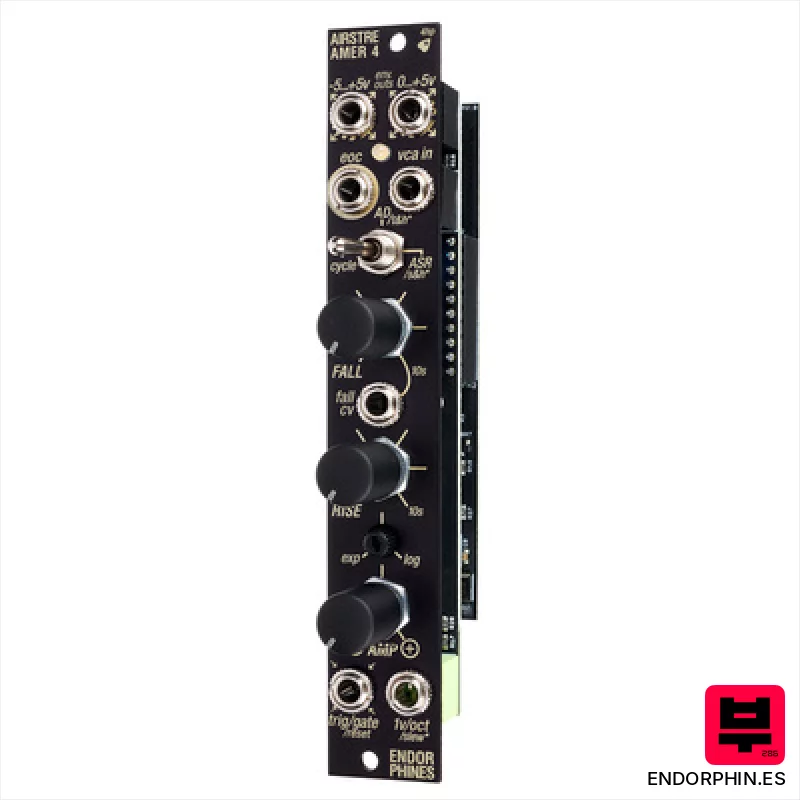
Endorphin.es Airstreamer 4 Black
- • Excellent response times for percussive envelopes.
- • The bipolar VCA CV input offers nuanced dynamic control.
- • Compact 4HP footprint maximizes modular space efficiency.
- • Robust metal enclosure feels premium and durable.
- • Limited modulation destinations compared to larger envelopes.
- • The logarithmic characteristic curve might be too subtle for some.
- • Power draw, while manageable, can be a factor in dense racks.

ADDAC 506 VC Stochastic Function Gen
- • Four channels offer incredible flexibility for complex textures.
- • Internal random generators add organic, unpredictable movement.
- • Comprehensive CV routing allows deep modulation possibilities.
- • Expandability with the 506B unlocks even more creative avenues.
- • 20HP footprint can be restrictive in smaller modular systems.
- • Steep learning curve; requires a solid understanding of modular synthesis.
- • Price point positions it as a premium investment for serious users.
How to Choose the Best Envelope Modules
Attack Time Range
A ridiculously short attack is crucial for percussive sounds like snappy snares and tight kicks, while a slow, creeping attack is essential for evolving pads and cinematic textures. The wider the range, the more sonic territory you can cover.
Sustain Level Depth
The sustain level isn't just about how long a note holds; it's about the shape of that sustain. A shallow sustain can create a plucked or muted feel, while a deep sustain allows for lush, drawn-out tones. Having control over this is key for expressive playing.
Release Time Response
A fast release can give you a percussive 'thwack,' while a slow release can create a trailing, ethereal effect. The responsiveness of the release curve-how it decays-can drastically alter the perceived tone; a sluggish release can muddy a mix.
Curve Shaping/Non-Linearity
Some envelopes offer curve shaping, allowing you to alter the attack, decay, or release curves. This adds a huge amount of character and complexity, letting you create unusual and expressive sounds that go beyond the standard ADSR.
Triggering Options
Beyond simple gate signals, look for features like retriggering (allowing the envelope to restart with each note), exponential triggering, or even negative triggering for bizarre, reversed effects. These small details can open up a world of patching possibilities.
Buying Guide
Envelope modules range from basic, budget-friendly clones to complex, Eurorack powerhouses. Cheaper modules often cut corners on the attack/release time range or responsiveness. Paying a bit more usually gets you a more accurate and flexible response, plus features like curve shaping. Think about your patching style - do you need a super-fast envelope for drums, or a more nuanced one for evolving textures?
Our Methodology
We're not just looking at spec sheets here. I've spent years tweaking envelopes for pads, basses, leads, and everything in between - both in the studio and onstage. We're talking about A/B comparisons against industry standards, and evaluating how these modules hold up in a noisy live environment, and whether they'll actually inspire you to create something new. Ultimately, it's about feel and sound, not just numbers.

