AudioFu Chart · October 2026
Best Active Stage Monitors Under $1,000 2026
The top pick is Mackie SRM150 Compact Powered PA System ($335). the box MA5 gives you the most for the money at $174. Yamaha DHR12M 1000-Watt Coaxial 12" Active Floor Monitor Loudspeaker leads the high end. Ranked by the AudioFu Index from 40 models across 13 brands, prices checked every night.
Last updated: October 19, 2026
Top 10
Full detail for the 10 highest AudioFu Index scores. Every other model is listed below.
-
- Size25"
- Weight3.4 kg
The SRM150 is a surprisingly capable little PA speaker – perfect for solo acoustic gigs, small vocal groups, or background music at events. It's a budget-friendly option that delivers decent volume and clarity, though don't expect earth-shattering bass. It's a solid workhorse for basic reinforcement needs.
Pros
- Surprisingly robust build for the price point; feels solid in hand.
- The Class D amp delivers respectable power without excessive heat.
- Built-in limiter protects drivers from overload, a crucial safety feature.
Cons
- Limited channel flexibility; not ideal for complex sound reinforcement.
- High frequencies can sound slightly harsh at higher volumes.
76AudioFu
IndexStableno change since Aug 17Aug 17$335 now$335€298 at Thomann · in stockCheck price ↗ -
Yamaha DHR12M 1000-Watt Coaxial 12" Active Floor Monitor Loudspeaker
DHR12M · Yamaha
23 for sale on Reverb1 finish at Thomann
- Weight16.5 kg
The DHR12M is a seriously powerful and well-built stage monitor. Its coaxial design and DSP make it ideal for smaller bands, DJs, or anyone needing a reliable, focused sound check in a variety of spaces. It's a great balance of performance and affordability.
Pros
- Robust plywood enclosure provides excellent resonance control and durability for stage use.
- Coaxial design delivers remarkably consistent coverage and a focused sound image.
- Class-D amplification offers impressive power and efficiency without excessive heat.
Cons
- The weight (16.5kg) makes transport a challenge, especially for solo performers.
- Limited EQ control beyond the presets restricts fine-tuning for specific acoustic environments.
65AudioFu
IndexStableno change since Aug 17Aug 17$697 now$697€619 at Thomann · in stockCheck price ↗ -
- Size5"
- Weight2.8 kg
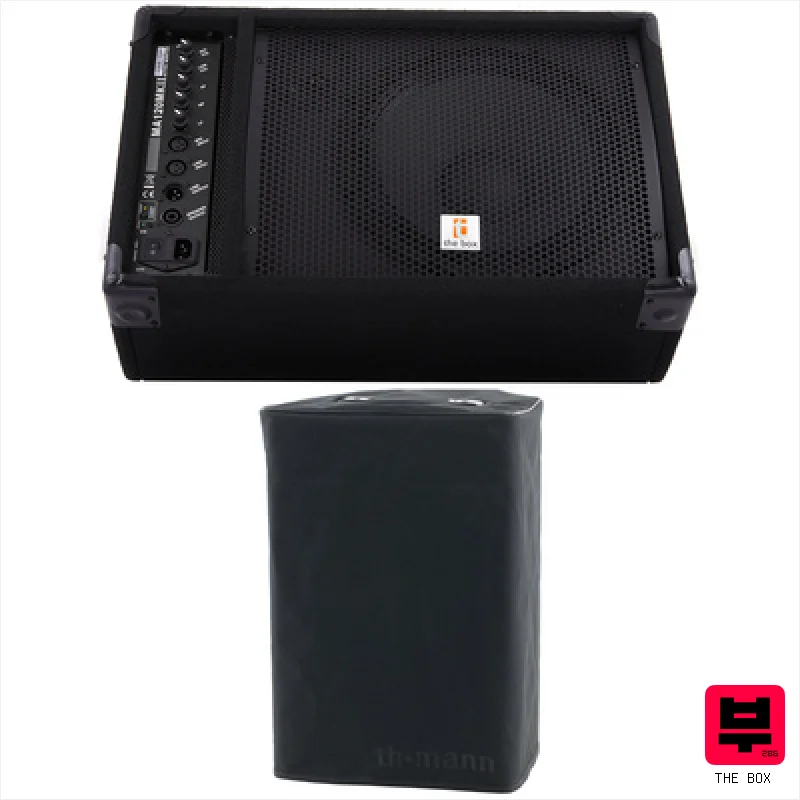
The box MA5 is a surprisingly capable little monitor – or full-range speaker – for the price. It's ideal for singer-songwriters, small acoustic ensembles, or anyone needing a portable, self-contained sound source. The built-in mixer is a real convenience, and the power-to-weight ratio is excellent.
Pros
- Neodymium driver delivers surprisingly punchy lows for its size
- Integrated mixer simplifies setup for solo performers or small bands
- Lightweight design (2.8kg) makes transport and stage setup easy
Cons
- EQ is basic 3-band; lacks precision for critical mixing
- RCA input limits connectivity to older CD players or devices
64AudioFu
IndexStableno change since Aug 17Aug 17$174 now$174€155 at Thomann · in stockCheck price ↗ -
- Size10"
- Weight12.8 kg
The Flexsys FM10 is a surprisingly capable little stage monitor. It's a great solution for solo artists, duos, or smaller bands needing clear, focused monitoring – especially those relying on keyboards or acoustic instruments. The build quality is solid for the price point, making it a reliable workhorse.
Pros
- Coaxial driver provides surprisingly focused and coherent soundstage.
- The FRFR design makes it ideal for keyboard and acoustic guitar monitoring.
- Robust enclosure feels well-built, suggesting good longevity for stage use.
Cons
- 160W RMS is adequate, but might struggle with very loud rock bands.
- Limited EQ controls; relies heavily on source material quality.
60AudioFu
IndexStableno change since Aug 17Aug 17$335 now$335€298 at Thomann · in stockCheck price ↗ -
dB Technologies Flexsys FMX10 2-Way 400-Watt 10" Coaxial Active Stage…
FMX 10 · dB Technologies
3 for sale on Reverb1 finish at Thomann
- Size10"
- Weight11.3 kg
The FMX 10 is a surprisingly capable stage monitor, especially for the money. It’s got a clear, punchy sound that works well for smaller bands, singer-songwriters, and even DJs needing a reliable wedge. The coaxial design really shines in terms of coverage, making it ideal for situations where you need to fill a wider area without multiple monitors.
Pros
- Excellent coaxial design delivers surprisingly wide, consistent coverage.
- Class D amplification provides ample clean power without excessive heat.
- Robust polypropylene woofer cone handles serious volume with minimal distortion.
Cons
- Limited EQ controls restrict fine-tuning for specific acoustic environments.
- While portable, its weight can be a challenge for solo performers.
60AudioFu
Index↓ 4.1%since Aug 17 · lowest so far$467 · Aug 17$448 now$448€398 at Thomann · in stockCheck price ↗ -
- Size15"
- Weight23.2 kg
The MON 15 A G3 is a serious contender for working bands and larger solo acts needing a powerful, focused stage monitor. The DynX DSP is genuinely helpful for quick setup adjustments, and the birch enclosure gives it a solid, professional feel. It's a great balance of performance and affordability.
Pros
- Birch multiplex enclosure provides excellent resonance and durability.
- DynX DSP offers genuinely useful presets for various monitoring scenarios.
- Coaxial design delivers surprisingly accurate imaging for a stage monitor.
Cons
- Weight (23.2 kg) makes transport a challenge for solo performers.
- EQ, while present, lacks the precision of higher-end studio monitors.
59AudioFu
Index↓ 16.3%since Aug 17 · lowest so far$775 · Aug 17$649 now$649€577 at Thomann · in stockCheck price ↗ -
dB Technologies Flexsys FMX15 2-Way 1200-Watt 15" Coaxial Active…
FMX 15 · dB Technologies
3 for sale on Reverb1 finish at Thomann
- Size15"
- Weight16.9 kg
The FMX 15 is a real workhorse stage monitor, packing a serious punch for its size. It’s perfect for smaller bands, DJs, or anyone needing a loud, reliable, and relatively portable solution for live sound reinforcement. The coaxial design makes it surprisingly versatile for a powered speaker.
Pros
- Coaxial design offers surprisingly wide, consistent coverage.
- Class D amplification delivers impressive headroom without excessive heat.
- Robust construction; feels solid and built to handle gigging.
Cons
- Limited EQ options restrict fine-tuning for diverse sound sources.
- Weight makes it less ideal for solo performers or frequent travel.
58AudioFu
IndexStableno change since Aug 17Aug 17$640 now$640€569 at Thomann · in stockCheck price ↗ -
Behringer Eurolive F1320D 300-Watt 2-Way 12" Active Wedge Monitor
F1320D Monitor · Behringer
3 for sale on Reverb1 finish at Thomann
- Size12"
- Weight15.7 kg
The F1320D is a seriously impressive monitor for the money. It’s perfect for smaller bands, solo artists, or anyone needing a reliable wedge for rehearsals or gigs where budget is a major factor. The power and surprisingly clean sound will cut through a mix without breaking the bank.
Pros
- Robust Class-D amp delivers surprisingly clean power for the price.
- Proprietary horn provides wide, even coverage – good for stage use.
- Integrated feedback filter is genuinely effective in live settings.
Cons
- EQ is basic – lacks finesse for detailed sound shaping.
- Bass response, while deep, can be muddy without careful mixing.
55AudioFu
IndexStableno change since Aug 17Aug 17$250 now$250€222 at Thomann · in stockCheck price ↗ -
- Size12"
- Weight13.9 kg
The FMX 12 is a surprisingly capable little stage monitor. It’s a great option for smaller bands, solo performers, or DJs needing reliable, powerful sound reinforcement in a compact package. The coaxial design really helps with clarity, and the build feels solid for the price point.
Pros
- Coaxial design provides excellent point-source imaging and coverage.
- Class D amplification delivers surprising power for its size and weight.
- Robust polypropylene woofer cone handles high SPLs without distortion.
Cons
- Limited EQ controls restrict fine-tuning for different acoustic environments.
- Plastic enclosure feels less premium than aluminum alternatives.
55AudioFu
Index↓ 2.5%since Aug 17 · lowest so far$591 · Aug 17$576 now$576€512 at Thomann · in stockCheck price ↗ -
- Size8"
- Weight7.5 kg
The MA8/2 CL is a surprisingly capable little monitor for the budget-conscious. It's ideal for solo performers, smaller bands, or as a secondary stage monitor. Don't expect it to move a stadium, but it'll handle smaller gigs and rehearsals with decent clarity.
Pros
- Surprisingly robust cabinet for the price point, feels well-constructed.
- The 8in woofer delivers a respectable low-end presence.
- XLR/TRS combo jack offers flexible connectivity options.
Cons
- 70W is limited; struggles in larger venues or loud band situations.
- High-frequency response can be a touch harsh without EQ adjustments.
54AudioFu
IndexStableno change since Aug 17Aug 17$168 now$168€149 at Thomann · in stockCheck price ↗
All 40 active stage monitors
Same index, same nightly prices — compact. Colour options of one model share a row. Tap a photo to zoom.
- 11
the box MA120 MKIIthe box54Stable$179€159$179€159Check ↗
- 12
the box MA100the box54Stable$179€159$179€159Check ↗
- 13
the box MA150the box54Stable$235€209$235€209Check ↗
- 14
the box pro DSX 110 Mthe box pro54Stable$280€249$280€249Check ↗
- 15
the box pro DSX 112 Mthe box pro54Stable$314€279$314€279Check ↗
- 16
the box pro DSX 115 Mthe box pro54Stable$359€319$359€319Check ↗
- 17
the box pro Mon A10the box pro54Stable$381€339$381€339Check ↗
- 18
the box pro Mon A12the box pro54Stable$438€389$438€389Check ↗
- 19
dB Technologies Flexsys FM12dB Technologies54Stable$448€398$448€398Check ↗
- 20
the box pro Achat 115 MA MKIIthe box pro54Stable$652€579$652€579Check ↗
- 21
the box pro MonX A10the box pro53↓ 12.3%$393€349$393€349Check ↗
- 22
LD Systems MON 8 A G3LD Systems53↓ 2.8%$437€388$437€388Check ↗
- 23
LD Systems MON 12 A G3LD Systems53↓ 4.2%$625€555$625€555Check ↗
- 24
IMG Stageline Flat-M200IMG Stageline52↓ 3.3%$467€415$467€415Check ↗
- 25
Behringer F1220D EuroliveBehringer51Stable$208€185$208€185Check ↗
- 26
IMG Stageline Flat-M100IMG Stageline51Stable$377€335$377€335Check ↗
- 27
IMG Stageline Flat-M8IMG Stageline51Stable$404€359$404€359Check ↗
- 28
Proel WD10AV2Proel51Stable$426€379$426€379Check ↗
- 29
LD Systems MON 10 A G3LD Systems51Stable$562€499$562€499Check ↗
- 30
FBT X-Pro 112MAFBT51↓ 0.9%$730€649$730€649Check ↗
- 31
FBT StageMaxX 12MAFBT51Stable$999€888$999€888Check ↗
- 32
the box pro MonX A12the box pro50↓ 7.2%$438€389$438€389Check ↗
- 33
the box pro MonX A15the box pro50↓ 6.7%$472€419$472€419Check ↗
- 34
Proel WD12AV2Proel49↑ 3.4%$448€398$448€398Check ↗
- 35
DAS Audio Action-M512ADAS Audio49Stable$898€798$898€798Check ↗
- 36
Fun Generation CL 105 AFun Generation · 2 finishes48Stable$78€69$78€69Check ↗
- 37
PROEL WD15AV2 2-Way Active Coaxial Stage MonitorWD15AV2 · Proel47Stable$528€469$528€469Check ↗
- 38
Behringer B105D Active 5" Personal MonitorB105D · Behringer44Stable$96€85$96€85Check ↗
- 39
the box Six Mix Singer Start Setthe box32Stable$235€209$235€209Check ↗
- 40
Thomann SingSang BundleThomann29Stable$223€198$223€198Check ↗
Active Stage Monitors by the numbers
Measured across all 43 models we track, not a sample.
Median $393 — half of all active stage monitors here cost less.
median of 37 models · 4"–15"
median of 43 models · 2.5 kg–23 kg
How to choose the best active stage monitors
Frequency Response
This isn't just about numbers; it's about the character of the sound. We're looking for a balanced response - not overly bright or muddy - that can handle both spoken word and a screaming guitar. A wider response can be good, but often means compromises elsewhere.
Power Handling (Wattage)
Don't get hung up on raw wattage. It's about headroom. You need enough power to cut through a loud band without distorting. 1200W peak is a good baseline for a decent amount of volume, but efficient design matters more.
Coverage Pattern (HxV)
A wider horizontal coverage means fewer feedback issues and more consistent sound across the stage. Vertical coverage is less critical, but a controlled pattern prevents unwanted reflections. 90x60 degrees is a solid starting point.
DSP Features
EQ, compression, and feedback suppression are your friends. Built-in processing can save you time and headaches, especially in tricky acoustic environments. Look for presets, but also the ability to tweak things to your liking.
Build Quality & Portability
Stage monitors take a beating. A robust enclosure and a manageable weight are essential for gigging musicians. Plastic enclosures are common at this price point, but look for something that feels solid and well-constructed.
Buying guide
So, you need stage monitors, huh? Don't wanna spend a fortune, but you also don't want your vocals sounding like they're coming from a tin can. Getting a decent wedge under $1000 is totally doable, but you gotta know what to look for - we're talking clarity, enough headroom to handle a loud drummer, and something that won't blow your back out lugging it around. Let's break down the best active stage monitors that won't break the bank.
At this price point, you're making trade-offs. Don't expect studio-grade clarity; you're looking for something that's reliable and functional on stage. The biggest corners cut are often in the high-frequency drivers - expect a less refined, sometimes slightly harsh, top end.
Prioritize power and coverage over ultimate sonic purity - you can always EQ to taste. Don't underestimate the importance of portability either; lugging a heavy monitor around all night is no fun.
How the AudioFu Index works
Five measured signals and nothing else — no stars from strangers, no “tested by experts” we didn’t do. The weights are fixed and public. We don’t play these instruments; we measure the market around them.
This chart covers 43 active stage monitors from the Thomann catalogue. Before you buy, read hands-on reviews and, where you can, play it. Full methodology.
AudioFu earns a commission when you buy through our Thomann links. It never changes the order — the index does.
- Demand40%
How many of this exact model are for sale on Reverb right now — what musicians actually buy and resell.
- Lineup20%
How many finishes Thomann stocks — makers expand the models that sell.
- Price15%
Where the price has moved since we started tracking in August.
- Specs15%
How completely the maker documents it.
- Maker10%
How deep the brand’s range is in this category.
Questions
Are smaller monitors better for wedges?
Not necessarily. Smaller size often means less power and a smaller speaker. While they're easier to move, they'll struggle to cut through a loud band. 10" or 12" is a good sweet spot for stage monitors, offering a balance of power and portability.
What's the difference between a 'B' and 'C' series speaker?
Generally, 'B' or 'Pro' series are a step up from the standard 'A' series. They'll usually have better components, more robust construction, and sometimes more advanced DSP features. The price jump isn't always worth it, though - listen before you buy.
Can I use these for recording?
You can, but they're designed for live sound. The frequency response might not be as neutral as a studio monitor, and the built-in DSP is geared towards live performance. It's fine for tracking vocals or guitar if you're on a tight budget, but don't expect pristine results.
What about powered PA speakers? Are those a good option?
Full-range PA speakers can work as monitors, but they're often designed to project sound forward, not down. This can lead to feedback issues and a less focused sound. Dedicated stage monitors are built for the job, with angled cabinets and optimized drivers.
How important is feedback suppression?
Hugely important, especially in smaller venues. Feedback suppression isn't a magic bullet, but it can dramatically reduce the time spent wrestling with feedback and let you get your levels up without ear-splitting squeals. It's a feature you'll appreciate.