AudioFu
AudioFu Chart · October 2026
Best Acoustic Violins for Jazz 2026
The top pick is Stentor SR1401 Harlequin Violin 4/4 AB ($189). Scala Vilagio H.L. Guarneri del G. Classic E leads the high end. Ranked by the AudioFu Index from 218 models across 21 brands, prices checked every night.
Last updated: October 11, 2026
Top 10
Full detail for the 10 highest AudioFu Index scores. Every other model is listed below.
-
- Size4/4 size
The Stentor Harlequin is a solid starter violin—it’s a reliable, budget-friendly option for students and beginners. The spruce top offers a good level of clarity, and the included case makes it convenient. It's a great value for the price point, offering a decent playing experience without requiring a significant investment.
Pros
- Solid spruce top provides a surprisingly resonant and bright tone.
- Maple back and sides contribute to a warm, balanced overall sound.
- The included case with reflectors is genuinely practical for student travel.
Cons
- The bow, while included, is a basic model and will likely need upgrading soon.
- The black stained fingerboard can feel a little slick, especially for beginners.
61AudioFu
Index↓ 14.6%since Aug 14 · lowest so far$222 · Aug 14$189 now$189€169 at Thomann · in stockCheck price ↗ -
- Size4/4 size
This Höfner H225-FR-V is a beautifully crafted violin aiming to capture the spirit of a Francesco Ruggieri. It’s a great option for intermediate to advanced students or players who appreciate a traditional European sound and a solid build quality – it’s a premium-priced instrument that offers considerable value for the money.
Pros
- Exquisite spruce top delivers a surprisingly warm, responsive tone.
- Solid maple back provides excellent projection and sustain.
- Ebony fingerboard offers smooth playing feel and precise intonation.
Cons
- The heavier construction might be tiring for extended practice sessions.
- The Ruggieri copy, while beautiful, won't fool a seasoned expert’s ear.
55AudioFu
Index↓ 7.7%since Aug 14 · lowest so far$5,693 · Aug 14$5,256 now$5,256€4,690 at Thomann · in stockCheck price ↗ -
- Size4/4 size
The Gewa Georg Walther GY is a seriously solid instrument – a real step up for intermediate to advanced players. It's got a mature, rich tone that's surprisingly versatile, and the build quality feels very dependable. This is a great option for students progressing beyond beginner instruments or amateur players seeking a refined sound without a premium price tag.
Pros
- Exceptional European tonewood yields a warm, responsive, and projecting sound.
- Hand-applied varnish enhances resonance and aesthetic appeal beautifully.
- Ebony fittings provide excellent response and a smooth playing experience.
Cons
- The varnish, while beautiful, might be a bit thick for some player preferences.
- The 'Stradivari' model designation can create unrealistic expectations for some.
54AudioFu
IndexStableno change since Aug 14Aug 14$1,670 now$1,670€1,490 at Thomann · in stockCheck price ↗ -
- FingerboardEbony fingerboard
- Size4/4 size
The Yamaha V20G is a seriously good student to intermediate violin. It offers a surprisingly mature tone for its class, thanks to the solid wood construction and careful detailing. It's a fantastic choice for dedicated students looking to step up from a beginner instrument or players wanting a reliable, well-made practice violin.
Pros
- Solid spruce top delivers a warm, responsive, and projecting tone.
- Hand-applied shaded oil finish enhances wood resonance and aesthetics.
- Boxwood fittings (pegs, chinrest, tailpiece) offer excellent stability and feel.
Cons
- The oil finish, while beautiful, requires more diligent cleaning than a lacquer finish.
- The included bow, while functional, is a basic model and likely needs upgrading for serious playing.
53AudioFu
Index↓ 14.8%since Aug 14 · lowest so far$1,933 · Aug 14$1,646 now$1,646€1,469 at Thomann · in stockCheck price ↗ -
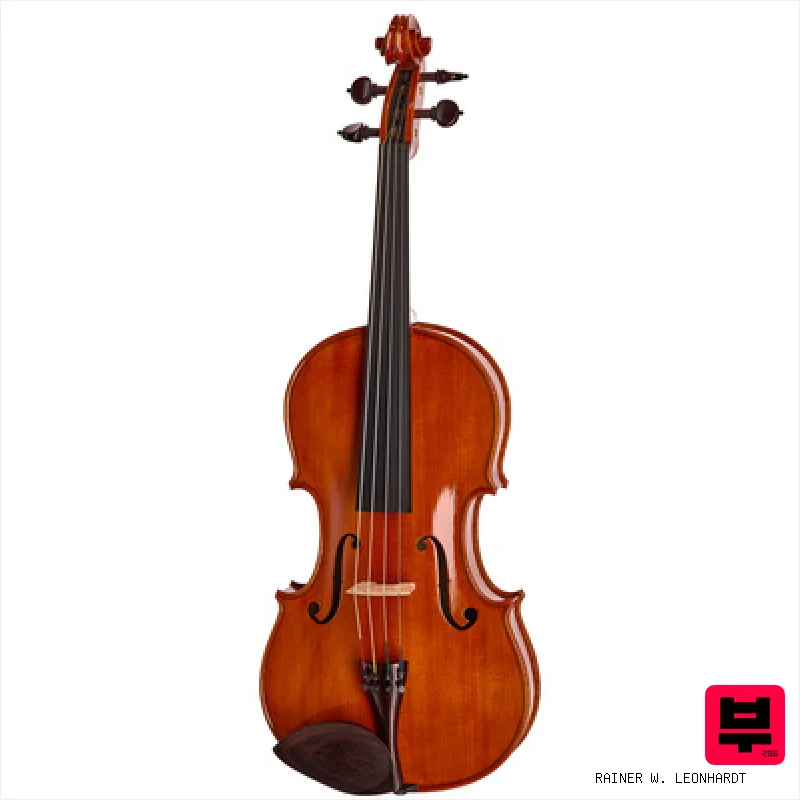
Rainer W. Leonhardt No. 100/
1 Master Violin 4/ 4 Not on Reverb yet2 finishes at Thomann
- FingerboardEbony fingerboard
- Size4/4 size
This Leonhardt No. 100/1 is a serious contender for intermediate to advanced players seeking a traditionally voiced violin. The mature woods and careful construction deliver a warm, resonant tone with excellent projection, making it ideal for solo work or orchestral settings. It's a well-built instrument that will reward dedicated practice and develop beautifully over time.
Pros
- Exceptional matured tonewoods yield a rich, complex tonal palette.
- Single-piece flamed maple back provides excellent projection and resonance.
- Ebony fittings offer superb feel and responsiveness for precise playing.
Cons
- The Pirastro Evah Pirazzi strings, while excellent, might not suit every player's preference.
- Mittenwald construction, while renowned, can sometimes result in a slightly heavier instrument.
49AudioFu
Index↑ 2.6%since Aug 14$4,258 · Aug 14$4,370 now$4,370€3,900 at Thomann · in stockCheck price ↗ -
- Size4/4 size
The Höfner H7-V is a fantastic entry point for serious students or players seeking a traditional acoustic violin with solid wood construction. It offers a surprisingly rich tone for its price range and provides a great foundation for developing technique. Ideal for intermediate players or those wanting a reliable, good-sounding violin without a premium-priced investment.
Pros
- Solid flamed maple construction delivers a warm, resonant tone.
- Hand-applied spirit varnish enhances the wood's natural beauty and responsiveness.
- Traditional design offers excellent projection and comfortable playability.
Cons
- The spirit varnish, while beautiful, can be susceptible to scratches and wear.
- The included bow is serviceable but a significant upgrade would improve tone.
48AudioFu
Index↓ 24.4%since Aug 14 · lowest so far$738 · Aug 14$558 now$558€498 at Thomann · in stockCheck price ↗ -
- Size4/4 size
This Vilagio H.L. Guarneri is a serious instrument—the kind of violin a dedicated student or professional would choose. Hannah Lobe’s handwork shines through, creating a focused, warm tone with surprising power and clarity. It's an investment piece for those seeking a truly refined classical voice.
Pros
- Hand-selected tonewoods deliver exceptional resonance and projection.
- Hannah Lobe's craftsmanship ensures meticulous detail and refined response.
- Thin, brush-applied varnish enhances wood character and tonal complexity.
Cons
- The premium-priced tag makes it inaccessible to many aspiring players.
- Limited versatility; primarily suited for classical and traditional styles.
48AudioFu
IndexStableno change since Aug 14Aug 14$8,853 now$8,853€7,900 at Thomann · in stockCheck price ↗ -
- Size4/4 size
This European violin looks stunning with its lion head carving and solid spruce top. The flamed maple back adds visual depth, though the boxwood parts make it quite heavy. It is a premium-priced instrument perfect for players who want classic aesthetics without extra electronics.
Pros
- Beautifully carved lion head decoration
- Fully solid spruce top wood
- Flamed maple back and sides
Cons
- Boxwood parts can be very heavy
- No electronic pickups available
47AudioFu
IndexStableno change since Sep 4Sep 4$1,118 now$1,118€998 at Thomann · in stockCheck price ↗ -
- Size4/4 size
This is a fully solid violin with a striking lion head design, perfect for players who want traditional craftsmanship. The flamed maple back and spruce top deliver a warm, classic sound, while the boxwood fingerboard feels smooth under your fingers. It's an affordable choice for those seeking a beautiful, acoustic instrument without electronic features.
Pros
- Beautifully carved lion head decoration adds unique visual appeal
- Fully solid construction ensures strong structural integrity
- Flamed maple back and sides provide classic tonal resonance
Cons
- No electronic pickups or digital recording capabilities available
- Limited fine-adjusters compared to high-end electronic models
47AudioFu
IndexStableno change since Sep 4Sep 4$1,118 now$1,118€998 at Thomann · in stockCheck price ↗ -
- Size4/4 size
The Yamaha V5 SC44 is a solid entry-level violin; it's well-made for the price point and offers a surprisingly pleasant sound. It’s a great choice for students or anyone just starting out, providing a reliable and affordable instrument to learn on without sacrificing too much in terms of playability.
Pros
- Solid spruce top delivers a surprisingly warm, responsive tone.
- Hand-carved top offers decent projection for its class.
- Ebony fingerboard provides a smooth playing experience, crucial for intonation.
Cons
- Oil-based finish can feel a bit thick and less refined than varnish.
- Included bow is serviceable but lacks the responsiveness of a higher-grade bow.
46AudioFu
Index↓ 6.7%since Aug 14 · lowest so far$503 · Aug 14$470 now$470€419 at Thomann · in stockCheck price ↗
All 218 acoustic violins
Same index, same nightly prices — compact. Colour options of one model share a row. Tap a photo to zoom.
- 11
Karl Höfner H9-V Violin 4/4Karl Höfner45↓ 10.6%$670€598$670€598Check ↗
- 12
Stentor SR1884 Violin Arcadia AntikStentor45↓ 6.8%$782€698$782€698Check ↗
- 13
Gewa Pure Violinset EW 4/4Gewa44Stable$262€234$262€234Check ↗
- 14
Gewa Allegro Violin 4/4Gewa44Stable$279€249$279€249Check ↗
- 15
Gewa Ideale Violin 4/4Gewa44Stable$324€289$324€289Check ↗
- 16
Gewa 100th Anniversary Violin 4/4Gewa44Stable$391€349$391€349Check ↗
- 17
Gewa Maestro 1 Violin 4/4Gewa44Stable$425€379$425€379Check ↗
- 18
Gewa Maestro 2 Violin 4/4Gewa44Stable$503€449$503€449Check ↗
- 19
Gewa Maestro 6 Antiqued Violin 4/4Gewa44Stable$615€549$615€549Check ↗
- 20
Stentor SR1865 Violin Messina 4/4Stentor44↓ 4.9%$638€569$638€569Check ↗
- 21
Gewa Maestro 26 Guarneri ViolinGewa44Stable$738€659$738€659Check ↗
- 22
Gewa Maestro 26 Stradivari ViolinGewa44Stable$738€659$738€659Check ↗
- 23
Gewa Germania 11 Paris Ant. ViolinGewa44Stable$951€849$951€849Check ↗
- 24
Gewa Maestro 41 Guarneri ViolinGewa44Stable$985€879$985€879Check ↗
- 25
Gewa Maestro 41 Stradivari ViolinGewa44Stable$997€890$997€890Check ↗
- 26
Gewa Maestro 46 Guarneri ViolinGewa44Stable$1,006€898$1,006€898Check ↗
- 27
Gewa Germania 11 Violin Paris 4/4Gewa44Stable$1,006€898$1,006€898Check ↗
- 28
Gewa Maestro 46 Stradivari ViolinGewa44Stable$1,006€898$1,006€898Check ↗
- 29
Gewa Germania 11 Prag Ant. ViolinGewa44Stable$1,006€898$1,006€898Check ↗
- 30
Gewa Germania 11 Violin Berlin 4/4Gewa44Stable$1,006€898$1,006€898Check ↗
- 31
Gewa Germania 11 Violin Rom 4/4Gewa44Stable$1,006€898$1,006€898Check ↗
- 32
Gewa Germania 11 Berlin Ant. ViolinGewa44Stable$1,037€925$1,037€925Check ↗
- 33
Gewa Maestro 51 Guarneri ViolinGewa44Stable$1,118€998$1,118€998Check ↗
- 34
Gewa Maestro 51 Stradivari ViolinGewa44Stable$1,118€998$1,118€998Check ↗
- 35
Gewa Maestro 71 Guarneri ViolinGewa44↑ 0.6%$2,006€1,790$2,006€1,790Check ↗
- 36
Gewa Maestro 71 Stradivari ViolinGewa44Stable$2,006€1,790$2,006€1,790Check ↗
- 37
Gewa La Campanella Guarneri SoloistGewa44Stable$3,194€2,850$3,194€2,850Check ↗
- 38
Scala Vilagio Scuola Italiana Violin G2 4/4Scala Vilagio44Stable$3,351€2,990$3,351€2,990Check ↗
- 39
Scala Vilagio Scuola Italiana Violin S2 4/4Scala Vilagio44Stable$3,575€3,190$3,575€3,190Check ↗
- 40
Scala Vilagio Scuola Italiana Baroque ViolinScala Vilagio44Stable$4,471€3,990$4,471€3,990Check ↗
- 41
Scala Vilagio S.I. Orchestra Violin Strad.Scala Vilagio44Stable$4,583€4,090$4,583€4,090Check ↗
- 42
Scala Vilagio S.I. Orchestra Violin GuarneriScala Vilagio44Stable$4,583€4,090$4,583€4,090Check ↗
- 43
Scala Vilagio Bohemia M.R. Maggini ViolinScala Vilagio44Stable$5,099€4,550$5,099€4,550Check ↗
- 44
Scala Vilagio D.H. Guarneri del Gesu 4/4Scala Vilagio44Stable$5,592€4,990$5,592€4,990Check ↗
- 45
Scala Vilagio D.H. Antonio Stradivari 4/4Scala Vilagio44Stable$5,592€4,990$5,592€4,990Check ↗
- 46
Scala Vilagio F.H. Nicolo Amati 1635Scala Vilagio44Stable$6,600€5,890$6,600€5,890Check ↗
- 47
Scala Vilagio F.H. Maggini before 1632Scala Vilagio44Stable$7,273€6,490$7,273€6,490Check ↗
- 48
Scala Vilagio F.H. Guarneri del Gesu 1735Scala Vilagio44Stable$7,273€6,490$7,273€6,490Check ↗
- 49
Scala Vilagio F.H. Maggini with Inlayed BackScala Vilagio44Stable$7,609€6,790$7,609€6,790Check ↗
- 50
Scala Vilagio F.H. Giovanni Grancino 1690Scala Vilagio44Stable$7,609€6,790$7,609€6,790Check ↗
- 51
Scala Vilagio F.H. Andrea Amati 1570Scala Vilagio44Stable$7,609€6,790$7,609€6,790Check ↗
- 52
Scala Vilagio H.L. Guarneri del G. PremiumScala Vilagio44Stable$11,094€9,900$11,094€9,900Check ↗
- 53
Gewa Pure Violinset HW 4/4Gewa43↑ 2.6%$178€159$178€159Check ↗
- 54
Thomann Europe 5-String Violin 4/4Thomann43↑ 11.5%$436€389$436€389Check ↗
- 55
Thomann Europe 5-Str. Antiqued ViolinThomann43↑ 10.2%$615€549$615€549Check ↗
- 56
Stentor SR1875 Violin Elysia 4/4Stentor43↓ 2.7%$761€679$761€679Check ↗
- 57
Conrad Götz Heritage Golden State 140 VnConrad Götz43Stable$4,135€3,690$4,135€3,690Check ↗
- 58
Scala Vilagio S.I. Orchestra Violin BergonziScala Vilagio43↑ 2.4%$4,695€4,190$4,695€4,190Check ↗
- 59
Stentor SR1542 Violin Graduate 4/4Stentor42↓ 1.1%$301€269$301€269Check ↗
- 60
Franz Sandner Schönbach Violin Mod.101 4/4Franz Sandner42Stable$727€649$727€649Check ↗
- 61
Stentor SR1880 Violin Arcadia 4/4Stentor42↓ 1.3%$772€689$772€689Check ↗
- 62
Roth & Junius Europe Orchestra Violin Gu/EbRoth & Junius42Stable$839€749$839€749Check ↗
- 63
Roth & Junius Europe Orchestra Violin St/EbRoth & Junius42Stable$839€749$839€749Check ↗
- 64
Roth & Junius Europe Orchestra Violin Gu/BwRoth & Junius42Stable$862€769$862€769Check ↗
- 65
Roth & Junius Europe Orchestra Violin St/BwRoth & Junius42Stable$862€769$862€769Check ↗
- 66
Roth & Junius Stroh Violin New Edition 4/4Roth & Junius42Stable$951€849$951€849Check ↗
- 67
Eastman Andreas Eastman Violin VL405Eastman · 2 finishes42Stable$1,053€940$1,053€940Check ↗
- 68
Roth & Junius Bird`s Eye Maple Violin Gu/ERoth & Junius42Stable$1,118€998$1,118€998Check ↗
- 69
Roth & Junius Bird`s Eye Maple Violin St/ERoth & Junius42Stable$1,118€998$1,118€998Check ↗
- 70
Franz Sandner Meisterwerk Guarneri Vn 4/4Franz Sandner42Stable$5,816€5,190$5,816€5,190Check ↗
- 71
Scala Vilagio R.O. Stradivari Viotti 1709Scala Vilagio42↑ 4.7%$15,128€13,500$15,128€13,500Check ↗
- 72
Scala Vilagio R.O. Guarneri Lord Wilton 1742Scala Vilagio42↑ 4.7%$15,128€13,500$15,128€13,500Check ↗
- 73
Stentor SR1018 Violinset 4/4Stentor41Stable$167€149$167€149Check ↗
- 74
Stentor SR1550 Conservatoire 4/4Stentor41↑ 0.8%$446€398$446€398Check ↗
- 75
Conrad Götz Heritage Contemp. 125F ViolinConrad Götz41↑ 4.8%$2,454€2,190$2,454€2,190Check ↗
- 76
Gewa Le Streghe Stradivari SoloistGewa41↑ 6.7%$3,575€3,190$3,575€3,190Check ↗
- 77
Thomann Classic Violinset 4/4Thomann40Stable$167€149$167€149Check ↗
- 78
Karl Höfner H11-V Violin 4/4Karl Höfner40Stable$894€798$894€798Check ↗
- 79
Karl Höfner H68HV-V Violin 4/4Karl Höfner40Stable$1,063€949$1,063€949Check ↗
- 80
Conrad Götz Signature Menuett 98 ViolinConrad Götz40↑ 5.8%$1,065€950$1,065€950Check ↗
- 81
Karl Höfner H216 AS Violin 4/4Karl Höfner40Stable$1,446€1,290$1,446€1,290Check ↗
- 82
Franz Sandner Francesca Orchestra Violin 4/4Franz Sandner40↑ 3.9%$1,455€1,298$1,455€1,298Check ↗
- 83
Scala Vilagio Scuola Italiana Violin S1 4/4Scala Vilagio40↑ 8.6%$2,118€1,890$2,118€1,890Check ↗
- 84
Franz Sandner Concerto De Luxe StradivariFranz Sandner40↑ 2.7%$2,127€1,898$2,127€1,898Check ↗
- 85
Franz Sandner Concerto De Luxe GuarneriFranz Sandner40↑ 2.7%$2,127€1,898$2,127€1,898Check ↗
- 86
Edgar Russ - Sound of Cremona Scala Perfetta Violin GuarneriEdgar Russ - Sound of Cremona40Stable$4,583€4,090$4,583€4,090Check ↗
- 87
Ernst Heinrich Roth 51/120-R Concert Violin 4/4Ernst Heinrich Roth40Stable$5,031€4,490$5,031€4,490Check ↗
- 88
Ernst Heinrich Roth 52/I-R Concert Violin 4/4Ernst Heinrich Roth40Stable$5,144€4,590$5,144€4,590Check ↗
- 89
Ernst Heinrich Roth 53/II-R Concert Violin 4/4Ernst Heinrich Roth40Stable$5,144€4,590$5,144€4,590Check ↗
- 90
Ernst Heinrich Roth 54/IV-R Concert Violin 4/4Ernst Heinrich Roth40Stable$5,490€4,899$5,490€4,899Check ↗
- 91
Ernst Heinrich Roth 62/VII-R Master Violin 4/4Ernst Heinrich Roth40Stable$6,298€5,620$6,298€5,620Check ↗
- 92
Ernst Heinrich Roth 61/VI-R Master Violin 4/4Ernst Heinrich Roth40Stable$6,320€5,640$6,320€5,640Check ↗
- 93
Ernst Heinrich Roth 63/VIII-R Master Violin 4/4Ernst Heinrich Roth40Stable$6,410€5,720$6,410€5,720Check ↗
- 94
Ernst Heinrich Roth 72/XI-R Master Violin 4/4Ernst Heinrich Roth40Stable$8,954€7,990$8,954€7,990Check ↗
- 95
Edgar Russ - Sound of Cremona Linea Mauro Macchi Violin Str.Edgar Russ - Sound of Cremona40Stable$10,522€9,390$10,522€9,390Check ↗
- 96
Edgar Russ - Sound of Cremona Linea Mauro Macchi Violin Gua.Edgar Russ - Sound of Cremona40Stable$10,522€9,390$10,522€9,390Check ↗
- 97
Stentor SR1400 Violinset 4/4Stentor39↑ 5.9%$201€179$201€179Check ↗
- 98
Yamaha V3-SKA 4/4 ViolinsetYamaha39Stable$380€339$380€339Check ↗
- 99
Stentor SR1864 Verona Violin 4/4Stentor39↑ 5.8%$670€598$670€598Check ↗
- 100
Franz Sandner Schönbach Violin Mod.107 4/4Franz Sandner39↑ 6.4%$951€849$951€849Check ↗
- 101
Franz Sandner 100th Anniversary Violin 4/4Franz Sandner39↑ 5.1%$2,118€1,890$2,118€1,890Check ↗
- 102
Conrad Götz Signature Contemp. 123 ViolinConrad Götz39↑ 8.4%$2,174€1,940$2,174€1,940Check ↗
- 103
Artino CFV-105F Carbon Violin LakatosArtino39Stable$2,230€1,990$2,230€1,990Check ↗
- 104
Franz Sandner Master de luxe StradivariFranz Sandner39↑ 4.9%$4,807€4,290$4,807€4,290Check ↗
- 105
Ernst Heinrich Roth 64/IX-R Master ViolinErnst Heinrich Roth39↑ 1.8%$6,488€5,790$6,488€5,790Check ↗
- 106
Luca Zerilli Violin Guarneri Atelier 4/4Luca Zerilli39Stable$7,049€6,290$7,049€6,290Check ↗
- 107
Bernd Hiller & Sohn Master Violin Montagnana 4/4Bernd Hiller & Sohn39Stable$9,973€8,900$9,973€8,900Check ↗
- 108
Bernd Hiller & Sohn Antonio Stradivari Violin 4/4Bernd Hiller & Sohn39Stable$10,982€9,800$10,982€9,800Check ↗
- 109
Bernd Hiller & Sohn Francesco Rugeri Violin 4/4Bernd Hiller & Sohn39Stable$10,982€9,800$10,982€9,800Check ↗
- 110
Bernd Hiller & Sohn Nicolo Amati Violin 4/4Bernd Hiller & Sohn39Stable$10,982€9,800$10,982€9,800Check ↗
- 111
Bernd Hiller & Sohn G.B. Guadagnini Violin 4/4Bernd Hiller & Sohn39Stable$10,982€9,800$10,982€9,800Check ↗
- 112
Luca Zerilli Violin Guarneri Cremona 4/4Luca Zerilli39Stable$13,335€11,900$13,335€11,900Check ↗
- 113
Luca Zerilli Violin Guarneri Bruna 4/4Luca Zerilli39Stable$13,335€11,900$13,335€11,900Check ↗
- 114
Luca Zerilli Violin Guarneri Parma 4/4Luca Zerilli39Stable$13,335€11,900$13,335€11,900Check ↗
- 115
Luca Zerilli Violin Guarneri 4/4Luca Zerilli39Stable$13,335€11,900$13,335€11,900Check ↗
- 116
Franz Sandner Schönbach Violin Mod.104 4/4Franz Sandner38↑ 8.7%$839€749$839€749Check ↗
- 117
Yamaha V7 SG44 Violin 4/4Yamaha38↑ 2.4%$894€798$894€798Check ↗
- 118
Eastman Albert Nebel Violin VL601G+Eastman38Stable$1,334€1,190$1,334€1,190Check ↗
- 119
Franz Sandner The Old Imitation No.1Franz Sandner38↑ 8.4%$1,455€1,298$1,455€1,298Check ↗
- 120
Conrad Götz Heritage Contempor. 115 ViolinConrad Götz38↑ 10.5%$1,670€1,490$1,670€1,490Check ↗
- 121
Franz Sandner Concerto 800 Strad. Violin 4/4Franz Sandner38↑ 8.1%$2,398€2,140$2,398€2,140Check ↗
- 122
Walter Mahr Lion`s Head Violin 4/4Walter Mahr38Stable$2,678€2,390$2,678€2,390Check ↗
- 123
Conrad Götz Heritage Metropol 136 ViolinConrad Götz38↑ 10.3%$2,768€2,470$2,768€2,470Check ↗
- 124
Walter Mahr Ornamented Baroque Violin 4/4Walter Mahr38Stable$3,126€2,790$3,126€2,790Check ↗
- 125
Conrad Götz Heritage Cantonate 136 ViolinConrad Götz38↑ 11.2%$3,227€2,880$3,227€2,880Check ↗
- 126
Conrad Götz Heritage Cantonate 140 ViolinConrad Götz38↑ 10.3%$3,945€3,520$3,945€3,520Check ↗
- 127
Walter Mahr Violin Johann Wilfer Model 4/4Walter Mahr38Stable$4,695€4,190$4,695€4,190Check ↗
- 128
Edgar Russ - Sound of Cremona Scala Perfetta Violin Strad.Edgar Russ - Sound of Cremona38↑ 4.9%$4,807€4,290$4,807€4,290Check ↗
- 129
Walter Mahr Baroque Violin Amadeo 4/4Walter Mahr38Stable$4,919€4,390$4,919€4,390Check ↗
- 130
Rainer W. Leonhardt No. 150 Master Violin 4/4Rainer W. Leonhardt38Stable$17,818€15,900$17,818€15,900Check ↗
- 131
Gewa Allegro Violin Set 4/4 SC MBGewa · 4 finishes37Stable$357€319$357€319Check ↗
- 132
Gewa Ideale Violin Set 4/4 SC MBGewa · 4 finishes37↓ 2.7%$402€359$402€359Check ↗
- 133
Conrad Götz Heritage Antique 108 ViolinConrad Götz37↑ 12.3%$1,118€998$1,118€998Check ↗
- 134
Conrad Götz Signature Antique 108 ViolinConrad Götz37↑ 12.8%$1,199€1,070$1,199€1,070Check ↗
- 135
Franz Sandner Black Lady Violin 4/4Franz Sandner37↑ 9.5%$1,288€1,149$1,288€1,149Check ↗
- 136
Franz Sandner Jubilee Orchestra Violin 4/4Franz Sandner37↑ 10.4%$1,545€1,379$1,545€1,379Check ↗
- 137
Conrad Götz Heritage Cantonate 115 ViolinConrad Götz37↑ 13.6%$1,961€1,750$1,961€1,750Check ↗
- 138
Scala Vilagio Scuola Italiana Guarneri G1Scala Vilagio37↑ 14.4%$2,230€1,990$2,230€1,990Check ↗
- 139
Conrad Götz Heritage Golden State 130 VnConrad Götz37↑ 13.7%$2,790€2,490$2,790€2,490Check ↗
- 140
Conrad Götz Signature Cantonate 136 ViolinConrad Götz37↑ 13.4%$3,799€3,390$3,799€3,390Check ↗
- 141
Rainer W. Leonhardt No. 110/1 Master Violin 4/4Rainer W. Leonhardt37↑ 2.6%$4,370€3,900$4,370€3,900Check ↗
- 142
Thomann Classic Concerto Violin 4/4Thomann36↑ 8.7%$279€249$279€249Check ↗
- 143
Roth & Junius Europe Orchestra Violin Set GERoth & Junius · 4 finishes36Stable$894€798$894€798Check ↗
- 144
Conrad Götz Heritage Menuett 93 ViolinConrad Götz36↑ 15.1%$940€839$940€839Check ↗
- 145
Conrad Götz Heritage Bohemia 108 ViolinConrad Götz36↑ 15.1%$1,545€1,379$1,545€1,379Check ↗
- 146
Conrad Götz Signature Metropol 115 ViolinConrad Götz36↑ 14.8%$1,670€1,490$1,670€1,490Check ↗
- 147
Conrad Götz Signature Bohemia 108 ViolinConrad Götz36↑ 14.8%$1,670€1,490$1,670€1,490Check ↗
- 148
Conrad Götz Signature Cantonate 115 ViolinConrad Götz36↑ 16.2%$2,006€1,790$2,006€1,790Check ↗
- 149
Scala Vilagio R.O. Stradivari Eloge ViolinScala Vilagio36Stable$3,575€3,190$3,575€3,190Check ↗
- 150
Scala Vilagio R.O. Stradivari Eclat ViolinScala Vilagio36Stable$4,135€3,690$4,135€3,690Check ↗
- 151
Scala Vilagio PSH06/E Concert Violin Guarn.Scala Vilagio36Stable$6,488€5,790$6,488€5,790Check ↗
- 152
Scala Vilagio F.H. Guarneri d.G. Late PeriodScala Vilagio36Stable$6,937€6,190$6,937€6,190Check ↗
- 153
Scala Vilagio R.O. Stradivari Avance SoloScala Vilagio36Stable$7,161€6,390$7,161€6,390Check ↗
- 154
Scala Vilagio R.O. Guarneri Avance SoloScala Vilagio36Stable$7,161€6,390$7,161€6,390Check ↗
- 155
Scala Vilagio PSH07/E Solo Violin GuarneriScala Vilagio36Stable$8,169€7,290$8,169€7,290Check ↗
- 156
Scala Vilagio R.O. Guarneri Superieur SoloScala Vilagio36Stable$10,074€8,990$10,074€8,990Check ↗
- 157
Scala Vilagio R.O. Stradivari Superieur SoloScala Vilagio36Stable$10,870€9,700$10,870€9,700Check ↗
- 158
Scala Vilagio R.O. Guarneri Kochanski 1741Scala Vilagio36Stable$14,456€12,900$14,456€12,900Check ↗
- 159
Conrad Götz Heritage Menuett 98 ViolinConrad Götz35↑ 19.2%$974€869$974€869Check ↗
- 160
Conrad Götz Heritage Audition 98 ViolinConrad Götz35↑ 20.4%$1,118€998$1,118€998Check ↗
- 161
Conrad Götz Signature Audition 98 ViolinConrad Götz35↑ 21.4%$1,221€1,090$1,221€1,090Check ↗
- 162
Conrad Götz Heritage Contempor. 123 ViolinConrad Götz35↑ 23.5%$2,073€1,850$2,073€1,850Check ↗
- 163
Conrad Götz Heritage Cantonate 123 ViolinConrad Götz35↑ 21.3%$2,230€1,990$2,230€1,990Check ↗
- 164
Conrad Götz Signature Cantonate 123 ViolinConrad Götz35↑ 18.0%$2,566€2,290$2,566€2,290Check ↗
- 165
Conrad Götz Heritage Cantonate 125F ViolinConrad Götz35↑ 17.5%$3,014€2,690$3,014€2,690Check ↗
- 166
Conrad Götz Signature Golden State 136 VnConrad Götz35↑ 20.8%$3,911€3,490$3,911€3,490Check ↗
- 167
Scala Vilagio R.O. Stradivari Lumiere ViolinScala Vilagio34↑ 4.2%$5,592€4,990$5,592€4,990Check ↗
- 168
Scala Vilagio R.O. Guarneri Lumiere ViolinScala Vilagio34↑ 4.2%$5,592€4,990$5,592€4,990Check ↗
- 169
Franz Sandner Century De Luxe Strad. VnFranz Sandner33↑ 3.4%$2,421€2,160$2,421€2,160Check ↗
- 170
Franz Sandner Century De Luxe Strad. Pro VnFranz Sandner33↑ 2.2%$2,622€2,340$2,622€2,340Check ↗
- 171
Edgar Russ - Sound of Cremona Linea Mauro Macchi TestoreEdgar Russ - Sound of Cremona33Stable$8,954€7,990$8,954€7,990Check ↗
- 172
Edgar Russ - Sound of Cremona Marco Dotti Strad. The BettsEdgar Russ - Sound of Cremona33Stable$17,818€15,900$17,818€15,900Check ↗
- 173
Edgar Russ - Sound of Cremona Edgar Russ Ysaye Guarneri 1740Edgar Russ - Sound of Cremona33Stable$41,462€37,000$41,462€37,000Check ↗
- 174
Conrad Götz Heritage Metropol 130 ViolinConrad Götz31↑ 9.6%$2,566€2,290$2,566€2,290Check ↗
- 175
Scala Vilagio R.O. Guarneri Eloge ViolinScala Vilagio31↑ 12.5%$4,023€3,590$4,023€3,590Check ↗
- 176
Scala Vilagio R.O. Guarneri Eclat ViolinScala Vilagio31↑ 11.5%$4,359€3,890$4,359€3,890Check ↗
- 177
Andrea Varazzani Violin Model CapicchioniAndrea Varazzani31Stable$16,697€14,900$16,697€14,900Check ↗
- 178
Andrea Varazzani Violin Model Guarneri YsayeAndrea Varazzani31Stable$16,697€14,900$16,697€14,900Check ↗
- 179
Andrea Varazzani Viol. Mod. Paganini`s CannonAndrea Varazzani31Stable$16,697€14,900$16,697€14,900Check ↗
- 180
Andrea Varazzani Violin Model Guarneri SaintonAndrea Varazzani31Stable$17,818€15,900$17,818€15,900Check ↗
- 181
Thomann Skulls Violin Set 4/4Thomann29Stable$145€129$145€129Check ↗
- 182
Roth & Junius Preludio 01 Violin Set 4/4 BWRoth & Junius · 2 finishes28Stable$313€279$313€279Check ↗
- 183
Roth & Junius Preludio 02 Violin Set 4/4 BWRoth & Junius · 2 finishes28Stable$334€298$334€298Check ↗
- 184
Hidersine Venezia Finetune Viol. Set 4/4Hidersine28↓ 11.0%$727€649$727€649Check ↗
- 185
Hidersine Melodioso Violin Set GuarneriHidersine28↓ 12.6%$1,558€1,390$1,558€1,390Check ↗
- 186
Alfred Stingl by Höfner AS-170-V Violin Set 4/4Alfred Stingl by Höfner27↓ 20.5%$222€198$222€198Check ↗
- 187
Hidersine Espressione Violin Set Strad.Hidersine27↓ 9.2%$996€889$996€889Check ↗
- 188
Franz Sandner 601 Violin Set 4/4Franz Sandner27↑ 9.1%$1,342€1,198$1,342€1,198Check ↗
- 189
Edgar Russ - Sound of Cremona Marco Dotti ex David - HeifetzEdgar Russ - Sound of Cremona27↑ 12.6%$20,059€17,900$20,059€17,900Check ↗
- 190
Thomann Red Rose Violin Set 4/4Thomann26↓ 6.7%$156€139$156€139Check ↗
- 191
Hamaril Violin Set 1A 4/4Hamaril26Stable$189€169$189€169Check ↗
- 192
Gewa Sonata Violin Set SC / MB 4/4Gewa26Stable$503€449$503€449Check ↗
- 193
Gewa Sonata Violin Set SC / CB 4/4Gewa26Stable$526€469$526€469Check ↗
- 194
Gewa Sonata Violin Set OC / MB 4/4Gewa26Stable$558€498$558€498Check ↗
- 195
Gewa Sonata Violin Set OC / CB 4/4Gewa26Stable$582€519$582€519Check ↗
- 196
Gewa Maestro 1 Violin Set 4/4 OC CBGewa26Stable$750€669$750€669Check ↗
- 197
Hidersine Edwin Whitmarsh Violin Set 4/4Hidersine26↓ 5.9%$1,052€939$1,052€939Check ↗
- 198
Roth & Junius Estudio Violin Set 4/4Roth & Junius25Stable$245€219$245€219Check ↗
- 199
Hidersine Vivente Violin Set 4/4Hidersine25Stable$290€259$290€259Check ↗
- 200
Roth & Junius RJV-A Antiqued Violin Set 4/4Roth & Junius25Stable$334€298$334€298Check ↗
- 201
Hidersine Piacenza Violin Set 4/4Hidersine25Stable$402€359$402€359Check ↗
- 202
Hidersine Venezia Antiqued Viol. Set 4/4Hidersine25Stable$558€498$558€498Check ↗
- 203
Hidersine Veracini Finetune Violin SetHidersine25↑ 0.6%$600€535$600€535Check ↗
- 204
Hidersine Veracini Violin Set 4/4Hidersine25Stable$670€598$670€598Check ↗
- 205
Hidersine Espressione Violin Set Guarn.Hidersine25Stable$1,063€949$1,063€949Check ↗
- 206
Hidersine Nobile Violin Set StradivariHidersine25Stable$1,534€1,369$1,534€1,369Check ↗
- 207
Hidersine Preciso Violin Set StradivariHidersine25Stable$1,782€1,590$1,782€1,590Check ↗
- 208
Edgar Russ - Sound of Cremona Edgar Russ Cremonese 1715Edgar Russ - Sound of Cremona25↑ 18.9%$49,306€44,000$49,306€44,000Check ↗
- 209
Thomann Black Rose Violin Set 4/4Thomann24Stable$156€139$156€139Check ↗
- 210
Thomann Rainbow Violin Set 4/4Thomann24Stable$167€149$167€149Check ↗
- 211
Thomann Black Fiber Violin Set 4/4Thomann24Stable$167€149$167€149Check ↗
- 212
Roth & Junius Europe Antiqued Violin Set 4/4Roth & Junius24↑ 4.7%$503€449$503€449Check ↗
- 213
Hidersine Uno Violin Set 4/4Hidersine23↑ 6.7%$178€159$178€159Check ↗
- 214
Artino European Wood Violin Set 4/4Artino23Stable$638€569$638€569Check ↗
- 215
Artino CFV-100F Carbon Violin Set 4/4Artino23Stable$1,883€1,680$1,883€1,680Check ↗
- 216
Artino VN-125 Premium Violin Set 4/4Artino22↑ 5.7%$414€369$414€369Check ↗
- 217
Alfred Stingl by Höfner AS-190-V Violin Set 4/4Alfred Stingl by Höfner22Stable$446€398$446€398Check ↗
- 218
Artino VN-155 Premium Violin Set 4/4Artino21↑ 8.2%$593€529$593€529Check ↗
Acoustic Violins by the numbers
Measured across all 247 models we track, not a sample.
Median $1,534 — half of all acoustic violins here cost less.
most common · 216 models
median of 5 models · 1.15 kg–2 kg
most common · 9 models
How to choose the best acoustic violins
Tonewood
Spruce tops are standard, but the grade matters. European spruce generally offers more complexity and sustain - that singing quality you want for jazz improvisation. Maple backs and sides influence projection and warmth; heavily flamed maple is often a visual cue for higher quality (but not always a guarantee).
Bass Response
Jazz often involves walking bass lines and a need to lock in with the rhythm section. A violin with a decent low-end thump, without getting muddy, is essential. It's a delicate balance - you don't want a violin that sounds like a cello, but you need some fundamental support.
Articulation & Response
Quick, clean articulation is key for navigating complex chord changes and intricate solos. The violin needs to respond immediately to your bow strokes; a sluggish instrument will fight you. Look for a violin that 'pops' when you bow it - that responsiveness is gold.
Setup & Playability
The action (string height) is critical. Too high, and it's a workout; too low, and you'll get buzzing. A comfortable neck profile is equally important for extended gigs. A good setup from a luthier is often worth the investment, even on a mid-range instrument.
Projection & Headroom
You need to be heard! Jazz ensembles can get dense quickly. A violin with good projection cuts through the mix without being harsh. Headroom refers to how much the instrument can handle before distorting - crucial for those moments when you're really digging in.
Buying guide
So you're diving into jazz violin? Excellent choice, it's a wonderfully expressive instrument. Finding the right acoustic violin is crucial - you need something that can handle that intimate club vibe, cut through a piano trio, and still sound gorgeous when you're recording a solo. It's not just about a pretty sound; it's about responsiveness, clarity, and a certain warmth that doesn't get lost in the mix. Let's break down what to look for.
Don't fall for the flashy flame maple - it's a cosmetic feature. A well-made violin from a lesser-known workshop can often outperform a mass-produced, visually appealing instrument. Budget at least $800 for something that won't leave you frustrated, and factor in the cost of a professional setup.
Beware of 'student' models - they often cut corners on tonewood and bracing, resulting in a thin, lifeless tone.
How the AudioFu Index works
Five measured signals and nothing else — no stars from strangers, no “tested by experts” we didn’t do. The weights are fixed and public. We don’t play these instruments; we measure the market around them.
This chart covers 247 acoustic violins from the Thomann catalogue. Before you buy, read hands-on reviews and, where you can, play it. Full methodology.
AudioFu earns a commission when you buy through our Thomann links. It never changes the order — the index does.
- Demand40%
How many of this exact model are for sale on Reverb right now — what musicians actually buy and resell.
- Lineup20%
How many finishes Thomann stocks — makers expand the models that sell.
- Price15%
Where the price has moved since we started tracking in August.
- Specs15%
How completely the maker documents it.
- Maker10%
How deep the brand’s range is in this category.
Questions
Do I need a pickup for jazz violin?
It depends. Some jazz violinists prefer purely acoustic, but a good pickup opens up possibilities for amplification and recording. Look for a system that aims for natural voicing, not a brittle, ice-picky tone.
What's the difference between European and Asian spruce?
European spruce generally has tighter grain and more complexity. Asian spruce can be brighter, but sometimes lacks the depth and sustain of European spruce. It's a generalization, though - quality varies widely.
Should I buy new or used?
Used instruments can offer incredible value, but you need to know what you're looking for. A luthier's inspection is a must before committing to a used violin.
What about chin rests and shoulder rests?
These are personal preference. Experiment to find what's comfortable for you - a good setup starts with a comfortable playing position.
I'm a beginner, should I spend a lot of money?
Not initially. Focus on playability and a decent setup. As you progress, you'll develop a better ear for tone and know what you need in an instrument.