AudioFu
AudioFu Chart · October 2026
Best Acoustic Violins Under $2,000 2026
The top pick is Stentor SR1401 Harlequin Violin 4/4 AB ($189). Gewa Georg Walther Violin GYA leads the high end. Ranked by the AudioFu Index from 115 models across 13 brands, prices checked every night.
Last updated: October 11, 2026
Top 10
Full detail for the 10 highest AudioFu Index scores. Every other model is listed below.
-
- Size4/4 size
The Stentor Harlequin is a solid starter violin—it’s a reliable, budget-friendly option for students and beginners. The spruce top offers a good level of clarity, and the included case makes it convenient. It's a great value for the price point, offering a decent playing experience without requiring a significant investment.
Pros
- Solid spruce top provides a surprisingly resonant and bright tone.
- Maple back and sides contribute to a warm, balanced overall sound.
- The included case with reflectors is genuinely practical for student travel.
Cons
- The bow, while included, is a basic model and will likely need upgrading soon.
- The black stained fingerboard can feel a little slick, especially for beginners.
61AudioFu
Index↓ 14.6%since Aug 14 · lowest so far$222 · Aug 14$189 now$189€169 at Thomann · in stockCheck price ↗ -
- Size4/4 size
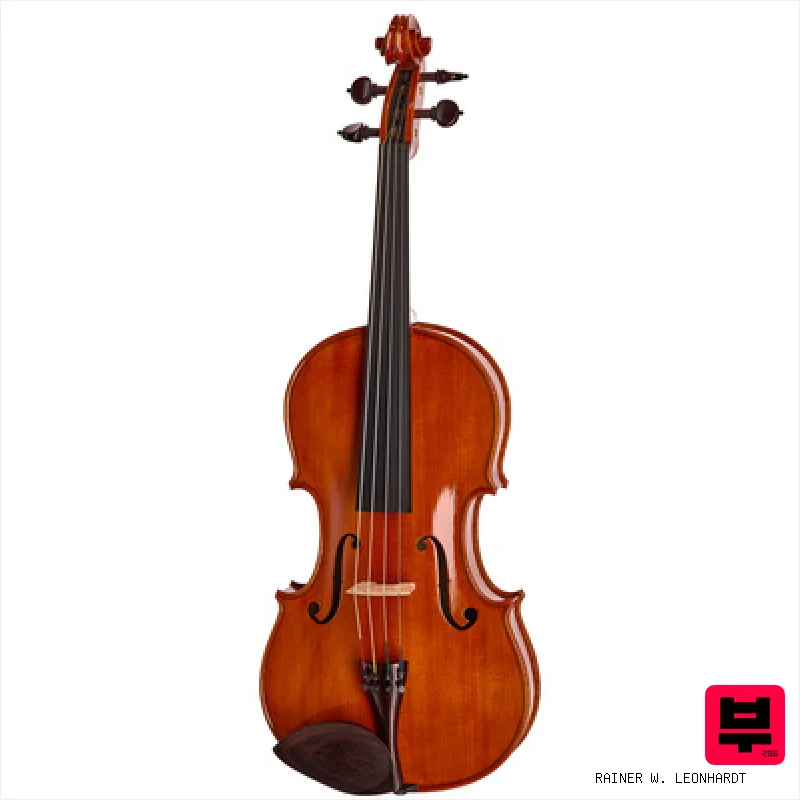
The Gewa Georg Walther GYA is a solid, beautifully crafted instrument perfect for serious students and advancing players. It offers a mature, warm tone with good projection and a comfortable playing experience—a real step up without the premium price tag of a master luthier’s creation.
Pros
- Hand-selected European tonewoods yield a rich, resonant tone.
- Antique varnish adds character and subtly enhances projection.
- Ebony fittings provide excellent response and a refined feel.
Cons
- The varnish, while beautiful, can be a little fragile and requires careful handling.
- The sound, while excellent, might lack the absolute top-end brilliance of truly exceptional instruments.
54AudioFu
IndexStableno change since Aug 14Aug 14$1,670 now$1,670€1,490 at Thomann · in stockCheck price ↗ -
- FingerboardEbony fingerboard
- Size4/4 size
The Yamaha V20G is a seriously good student to intermediate violin. It offers a surprisingly mature tone for its class, thanks to the solid wood construction and careful detailing. It's a fantastic choice for dedicated students looking to step up from a beginner instrument or players wanting a reliable, well-made practice violin.
Pros
- Solid spruce top delivers a warm, responsive, and projecting tone.
- Hand-applied shaded oil finish enhances wood resonance and aesthetics.
- Boxwood fittings (pegs, chinrest, tailpiece) offer excellent stability and feel.
Cons
- The oil finish, while beautiful, requires more diligent cleaning than a lacquer finish.
- The included bow, while functional, is a basic model and likely needs upgrading for serious playing.
53AudioFu
Index↓ 14.8%since Aug 14 · lowest so far$1,933 · Aug 14$1,646 now$1,646€1,469 at Thomann · in stockCheck price ↗ -
- Size4/4 size
The Höfner H7-V is a fantastic entry point for serious students or players seeking a traditional acoustic violin with solid wood construction. It offers a surprisingly rich tone for its price range and provides a great foundation for developing technique. Ideal for intermediate players or those wanting a reliable, good-sounding violin without a premium-priced investment.
Pros
- Solid flamed maple construction delivers a warm, resonant tone.
- Hand-applied spirit varnish enhances the wood's natural beauty and responsiveness.
- Traditional design offers excellent projection and comfortable playability.
Cons
- The spirit varnish, while beautiful, can be susceptible to scratches and wear.
- The included bow is serviceable but a significant upgrade would improve tone.
48AudioFu
Index↓ 24.4%since Aug 14 · lowest so far$738 · Aug 14$558 now$558€498 at Thomann · in stockCheck price ↗ -
- Size4/4 size
This European violin feels solid thanks to its spruce top and flamed maple body. The dark brown varnish and ebony details give it a classic look. It suits players who want a sturdy, well-made instrument without extra accessories.
Pros
- Solid spruce top delivers bright attack and strong projection
- Flamed maple back and sides add warmth to the midrange
- Carved lion's head provides unique visual character
Cons
- No specific finish type mentioned beyond dark brown varnish
- Factory strings are generic Thomastik Dominants, not custom
47AudioFu
IndexStableno change since Aug 17Aug 17$1,118 now$1,118€998 at Thomann · in stockCheck price ↗ -
- Size4/4 size
This is a fully solid 4/4 violin with a striking lion head carving. The spruce top and flamed maple back give it a classic sound. It comes with ebony parts and four fine-adjusters for setup. This model suits players who want traditional craftsmanship without extra electronics.
Pros
- Beautiful carved lion head decoration
- Fully solid spruce top wood
- Flamed maple back and sides
Cons
- Heavy weight due to full solid wood
- No electronic pickups or amplification
47AudioFu
IndexStableno change since Sep 4Sep 4$1,118 now$1,118€998 at Thomann · in stockCheck price ↗ -
- Size4/4 size
The Yamaha V5 SC44 is a solid entry-level violin; it's well-made for the price point and offers a surprisingly pleasant sound. It’s a great choice for students or anyone just starting out, providing a reliable and affordable instrument to learn on without sacrificing too much in terms of playability.
Pros
- Solid spruce top delivers a surprisingly warm, responsive tone.
- Hand-carved top offers decent projection for its class.
- Ebony fingerboard provides a smooth playing experience, crucial for intonation.
Cons
- Oil-based finish can feel a bit thick and less refined than varnish.
- Included bow is serviceable but lacks the responsiveness of a higher-grade bow.
46AudioFu
Index↓ 6.7%since Aug 14 · lowest so far$503 · Aug 14$470 now$470€419 at Thomann · in stockCheck price ↗ -
- Size4/4 size
The Höfner H9-V is a solid entry-level violin, well-suited for students and hobbyists looking for a reliable instrument. The spruce top provides a clear, bright voice, and the flamed maple back adds a touch of sophistication. It’s a great starting point for anyone wanting to explore the world of acoustic violins without a premium-priced investment.
Pros
- Solid spruce top delivers a bright, responsive tone.
- Flamed maple back and sides add warmth and complexity.
- Antique varnish enhances the wood's natural resonance and appearance.
Cons
- The antique varnish can be somewhat fragile and requires careful handling.
- The included bow is functional but not a premium-grade instrument.
45AudioFu
Index↓ 10.6%since Aug 14 · lowest so far$750 · Aug 14$670 now$670€598 at Thomann · in stockCheck price ↗ -
- Size4/4 size
The Stentor Arcadia Antik is a solid choice for intermediate students or players looking for a traditionally voiced violin without a premium price tag. The spruce top and maple back provide a good balance of warmth and projection, and the ebony fittings offer a nice feel. It’s a reliable instrument that’ll serve well for years of practice and performance.
Pros
- Solid spruce top delivers a surprisingly rich, resonant tone for the price.
- Heavily flamed maple back and sides add visual appeal and contribute to projection.
- Ebony fittings (pegs, fingerboard, chin rest) offer durability and a smooth playing experience.
Cons
- Antique finish, while attractive, can be prone to scratches and wear with regular use.
- The bow, while functional, is a basic model and might benefit from an upgrade for serious players.
45AudioFu
Index↓ 6.8%since Aug 14 · lowest so far$839 · Aug 14$782 now$782€698 at Thomann · in stockCheck price ↗ -
- Size4/4 size
This Gewa Pure violin set is a solid, budget-friendly option for students or anyone just starting out. The solid wood construction gives it a surprisingly mature tone, and the included accessories make it a complete package. It’s a great way to get a playable, decent-sounding instrument without a huge investment.
Pros
- Solid spruce top provides a surprisingly resonant and clear tone.
- Ebony fingerboard and pegs offer a smooth playing experience and stable tuning.
- The Massaranduba bow, while basic, is responsive for a beginner's bow.
Cons
- The dark red-brown varnish can appear a bit thick and less refined upon close inspection.
- The Massaranduba bow, while adequate, won't offer the responsiveness of a higher-grade bow.
44AudioFu
IndexStableno change since Aug 14Aug 14$262 now$262€234 at Thomann · in stockCheck price ↗
All 115 acoustic violins
Same index, same nightly prices — compact. Colour options of one model share a row. Tap a photo to zoom.
- 11
Gewa Allegro Violin 4/4Gewa44Stable$279€249$279€249Check ↗
- 12
Gewa Ideale Violin 4/4Gewa44Stable$324€289$324€289Check ↗
- 13
Gewa 100th Anniversary Violin 4/4Gewa44Stable$391€349$391€349Check ↗
- 14
Gewa Maestro 1 Violin 4/4Gewa44Stable$425€379$425€379Check ↗
- 15
Gewa Maestro 2 Violin 4/4Gewa44Stable$503€449$503€449Check ↗
- 16
Gewa Maestro 6 Antiqued Violin 4/4Gewa44Stable$615€549$615€549Check ↗
- 17
Stentor SR1865 Violin Messina 4/4Stentor44↓ 4.9%$638€569$638€569Check ↗
- 18
Gewa Maestro 26 Stradivari ViolinGewa44Stable$738€659$738€659Check ↗
- 19
Gewa Maestro 26 Guarneri ViolinGewa44Stable$738€659$738€659Check ↗
- 20
Gewa Germania 11 Paris Ant. ViolinGewa44Stable$951€849$951€849Check ↗
- 21
Gewa Maestro 41 Guarneri ViolinGewa44Stable$985€879$985€879Check ↗
- 22
Gewa Maestro 41 Stradivari ViolinGewa44Stable$997€890$997€890Check ↗
- 23
Gewa Germania 11 Violin Rom 4/4Gewa44Stable$1,006€898$1,006€898Check ↗
- 24
Gewa Germania 11 Violin Berlin 4/4Gewa44Stable$1,006€898$1,006€898Check ↗
- 25
Gewa Germania 11 Prag Ant. ViolinGewa44Stable$1,006€898$1,006€898Check ↗
- 26
Gewa Maestro 46 Stradivari ViolinGewa44Stable$1,006€898$1,006€898Check ↗
- 27
Gewa Germania 11 Violin Paris 4/4Gewa44Stable$1,006€898$1,006€898Check ↗
- 28
Gewa Maestro 46 Guarneri ViolinGewa44Stable$1,006€898$1,006€898Check ↗
- 29
Gewa Germania 11 Berlin Ant. ViolinGewa44Stable$1,037€925$1,037€925Check ↗
- 30
Gewa Maestro 51 Stradivari ViolinGewa44Stable$1,118€998$1,118€998Check ↗
- 31
Gewa Maestro 51 Guarneri ViolinGewa44Stable$1,118€998$1,118€998Check ↗
- 32
Gewa Pure Violinset HW 4/4Gewa43↑ 2.6%$178€159$178€159Check ↗
- 33
Thomann Europe 5-String Violin 4/4Thomann43↑ 11.5%$436€389$436€389Check ↗
- 34
Thomann Europe 5-Str. Antiqued ViolinThomann43↑ 10.2%$615€549$615€549Check ↗
- 35
Stentor SR1875 Violin Elysia 4/4Stentor43↓ 2.7%$761€679$761€679Check ↗
- 36
Stentor SR1542 Violin Graduate 4/4Stentor42↓ 1.1%$301€269$301€269Check ↗
- 37
Franz Sandner Schönbach Violin Mod.101 4/4Franz Sandner42Stable$727€649$727€649Check ↗
- 38
Stentor SR1880 Violin Arcadia 4/4Stentor42↓ 1.3%$772€689$772€689Check ↗
- 39
Roth & Junius Europe Orchestra Violin St/EbRoth & Junius42Stable$839€749$839€749Check ↗
- 40
Roth & Junius Europe Orchestra Violin Gu/EbRoth & Junius42Stable$839€749$839€749Check ↗
- 41
Roth & Junius Europe Orchestra Violin St/BwRoth & Junius42Stable$862€769$862€769Check ↗
- 42
Roth & Junius Europe Orchestra Violin Gu/BwRoth & Junius42Stable$862€769$862€769Check ↗
- 43
Roth & Junius Stroh Violin New Edition 4/4Roth & Junius42Stable$951€849$951€849Check ↗
- 44
Eastman Andreas Eastman Violin VL405Eastman · 2 finishes42Stable$1,053€940$1,053€940Check ↗
- 45
Roth & Junius Bird`s Eye Maple Violin St/ERoth & Junius42Stable$1,118€998$1,118€998Check ↗
- 46
Roth & Junius Bird`s Eye Maple Violin Gu/ERoth & Junius42Stable$1,118€998$1,118€998Check ↗
- 47
Stentor SR1018 Violinset 4/4Stentor41Stable$167€149$167€149Check ↗
- 48
Stentor SR1550 Conservatoire 4/4Stentor41↑ 0.8%$446€398$446€398Check ↗
- 49
Thomann Classic Violinset 4/4Thomann40Stable$167€149$167€149Check ↗
- 50
Karl Höfner H11-V Violin 4/4Karl Höfner40Stable$894€798$894€798Check ↗
- 51
Karl Höfner H68HV-V Violin 4/4Karl Höfner40Stable$1,063€949$1,063€949Check ↗
- 52
Conrad Götz Signature Menuett 98 ViolinConrad Götz40↑ 5.8%$1,065€950$1,065€950Check ↗
- 53
Karl Höfner H216 AS Violin 4/4Karl Höfner40Stable$1,446€1,290$1,446€1,290Check ↗
- 54
Franz Sandner Francesca Orchestra Violin 4/4Franz Sandner40↑ 3.9%$1,455€1,298$1,455€1,298Check ↗
- 55
Stentor SR1400 Violinset 4/4Stentor39↑ 5.9%$201€179$201€179Check ↗
- 56
Yamaha V3-SKA 4/4 ViolinsetYamaha39Stable$380€339$380€339Check ↗
- 57
Stentor SR1864 Verona Violin 4/4Stentor39↑ 5.8%$670€598$670€598Check ↗
- 58
Franz Sandner Schönbach Violin Mod.107 4/4Franz Sandner39↑ 6.4%$951€849$951€849Check ↗
- 59
Franz Sandner Schönbach Violin Mod.104 4/4Franz Sandner38↑ 8.7%$839€749$839€749Check ↗
- 60
Yamaha V7 SG44 Violin 4/4Yamaha38↑ 2.4%$894€798$894€798Check ↗
- 61
Eastman Albert Nebel Violin VL601G+Eastman38Stable$1,334€1,190$1,334€1,190Check ↗
- 62
Franz Sandner The Old Imitation No.1Franz Sandner38↑ 8.4%$1,455€1,298$1,455€1,298Check ↗
- 63
Conrad Götz Heritage Contempor. 115 ViolinConrad Götz38↑ 10.5%$1,670€1,490$1,670€1,490Check ↗
- 64
Gewa Allegro Violin Set 4/4 SC MBGewa · 4 finishes37Stable$357€319$357€319Check ↗
- 65
Gewa Ideale Violin Set 4/4 SC MBGewa · 4 finishes37↓ 2.7%$402€359$402€359Check ↗
- 66
Conrad Götz Heritage Antique 108 ViolinConrad Götz37↑ 12.3%$1,118€998$1,118€998Check ↗
- 67
Conrad Götz Signature Antique 108 ViolinConrad Götz37↑ 12.8%$1,199€1,070$1,199€1,070Check ↗
- 68
Franz Sandner Black Lady Violin 4/4Franz Sandner37↑ 9.5%$1,288€1,149$1,288€1,149Check ↗
- 69
Franz Sandner Jubilee Orchestra Violin 4/4Franz Sandner37↑ 10.4%$1,545€1,379$1,545€1,379Check ↗
- 70
Conrad Götz Heritage Cantonate 115 ViolinConrad Götz37↑ 13.6%$1,961€1,750$1,961€1,750Check ↗
- 71
Thomann Classic Concerto Violin 4/4Thomann36↑ 8.7%$279€249$279€249Check ↗
- 72
Roth & Junius Europe Orchestra Violin Set SERoth & Junius · 4 finishes36Stable$894€798$894€798Check ↗
- 73
Conrad Götz Heritage Menuett 93 ViolinConrad Götz36↑ 15.1%$940€839$940€839Check ↗
- 74
Conrad Götz Heritage Bohemia 108 ViolinConrad Götz36↑ 15.1%$1,545€1,379$1,545€1,379Check ↗
- 75
Conrad Götz Signature Bohemia 108 ViolinConrad Götz36↑ 14.8%$1,670€1,490$1,670€1,490Check ↗
- 76
Conrad Götz Signature Metropol 115 ViolinConrad Götz36↑ 14.8%$1,670€1,490$1,670€1,490Check ↗
- 77
Conrad Götz Heritage Menuett 98 ViolinConrad Götz35↑ 19.2%$974€869$974€869Check ↗
- 78
Conrad Götz Heritage Audition 98 ViolinConrad Götz35↑ 20.4%$1,118€998$1,118€998Check ↗
- 79
Conrad Götz Signature Audition 98 ViolinConrad Götz35↑ 21.4%$1,221€1,090$1,221€1,090Check ↗
- 80
Thomann Skulls Violin Set 4/4Thomann29Stable$145€129$145€129Check ↗
- 81
Roth & Junius Preludio 01 Violin Set 4/4 EBRoth & Junius · 2 finishes28Stable$313€279$313€279Check ↗
- 82
Roth & Junius Preludio 02 Violin Set 4/4 EBRoth & Junius · 2 finishes28Stable$334€298$334€298Check ↗
- 83
Hidersine Venezia Finetune Viol. Set 4/4Hidersine28↓ 11.0%$727€649$727€649Check ↗
- 84
Hidersine Melodioso Violin Set GuarneriHidersine28↓ 12.6%$1,558€1,390$1,558€1,390Check ↗
- 85
Alfred Stingl by Höfner AS-170-V Violin Set 4/4Alfred Stingl by Höfner27↓ 20.5%$222€198$222€198Check ↗
- 86
Hidersine Espressione Violin Set Strad.Hidersine27↓ 9.2%$996€889$996€889Check ↗
- 87
Franz Sandner 601 Violin Set 4/4Franz Sandner27↑ 9.1%$1,342€1,198$1,342€1,198Check ↗
- 88
Thomann Red Rose Violin Set 4/4Thomann26↓ 6.7%$156€139$156€139Check ↗
- 89
Hamaril Violin Set 1A 4/4Hamaril26Stable$189€169$189€169Check ↗
- 90
Gewa Sonata Violin Set SC / MB 4/4Gewa26Stable$503€449$503€449Check ↗
- 91
Gewa Sonata Violin Set SC / CB 4/4Gewa26Stable$526€469$526€469Check ↗
- 92
Gewa Sonata Violin Set OC / MB 4/4Gewa26Stable$558€498$558€498Check ↗
- 93
Gewa Sonata Violin Set OC / CB 4/4Gewa26Stable$582€519$582€519Check ↗
- 94
Gewa Maestro 1 Violin Set 4/4 OC CBGewa26Stable$750€669$750€669Check ↗
- 95
Hidersine Edwin Whitmarsh Violin Set 4/4Hidersine26↓ 5.9%$1,052€939$1,052€939Check ↗
- 96
Roth & Junius Estudio Violin Set 4/4Roth & Junius25Stable$245€219$245€219Check ↗
- 97
Hidersine Vivente Violin Set 4/4Hidersine25Stable$290€259$290€259Check ↗
- 98
Roth & Junius RJV-A Antiqued Violin Set 4/4Roth & Junius25Stable$334€298$334€298Check ↗
- 99
Hidersine Piacenza Violin Set 4/4Hidersine25Stable$402€359$402€359Check ↗
- 100
Hidersine Venezia Antiqued Viol. Set 4/4Hidersine25Stable$558€498$558€498Check ↗
- 101
Hidersine Veracini Finetune Violin SetHidersine25↑ 0.6%$600€535$600€535Check ↗
- 102
Hidersine Veracini Violin Set 4/4Hidersine25Stable$670€598$670€598Check ↗
- 103
Hidersine Espressione Violin Set Guarn.Hidersine25Stable$1,063€949$1,063€949Check ↗
- 104
Hidersine Nobile Violin Set StradivariHidersine25Stable$1,534€1,369$1,534€1,369Check ↗
- 105
Hidersine Preciso Violin Set StradivariHidersine25Stable$1,782€1,590$1,782€1,590Check ↗
- 106
Thomann Black Rose Violin Set 4/4Thomann24Stable$156€139$156€139Check ↗
- 107
Thomann Black Fiber Violin Set 4/4Thomann24Stable$167€149$167€149Check ↗
- 108
Thomann Rainbow Violin Set 4/4Thomann24Stable$167€149$167€149Check ↗
- 109
Roth & Junius Europe Antiqued Violin Set 4/4Roth & Junius24↑ 4.7%$503€449$503€449Check ↗
- 110
Hidersine Uno Violin Set 4/4Hidersine23↑ 6.7%$178€159$178€159Check ↗
- 111
Artino European Wood Violin Set 4/4Artino23Stable$638€569$638€569Check ↗
- 112
Artino CFV-100F Carbon Violin Set 4/4Artino23Stable$1,883€1,680$1,883€1,680Check ↗
- 113
Artino VN-125 Premium Violin Set 4/4Artino22↑ 5.7%$414€369$414€369Check ↗
- 114
Alfred Stingl by Höfner AS-190-V Violin Set 4/4Alfred Stingl by Höfner22Stable$446€398$446€398Check ↗
- 115
Artino VN-155 Premium Violin Set 4/4Artino21↑ 8.2%$593€529$593€529Check ↗
Acoustic Violins by the numbers
Measured across all 138 models we track, not a sample.
Median $750 — half of all acoustic violins here cost less.
most common · 8 models
most common · 137 models
median of 5 models · 1.15 kg–2 kg
How to choose the best acoustic violins
Tone
It's the obvious one, but we're talking about clarity, sustain, and responsiveness. A good violin in this price range shouldn't sound muddy or boxy - you want some warmth, but also articulation so individual notes don't bleed into each other. Think focused, not just loud.
Setup & Playability
A poorly set-up violin is frustrating to play, period. We looked at action height (string distance from the fingerboard), neck profile, and overall ease of playing. A comfortable neck and a playable action make a huge difference, especially if you're practicing a lot.
Wood Quality & Construction
You're not getting exotic tonewoods here, but we looked for instruments where the spruce top and maple back/sides were reasonably well-selected and properly joined. Sloppy construction shows in the sound and longevity.
Varnish & Finish
The varnish impacts the tone and how the instrument ages. Thicker, cheaper varnishes can dampen the sound; we prioritized instruments with thinner, more resonant finishes, even if they're not the prettiest.
Overall Resonance & Projection
Does the violin project well? Can you hear it clearly in a room? This isn't just about volume, but about how the sound carries and fills the space. It's crucial for gigging or even playing with a small ensemble.
Buying guide
So, you're looking for a decent acoustic violin without dropping serious coin? It's a tricky spot to be in - a lot of student-grade stuff out there that'll sound...fine, but won't inspire you to really dig in. This list focuses on instruments that offer genuine improvement over the absolute bottom rung, giving you a violin that'll respond better, record cleaner, and just generally feel more rewarding to play. Let's find you something that doesn't sound like a violin factory reject.
At this budget, expect compromises. Solid wood tops are pretty standard, but the back and sides are often laminated, which will affect the low-end thump and sustain. Don't chase 'bright' - that often translates to harshness.
Listen for a balanced tone with decent sustain. A good setup from a luthier is almost essential - factor that into your budget; it's often worth more than the instrument itself.
How the AudioFu Index works
Five measured signals and nothing else — no stars from strangers, no “tested by experts” we didn’t do. The weights are fixed and public. We don’t play these instruments; we measure the market around them.
This chart covers 138 acoustic violins from the Thomann catalogue. Before you buy, read hands-on reviews and, where you can, play it. Full methodology.
AudioFu earns a commission when you buy through our Thomann links. It never changes the order — the index does.
- Demand40%
How many of this exact model are for sale on Reverb right now — what musicians actually buy and resell.
- Lineup20%
How many finishes Thomann stocks — makers expand the models that sell.
- Price15%
Where the price has moved since we started tracking in August.
- Specs15%
How completely the maker documents it.
- Maker10%
How deep the brand’s range is in this category.
Questions
What's the difference between a 'student' and 'intermediate' violin?
A student violin is usually built with less care, simpler construction, and a heavier setup. Intermediate models often have better wood, a more refined finish, and a more responsive feel - they'll generally offer a more nuanced tone and better projection.
Should I buy new or used?
Used can be a great value, but you need to know what you're looking for. A luthier's inspection is vital to check for cracks or repairs. New instruments offer a warranty and a clean slate, but you might pay a premium.
What about a pickup? Can I record this violin directly?
Many violins in this range don't come with pickups. You can record them with a contact microphone, but the results will likely be underwhelming. A dedicated violin pickup system is a separate investment, and the voicing of the pickup itself will impact the recorded tone.
How important is the bow?
Hugely important. A bad bow will make even a good violin sound terrible. Don't skimp on the bow - a decent fiberglass or carbon fiber bow will make a world of difference compared to the cheap bows often bundled with student instruments.
What's 'action' and why should I care?
Action refers to the string height above the fingerboard. High action makes the violin harder to play and can cause buzzing. Low action can lead to string rattle. A proper setup involves adjusting the action for optimal playability and tone.