
Best Wireless Microphones with Headset Microphone Under $300 2026
Alright, so you need a wireless headset mic for gigging, rehearsals, or maybe even streaming, but you're not looking to drop a grand. It's a common situation. Finding something that cuts through the mix, sounds decent, and doesn't explode after a few gigs under $300 is a challenge, but not impossible. We've sifted through the options to find the best bang-for-your-buck wireless headset mic systems in this price range.
Last updated: April 11, 2026
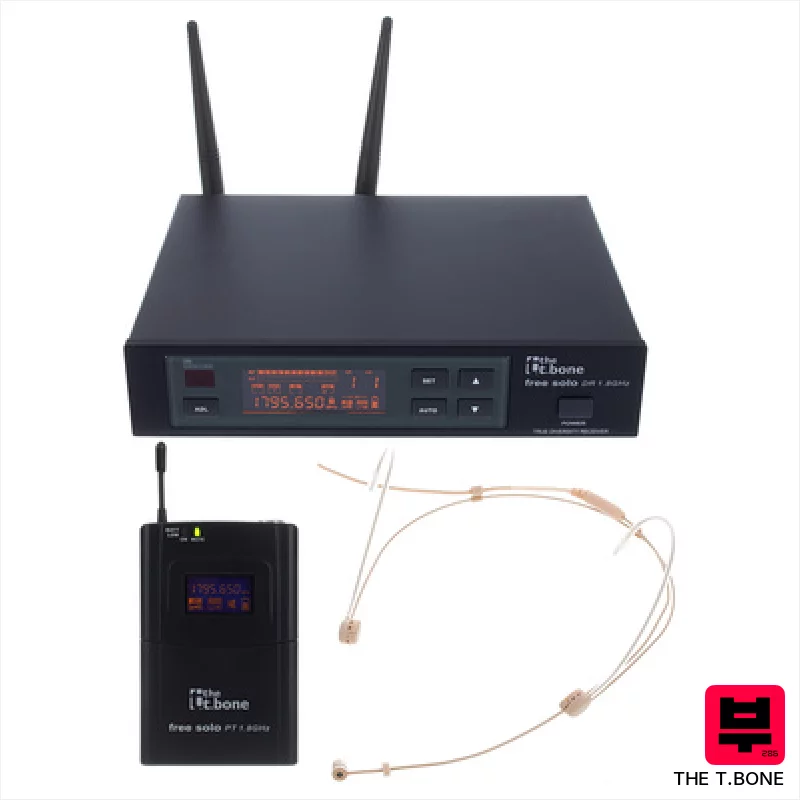
the t.bone free solo 1.8 HeadmikeD Bundle
- • 1.8 GHz band offers decent immunity to common interference.
- • Compact bodypack is surprisingly comfortable for extended use.
- • Infrared sync simplifies transmitter-receiver pairing, a real time-saver.
- • Multiple presets allow quick switching between different performers/sources.
- • Plastic bodypack feels a bit cheap compared to metal alternatives.
- • AA battery power is inconvenient; rechargeable pack a must-have.
- • Limited frequency range restricts channel availability in congested areas.
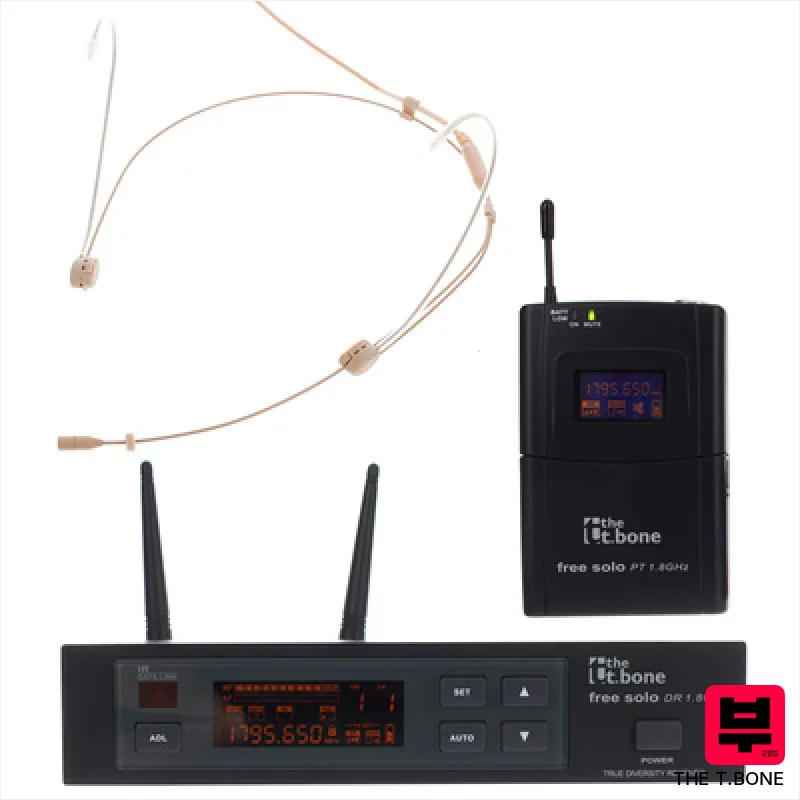
the t.bone free solo 1.8 HeadmikeO Bundle
- • 1.8 GHz band offers decent immunity to common RF interference.
- • Plastic bodypack is lightweight, crucial for extended wear.
- • Infrared sync simplifies pairing between transmitter and receiver.
- • Receiver’s adjustable squelch helps manage background noise effectively.
- • Plastic construction feels less robust than metal alternatives.
- • AA battery power is inconvenient; rechargeable pack is a must.
- • 1.8 GHz range is shorter than 2.4 GHz systems; line-of-sight critical.
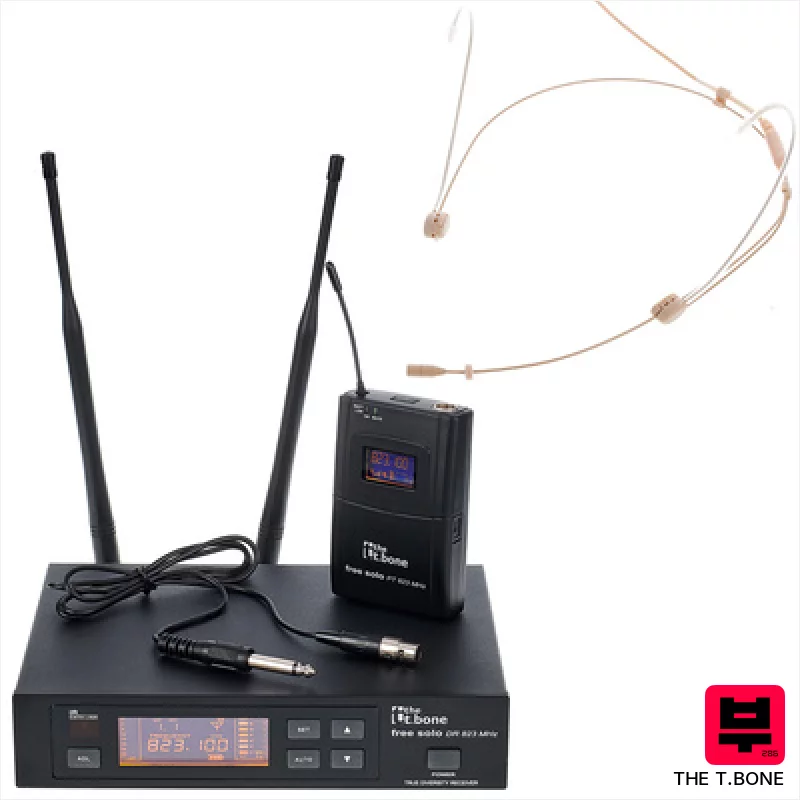
the t.bone free solo 823 HeadmikeO Bundle
- • Lightweight headset offers comfortable extended performance use.
- • Infrared sync simplifies channel matching between transmitter and receiver.
- • Plastic transmitter housing keeps the overall system surprisingly portable.
- • Multiple frequency groups provide flexibility in crowded RF environments.
- • Plastic transmitter feels noticeably less robust than metal alternatives.
- • AA battery operation adds ongoing expense and potential for mid-performance failure.
- • Limited frequency range restricts use in areas with heavy wireless congestion.
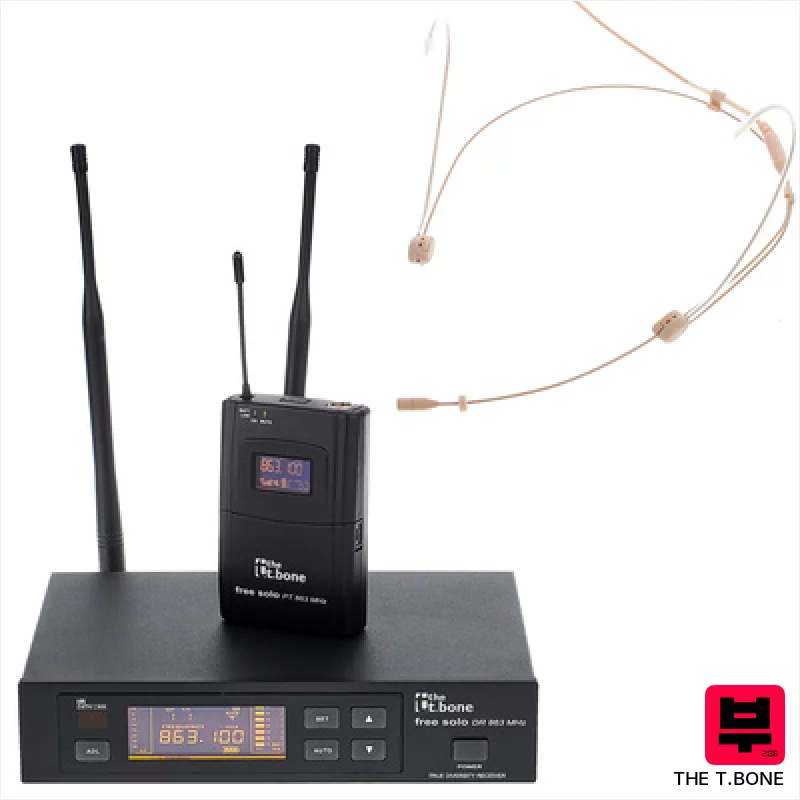
the t.bone free solo 863 HeadmikeO Bundle
- • Compact receiver housing simplifies setup and portability.
- • Infrared control minimizes interference and simplifies transmitter adjustments.
- • TQG connector offers secure and reliable headset mic connection.
- • 863-865 MHz band provides relatively clear frequency access in many regions.
- • Plastic transmitter casing feels less robust than metal alternatives.
- • AA battery operation limits runtime compared to rechargeable packs.
- • Limited channel selection might be restrictive in crowded RF environments.
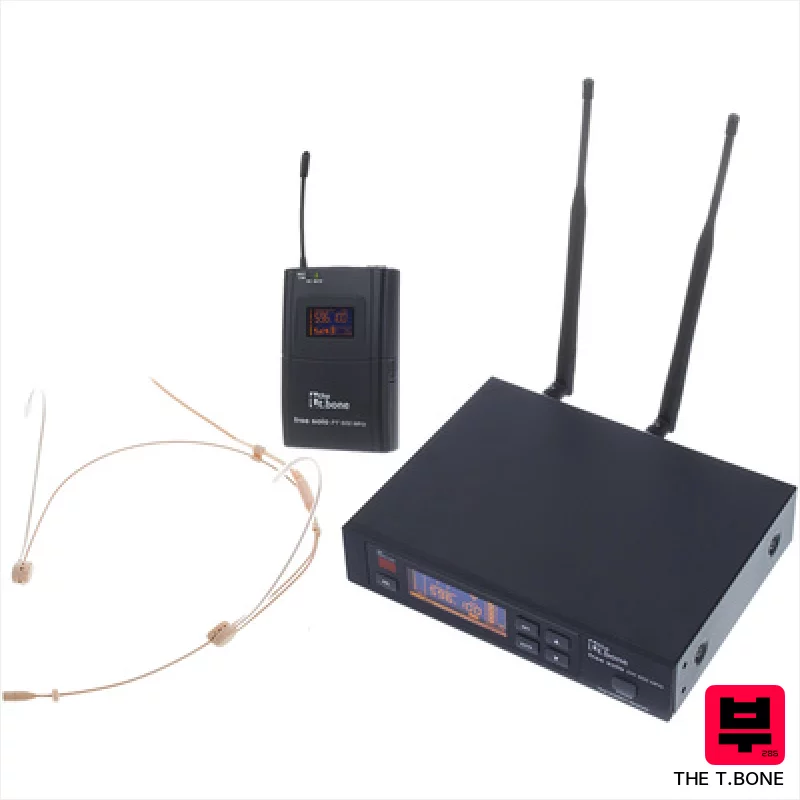
the t.bone free solo 600 HeadmikeO Bundle
- • Infrared sync simplifies setup and eliminates frequency drift issues.
- • Plastic transmitter housing keeps the unit surprisingly lightweight for extended use.
- • The 14 frequency groups offer good channel availability in most performance environments.
- • Adjustable transmission power allows for flexible range optimization.
- • Plastic transmitter housing feels less robust than metal alternatives, potentially impacting longevity.
- • AA battery power is less convenient than rechargeable internal packs.
- • The HeadmikeO capsule's sound quality is adequate, not exceptional, for critical recording.
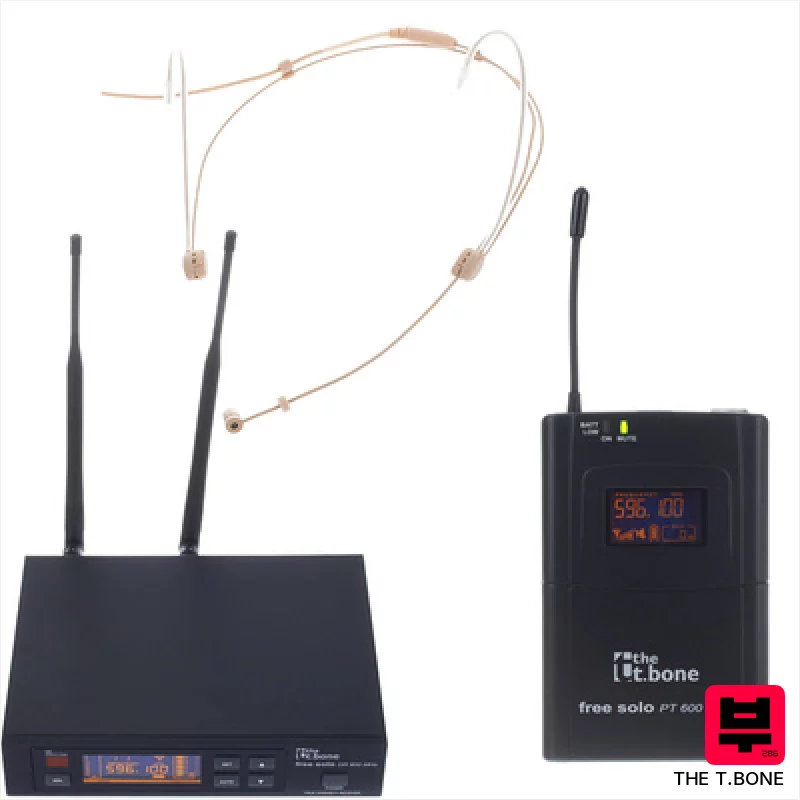
the t.bone free solo 600 HeadmikeD Bundle
- • Infrared sync simplifies setup and avoids frustrating frequency drift.
- • Plastic transmitter housing keeps the unit surprisingly lightweight for extended use.
- • The 14 frequency groups offer decent channel flexibility in moderately crowded environments.
- • Adjustable transmission power extends range and optimizes signal clarity.
- • The plastic transmitter feels a little flimsy compared to metal alternatives.
- • AA battery power is less convenient than a rechargeable internal pack.
- • Limited frequency band restricts use in areas with heavy RF congestion.
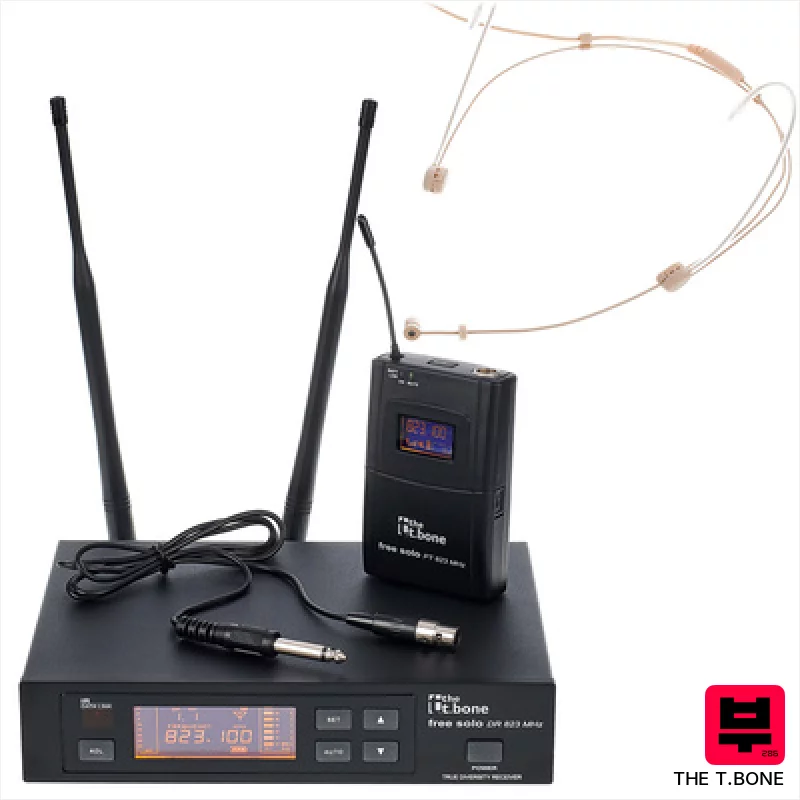
the t.bone free solo 823 HeadmikeD Bundle
- • Lightweight transmitter offers comfortable extended performance use.
- • Infrared sync simplifies channel matching, a genuine time-saver.
- • Dual BNC outputs allow for flexible antenna placement and improved signal.
- • Plastic transmitter housing keeps weight minimal, vital for headset use.
- • Plastic transmitter housing feels less robust than metal alternatives.
- • AA battery power is less convenient than integrated rechargeable packs.
- • Limited frequency range may encounter interference in crowded RF environments.
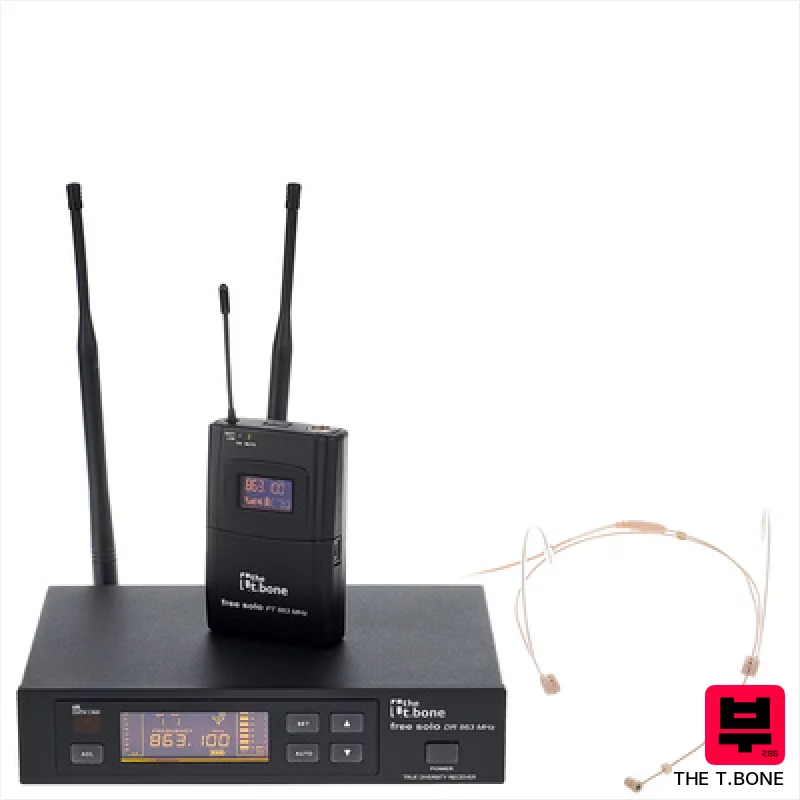
the t.bone free solo 863 HeadmikeD Bundle
- • Lightweight headset offers comfortable extended performance use
- • UHF frequency provides decent immunity to common interference
- • Rack-mountable receiver saves space in a live rig
- • Infrared control simplifies transmitter adjustments and battery management
- • Plastic transmitter casing feels somewhat fragile for heavy gigging
- • Limited channel count may present issues in crowded RF environments
- • Sound quality leans towards functional, not studio-grade clarity

the t.bone free solo 1.8 Headset Bundle
- • 1.8 GHz band offers cleaner signal, less interference than 2.4 GHz.
- • Compact bodypack is lightweight, comfortable for extended use.
- • Infrared sync simplifies setup, avoids tedious frequency adjustments.
- • Dual BNC outputs allow for increased coverage with external antennas.
- • Plastic bodypack feels less robust than metal alternatives.
- • AA battery power is less convenient than rechargeable internal packs.
- • 1.8 GHz range can be shorter than 2.4 GHz in some environments.
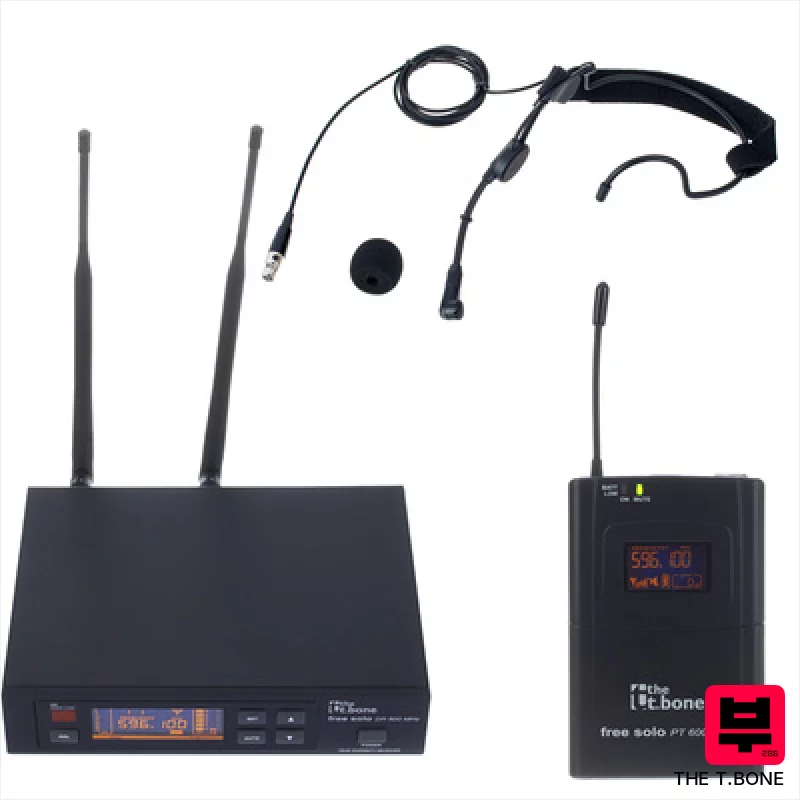
the t.bone free solo 600 Headset Bundle
- • Lightweight headset offers comfortable extended performance use.
- • Infrared sync simplifies channel matching, a real time-saver.
- • Plastic transmitter housing keeps the unit surprisingly lightweight.
- • 14 frequency groups provide decent flexibility in moderately crowded RF environments.
- • Plastic transmitter feels a bit flimsy compared to metal alternatives.
- • AA battery power isn't ideal; rechargeable packs are essential.
- • Limited range; best suited for smaller stages and rehearsals.
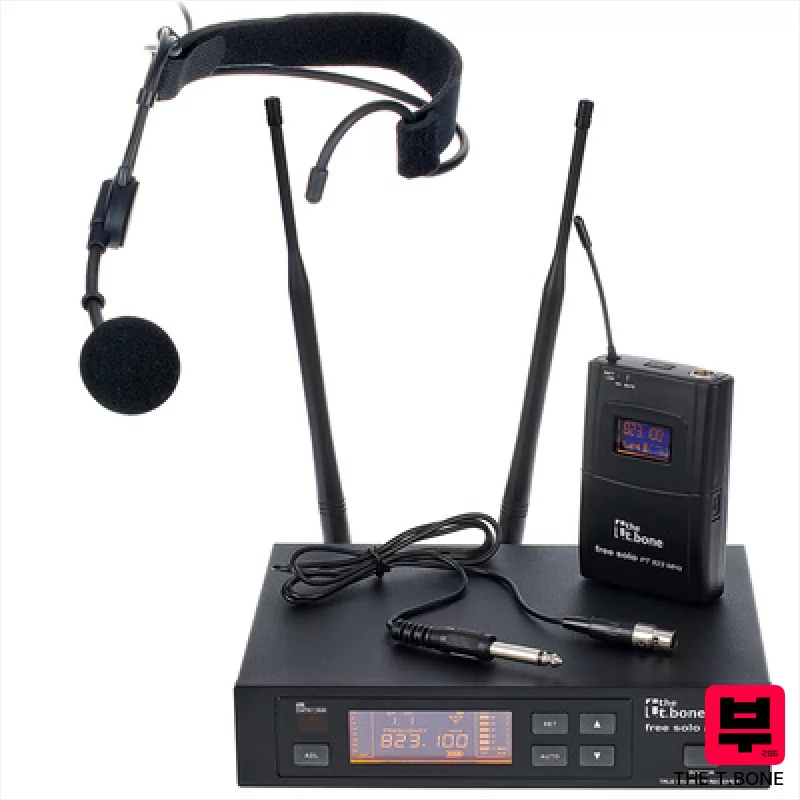
the t.bone free solo 823 Headset Bundle
- • Infrared sync simplifies setup, avoiding tedious manual adjustments.
- • UHF frequency band offers decent range and reduces interference potential.
- • Plastic transmitter housing keeps the unit lightweight for extended use.
- • Multiple channels provide flexibility in crowded wireless environments.
- • Plastic transmitter feels somewhat cheap compared to metal alternatives.
- • AA battery power demands can become costly and inconvenient.
- • Limited frequency range may experience issues in very dense RF environments.
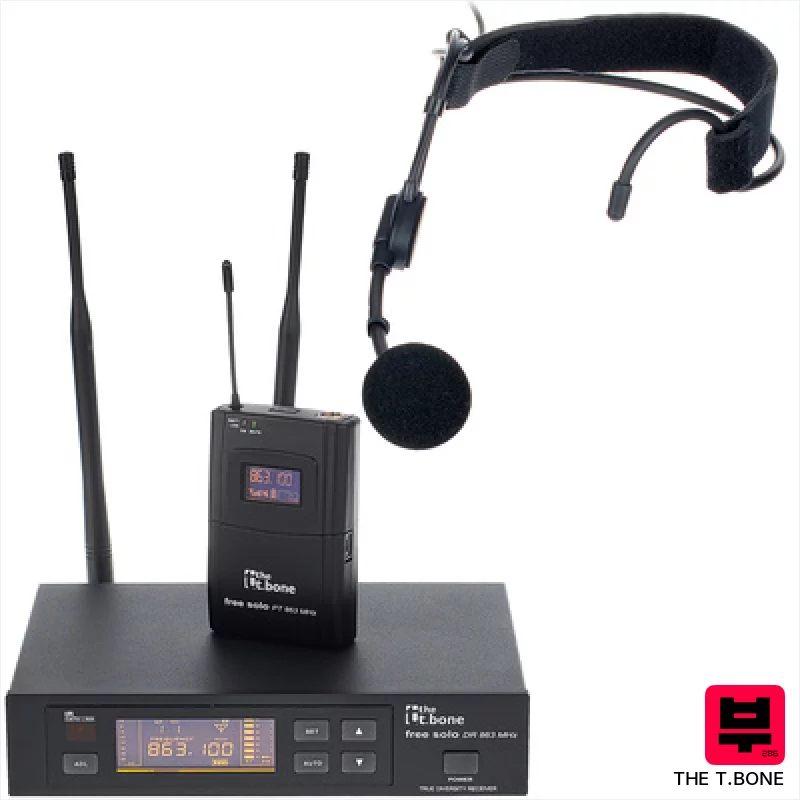
the t.bone free solo 863 Headset Bundle
- • Lightweight headset offers comfortable extended use for performers
- • UHF 863 MHz frequency provides reliable wireless operation
- • Rack-mountable receiver integrates well into existing setups
- • Pocket transmitter's LCD display simplifies frequency selection
- • Plastic transmitter casing feels somewhat fragile for demanding stage use
- • Limited channel selection compared to higher-end wireless systems
- • AA battery dependency can be inconvenient for long gigs
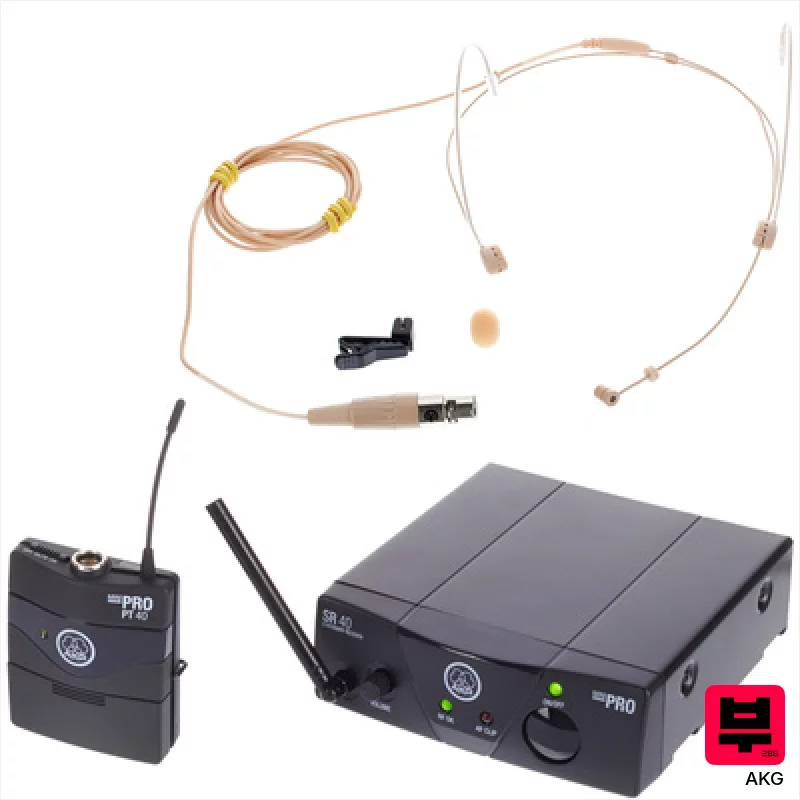
AKG WMS 40 Mini HeadmikeD ISM2 Set
- • Lightweight headset offers comfortable extended wear for performers
- • ISM2 band provides license-free operation across Europe simplifying setup
- • HDAP technology delivers surprisingly clean and detailed audio reproduction
- • Bodypack design allows for discreet instrument amplification on stage
- • Non-diversity receiver limits channel selection and potential for interference
- • Condenser mic is susceptible to wind noise and handling sounds
- • Limited frequency range might not suit all instrument types or advanced users
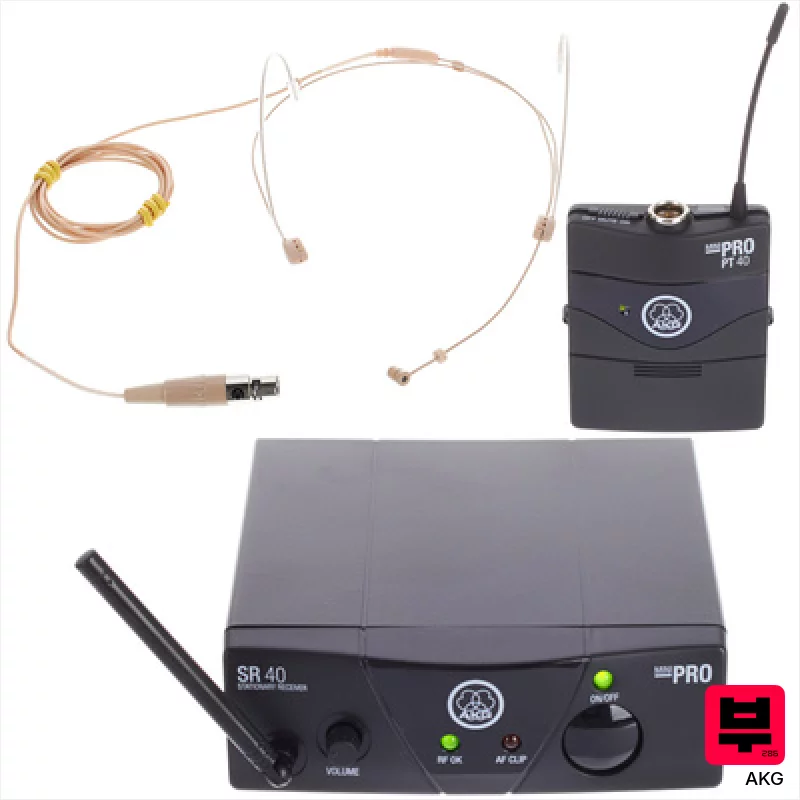
AKG WMS 40 Mini HeadmikeD ISM1 Set
- • Lightweight HeadmiKe offers comfortable extended wear during performance
- • HDAP technology delivers surprisingly clean, detailed audio reproduction
- • License-free ISM band operation simplifies setup and use
- • Bodypack transmitter's on/off/mute switch adds performance convenience
- • Non-diversity receiver limits channel selection and potential interference
- • Limited frequency range restricts compatibility with some effects pedals
- • Headset mic's kidney polar pattern picks up more ambient noise
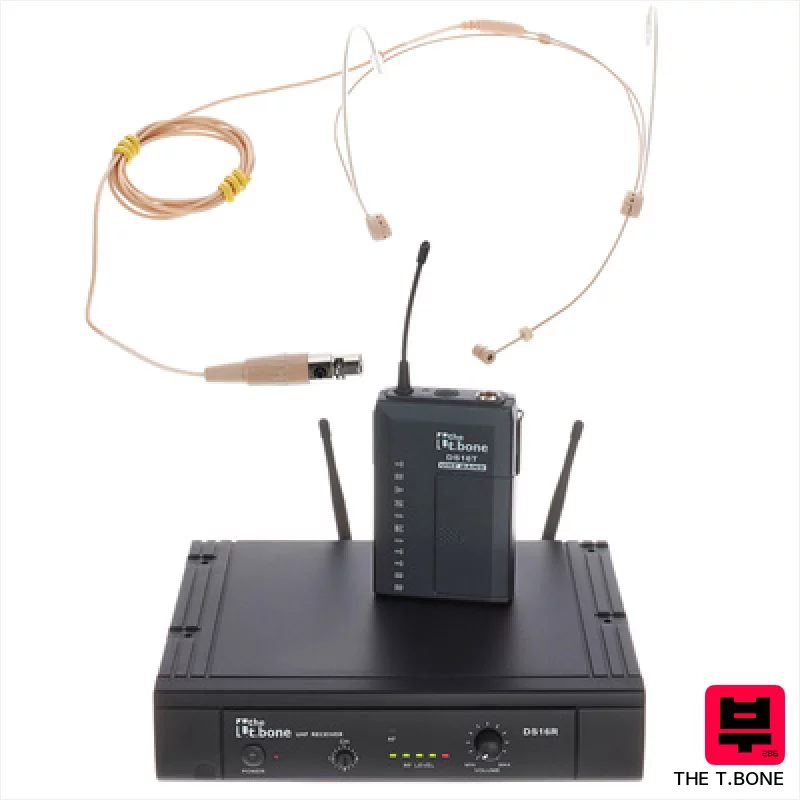
the t.bone TWS 16 HeadmiKeD 863 MHz Set
- • 863 MHz band offers license-free operation in many regions, simplifying setup.
- • Bodypack's AKG compatibility allows use with a wide range of existing accessories.
- • Diversity receiver minimizes interference, crucial for live performance environments.
- • Rack mountable design provides convenient integration into existing audio setups.
- • Condenser mic's sensitivity makes it susceptible to handling noise and stage feedback.
- • Limited frequency range might restrict clarity for some vocal styles.
- • Budget-friendly construction may not withstand heavy professional touring abuse.
How to Choose the Best Wireless Microphones with Headset Microphone
Sound Quality
It's not going to be a Neumann, but you want something that doesn't sound like you're talking through a tin can. We're looking for decent articulation and a frequency response that doesn't muddy the low-mids or sound brittle in the highs.
Wireless Range & Reliability
Dropped signal mid-song is a career killer. We tested range in crowded environments to see how well these systems handle interference - crucial for bands with multiple wireless devices.
Build Quality & Durability
Gigs are rough. Cheap plastic and flimsy capsules won't last. We looked for systems that feel reasonably solid and can take a beating (or at least a few accidental drops).
Ease of Use
Complex menus and finicky setups are a nightmare when you're already stressed about soundcheck. Simple controls and a straightforward pairing process are a huge plus.
Microphone Capsule Type & Polar Pattern
Cardioid is generally what you want - it rejects sound from the sides and back, minimizing feedback and focusing on your voice. Some offer dynamic capsules for more gain before feedback, others condenser for a more detailed, 'airy' sound - a trade-off to consider.
Buying Guide
At this price point, you're making trade-offs. Don't expect pristine audio or rock-solid reliability like you'd get with a Shure or Sennheiser pro system. You'll likely encounter some hiss or limited dynamic range, and range can be affected by interference. Prioritize a system with a decent capsule and a cardioid pattern; those are the areas where you'll hear the biggest difference. Check the frequency response - avoid anything that's heavily hyped in the midrange, as it will sound honky.
How This List Is Built
We don't play these instruments — we're a catalog, not a review desk, and we'd rather say so than pretend otherwise. This page ranks 15 wireless microphones with headset microphone from the Thomann catalogue, which is the largest single source of specification data in this category.
Position is computed, not curated. Four signals, in order of weight: how completely the manufacturer documents the instrument (number of published specifications), where it sits in the price range, how specific the model designation is — which filters out generic accessories — and whether a product image exists. The same inputs always produce the same order, so nothing here is shuffled to look fresh.
What this list is good for: narrowing a category down to a shortlist by spec and budget. What it isn't: a substitute for hearing an instrument. Before you buy, read hands-on reviews and, where you can, play it. Full methodology.

