
Best Wireless Microphones with Headset Microphone Under $1,000 2026
So, you need a wireless headset mic for vocals or brass, but your budget isn't bottomless? Been there. It's a tricky space - you want freedom on stage without sounding like you're using a tin can and string. Finding a reliable, decent-sounding wireless headset system under $1000 requires knowing what to prioritize and where to compromise, and that's what we're breaking down here.
Last updated: April 11, 2026
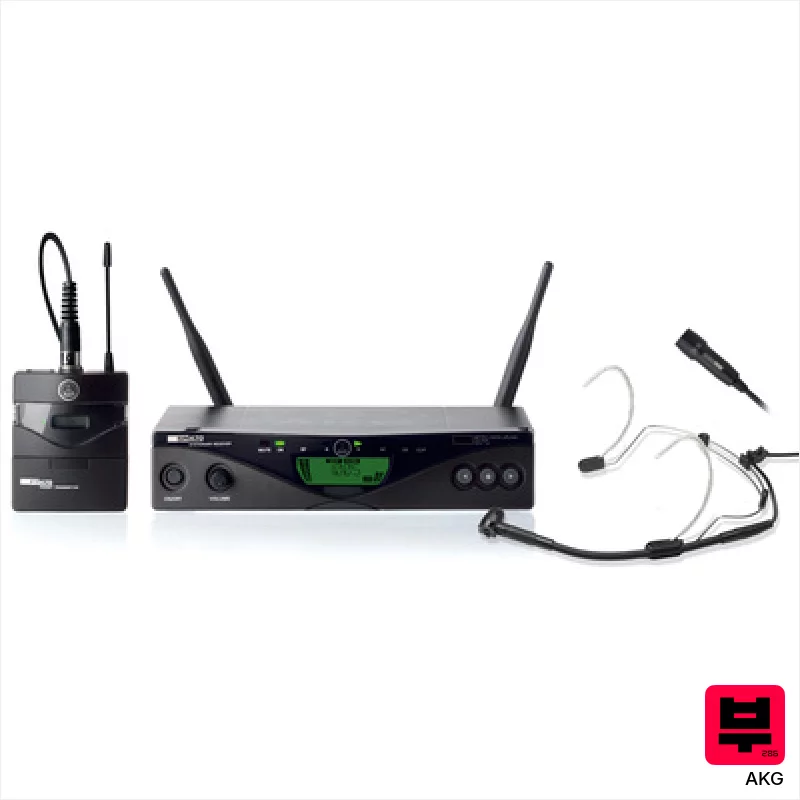
AKG WMS 470 Presenter Set Band 10
- • Robust metal receiver housing offers excellent durability for stage use
- • The included C555 L headset delivers clear, intelligible vocal reproduction
- • Infrared frequency transmission ensures reliable, interference-free operation
- • Auto setup and rehearsal mode simplify operation, even for less experienced users
- • Band 10 frequency range may face licensing restrictions in some regions
- • AA battery power is less convenient than a rechargeable internal pack
- • Presenter-focused design limits versatility for other performance scenarios
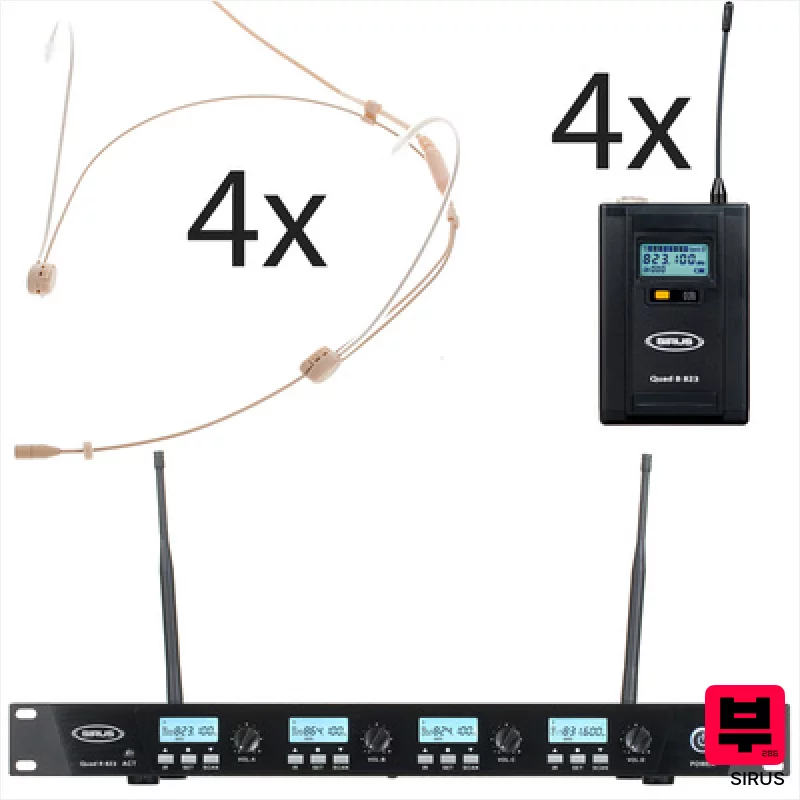
Sirus Quad R/4B 4 Headmike O 823 Set
- • Infrared settings sync simplifies channel management significantly.
- • Robust 19" rackmount receiver saves valuable stage space.
- • Wide 40-18kHz frequency range captures vocal nuances clearly.
- • Auto-squelch minimizes interference, ensuring reliable signal.
- • Limited frequency band might face congestion in densely populated areas.
- • Power supply dependency adds to potential failure points on stage.
- • Headmike design restricts movement compared to more flexible options.
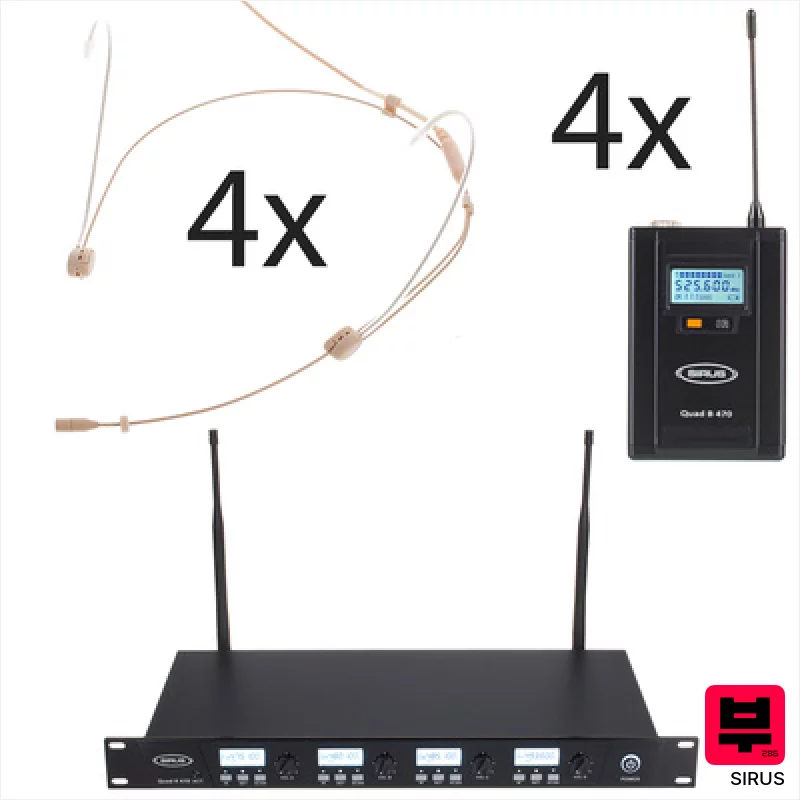
Sirus Quad R/4B 4 Headmike O 470 Set
- • Excellent frequency scan simplifies channel selection and avoids interference.
- • Infrared transmission streamlines setup across multiple channels quickly.
- • Robust 1U rackmount design ensures stability in professional environments.
- • High signal-to-noise ratio (>110dB) minimizes background noise for clear audio.
- • 470-526 MHz band may face regulatory limitations in some regions.
- • Limited frequency range (40 Hz - 18 kHz) might lack extreme low-end clarity.
- • Receiver's 12V DC power supply adds an external dependency.
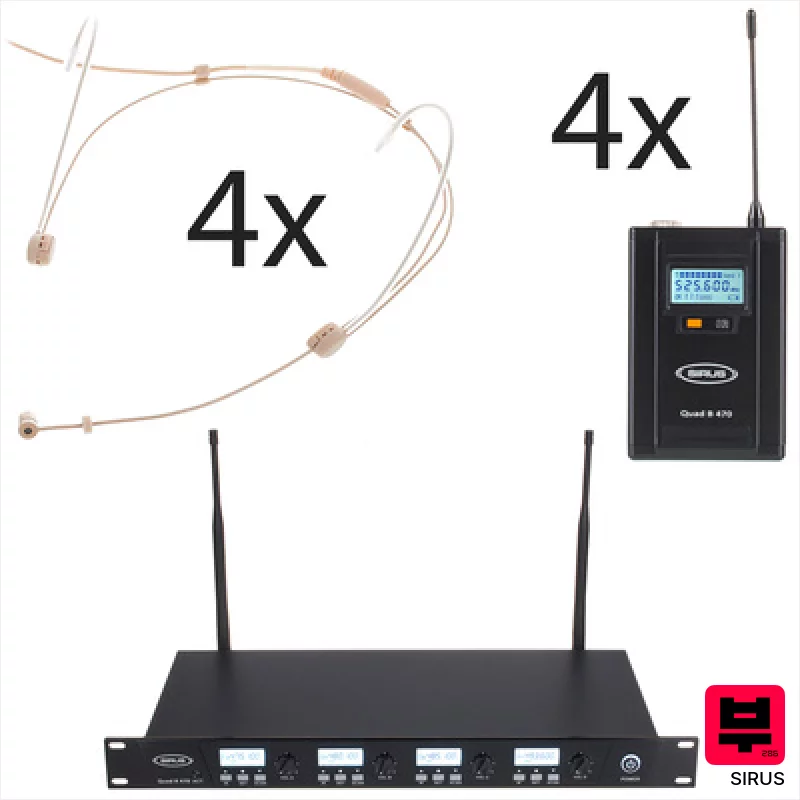
Sirus Quad R/4B 4 Headmike D 470 Set
- • Excellent frequency scan simplifies channel setup and avoids interference.
- • Infrared transmitter simplifies configuration across multiple channels.
- • Solid build quality for a reliable, road-ready wireless system.
- • Sum output provides convenient mono mixing for live or broadcast use.
- • Limited frequency range compared to broader UHF systems.
- • The 12V DC power supply adds an external dependency.
- • Headset mics are likely to be generic and may not offer premium audio quality.

Sirus Quad R/4B 4 Headmike D 823 Set
- • Solid build quality with robust 1U rack receiver.
- • Infrared sync simplifies channel management significantly.
- • Wide 40-18kHz frequency range captures nuanced vocals.
- • Detachable BNC antennas offer flexibility for optimal reception.
- • Limited frequency band allocation could pose interference issues.
- • Power supply dependency adds to potential failure points.
- • Headmike design may not suit all performers or applications.
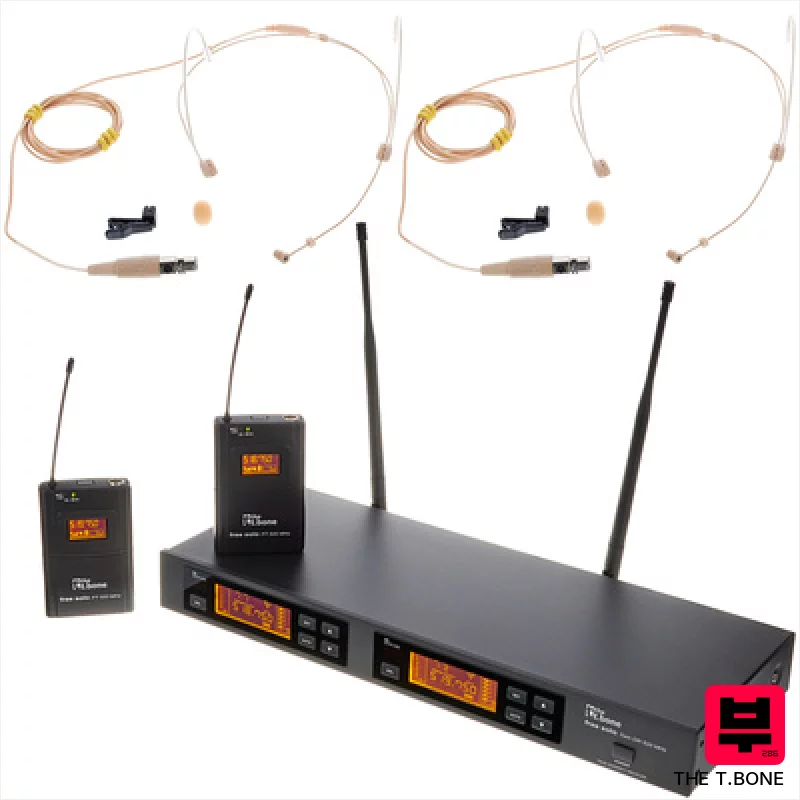
the t.bone free solo Twin PT520 HeadmiKeD
- • Robust plastic transmitter housing offers surprising durability for the price.
- • Infrared sync simplifies frequency matching, a real time-saver on stage.
- • Dual-channel operation allows for interviews or two vocalists.
- • Compact receiver fits easily into standard 1U rack space for portability.
- • The AA battery power requirement can be inconvenient for long gigs.
- • 518-536 MHz frequency band is increasingly congested in some areas.
- • Plastic transmitter housing, while durable, lacks the premium feel of metal.

the t.bone free solo Twin PT590 HeadmiKeD
- • Robust UHF system offers reliable performance on stage.
- • Pocket transmitters provide discreet and comfortable operation.
- • Infrared sync simplifies frequency matching between units.
- • Dual-channel design allows for two performers or instruments.
- • Plastic transmitter housing feels less premium than metal alternatives.
- • AA batteries introduce potential for mid-performance power issues.
- • Limited frequency band compared to broader UHF systems.
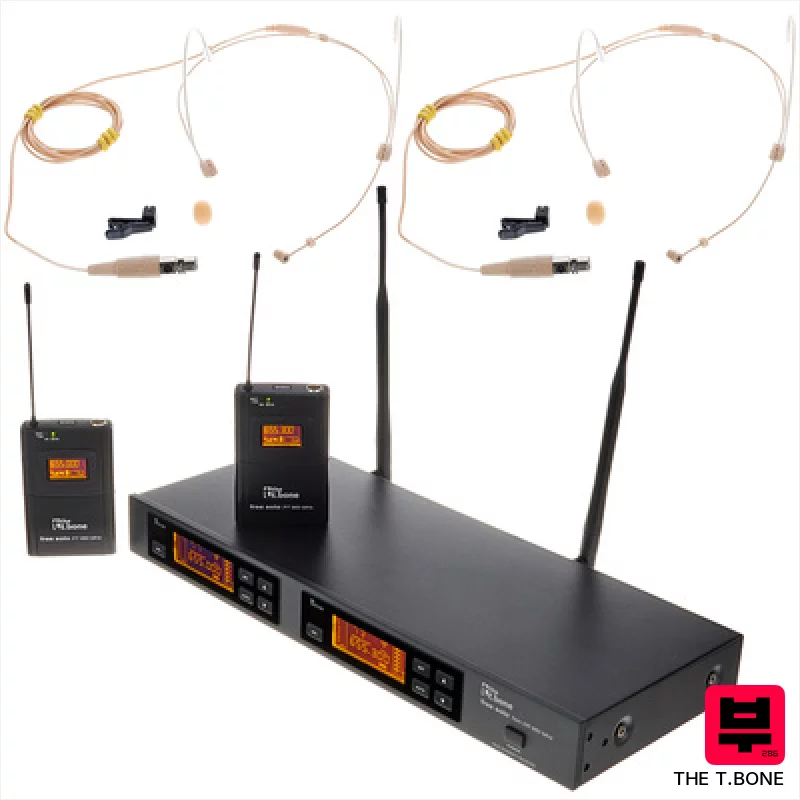
the t.bone free solo Twin PT660 HeadmiKeD
- • Plastic transmitter housing keeps the weight down for extended use.
- • Infrared settings transfer simplifies channel matching and setup.
- • Dual-channel system provides flexibility for interviews or duets.
- • BNC antenna outputs allow for increased range and signal clarity.
- • The AA battery power option limits operating time significantly.
- • Plastic transmitter housing feels less robust than metal alternatives.
- • Limited frequency band might encounter interference in densely populated areas.
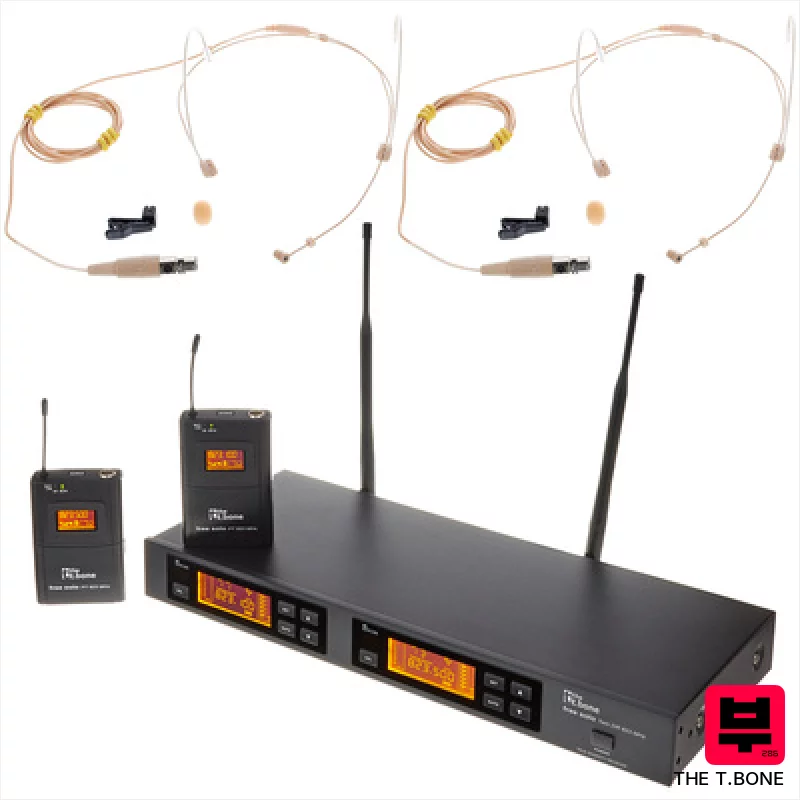
the t.bone free solo Twin PT823 HeadmiKeD
- • Plastic transmitter housing keeps the weight down for extended wear
- • Infrared sync simplifies frequency matching – a real time saver
- • Dual-channel system offers flexibility for interviews or duos
- • BNC antenna outputs allow for expanded range and signal clarity
- • 823-832 MHz band is susceptible to interference in crowded RF environments
- • Plastic transmitter construction feels somewhat less robust than metal alternatives
- • Limited frequency groups restrict channel availability in dense wireless environments
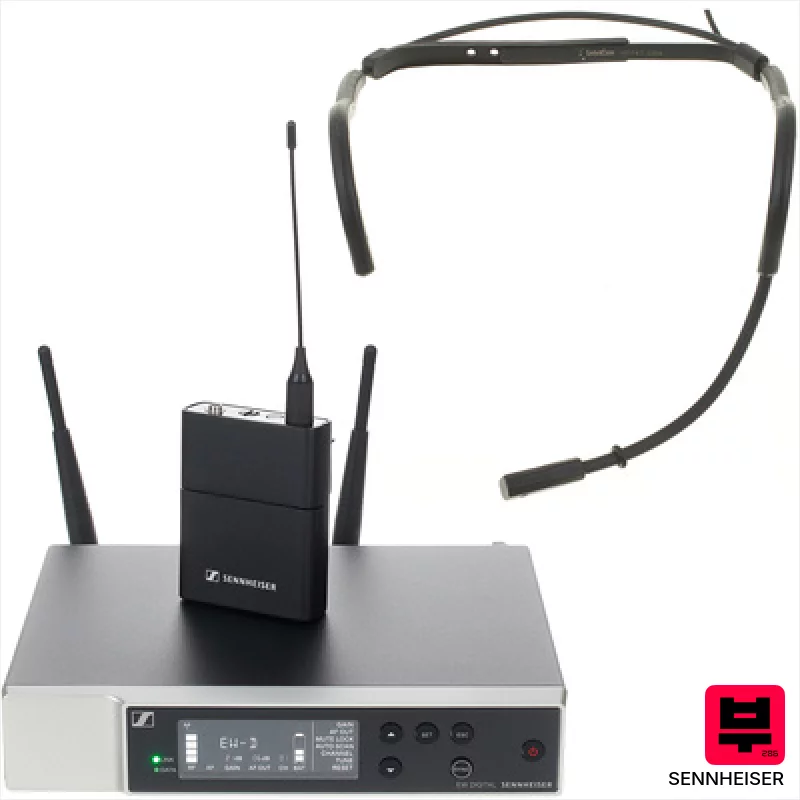
Sennheiser EW-D HT 747 BK Q1-6 Bundle
- • Digital clarity provides exceptionally clean audio with minimal interference.
- • The Intricon HT 747 headset offers a secure, comfortable fit for active performers.
- • SK base’s robust build quality and metal housing promise long-term reliability.
- • Smart Assist App allows for intuitive remote system management and configuration.
- • Frequency band limitations may require coordination in crowded RF environments.
- • The AA battery requirement can be inconvenient compared to rechargeable options.
- • The bundled cable is basic and might benefit from an upgrade for critical applications.
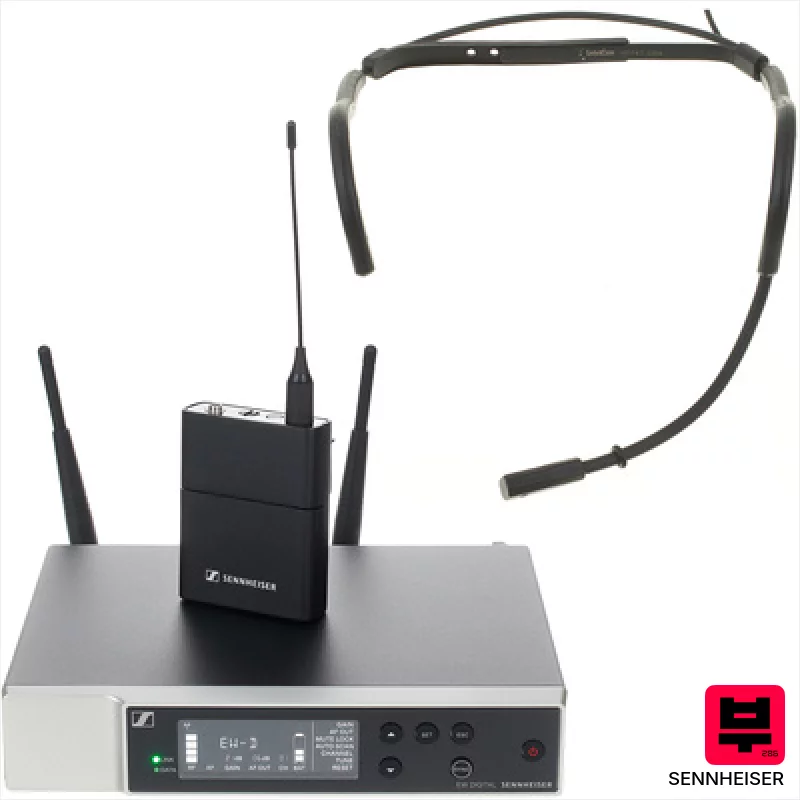
Sennheiser EW-D HT 747 BK S1-7 Bundle
- • Rock-solid build quality; feels like it'll withstand serious stage abuse.
- • Digital clarity ensures clean, interference-free audio transmission.
- • The Intricon HT 747 headset is lightweight and comfortable for extended use.
- • Smart Assist App simplifies complex wireless system management.
- • The AA battery requirement can be inconvenient for long gigs.
- • The 56MHz bandwidth, while decent, might feel restrictive in crowded RF environments.
- • The guitar cable isn't included, adding to the overall investment.
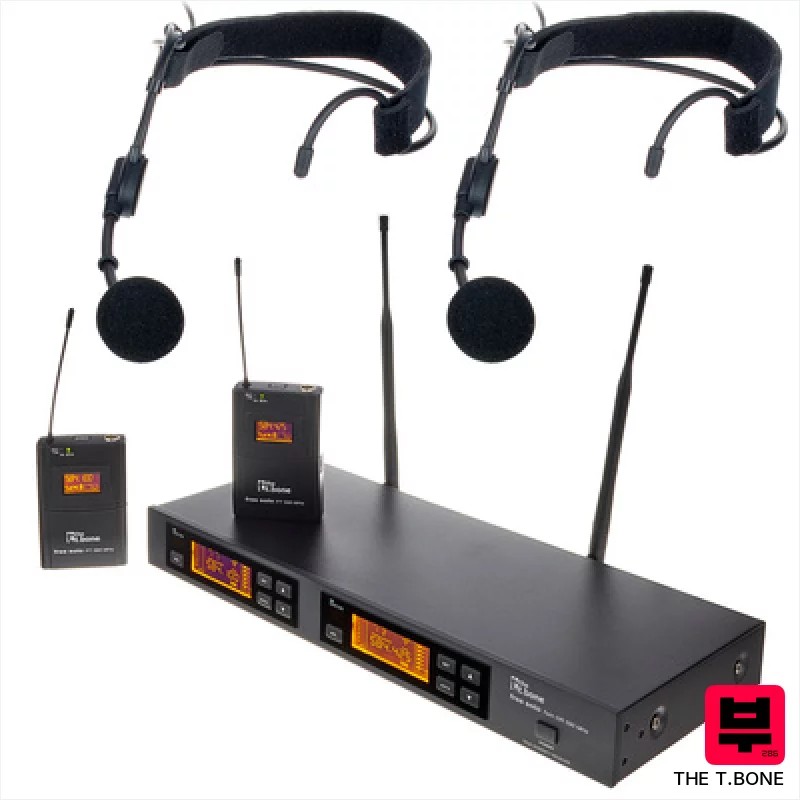
the t.bone free solo Twin PT 520 Headset
- • Plastic housing keeps transmitters lightweight for extended wear
- • Infrared sync simplifies frequency matching, a real time-saver
- • Dual-channel operation allows for interviews or duets
- • Compact receiver fits easily into a standard 1U rack space
- • Plastic transmitters feel less robust than metal alternatives
- • AA batteries add to ongoing operating costs and weight
- • Limited frequency range might encounter interference in dense RF environments
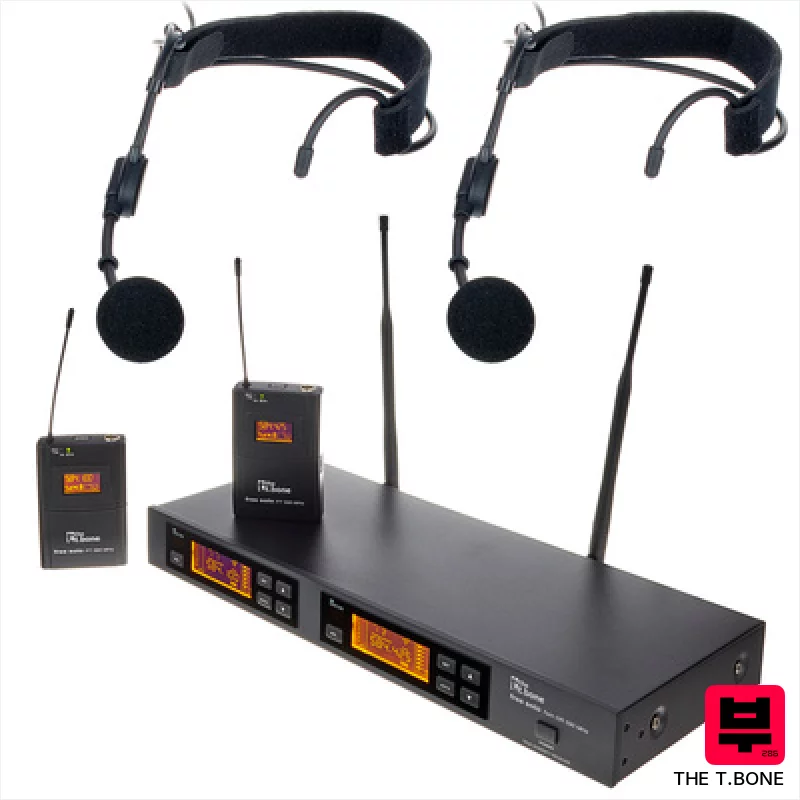
the t.bone free solo Twin PT 590 Headset
- • Dual-channel system offers flexibility for interviews or duets
- • Plastic transmitters are lightweight, reducing performer fatigue
- • Infrared sync simplifies frequency matching between receiver and transmitters
- • Compact receiver design with BNC antenna outputs for improved range
- • AA battery operation in transmitters can be inconvenient for long performances
- • Plastic transmitter housing feels less robust than metal alternatives
- • Limited frequency band might encounter interference in densely populated areas
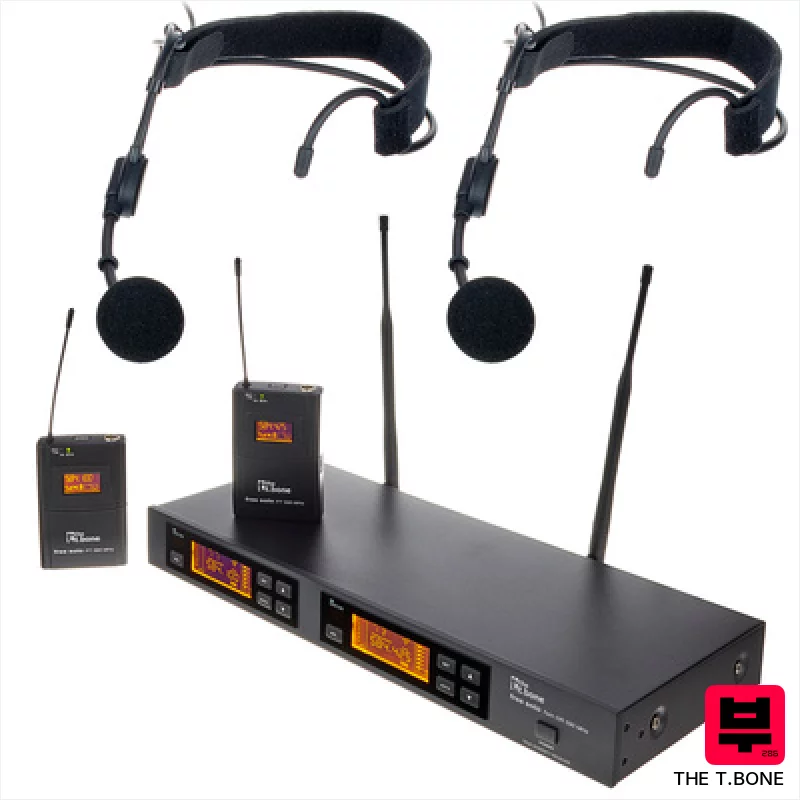
the t.bone free solo Twin PT 660 Headset
- • Solid UHF frequency range minimizes interference potential.
- • Infrared sync simplifies channel matching between receiver and transmitters.
- • Plastic transmitter housing keeps weight down for comfortable extended use.
- • Dual-channel system allows for two performers or monitoring.
- • Plastic transmitter housing lacks the premium feel of metal alternatives.
- • AA battery reliance can be costly and inconvenient for frequent use.
- • Limited frequency band compared to some higher-end wireless systems.
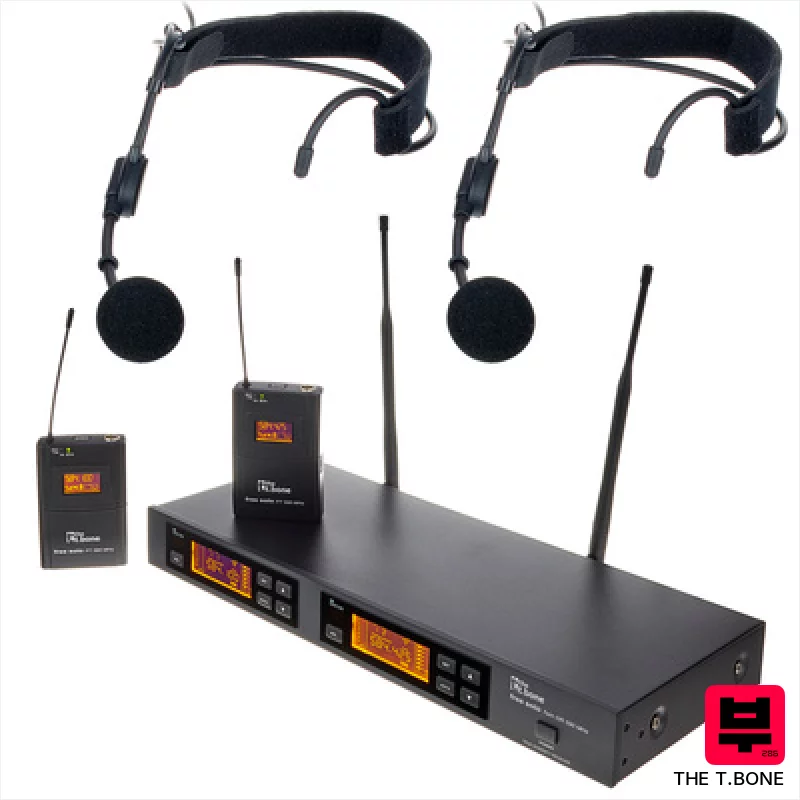
the t.bone free solo Twin PT 823 Headset
- • Plastic transmitter housing keeps the weight manageable for extended use
- • Infrared sync simplifies frequency matching, a real time-saver
- • Dual-channel system allows for two performers or monitoring
- • BNC antenna outputs provide flexibility for improved signal
- • 823-832 MHz frequency band might face interference in crowded RF environments
- • Plastic transmitter housing feels less premium than metal alternatives
- • Limited frequency groups necessitate careful channel selection in busy spaces
How to Choose the Best Wireless Microphones with Headset Microphone
Frequency Band
UHF is generally your best bet for avoiding interference, but licensing can be a headache. 2.4GHz systems are becoming more common, offering wider availability but potentially more interference from Wi-Fi. Consider your local environment.
Dynamic Range
This determines how much headroom you have before distortion kicks in. A wider dynamic range means you can handle louder vocals or instruments without clipping - crucial for gigging.
Microphone Capsule Quality
A cheap capsule will sound thin and lack body. Look for capsules that offer a natural vocal reproduction, not just a hyped-up sparkly top end. That 'ice-picky' harshness is a dead giveaway of a low-quality capsule.
Build Quality & Durability
Headset mics take a beating. Check for robust construction, comfortable earpieces (seriously, comfort matters during a long set), and a reliable clip for the transmitter. A flimsy system won't last.
Latency
Wireless systems introduce a tiny delay. Excessive latency can be distracting, especially for singers or brass players who need tight timing. Test this out if possible - even a few milliseconds can feel like an eternity.
Buying Guide
At this price point, you're making trade-offs. Don't expect broadcast-quality audio - these are for reliable performance on stage or in rehearsal. Battery life is often a compromise; expect to carry spares. Focus on finding a system with a solid build, a decent microphone capsule, and a frequency band that works well in your area. Spending a little more on a system with a wider dynamic range is almost always worth it.
How This List Is Built
We don't play these instruments — we're a catalog, not a review desk, and we'd rather say so than pretend otherwise. This page ranks 15 wireless microphones with headset microphone from the Thomann catalogue, which is the largest single source of specification data in this category.
Position is computed, not curated. Four signals, in order of weight: how completely the manufacturer documents the instrument (number of published specifications), where it sits in the price range, how specific the model designation is — which filters out generic accessories — and whether a product image exists. The same inputs always produce the same order, so nothing here is shuffled to look fresh.
What this list is good for: narrowing a category down to a shortlist by spec and budget. What it isn't: a substitute for hearing an instrument. Before you buy, read hands-on reviews and, where you can, play it. Full methodology.

