
Best the t.bone Wireless In-Ear Components 2026
Premium the t.bone wireless in-ear components - legendary tone and craftsmanship
Last updated: April 11, 2026

the t.bone IEM 150 R - 640 MHz
- • Surprisingly clear audio for the price point, considering the budget
- • Plastic build feels noticeably cheap, prone to scuffs

the t.bone IEM 75R Bodypack Receiver
- • Surprisingly clear audio for the price point, decent dynamic range
- • Lightweight and comfortable for extended stage use
- • Included EP3 earphones are surprisingly adequate for basic monitoring
- • Simple, straightforward operation – easy for beginners to grasp
- • Limited frequency band restricts channel availability in crowded RF environments
- • AA battery reliance is less convenient than rechargeable options
- • Build quality feels plasticky; not built to withstand heavy abuse

the t.bone IEM 200 R - 606 MHz
- • Solid build quality for the price point; feels surprisingly robust.
- • Switchable limiter protects against sudden volume spikes.
- • Balance control helps isolate individual ear pieces for clear monitoring.
- • Decent frequency response avoids overly colored or muddy sound.
- • 606 MHz band can be susceptible to interference in crowded RF environments.
- • Battery life is average; expect around 6-8 hours with alkaline cells.
- • Limited channel selection compared to higher-end wireless IEM systems.
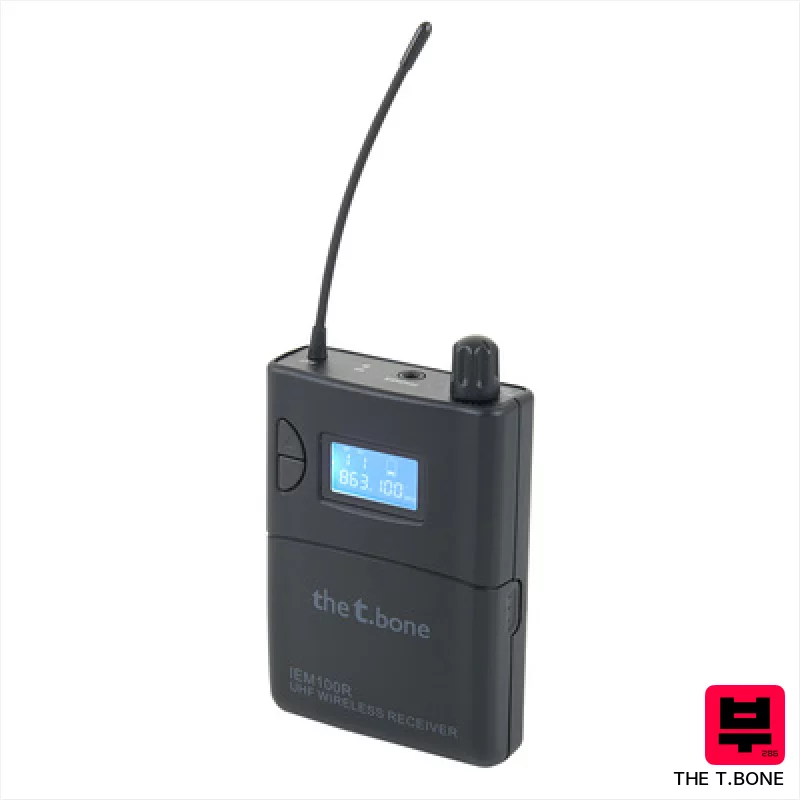
the t.bone IEM 100-R - 863 Mhz
- • Clean, clear audio reception; minimizes stage feedback issues.
- • Included t.bone EP 3 earphones offer surprisingly decent clarity.
- • Simple frequency switching is straightforward for quick setup.
- • Lightweight bodypack design enhances comfort during extended use.
- • 863 MHz band can be congested in areas with high RF interference.
- • Battery life is average; expect around 6-8 hours with AA cells.
- • Plastic construction feels budget-friendly, not particularly robust.
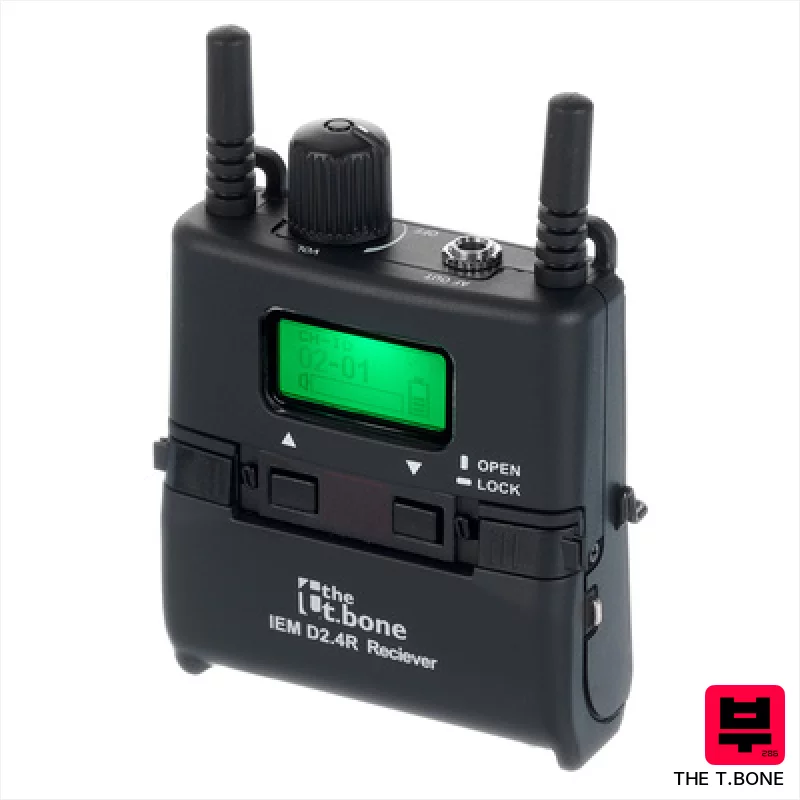
the t.bone IEM D2.4 R
- • True diversity reception minimizes dropouts in crowded RF environments
- • Integrated limiter prevents unexpected volume spikes, protecting your ears
- • Compact size and lightweight design (98g) offer comfortable stage wear
- • Solid build quality for a budget-friendly wireless IEM system
- • Battery life, while adequate, requires mindful management during longer gigs
- • 2.4GHz band can be susceptible to interference from other devices
- • Limited channel count compared to higher-end professional systems
Wireless In-Ear Components by the numbers
Measured across all 46 models in this category, so «wide», «short» or «expensive» mean something you can check.
How This List Is Built
We don't play these instruments — we're a catalog, not a review desk, and we'd rather say so than pretend otherwise. This page covers 5 of 46 wireless in-ear components from the Thomann catalogue, which is the largest single source of specification data in this category: 5 in detail, the rest listed with their specifications.
Position is computed, not curated. We parse the manufacturer's own description into actual values — nut width, scale, fret count, fingerboard radius, size, alloy — and rank on them: how many specifications a model has published, how many of them are measurable numbers, and how precisely it meets this page's criterion. A product image adds a little. Price is not a ranking signal: it tells you nothing about whether a neck fits your hand. The same inputs always produce the same order, so nothing here is shuffled to look fresh.
What this list is good for: narrowing a category down to a shortlist by spec and budget. What it isn't: a substitute for hearing an instrument. Before you buy, read hands-on reviews and, where you can, play it. Full methodology.
How to Choose the Best Wireless In-Ear Components
Budget Planning
- • Under $200: Entry-level
- • $200-$500: Intermediate
- • $500-$1000: Advanced
- • $1000+: Professional
Quality Check
- • Sound clarity & tone
- • Build materials & finish
- • Hardware durability
- • Overall craftsmanship
Key Features
- • Your musical style
- • Skill level match
- • Intended use case
- • Brand reputation

