
Best Wireless Conference Systems for Government 2026
Look, government meetings aren't exactly rock concerts, but clarity and reliability are just as crucial. You're dealing with folks who need to be heard, understood, and taken seriously - a muddy mic or dropouts during a critical statement are a disaster. We're talking about wireless conference systems here, and they need to be rock-solid, not just 'good enough'.
Last updated: July 8, 2026 • Next update: July 15, 2026
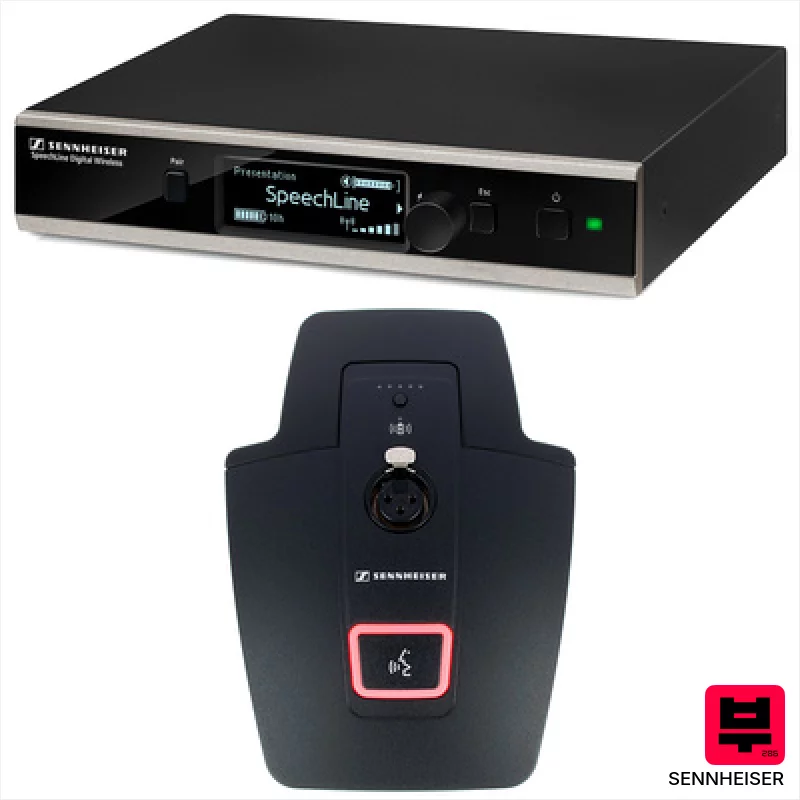
Sennheiser SL Tablestand & Receiver Set
- • Solid build quality; metal tripod feels substantial and stable.
- • 1.9 GHz digital transmission minimizes interference common in crowded RF spaces.
- • Sennheiser Cockpit Control offers granular remote monitoring and configuration.
- • Qi wireless charging adds convenience; battery life is genuinely impressive.
- • CHG2W charging base is a frustratingly separate purchase.
- • Limited frequency range restricts flexibility for complex multi-mic setups.
- • The 1.9 GHz band might have licensing/regulatory hurdles in some regions.

Sennheiser EW-DX 4CH Conference Set U1/5
- • Rock-solid build quality; the receiver feels substantial and well-engineered.
- • Dante connectivity offers seamless integration with modern AV infrastructure.
- • AES 256 encryption provides a high level of security for sensitive discussions.
- • Gooseneck microphone compatibility allows for flexible placement and optimal pickup.
- • The substantial weight of the receiver (approx. 2kg) requires careful rack mounting.
- • Limited frequency band allocation can pose challenges in congested RF environments.
- • High-end price point makes it a significant investment for smaller organizations.

Sennheiser EW-DX 4CH Conference Set Q1-9
- • Rock-solid build quality; feels like it'll survive a tour bus.
- • Dante connectivity offers seamless integration into professional networks.
- • AES 256 encryption provides excellent security for sensitive meetings.
- • Table stands offer stable, flexible mic positioning for presenters.
- • The receiver's weight (4.6 kg) makes rack mounting essential, not portable.
- • Premium-priced, representing a significant investment for smaller organizations.
- • Gooseneck microphones are not included, adding to the overall cost.
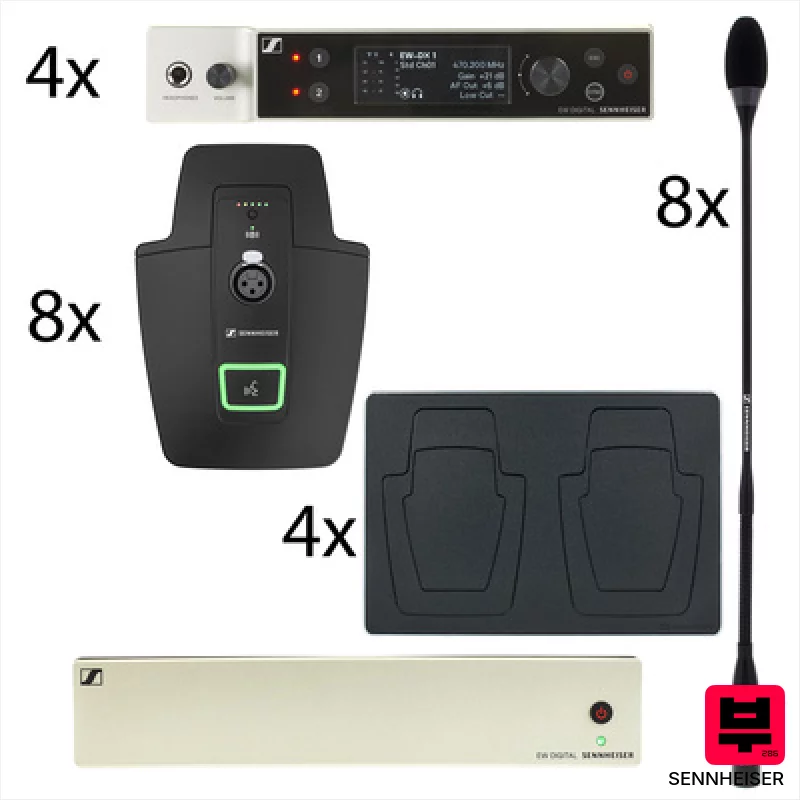
Sennheiser EW-DX 8CH Conference Set Q1-9
- • Rock-solid build quality with robust metal receiver chassis.
- • AES 256 encryption ensures exceptionally secure, private communications.
- • Dual-channel receiver minimizes interference and provides excellent reliability.
- • Table stands offer stable, adjustable mic placement for clear audio capture.
- • Premium-priced, represents a significant investment for most users.
- • Receiver size (212x44x189mm) can be cumbersome in smaller spaces.
- • Limited frequency band flexibility compared to broader wireless systems.
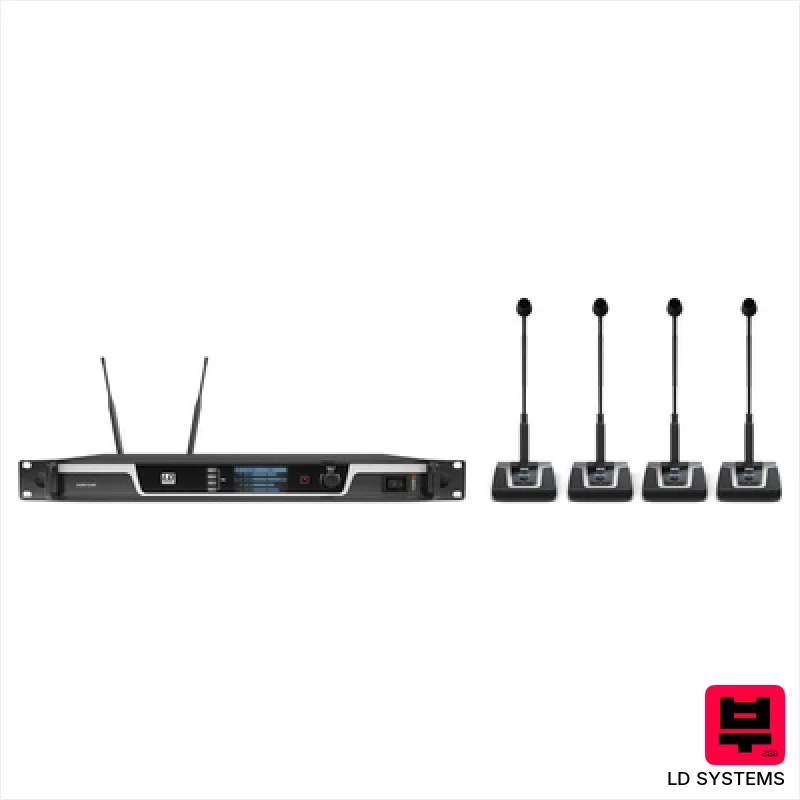
LD Systems U508 CS 4
- • Excellent true diversity UHF reception minimizes interference
- • Gooseneck mics offer stable positioning and reduced handling noise
- • Integrated inMix XLR output simplifies routing to mixers or recorders
- • OLED display provides clear, at-a-glance system status information
- • The base unit's weight makes it less portable for frequent relocation
- • Limited frequency range compared to some higher-end conference systems
- • AA batteries can become a recurring expense; consider rechargeable options
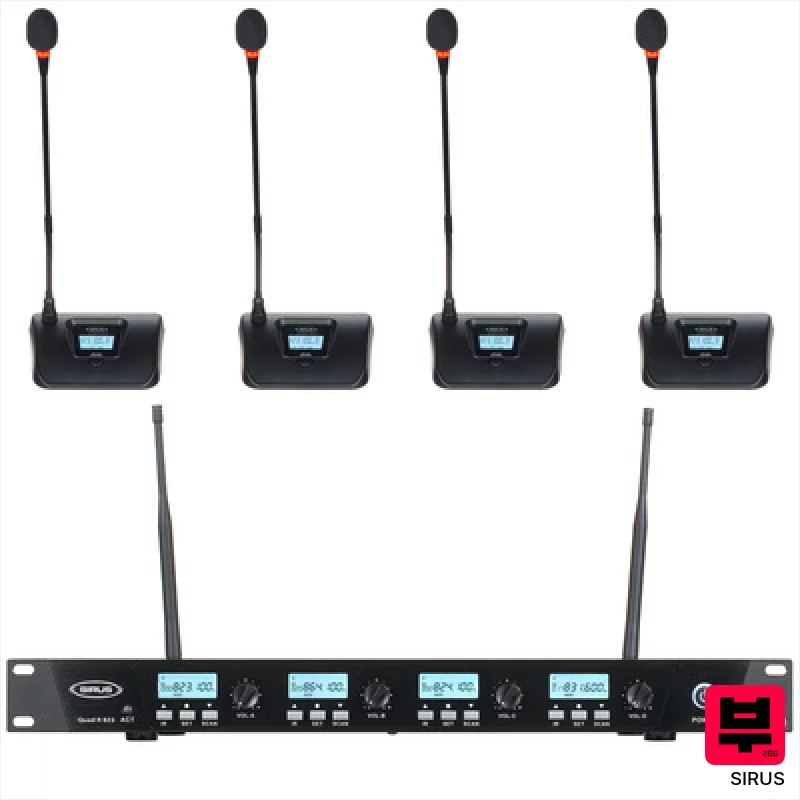
Sirus Quad R + 4C 823 Bundle
- • Rackmount design saves space, ideal for permanent conference room installations.
- • Infrared transmission simplifies channel syncing, reducing setup headaches.
- • Excellent signal-to-noise ratio ensures clear audio even in noisy environments.
- • UHF frequency range minimizes interference compared to FM systems.
- • Limited frequency range necessitates careful frequency coordination in dense RF areas.
- • External power supply adds another cable and potential point of failure.
- • Handheld and pocket transmitters sold separately, increasing overall investment.
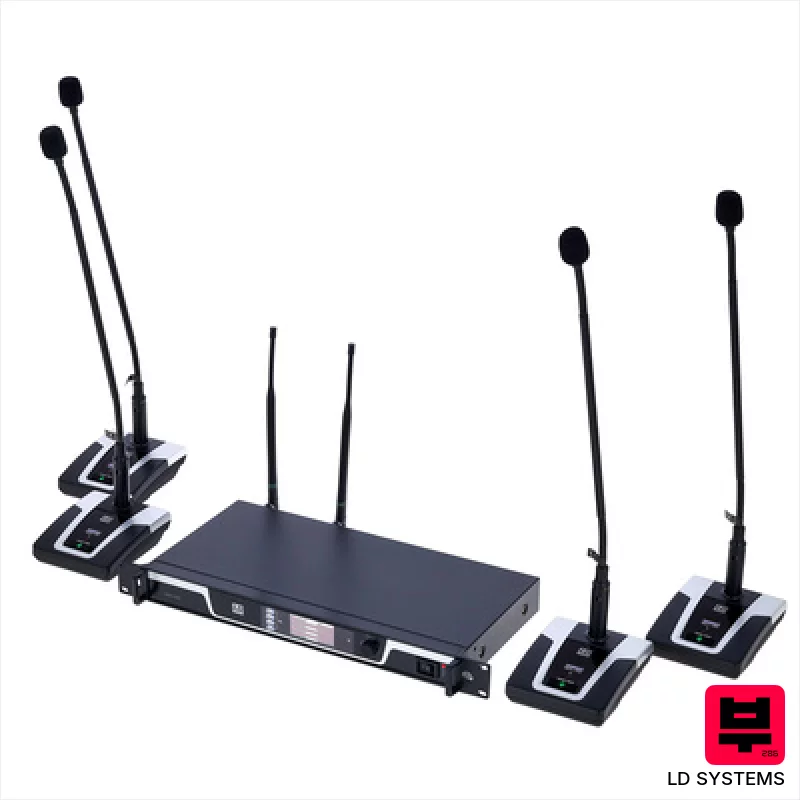
LD Systems U505 CS 4
- • Solid build quality with a professional, understated aesthetic
- • OLED display offers clear, at-a-glance system status
- • BNC antenna connectors allow for upgraded external antennas
- • 6 groups of 106 channels offer flexibility in congested RF environments
- • The system's weight (6kg) makes transport and setup cumbersome
- • 554-586 MHz band can be restrictive depending on location
- • Limited frequency range may require careful channel selection
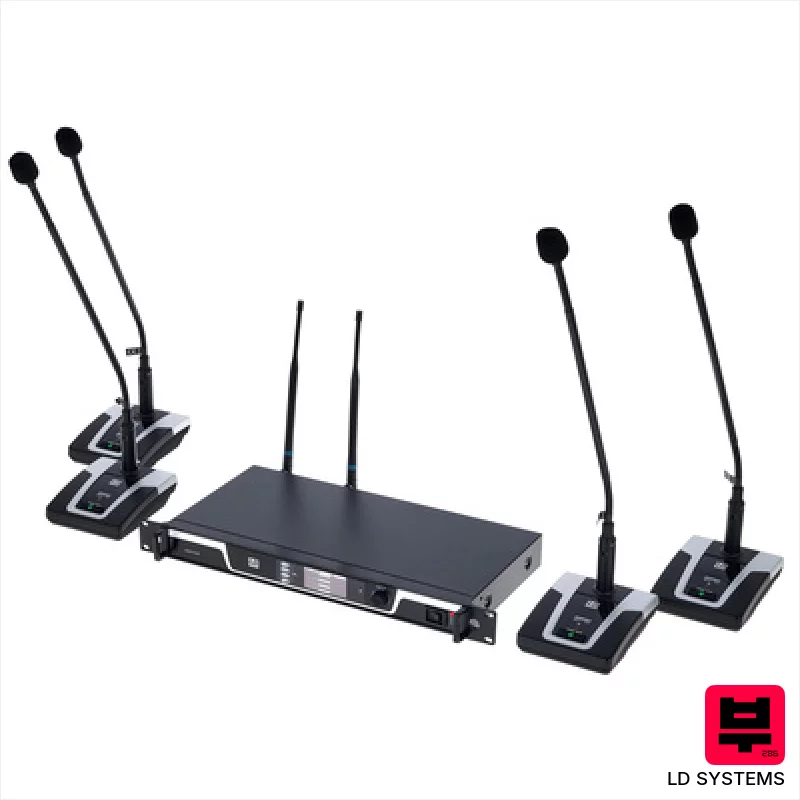
LD Systems U506 CS 4
- • Solid build quality with a robust metal chassis and stable table bases.
- • Infrared frequency synchronization is genuinely reliable and fast.
- • Gooseneck mics offer good positioning flexibility for presenters.
- • Balanced XLR outputs provide clean, professional audio signal.
- • The system's size and weight make it less portable for frequent moves.
- • Limited frequency band allocation may pose issues in densely populated RF areas.
- • Microphone unit battery life could be better, especially for extended meetings.

Sennheiser EW-DX 4CH Conference Set R1-9
- • Rock-solid build quality with robust metal chassis for demanding environments.
- • Dante connectivity offers seamless integration into existing digital audio networks.
- • AES 256 encryption ensures secure and private conference communications.
- • Excellent RF performance minimizes dropouts, even in crowded wireless spaces.
- • Significant investment; this is a premium-priced system for professional use.
- • Weight (approx. 2kg for the receiver) necessitates a dedicated rack space or sturdy placement.
- • Limited frequency band compared to broader UHF systems might restrict channel availability.
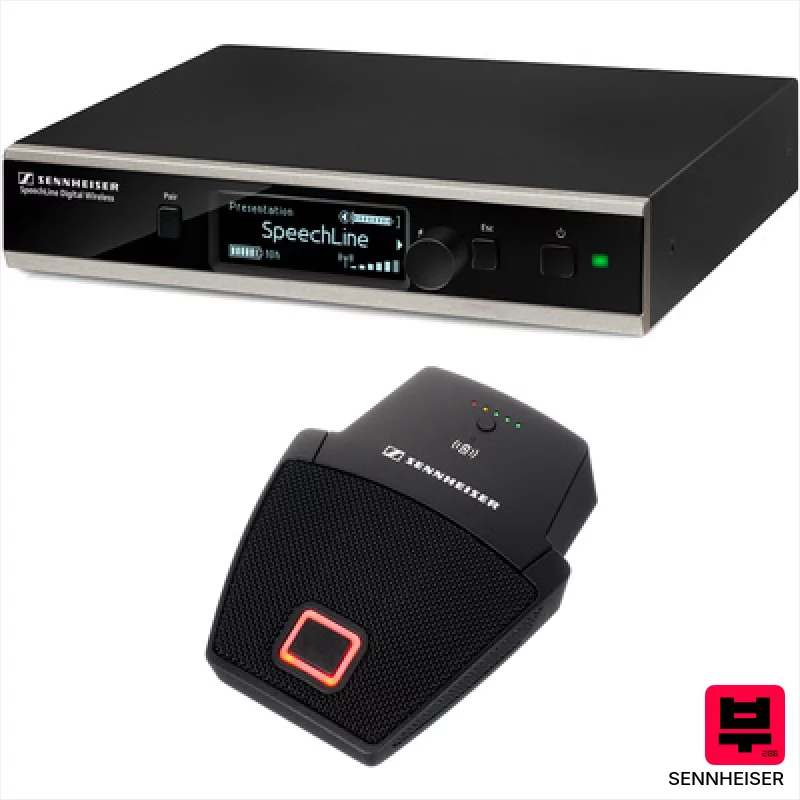
Sennheiser SL 114-S Wireless Bundle
- • Excellent boundary mic for clear table pickup, minimizing room noise.
- • Robust DW-3B construction feels very solid, professional grade.
- • Programmable micro switch adds significant flexibility in use cases.
- • Qi wireless charging is a convenient, modern touch.
- • 1.9 GHz band can be susceptible to interference in crowded RF environments.
- • Receiver size (9.5") might be restrictive for some mobile setups.
- • Boundary design limits placement options; not ideal for handheld use.
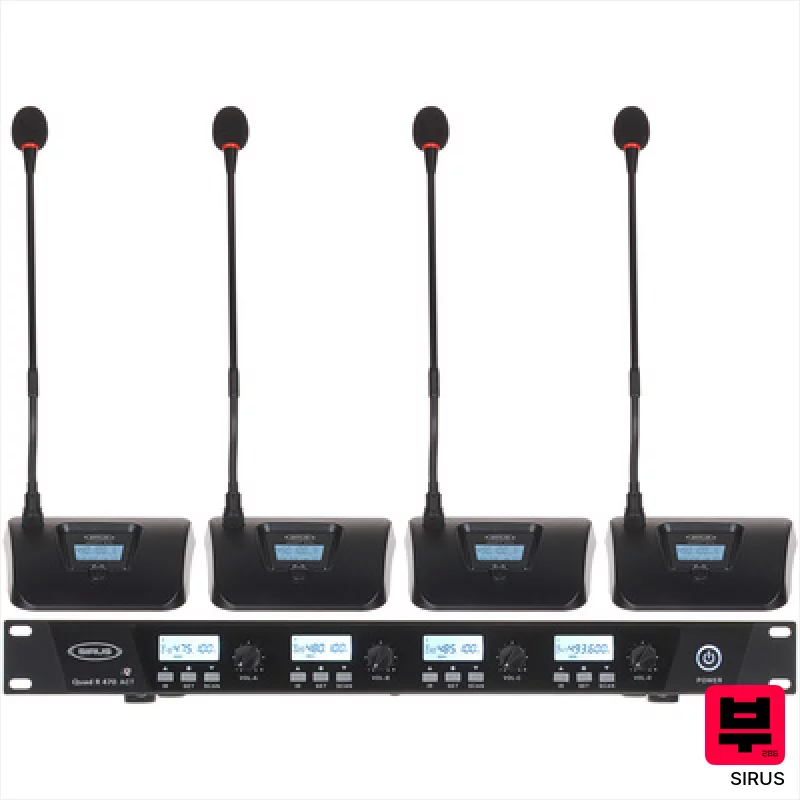
Sirus Quad R + 4C 470 Bundle
- • Excellent frequency scan simplifies setup for multi-mic environments.
- • IR transmission streamlines channel configuration across multiple transmitters.
- • Robust 1U rackmount design ensures stability in professional installations.
- • High signal-to-noise ratio minimizes background noise for clear audio.
- • 470-526 MHz band can be congested in some areas, limiting channel availability.
- • Power supply is external, adding to cable clutter and potential failure point.
- • Limited frequency range (40Hz-18kHz) may lack some high-end clarity for critical applications.
How to Choose the Best Wireless Conference Systems
Frequency Stability
Government buildings can be RF nightmares - lots of interference from lighting, HVAC, and who knows what else. You need a system with a wide, clean frequency range and good hopping capabilities to avoid dropouts. A system that drifts a few kHz is a no-go.
Tonal Transparency
Forget colored, hyped sound. We're after natural vocal reproduction - the ability to hear the speaker's nuances without a boxy low-midrange or harsh high-end. A little warmth is okay, but avoid anything that sounds like it's been run through a cheap EQ.
Dynamic Range & Headroom
You don't want clipping or distortion when someone gets animated. Good dynamic range means the system can handle both quiet whispers and louder pronouncements without introducing unwanted artifacts. Headroom is key - it's the buffer against those unexpected outbursts.
Build Quality & Reliability
These systems are often in high-use environments. They need to be robust, with reliable components that can withstand daily use and potential abuse. A flimsy handheld mic is going to fail sooner or later.
Security Features
Sensitive information is often discussed. Encryption and secure pairing are non-negotiable. You need a system that protects against unauthorized access and eavesdropping. This isn't about 'nice to have' - it's a requirement.
Buying Guide
Don't chase the cheapest option. You'll pay for it in headaches later. Wireless conference systems are a long-term investment, and corners are always cut somewhere - usually in frequency stability or build quality. Consider the room size and potential for interference; a larger room needs more power and wider frequency range. And seriously, factor in the cost of replacement mics - they will wear out.
Our Methodology
We don't just look at spec sheets; we put these systems through the wringer. That means A/B comparisons against known good systems, real-world testing in spaces mimicking conference rooms (sometimes a bit echoey, let's be honest), and evaluating how they perform with different vocal types - from booming baritones to quieter altos. It's about how they sound and perform, not just the numbers on paper.

