
Best Switch Pedals Under $200 2026
Alright, so you need a switch pedal, huh? A good one doesn't have to break the bank. We're talking about getting you organized - multiple guitars, amps, or effects chains at your feet without looking like a tangled mess of cables. This list focuses on solid, reliable switch pedals you can snag for under $200, because let's be honest, your money's better spent on strings and a decent amp.
Last updated: October 8, 2026
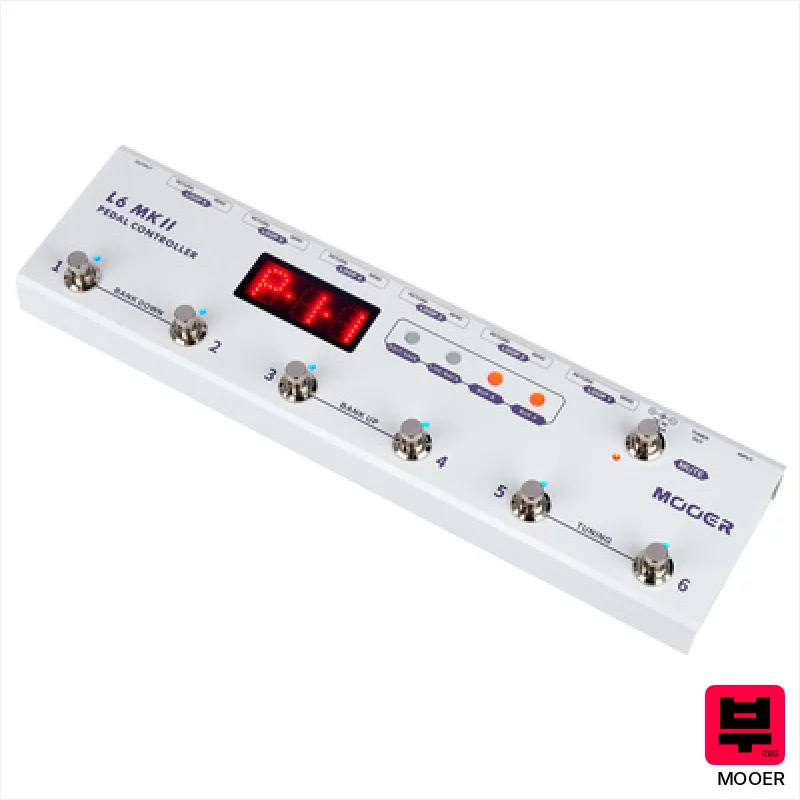
Mooer Pedal Controller L6 MKII
- • Solid metal housing feels robust, ready for gigging demands.
- • Intuitive programming minimizes setup time, gets you playing fast.
- • Six loops offer substantial flexibility for complex pedalboards.
- • Buffered bypass maintains signal integrity, preserving tone quality.
- • Limited MIDI functionality restricts advanced integration with other gear.
- • Size (370mm) can be cumbersome on smaller pedalboards.
- • Plastic push buttons feel slightly cheap compared to metal alternatives.
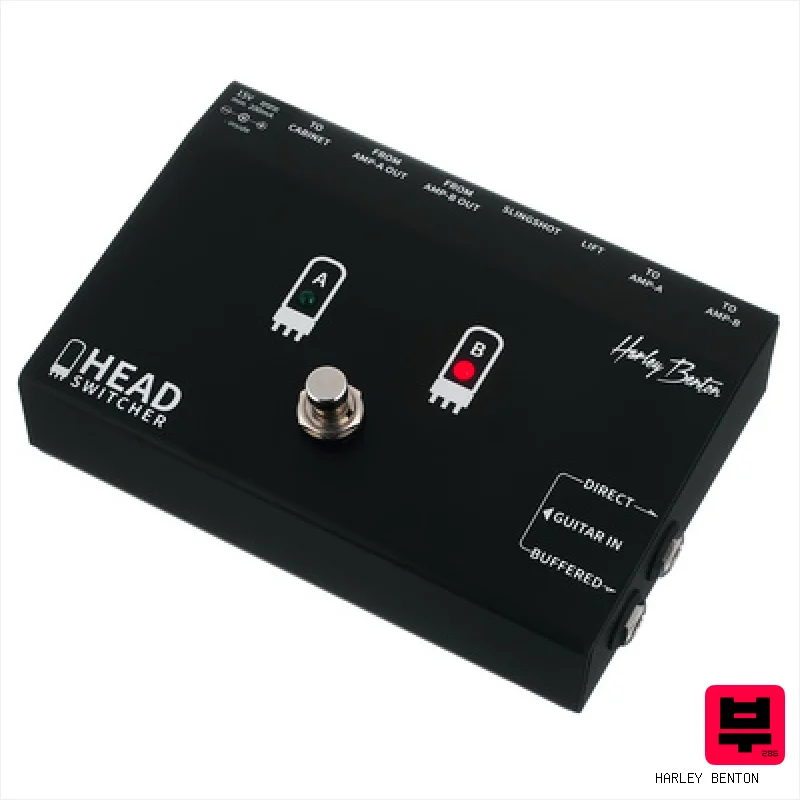
Harley Benton Tube Head Switch
- • Silent switching protects your ears during loud practice sessions.
- • Best Class A components keep the original tube amp sound pure.
- • Safety load operation prevents damaging your connected amplifiers.
- • Remote slingshot input lets you control it from other pedals.
- • No built-in effects means you must use external pedals for tone shaping.
- • Single speaker output limits setups without additional routing gear.
- • Weight is 1.0 kg which might feel heavy on a crowded pedalboard.

Positive Grid Spark Control
- • Wireless convenience streamlines Spark amp preset changes significantly.
- • Four footswitches offer flexible control over effects and loops.
- • Impressive 150-hour battery life ensures extended performance.
- • Compact size and lightweight design (0.31kg) adds portability.
- • Limited to Spark amp ecosystem; lacks universal pedalboard compatibility.
- • Plastic construction feels less robust than premium metal footswitches.
- • Bluetooth range, while stated as 45m, realistically shrinks with interference.
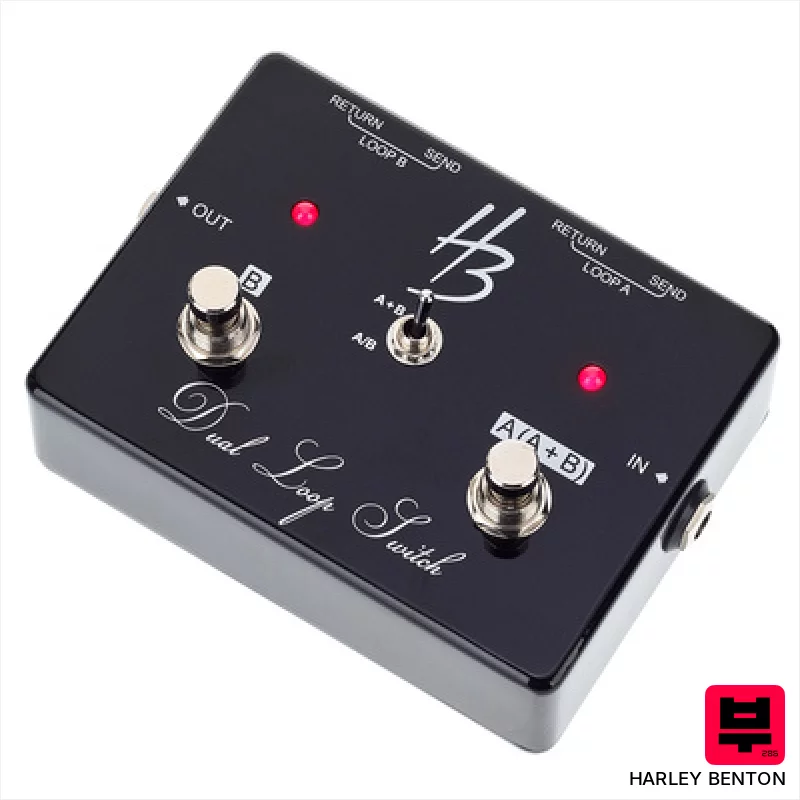
Harley Benton Custom Line Dual Loop Switch
- • True bypass preserves signal integrity across all loops
- • Flexible routing enables amp switching and mute functionality
- • Compact size saves valuable pedalboard real estate
- • Solid build quality for its price point, feels surprisingly robust
- • Plastic enclosure feels less premium compared to boutique alternatives
- • LED brightness might be insufficient in brightly lit environments
- • Limited expandability – no provision for future loop additions
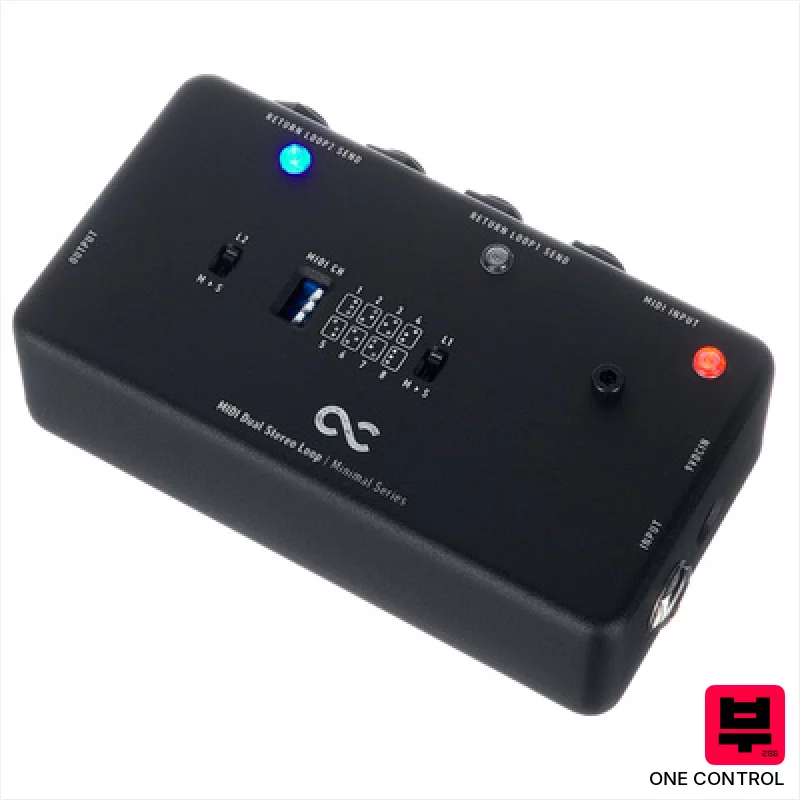
One Control Minimal Series MIDI DS Loop
- • Solid metal housing provides excellent durability for pedalboard travel
- • True bypass preserves signal integrity when effects are disengaged
- • Flexible MIDI implementation allows for complex program changes
- • Compact size minimizes footprint on crowded pedalboards
- • Requires an external power supply, adding to the overall cost
- • Passive operation lacks MIDI functionality and buffering
- • Limited to 4 loops, may be restrictive for complex setups
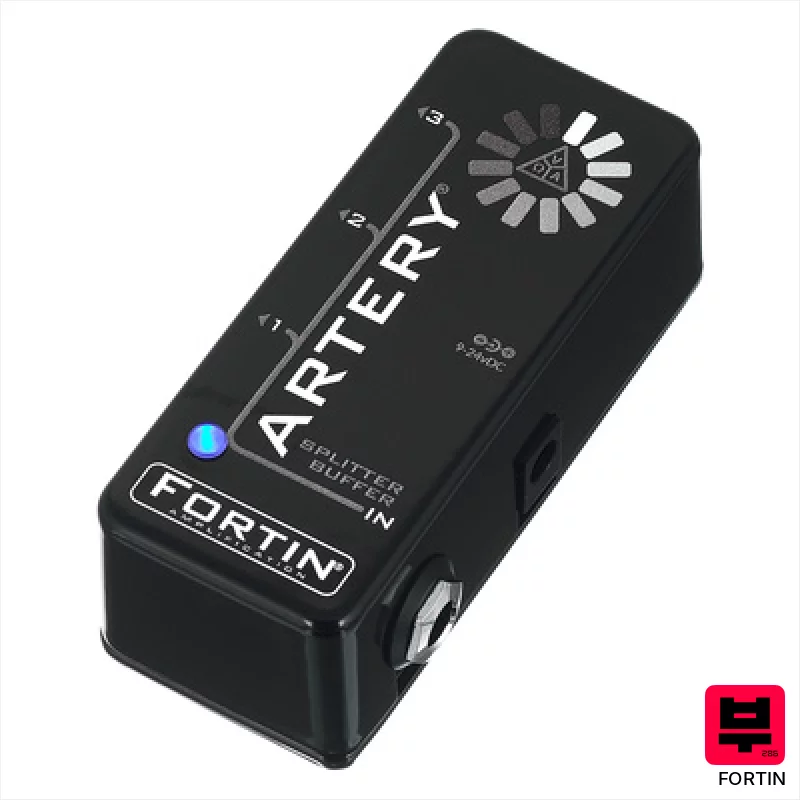
Fortin Artery Splitter Buffer
- • Class A buffering maintains signal integrity across multiple outputs.
- • Compact size minimizes pedalboard real estate consumption.
- • Robust enclosure suggests excellent long-term durability.
- • True signal split avoids signal loss or coloration.
- • Limited to 9-24V DC, restricting power supply options.
- • No MIDI implementation for advanced routing control.
- • Lack of loop functionality limits versatility for complex setups.
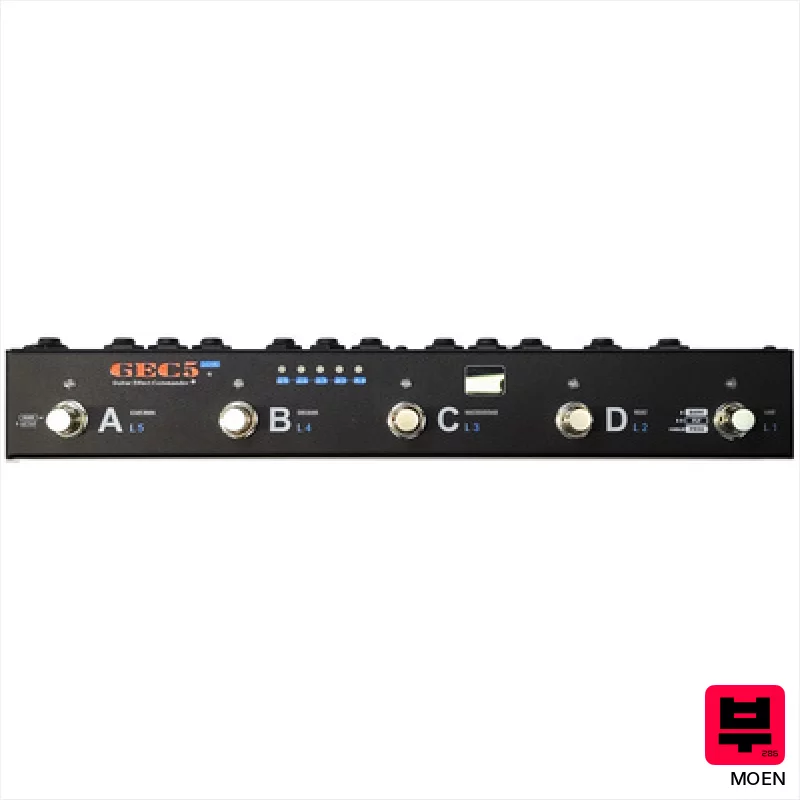
Moen GEC5-Link
- • 200 presets offer substantial organization for complex rigs.
- • ‘On the Fly’ mode provides immediate loop control during performance.
- • Relay true bypass preserves signal integrity when loops are inactive.
- • Link function allows expansion for serious multi-effect setups.
- • Physical size (330mm) might be cumbersome for smaller pedalboards.
- • Programming interface, while intuitive, may require dedicated practice time.
- • Lack of MIDI implementation limits advanced automation possibilities.
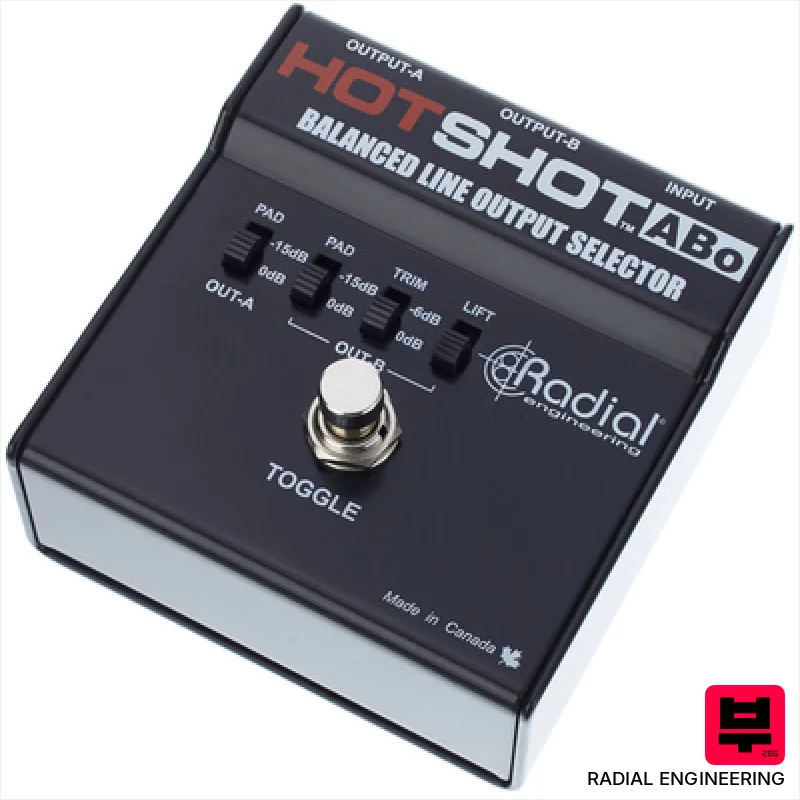
Radial Engineering HotShot ABO
- • Rock-solid Radial build quality; feels like it’ll survive a stadium tour
- • Balanced XLR connections eliminate noise and hum for pristine signal
- • 15dB pad offers crucial headroom management for hot pickups/amps
- • Large footswitch is responsive and easy to use, even in low light
- • Limited to just two channels; not ideal for complex switching needs
- • No MIDI control; relies solely on the mechanical footswitch
- • The ground lift isn’t the most robust, can be finicky in some environments
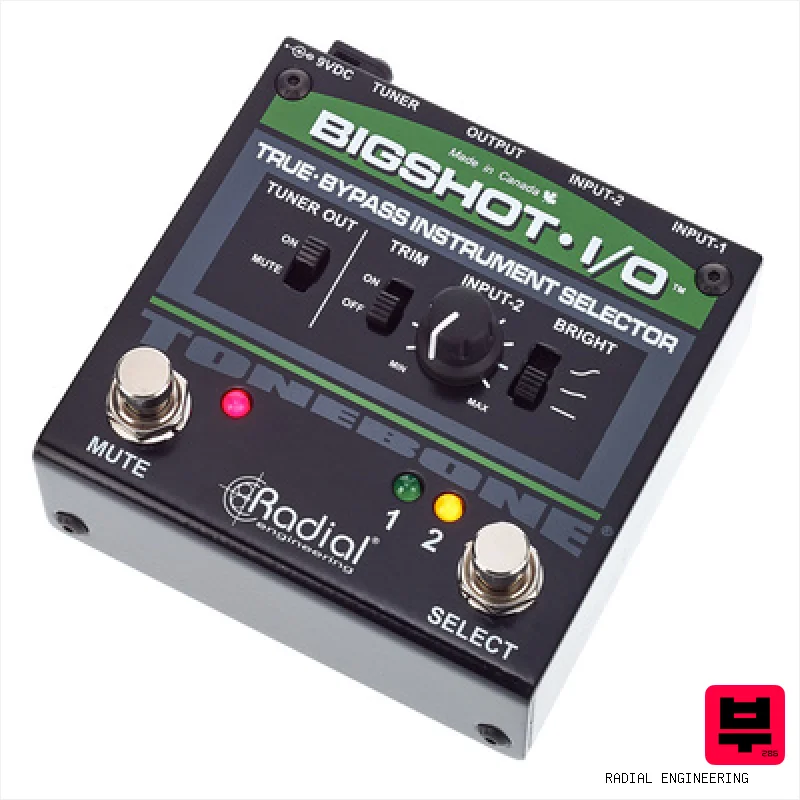
Radial Engineering Bigshot I/O
- • Metal housing keeps things sturdy and durable for daily use.
- • True bypass design preserves original signal clarity when effects are off.
- • Three-way bright switch adds necessary high-end shine to dull instruments.
- • Separate tuner output lets you record or sing without interference.
- • No battery operation means you need a power supply constantly.
- • Power supply is required just for the LEDs, not the pedals.
- • Input 2 output level is automatically reduced, which might be limiting.
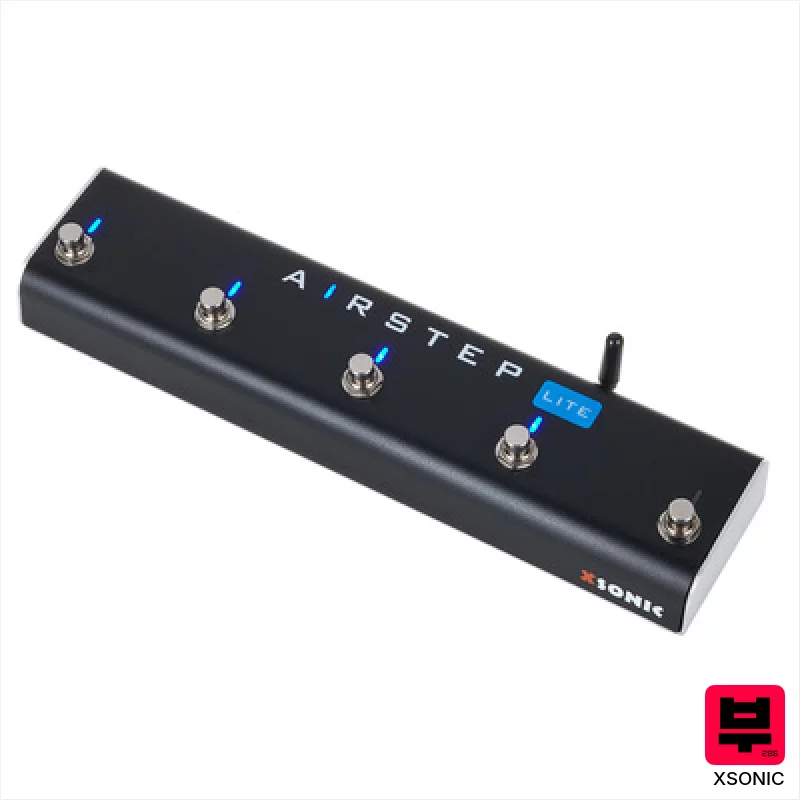
Xsonic Airstep Lite Controller
- • Wireless operation offers unparalleled stage flexibility and convenience
- • Intuitive app simplifies complex programming, even for beginners
- • Multiple switching options (press, release, long press) maximize control
- • Long battery life (300 hours) minimizes downtime during performances
- • Plastic construction feels less robust than metal alternatives in this category
- • Limited number of foot switches (5) restricts complex routing possibilities
- • Bluetooth range, while decent, can be susceptible to interference in crowded spaces
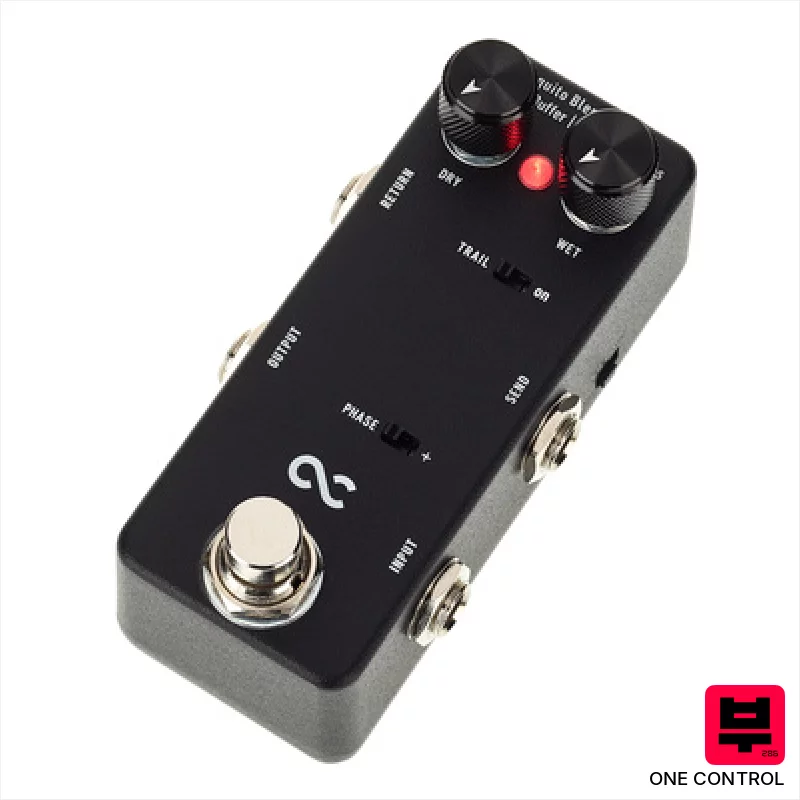
One Control Mosquito Blender Trail
- • Robust metal housing feels incredibly solid and durable.
- • Trail mode adds nuanced repeats, blending seamlessly with the dry signal.
- • Switchable buffer combats signal loss, maintaining clarity in long cable runs.
- • Phase inversion offers tonal flexibility, correcting muddiness in complex rigs.
- • Lack of battery operation limits portability, requiring a power supply.
- • Small footprint might feel cramped for those used to larger switchers.
- • Limited to a single loop, not ideal for extensive pedalboard setups.

Radial Engineering HotShot ABI
- • Rock-solid Radial build quality; feels like it’ll survive a stadium tour
- • Excellent balanced XLR connectivity for pristine signal transfer
- • 15dB pad per channel prevents unwanted signal overload and distortion
- • Ground lift on Input B eliminates hum and noise effectively
- • Limited to ABY switching; lacks more complex routing options
- • Metal casing adds noticeable weight, not ideal for travel
- • No MIDI control; purely analog operation
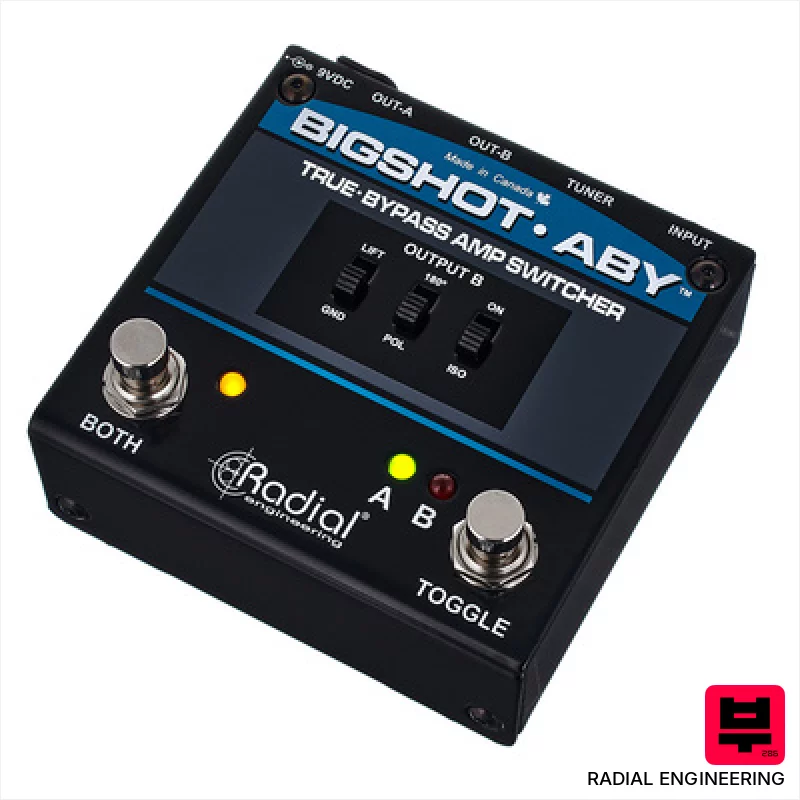
Radial Engineering Tonebone Bigshot ABY/Y MKII
- • Passive design eliminates the need for a power supply for core functionality
- • Transformer isolation effectively combats hum and ground loops, crucial for live rigs
- • Phase reversing switches allow precise amp tone matching for seamless transitions
- • Rugged metal housing and Radial’s renowned build quality ensure long-term durability
- • Limited to A/B/Y switching; lacks more complex routing options
- • Requires an external 9V power supply for LED illumination only, adding to cost
- • Relatively compact, but still adds noticeable bulk to a pedalboard
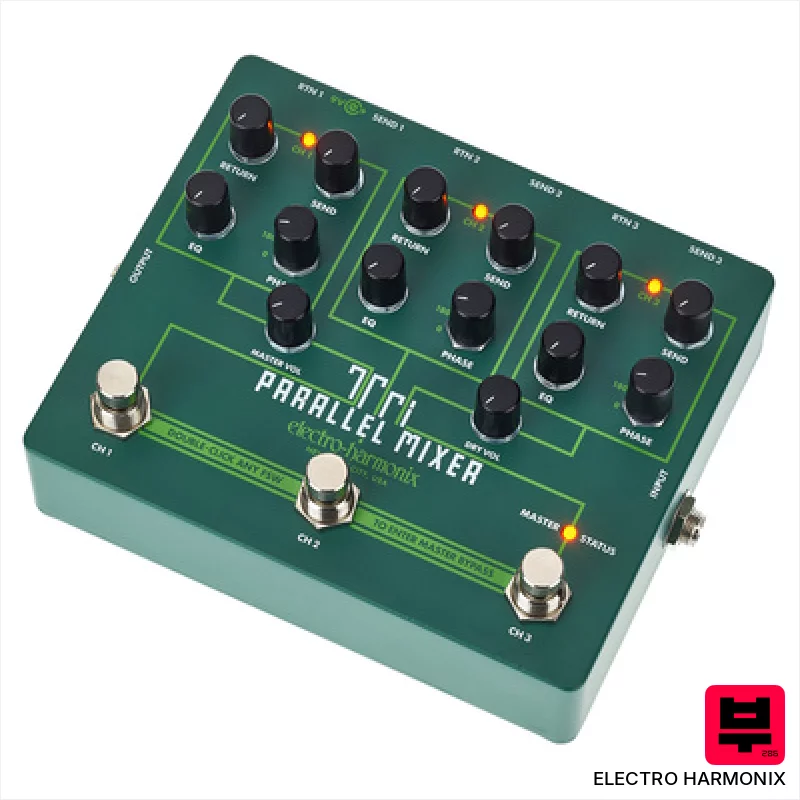
Electro Harmonix Tri Parallel Mixer
- • Flexible parallel routing offers unique sonic experimentation.
- • Individual loop EQ allows shaping each effect’s character.
- • Solid build quality with EHX’s typical robust footswitching.
- • Compact size makes it stage-friendly and pedalboard-efficient.
- • Limited EQ controls per loop – a more detailed EQ would be welcome.
- • No MIDI implementation restricts advanced automation possibilities.
- • Power adapter only – no battery option limits portability.
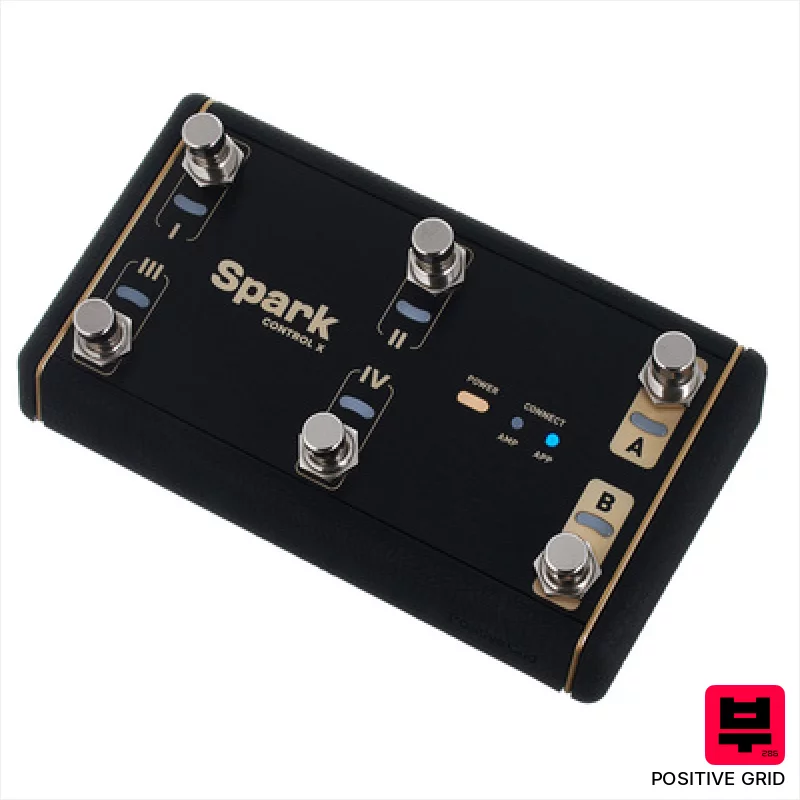
Positive Grid Spark Control X
- • Robust aluminum chassis with silicone cover offers excellent stage stability and protection.
- • The 150-hour battery life is genuinely impressive; a real convenience for gigging.
- • Customizable footswitches with vibrant LEDs allow for clear visual feedback in low-light conditions.
- • Expression pedal inputs expand creative control beyond simple preset changes.
- • Limited to Spark ecosystem; not a general-purpose footswitch for other amps/pedals.
- • The aluminum construction makes it relatively heavy, potentially cumbersome for smaller setups.
- • Faceplate overlays, while a nice touch, feel like a potential point of wear and tear.
Every switch pedals that matches
83 models match this page. The 15 above are covered in detail; the rest are listed here with their published specifications.
Switch Pedals by the numbers
Measured across all 83 models in this category, so «wide», «short» or «expensive» mean something you can check.
How to Choose the Best Switch Pedals
Footswitch Quality
Cheap plastic switches feel mushy and often fail. We're looking for something with a solid, confident click and a decent lifespan - something that won't give out mid-set.
Durability
Gigging is brutal. These pedals need to withstand being kicked, bumped, and generally abused. The build quality of the enclosure and internal components are key.
Number of Switches & Functions
Do you need four switches, eight, or something with an expression pedal input? Think about your setup and how many things you realistically need to control.
True Bypass vs. Buffered Bypass
True bypass is generally preferred for preserving your tone, but a buffer can help maintain signal strength, especially with long cable runs - a common issue in older studios or venues.
Ease of Use/Labeling
A confusing layout is a recipe for disaster. Clear labeling and a logical switch arrangement are essential for quick changes onstage.
Buying Guide
At this price point, you're making trade-offs. Don't expect premium metal enclosures or super-precise footswitch feel. Most will be plastic, and the switches might feel a little less 'clicky' than a Strymon. Look for pedals with solid reviews about reliability and a layout that makes sense for your specific needs. Consider whether a buffered bypass is important for your signal chain - it's a small thing that can make a big difference in some situations.
How This List Is Built
We don't play these instruments — we're a catalog, not a review desk, and we'd rather say so than pretend otherwise. This page covers 83 switch pedals from the Thomann catalogue, which is the largest single source of specification data in this category: 15 in detail, the rest listed with their specifications.
Position is computed, not curated. We parse the manufacturer's own description into actual values — nut width, scale, fret count, fingerboard radius, size, alloy — and rank on them: how many specifications a model has published, how many of them are measurable numbers, and how precisely it meets this page's criterion. A product image adds a little. Price is not a ranking signal: it tells you nothing about whether a neck fits your hand. The same inputs always produce the same order, so nothing here is shuffled to look fresh.
What this list is good for: narrowing a category down to a shortlist by spec and budget. What it isn't: a substitute for hearing an instrument. Before you buy, read hands-on reviews and, where you can, play it. Full methodology.

