AudioFu Chart · October 2026
Best Yamaha Stage Pianos 2026
The top pick is Yamaha P-45 Digital Piano ($370). Yamaha CP88 Stage Piano leads the high end. Ranked by the AudioFu Index from 6 models, prices checked every night.
Last updated: October 19, 2026
Top 6
Full detail for the 6 highest AudioFu Index scores. Every other model is listed below.
-
- Weight11.5 kg
- Key actionWeighted keys
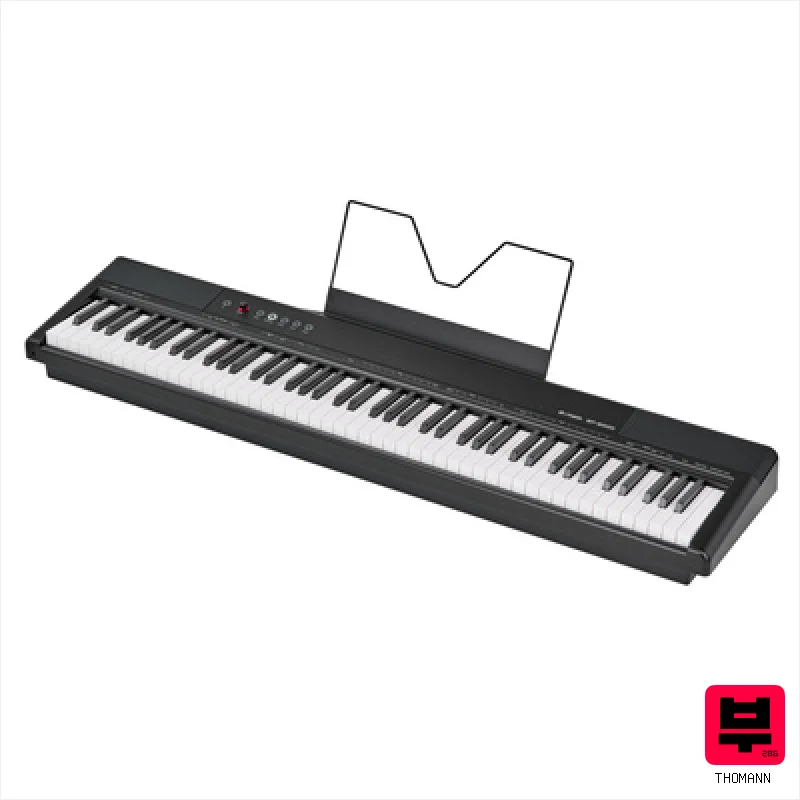
The P-45B is a solid entry-level stage piano – a great starting point for beginners or those needing a compact, budget-friendly option. The key action is surprisingly good for the price, but don’t expect a concert grand experience. It's perfect for students, casual players, or anyone needing a portable piano for practice or basic performances.
Pros
- Graded Hammer Standard action provides surprisingly realistic piano feel
- Compact and lightweight for portability, ideal for students or small spaces
- Built-in speakers are adequate for practice and casual playing
Cons
- The GHS action lacks the nuance and depth of higher-end weighted actions
- Limited sound palette; ten tones feel restrictive for serious players
81AudioFu
IndexStableno change since Aug 17Aug 17$370 now$370€329 at Thomann · in stockCheck price ↗ -
- Weight11.5 kg
The P-225 is a solid entry-level stage piano; the action is surprisingly good for its size and price point. It's a great option for students, beginners, or anyone needing a portable piano with a decent piano sound – just don't expect to fill a concert hall with those speakers.
Pros
- Excellent GHC action provides a surprisingly realistic piano feel.
- VRM Lite engine delivers a warm, nuanced CFX piano sound.
- Compact design and lightweight build make it highly portable.
Cons
- Built-in speakers lack power and low-end response for performance.
- Limited sound selection compared to higher-end stage pianos.
80AudioFu
IndexStableno change since Aug 17Aug 17$632 now$632€562 at Thomann · in stockCheck price ↗ -
- Weight11.1 kg
The P-145 B BT is a solid choice for students and casual players needing a portable, realistic piano experience. Its GHC action and CFIIIS sound engine are genuinely impressive for its class, making it a great value for practice and home use – just don't expect it to replace a full-sized stage piano for serious gigs.
Pros
- Excellent GHC action provides a surprisingly realistic piano feel.
- CFIIIS sound engine delivers a warm, authentic grand piano tone.
- Compact size and lightweight design enhance portability significantly.
Cons
- Built-in speakers are adequate but lack dynamic range for performance.
- Limited effects offer less sonic shaping than higher-end stage pianos.
68AudioFu
IndexStableno change since Aug 17Aug 17$444 now$444€395 at Thomann · in stockCheck price ↗ -
- Weight21.8 kg
- Key actionWeighted keys
The P-S500 is a seriously capable portable stage piano. The GHS action is a noticeable step up from basic weighted keys, and the sound engine is surprisingly versatile, especially when paired with the Smart Pianist app. It's an excellent choice for gigging musicians, students, or anyone needing a compact and expressive piano solution.
Pros
- Excellent GHS action provides realistic weighted piano feel.
- Impressive sound library offers broad tonal palette for various genres.
- Smart Pianist app expands functionality and learning tools considerably.
Cons
- GHS action, while good, lacks the nuance of higher-end graded actions.
- Limited onboard effects; Smart Pianist app reliance is a slight drawback.
68AudioFu
IndexStableno change since Aug 17Aug 17$1,664 now$1,664€1,479 at Thomann · in stockCheck price ↗ -
- Weight18.6 kg
- Keys88 keys
The CP88 is a solid choice for gigging musicians needing a reliable, portable stage piano. It nails the core piano sounds and action with a focus on live usability – the seamless sound switching is a game-changer. It's a great all-rounder for a wide range of genres, particularly those where a clean, responsive piano sound is paramount.
Pros
- NW-GH3 action feels incredibly realistic, like a premium acoustic piano
- Seamless Sound Switching eliminates performance interruptions mid-song
- Excellent AWM2 engine delivers nuanced, expressive piano tones
Cons
- Sound engine, while good, lacks the depth of dedicated workstations
- Limited effects compared to more expensive, fully-featured stage pianos
65AudioFu
IndexStableno change since Aug 17Aug 17$2,625 now$2,625€2,333 at Thomann · in stockCheck price ↗ -
- Weight13.1 kg
- Keys73 keys
The CP73 is a solid choice for gigging musicians needing a dependable, portable stage piano with Yamaha's well-regarded piano sounds. Its Seamless Sound Switching is a real boon for live performance, and the BHS action offers a decent playing experience without the premium price tag. It's a workhorse instrument perfect for pop, rock, and contemporary worship scenarios.
Pros
- Excellent Balanced Hammer Standard action feels surprisingly realistic
- Seamless Sound Switching avoids disruptive audio dropouts onstage
- AWM2 engine delivers Yamaha's signature piano tones convincingly
Cons
- The LC display is small and a bit basic for detailed editing
- Sound engine lacks the sheer depth of higher-end stage pianos
58AudioFu
IndexStableno change since Aug 17Aug 17$2,114 now$2,114€1,879 at Thomann · in stockCheck price ↗
Stage Pianos by the numbers
Measured across all 132 models we track, not a sample.
Median $809 — half of all stage pianos here cost less.
median of 130 models · 8.4 kg–26 kg
median of 51 models · 73–88
most common · 64 models
How to choose the best stage pianos
Action
Yamaha's Graded Hammer Action (GHA) is generally solid, but the feel varies across models. The higher-end GH3 action is noticeably more responsive and nuanced than the earlier GHS - a huge deal for expressive playing, especially if you're a pianist coming from an acoustic instrument.
Sound Engine
Yamaha's CFX sampled pianos are the gold standard for a reason - that rich, resonant tone with a real sense of space. However, the quality of the sampling and the available sounds vary significantly between models, impacting realism and versatility. The older models can sound a little sterile compared to more modern offerings.
Effects
Yamaha's built-in effects are usually decent, offering some usable reverb and chorus. But don't expect studio-grade processing; you'll likely want to supplement with external effects for serious recording work. The newer models have expanded effects options, which is a definite plus.
Connectivity
Stage pianos need to integrate into a live or studio setup. Yamaha consistently delivers solid connectivity - multiple outputs, MIDI in/out, USB - but check the specific model for the features you absolutely need. USB audio interface functionality is a big plus for direct recording.
Build Quality
Yamaha generally nails build quality. These aren't flimsy plastic instruments. They're built to withstand gigging, but cheaper models will use lighter materials and simpler construction - not a dealbreaker, but something to consider if you're hard on gear.
Buying guide
Alright, so you're in the market for a Yamaha stage piano? Smart move. Yamaha's been a mainstay on stages and in studios for decades, and for good reason - they offer a reliably good foundation for a wide range of musical styles. But with a lineup that's evolved over the years, figuring out which one is right for you can be a bit overwhelming. Let's break down the best options and what makes them tick.
Don't get caught up in the hype about extra sounds you'll never use. Focus on the piano action and the core piano sounds first. The higher-end actions are a real upgrade for expressive playing, and a good piano sound is the foundation for everything else.
Be wary of older models with limited connectivity - those can be frustrating in a modern setup.
How the AudioFu Index works
Five measured signals and nothing else — no stars from strangers, no “tested by experts” we didn’t do. The weights are fixed and public. We don’t play these instruments; we measure the market around them.
This chart covers 19 stage pianos from the Thomann catalogue (of 132 in the category). Before you buy, read hands-on reviews and, where you can, play it. Full methodology.
AudioFu earns a commission when you buy through our Thomann links. It never changes the order — the index does.
- Demand40%
How many of this exact model are for sale on Reverb right now — what musicians actually buy and resell.
- Lineup20%
How many finishes Thomann stocks — makers expand the models that sell.
- Price15%
Where the price has moved since we started tracking in August.
- Specs15%
How completely the maker documents it.
- Maker10%
How deep the brand’s range is in this category.
Questions
What's the difference between GHS and GH3 action?
GHS is a more basic, lighter action, good for beginners. GH3 is heavier, more responsive, and more closely emulates an acoustic piano - a significant upgrade for serious players.
Are Yamaha stage pianos good for recording?
They can be, but consider the sound engine's quality. The CFX samples are excellent, but the older engines can be a bit thin. A good external preamp and some effects can really elevate the sound.
Can I use these pianos with a laptop and DAW?
Absolutely! Most Yamaha stage pianos have USB MIDI and audio interface capabilities for seamless integration with your computer.
Which Yamaha stage piano is best for a beginner?
The Yamaha P-515 is a great starting point. It offers a solid action, good sounds, and plenty of features without breaking the bank. The NP-32 is also a good budget option.
Do Yamaha stage pianos have a 'fat midrange honk'?
Not inherently. The CFX samples can be tweaked to achieve that, but it's not a default characteristic. It's more about EQ and layering sounds than the piano's inherent tone.