
Best Stage Pianos Under $2,000 2026
Alright, so you need a stage piano but your bank account isn't thrilled about dropping three grand? Been there. Getting a decent, reliable stage piano under $2000 is totally doable, but you gotta know what you're looking for. We're not chasing flagship features here, but we are after something that'll cut through the mix at a gig and won't make you want to smash it during a quiet ballad.
Last updated: September 29, 2026

Crumar Seventeen Legs Set
- • Excellent vintage electric piano sounds; convincingly recreates 80s tones.
- • Physical modeling provides nuanced expression and dynamic response.
- • Compact and relatively lightweight for a 73-key stage piano.
- • Integrated effects offer usable sounds without external processing.
- • 73-key layout might feel cramped for pianists accustomed to full 88-key action.
- • Physical modeling, while good, might not fool seasoned purists of classic hardware.
- • Limited polyphony could be a constraint with very complex layered sounds.
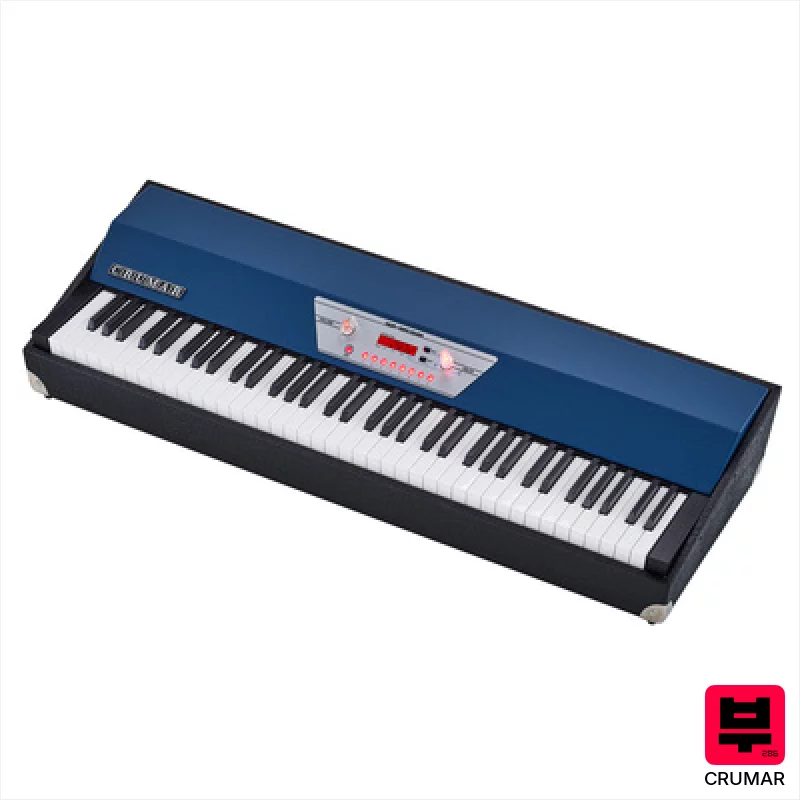
Crumar Seventeen
- • Excellent vintage electric piano emulations, capturing 80s warmth.
- • Physical modeling adds nuanced expression and responsiveness.
- • Compact and lightweight for stage portability.
- • Versatile sound palette spanning electrics to acoustic grands.
- • 73-key action might feel shallow for experienced pianists.
- • Limited effects compared to higher-end stage pianos.
- • Build quality, while decent, doesn’t feel premium.
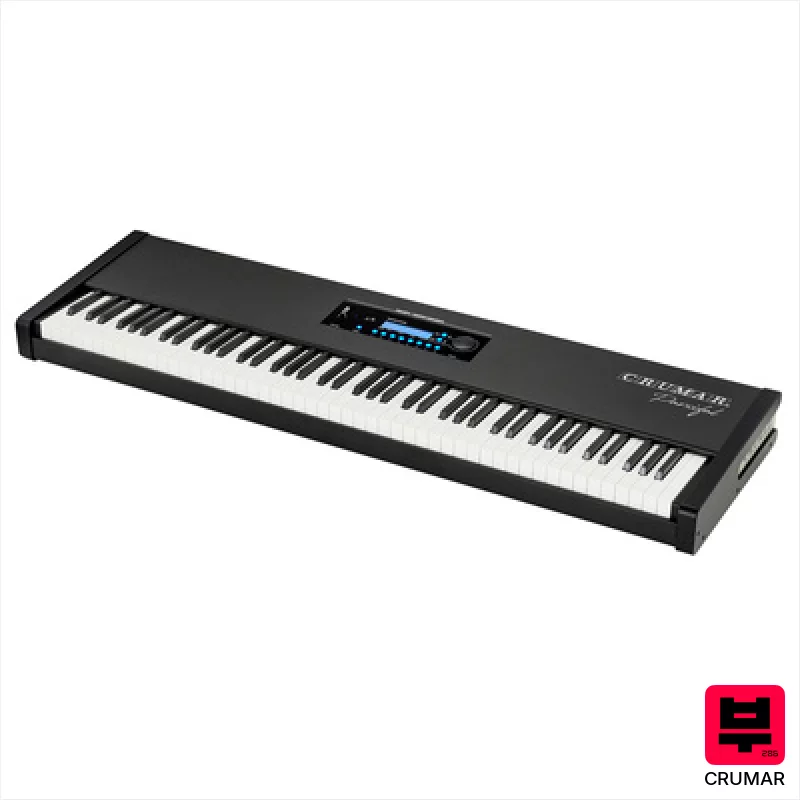
Crumar Parsifal
- • Excellent hammer action provides responsive, nuanced playing experience.
- • Crumar’s sound modeling delivers surprisingly authentic acoustic grand piano tones.
- • Pre-installed Venice Grand expansions offer a significant sonic upgrade.
- • Compact design and relatively lightweight for a full 88-key stage piano.
- • Limited connectivity options compared to more modern stage pianos.
- • Sound library, while decent, lacks the depth of some higher-end competitors.
- • Build quality, while functional, doesn’t exude premium materials or construction.

Studiologic Numa Compact X SE
- • Excellent portability due to its lightweight design and compact form factor.
- • The TP/9PIANO key action provides a surprisingly realistic feel for a semi-weighted action.
- • Integrated speakers offer decent volume and surprisingly full organ tones for practice.
- • The joystick controllers are a unique and genuinely useful feature for expressive control.
- • Semi-weighted action won't satisfy serious pianists seeking a fully graded feel.
- • Limited polyphony compared to higher-end stage pianos can cause note drop at dense layering.
- • The OLED display, while clear, is a bit small for comfortable editing on the fly.
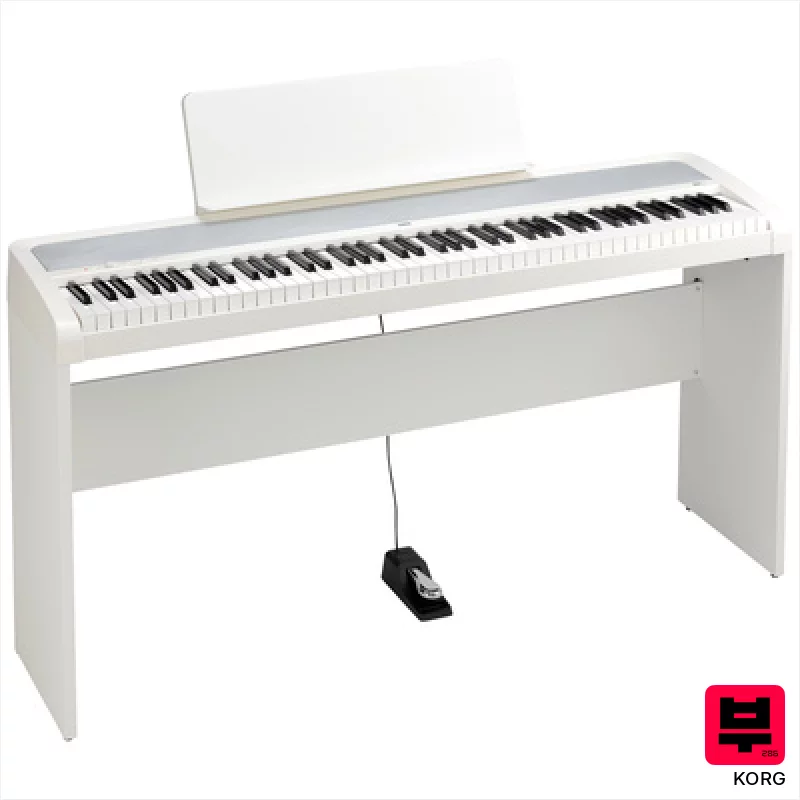
Korg B2+ SP White
- • Solid, dependable hammer action offers a surprisingly responsive feel.
- • Included wooden stand (STB1-WH) elevates the aesthetic and stability.
- • The Italian/German grand piano sounds are genuinely impressive for the price.
- • Integrated speakers provide decent volume and clarity for practice and small gigs.
- • The 3.5mm outputs feel a bit flimsy and budget-oriented.
- • Limited sound selection compared to more premium stage pianos.
- • The white finish, while attractive, shows fingerprints easily.
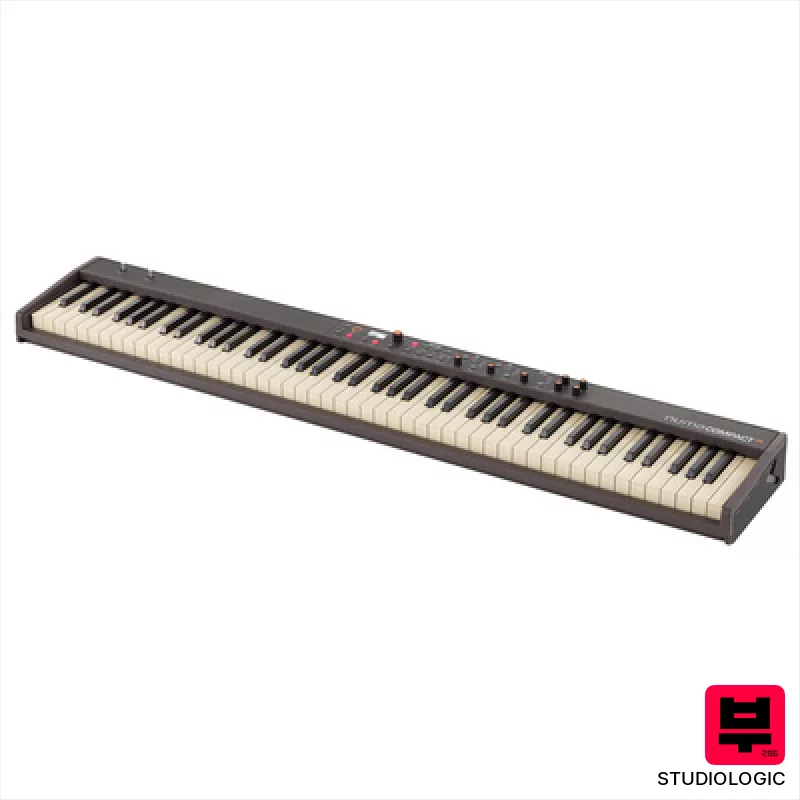
Studiologic Numa Compact SE
- • Surprisingly good sound for the size, thanks to the custom speakers.
- • TP/9 piano action offers decent responsiveness for a compact stage piano.
- • Built-in speakers eliminate the need for external amplification initially.
- • Joystick controllers offer quick, intuitive modulation possibilities.
- • Semi-weighted action lacks the depth and nuance of fully-weighted keys.
- • Limited polyphony may become apparent with complex layered sounds.
- • The OLED display, while clear, is relatively small and can be hard to read in bright light.
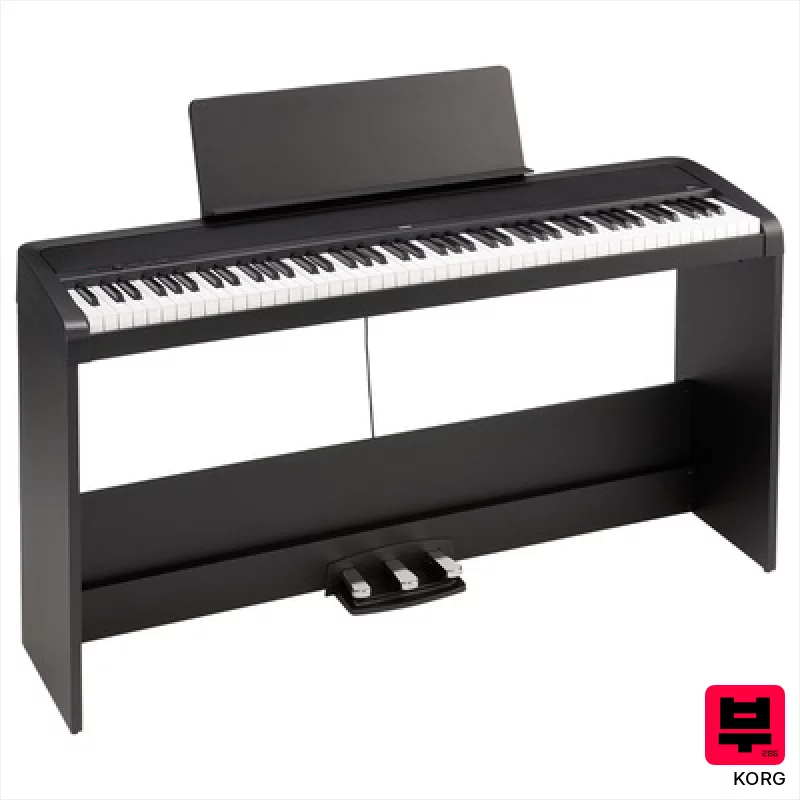
Korg B2+ SP Black
- • Excellent Italian/German grand piano samples offer surprising realism.
- • The included stand and pedal provide a complete, ready-to-play setup.
- • Hammer action provides a decent learning experience for aspiring pianists.
- • Compact size makes it suitable for smaller spaces and portability.
- • The plastic key feel lacks the premium heft of fully weighted keys.
- • Speakers, while adequate, won't satisfy serious performance needs.
- • Limited sound selection compared to higher-end stage pianos.
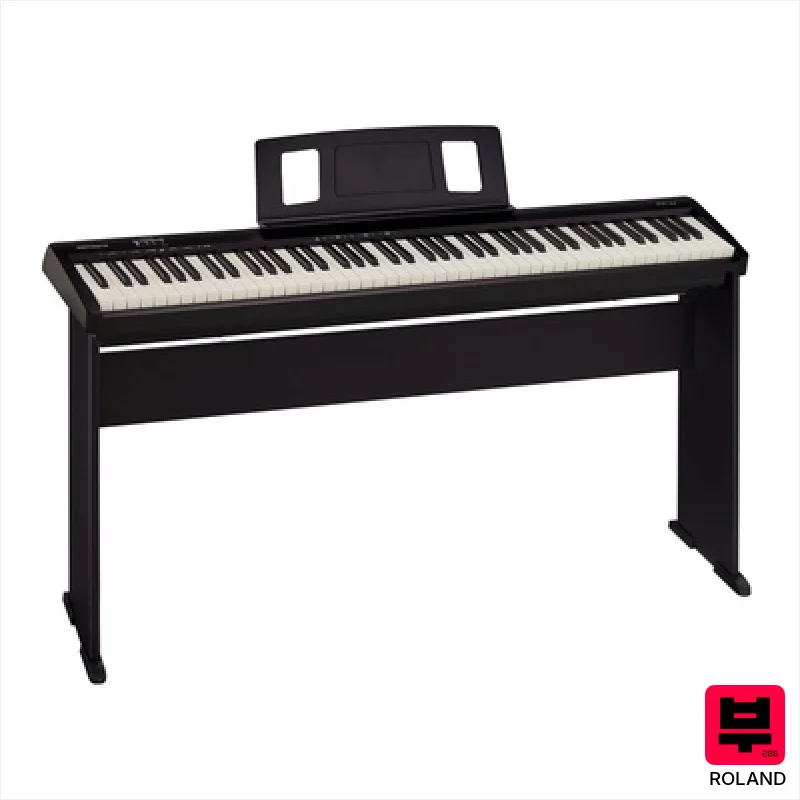
Roland FP-10 Stand Bundle
- • PHA-4 keyboard provides a surprisingly realistic piano feel
- • Compact footprint makes it ideal for smaller spaces or travel
- • SuperNATURAL piano sounds are genuinely impressive for the price point
- • Included stand offers a stable and functional playing experience
- • Speakers are adequate but lack the depth for serious performance work
- • Limited sound selection compared to more expensive stage pianos
- • USB-B connection restricts computer connectivity options somewhat
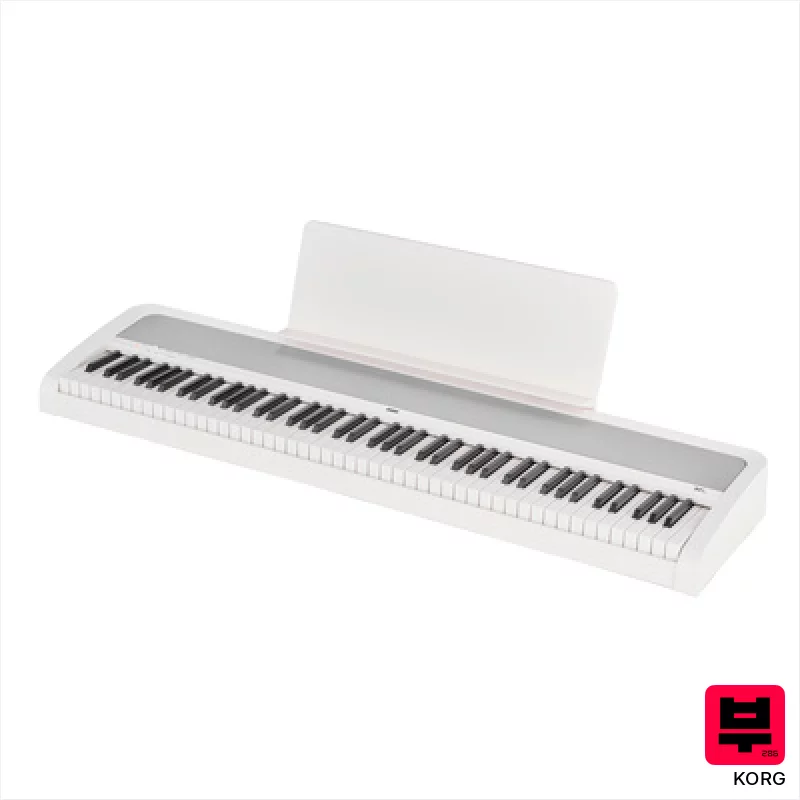
Korg B2+ White
- • Italian/German piano samples offer surprisingly rich, nuanced tones.
- • Hammer action provides decent responsiveness for beginner to intermediate players.
- • Compact size and integrated speakers make it easily portable for practice.
- • Included damper pedal and software bundle adds genuine value.
- • Hammer action lacks the depth and subtlety of higher-end graded actions.
- • Speaker output is adequate but lacks the power for performance situations.
- • Limited sound selection compared to more expensive stage pianos.
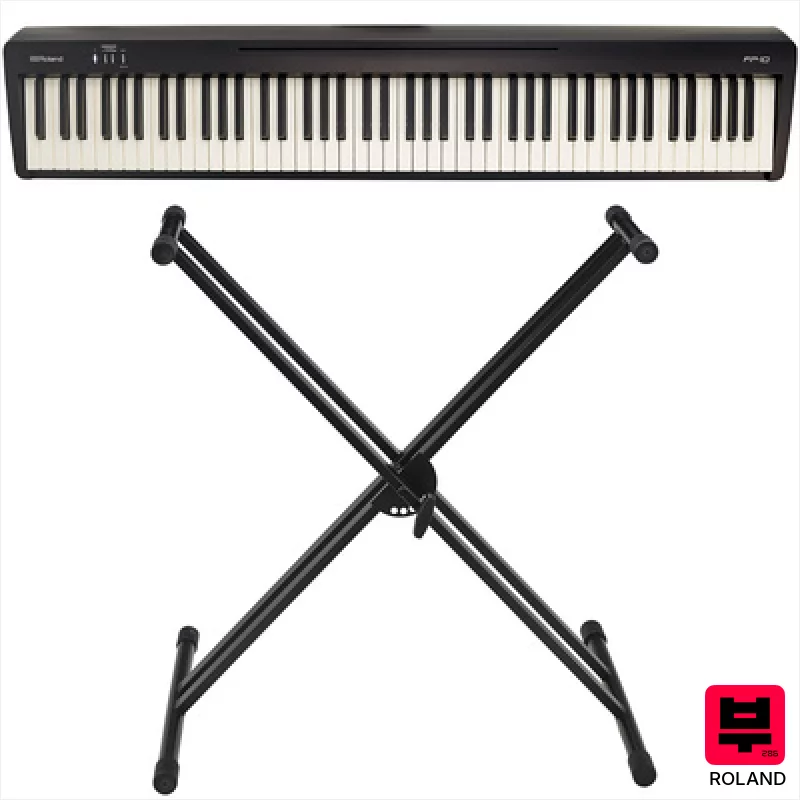
Roland FP-10 Set
- • PHA-4 action provides a surprisingly realistic, responsive piano feel.
- • SuperNATURAL sound engine delivers decent piano tones for the price point.
- • Compact design and lightweight for easy portability and setup.
- • Bluetooth MIDI connectivity adds versatility for modern digital workflows.
- • Speakers are weak; external amplification is highly recommended for performance.
- • Limited sound selection compared to more expensive stage pianos.
- • The included pedal feels cheap and lacks nuanced responsiveness.
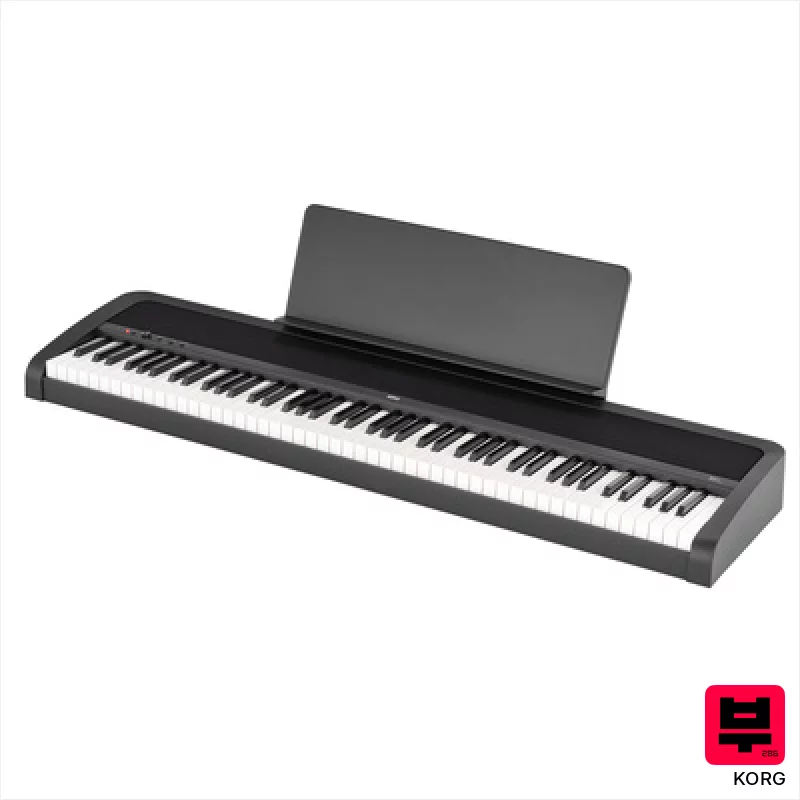
Korg B2+ Black
- • Excellent value for an 88-key stage piano.
- • Italian/German grand piano samples offer surprising realism.
- • Lightweight and portable for gigging musicians.
- • Decent built-in speakers for practice and small rooms.
- • Key action lacks the nuance of higher-end weighted actions.
- • Limited sound selection compared to more expensive stage pianos.
- • Mini-jack connections feel a bit cheap for a stage instrument.

Roland FP-10
- • PHA-4 action provides a surprisingly realistic, responsive key feel
- • SuperNATURAL piano sounds offer a decent, usable tonal palette
- • Compact design makes it ideal for smaller spaces and portability
- • Bluetooth MIDI expands connectivity without requiring extra cables
- • Speakers are underpowered; headphone use highly recommended for serious practice
- • Limited sound selection compared to more expensive stage pianos
- • Plastic construction, while lightweight, lacks premium feel and durability
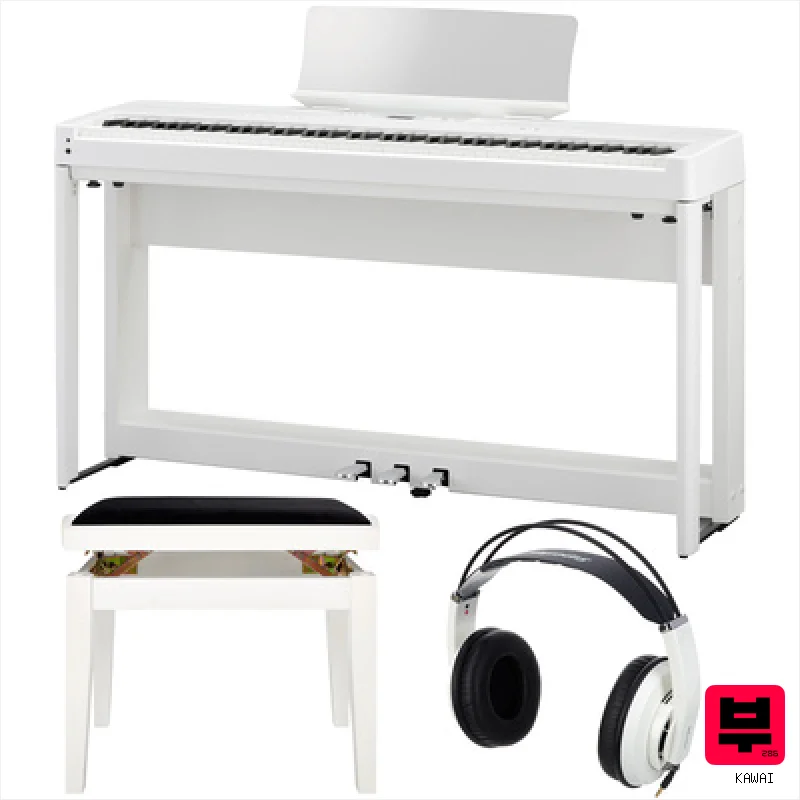
Kawai ES-920 W Deluxe Bundle
- • Triple sensor key action simulates real piano pressure points
- • Includes F-10H sustain pedal and power supply in bundle
- • Bluetooth aptX support for high-quality wireless audio
- • 256-note polyphony handles complex orchestral arrangements easily
- • Only two small 20-watt speakers limit room fill
- • No specific acoustic piano sample source listed in text
- • Weight of 17kg may be heavy for small venues

Kawai ES-920 B Deluxe Bundle
- • RHIII action convincingly simulates acoustic piano touch and response
- • Harmonic Imaging XL delivers genuinely warm, nuanced piano tones
- • Bluetooth audio playback adds significant convenience for practice and performance
- • Solid build quality and included F-10H pedal enhance the overall experience
- • Speaker system adequate for practice, lacks power for larger venues
- • Limited sound selection compared to higher-end workstations
- • 17kg weight makes transport less convenient for solo performers

Kawai MP-7 SE Stage Bundle
- • RH3 action convincingly mimics acoustic grand piano feel
- • SK-EX and SK-5 piano sounds are remarkably authentic and nuanced
- • Comprehensive effects suite expands sonic possibilities significantly
- • Roadworx stand provides stable and adjustable support for performance
- • LCD screen is relatively small and lacks modern clarity
- • MP7 SE's build feels somewhat plasticky compared to higher-end Kawai models
- • Virtual Tone Wheel organ, while present, is a simplified emulation.
Every stage pianos that matches
72 models match this page. The 15 above are covered in detail; the rest are listed here with their published specifications.
| # | Model | Specifications | Price |
|---|---|---|---|
| 16 | Kawai MP-7 SE | Weight 22.5 kg · Keys 88 keys | $1,643 |
| 17 | Roland FP-60X WH Home Bundle | Weight 19.3 kg · Keys 88 keys | $1,637 |
| 18 | Roland FP-60X BK Home Bundle | Weight 19.3 kg · Keys 88 keys | $1,592 |
| 19 | Kawai ES-520 W Deluxe Bundle | Weight 14.5 kg · Keys 88 keys | $1,508 |
| 20 | Kawai ES-520 B Deluxe Bundle | Weight 14.5 kg · Keys 88 keys | $1,492 |
| 21 | Kawai ES-920 W | Weight 17 kg · Keys 88 keys | $1,478 |
| 22 | Kawai ES-920 B | Weight 17 kg · Keys 88 keys | $1,421 |
| 23 | Kawai ES-520 W | Weight 14.5 kg · Keys 88 keys | $1,037 |
| 24 | Kawai ES-520 B | Weight 14.5 kg · Keys 88 keys | $1,022 |
| 25 | Korg SP-280 BK Bundle | Weight 19 kg · Keys 88 keys | $738 |
| 26 | Korg SP-280 BK Bundle | Weight 19 kg · Keys 88 keys | $727 |
| 27 | Korg SP-280 BK | Weight 19 kg · Keys 88 keys | $647 |
| 28 | Dexibell Vivo S2 | Weight 8.5 kg · Key action Weighted keys | $1,933 |
| 29 | Viscount Legend `70s Compact | Weight 16.2 kg · Key action Weighted keys | $1,808 |
| 30 | Yamaha P-S500 B | Weight 21.8 kg · Key action Weighted keys | $1,719 |
| 31 | Casio PX-S6000 Bundle | Weight 14.8 kg · Key action Weighted keys | $1,535 |
| 32 | Casio PX-S6000 | Weight 14.8 kg · Key action Weighted keys | $1,444 |
| 33 | Studiologic Numa X Piano 88 | Weight 14 kg · Key action Weighted keys | $1,421 |
| 34 | Kurzweil KaP1-LB | Weight 19.7 kg · Key action Weighted keys | $909 |
| 35 | Kurzweil KaP1-WH | Weight 19.7 kg · Key action Weighted keys | $909 |
| 36 | Korg D1 Bag Bundle | Weight 16 kg · Key action Weighted keys | $659 |
| 37 | Thomann DP-28 WH Digital Piano Bundle | Weight 12.5 kg · Key action Weighted keys | $631 |
| 38 | Thomann DP-28 Plus WH Thon Case Set | Weight 12.5 kg · Key action Weighted keys | $625 |
| 39 | Thomann DP-28 Digital Piano Bundle | Weight 12.5 kg · Key action Weighted keys | $602 |
| 40 | Korg D1 | Weight 16 kg · Key action Weighted keys | $568 |
| 41 | Thomann DP-28 Plus Thon Case Set | Weight 12.5 kg · Key action Weighted keys | $567 |
| 42 | Yamaha P-45 B Mega Bundle | Weight 11.5 kg · Key action Weighted keys | $488 |
| 43 | Thomann DP-28 WH Plus Set | Weight 12.5 kg · Key action Weighted keys | $477 |
| 44 | Kurzweil KaE1-WH | Weight 14.8 kg · Key action Weighted keys | $454 |
| 45 | Kurzweil KaE1-LB | Weight 14.8 kg · Key action Weighted keys | $443 |
| 46 | Thomann DP-28 Plus WH | Weight 12.5 kg · Key action Weighted keys | $431 |
| 47 | Yamaha P-45 B Bag Bundle | Weight 11.5 kg · Key action Weighted keys | $415 |
| 48 | Yamaha P-45 B Stand Bundle | Weight 11.5 kg · Key action Weighted keys | $397 |
| 49 | Thomann DP-28 Plus | Weight 12.5 kg · Key action Weighted keys | $379 |
| 50 | Yamaha P-45 B | Weight 11.5 kg · Key action Weighted keys | $374 |
| 51 | Thomann SP-120 Set | Weight 6.2 kg · Key action Weighted keys | $199 |
| 52 | Thomann SP-120 | Weight 6.2 kg · Key action Weighted keys | $181 |
| 53 | Korg SV-2 73 | Weight 17.2 kg | $1,819 |
| 54 | Roland RD-88 EX | Weight 13.5 kg | $1,410 |
| 55 | Studiologic Numa X Piano 73 | Weight 11.7 kg | $1,250 |
| 56 | Roland FP-40 BK Case Bundle | Weight 14 kg | $1,205 |
| 57 | Roland FP-40 WH Case Bundle | Weight 14 kg | $1,205 |
| 58 | Roland FP-40 BK | Weight 14 kg | $966 |
| 59 | Roland FP-40 WH | Weight 14 kg | $966 |
| 60 | Roland RD-08 | Weight 13.5 kg | $909 |
| 61 | Yamaha P-225 B Home Bundle | Weight 11.5 kg | $909 |
| 62 | Yamaha P-225 WH Home Bundle | Weight 11.5 kg | $898 |
| 63 | Yamaha P-225 B Bag Bundle | Weight 11.5 kg | $829 |
| 64 | Yamaha P-225 WH Bag Bundle | Weight 11.5 kg | $818 |
| 65 | Roland FP-E50 | Weight 17.1 kg | $795 |
| 66 | Yamaha P-145 B BT Mega Bundle | Weight 11.1 kg | $723 |
| 67 | Yamaha P-225 B | Weight 11.5 kg | $647 |
| 68 | Yamaha P-225 WH | Weight 11.5 kg | $639 |
| 69 | Yamaha P-145 B BT Home Bundle | Weight 11.1 kg | $591 |
| 70 | Korg Liano Live! | Weight 5.9 kg | $556 |
| 71 | Yamaha P-145 B BT | Weight 11.1 kg | $449 |
| 72 | Korg Liano | Weight 6 kg | $358 |
Stage Pianos by the numbers
Measured across all 72 models in this category, so «wide», «short» or «expensive» mean something you can check.
How to Choose the Best Stage Pianos
Key Action
This is king. Weighted hammer action is a must; the heavier, the better, but budget dictates. Look for consistent key travel and a decent amount of aftertouch - it's what separates a plastic feel from something approaching a real piano. Anything too light feels sloppy onstage.
Sound Engine & Voicing
Don't expect pristine concert grand samples. Focus on versatility - good Rhodes, Wurly, B3 emulations are invaluable. Listen for that 'fat midrange honk' in the electric pianos and whether the acoustic pianos have enough dynamic range without sounding brittle.
Polyphony & Memory
128-note polyphony is the baseline these days. More memory allows for more layers and effects - crucial for pads, strings, and complex arrangements. Running out of notes mid-song is a rookie mistake.
Connectivity & Routing
XLR outputs are non-negotiable for live work. MIDI in/out is essential for expanding your rig. USB audio interface functionality is a bonus for recording - saves on extra gear.
Build Quality & Portability
Stage pianos get abused. Check for sturdy construction, decent-sized knobs and faders (if applicable), and a reasonable weight. You're going to be lugging this around.
Buying Guide
At this price point, you're making trade-offs. Action is often the first thing to suffer - expect it to be good, but not Steinway-level. Sound quality will be decent, but don't expect pristine, sampled realism. Prioritize the features you actually use - if you're mostly a Rhodes player, don't pay extra for a mediocre acoustic piano engine. A good power supply is also worth noting; flaky power can kill a gig.
How This List Is Built
We don't play these instruments — we're a catalog, not a review desk, and we'd rather say so than pretend otherwise. This page covers 72 stage pianos from the Thomann catalogue, which is the largest single source of specification data in this category: 15 in detail, the rest listed with their specifications.
Position is computed, not curated. We parse the manufacturer's own description into actual values — nut width, scale, fret count, fingerboard radius, size, alloy — and rank on them: how many specifications a model has published, how many of them are measurable numbers, and how precisely it meets this page's criterion. A product image adds a little. Price is not a ranking signal: it tells you nothing about whether a neck fits your hand. The same inputs always produce the same order, so nothing here is shuffled to look fresh.
What this list is good for: narrowing a category down to a shortlist by spec and budget. What it isn't: a substitute for hearing an instrument. Before you buy, read hands-on reviews and, where you can, play it. Full methodology.

