AudioFu
AudioFu Chart · October 2026
Best Parametric Equalizers Under $2,000 2026
The top pick is Heritage Audio Lang PEQ-2 Parametric Equalizer ($1,063). Lindell Audio LiNTEC gives you the most for the money at $470. Bettermaker Stereo Passive EQ leads the high end. Ranked by the AudioFu Index from 15 models across 10 brands, prices checked every night.
Last updated: October 12, 2026
Top 10
Full detail for the 10 highest AudioFu Index scores. Every other model is listed below.
-
Heritage Audio Lang PEQ-2 Parametric Equalizer
LANG PEQ-2 Equalizer · Heritage Audio
9 for sale on Reverb1 finish at Thomann
- Size19"
- Weight3.08 kg
The LANG PEQ-2 is a seriously impressive single-channel EQ, drawing heavily from classic Neve designs. It’s got that warm, forgiving character that’s fantastic for tracking vocals, guitars, or adding polish to a mix. If you're after a touch of vintage vibe and precise control without a complex feature set, this is a great choice for engineers and producers.
Pros
- Discrete Class A circuitry delivers a remarkably smooth, musical EQ response.
- The extensive shelving filters offer surgical control over low and high frequencies.
- Solid, weighty build with robust metal chassis inspires confidence and longevity.
Cons
- The 2U height might be restrictive for smaller racks or mobile setups.
- Single-channel design limits its application for complex stereo processing.
85AudioFu
Index↓ 4.0%since Aug 14 · lowest so far$1,108 · Aug 14$1,063 now$1,063€949 at Thomann · in stockCheck price ↗ -
Elysia xfilter 500 Stereo 500 Series Equalizer Module
xfilter · Elysia
8 for sale on Reverb1 finish at Thomann
- Size19"
- Weight2 kg
The Elysia xfilter is a serious tool for engineers and mixing professionals who demand surgical precision and a pristine sound. Its Class-A design and meticulously chosen components deliver an unparalleled level of clarity and control, making it a premium-priced but rewarding investment for critical listening and mastering applications.
Pros
- Class-A topology delivers exceptionally clean and musical equalization.
- True stereo linking ensures phase coherence and a wide stereo image.
- High-quality, low-tolerance capacitors minimize distortion and noise.
Cons
- The stepped potentiometer, while precise, can limit subtle adjustments.
- Its high-end price point places it beyond many home studios' budgets.
85AudioFu
Index↓ 7.2%since Aug 14 · lowest so far$1,400 · Aug 14$1,299 now$1,299€1,159 at Thomann · in stockCheck price ↗ -
Heritage Audio SYMPH EQ Stereo Master Bus Asymptotic Equalizer
Symph EQ · Heritage Audio
7 for sale on Reverb1 finish at Thomann
- Size19"
The Heritage Audio Symph EQ is a beautifully realized mastering-grade equalizer, delivering the sonic character of classic Carnhill designs. It’s a fantastic choice for engineers and producers seeking to impart a refined, analog warmth and subtle harmonic enhancement to their mixes—especially those working in genres like acoustic, jazz, or anything requiring a polished, vintage-inspired sound.
Pros
- Carnhill-inspired design delivers a uniquely musical, 'vintage' warmth.
- Transformer-coupled I/O adds subtle harmonic richness and headroom.
- Asymptotic shelving EQ provides incredibly smooth, natural-sounding adjustments.
Cons
- The Class-A output stage can run a bit warm, requiring adequate ventilation.
- Limited to stereo operation; no multi-channel processing capability.
72AudioFu
IndexStableno change since Aug 14Aug 14$1,713 now$1,713€1,529 at Thomann · in stockCheck price ↗ -
- Size19"
- Weight3.5 kg
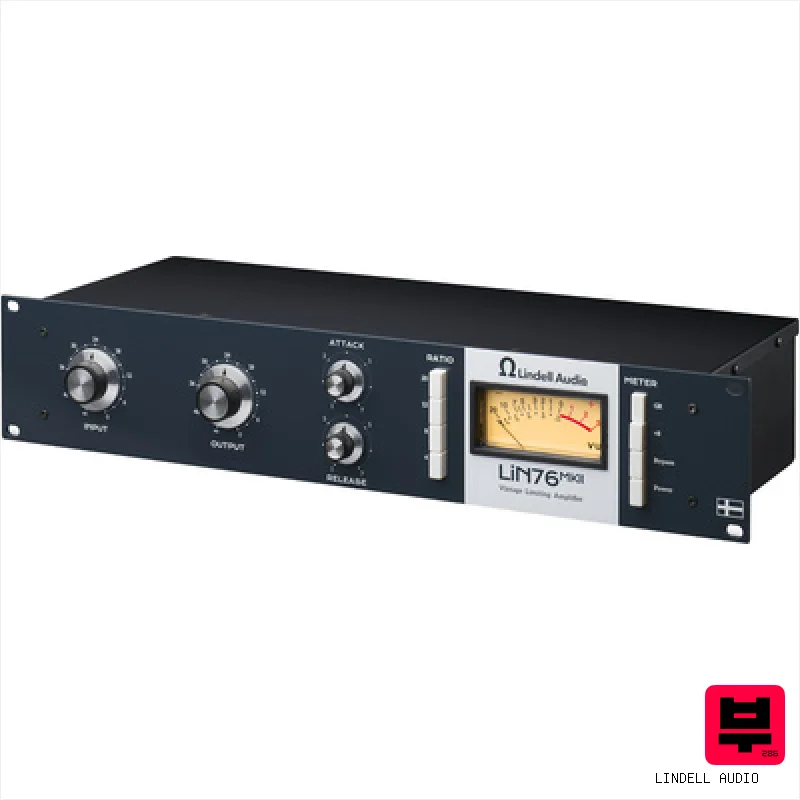
The Lindell LiNTEC is a cool, focused EQ – it’s not trying to be everything to everyone. It excels at adding subtle warmth or aggressive low-end punch to drums, bass, or even vocals. If you're looking for a simple, characterful EQ to add some vintage vibe to your mixes, this is a solid choice.
Pros
- Gridded pots offer a unique, tactile feel and characterful response.
- OPA1731 provides a clean, punchy sound with excellent transient response.
- The flexible EQ ranges cover a surprisingly broad spectrum of tonal shaping.
Cons
- Single-band design limits versatility compared to multi-band EQs.
- 6.3mm jacks feel dated and less convenient than modern connectors.
64AudioFu
Index↓ 10.7%since Aug 14 · lowest so far$526 · Aug 14$470 now$470€419 at Thomann · in stockCheck price ↗ -
- Weight2.7 kg
This Bettermaker is a fascinating piece of kit. It’s a passive EQ, which means it's inherently clean, but with the convenience of digital control—a unique combination. It’s ideal for engineers and producers seeking a pristine, characterful stereo EQ for mastering or critical mix processing where recall and integration are paramount.
Pros
- Exceptional passive design yields a remarkably clean, musical EQ response.
- Digital control offers precise recall and DAW integration, a clever hybrid approach.
- Robust construction with high-quality components ensures longevity and reliability.
Cons
- The fixed frequency bands limit flexibility compared to fully parametric EQs.
- Stereo operation doubles the cost and rack space requirements.
63AudioFu
Index↓ 18.4%since Aug 14 · lowest so far$2,128 · Aug 14$1,736 now$1,736€1,549 at Thomann · in stockCheck price ↗ -
- Size19"
The Warm Audio EQP-WA GainMod is a seriously classy piece of gear. Its tube warmth and transformer mojo add a distinct character to anything you run through it – think vintage consoles and that classic analog vibe. This is a sweet upgrade for engineers and producers wanting that specific, polished tone for vocals, guitars, or even drums.
Pros
- CineMag transformers deliver a distinct, warm saturation and harmonic enhancement.
- GainMod feature offers flexible gain staging between devices, crucial for mastering.
- Discrete inductor EQ section provides precise control and musical shaping.
Cons
- Single-channel design limits its utility for stereo processing workflows.
- High-end price point puts it out of reach for budget-conscious studios.
59AudioFu
Index↓ 16.3%since Aug 14 · lowest so far$895 · Aug 14$750 now$750€669 at Thomann · in stockCheck price ↗ -
- Size19"
- Weight3.2 kg
This unit brings the warm, transparent character of the famous Studer 169 console into your studio. It handles frequencies up to 20kHz with a clean signal path and a useful presence control. Perfect for analog mixing or when you need a reliable equalizer that sounds great without extra buttons.
Pros
- Uses original Studer 169 circuit design for classic sound
- Offers high shelf boost up to 15dB at 20kHz
- Features continuously variable presence filter with 11dB swing
Cons
- Heavy at 3.2 kg for transport compared to modern units
- Lacks digital signal processing or preset storage capabilities
59AudioFu
IndexStableno change since Aug 20Aug 20$1,086 now$1,086€969 at Thomann · in stockCheck price ↗ -
- Size9.5"
The EQ-81 MKIII nails that vintage vibe—it’s a fantastic way to add some classic console color to your mix. It’s particularly good for vocals, bass, and drums needing a touch of warmth and clarity, and it’s a surprisingly affordable entry into analog EQ territory.
Pros
- Classic 1081 EQ character delivers warmth and musicality
- Tantalum capacitors contribute to a clean, detailed sound
- Stepped controls ensure repeatable and precise EQ settings
Cons
- Limited to four bands, restricting complex equalization tasks
- 6.3mm jacks feel somewhat dated compared to modern connectors
57AudioFu
Index↓ 2.5%since Aug 14 · lowest so far$447 · Aug 14$436 now$436€389 at Thomann · in stockCheck price ↗ -
- Weight2.8 kg
The 1974 delivers a classic, polished sound—think Neve-esque but with a Drawmer edge. It's a fantastic choice for mixing engineers wanting subtle enhancements or a vintage vibe, and it’s great for adding some warmth and character to sterile recordings. This is an easy-to-use, powerful tool for any studio.
Pros
- Drawmer's signature sonic warmth and clarity is immediately apparent
- The 4-band design offers precise tonal shaping without excessive complexity
- High-quality discrete component construction ensures longevity and reliability
Cons
- The EQ's fixed bandwidths may limit flexibility for some users
- Relatively high price point places it in a premium-priced category
57AudioFu
Index↓ 0.8%since Aug 14 · lowest so far$1,230 · Aug 14$1,220 now$1,220€1,089 at Thomann · in stockCheck price ↗ -
- Weight4.2 kg
The 1971 is a classic for a reason – it's clean, precise, and just oozes that vintage Drawmer vibe. If you're a mixing engineer or producer looking for subtle, transparent EQ adjustments without introducing harshness, this is a fantastic tool. It's a bit of a specialist, though, not a do-everything solution.
Pros
- Drawmer's signature transparency delivers clean, precise tonal shaping.
- Excellent filter slopes (up to 12dB/octave) offer surgical control.
- Dual-mono design provides flexibility for stereo or mono processing.
Cons
- Limited bandwidth options compared to fully parametric equalizers.
- The vintage design might feel slightly dated for modern workflows.
55AudioFu
Index↓ 3.3%since Aug 14 · lowest so far$1,911 · Aug 14$1,848 now$1,848€1,649 at Thomann · in stockCheck price ↗
All 15 parametric equalizers
Same index, same nightly prices — compact. Colour options of one model share a row. Tap a photo to zoom.
- 11
Golden Age Audio Premier EQ-73Golden Age Audio50↓ 5.3%$526€469$526€469Check ↗
- 12
Elysia xfilter qubeElysia49↓ 1.0%$1,075€959$1,075€959Check ↗
- 13
Golden Age Audio Project EQ-73 MKIIGolden Age Audio48Stable$425€379$425€379Check ↗
- 14
Rolls RPQ160B Parametric EqualizerRPQ 160b · Rolls43↓ 2.8%$391€349$391€349Check ↗
- 15
Behringer DEQ2496 Ultra-Curve BundleBehringer32↓ 3.3%$324€289$324€289Check ↗
Parametric Equalizers by the numbers
Measured across all 15 models we track, not a sample.
Median $1,063 — half of all parametric equalizers here cost less.
median of 8 models · 0.15 kg–3.5 kg
median of 7 models · 9.5"–19"
How to choose the best parametric equalizers
Bands/Filters
More bands (shelves, peaks, notches) give you finer control. 5-band EQs are a good starting point, but 9+ bands offer surgical precision for complex mixes. Trade-off: more bands often mean a steeper learning curve.
Q Control
This is crucial. Q determines the width of the frequency band being affected. Low Q values are broad and gentle; high Q values are narrow and aggressive. A wide Q can smooth out a harsh transient, while a narrow Q can surgically remove a resonant frequency.
Dynamic EQ Capabilities
Some units offer dynamic EQ, allowing bands to react to the input signal. This is fantastic for controlling unruly frequencies that pop up only under certain playing conditions, but it adds complexity and cost.
Filter Types
Look for options like high-pass, low-pass, band-pass, and notch filters. Different filters excel at different tasks - cleaning up low-end rumble, sculpting a vocal presence, or creating unique effects.
Workflow & Interface
A cluttered or unintuitive interface can slow you down in a live setting or during a critical recording take. Consider ease of use, especially if you're not an EQ wizard. Physical knobs are often preferable for quick adjustments.
Buying guide
So you need a parametric EQ, huh? It's a sign you're serious about shaping your tone, whether you're dialing in a perfect snare sound in the studio or carving out space for your bass in a crowded band mix. Forget the boutique stuff - we're focusing on getting serious sonic control without breaking the bank. Let's find you a parametric EQ under $2000 that actually delivers.
At this price point, you're going to see trade-offs. Some units might compromise on build quality (plastic knobs instead of metal, a less robust enclosure). Dynamic EQ features are usually a premium add-on.
Don't be swayed by a huge number of features if you don't understand them - a simpler, well-implemented EQ will always be better than a complex one you can't use effectively. Focus on Q control and filter versatility; those are the core of a good parametric.
How the AudioFu Index works
Five measured signals and nothing else — no stars from strangers, no “tested by experts” we didn’t do. The weights are fixed and public. We don’t play these instruments; we measure the market around them.
This chart covers 15 parametric equalizers from the Thomann catalogue. Before you buy, read hands-on reviews and, where you can, play it. Full methodology.
AudioFu earns a commission when you buy through our Thomann links. It never changes the order — the index does.
- Demand40%
How many of this exact model are for sale on Reverb right now — what musicians actually buy and resell.
- Lineup20%
How many finishes Thomann stocks — makers expand the models that sell.
- Price15%
Where the price has moved since we started tracking in August.
- Specs15%
How completely the maker documents it.
- Maker10%
How deep the brand’s range is in this category.
Questions
What's the difference between a graphic EQ and a parametric EQ?
Graphic EQs have fixed frequencies and Q values; parametric EQs let you adjust those parameters. Parametric EQs are far more flexible and precise, but also more complex to learn.
Can I use a parametric EQ to 'fix' a bad recording?
EQ isn't magic. It can improve a recording, but it can't completely salvage a poorly captured signal. Think of it as polish, not a miracle cure.
Do I need a digital or analog parametric EQ?
Both have their strengths. Analog EQs often offer a 'musical' character and can add pleasing harmonic distortion. Digital EQs are more precise, offer more features, and are often more affordable. It depends on your sonic goals and budget.
What's a 'high-pass filter' and why should I use it?
A high-pass filter (HPF) cuts frequencies below a certain point. It's essential for cleaning up low-end rumble from stage vibrations, mic handling noise, or unwanted sub-bass frequencies that muddy your mix.
I'm overwhelmed! Where do I even start?
Start with a simple EQ and focus on learning the basics: high-pass filtering, subtle boosts and cuts to shape the overall tone, and how Q affects the character of your changes. Experiment and listen carefully!