
Best Parametric Equalizers for Studio Mixing 2026
Alright, so you're looking for a parametric EQ for your studio mixes? Good choice - it's a massive step up from a basic graphic. Forget those presets and 'easy mode' plugins; a parametric gives you surgical control to shape your sounds, carve out space in the mix, and really dial in the vibe you're after. But there are a lot to choose from, and not all of them are created equal. Let's break down what to look for.
Last updated: July 15, 2026 • Next update: July 22, 2026

Heritage Audio Motorcity EQualizer Stereo Set
- • Carnhill output transformer adds a desirable 'color' to the signal.
- • Limited frequency band selection compared to modern parametric EQs.
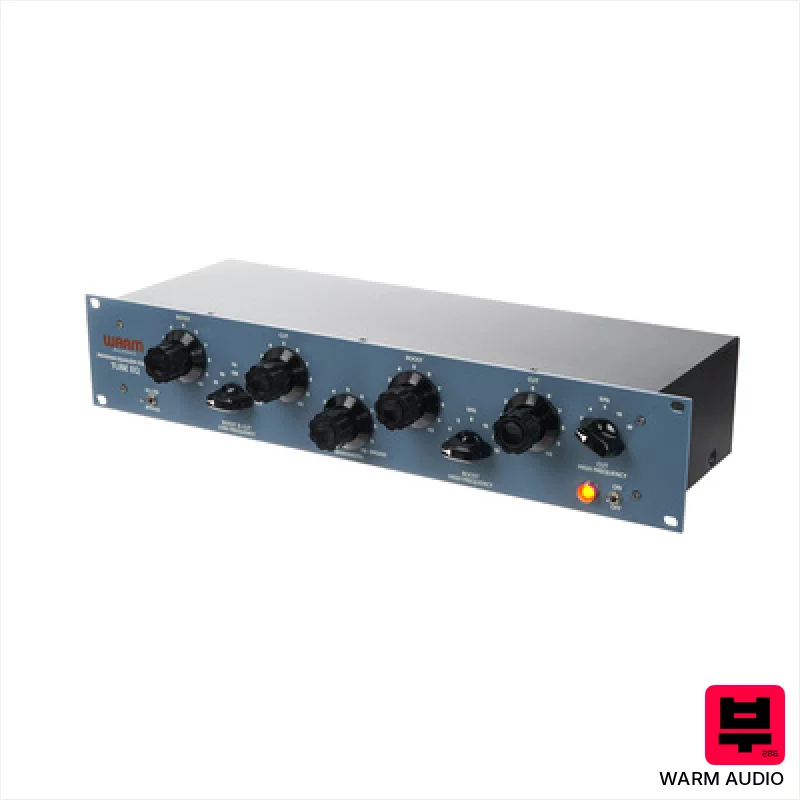
Warm Audio EQP-WA GainMod
- • CineMag transformers deliver a distinct, warm saturation and harmonic enhancement.
- • GainMod feature offers flexible gain staging between devices, crucial for mastering.
- • Discrete inductor EQ section provides precise control and musical shaping.
- • Premium tube complement (12AX7, 12AU7) contributes to a rich, vintage tone.
- • Single-channel design limits its utility for stereo processing workflows.
- • High-end price point puts it out of reach for budget-conscious studios.
- • EQ frequency options, while comprehensive, could feel overwhelming for beginners.

Golden Age Audio Project EQ-73 MKII
- • Vintage-style electronics deliver a warm, musical tone.
- • Tantalum capacitors contribute to a clean, detailed sound.
- • Detented pots provide precise frequency selection and repeatability.
- • Flexible I/O options accommodate various studio setups.
- • Build quality, while decent, doesn't match high-end, all-discrete designs.
- • Limited to three bands, restricting complex equalization possibilities.
- • External power supply adds clutter and a potential point of failure.
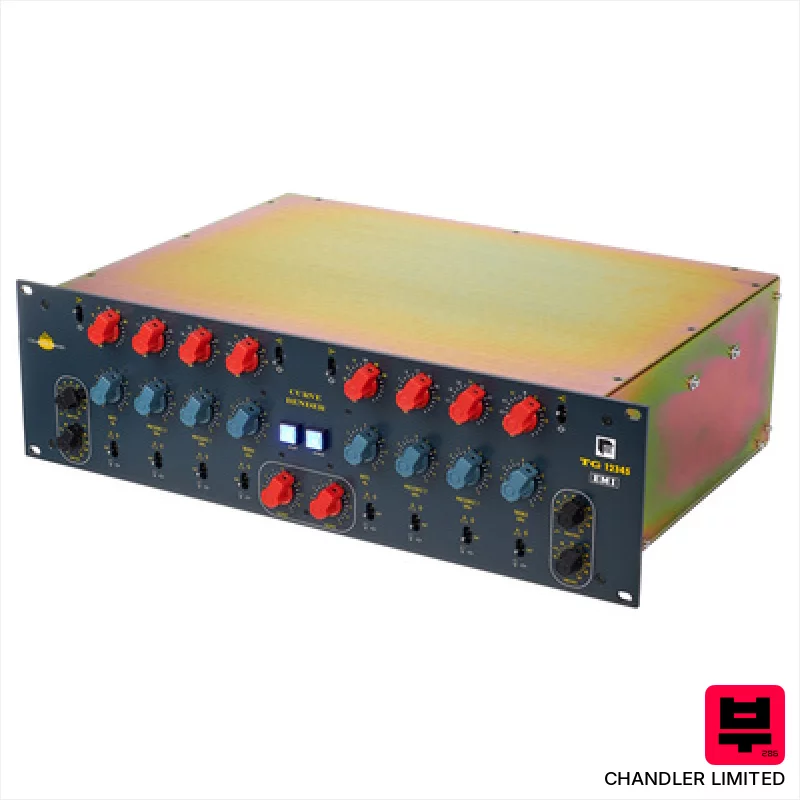
Chandler Limited EMI TG 12345 Curve Bender
- • Discrete transistor circuitry delivers a uniquely warm, harmonically rich tone.
- • The detented gain controls offer precise, repeatable EQ shaping.
- • Based on a legendary console, capturing Abbey Road’s signature sound.
- • Robust 19-inch rackmount build ensures durability for studio use.
- • The price point places it firmly in the high-end, professional category.
- • Requires a separate power supply, adding to the overall investment.
- • Limited versatility compared to more flexible parametric equalizers.

Elysia museq
- • Discrete Class-A design delivers exceptional clarity and warmth
- • Matched potentiometers ensure precise, repeatable EQ adjustments
- • Active filter stages eliminate capacitor coloration for pristine sound
- • Wide frequency response handles sub-bass and high-frequency detail
- • Premium-priced, a significant investment for most studios
- • 2U rack height can be restrictive in smaller spaces
- • Limited recall options compared to fully digital EQ solutions
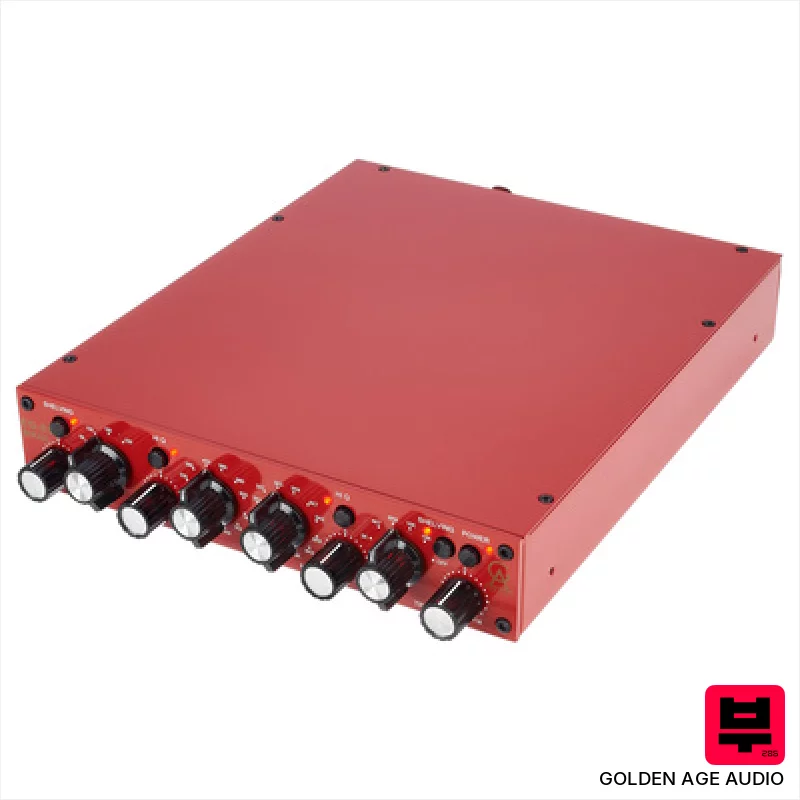
Golden Age Audio Project EQ-81 MKIII
- • Classic 1081 EQ character delivers warmth and musicality
- • Tantalum capacitors contribute to a clean, detailed sound
- • Stepped controls ensure repeatable and precise EQ settings
- • Compact 1U design saves valuable rack space
- • Limited to four bands, restricting complex equalization tasks
- • 6.3mm jacks feel somewhat dated compared to modern connectors
- • External power supply adds clutter and potential instability

Elysia xfilter qube
- • Detented potentiometers provide precise, repeatable EQ settings quickly.
- • Passive high-band filter offers less flexibility than fully parametric control.

Heritage Audio LANG PEQ-2 Equalizer
- • Discrete Class A circuitry delivers a remarkably smooth, musical EQ response.
- • The extensive shelving filters offer surgical control over low and high frequencies.
- • Solid, weighty build with robust metal chassis inspires confidence and longevity.
- • The variable bandwidth control allows for subtle shaping or aggressive boosts.
- • The 2U height might be restrictive for smaller racks or mobile setups.
- • Single-channel design limits its application for complex stereo processing.
- • The grid controls, while classic, can feel less precise than rotary knobs.
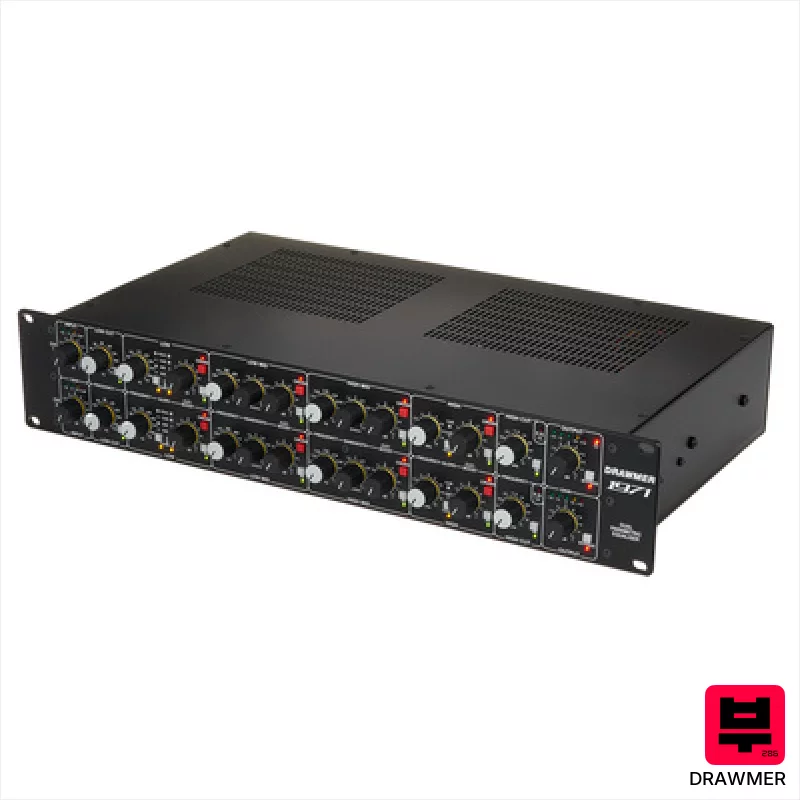
Drawmer 1971 Dual 4-Band Parametric
- • Drawmer's signature transparency delivers clean, precise tonal shaping.
- • Excellent filter slopes (up to 12dB/octave) offer surgical control.
- • Dual-mono design provides flexibility for stereo or mono processing.
- • Robust build quality; feels solid and dependable for studio use.
- • Limited bandwidth options compared to fully parametric equalizers.
- • The vintage design might feel slightly dated for modern workflows.
- • Premium-priced, making it a significant investment for smaller studios.
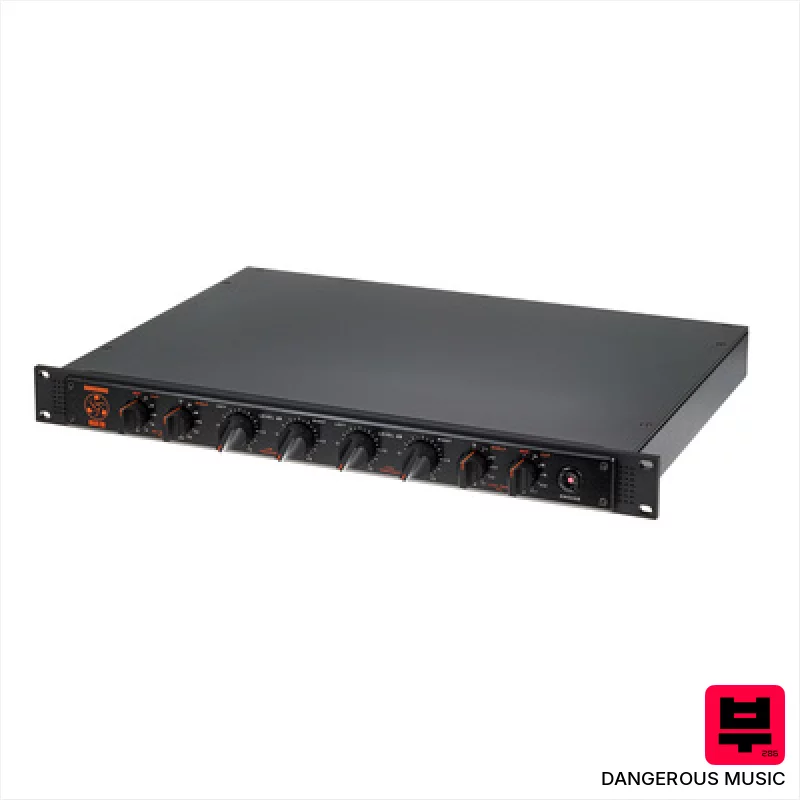
Dangerous Music BAX EQ
- • Screened potentiometers ensure exceptional repeatability and accuracy.
- • Relay-based filters maintain phase coherence across frequencies.
- • Wide Q shelving provides a natural, musical equalization response.
- • Ultra-low noise floor and distortion for pristine signal integrity.
- • The high price point places it out of reach for many studios.
- • Limited to two channels, restricting broader equalization tasks.
- • Relay-based filters, while phase-correct, introduce a tiny amount of latency.
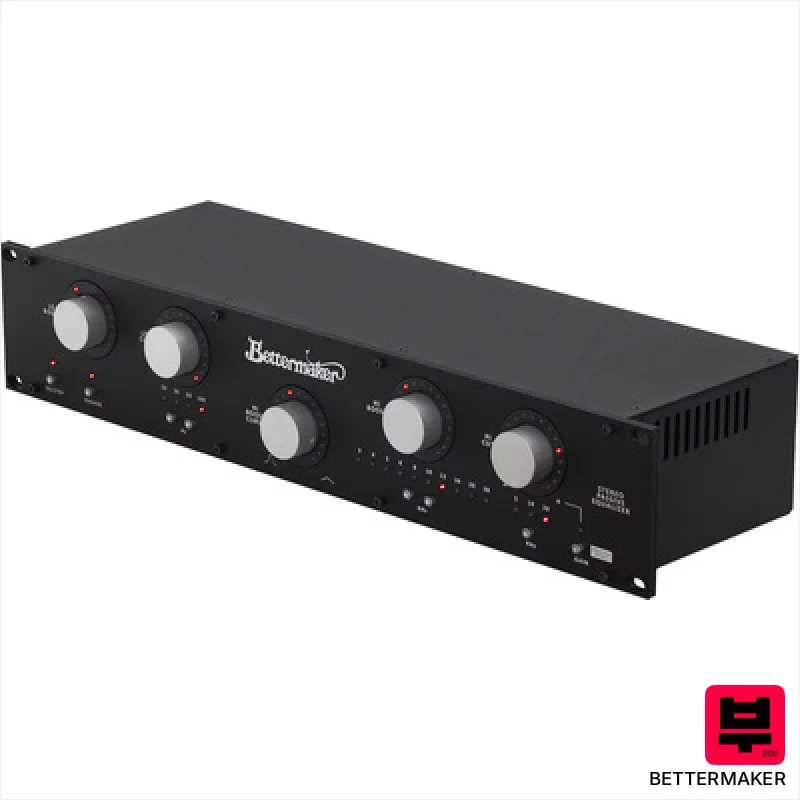
Bettermaker Stereo Passive EQ
- • Exceptional passive design yields a remarkably clean, musical EQ response.
- • Digital control offers precise recall and DAW integration, a clever hybrid approach.
- • Robust construction with high-quality components ensures longevity and reliability.
- • Fixed frequencies are surprisingly versatile, creating unique sonic textures.
- • The fixed frequency bands limit flexibility compared to fully parametric EQs.
- • Stereo operation doubles the cost and rack space requirements.
- • The digital control, while convenient, adds a layer of complexity for some users.

Elysia xfilter
- • Class-A topology delivers exceptionally clean and musical equalization.
- • True stereo linking ensures phase coherence and a wide stereo image.
- • High-quality, low-tolerance capacitors minimize distortion and noise.
- • Robust all-aluminum chassis provides excellent shielding and build quality.
- • The stepped potentiometer, while precise, can limit subtle adjustments.
- • Its high-end price point places it beyond many home studios' budgets.
- • The 1U height might pose rack space limitations for some users.

Manley Massive Passive XXV
- • Exceptional tube make-up gain adds warmth and subtle harmonic richness.
- • Passive design ensures pristine transparency and avoids coloration.
- • Cobalt blue finish and laser engraving elevate the aesthetic appeal.
- • Robust, all-steel construction ensures decades of reliable operation.
- • Significant weight makes portability and rack mounting challenging.
- • Passive design requires substantial gain staging considerations.
- • Limited frequency range compared to some active EQ solutions.

Rolls RPQ 160b
- • Solid build quality; feels robust for its class.
- • Flexible Q control allows for precise tonal shaping.
- • Versatile XLR, TRS, and RCA connectivity caters to varied setups.
- • 4-band parametric EQ offers substantial corrective and creative options.
- • Limited channel count restricts complex signal routing.
- • Metering is basic; lacks detailed visual feedback.
- • EQ range (+/- 15dB) may be insufficient for extreme correction.
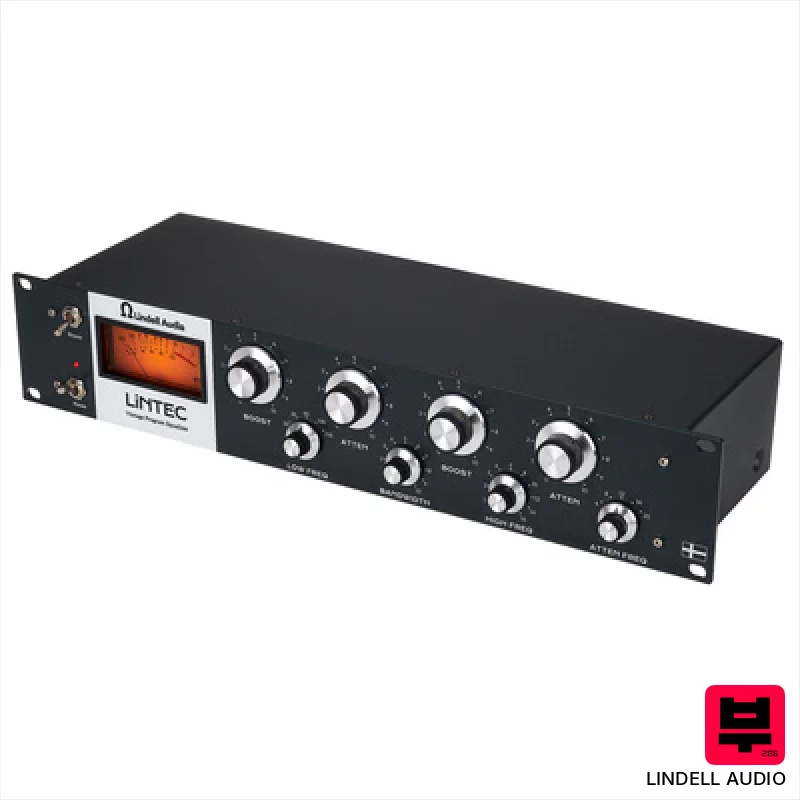
Lindell Audio LiNTEC
- • Gridded pots offer a unique, tactile feel and characterful response.
- • OPA1731 provides a clean, punchy sound with excellent transient response.
- • The flexible EQ ranges cover a surprisingly broad spectrum of tonal shaping.
- • Steel housing feels robust and contributes to a professional, weighty build quality.
- • Single-band design limits versatility compared to multi-band EQs.
- • 6.3mm jacks feel dated and less convenient than modern connectors.
- • Limited frequency selection may not suit all specific tonal needs.
How to Choose the Best Parametric Equalizers
Cleanliness/Noise Floor
A parametric EQ's sonic footprint shouldn't be a distraction. You want subtle adjustments, not hiss or muddiness introduced by the plugin itself. A noisy EQ is useless for surgical cuts.
Bandwidth Control (Q)
This is the core of a parametric. A wide Q lets you gently shape broad areas, while a narrow Q allows for precise cuts or boosts - think taming a harsh resonance on a snare or adding a little air to a vocal. Lack of Q control kills versatility.
Filter Types (Bell, Shelf, Notch, High/Low Pass)
Different filter types are essential for different tasks. Bell curves are your workhorses, shelves for broad tonal shaping, notches for surgical removal of problem frequencies, and high/low pass filters for cleaning up unwanted rumble or harshness.
Stereo Linking/Mid-Side Processing
Modern mixing often involves stereo widening and manipulating the center image. EQs that offer linked parameters or M/S processing give you far more creative control.
Workflow/Interface
A cluttered or confusing interface will slow you down and lead to frustration. The best EQs are intuitive, visually clear, and allow you to quickly make the adjustments you need.
Buying Guide
Don't fall for the 'more knobs = better EQ' trap. Some cheaper plugins overload you with options that don't actually sound great. Spend more on an EQ with a clean sound and a flexible interface - that's where you'll hear the difference. The ability to precisely control bandwidth is critical; if it's missing, you're just using a glorified graphic EQ. Look for linear phase options if phase shift is a concern, but be aware that they often come with processing overhead.
Our Methodology
We're not just looking at spec sheets here. We've spent countless hours A/B'ing these EQs on everything from acoustic guitars and vocals to driving drums and thumping basslines. We've thrown them into real mixes, listened critically on multiple systems, and compared them to classic hardware units. It's about how they feel and, more importantly, what they do for your music.

