 AudioFu
AudioFu Chart · October 2026
Best Parametric Equalizers for Beginner 2026
The top pick is Lindell Audio LiNTEC ($470). Elysia xfilter 500 Stereo 500 Series Equalizer Module leads the high end. Ranked by the AudioFu Index from 44 models across 24 brands, prices checked every night.
Last updated: October 12, 2026
Top 10
Full detail for the 10 highest AudioFu Index scores. Every other model is listed below.
-
- Size19"
- Weight3.5 kg
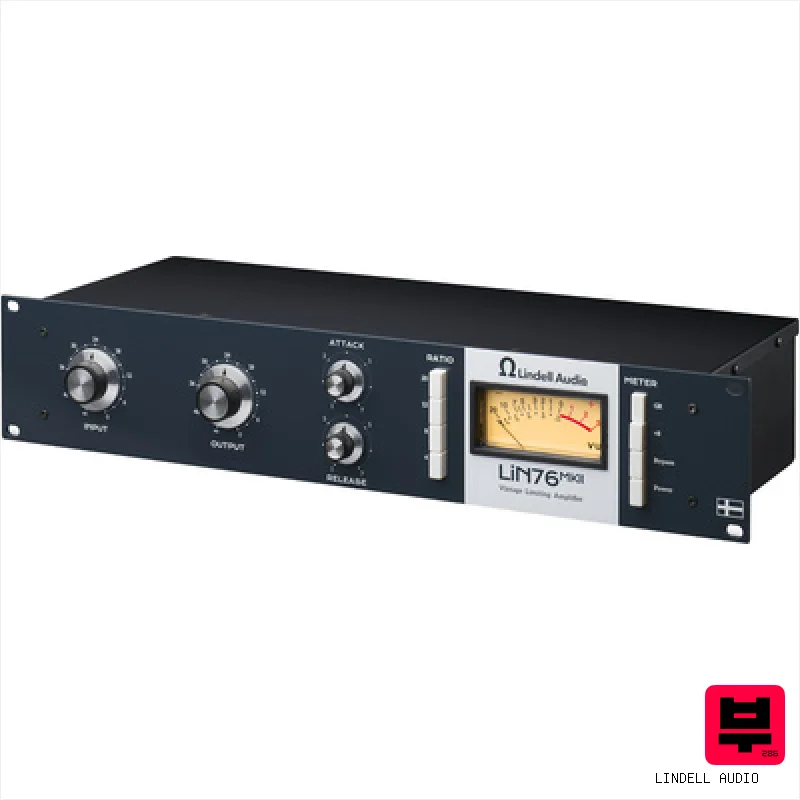
The Lindell LiNTEC is a cool, focused EQ – it’s not trying to be everything to everyone. It excels at adding subtle warmth or aggressive low-end punch to drums, bass, or even vocals. If you're looking for a simple, characterful EQ to add some vintage vibe to your mixes, this is a solid choice.
Pros
- Gridded pots offer a unique, tactile feel and characterful response.
- OPA1731 provides a clean, punchy sound with excellent transient response.
- The flexible EQ ranges cover a surprisingly broad spectrum of tonal shaping.
Cons
- Single-band design limits versatility compared to multi-band EQs.
- 6.3mm jacks feel dated and less convenient than modern connectors.
64AudioFu
Index↓ 10.7%since Aug 14 · lowest so far$526 · Aug 14$470 now$470€419 at Thomann · in stockCheck price ↗ -
- Size9.5"
The EQ-81 MKIII nails that vintage vibe—it’s a fantastic way to add some classic console color to your mix. It’s particularly good for vocals, bass, and drums needing a touch of warmth and clarity, and it’s a surprisingly affordable entry into analog EQ territory.
Pros
- Classic 1081 EQ character delivers warmth and musicality
- Tantalum capacitors contribute to a clean, detailed sound
- Stepped controls ensure repeatable and precise EQ settings
Cons
- Limited to four bands, restricting complex equalization tasks
- 6.3mm jacks feel somewhat dated compared to modern connectors
57AudioFu
Index↓ 2.5%since Aug 14 · lowest so far$447 · Aug 14$436 now$436€389 at Thomann · in stockCheck price ↗ -
Heritage Audio Lang PEQ-2 Parametric Equalizer
LANG PEQ-2 Equalizer · Heritage Audio
9 for sale on Reverb1 finish at Thomann
- Size19"
- Weight3.08 kg
The LANG PEQ-2 is a seriously impressive single-channel EQ, drawing heavily from classic Neve designs. It’s got that warm, forgiving character that’s fantastic for tracking vocals, guitars, or adding polish to a mix. If you're after a touch of vintage vibe and precise control without a complex feature set, this is a great choice for engineers and producers.
Pros
- Discrete Class A circuitry delivers a remarkably smooth, musical EQ response.
- The extensive shelving filters offer surgical control over low and high frequencies.
- Solid, weighty build with robust metal chassis inspires confidence and longevity.
Cons
- The 2U height might be restrictive for smaller racks or mobile setups.
- Single-channel design limits its application for complex stereo processing.
85AudioFu
Index↓ 4.0%since Aug 14 · lowest so far$1,108 · Aug 14$1,063 now$1,063€949 at Thomann · in stockCheck price ↗ -
The EQ-73 MKII is a surprisingly good recreation of a classic British EQ. It’s got that slightly colored, vintage vibe that sits beautifully on vocals or guitars – think classic rock and roll or soulful R&B. It’s a budget-friendly way to add some character without getting into truly premium-priced territory.
Pros
- Vintage-style electronics deliver a warm, musical tone.
- Tantalum capacitors contribute to a clean, detailed sound.
- Detented pots provide precise frequency selection and repeatability.
Cons
- Build quality, while decent, doesn't match high-end, all-discrete designs.
- Limited to three bands, restricting complex equalization possibilities.
-
The Premier EQ-73 nails that classic, warm EQ sound without getting overly complex. It's a fantastic choice for engineers and producers chasing a vintage vibe on vocals, guitars, or drums – especially if you're after a gentle shaping tool rather than surgical precision. The discrete design really shines when you want to add some analog character.
Pros
- Carnhill coil delivers a sweet, musical midrange response
- Discrete circuitry avoids harshness, offering a vintage tone
- Tantalum caps contribute to a cleaner, more detailed signal
Cons
- Limited to three bands restricts complex equalization tasks
- Detented pots can be a bit abrupt for subtle adjustments
50AudioFu
Index↓ 5.3%since Aug 14 · lowest so far$555 · Aug 14$526 now$526€469 at Thomann · in stockCheck price ↗ -
Elysia xfilter 500 Stereo 500 Series Equalizer Module
xfilter · Elysia
8 for sale on Reverb1 finish at Thomann
- Size19"
- Weight2 kg
The Elysia xfilter is a serious tool for engineers and mixing professionals who demand surgical precision and a pristine sound. Its Class-A design and meticulously chosen components deliver an unparalleled level of clarity and control, making it a premium-priced but rewarding investment for critical listening and mastering applications.
Pros
- Class-A topology delivers exceptionally clean and musical equalization.
- True stereo linking ensures phase coherence and a wide stereo image.
- High-quality, low-tolerance capacitors minimize distortion and noise.
Cons
- The stepped potentiometer, while precise, can limit subtle adjustments.
- Its high-end price point places it beyond many home studios' budgets.
85AudioFu
Index↓ 7.2%since Aug 14 · lowest so far$1,400 · Aug 14$1,299 now$1,299€1,159 at Thomann · in stockCheck price ↗ -
The Rolls RPQ 160b is a surprisingly capable 4-band parametric EQ. It’s a great option for podcasters, home recording enthusiasts, or anyone needing precise tonal adjustments without a complex signal chain – offering a good balance of features and affordability. It's not a studio workhorse, but a solid tool for improving clarity and character.
Pros
- Solid build quality; feels robust for its class.
- Flexible Q control allows for precise tonal shaping.
- Versatile XLR, TRS, and RCA connectivity caters to varied setups.
Cons
- Limited channel count restricts complex signal routing.
- Metering is basic; lacks detailed visual feedback.
43AudioFu
Index↓ 2.8%since Aug 14 · lowest so far$402 · Aug 14$391 now$391€349 at Thomann · in stockCheck price ↗ -
- Size19"
The Warm Audio EQP-WA GainMod is a seriously classy piece of gear. Its tube warmth and transformer mojo add a distinct character to anything you run through it – think vintage consoles and that classic analog vibe. This is a sweet upgrade for engineers and producers wanting that specific, polished tone for vocals, guitars, or even drums.
Pros
- CineMag transformers deliver a distinct, warm saturation and harmonic enhancement.
- GainMod feature offers flexible gain staging between devices, crucial for mastering.
- Discrete inductor EQ section provides precise control and musical shaping.
Cons
- Single-channel design limits its utility for stereo processing workflows.
- High-end price point puts it out of reach for budget-conscious studios.
59AudioFu
Index↓ 16.3%since Aug 14 · lowest so far$895 · Aug 14$750 now$750€669 at Thomann · in stockCheck price ↗ -
- Weight0.15 kg
The DEQ2496 is a powerhouse for anyone needing serious EQ capabilities, especially live sound engineers and those working on mastering projects. It's packed with features – graphic, parametric, dynamic EQ, and a really useful FFT analyzer – all in one box. While it might take some time to learn everything it can do, the value for money is undeniable.
Pros
- Remarkable feature set for the price; comprehensive EQ options
- Excellent real-time FFT analyzer for precise room correction
- Feedback Destroyer circuit genuinely effective in live settings
Cons
- Build quality feels plasticky; lacks premium component feel
- User interface can be overwhelming with its complexity
32AudioFu
Index↓ 3.3%since Aug 14 · lowest so far$335 · Aug 14$324 now$324€289 at Thomann · in stockCheck price ↗ -
- Size19"
- Weight3.2 kg
This unit brings the warm, transparent character of the famous Studer 169 console into your studio. It handles frequencies up to 20kHz with a clean signal path and a useful presence control. Perfect for analog mixing or when you need a reliable equalizer that sounds great without extra buttons.
Pros
- Uses original Studer 169 circuit design for classic sound
- Offers high shelf boost up to 15dB at 20kHz
- Features continuously variable presence filter with 11dB swing
Cons
- Heavy at 3.2 kg for transport compared to modern units
- Lacks digital signal processing or preset storage capabilities
59AudioFu
IndexStableno change since Aug 20Aug 20$1,086 now$1,086€969 at Thomann · in stockCheck price ↗
All 44 parametric equalizers
Same index, same nightly prices — compact. Colour options of one model share a row. Tap a photo to zoom.
- 11
Drawmer 1974 Stereo Parametric Equalizer1974 · Drawmer57↓ 0.8%$1,220€1,089$1,220€1,089Check ↗
- 12
Elysia xfilter qubeElysia49↓ 1.0%$1,075€959$1,075€959Check ↗
- 13
Manley Labs Massive Passive Stereo Tube EqualizerMassive Passive · Manley92Stable$6,721€5,998$6,721€5,998Check ↗
- 14
Bettermaker Mastering EqualizerBettermaker90↓ 17.8%$3,069€2,739$3,069€2,739Check ↗
- 15
Dangerous Music BAX EQ Stereo Shelving EqualizerBAX EQ · Dangerous Music85↓ 20.8%$3,787€3,379$3,787€3,379Check ↗
- 16
SPL 1650 Passeq 2-Channel Mastering EqualizerPassEQ black · SPL81Stable$4,201€3,749$4,201€3,749Check ↗
- 17
Manley Labs Massive Passive Mastering Version Stereo Tube EqualizerMassive Passive Mastering · Manley77Stable$8,179€7,299$8,179€7,299Check ↗
- 18
Tube-Tech PE 1C Program EqualizerPE 1C · Tube-Tech73↓ 10.8%$3,249€2,899$3,249€2,899Check ↗
- 19
Heritage Audio SYMPH EQ Stereo Master Bus Asymptotic EqualizerSymph EQ · Heritage Audio72Stable$1,713€1,529$1,713€1,529Check ↗
- 20
Tegeler Audio Manufaktur EQP-1 2-Channel Program EqualizerEQP-1 Green · Tegeler72Stable$2,016€1,799$2,016€1,799Check ↗
- 21
Cranborne Audio Carnaby HE2 2-Channel HarmonicEQCarnaby HE2 · Cranborne Audio72↓ 4.5%$2,408€2,149$2,408€2,149Check ↗
- 22
WesAudio ngTubeEQ Parametric Tube EqualizerngTubeEQ · WesAudio70↓ 1.7%$6,443€5,750$6,443€5,750Check ↗
- 23
IGS Audio Tilt n BandsIGS Audio69↓ 14.1%$2,790€2,490$2,790€2,490Check ↗
- 24
IGS Audio RB500ME Rubber BandsRubber Bands · IGS Audio66Stable$2,342€2,090$2,342€2,090Check ↗
- 25
Elysia xfilter Mastering Edition Stereo 4-Band Parametric Equalizerxfilter Mastering Edition · Elysia65↓ 5.1%$2,126€1,897$2,126€1,897Check ↗
- 26
Manley Dual Mid Band EQManley64Stable$6,274€5,599$6,274€5,599Check ↗
- 27
Manley Dual Main EQManley64Stable$6,274€5,599$6,274€5,599Check ↗
- 28
SPL PQ blackSPL64↓ 6.3%$6,722€5,999$6,722€5,999Check ↗
- 29
Bettermaker Stereo Passive EQBettermaker63↓ 18.4%$1,736€1,549$1,736€1,549Check ↗
- 30
Bettermaker VSPEBettermaker63↓ 17.4%$2,666€2,379$2,666€2,379Check ↗
- 31
Tube-Tech ME 1B Midrange EqualizerTube-Tech63Stable$3,349€2,989$3,349€2,989Check ↗
- 32
IGS Audio 825EQIGS Audio63↑ 1.3%$4,369€3,899$4,369€3,899Check ↗
- 33
Tube-Tech HLT 2AMTube-Tech63Stable$5,266€4,699$5,266€4,699Check ↗
- 34
Drawmer 1971 Dual 4-Band ParametricDrawmer55↓ 3.3%$1,848€1,649$1,848€1,649Check ↗
- 35
Gyraf Audio G23-SGyraf Audio54Stable$3,977€3,549$3,977€3,549Check ↗
- 36
WesAudio ngOmniBoxWesAudio54Stable$4,481€3,999$4,481€3,999Check ↗
- 37
Gyraf Audio G14-SGyraf Audio54Stable$5,602€4,999$5,602€4,999Check ↗
- 38
Chandler Limited EMI TG 12345 Curve BenderChandler Limited53↓ 4.0%$8,179€7,299$8,179€7,299Check ↗
- 39
MÄAG EQ4MMÄAG51Stable$3,361€2,999$3,361€2,999Check ↗
- 40
Vertigo Sound VSE-2Vertigo Sound50↑ 1.9%$6,040€5,390$6,040€5,390Check ↗
- 41
Heritage Audio MotorCity EQualizer 7-Band Graphic EqualizerMotorcity EQualizer Stereo Set · Heritage Audio48Stable$3,361€2,999$3,361€2,999Check ↗
- 42
API Audio 5500 Dual EqualizerAPI Audio47↓ 7.6%$3,726€3,325$3,726€3,325Check ↗
- 43
Neve 8801 Channel StripNeve45↑ 3.6%$3,249€2,899$3,249€2,899Check ↗
- 44
Neve 8803 StereoequalizerNeve39↑ 20.2%$2,490€2,222$2,490€2,222Check ↗
Parametric Equalizers by the numbers
Measured across all 44 models we track, not a sample.
Median $3,069 — half of all parametric equalizers here cost less.
median of 28 models · 9.5"–19"
median of 25 models · 2 kg–10.2 kg
How to choose the best parametric equalizers
Learnability
A steep learning curve is the quickest way to frustration. We're looking for EQs with a logical layout and some kind of visual feedback that makes understanding the impact of your adjustments easier.
Feature Set
You don't need every bell and whistle. A good beginner EQ should offer basic frequency control, Q (bandwidth) adjustment, and gain - enough to address common tonal issues without overwhelming you.
Interface
Physical knobs are generally easier to learn than complex menu diving. A tactile interface lets you feel the changes you're making, which aids in understanding how EQ affects your sound.
Sound Quality
Even budget EQs shouldn't sound muddy or introduce unwanted noise. We're listening for clean, transparent processing that enhances your tone without adding artifacts.
Value
Let's be honest, you're starting out. We're balancing cost with functionality and build quality - finding the sweet spot where you get the most usable features for your money.
Buying guide
Okay, so you're dipping your toes into parametric EQ. Awesome! It can seem intimidating, all those knobs and numbers, but it's the key to sculpting a tone that really cuts through, whether you're gigging in a smoky bar or laying down tracks in your bedroom. Let's cut through the jargon and find you an EQ that won't leave you lost in a sea of frequencies - something you can actually learn and use, not just stare at.
Don't chase the 'pro' features just yet. Many affordable EQs offer a surprisingly clean signal path, but corners are often cut on the build quality - plastic enclosures and slightly scratchy pots are common. Focus on something with a clear, intuitive layout, and be prepared to spend some time experimenting.
A little time invested now will pay off big time in your tonal control.
How the AudioFu Index works
Five measured signals and nothing else — no stars from strangers, no “tested by experts” we didn’t do. The weights are fixed and public. We don’t play these instruments; we measure the market around them.
This chart covers 44 parametric equalizers from the Thomann catalogue. Before you buy, read hands-on reviews and, where you can, play it. Full methodology.
AudioFu earns a commission when you buy through our Thomann links. It never changes the order — the index does.
- Demand40%
How many of this exact model are for sale on Reverb right now — what musicians actually buy and resell.
- Lineup20%
How many finishes Thomann stocks — makers expand the models that sell.
- Price15%
Where the price has moved since we started tracking in August.
- Specs15%
How completely the maker documents it.
- Maker10%
How deep the brand’s range is in this category.
Questions
What's the difference between a graphic EQ and a parametric EQ?
Graphic EQs offer fixed frequencies, great for quick adjustments but limited control. Parametric EQs let you adjust frequency, Q, and gain, giving you surgical precision to shape your tone - it's more flexible, but requires more understanding.
What does 'Q' mean, and why does it matter?
Q refers to the bandwidth of a frequency. A narrow Q affects a small range of frequencies, like targeting a specific resonant peak. A wide Q affects a broader range, useful for broader tonal shaping. It's a major control in a parametric EQ.
I'm recording vocals - what kind of problems can a parametric EQ solve?
Vocals often have muddiness in the low-mids (around 250-500Hz) or harshness in the high-mids (around 2-4kHz). A parametric EQ can surgically remove those frequencies, bringing clarity and presence.
Do I need a parametric EQ if I have a graphic EQ?
A graphic EQ is a good starting point, but a parametric EQ gives you the ability to address specific tonal issues that a graphic EQ can't. Think of it as upgrading from a basic tool to a precision instrument.
My EQ is making my tone sound worse - what am I doing wrong?
You're probably making large, sweeping changes. Small, subtle adjustments are key - try reducing frequencies by just 1-3dB at a time and listen carefully. Less is often more with EQ.