AudioFu
AudioFu Chart · October 2026
Best Parametric Equalizers Under $500 2026
The top pick is Lindell Audio LiNTEC ($470). Ranked by the AudioFu Index from 5 models across 4 brands, prices checked every night.
Last updated: October 12, 2026
Top 5
Full detail for the 5 highest AudioFu Index scores. Every other model is listed below.
-
- Size19"
- Weight3.5 kg
The Lindell LiNTEC is a cool, focused EQ – it’s not trying to be everything to everyone. It excels at adding subtle warmth or aggressive low-end punch to drums, bass, or even vocals. If you're looking for a simple, characterful EQ to add some vintage vibe to your mixes, this is a solid choice.
Pros
- Gridded pots offer a unique, tactile feel and characterful response.
- OPA1731 provides a clean, punchy sound with excellent transient response.
- The flexible EQ ranges cover a surprisingly broad spectrum of tonal shaping.
Cons
- Single-band design limits versatility compared to multi-band EQs.
- 6.3mm jacks feel dated and less convenient than modern connectors.
64AudioFu
Index↓ 10.7%since Aug 14 · lowest so far$526 · Aug 14$470 now$470€419 at Thomann · in stockCheck price ↗ -
- Size9.5"
The EQ-81 MKIII nails that vintage vibe—it’s a fantastic way to add some classic console color to your mix. It’s particularly good for vocals, bass, and drums needing a touch of warmth and clarity, and it’s a surprisingly affordable entry into analog EQ territory.
Pros
- Classic 1081 EQ character delivers warmth and musicality
- Tantalum capacitors contribute to a clean, detailed sound
- Stepped controls ensure repeatable and precise EQ settings
Cons
- Limited to four bands, restricting complex equalization tasks
- 6.3mm jacks feel somewhat dated compared to modern connectors
57AudioFu
Index↓ 2.5%since Aug 14 · lowest so far$447 · Aug 14$436 now$436€389 at Thomann · in stockCheck price ↗ -
The EQ-73 MKII is a surprisingly good recreation of a classic British EQ. It’s got that slightly colored, vintage vibe that sits beautifully on vocals or guitars – think classic rock and roll or soulful R&B. It’s a budget-friendly way to add some character without getting into truly premium-priced territory.
Pros
- Vintage-style electronics deliver a warm, musical tone.
- Tantalum capacitors contribute to a clean, detailed sound.
- Detented pots provide precise frequency selection and repeatability.
Cons
- Build quality, while decent, doesn't match high-end, all-discrete designs.
- Limited to three bands, restricting complex equalization possibilities.
-
The Rolls RPQ 160b is a surprisingly capable 4-band parametric EQ. It’s a great option for podcasters, home recording enthusiasts, or anyone needing precise tonal adjustments without a complex signal chain – offering a good balance of features and affordability. It's not a studio workhorse, but a solid tool for improving clarity and character.
Pros
- Solid build quality; feels robust for its class.
- Flexible Q control allows for precise tonal shaping.
- Versatile XLR, TRS, and RCA connectivity caters to varied setups.
Cons
- Limited channel count restricts complex signal routing.
- Metering is basic; lacks detailed visual feedback.
43AudioFu
Index↓ 2.8%since Aug 14 · lowest so far$402 · Aug 14$391 now$391€349 at Thomann · in stockCheck price ↗ -
- Weight0.15 kg
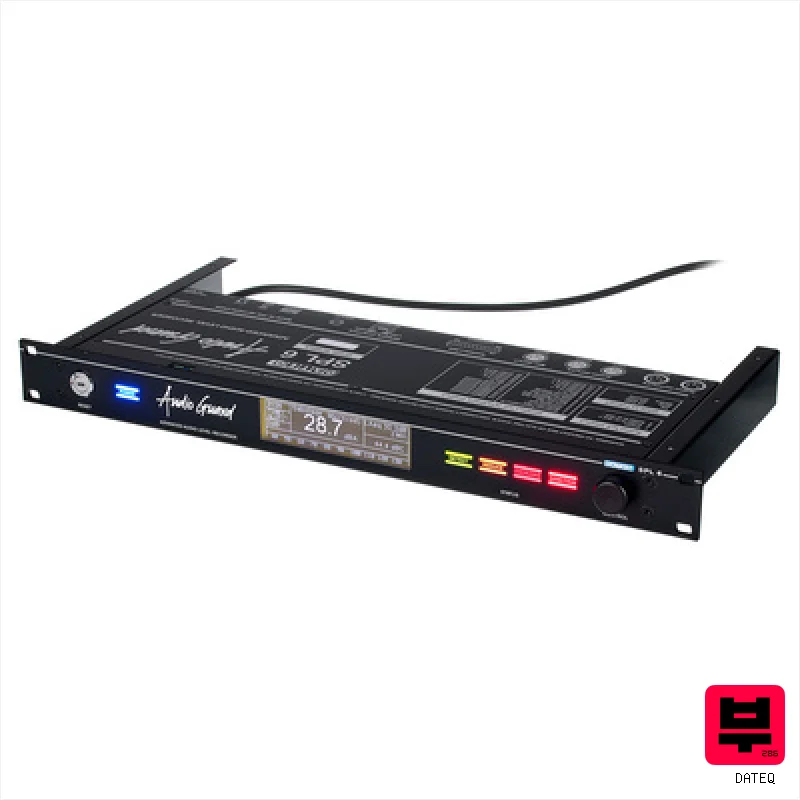
The DEQ2496 is a powerhouse for anyone needing serious EQ capabilities, especially live sound engineers and those working on mastering projects. It's packed with features – graphic, parametric, dynamic EQ, and a really useful FFT analyzer – all in one box. While it might take some time to learn everything it can do, the value for money is undeniable.
Pros
- Remarkable feature set for the price; comprehensive EQ options
- Excellent real-time FFT analyzer for precise room correction
- Feedback Destroyer circuit genuinely effective in live settings
Cons
- Build quality feels plasticky; lacks premium component feel
- User interface can be overwhelming with its complexity
32AudioFu
Index↓ 3.3%since Aug 14 · lowest so far$335 · Aug 14$324 now$324€289 at Thomann · in stockCheck price ↗
How to choose the best parametric equalizers
Frequency Bandwidth (Q)
This is the key to surgical EQ. A wider Q is good for broad shaping, a narrow Q lets you target specific frequencies for notch filtering or boosting that sweet spot. Expect reasonable control, but super-narrow Qs are rare under $500.
Number of Bands
More bands can mean more flexibility, but it also increases complexity. Three or four bands, well-implemented, can be more useful than a dozen poorly designed ones. Think about what you're actually going to do with those bands.
Filter Types (Peak/Shelf/Notch)
A good parametric should offer at least peak (boost/cut) filtering. High and low shelves are incredibly useful for overall tonal shaping. Notch filters are the surgical tool for removing resonances or feedback.
Build Quality & Noise Floor
Cheap components can lead to a noisy signal. Listen carefully for hiss or hum, especially when boosting. Solid construction is vital for gigging - you don't want it falling apart after a few gigs.
User Interface/Workflow
A complicated or clunky interface can make subtle adjustments a nightmare. Look for clear labeling, intuitive controls, and a workflow that feels natural, especially if you're using it live.
Buying guide
Alright, so you need a parametric EQ but your bank account isn't screaming 'gold-plated studio console.' It's a common situation. You want surgical precision for cleaning up muddy mixes or adding that subtle warmth to your guitar tone, but dropping five figures on a Neve isn't happening. Let's look at some solid parametric EQs that'll give you a serious boost without breaking the gigging musician's budget.
At this price point, you're making trade-offs. Don't expect the same pristine sound or ultra-precise control as a $2000 unit. Often, the biggest compromise is in the build quality - plastic enclosures and slightly rattly pots are common.
Focus on finding something with a good, clean preamp stage and a usable range of frequencies and Q values. Spend a bit more if the interface is significantly better - a frustrating EQ is useless, no matter how good it sounds.
How the AudioFu Index works
Five measured signals and nothing else — no stars from strangers, no “tested by experts” we didn’t do. The weights are fixed and public. We don’t play these instruments; we measure the market around them.
This chart covers 5 parametric equalizers from the Thomann catalogue. Before you buy, read hands-on reviews and, where you can, play it. Full methodology.
AudioFu earns a commission when you buy through our Thomann links. It never changes the order — the index does.
- Demand40%
How many of this exact model are for sale on Reverb right now — what musicians actually buy and resell.
- Lineup20%
How many finishes Thomann stocks — makers expand the models that sell.
- Price15%
Where the price has moved since we started tracking in August.
- Specs15%
How completely the maker documents it.
- Maker10%
How deep the brand’s range is in this category.
Questions
Can I really get a 'studio-quality' parametric EQ for under $500?
'Studio quality' is subjective. You won't get the absolute pinnacle of performance, but you can get something that sounds very good and is genuinely useful for mixing and mastering, especially if you're careful with your adjustments.
What's the difference between a graphic EQ and a parametric EQ?
Graphic EQs have fixed frequencies and Q values. Parametric EQs let you adjust those frequencies and Q values, offering far more flexibility. Graphic EQs are good for quick shaping, but a parametric is your go-to for surgical work.
How important is the noise floor?
It's more important than you might think, especially when boosting. A noisy EQ can quickly muddy a clean recording or make a live sound system unbearable. Listen for hiss or hum before you buy.
Are digital parametric EQs better than analog ones in this price range?
Digital units often offer more features (memory presets, visual displays) for the money. However, some prefer the 'feel' of analog. Both can sound great - it's more about the implementation than the format.
I'm a guitarist - will I actually use a parametric EQ?
Absolutely! It's not just for mixing engineers. Use it to tame harsh high frequencies, add warmth to a thin amp tone, or even carve out space for your guitar in a dense band mix. It's a powerful tool for shaping your sound.