AudioFu Chart · October 2026
Best Reloop DJ Mixers 2026
The top pick is Reloop Elite DJ Mixer ($1,372). Reloop RMX-10BT 2-Channel DJ Mixer with Bluetooth gives you the most for the money at $145. Ranked by the AudioFu Index from 8 models, prices checked every night.
Last updated: October 19, 2026
Top 8
Full detail for the 8 highest AudioFu Index scores. Every other model is listed below.
-
- Weight6 kg
The Reloop ELITE is a serious contender for DJs demanding high-end DVS performance and extensive creative control within the Serato ecosystem. Its build quality feels solid, and the performance pad modes are genuinely innovative, offering a depth of control you rarely see. This mixer is ideal for established Serato DJs looking to elevate their live sets.
Pros
- Exceptional DVS performance with Serato integration and intuitive workflow
- The OLED displays offer genuinely useful, at-a-glance information clarity
- Flexible performance pad modes provide creative mixing options and customization
Cons
- The substantial weight makes portability a challenge for mobile DJs
- The extensive feature set can feel overwhelming for less experienced users
72AudioFu
Index↓ 5.1%since Aug 17 · lowest so far$1,446 · Aug 17$1,372 now$1,372€1,219 at Thomann · in stockCheck price ↗ -
Reloop RMX-95 4+1 Channel Digital Club Mixer
RMX-95 · Reloop
9 for sale on Reverb2 finishes at Thomann
- Weight6.8 kg
The RMX-95 is a serious contender for club DJs and those needing a feature-rich mixer. Its flexible routing, robust build, and surprisingly useful Neural Mix EQ make it a great all-rounder, though it's not the lightest option out there. If you need a reliable, well-equipped mixer for serious mixing, this is a solid choice.
Pros
- Robust build quality; metal chassis feels substantial and durable.
- Neural Mix EQ offers genuinely useful, subtle tonal shaping.
- Flexible booth output routing provides excellent creative control.
Cons
- Weight makes it less portable; setup requires careful planning and space.
- Effect quality, while versatile, isn't boutique-level pristine.
71AudioFu
IndexStableno change since Aug 17Aug 17$1,068 now$1,068€949 at Thomann · in stockCheck price ↗ -
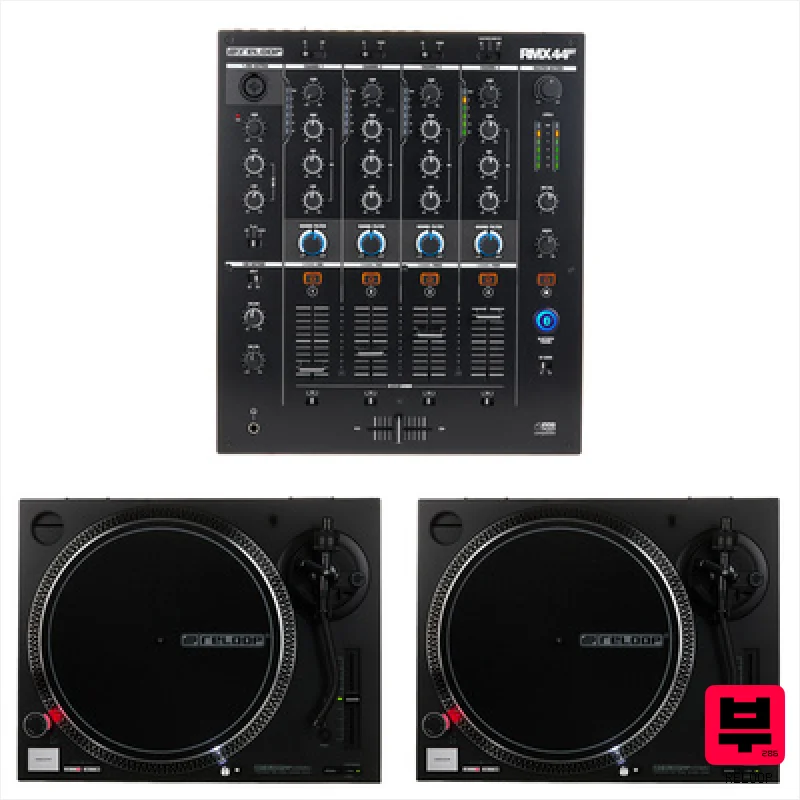
Reloop RMX-44BT 4-Channel DJ Mixer with Bluetooth
RMX-44BT · Reloop
7 for sale on Reverb2 finishes at Thomann
- Weight5.4 kg
The RMX-44BT is a surprisingly capable mixer for the price. It’s a great entry point for DJs looking for a reliable, feature-rich platform with Bluetooth connectivity, or a budget-friendly option for mobile setups where portability and simplicity are key. It's not going to replace a top-tier mixer, but it delivers solid performance for the money.
Pros
- Solid build quality with metal faceplate and robust knobs.
- Innofader compatibility offers a significant upgrade path.
- Flexible EQ and filter options provide creative mixing possibilities.
Cons
- Master output level can be a bit lower than some higher-end mixers.
- Limited USB functionality; primarily for playback, not advanced routing.
68AudioFu
IndexStableno change since Aug 17Aug 17$386 now$386€343 at Thomann · in stockCheck price ↗ -
Reloop RMX-10BT 2-Channel DJ Mixer with Bluetooth
RMX-10BT · Reloop
9 for sale on Reverb1 finish at Thomann
- Weight1.72 kg
The RMX-10BT is a surprisingly capable little mixer, especially for beginners or those needing a basic, Bluetooth-enabled solution. It's perfect for bedroom DJs, mobile events where minimal gear is required, or as a secondary mixer for practice. Don't expect high-end performance, but it delivers a lot for the asking price.
Pros
- Solid 21.5mm pots offer precise control and feel.
- Bluetooth routing provides surprising versatility for mobile setups.
- The included crossfader is surprisingly decent for the price point.
Cons
- EQ is basic – lacks the finesse of higher-end mixers.
- Microphone input is adequate, but lacks headroom for dynamic vocals.
65AudioFu
IndexStableno change since Aug 17Aug 17$145 now$145€129 at Thomann · in stockCheck price ↗ -
The RMX-22i is a surprisingly capable mixer for the price. It’s a great option for bedroom DJs or mobile setups needing a compact, feature-rich solution with a decent sound. The digital effects add a lot of potential for creative mixing, and the build, while not luxurious, is perfectly serviceable for regular use.
Pros
- Solid 45mm club-style crossfader offers reliable, adjustable cuts.
- Digital effects are surprisingly usable and creatively flexible.
- Comprehensive input options cater to diverse DJ setups and sources.
Cons
- Plastic build feels budget-oriented; lacks premium robustness.
- Limited effects compared to higher-end digital mixers.
-
- Weight6.8 kg
The RMX-60 Digital is a solid performer, offering a surprisingly flexible digital mixer at a reasonable price point. It's a great choice for serious DJs who want a robust feature set and the option to upgrade their crossfader, but aren't chasing top-tier studio sound quality. This mixer will really shine in club environments and for DJs who appreciate creative effect manipulation.
Pros
- Excellent digital clarity minimizes noise and artifacts during complex transitions
- Innofader compatibility opens up a world of advanced scratching techniques
- Flexible EQ options, including a 'kill' setting, offer precise tonal sculpting
Cons
- Build quality, while decent, feels a step below premium club mixers
- The effects, while numerous, lack the depth of dedicated studio processors
51AudioFu
IndexStableno change since Aug 17Aug 17$595 now$595€529 at Thomann · in stockCheck price ↗ -
- Weight2.6 kg
The RMX-30 BT is a surprisingly capable entry-level mixer – a solid, reliable option for mobile DJs, bedroom producers, or anyone just starting out. The Bluetooth functionality is genuinely useful, and the build quality is better than you'd expect at this price. It's not going to replace a high-end club mixer, but it's a great value for what it is.
Pros
- Solid metal chassis provides surprising rigidity for the price point.
- Bluetooth connectivity offers convenient streaming, well-integrated routing.
- 45mm crossfader is serviceable, replaceable for future upgrades.
Cons
- EQ isn't the most precise, lacking nuance for critical mixing.
- Bluetooth audio quality won't satisfy audiophiles or high-end setups.
45AudioFu
IndexStableno change since Aug 17Aug 17$224 now$224€199 at Thomann · in stockCheck price ↗ -
This mixer works great for DJs who want one box to do everything. It has four input channels and a built-in USB interface that acts like a separate audio card. The crossfader lets you adjust the curve for your preferred feel. It fits well in a small booth but lacks a phono stage for turntables.
Pros
- Four RCA inputs handle multiple sources easily
- Integrated USB-C audio interface saves a second device
- USB-C DVS support enables precise digital vinyl control
Cons
- No dedicated phono preamp for turntables
- Effects are limited to basic high-pass and low-pass filters
38AudioFu
IndexStableno change since Aug 17Aug 17$280 now$280€249 at Thomann · in stockCheck price ↗
DJ Mixers by the numbers
Measured across all 76 models we track, not a sample.
Median $456 — half of all DJ mixers here cost less.
median of 62 models · 1 kg–7 kg
median of 11 models · 10"–19"
How to choose the best DJ mixers
Build Quality
Reloop mixers tend to be robust. They're not necessarily luxury build - you'll find some plastic parts - but they feel solid and reliable for the price point, especially the older models. The faders, however, are often the first thing to show wear and tear with heavy use - budget for replacements if you're gigging hard.
EQ Response
Reloop's EQ isn't overly colored. It's not going to give you that scooped, hyper-aggressive sound some mixers do. Instead, you get a fairly neutral response with a usable, if not always expansive, frequency range. This makes them surprisingly versatile for blending genres - from house and techno to hip-hop and breaks.
Feel & Ergonomics
This is where Reloop shines. They've clearly focused on tactile feedback and intuitive layout. The jog wheels feel good under the hand, the faders have a decent throw, and the button placement generally makes sense, even on the more budget-oriented models. It's a 'familiar' feel that many older school DJs appreciate.
Effects & Routing
Reloop's effects aren't industry-leading, let's be honest. They're serviceable, and some models offer a decent selection of filters and delays, but don't expect mind-blowing creativity. The routing options are usually fairly standard, but it's worth checking the specs to see if they meet your needs for external gear integration.
Noise Floor
Reloop mixers generally have a clean noise floor, especially the higher-end models. You won't be battling excessive hiss or hum, which is crucial for preserving the clarity of your tracks and keeping the mix tight, particularly when layering multiple sounds or using effects.
Buying guide
Alright, so you're looking at Reloop mixers? Good choice, honestly. They've flown a bit under the radar for a while, but they offer a different vibe than the usual suspects - Pioneer, Denon, Rane. Reloop's got a history rooted in vinyl culture, and that shows in the feel and functionality, even on their digital models. They're not always the flashiest, but they're built to work, and often deliver a surprisingly musical sound.
Reloop mixers offer a lot of value, but here's the deal: you're not paying for boutique components. The cheaper models will have plastic knobs and faders that might feel a little cheap, and the effects are basic. Invest in a higher-end model if you're serious about gigging regularly, and absolutely factor in the cost of replacement faders down the line.
Don't chase the bells and whistles; focus on the core functionality and build quality that fits your budget and playing style.
How the AudioFu Index works
Five measured signals and nothing else — no stars from strangers, no “tested by experts” we didn’t do. The weights are fixed and public. We don’t play these instruments; we measure the market around them.
This chart covers 11 DJ mixers from the Thomann catalogue (of 76 in the category). Before you buy, read hands-on reviews and, where you can, play it. Full methodology.
AudioFu earns a commission when you buy through our Thomann links. It never changes the order — the index does.
- Demand40%
How many of this exact model are for sale on Reverb right now — what musicians actually buy and resell.
- Lineup20%
How many finishes Thomann stocks — makers expand the models that sell.
- Price15%
Where the price has moved since we started tracking in August.
- Specs15%
How completely the maker documents it.
- Maker10%
How deep the brand’s range is in this category.
Questions
Are Reloop mixers as good as Pioneer DJ?
'Good' is subjective. Pioneer DJ mixers are the industry standard for a reason - they're reliable and feature-rich. Reloop offers a different, often more affordable, path with a focus on feel and a more neutral sound. It depends on your priorities and budget.
What's the difference between the Reloop Groove and the Reloop Rumble?
The Groove is more of an entry-level option, simpler features, often a little more plasticky. The Rumble is a step up, better build, more routing options, and a slightly improved EQ. The Rumble is the one I'd recommend for most serious DJs.
Can I record mixes directly from a Reloop mixer?
Most Reloop mixers have booth outputs and master outputs, so yes, you can record using an external audio interface. However, the built-in sound cards aren't high-end, so you'll get better quality recording with a dedicated interface.
Are Reloop mixers good for scratching?
They're decent. The jog wheel feel is generally good, but the faders might not be as precise as some higher-end scratching mixers. It's not a deal-breaker, but serious scratch DJs might want something more specialized.
Do Reloop mixers have MIDI capabilities?
Some models do, offering MIDI connectivity for controlling software or integrating with other hardware. Check the specific model's specifications to confirm MIDI functionality and available parameters.