AudioFu Chart · October 2026
Best DJ Mixers 2026
The top pick is Allen & Heath XONE:96 Professional 6+2-Channel DJ Mixer ($2,023). Reloop RMX-10BT 2-Channel DJ Mixer with Bluetooth gives you the most for the money at $145. Ranked by the AudioFu Index from 53 models across 11 brands, prices checked every night.
Last updated: October 19, 2026
Narrow the chart
All DJ MixersTop 10
Full detail for the 10 highest AudioFu Index scores. Every other model is listed below.
-
Allen & Heath XONE:96 Professional 6+2-Channel DJ Mixer
Xone 96 · Allen & Heath
17 for sale on Reverb3 finishes at Thomann
- Weight7 kg
The Xone 96 is a serious piece of kit for discerning DJs who prioritize analog warmth and tactile control. It's built like a tank and delivers exceptional audio quality, perfect for club environments or serious home setups where sonic fidelity is paramount. While not as feature-rich as some newer models, its core functionality is top-notch and delivers a classic DJing experience.
Pros
- Robust build quality with a solid, weighty chassis.
- Exceptional sound clarity thanks to the 32-bit converters.
- The InnoFader crossfader offers precise, customizable performance.
Cons
- The substantial weight makes transport a real consideration.
- Limited routing options compared to more modern mixers.
83AudioFu
Index↑ 1.6%since Aug 17$1,991 · Aug 17$2,023 now$2,023€1,798 at Thomann · in stockCheck price ↗ -
- Weight3.6 kg
The Warm2 is a beautifully built, no-frills rotary mixer perfect for DJs focused on classic house, disco, or soulful sounds. The Alps pots are a real treat, and the EQ gives you excellent control—it's a solid choice if you appreciate a vintage feel and a direct connection to your music.
Pros
- Alps Blue Velvet pots offer exceptional feel and longevity.
- Wooden side panels add a touch of class and dampen vibrations.
- 3-band EQ per channel provides precise tonal shaping capabilities.
Cons
- Limited effects options compared to modern, feature-rich mixers.
- Rotary mixers have a learning curve for those used to fader-based mixing.
75AudioFu
IndexStableno change since Aug 17Aug 17$715 now$715€635 at Thomann · in stockCheck price ↗ -
Ecler WARM4 Four-Channel Analogue Rotary Mixer
Warm4 · Ecler
11 for sale on Reverb2 finishes at Thomann
- Weight5.3 kg
The Warm4 is a seriously cool mixer, especially if you’re into a more analog, hands-on vibe. That subharmonic generator is a real signature feature, giving your basslines some serious girth. It’s perfect for DJs who want a quality, characterful mixer without going full-on digital – think house, techno, and anything that benefits from a little extra warmth.
Pros
- Solid build quality with Alps potentiometers and metal shafts.
- Unique subharmonic synthesizer adds a distinct low-end texture.
- Isolator EQ provides precise frequency sculpting capabilities.
Cons
- Limited USB connectivity; lacks advanced digital routing options.
- Price places it in the premium-priced mixer category.
73AudioFu
IndexStableno change since Aug 17Aug 17$1,417 now$1,417€1,259 at Thomann · in stockCheck price ↗ -
Allen & Heath XONE:43 4+1 Channel DJ Scratch Mixer
Xone 43 · Allen & Heath
16 for sale on Reverb2 finishes at Thomann
The Xone 43 is a fantastic, reliable mixer for DJs who appreciate a classic, clean sound and robust build. It's a great all-rounder – perfect for house, techno, and everything in between – without getting bogged down in excessive features. It's a solid choice for experienced DJs or those stepping up from entry-level gear.
Pros
- Solid build quality with robust metal chassis and reliable faders
- Excellent sound clarity thanks to the Xone EQ and filter design
- Flexible microphone input caters to both vocalists and podcasting
Cons
- Crossfader, while serviceable, isn't the premium quality of high-end models
- Limited USB functionality compared to newer, more feature-rich mixers
72AudioFu
IndexStableno change since Aug 17Aug 17$697 now$697€619 at Thomann · in stockCheck price ↗ -
- Weight6 kg
The Reloop ELITE is a serious contender for DJs demanding high-end DVS performance and extensive creative control within the Serato ecosystem. Its build quality feels solid, and the performance pad modes are genuinely innovative, offering a depth of control you rarely see. This mixer is ideal for established Serato DJs looking to elevate their live sets.
Pros
- Exceptional DVS performance with Serato integration and intuitive workflow
- The OLED displays offer genuinely useful, at-a-glance information clarity
- Flexible performance pad modes provide creative mixing options and customization
Cons
- The substantial weight makes portability a challenge for mobile DJs
- The extensive feature set can feel overwhelming for less experienced users
72AudioFu
Index↓ 5.1%since Aug 17 · lowest so far$1,446 · Aug 17$1,372 now$1,372€1,219 at Thomann · in stockCheck price ↗ -
Allen & Heath XONE:PX5 4+1 Channel DJ Mixer
Xone:PX5 · Allen & Heath
15 for sale on Reverb1 finish at Thomann
- Weight5.2 kg
The Xone:PX5 is a seriously well-built mixer, perfect for discerning DJs who demand quality and sonic flexibility. Its analog feel combined with the integrated soundcard gives you the best of both worlds – classic mixing with modern convenience. It's a powerhouse for house, techno, and any genre where you want a truly hands-on, expressive workflow.
Pros
- Robust bulletproof build inspires confidence and longevity
- Xone VCF filter offers unique, characterful sonic sculpting
- Penny & Giles crossfader provides precise, reliable performance
Cons
- Premium-priced, a significant investment for many DJs
- Relatively heavy, not ideal for frequent travel
72AudioFu
IndexStableno change since Aug 17Aug 17$1,404 now$1,404€1,248 at Thomann · in stockCheck price ↗ -
Reloop RMX-95 4+1 Channel Digital Club Mixer
RMX-95 · Reloop
9 for sale on Reverb2 finishes at Thomann
- Weight6.8 kg
The RMX-95 is a serious contender for club DJs and those needing a feature-rich mixer. Its flexible routing, robust build, and surprisingly useful Neural Mix EQ make it a great all-rounder, though it's not the lightest option out there. If you need a reliable, well-equipped mixer for serious mixing, this is a solid choice.
Pros
- Robust build quality; metal chassis feels substantial and durable.
- Neural Mix EQ offers genuinely useful, subtle tonal shaping.
- Flexible booth output routing provides excellent creative control.
Cons
- Weight makes it less portable; setup requires careful planning and space.
- Effect quality, while versatile, isn't boutique-level pristine.
71AudioFu
IndexStableno change since Aug 17Aug 17$1,068 now$1,068€949 at Thomann · in stockCheck price ↗ -
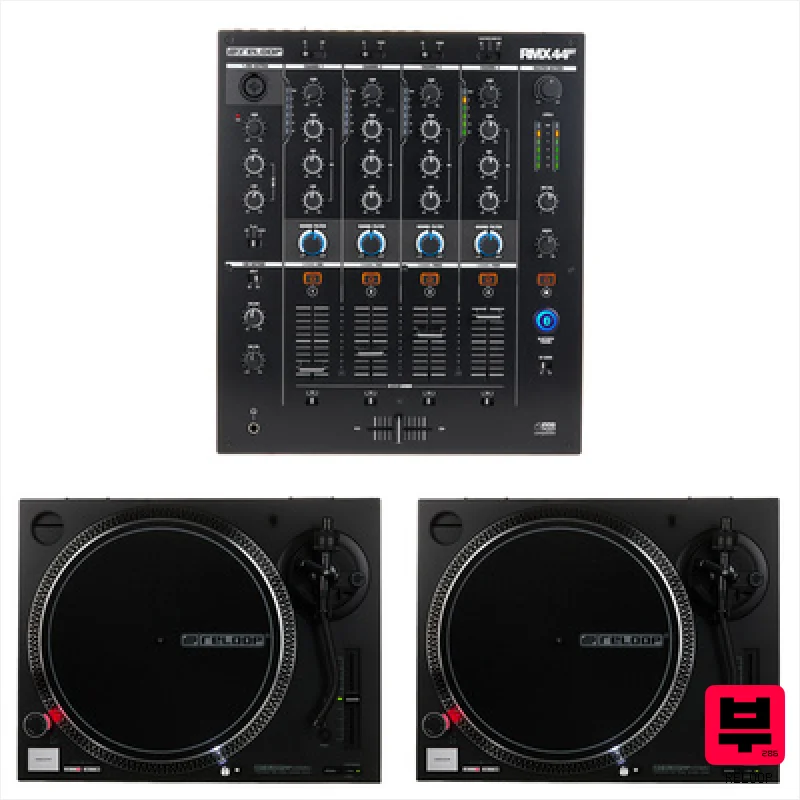
Reloop RMX-44BT 4-Channel DJ Mixer with Bluetooth
RMX-44BT · Reloop
7 for sale on Reverb2 finishes at Thomann
- Weight5.4 kg
The RMX-44BT is a surprisingly capable mixer for the price. It’s a great entry point for DJs looking for a reliable, feature-rich platform with Bluetooth connectivity, or a budget-friendly option for mobile setups where portability and simplicity are key. It's not going to replace a top-tier mixer, but it delivers solid performance for the money.
Pros
- Solid build quality with metal faceplate and robust knobs.
- Innofader compatibility offers a significant upgrade path.
- Flexible EQ and filter options provide creative mixing possibilities.
Cons
- Master output level can be a bit lower than some higher-end mixers.
- Limited USB functionality; primarily for playback, not advanced routing.
68AudioFu
IndexStableno change since Aug 17Aug 17$386 now$386€343 at Thomann · in stockCheck price ↗ -
Reloop RMX-10BT 2-Channel DJ Mixer with Bluetooth
RMX-10BT · Reloop
9 for sale on Reverb1 finish at Thomann
- Weight1.72 kg
The RMX-10BT is a surprisingly capable little mixer, especially for beginners or those needing a basic, Bluetooth-enabled solution. It's perfect for bedroom DJs, mobile events where minimal gear is required, or as a secondary mixer for practice. Don't expect high-end performance, but it delivers a lot for the asking price.
Pros
- Solid 21.5mm pots offer precise control and feel.
- Bluetooth routing provides surprising versatility for mobile setups.
- The included crossfader is surprisingly decent for the price point.
Cons
- EQ is basic – lacks the finesse of higher-end mixers.
- Microphone input is adequate, but lacks headroom for dynamic vocals.
65AudioFu
IndexStableno change since Aug 17Aug 17$145 now$145€129 at Thomann · in stockCheck price ↗ -
Behringer DDM4000 Professional 4-Channel Digital DJ Mixer with Sampler
DDM4000 · Behringer
8 for sale on Reverb3 finishes at Thomann
The DDM4000 is a surprisingly capable mixer for the price, offering a ton of features you'd normally find in much more expensive gear. It's a great option for budget-conscious DJs and producers who want a lot of creative control and built-in effects, especially those experimenting with sampling and looping.
Pros
- Extensive control mapping offers deep customization for complex mixes
- Dual effect processors with tempo sync are genuinely useful and creative
- Four phono/line channels support eight signal sources for flexible setups
Cons
- Plastic construction feels budget-oriented and lacks premium durability
- Digital crossfader may lack the feel of a high-end, motorized unit
65AudioFu
IndexStableno change since Aug 17Aug 17$372 now$372€331 at Thomann · in stockCheck price ↗
All 53 DJ mixers
Same index, same nightly prices — compact. Colour options of one model share a row. Tap a photo to zoom.
- 11
Omnitronic TRM-422Omnitronic · 2 finishes60Stable$674€599$674€599Check ↗
- 12
Omnitronic PM-202FOmnitronic · 3 finishes57↓ 0.7%$160€142$160€142Check ↗
- 13
Behringer DJX900USB 5-Channel DJ Mixer USBDJX900USB · Behringer57Stable$224€199$224€199Check ↗
- 14
Reloop RMX-22i 2-Channel MIDI MixerRMX-22i · Reloop56↑ 7.0%$359€319$359€319Check ↗
- 15
Behringer Pro Mixer DX2000USB 7-channel DJ Mixer with USB InterfaceDX2000USB · Behringer55Stable$250€222$250€222Check ↗
- 16
Omnitronic TRM-202 MK3Omnitronic · 2 finishes55↓ 4.3%$303€269$303€269Check ↗
- 17
Ecler NUO 4.0 F SilverEcler · 2 finishes54↓ 6.4%$1,011€898$1,011€898Check ↗
- 18
Omnitronic GNOME 202P BlackOmnitronic · 2 finishes53Stable$86€76$86€76Check ↗
- 19
Omnitronic PM-222Omnitronic · 2 finishes53Stable$107€95$107€95Check ↗
- 20
Ecler NUO 2.0Ecler · 2 finishes53↓ 3.9%$449€399$449€399Check ↗
- 21
Reloop RMX-60 DigitalReloop · 2 finishes51Stable$595€529$595€529Check ↗
- 22
Ecler eCompact 4 BTEcler51↑ 3.3%$843€749$843€749Check ↗
- 23
Behringer Pro Mixer DX626 3-Channel DJ MixerDX626 · Behringer50Stable$117€104$117€104Check ↗
- 24
Allen & Heath Xone 24Allen & Heath · 3 finishes50↓ 2.5%$394€350$394€350Check ↗
- 25
Omnitronic TRM-402Omnitronic49↓ 5.0%$426€379$426€379Check ↗
- 26
Omnitronic PM-444PiOmnitronic48↓ 1.5%$224€199$224€199Check ↗
- 27
Allen & Heath Xone:92 MK2Allen & Heath · 3 finishes48Stable$1,462€1,299$1,462€1,299Check ↗
- 28
Omnitronic PM-422POmnitronic47Stable$200€178$200€178Check ↗
- 29
Omnitronic PM-322POmnitronic47Stable$201€179$201€179Check ↗
- 30
Omnitronic PM-404FOmnitronic47Stable$291€259$291€259Check ↗
- 31
Omnitronic CM-5300Omnitronic47Stable$463€411$463€411Check ↗
- 32
Reloop RMX-30 BTReloop45Stable$224€199$224€199Check ↗
- 33
Omnitronic TRM-222Omnitronic45↑ 4.6%$618€549$618€549Check ↗
- 34
Behringer VMX1000 USBBehringer44Stable$198€176$198€176Check ↗
- 35
Numark M4 USB 3-Channel DJ MixerM 4 Black · Numark43Stable$163€145$163€145Check ↗
- 36
Union Audio orbit.2 LE Rotary MixerUnion Audio43Stable$1,124€999$1,124€999Check ↗
- 37
Union Audio orbit.2 LE fx Rotary MixerUnion Audio43Stable$1,237€1,099$1,237€1,099Check ↗
- 38
Union Audio two.valve Rotary MixerUnion Audio43Stable$2,137€1,899$2,137€1,899Check ↗
- 39
Union Audio four.valve Rotary MixerUnion Audio43Stable$2,925€2,599$2,925€2,599Check ↗
- 40
Union Audio elara.6 Performance-MixerUnion Audio43Stable$3,825€3,399$3,825€3,399Check ↗
- 41
Behringer NOX101 2-Channel DJ Mixer VCANOX101 DJ-Mixer · Behringer42Stable$99€88$99€88Check ↗
- 42
the t.mix 201-USB Playthe t.mix42Stable$110€98$110€98Check ↗
- 43
the t.mix 401-USB Playthe t.mix42Stable$111€99$111€99Check ↗
- 44
Formula Sound NN106Formula Sound42Stable$2,361€2,098$2,361€2,098Check ↗
- 45
Formula Sound FF2.2 LFormula Sound42Stable$2,531€2,249$2,531€2,249Check ↗
- 46
Fun Generation USB Mix 3Fun Generation41Stable$44€39$44€39Check ↗
- 47
Fun Generation USB Mix 2Fun Generation41Stable$66€59$66€59Check ↗
- 48
DAP-Audio CORE ClubDAP-Audio41Stable$242€215$242€215Check ↗
- 49
DAP-Audio CORE MIX-4 USBDAP-Audio41↓ 0.9%$512€455$512€455Check ↗
- 50
Allen & Heath Xone 24CAllen & Heath39↓ 0.6%$528€469$528€469Check ↗
DJ Mixers by the numbers
Measured across all 76 models we track, not a sample.
Median $512 — half of all DJ mixers here cost less.
median of 62 models · 1 kg–7 kg
median of 11 models · 10"–19"
How to choose the best DJ mixers
EQ Capabilities
Beyond just bass, mids, and highs, look for a mixer with surgical EQ - those precise adjustments are crucial for carving out space in a dense mix, especially when you're battling a live band or competing with other DJs. A muddy low-end is a killer, and a weak mid-range can make your sounds disappear.
Effects
Built-in effects can be a huge time-saver, but quality matters. Reverb and delay are essential for adding depth and texture, but cheesy, digital-sounding effects will only detract from your set. Consider the flexibility - can you tweak the parameters, or are you stuck with a pre-baked sound?
Routing Options
This is where things get technical, but it's vital. Do you need booth outs for monitoring? Multiple phono inputs? Auxiliary sends for external effects? Think about your setup and make sure the mixer can handle it without sounding like a stressed-out preamp.
Build Quality & Faders
Cheap plastic faders feel terrible and fail quickly - trust me, replacing a fader mid-gig is not a good look. Solid construction and smooth, reliable faders are essential for consistent performance and long-term durability. The feel of the EQ knobs is important too - they should respond smoothly and predictably.
Headroom
This is about clean signal path. Low headroom means your mixer will start to distort and breakup at relatively low output levels, making it impossible to push things without introducing unwanted noise. More headroom lets you drive the mixer harder without sacrificing clarity - essential for louder environments and recording.
Buying guide
So, you're looking for a DJ mixer. Let's be real, a mixer isn't just a box of knobs; it's the command center for your sonic landscape. Whether you're slinging tracks at a sweaty club, laying down a live set for a recording, or just practicing in your bedroom, the right mixer can make or break your performance - it's about feel, reliability, and getting that clean transition or just the right amount of controlled chaos. Let's dive into what makes a good one.
Don't get caught up in features you won't use. A mixer with a million knobs and effects is useless if you can't operate it intuitively. Entry-level mixers often cut corners on build quality and EQ precision; you'll hear it.
Paying a bit more for a mixer with solid faders, a clean preamp, and versatile EQ will save you headaches in the long run - and sound a heck of a lot better.
How the AudioFu Index works
Five measured signals and nothing else — no stars from strangers, no “tested by experts” we didn’t do. The weights are fixed and public. We don’t play these instruments; we measure the market around them.
This chart covers 76 DJ mixers from the Thomann catalogue. Before you buy, read hands-on reviews and, where you can, play it. Full methodology.
AudioFu earns a commission when you buy through our Thomann links. It never changes the order — the index does.
- Demand40%
How many of this exact model are for sale on Reverb right now — what musicians actually buy and resell.
- Lineup20%
How many finishes Thomann stocks — makers expand the models that sell.
- Price15%
Where the price has moved since we started tracking in August.
- Specs15%
How completely the maker documents it.
- Maker10%
How deep the brand’s range is in this category.
Questions
What's the difference between a 2-channel and 4-channel mixer?
2-channel mixers are great for basic setups and practicing, letting you blend two decks or sources. 4-channel mixers give you more flexibility for complex transitions, layering tracks, and incorporating samples - a must for more advanced gigs.
Do I need a USB interface?
If you're recording your mixes or using software like Serato or Traktor, a USB interface is crucial for connecting to your computer. Otherwise, it's a nice-to-have but not essential.
What does 'Booth Out' do?
Booth outs provide a dedicated, isolated output for your monitor speakers, allowing you to hear your mix clearly without affecting the main sound system.
Are motorized faders worth the extra cost?
Motorized faders can automate transitions and create complex effects, but they also add complexity and can be prone to mechanical issues. They're a tool for specific applications, not a necessity for everyone.
My mixer's sound is muddy - what's wrong?
It's likely a combination of factors: poor EQ settings, a muddy source track, or a low-quality preamp in the mixer itself. Try adjusting the EQ aggressively, experimenting with different tracks, and consider upgrading your mixer if the problem persists.