
Best DJ Mixers for Intermediate 2026
So, you're past the basic entry-level mixers and starting to feel limited - good. That means you're actually getting serious about DJing. You're probably tired of those super-basic mixers with the stiff faders and limited effects. This is about finding a mixer that can handle more complex blends, effects routing, and just generally feel good under your hands during a late-night gig.
Last updated: September 30, 2026
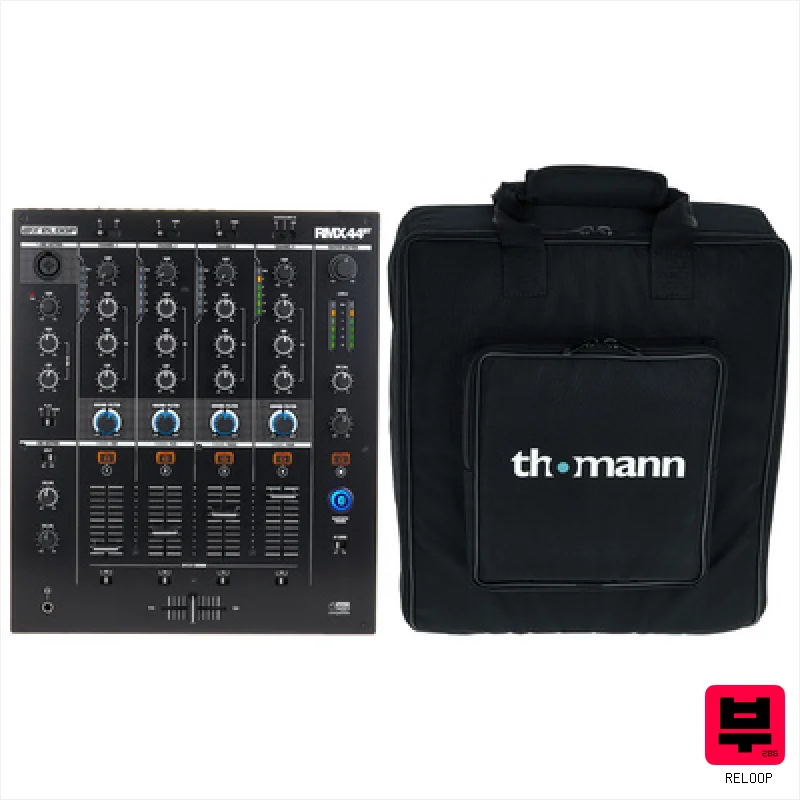
Reloop RMX-44BT Bag Bundle
- • Bluetooth input with cue function saves cables
- • Robust Cordura bag protects gear in rough conditions
- • Adjustable crossfader curve fits your mixing style
- • Water-repellent nylon casing handles sweaty hands well
- • No USB connectivity limits file loading options
- • Single mic channel lacks full-band EQ control
- • Compact size may feel cramped for large tracks

Reloop RMX-60 Digital
- • Excellent digital clarity minimizes noise and artifacts during complex transitions
- • Innofader compatibility opens up a world of advanced scratching techniques
- • Flexible EQ options, including a 'kill' setting, offer precise tonal sculpting
- • Multiple input/output options accommodate diverse setups and routing needs
- • Build quality, while decent, feels a step below premium club mixers
- • The effects, while numerous, lack the depth of dedicated studio processors
- • Digital architecture can introduce subtle latency for extremely precise beatmatching.
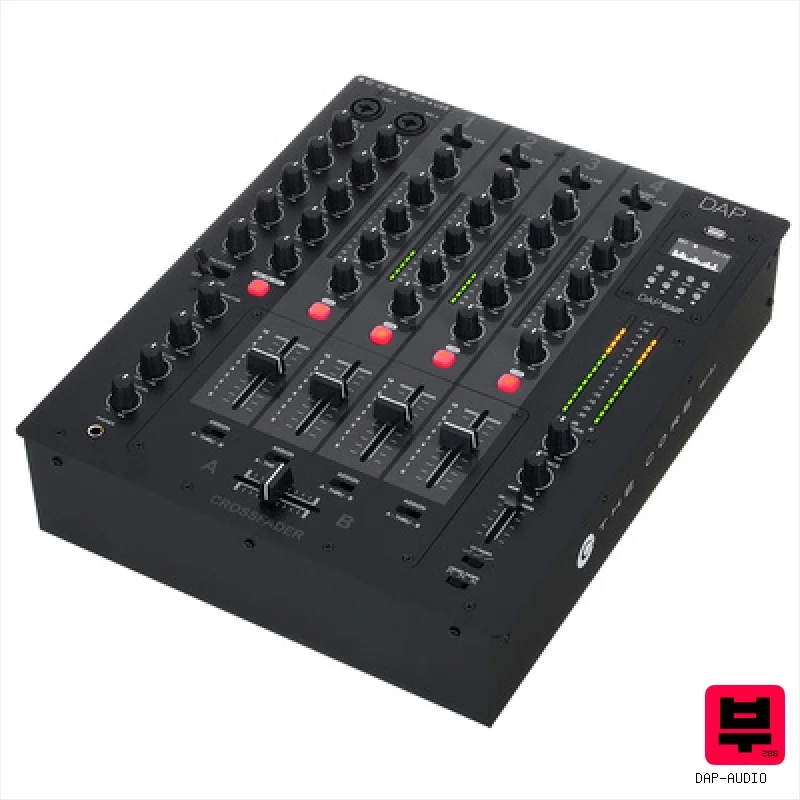
DAP-Audio CORE MIX-4 USB
- • Two dedicated USB ports for direct PC and Mac audio integration
- • Built-in USB and SD recorder handles MP3 playback natively
- • Separate send and return knobs let users route effects per channel
- • Durable 60 mm VCA faders provide precise volume control
- • Only two microphone inputs limit multi-mic setups
- • No dedicated effects processor, only send/return routing
- • Single record output channel restricts multi-track recording
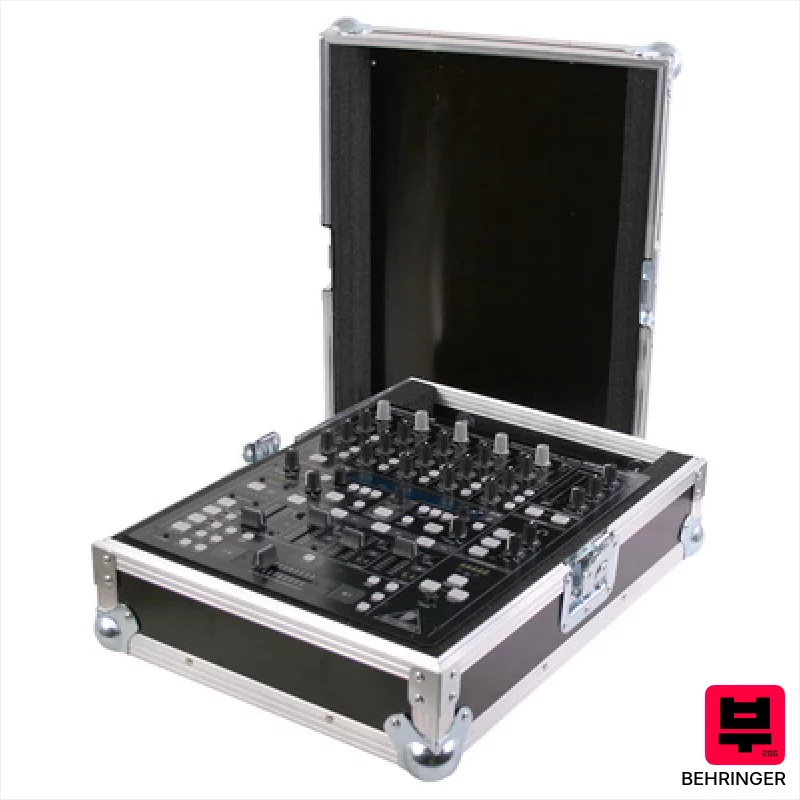
Behringer DDM 4000 Bundle II
- • Extensive control options offer deep customization for effects and routing.
- • Integrated sampler with 32-second loops provides creative flexibility.
- • MIDI output unlocks integration with DAWs like Ableton Live and Traktor.
- • Four phono/line channels support up to eight signal sources for complex setups.
- • Build quality feels plasticky; not as robust as higher-end mixers.
- • Digital crossfader may not satisfy purists preferring analog feel.
- • Effect processing, while versatile, can sound a bit sterile without tweaking.
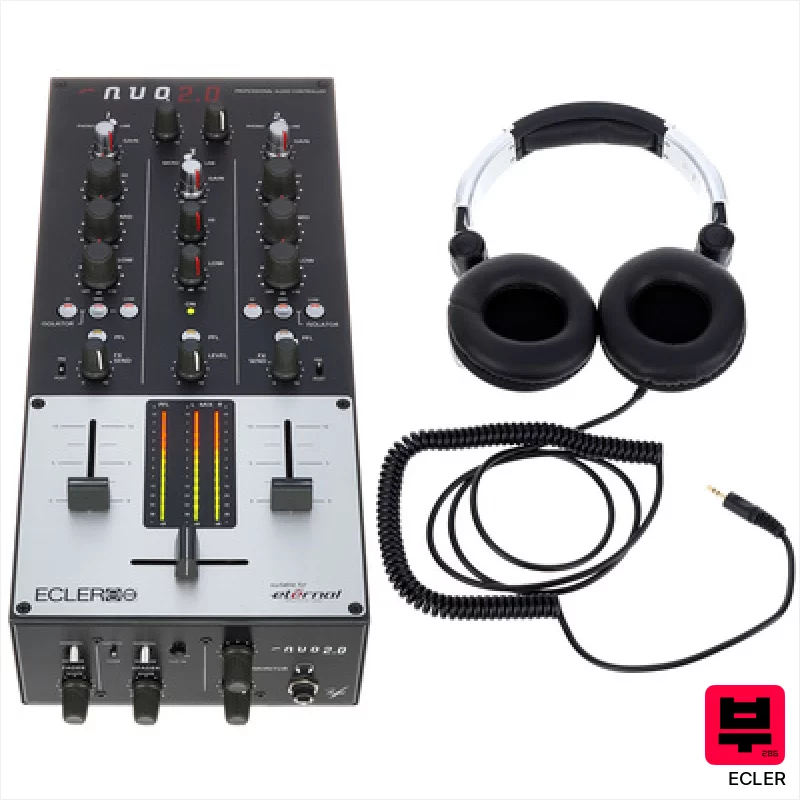
Ecler NUO 2.0 Bundle
- • Solid 45mm VCA faders offer precise curve customization.
- • Compact size (370 x 165 x 80 mm) suits smaller spaces.
- • 3-band EQ and kill switches provide flexible tonal shaping.
- • t.bone TDJ 1000 headphones deliver a decent, closed-back listening experience.
- • Build quality feels somewhat plasticky for extended professional use.
- • Limited channel count restricts mixing complex track arrangements.
- • FX send lacks advanced control options compared to higher-end mixers.
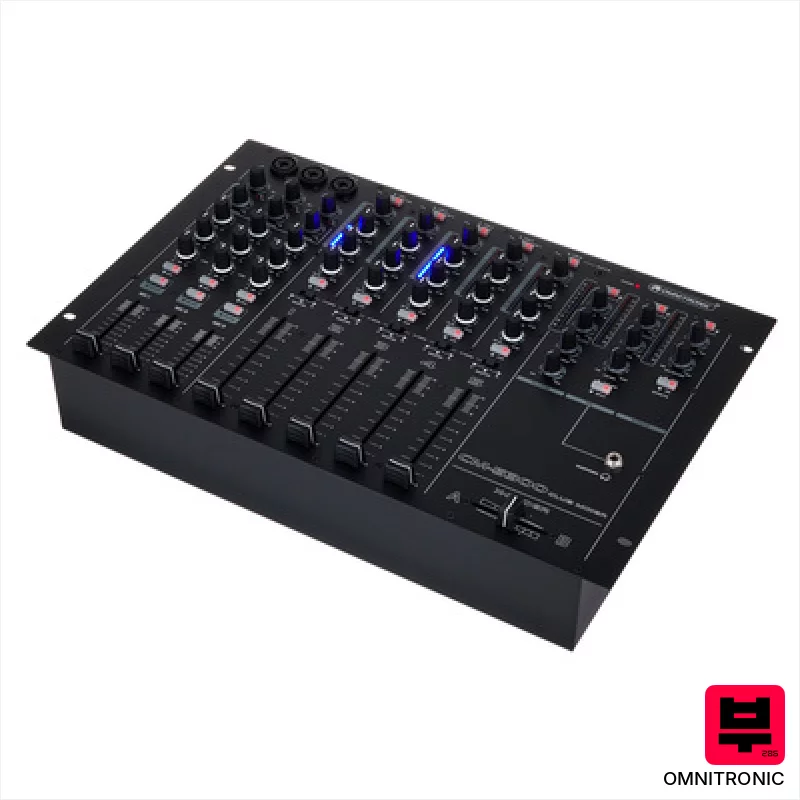
Omnitronic CM-5300
- • Solid build quality with robust 100mm faders for reliable operation.
- • Versatile mic inputs with compressor and talkover are a real mixing boon.
- • Comprehensive I/O including XLR masters and subwoofer out offer flexibility.
- • Assignable crossfader caters to various DJing styles and preferences.
- • The 7U rack height makes it less ideal for smaller, space-constrained setups.
- • Limited USB functionality; primarily for recording, not advanced routing.
- • EQ range (-26dB/+12dB) may be restrictive for some genres.
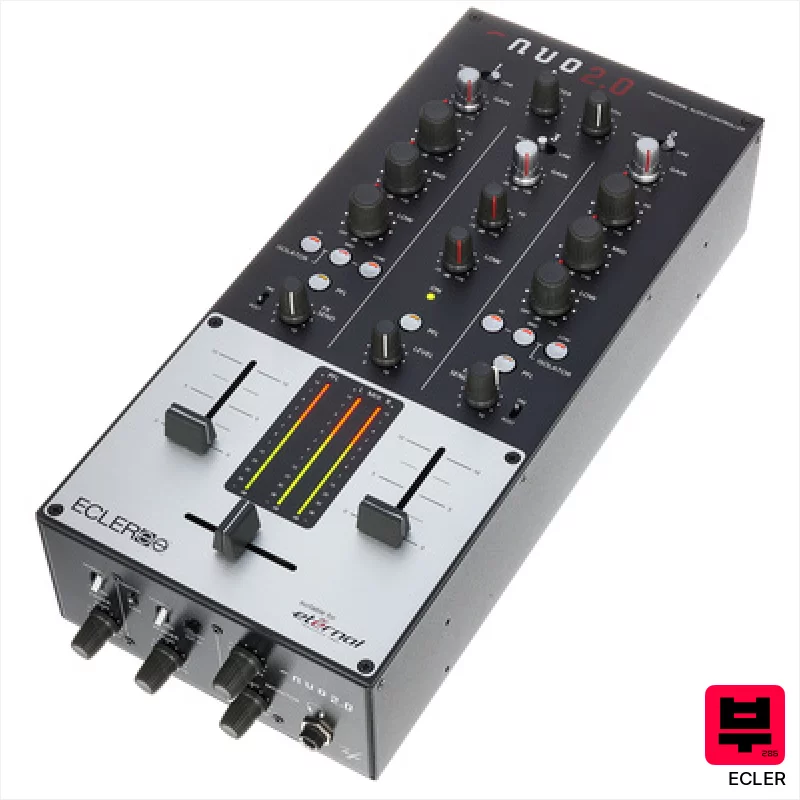
Ecler NUO 2.0
- • Solid 45mm VCA faders offer smooth, customizable curves.
- • 3-band EQ with kill switches provides precise tonal shaping.
- • Double VU meters offer a classic visual feedback of levels.
- • Compact size makes it ideal for smaller setups or mobile DJs.
- • Limited channel count restricts versatility for complex mixes.
- • Lack of dedicated USB audio interface is a notable omission.
- • The included crossfader, while adjustable, feels a bit basic.
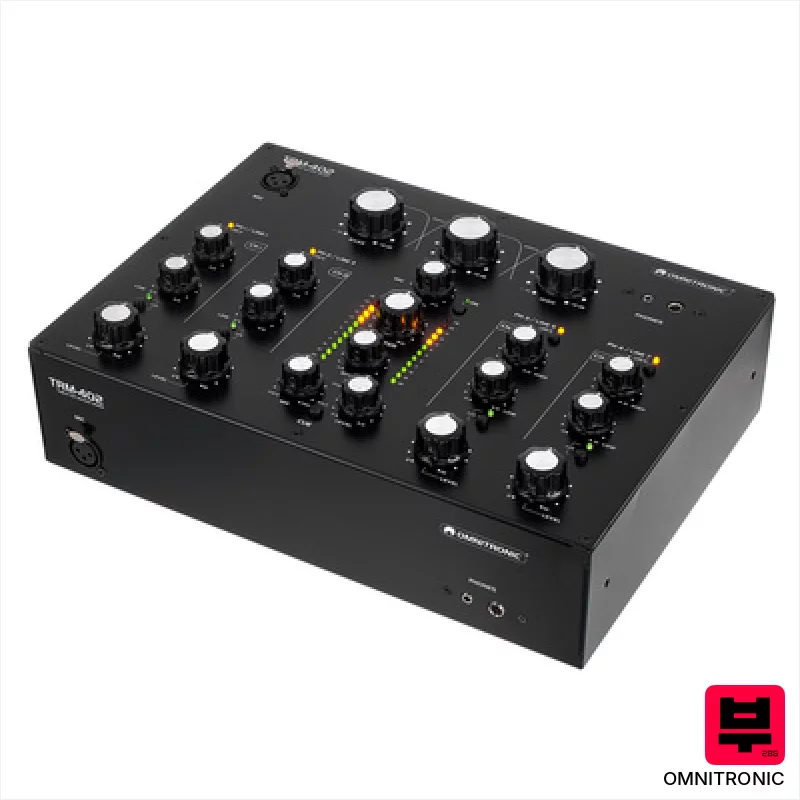
Omnitronic TRM-402
- • ALPS Blue Velvet potentiometers offer smooth, precise control.
- • Frequency isolators provide creative, surgical EQ capabilities.
- • Dedicated booth output allows for monitor flexibility.
- • Solid build quality suggests longevity and reliable performance.
- • Limited channel effects beyond the isolators restrict versatility.
- • Rotary mixers aren't ideal for all DJing styles or genres.
- • The microphone preamp might be noisy for professional vocalists.

Reloop RMX-44BT
- • Solid build quality with metal faceplate and robust knobs.
- • Innofader compatibility offers a significant upgrade path.
- • Flexible EQ and filter options provide creative mixing possibilities.
- • Bluetooth input with cueing simplifies mobile DJing and streaming.
- • Master output level can be a bit lower than some higher-end mixers.
- • Limited USB functionality; primarily for playback, not advanced routing.
- • Microphone preamp is serviceable but lacks the headroom of dedicated units.
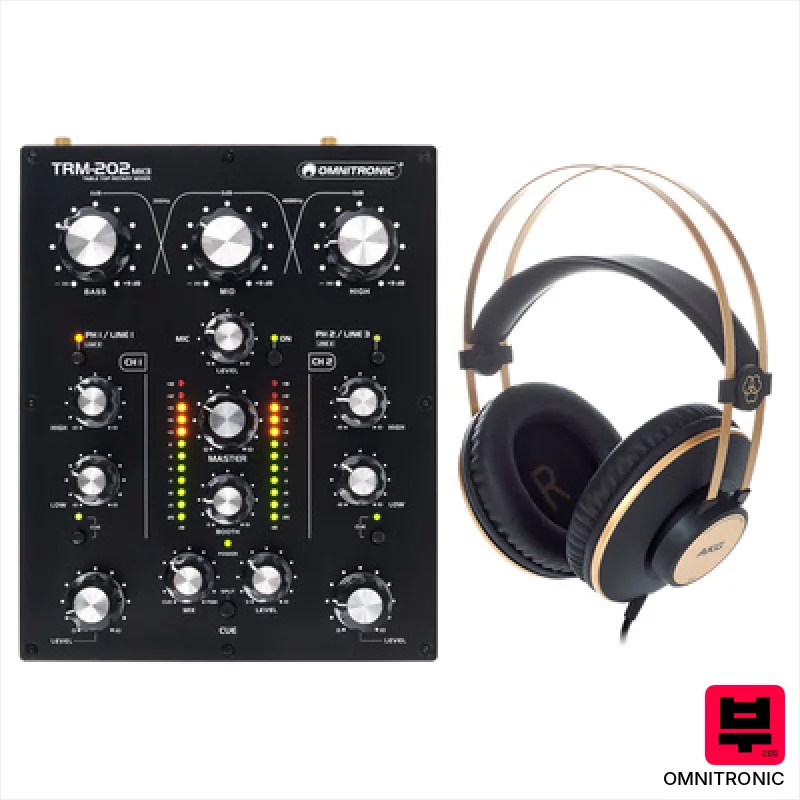
Omnitronic TRM-202 MK3 HP Bundle
- • ALPS Blue Velvet potentiometers offer smooth, reliable rotary control and feel.
- • The isolator's kill function provides distinct, creative mixing possibilities.
- • Dedicated booth output caters to dynamic DJ performances and monitoring.
- • Built-in microphone input expands versatility for MCs or live vocals.
- • Limited channel count restricts complex multi-source mixing scenarios.
- • Lack of digital connectivity restricts integration with modern DJ software.
- • The EQ is basic, lacking the precision of more advanced mixer designs.
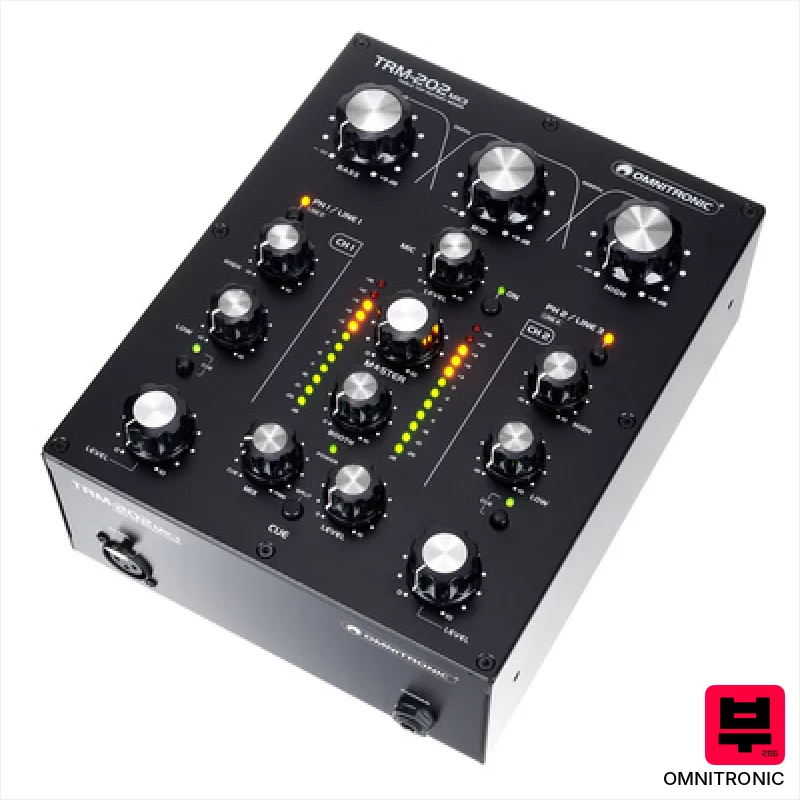
Omnitronic TRM-202 MK3
- • Classic ALPS Blue Velvet pots offer smooth, reliable rotary feel
- • Frequency isolator provides precise, creative mixing possibilities
- • Robust build quality suggests long-term durability and reliability
- • Dedicated booth output caters to live performance environments
- • Limited channel count restricts complex multi-source mixing
- • Lacks digital connectivity for modern DJ workflows
- • EQ is basic, lacks the finesse of higher-end rotary mixers
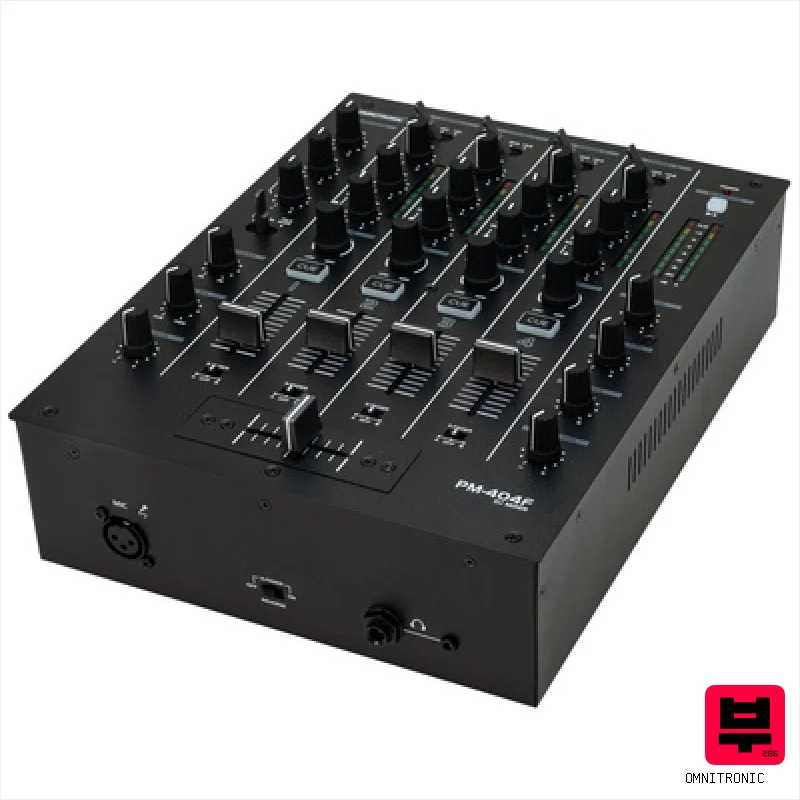
Omnitronic PM-404F
- • Solid metal housing builds a sturdy, reliable DJ booth.
- • Built-in Bluetooth lets you connect wireless headphones easily.
- • Dedicated mic input includes separate talkover and EQ controls.
- • Four input channels give you flexibility for various setups.
- • Only three bands of EQ on the main channels.
- • No USB interface for digital audio file playback.
- • Phono inputs require manual switching between modes.
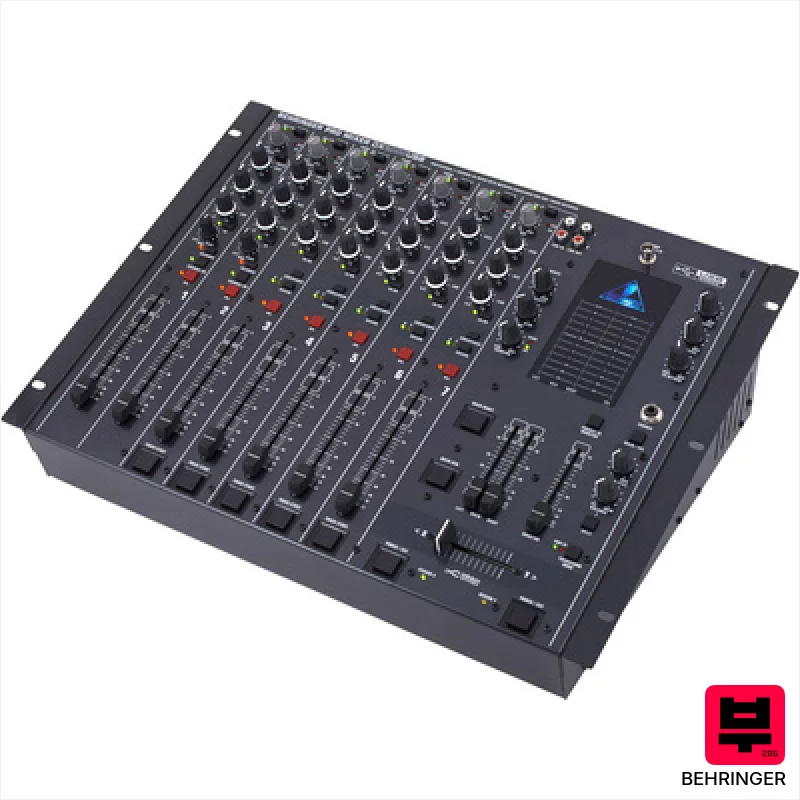
Behringer DX2000USB
- • Seven channels offer flexible routing for complex setups.
- • Infinium crossfader provides smoother transitions and better durability.
- • Phantom power supports condenser microphones for vocal recording or live performance.
- • Rackmountable design simplifies integration into professional DJ rigs.
- • Build quality feels plasticky; lacks the premium heft of higher-end mixers.
- • EQ controls are basic; lacks the precision of more advanced options.
- • USB interface likely limited to standard audio quality, not high-res.
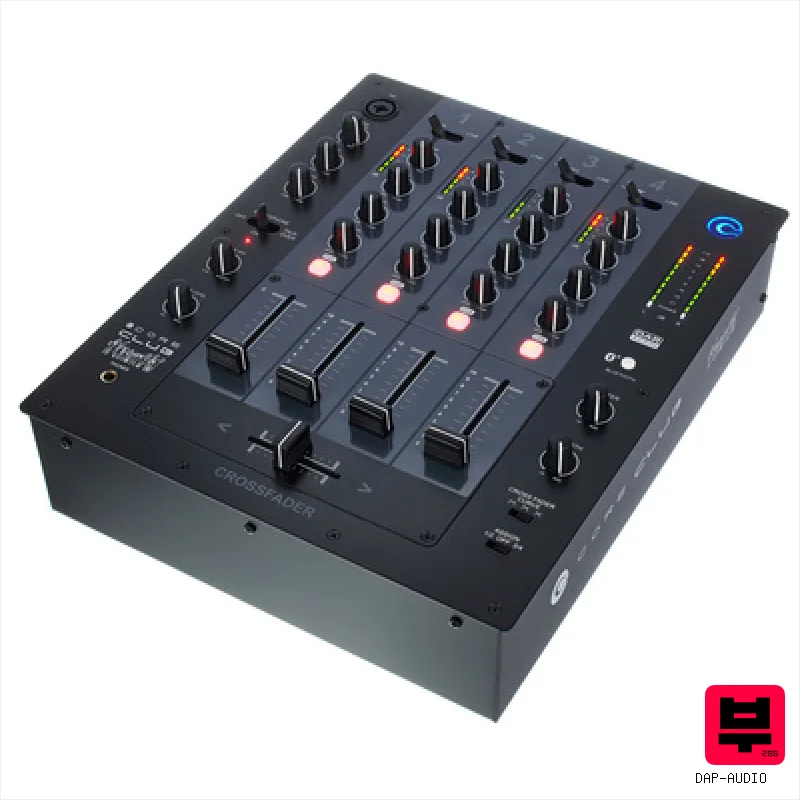
DAP-Audio CORE Club
- • Four dedicated channels for flexible mixing setups
- • Bluetooth playback lets you stream music directly
- • Separate fader board simplifies cable management and repairs
- • VU displays show channel levels clearly on screen
- • No phono inputs for direct vinyl playback
- • No USB connectivity for digital audio sources
- • Effects are not mentioned in the description
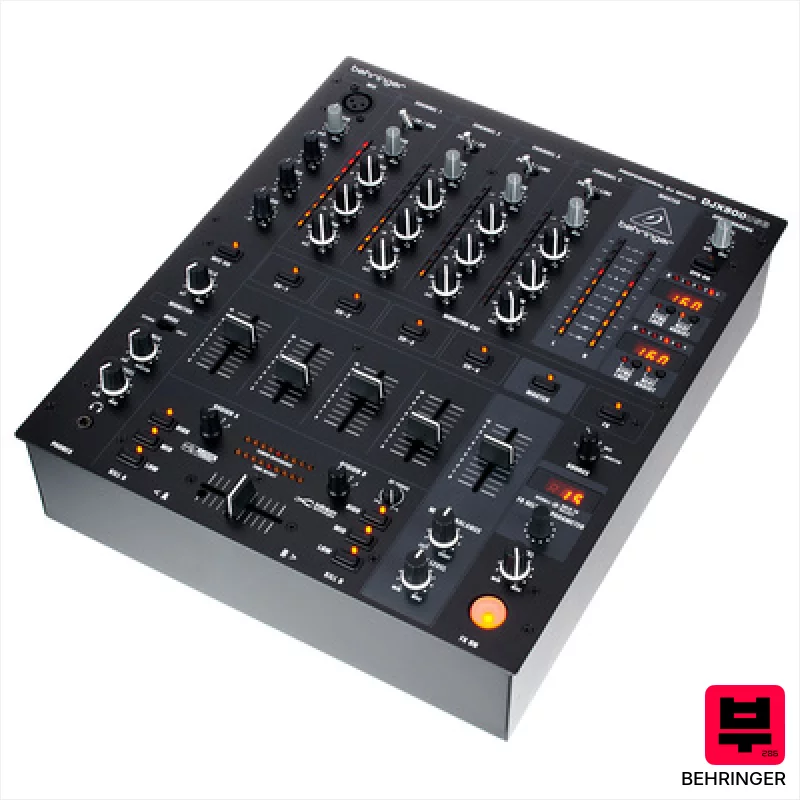
Behringer DJX900USB
- • Optical Infinium crossfader offers surprisingly smooth and reliable performance
- • 3-band kill EQ provides precise tonal shaping for creative mixing
- • Integrated USB interface simplifies recording and playback of digital tracks
- • Robust VCA fader minimizes noise and maximizes operational longevity
- • Build quality feels plasticky; lacks the premium feel of higher-end mixers
- • Effects are basic and lack depth compared to dedicated processors
- • Limited headroom; can introduce noise at higher output levels
Every dj mixers that matches
70 models match this page. The 15 above are covered in detail; the rest are listed here with their published specifications.
| # | Model | Specifications | Price |
|---|---|---|---|
| 16 | Omnitronic PM-444Pi | Weight 2 kg | $226 |
| 17 | Reloop RMX-30 BT | Weight 2.6 kg | $226 |
| 18 | Omnitronic PM-322P | Weight 2.6 kg | $203 |
| 19 | Omnitronic PM-422P | Weight 3.5 kg | $202 |
| 20 | Behringer VMX1000 USB | Weight 3.6 kg | $200 |
| 21 | Omnitronic PM-202FX | Weight 2.2 kg | $178 |
| 22 | Numark M 4 Black | Size 10" | $165 |
| 23 | Allen & Heath Xone 24 Case Bundle | not published | $567 |
| 24 | Allen & Heath Xone 24C | not published | $533 |
| 25 | Allen & Heath Xone 24 | not published | $397 |
| 26 | Behringer DDM 4000 Bundle | not published | $396 |
| 27 | Behringer DDM4000 | not published | $376 |
| 28 | Reloop RMX-22i | not published | $362 |
| 29 | Reloop PTB-2 | not published | $283 |
| 30 | Omnitronic PM-202F | Weight 2.2 kg | $162 |
| 31 | Reloop RMX-10BT | Weight 1.72 kg | $146 |
| 32 | Omnitronic PM-222P | Weight 2.1 kg | $131 |
| 33 | the t.mix 401-USB Play | Weight 3.85 kg | $112 |
| 34 | the t.mix 201-USB Play | Weight 2.75 kg | $111 |
| 35 | Omnitronic PM-222 | Weight 2 kg | $108 |
| 36 | Behringer NOX101 DJ-Mixer | Weight 2.1 kg | $100 |
| 37 | Omnitronic GNOME 202P Gold | Weight 0.5 kg | $87 |
| 38 | Omnitronic GNOME 202P Black | Weight 0.5 kg | $86 |
| 39 | Allen & Heath Xone 96 Bag Bundle | Size 10" · Weight 7 kg | $2,088 |
| 40 | Reloop RMX-95 djay Pro Bundle | Size 12" · Weight 6.8 kg | $1,130 |
| 41 | Ecler eCompact 4 BT | Size 19" · Weight 3 kg | $850 |
| 42 | Allen & Heath Xone 43 Bag Bundle | Size 10" · Weight 1 kg | $771 |
| 43 | Omnitronic TRM-422 Case Bundle | Size 19" · Weight 5.8 kg | $748 |
| 44 | Omnitronic TRM-422 | Size 19" · Weight 5.8 kg | $685 |
| 45 | Reloop RMX-60 Digital Bag Bundle | Size 10" · Weight 6.8 kg | $669 |
| 46 | the t.mix 201-USB Play Bundle | Size 15" · Weight 30 kg | $612 |
| 47 | Behringer DX626 | not published | $118 |
| 48 | Fun Generation USB Mix 2 | Weight 1.35 kg | $67 |
| 49 | Formula Sound FF2.2 L | Weight 4.2 kg | $2,554 |
| 50 | Formula Sound NN106 | Weight 8.2 kg | $2,382 |
| 51 | Allen & Heath Xone 96 Case Bundle | Weight 7 kg | $2,155 |
| 52 | Allen & Heath Xone 96 | Weight 7 kg | $2,042 |
| 53 | Allen & Heath Xone:92 MK2 Inlay Case Bundle | Weight 4.54 kg | $1,641 |
| 54 | Allen & Heath Xone:92 MK2 Case Bundle | Weight 5.3 kg | $1,623 |
| 55 | Ecler Warm 4 Case Bundle | Weight 5.3 kg | $1,587 |
| 56 | Ecler Warm4 | Weight 5.3 kg | $1,430 |
| 57 | Allen & Heath Xone:PX5 | Weight 5.2 kg | $1,417 |
| 58 | Reloop ELITE | Weight 6 kg | $1,384 |
| 59 | Reloop RMX-95 | Weight 6.8 kg | $1,078 |
| 60 | Ecler NUO 4.0 F Silver | Weight 4.72 kg | $1,066 |
| 61 | Ecler NUO 4.0 F Black | Weight 4.72 kg | $1,020 |
| 62 | Ecler Warm2 Case Bundle | Weight 3.6 kg | $925 |
| 63 | Ecler Warm2 HP Bundle | Weight 3.6 kg | $760 |
| 64 | Ecler Warm2 | Weight 3.6 kg | $721 |
| 65 | Omnitronic TRM-222 | Weight 5.8 kg | $623 |
| 66 | Fun Generation USB Mix 3 | Weight 1 kg | $44 |
| 67 | Formula Sound FF-4000 | not published | $1,929 |
| 68 | Allen & Heath Xone:92 MK2 | not published | $1,475 |
| 69 | Allen & Heath Xone 43 | not published | $703 |
| 70 | Allen & Heath Xone 24C Case Bundle | not published | $692 |
DJ Mixers by the numbers
Measured across all 70 models in this category, so «wide», «short» or «expensive» mean something you can check.
How to Choose the Best DJ Mixers
Fader Feel
It's not just about smoothness; it's about consistent resistance and accurate tracking. A jerky fader can throw off your timing and make subtle blends impossible - especially when you're trying to ride a vocal across the mix. We're looking for something with a reassuring heft, not a flimsy, plastic feel.
EQ Capabilities
Basic 3-band EQs are fine for a beginner, but intermediate players need more control. Isolate mids to remove muddiness, carve out space for the kick drum, or add some subtle warmth to a synth. Look for semi-parametric EQ or isolator filters to really shape your sound.
Effects Routing & Processing
Built-in effects are a time-saver, but can they be routed creatively? Can you send the master output to an external FX unit? Intermediate players want flexibility-the ability to layer effects, create custom transitions, and generally push the mixer beyond its basic functionality.
Cueing & Monitoring
Accurate cueing is crucial. You need clear separation between your headphone mix and the master output, and the ability to adjust the cue level precisely. Look for dedicated cue send controls and a decent headphone amplifier - weak headphone amps are a common compromise in cheaper mixers.
Build Quality & Durability
Gigging isn't kind to gear. Plastic knobs and flimsy pots will fail quickly. We're looking for solid construction, reliable components, and a mixer that can withstand the rigors of regular use and transport. A little weight is a good sign - it usually means metal internals.
Buying Guide
Don't get seduced by a ton of features if the core functionality-the faders, the EQ-feels cheap. A mixer with a steeper learning curve is okay, but if you can't reliably blend tracks because the controls are fighting you, it's useless. Spend a little more for better faders-they're the most used part of the mixer and will make your life significantly easier during a long set. Read reviews that mention gigging experiences, not just bedroom practice.
How This List Is Built
We don't play these instruments — we're a catalog, not a review desk, and we'd rather say so than pretend otherwise. This page covers 70 dj mixers from the Thomann catalogue, which is the largest single source of specification data in this category: 15 in detail, the rest listed with their specifications.
Position is computed, not curated. We parse the manufacturer's own description into actual values — nut width, scale, fret count, fingerboard radius, size, alloy — and rank on them: how many specifications a model has published, how many of them are measurable numbers, and how precisely it meets this page's criterion. A product image adds a little. Price is not a ranking signal: it tells you nothing about whether a neck fits your hand. The same inputs always produce the same order, so nothing here is shuffled to look fresh.
What this list is good for: narrowing a category down to a shortlist by spec and budget. What it isn't: a substitute for hearing an instrument. Before you buy, read hands-on reviews and, where you can, play it. Full methodology.

