AudioFu Chart · October 2026
Best DJ Mixers for Beginner 2026
The top pick is Omnitronic GNOME 202P Black ($86). Fun Generation USB Mix 3 gives you the most for the money at $44. Omnitronic PM-202F leads the high end. Ranked by the AudioFu Index from 53 models across 11 brands, prices checked every night.
Last updated: October 19, 2026
Top 10
Full detail for the 10 highest AudioFu Index scores. Every other model is listed below.
-
- Weight0.5 kg
Look, this little Omnitronic is a bare-bones mixer, but it's shockingly compact and has Bluetooth. It's perfect for a mobile DJ, a bedroom producer wanting a simple mixing solution, or someone needing a basic backup mixer – don't expect miracles, but it does what it says it will at a really affordable price point.
Pros
- Extremely compact and lightweight for portability.
- Integrated Bluetooth offers convenient music streaming.
- Basic EQ provides some tonal shaping ability.
Cons
- Limited channel count restricts mixing complexity.
- Plastic build feels budget-oriented, lacks robustness.
-
- Weight1 kg
Look, this Fun Generation USB Mix 3 is what it is: a budget-friendly option for absolute beginners or for those needing a simple, portable mixer for casual events. Don't expect miracles, but it'll get you started with basic mixing and USB playback without breaking the bank. Perfect for student DJs or bedroom producers.
Pros
- Compact size makes it great for mobile DJing setups
- Basic talkover function adds some vocal flexibility
- USB player offers a convenient, all-in-one solution
Cons
- Limited channel EQ; shaping sound is quite restrictive
- Crossfader feels cheap and will likely wear quickly
-
Reloop RMX-10BT 2-Channel DJ Mixer with Bluetooth
RMX-10BT · Reloop
9 for sale on Reverb1 finish at Thomann
- Weight1.72 kg
The RMX-10BT is a surprisingly capable little mixer, especially for beginners or those needing a basic, Bluetooth-enabled solution. It's perfect for bedroom DJs, mobile events where minimal gear is required, or as a secondary mixer for practice. Don't expect high-end performance, but it delivers a lot for the asking price.
Pros
- Solid 21.5mm pots offer precise control and feel.
- Bluetooth routing provides surprising versatility for mobile setups.
- The included crossfader is surprisingly decent for the price point.
Cons
- EQ is basic – lacks the finesse of higher-end mixers.
- Microphone input is adequate, but lacks headroom for dynamic vocals.
65AudioFu
IndexStableno change since Aug 17Aug 17$145 now$145€129 at Thomann · in stockCheck price ↗ -
- Weight2 kg
The PM-222 is a no-frills mixer, but it's surprisingly capable for the price. It’s a good starting point for bedroom DJs or mobile setups where portability and affordability are key. Don’t expect professional-grade performance, but it’ll get the job done for basic mixing.
Pros
- Solid build for the price point; feels surprisingly robust.
- Decent EQ provides some flexibility in shaping sounds.
- Microphone input allows for MCing or vocal integration.
Cons
- EQ is basic, lacking a mid-sweep or more precise control.
- Crossfader likely a budget-grade unit; expect limited lifespan.
-
- Weight1.35 kg
The Fun Generation USB Mix 2 is a surprisingly functional little mixer for the price. It’s a solid starting point for bedroom DJs or those needing a super-portable, all-in-one solution with basic digital playback. Don't expect professional-grade features, but it gets the job done for casual use.
Pros
- Compact size makes it ideal for mobile DJing setups
- Integrated USB player offers convenient digital track playback
- Microphone input allows for basic MCing or vocal additions
Cons
- Plastic construction feels noticeably budget-oriented and less durable
- Limited EQ controls restrict mixing flexibility and tonal shaping
-
Behringer Pro Mixer DX626 3-Channel DJ Mixer
DX626 · Behringer
5 for sale on Reverb1 finish at Thomann
The DX626 is a seriously affordable entry point into DJing, especially for those just starting out or needing a reliable backup mixer. It's got the core features you need – decent EQ, a solid crossfader, and a mic input – all in a compact package. Don't expect miracles, but for the price, it’s hard to beat for basic mixing and mobile DJing.
Pros
- Ultraglide crossfader boasts impressive 500,000 life cycles for reliable scratching.
- 3-band kill EQ provides substantial tonal shaping and mixing flexibility.
- Built-in beat counter aids in synchronization, useful for beginners and pros alike.
Cons
- Plastic construction feels noticeably budget-oriented; lacks premium mixer heft.
- EQ range, while present, isn't as surgical as higher-end mixers.
50AudioFu
IndexStableno change since Aug 17Aug 17$117 now$117€104 at Thomann · in stockCheck price ↗ -
Behringer NOX101 2-Channel DJ Mixer VCA
NOX101 DJ-Mixer · Behringer
1 for sale on Reverb1 finish at Thomann
- Weight2.1 kg
The NOX101 is a surprisingly capable entry-level mixer – it’s perfect for budding DJs or mobile setups where portability is key. The build is decent for the price, and the Ultraglide crossfader is a definite plus, but don't expect pro-level features or premium components.
Pros
- Solid build for the price point; feels surprisingly robust.
- Ultraglide crossfader offers smooth, reliable cuts.
- Functional 3-band EQ with kill filters for basic shaping.
Cons
- Plastic faders feel a bit cheap and may develop scratchiness over time.
- Limited connectivity compared to higher-end mixers.
-
- Weight2.2 kg
The PM-202F is a solid, affordable option for mobile DJs and solo entertainers needing basic mixing functionality with Bluetooth. Don't expect high-end performance, but it's surprisingly capable for its price point and size – a good starter mixer for smaller parties and events where portability is key.
Pros
- Metal housing provides decent durability for mobile DJing scenarios.
- Bluetooth connectivity offers convenient audio streaming for solo entertainers.
- Adjustable crossfader curve allows for customization of mixing style.
Cons
- Limited EQ controls (2-band) restrict tonal shaping flexibility.
- Frequency response suggests a slightly rolled-off high end, lacking sparkle.
57AudioFu
Index↓ 0.7%since Aug 17 · lowest so far$161 · Aug 17$160 now$160€142 at Thomann · in stockCheck price ↗ -
- Weight2.75 kg
The t.mix 201-USB Play is a neat little mixer perfect for bedroom DJs, mobile events, or anyone just starting out. It’s a handy all-in-one solution with built-in media players, but don’t expect professional-grade performance – it’s a budget-friendly entry point, plain and simple.
Pros
- Compact design ideal for mobile DJs and smaller setups
- Integrated media players offer convenient playback of MP3 and WAV files
- Microphone input with talkover function is useful for MCs and announcements
Cons
- Limited effects options restrict creative mixing possibilities
- Crossfader quality is basic; likely won’t withstand heavy scratching
-
- Weight3.85 kg
The t.mix 401-USB Play is a surprisingly capable little mixer, perfect for beginner DJs or those needing a compact, all-in-one solution for smaller gigs. The built-in USB player is a real convenience, and the overall feel is much better than you'd expect at this price. Just don't expect to be performing complex routines with it.
Pros
- Solid build quality for the price point; feels surprisingly robust.
- The integrated USB player is genuinely useful for mobile DJs.
- Microphone input with talk-over is a nice touch for MCs.
Cons
- Crossfader feels a bit plasticky and will likely need upgrading for serious scratching.
- EQ controls are basic, lacking the finesse of higher-end mixers.
All 53 DJ mixers
Same index, same nightly prices — compact. Colour options of one model share a row. Tap a photo to zoom.
- 11
Numark M4 USB 3-Channel DJ MixerM 4 Black · Numark43Stable$163€145$163€145Check ↗
- 12
Omnitronic PM-422POmnitronic47Stable$200€178$200€178Check ↗
- 13
Omnitronic PM-322POmnitronic47Stable$201€179$201€179Check ↗
- 14
Behringer VMX1000 USBBehringer44Stable$198€176$198€176Check ↗
- 15
Allen & Heath XONE:96 Professional 6+2-Channel DJ MixerXone 96 · Allen & Heath · 3 finishes83↑ 1.6%$2,023€1,798$2,023€1,798Check ↗
- 16
Ecler WARM2 Two-Channel Analogue Rotary MixerWarm2 · Ecler · 3 finishes75Stable$715€635$715€635Check ↗
- 17
Ecler WARM4 Four-Channel Analogue Rotary MixerWarm4 · Ecler · 2 finishes73Stable$1,417€1,259$1,417€1,259Check ↗
- 18
Allen & Heath XONE:43 4+1 Channel DJ Scratch MixerXone 43 · Allen & Heath · 2 finishes72Stable$697€619$697€619Check ↗
- 19
Reloop Elite DJ MixerELITE · Reloop72↓ 5.1%$1,372€1,219$1,372€1,219Check ↗
- 20
Allen & Heath XONE:PX5 4+1 Channel DJ MixerXone:PX5 · Allen & Heath72Stable$1,404€1,248$1,404€1,248Check ↗
- 21
Reloop RMX-95 4+1 Channel Digital Club MixerRMX-95 · Reloop · 2 finishes71Stable$1,068€949$1,068€949Check ↗
- 22
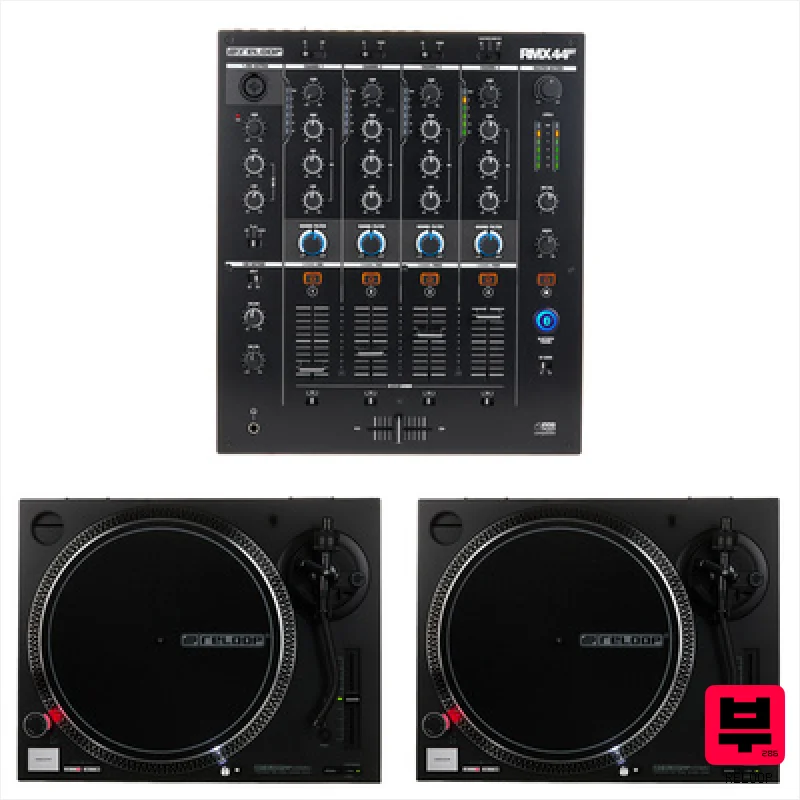
Reloop RMX-44BT 4-Channel DJ Mixer with BluetoothRMX-44BT · Reloop · 2 finishes68Stable$386€343$386€343Check ↗
- 23
Behringer DDM4000 Professional 4-Channel Digital DJ Mixer with SamplerDDM4000 · Behringer · 3 finishes65Stable$372€331$372€331Check ↗
- 24
Omnitronic TRM-422Omnitronic · 2 finishes60Stable$674€599$674€599Check ↗
- 25
Behringer DJX900USB 5-Channel DJ Mixer USBDJX900USB · Behringer57Stable$224€199$224€199Check ↗
- 26
Reloop RMX-22i 2-Channel MIDI MixerRMX-22i · Reloop56↑ 7.0%$359€319$359€319Check ↗
- 27
Behringer Pro Mixer DX2000USB 7-channel DJ Mixer with USB InterfaceDX2000USB · Behringer55Stable$250€222$250€222Check ↗
- 28
Omnitronic TRM-202 MK3Omnitronic · 2 finishes55↓ 4.3%$303€269$303€269Check ↗
- 29
Ecler NUO 4.0 F SilverEcler · 2 finishes54↓ 6.4%$1,011€898$1,011€898Check ↗
- 30
Ecler NUO 2.0Ecler · 2 finishes53↓ 3.9%$449€399$449€399Check ↗
- 31
Reloop RMX-60 DigitalReloop · 2 finishes51Stable$595€529$595€529Check ↗
- 32
Ecler eCompact 4 BTEcler51↑ 3.3%$843€749$843€749Check ↗
- 33
Allen & Heath Xone 24Allen & Heath · 3 finishes50↓ 2.5%$394€350$394€350Check ↗
- 34
Omnitronic TRM-402Omnitronic49↓ 5.0%$426€379$426€379Check ↗
- 35
Omnitronic PM-444PiOmnitronic48↓ 1.5%$224€199$224€199Check ↗
- 36
Allen & Heath Xone:92 MK2Allen & Heath · 3 finishes48Stable$1,462€1,299$1,462€1,299Check ↗
- 37
Omnitronic PM-404FOmnitronic47Stable$291€259$291€259Check ↗
- 38
Omnitronic CM-5300Omnitronic47Stable$463€411$463€411Check ↗
- 39
Reloop RMX-30 BTReloop45Stable$224€199$224€199Check ↗
- 40
Omnitronic TRM-222Omnitronic45↑ 4.6%$618€549$618€549Check ↗
- 41
Union Audio orbit.2 LE Rotary MixerUnion Audio43Stable$1,124€999$1,124€999Check ↗
- 42
Union Audio orbit.2 LE fx Rotary MixerUnion Audio43Stable$1,237€1,099$1,237€1,099Check ↗
- 43
Union Audio two.valve Rotary MixerUnion Audio43Stable$2,137€1,899$2,137€1,899Check ↗
- 44
Union Audio four.valve Rotary MixerUnion Audio43Stable$2,925€2,599$2,925€2,599Check ↗
- 45
Union Audio elara.6 Performance-MixerUnion Audio43Stable$3,825€3,399$3,825€3,399Check ↗
- 46
Formula Sound NN106Formula Sound42Stable$2,361€2,098$2,361€2,098Check ↗
- 47
Formula Sound FF2.2 LFormula Sound42Stable$2,531€2,249$2,531€2,249Check ↗
- 48
DAP-Audio CORE ClubDAP-Audio41Stable$242€215$242€215Check ↗
- 49
DAP-Audio CORE MIX-4 USBDAP-Audio41↓ 0.9%$512€455$512€455Check ↗
- 50
Allen & Heath Xone 24CAllen & Heath39↓ 0.6%$528€469$528€469Check ↗
- 51
Reloop PTB-2Reloop38Stable$280€249$280€249Check ↗
- 52
Formula Sound FF-4000Formula Sound34Stable$1,912€1,699$1,912€1,699Check ↗
- 53
the t.mix 201-USB Play Bundlethe t.mix30Stable$607€539$607€539Check ↗
DJ Mixers by the numbers
Measured across all 76 models we track, not a sample.
Median $512 — half of all DJ mixers here cost less.
median of 62 models · 1 kg–7 kg
median of 11 models · 10"–19"
How to choose the best DJ mixers
EQ Control
Beginner mixers don't need surgical precision. Look for a simple 3-band EQ (low, mid, high) that's responsive and doesn't introduce unwanted noise when you tweak it. Too many bands just adds complexity when you're learning the basics.
Faders & Knobs
These are your bread and butter. Smooth, consistent faders are essential. Scratchy or stiff faders will kill your flow and make blending tracks feel awkward. Knobs should have a good feel, not too loose or too stiff.
Cueing System
A clear, reliable cueing system is vital. You need to be able to hear your cued track clearly without bleed-through to the master output. A simple headphone volume control and a clean cue/master switch are all you really need to start.
Effects (if any)
Most beginner mixers have basic effects like echo or filter. These can be fun, but don't let them be the deciding factor. They're often a compromise - sometimes cheesy sounding and not very versatile. Learn to mix first, worry about effects later.
Build Quality
Let's be real, budget mixers cut corners somewhere. Look for a solid chassis and sturdy knobs. Plastic parts are fine, but avoid anything that feels flimsy or like it's going to fall apart after a few gigs.
Buying guide
So, you're diving into the world of DJing? Awesome! Picking your first mixer is a big deal - it's your control center. Don't get caught up in all the flashy features you don't need; a beginner mixer should feel good under your hands, be easy to learn, and not break the bank. We're going to break down some solid options that'll let you focus on learning the craft, not wrestling with a complicated piece of gear.
Don't chase features you don't need. A mixer with a ton of effects or a complex routing system is just going to slow you down. Prioritize smooth faders, a responsive EQ, and a reliable cueing system.
You'll likely find that the cheaper mixers have plastic components and a less robust feel - it's a trade-off. Spend a little more for something that feels solid and inspires confidence.
How the AudioFu Index works
Five measured signals and nothing else — no stars from strangers, no “tested by experts” we didn’t do. The weights are fixed and public. We don’t play these instruments; we measure the market around them.
This chart covers 76 DJ mixers from the Thomann catalogue. Before you buy, read hands-on reviews and, where you can, play it. Full methodology.
AudioFu earns a commission when you buy through our Thomann links. It never changes the order — the index does.
- Demand40%
How many of this exact model are for sale on Reverb right now — what musicians actually buy and resell.
- Lineup20%
How many finishes Thomann stocks — makers expand the models that sell.
- Price15%
Where the price has moved since we started tracking in August.
- Specs15%
How completely the maker documents it.
- Maker10%
How deep the brand’s range is in this category.
Questions
What's the difference between a 2-channel and 4-channel mixer?
A 2-channel mixer lets you mix two tracks at a time, great for beginners. 4-channel mixers let you blend four tracks simultaneously, useful for more complex transitions, but more to learn upfront.
Do I need Serato or Traktor compatibility?
Not initially! Start with a mixer that's straightforward to use with your music player. You can always upgrade later if you want to integrate with DJ software.
What does 'headroom' mean for a DJ mixer?
Headroom is the amount of signal a mixer can handle before distorting. More headroom means cleaner sound, especially at higher volumes, but it's less crucial for beginner setups.
My faders feel scratchy. Can I fix this?
Sometimes a little contact cleaner can help, but often scratchy faders are a sign of cheap components. Replacing them is an option, but it's a sign the mixer wasn't built to last.
Is it worth buying used?
Definitely! You can often find great deals on used mixers. Just inspect the faders and knobs carefully before you buy and check for any signs of damage.