
Best Analogue mixers for Beginner 2026
So you're diving into live sound or basic recording - awesome! An analogue mixer is still the heart of a lot of setups, even in a digital world. Forget those complex digital boards for now; we're talking about getting your head around the fundamentals. Let's find you a mixer that won't overwhelm you, but will still let you shape your sound and cut through a rehearsal room.
Last updated: September 29, 2026

Rockboard LM 4 4-Channel Line Mixer
- • Metal housing provides surprising durability for its size and price.
- • 95dB signal-to-noise ratio is excellent for a mixer in this class.
- • Compact size makes it ideal for pedalboards or tight spaces.
- • The included power supply is a welcome convenience for portability.
- • Limited to line-level inputs; unsuitable for microphone use directly.
- • Lacks EQ; tonal shaping is entirely dependent on incoming signals.
- • Single output restricts flexibility for more complex routing needs.
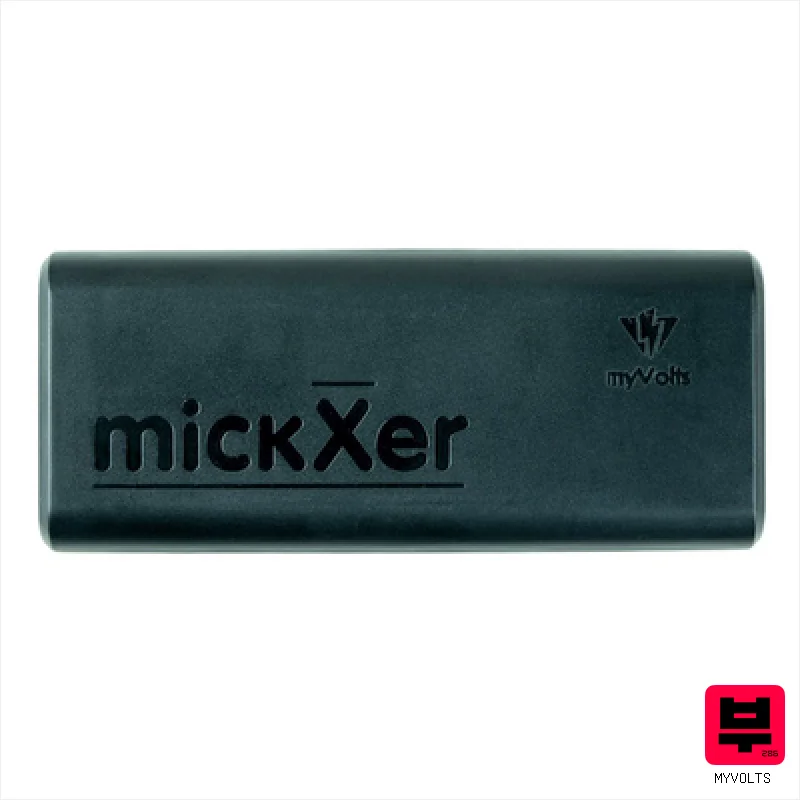
myVolts MickXer Black
- • Runs without any battery or power supply needed.
- • Handles up to five separate stereo sources easily.
- • Includes a noise filter to stop ground loops.
- • Very light weight for easy carrying around.
- • No equalizer bands to shape the sound.
- • No built-in effects to add creativity.
- • No aux sends for external monitoring.
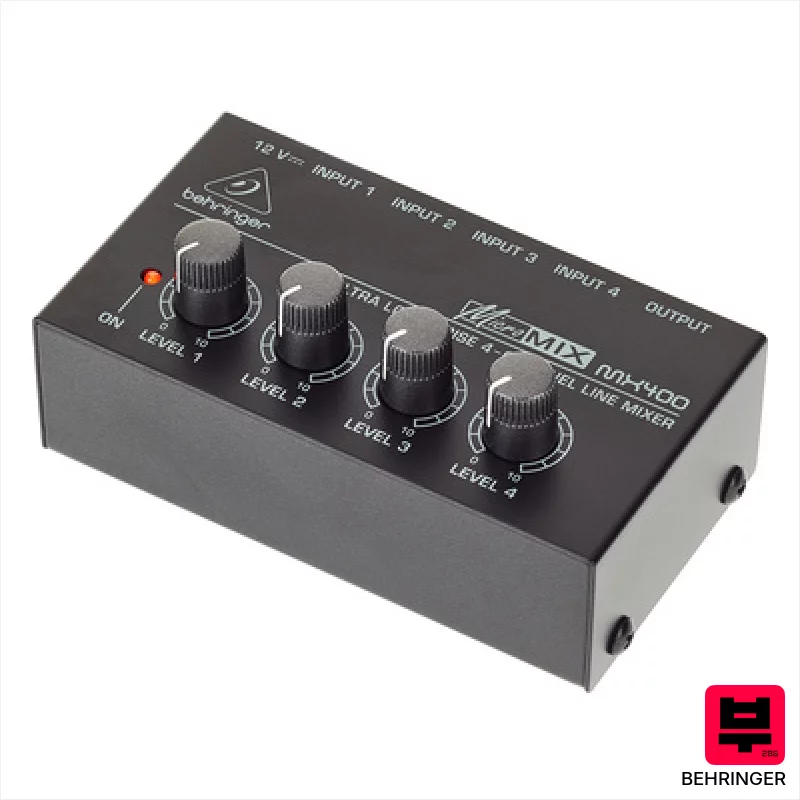
Behringer MX400
- • Uses 4580 op-amps for surprisingly clean, low-noise performance
- • Extremely compact footprint ideal for space-constrained setups
- • Provides flexible sub-mixing capabilities for expanding channel count
- • Remarkably affordable entry point into basic mixing functionality
- • Limited EQ capabilities restrict detailed sonic sculpting
- • No phantom power support restricts microphone usage
- • Build quality feels plasticky and not exceptionally durable
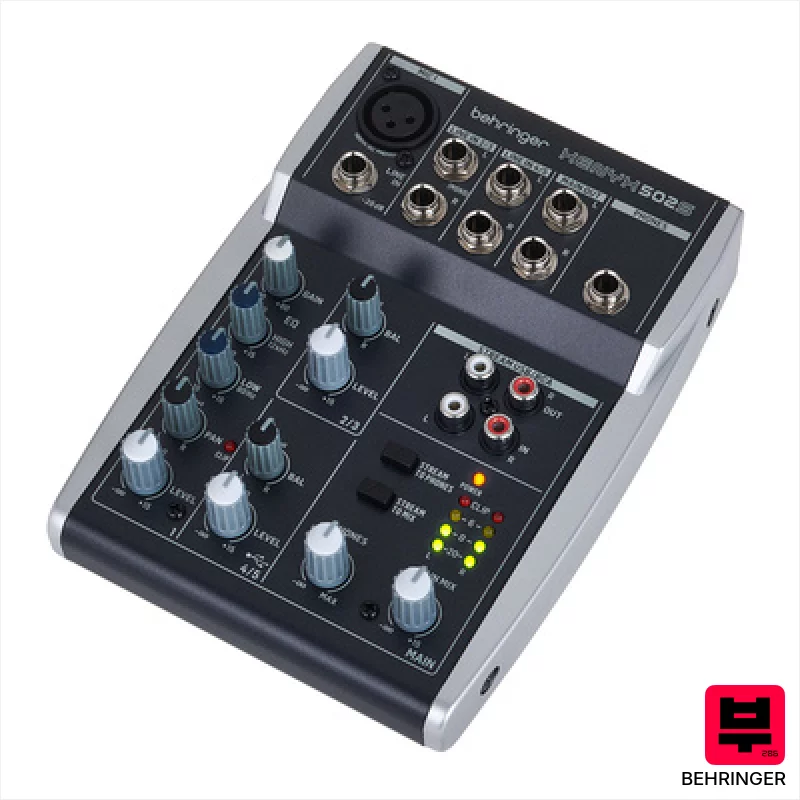
Behringer Xenyx 502S
- • Compact size ideal for small spaces and mobile setups
- • Xenyx preamps offer surprisingly clean gain for the price point
- • USB streaming interface simplifies recording and online broadcasting
- • Simple EQ provides basic tonal shaping without excessive complexity
- • Plastic construction feels somewhat flimsy and lacks long-term durability
- • Limited channel count restricts use for more complex setups
- • EQ is basic - lacks the finesse of higher-end consoles

IMG Stageline MMX-31
- • Passive design simplifies setup, no power needed
- • Compact size ideal for portable applications
- • Robust construction for reliable field use
- • Simple level controls offer basic gain staging
- • Limited to three microphone inputs severely restricts use
- • Lack of EQ limits tonal shaping possibilities
- • Passive nature means lower signal levels require careful gain management
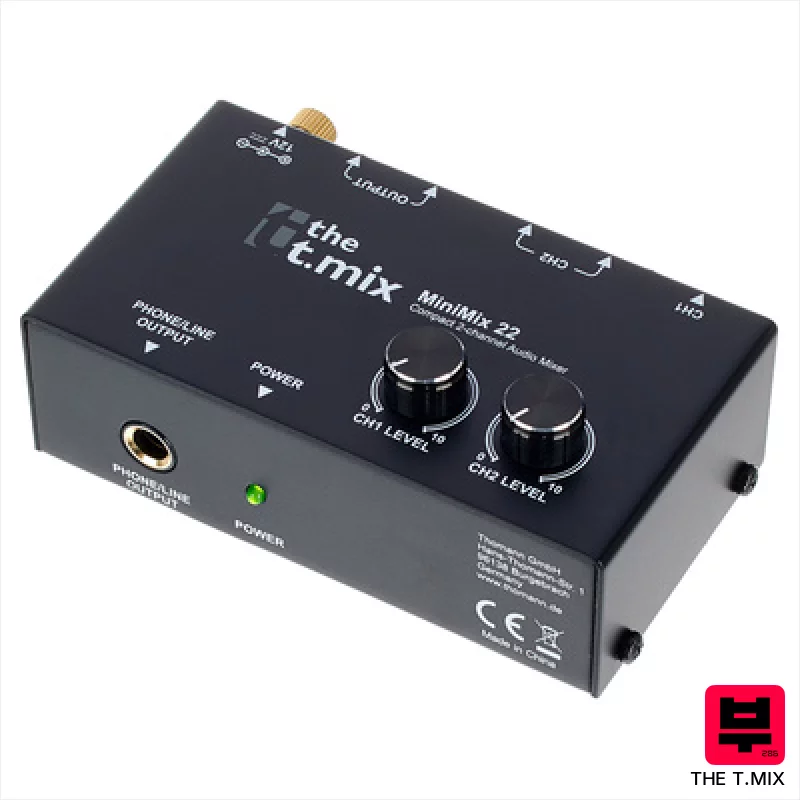
the t.mix MiniMix 22
- • Extremely compact and portable for mobile recording setups
- • Simple, straightforward design ideal for basic audio routing
- • Included power supply eliminates immediate additional cost
- • Stereo and RCA inputs offer surprising versatility for its size
- • Limited channel count restricts complex mixing scenarios
- • Build quality feels plasticky; not built for heavy road use
- • RCA input quality is noticeably lower than the 6.3mm jack
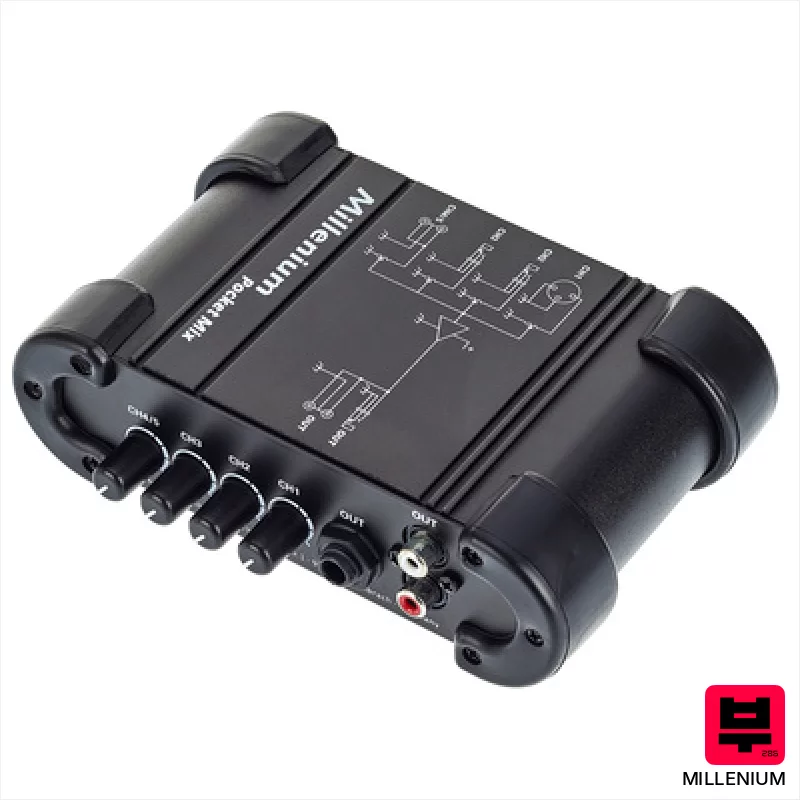
Millenium Pocket Mix
- • Compact size ideal for small spaces and mobile setups
- • Simple layout makes it easy to learn and operate quickly
- • XLR mic input provides decent gain for basic vocal needs
- • Affordable entry point for simple audio mixing tasks
- • Limited channel count restricts versatility for complex setups
- • Plastic construction feels budget-oriented and less durable
- • Sound quality is basic; expect noise and limited headroom
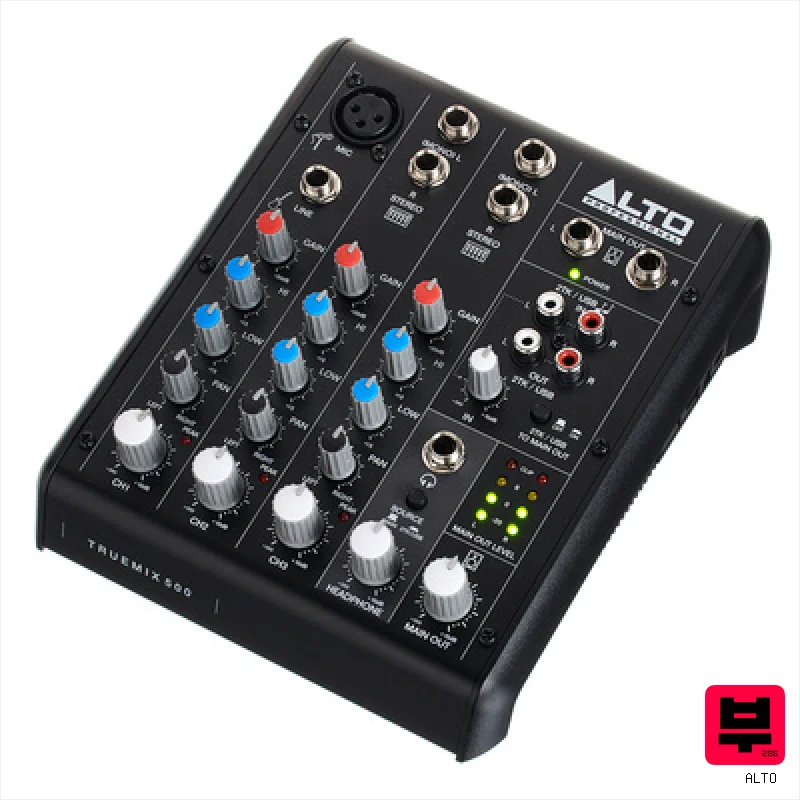
Alto TrueMix 500
- • USB audio interface built directly into the mixer
- • 18V phantom power supports condenser microphones
- • Compact dimensions fit small venues easily
- • Lightweight design simplifies transport for gigging
- • No aux sends listed for direct monitoring
- • Effects section is completely absent from specs
- • Only two band EQ limits tone shaping options
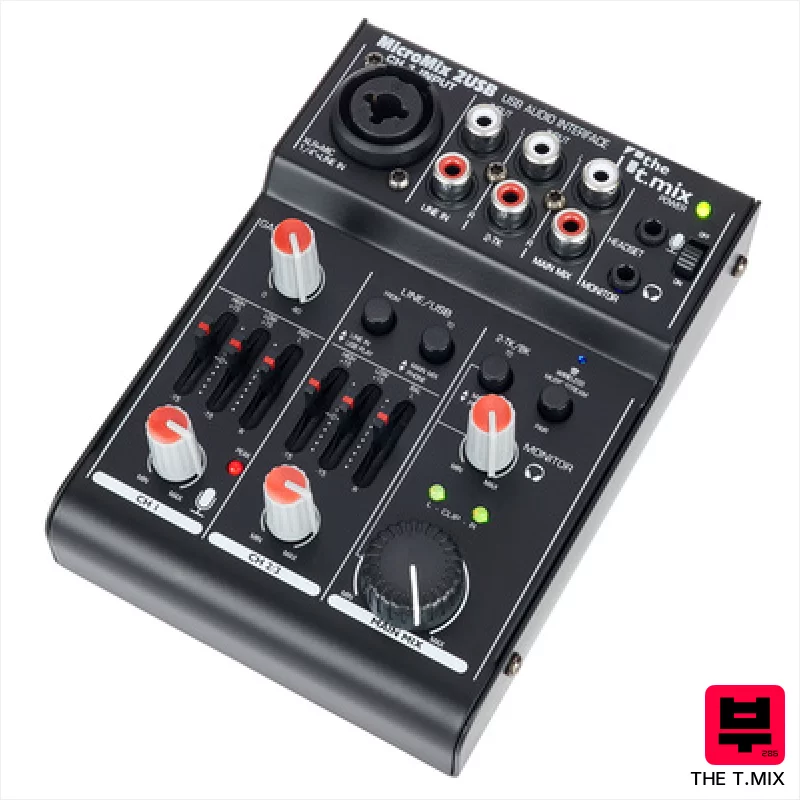
the t.mix MicroMix 2 USB
- • Extremely compact and lightweight for portable applications
- • Bluetooth 4.2 provides convenient wireless connectivity
- • Built-in USB audio interface simplifies recording and playback
- • Simple EQ offers basic tonal shaping without complexity
- • Limited channel count restricts larger or complex setups
- • 80dB signal-to-noise ratio indicates potential for noise floor
- • Plastic construction feels budget-oriented, lacks premium feel
- • EQ is basic, lacking the precision of higher-end mixers
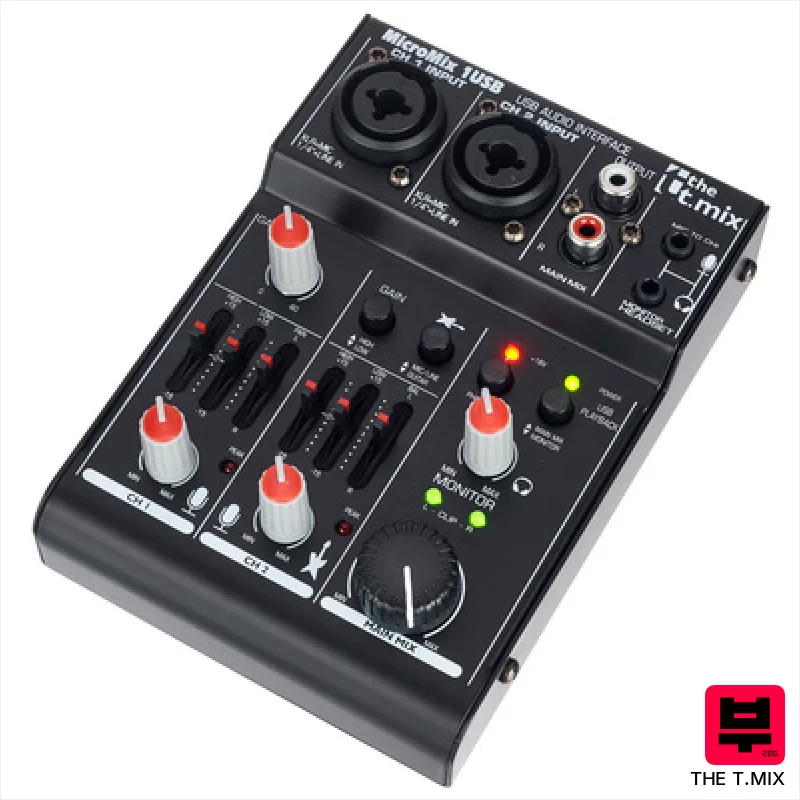
the t.mix MicroMix 1 USB
- • Extremely compact and portable, ideal for mobile recording setups
- • Built-in USB audio interface simplifies computer recording workflows
- • Phantom power supports condenser microphones for better audio quality
- • Simple, intuitive controls make it easy to dial in a sound quickly
- • Limited channel count restricts use for larger or complex setups
- • 80dB SNR is noticeable, especially in quieter recording environments
- • Plastic enclosure feels somewhat flimsy, lacks premium build quality
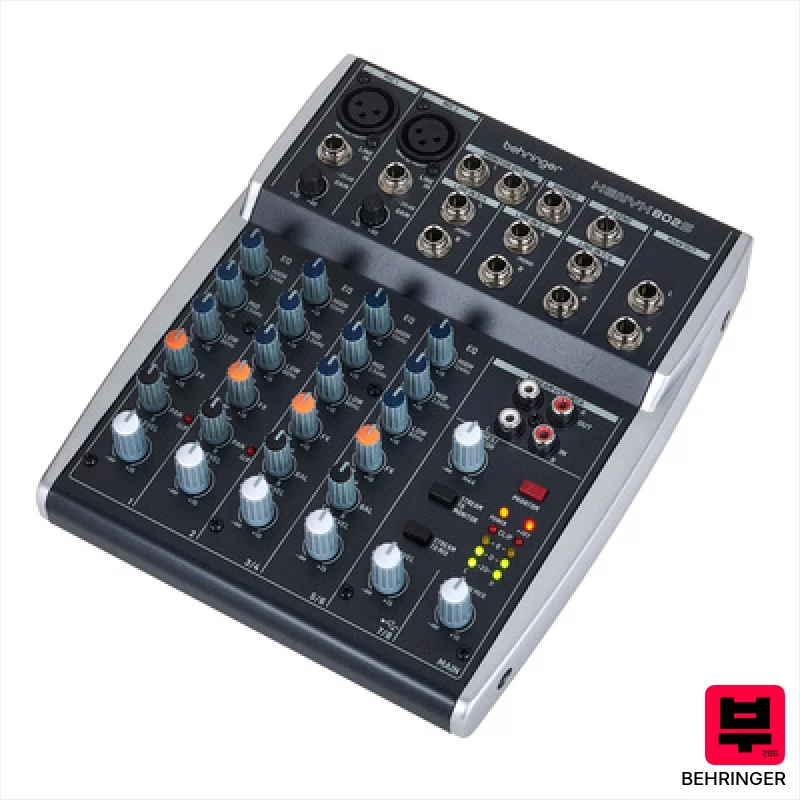
Behringer Xenyx 802S
- • Compact size ideal for small venues and home recording setups
- • XLR inputs offer versatility for microphones and line-level sources
- • Built-in USB interface simplifies recording and streaming workflows
- • 3-band EQ provides basic tonal shaping on most channels
- • Plastic construction feels somewhat flimsy, lacks premium robustness
- • Limited headroom; can introduce noise at higher gain levels
- • EQ is basic; lacks semi-parametric control for nuanced adjustments
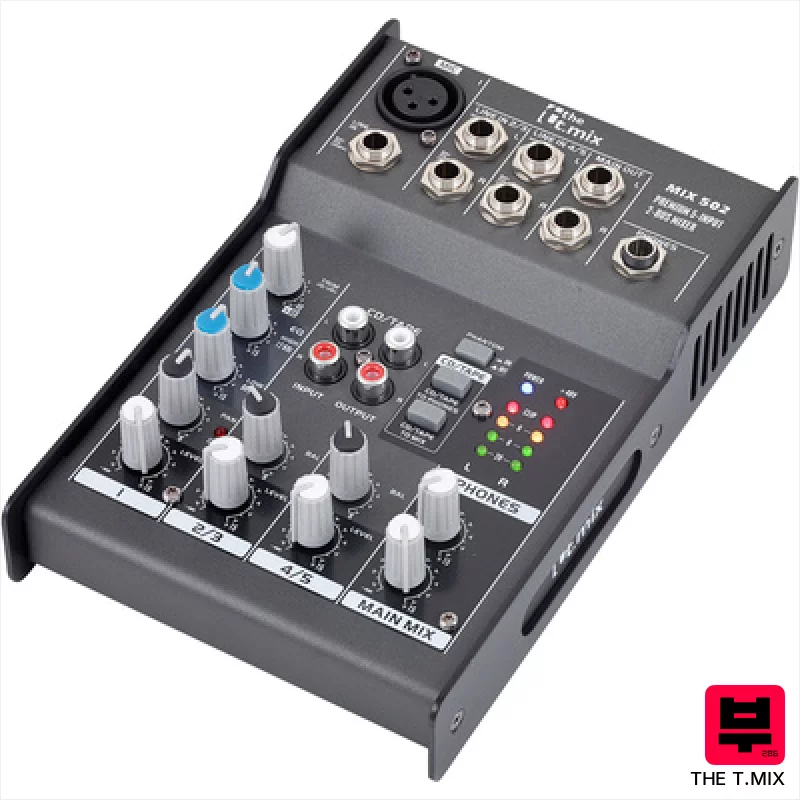
the t.mix mix 502
- • Extremely affordable entry point to basic mixing
- • Functional phantom power for condenser mics is a bonus
- • Compact size makes it ideal for small, portable setups
- • Simple EQ offers basic tonal shaping capabilities.
- • Limited channel count restricts versatility for larger bands
- • Construction feels budget-oriented – plastic enclosure
- • RCA inputs only; lacks more modern connectivity options.

Behringer Xenyx 1002SFX
- • Compact size ideal for small spaces and mobile setups.
- • XENYX preamps offer surprisingly decent clean gain for the price.
- • Built-in Klark Teknik effects add usable reverb/delay options.
- • USB interface simplifies recording directly to a computer for streaming.
- • Plastic construction feels noticeably cheap and less durable.
- • EQ is basic 3-band, lacking precision for detailed mixing.
- • Limited headroom; prone to noise with higher input levels.
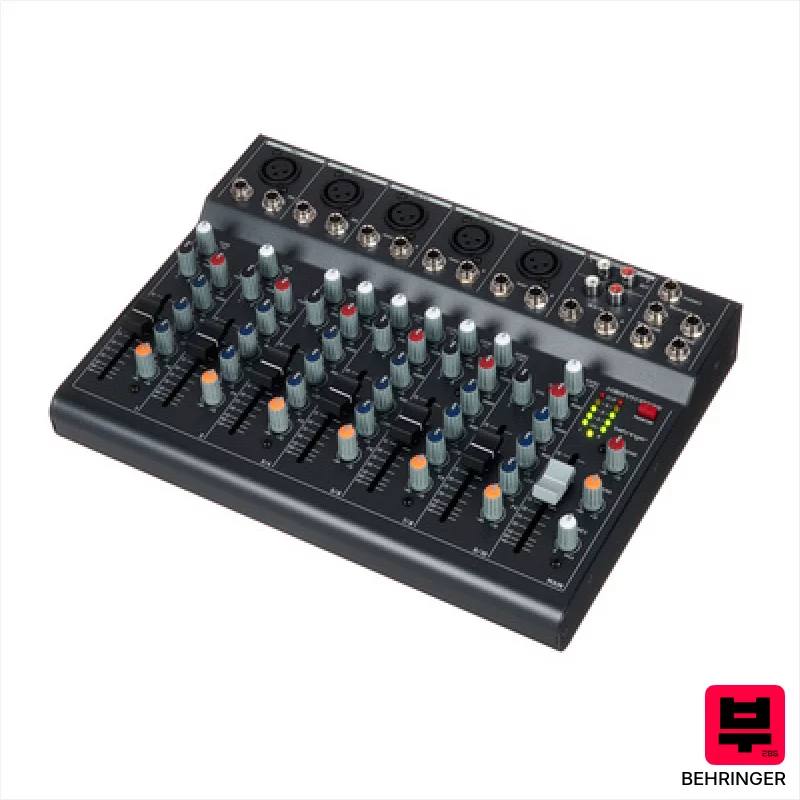
Behringer Xenyx 1003B
- • Compact size makes it exceptionally portable for mobile setups.
- • 60mm faders offer surprisingly precise control for the price point.
- • XLR mic inputs provide decent gain and low-noise operation.
- • Battery operation offers flexibility for remote recording or small gigs.
- • Plastic construction feels noticeably budget-conscious; not built to withstand heavy abuse.
- • EQ is basic; lacks the finesse for complex tonal shaping.
- • Limited aux sends restrict routing options for more elaborate effects setups.

Mackie Mix5
- • Solid build for its size, surprisingly robust plastic chassis
- • Mic preamp delivers usable gain with minimal noise
- • Compact design makes it ideal for small spaces and mobile setups
- • Tape I/O offers basic recording/playback flexibility
- • EQ limited to just 2-band on the mic channel
- • Stereo channels lack any EQ adjustment – a significant limitation
- • Headphone output lacks a dedicated level control
Every analogue mixers that matches
145 models match this page. The 15 above are covered in detail; the rest are listed here with their published specifications.
| # | Model | Specifications | Price |
|---|---|---|---|
| 16 | Behringer Xenyx 1202SFX | Weight 1.5 kg | $121 |
| 17 | Alto TrueMix 600 | Weight 1.4 kg | $123 |
| 18 | the t.mix mix 802 | not published | $85 |
| 19 | Allen & Heath ZED-6 | Weight 1.5 kg | $127 |
| 20 | Soundcraft Notepad-5 | Weight 0.62 kg | $131 |
| 21 | Behringer Xenyx QX602MP3 | not published | $98 |
| 22 | the t.mix xmix 802 USB | Weight 3.2 kg | $147 |
| 23 | Mackie Mix8 | not published | $112 |
| 24 | Rolls MX 41b | not published | $113 |
| 25 | Yamaha MG06 | Weight 0.9 kg | $152 |
| 26 | Behringer Xenyx 1003B Case Bundle | Weight 2.1 kg | $165 |
| 27 | Behringer Xenyx 1202SFX Case Bundle | Weight 1.5 kg | $165 |
| 28 | the t.mix xmix 1002 FX USB | Weight 3.85 kg | $170 |
| 29 | the t.mix xmix 1202 USB | Weight 4.3 kg | $170 |
| 30 | Korg Volca Mix | not published | $131 |
| 31 | Rolls MX 51S | not published | $131 |
| 32 | Rolls MX 22s | not published | $131 |
| 33 | LD Systems VIBZ 6 | not published | $134 |
| 34 | Alto TrueMix 800FX | Weight 2.1 kg | $175 |
| 35 | Rolls MX 42 | not published | $142 |
| 36 | Mackie Mix12FX | not published | $146 |
| 37 | Mackie 402 VLZ4 | not published | $147 |
| 38 | Soundcraft Notepad-8FX | not published | $165 |
| 39 | ART Promix | not published | $176 |
| 40 | Dynacord CMS600-3 | Size 19" · Weight 6 kg | $2,309 |
| 41 | Allen & Heath WZ4 16:2 | Size 19" · Weight 13 kg | $1,933 |
| 42 | Allen & Heath WZ4 14:4:2 | Size 19" · Weight 12.5 kg | $1,842 |
| 43 | Soundcraft FX 16 II | Size 19" · Weight 8.5 kg | $908 |
| 44 | Allen & Heath ZED-14 Bundle | Size 19" · Weight 7.5 kg | $568 |
| 45 | Allen & Heath ZED-14 | Size 19" · Weight 7.5 kg | $493 |
| 46 | Behringer Xenyx X2442 USB Case Bundle | Size 19" · Weight 5.9 kg | $363 |
| 47 | DAP-Audio IMIX-6.2 | Size 19" · Weight 2.6 kg | $358 |
| 48 | Behringer Xenyx X2222 USB Bundle | Size 19" · Weight 4.78 kg | $340 |
| 49 | Behringer Xenyx X1222 USB Case Bundle | Size 19" · Weight 3.7 kg | $279 |
| 50 | Behringer Xenyx X1222USB | Size 19" · Weight 3.7 kg | $222 |
| 51 | Allen & Heath ZED-428 | Weight 21 kg | $2,457 |
| 52 | Dynacord CMS1000-3 | Size 19" | $2,331 |
| 53 | Tascam Model 2400 | Weight 14 kg | $2,274 |
| 54 | Boredbrain Music Xcelon SL | Weight 2.21 kg | $2,218 |
| 55 | Soundcraft Signature Plus 32 | Weight 13.9 kg | $1,704 |
| 56 | Soundcraft Signature Plus 22 | Weight 9.7 kg | $1,363 |
| 57 | Tascam Model 24 | Weight 10.4 kg | $1,285 |
| 58 | Mackie 1604 VLZ4 | Weight 9.1 kg | $1,023 |
| 59 | Soundcraft Signature Plus 16 | Weight 7.8 kg | $1,022 |
| 60 | Mackie 1642 VLZ4 Case Bundle | Weight 8.3 kg | $920 |
| 61 | Soundcraft Signature Plus 12 | Weight 6.1 kg | $908 |
| 62 | Yamaha MG20 XU | Weight 7.1 kg | $898 |
| 63 | Allen & Heath ZED-22FX | Weight 11.5 kg | $852 |
| 64 | Intellijel Designs Jellymix | Weight 1.4 kg | $852 |
| 65 | Mackie ProFX16v3 Case Bundle | Weight 6.9 kg | $807 |
| 66 | Yamaha MG20 | Weight 6.9 kg | $795 |
| 67 | Mackie ProFX22v3 | Weight 9 kg | $794 |
| 68 | Mackie 1642 VLZ4 | Weight 8.3 kg | $768 |
| 69 | Heritage Audio Mix Buddy | Weight 1.92 kg | $738 |
| 70 | Allen & Heath ZED-16FX | Weight 8.5 kg | $724 |
| 71 | Mackie ProFX10 GO Case Bundle | Weight 2.7 kg | $654 |
| 72 | Allen & Heath ZED-12FX | Weight 7.4 kg | $631 |
| 73 | Yamaha MG16XU | Weight 6.8 kg | $597 |
| 74 | Yamaha MG12 XU Thon Case Bundle | Weight 4.2 kg | $591 |
| 75 | Yamaha MG16X | Weight 6.8 kg | $591 |
| 76 | Soundcraft EFX12 | Weight 4.6 kg | $568 |
| 77 | Mackie ProFX16v3 | Weight 6.9 kg | $556 |
| 78 | Yamaha MG16 | Weight 6.6 kg | $545 |
| 79 | Allen & Heath ZED60-14FX | Weight 4.4 kg | $529 |
| 80 | Allen & Heath ZED60-10FX | Weight 3.8 kg | $511 |
| 81 | Yamaha MG12 XU Case Bundle | Weight 4.2 kg | $488 |
| 82 | Mackie ProFX10 GO | Weight 2.7 kg | $477 |
| 83 | Yamaha MG12XUK | Weight 3 kg | $465 |
| 84 | Soundcraft EFX8 | Weight 4.6 kg | $464 |
| 85 | Mackie 1402 VLZ4 | Weight 4.5 kg | $431 |
| 86 | Yamaha MG12 XU | Weight 4.2 kg | $431 |
| 87 | Mackie ProFX12v3+ | Weight 3.6 kg | $427 |
| 88 | Soundcraft EPM12 | Weight 5.8 kg | $408 |
| 89 | Yamaha MG12X | Weight 4.2 kg | $408 |
| 90 | Behringer Xenyx QX1222USB Case Bundle | Weight 3.7 kg | $404 |
| 91 | Mackie ProFX10v3+ | Weight 2.2 kg | $397 |
| 92 | Soundcraft EPM8 | Weight 4.6 kg | $386 |
| 93 | Soundcraft EPM6 Case Bundle | Weight 4 kg | $386 |
| 94 | Yamaha MG10XUF Case Bundle | Weight 3.3 kg | $386 |
| 95 | Yamaha MG12 | Weight 4 kg | $386 |
| 96 | Mackie ProFX12v3 | Weight 3.6 kg | $370 |
| 97 | Allen & Heath ZED-10FX | Weight 3.3 kg | $363 |
| 98 | cre8audio Assembler | Weight 0.85 kg | $352 |
| 99 | Soundcraft EPM6 | Weight 4 kg | $329 |
| 100 | Yamaha MG10XUF | Weight 3.3 kg | $329 |
| 101 | Allen & Heath ZEDi-10 FX | Weight 2.3 kg | $324 |
| 102 | Behringer Xenyx QX2442USB | Weight 5.9 kg | $324 |
| 103 | Allen & Heath ZED-10 | Weight 3.3 kg | $295 |
| 104 | Behringer Xenyx QX1832USB | Weight 4.6 kg | $295 |
| 105 | Yamaha MG10 XU | Weight 2.1 kg | $295 |
| 106 | Mackie ProFX6v3+ | Weight 1.2 kg | $283 |
| 107 | Behringer Xenyx QX2222USB | Weight 4.78 kg | $266 |
| 108 | Allen & Heath ZEDi-10 | Weight 2.2 kg | $261 |
| 109 | Mackie 1202 VLZ4 | Weight 3 kg | $261 |
| 110 | Yamaha MG10X | Weight 2.1 kg | $261 |
| 111 | the t.mix xmix 1402 FXMP Case Bundle | Weight 4.7 kg | $261 |
| 112 | the t.mix xmix 1202 FXMP USB Case Bundle | Weight 4.7 kg | $261 |
| 113 | Mackie ProFX10v3 | Weight 2.2 kg | $258 |
| 114 | Yamaha MG06X Case Bundle | Weight 0.9 kg | $245 |
| 115 | Mackie MobileMix | Weight 0.8 kg | $242 |
| 116 | Mackie 802 VLZ4 | Weight 2.5 kg | $226 |
| 117 | Radial Engineering MIX2:1 | Weight 0.8 kg | $225 |
| 118 | the t.mix xmix 1402 FXMP USB | Weight 4.7 kg | $225 |
| 119 | Behringer Xenyx QX1222USB | Weight 3.7 kg | $222 |
| 120 | Yamaha MG10 | Weight 1.9 kg | $222 |
| 121 | Rolls MX 28 | Weight 490 kg | $212 |
| 122 | Behringer Xenyx QX1204USB | Weight 2.8 kg | $204 |
| 123 | Yamaha MG06X | Weight 0.9 kg | $204 |
| 124 | the t.mix xmix 802 USB Case Bundle | Weight 3.2 kg | $204 |
| 125 | the t.mix xmix 1202 FXMP USB | Weight 4.7 kg | $204 |
| 126 | Allen & Heath ZEDi-8 | Weight 1.5 kg | $192 |
| 127 | Allen & Heath ZED-6 FX | Weight 1.5 kg | $192 |
| 128 | Mackie ProFX6v3 | Weight 1.2 kg | $192 |
| 129 | Rolls MX44Pro | Weight 0.45 kg | $189 |
| 130 | Soundcraft Notepad-12FX | Weight 1.7 kg | $181 |
| 131 | the t.mix xmix 1202 FX USB | Weight 4.35 kg | $181 |
| 132 | Dynacord CMS1600-3 | not published | $3,515 |
| 133 | Dynacord CMS2200-3 | not published | $3,184 |
| 134 | Allen & Heath WZ4 12:2 | not published | $1,535 |
| 135 | Mackie Onyx16 | not published | $704 |
| 136 | Radial Engineering Gold Digger | not published | $567 |
| 137 | Mackie Onyx8 | not published | $397 |
| 138 | Rolls MX 54s | not published | $302 |
| 139 | Midas DM12 | not published | $272 |
| 140 | Rolls MX 122 | not published | $272 |
| 141 | Bastl Instruments Bestie | not published | $267 |
| 142 | Korg Nu:Tekt NTS-4 | not published | $249 |
| 143 | Rolls MX 34C | not published | $249 |
| 144 | Rolls MX 310 | not published | $225 |
| 145 | LD Systems VIBZ 10 C | not published | $207 |
Analogue mixers by the numbers
Measured across all 145 models in this category, so «wide», «short» or «expensive» mean something you can check.
How to Choose the Best Analogue mixers
Channel Count
More isn't always better. 8 channels is usually plenty for a beginner - enough for a vocal mic, guitar, bass, and a little drum kit. Too many channels just adds unnecessary complexity and potential for signal chain confusion.
EQ
Don't get sucked into fancy parametric EQs just yet. Simple 3-band EQ (low-mid-high) is all you need to start sculpting your tone. Look for a decent amount of cut/boost - at least 6dB on each band - to have some flexibility.
Preamp Quality
This is where the "mojo" comes from. Better preamps offer a cleaner signal and more headroom before breakup, which means less noise and more punch. Don't expect boutique studio quality at this price point, but avoid anything that sounds thin or lifeless.
Aux Sends
Essential for effects! Having at least one aux send allows you to route a signal to a reverb or delay pedal/processor. It's a simple way to add depth and space to your mix.
Build Quality
Let's be honest, budget mixers can feel flimsy. Check for sturdy knobs, reliable faders (if present), and a chassis that doesn't rattle like a tin can. This impacts longevity and how it holds up to gigging.
Buying Guide
For a beginner, prioritize playability and simplicity over features. Don't chase that 'fat midrange honk' if you don't understand EQ yet - you'll just end up muddying things up. Cheaper mixers often cut corners on preamp quality and build; you'll hear it in the noise and feel it in the wobbly knobs. Spending a little more on a model with decent preamps and a robust build is an investment in your learning and frustration levels.
How This List Is Built
We don't play these instruments — we're a catalog, not a review desk, and we'd rather say so than pretend otherwise. This page covers 145 analogue mixers from the Thomann catalogue, which is the largest single source of specification data in this category: 15 in detail, the rest listed with their specifications.
Position is computed, not curated. We parse the manufacturer's own description into actual values — nut width, scale, fret count, fingerboard radius, size, alloy — and rank on them: how many specifications a model has published, how many of them are measurable numbers, and how precisely it meets this page's criterion. A product image adds a little. Price is not a ranking signal: it tells you nothing about whether a neck fits your hand. The same inputs always produce the same order, so nothing here is shuffled to look fresh.
What this list is good for: narrowing a category down to a shortlist by spec and budget. What it isn't: a substitute for hearing an instrument. Before you buy, read hands-on reviews and, where you can, play it. Full methodology.

