
Best Wireless Microphones for Instruments for Advanced 2026
Alright, so you're tired of cable clutter and ready to go wireless with your instrument? It's a game changer for stage presence, no doubt, but a cheap system is just going to introduce more headaches than it solves. We're not talking about plugging in a vocal mic here; instrument wireless needs to handle dynamics, transient response, and a surprisingly wide frequency range, all while minimizing noise and latency. This isn't a beginner's guide; we're diving into what serious players need to know.
Last updated: April 11, 2026
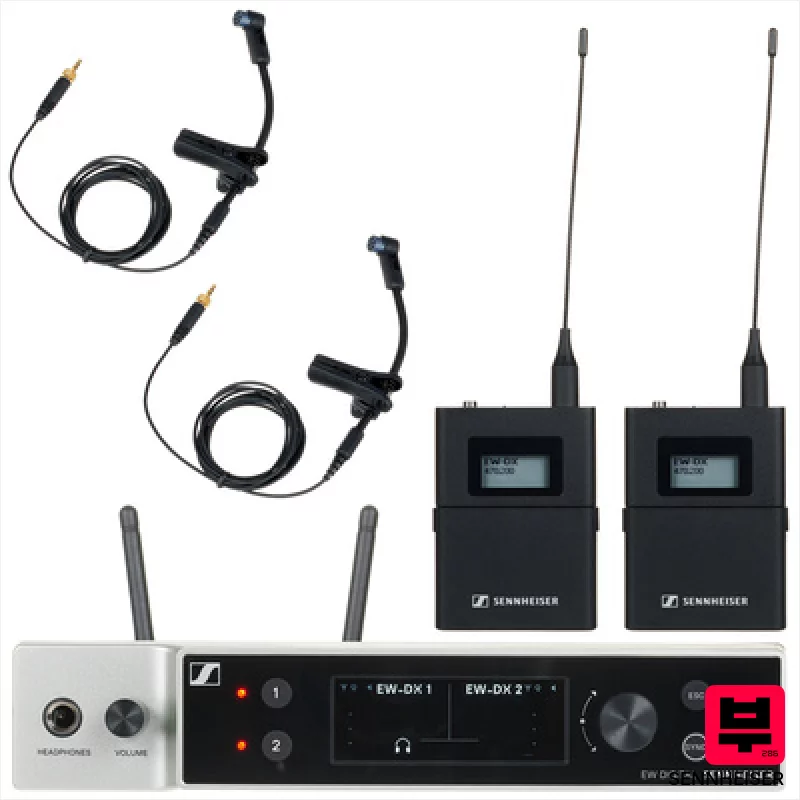
Sennheiser EW-DX 2x E908 B Dante U1/5
- • Rock-solid build quality; feels like it’ll withstand years of gigging.
- • E908 B mics deliver Sennheiser's signature clarity and warmth.
- • Dante connectivity offers seamless integration with modern digital workflows.
- • SK Q1-9 transmitters are remarkably compact and lightweight for pocket use.
- • The receiver is fairly bulky, might be challenging in very tight rack spaces.
- • AA battery dependency can be inconvenient for long performances; rechargeable pack extra.
- • Price places it in the premium-priced tier, a significant investment.
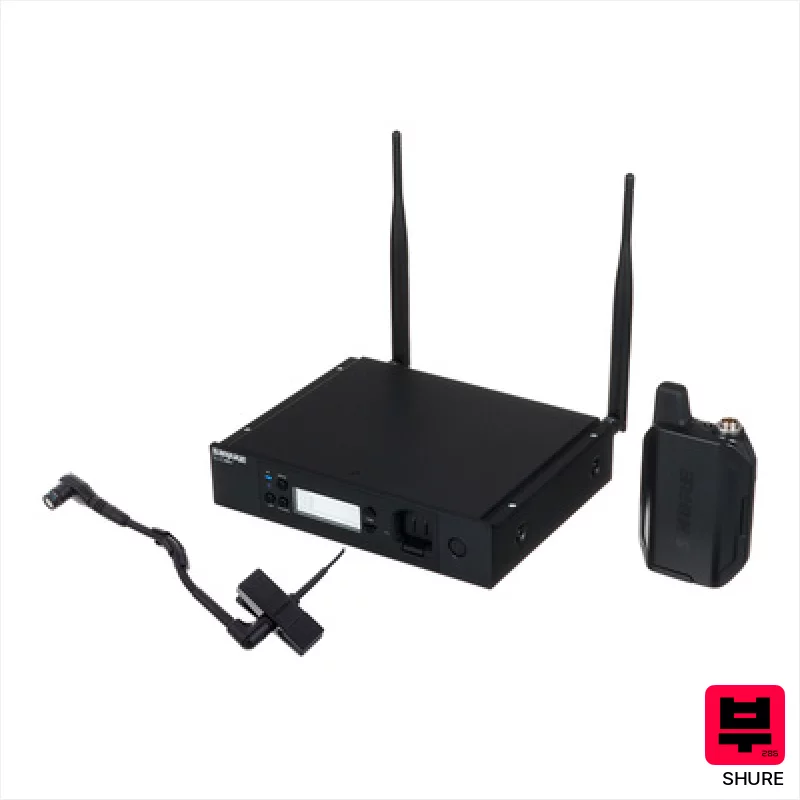
Shure GLXD14R+/B98
- • Robust metal transmitter provides reliable stage performance.
- • Dual-band operation minimizes interference in crowded RF environments.
- • Beta98 delivers clear, detailed instrument capture with a natural tone.
- • Integrated charging simplifies workflow and eliminates battery anxiety.
- • Plastic receiver construction feels less premium compared to all-metal options.
- • Limited channel count compared to higher-end Shure systems.
- • Rackmount ears aren't included, adding to the overall cost.
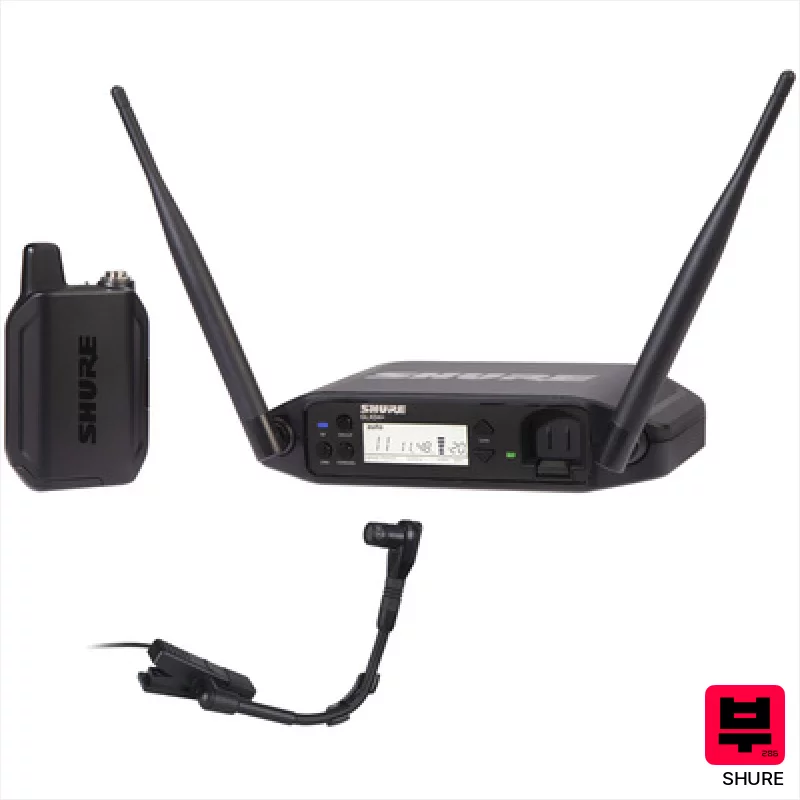
Shure GLXD14+/B98
- • Dual-band operation minimizes interference, crucial for crowded stages.
- • Beta98 delivers clear, detailed instrument tone with excellent transient response.
- • Automatic frequency setup simplifies operation, ideal for less tech-savvy users.
- • Metal transmitter body adds robustness, suggesting long-term reliability.
- • Receiver's plastic construction feels somewhat less premium compared to Shure's higher-end offerings.
- • Limited channel count (8 with Frequency Manager) might be restrictive for very large bands.
- • Fixed antennas restrict placement flexibility for optimal signal reception.
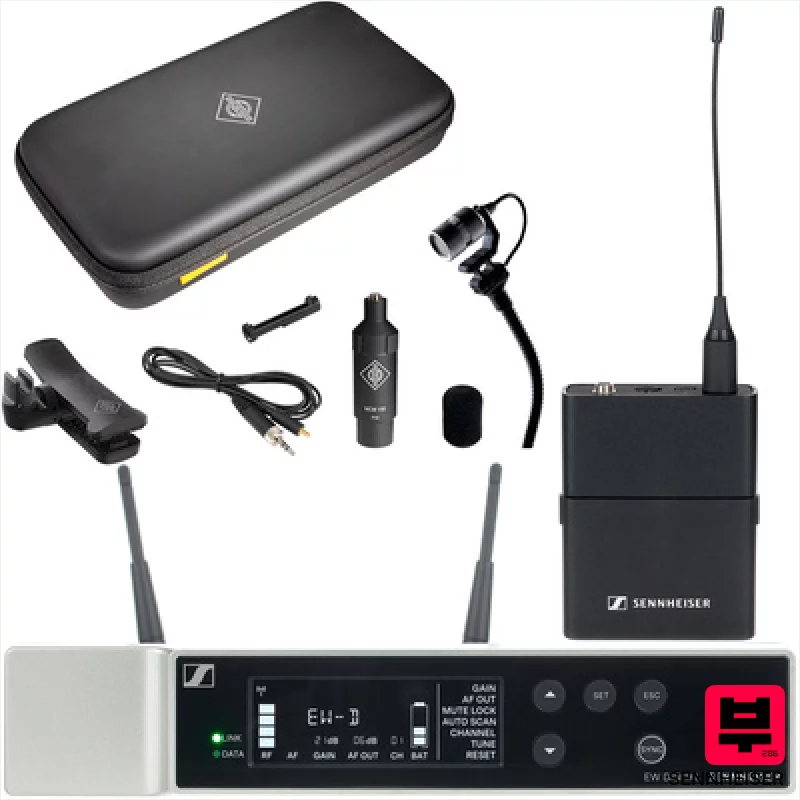
Sennheiser EW-D MCM 114 Q1-6 Bundle
- • Neumann MCM 114 offers exceptionally clean, detailed brass/sax sound.
- • EW-D digital system provides rock-solid wireless reliability and low latency.
- • KK 14 capsule delivers focused sound rejection for stage use.
- • Smart Assist App simplifies complex system configuration and monitoring.
- • Premium-priced investment; may be overkill for casual or home use.
- • SK transmitter's battery life is decent but could be longer with heavier use.
- • Limited channel count (6) might restrict use in very crowded RF environments.

Sennheiser EW-D MCM 114 Y1-3 Bundle
- • Neumann MCM 114 delivers exceptional brass/wind clarity and detail.
- • Digital wireless system offers rock-solid reliability and low latency.
- • Smart Assist App simplifies configuration and troubleshooting significantly.
- • KK 14 capsule provides tailored frequency response for brass instruments.
- • The MCM 114 capsule's sensitivity might require gain adjustments.
- • The system's frequency range (Y1-3) may face regulatory restrictions.
- • High-end wireless bundles represent a premium investment for performers.

Sennheiser EW-D MCM 114 U1/5 Bundle
- • Neumann MCM 114 delivers exceptional brass/sax clarity and detail.
- • Robust KK 14 capsule handles high SPLs without distortion.
- • EW-D digital system offers clean, interference-free audio transmission.
- • Smart Assist App simplifies complex wireless system configuration.
- • The MCM 114 capsule’s directional pattern can be limiting for some applications.
- • System’s weight (receiver + bodypack) can become fatiguing during extended use.
- • High-end price point makes it a significant investment for smaller budgets.
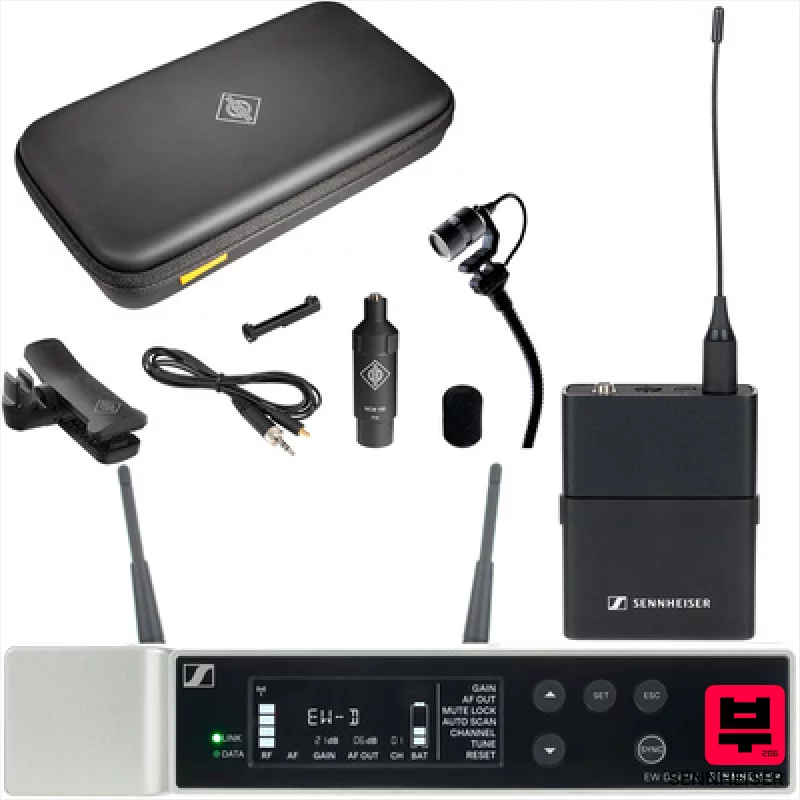
Sennheiser EW-D MCM 114 S7-10 Bundle
- • Neumann MCM 114 delivers exceptional clarity and detail for brass instruments.
- • EW-D digital system offers rock-solid reliability and interference rejection.
- • Smart Assist App simplifies configuration and troubleshooting significantly.
- • KK 14 capsule's flexible gooseneck allows precise mic placement on instruments.
- • The MCM 114 capsule can be fragile and requires careful handling.
- • The system's frequency range is somewhat limited by regional regulations.
- • AA battery power demands can become a logistical consideration on long gigs.

Sennheiser EW-D MCM 114 S1-7 Bundle
- • Neumann MCM 114 delivers exceptional clarity and detail for brass instruments.
- • Digital wireless system offers rock-solid reliability and minimal interference.
- • Smart Assist App simplifies configuration and troubleshooting for ease of use.
- • KK 14 capsule provides a tailored frequency response for wind instruments.
- • The system's weight can be a factor for extended handheld use.
- • Limited channel count within the S1-7 band restricts simultaneous users.
- • The 3.5mm connector feels somewhat fragile compared to more robust options.

Sennheiser EW-D MCM 114 R4-9 Bundle
- • Neumann MCM 114 delivers exceptional clarity and detail for brass/sax.
- • EW-D digital system offers rock-solid wireless reliability and low latency.
- • Smart Assist App provides convenient remote control and monitoring.
- • KK 14 capsule's tailored frequency response suits a wide range of instruments.
- • The bundle is premium-priced, a significant investment for many musicians.
- • AA battery power is less convenient than rechargeable options.
- • The 56MHz bandwidth, while sufficient, might be limiting for complex setups.
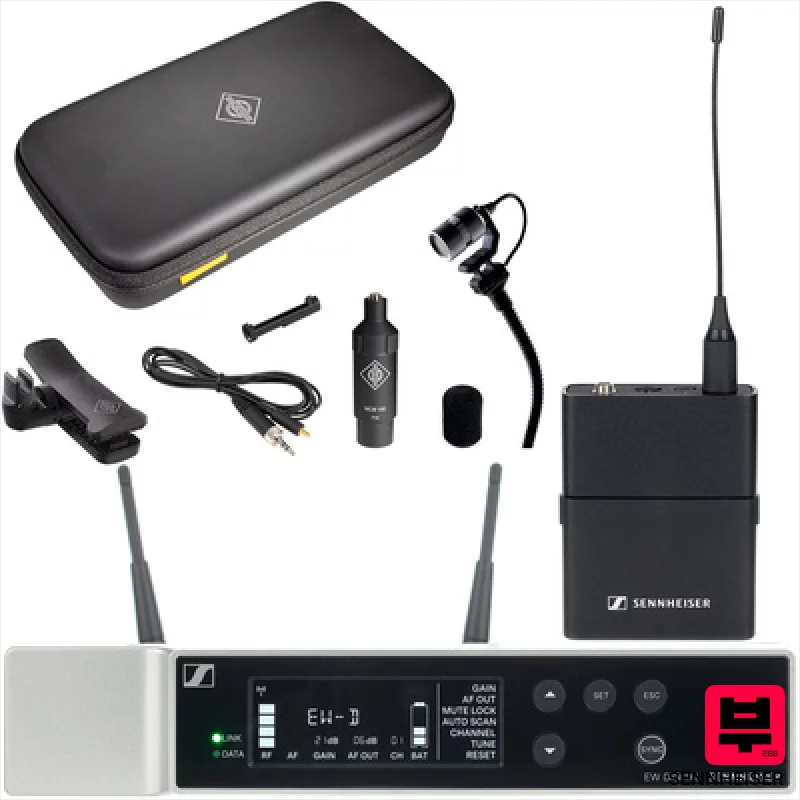
Sennheiser EW-D MCM 114 R1-6 Bundle
- • Neumann MCM 114 delivers exceptional brass/sax clarity and detail.
- • EW-D digital system offers rock-solid reliability and low latency.
- • Smart Assist App simplifies configuration and troubleshooting significantly.
- • KK 14 capsule provides a tailored frequency response for wind instruments.
- • The bundle is premium-priced, a significant investment for many performers.
- • Limited channel availability within the R1-6 frequency band can be restrictive.
- • The SK transmitter's size and weight might be noticeable for some performers.

Shure SLXD14E/98H S50
- • Rock-solid Shure build quality; feels substantial and reliable.
- • Excellent audio clarity with 24-bit/48kHz transmission.
- • The WB98H clip mic handles higher SPLs with minimal distortion.
- • Infrared sync simplifies channel management; a real time-saver.
- • The AA battery power is a bit inconvenient compared to rechargeable packs.
- • Limited frequency range can be problematic in congested RF environments.
- • The clip mic's cardioid pattern isn't ideal for all instrument applications.

Shure SLXD14E/98H K59
- • Rock-solid Shure build quality; feels incredibly durable.
- • Excellent audio clarity with a wide 120dB dynamic range.
- • Intuitive infrared frequency syncing simplifies channel management.
- • The WB98H clip mic handles high SPLs – great for brass/drums.
- • AA battery operation can be inconvenient for long gigs.
- • The system’s 44 MHz bandwidth, while good, is less than some competitors.
- • Limited frequency band (606-650 MHz) might restrict availability in some regions.
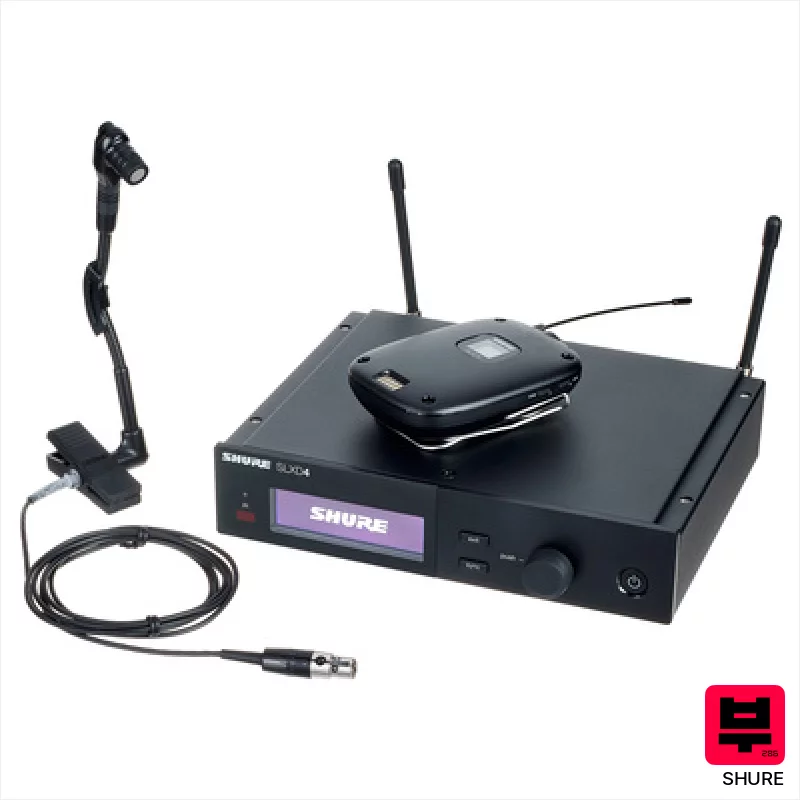
Shure SLXD14E/98H H56
- • Rock-solid Shure build quality; feels incredibly durable.
- • Excellent audio clarity with 24-bit/48kHz transmission.
- • The H56 capsule delivers a warm, focused, and natural sound.
- • Infrared syncing simplifies channel management, a real time-saver.
- • The AA battery power is less convenient than rechargeable options.
- • Limited frequency range compared to some broader UHF systems.
- • The clip-on design might not be ideal for all instrument types.

Shure SLXD14E/98H G59
- • Rock-solid Shure build quality; feels incredibly durable.
- • Excellent audio clarity with 24-bit/48kHz resolution.
- • Infrared syncing simplifies channel management significantly.
- • Cardioid clip mic effectively rejects stage bleed.
- • The AA battery power can be a logistical concern for long gigs.
- • Limited frequency band compared to broader UHF systems.
- • The WB98H clip mic’s capsule isn’t ideal for all instrument types.

Shure SLXD14E/98H J53
- • Excellent Shure build quality; feels incredibly robust and reliable
- • The WB98H clip mic is surprisingly natural sounding for a clip-on
- • Digital transmission ensures clean, interference-free audio even on crowded frequencies
- • Wide 44 MHz switching bandwidth offers flexibility in congested RF environments
- • The AA battery requirement can be inconvenient for extended gigs
- • Limited channel options compared to some higher-end systems
- • The pocket transmitter adds bulk, not ideal for very minimalist setups
Every wireless microphones for instruments that matches
66 models match this page. The 15 above are covered in detail; the rest are listed here with their published specifications.
Wireless Microphones for Instruments by the numbers
Measured across all 66 models in this category, so «wide», «short» or «expensive» mean something you can check.
How to Choose the Best Wireless Microphones for Instruments
Frequency Response & Articulation
It's not just about covering the range; it's about how it covers it. A system that muffles your low-end thump or smears your high-end articulation is useless, no matter how clean it sounds. We're looking for faithful reproduction of your instrument's character, not a homogenized tone.
Latency
This is critical. Even a few milliseconds of lag can throw off your timing and feel, especially for fast playing or complex rhythms. We test latency with metronomes and backing tracks to get a real-world feel.
Dynamic Range & Headroom
Can the system handle your quietest passages and your loudest peaks without compression or noise? A system that clips easily or introduces hiss under load is a non-starter for gigging musicians.
RF Interference Mitigation
Let's be real, stages are RF nightmares. The best systems have intelligent frequency hopping and robust interference rejection - it's not enough to just have a clean signal; it needs to stay clean when the drummer's wireless mic starts bleeding.
Build Quality & Durability
Gigs aren't gentle. You need a system that can withstand being tossed in a case, stepped on, and generally abused. Cheap plastic construction screams 'failure' after a few gigs.
Buying Guide
Don't skimp here. Instrument wireless is a complex system, and corners always get cut somewhere - usually in frequency response, dynamic range, or interference rejection. Pay attention to the receiver's antenna design; a better antenna equals a more reliable signal. And consider a system with adjustable input sensitivity to fine-tune the signal-to-noise ratio for your specific guitar or bass's output level.
How This List Is Built
We don't play these instruments — we're a catalog, not a review desk, and we'd rather say so than pretend otherwise. This page covers 66 wireless microphones for instruments from the Thomann catalogue, which is the largest single source of specification data in this category: 15 in detail, the rest listed with their specifications.
Position is computed, not curated. We parse the manufacturer's own description into actual values — nut width, scale, fret count, fingerboard radius, size, alloy — and rank on them: how many specifications a model has published, how many of them are measurable numbers, and how precisely it meets this page's criterion. A product image adds a little. Price is not a ranking signal: it tells you nothing about whether a neck fits your hand. The same inputs always produce the same order, so nothing here is shuffled to look fresh.
What this list is good for: narrowing a category down to a shortlist by spec and budget. What it isn't: a substitute for hearing an instrument. Before you buy, read hands-on reviews and, where you can, play it. Full methodology.

