
Best AKG Wireless Microphones for Instruments 2026
Alright, so you're ditching the cable clutter and going wireless for your instrument? Smart move. AKG's been a mainstay in pro audio for decades, and their wireless systems have a reputation for reliability and a surprisingly natural sound - something a lot of other brands just can't seem to nail. Let's break down the best AKG options for getting your guitar, bass, keys, or whatever else you're playing to the PA without the spaghetti.
Last updated: April 11, 2026

AKG PW45 Ovid Accordion Pro Set
- • Robust UHF transmission offers reliable performance on stage.
- • Ovid clip mics deliver clear, detailed accordion tone capture.
- • Dual microphone setup expands sonic possibilities for layering.
- • Compact transmitter and receiver simplify setup and transport.
- • Frequency range is relatively narrow, potential for interference in crowded RF environments.
- • AA battery operation can be inconvenient for extended performances.
- • Ovid clip mic mounting requires careful adjustment for optimal placement.

AKG PW45 Ovid Violin Bundle Band M
- • Solid UHF transmission minimizes dropouts common in crowded RF environments.
- • t.bone Ovid CC 100 RC delivers clear, detailed violin tone with good transient response.
- • Compact pocket transmitter simplifies stage setup and reduces cable clutter.
- • Receiver’s integrated antennas offer decent coverage without external antenna needs.
- • Limited frequency range might cause interference in densely populated areas.
- • AA battery power in the transmitter can be inconvenient for long performances.
- • Cardioid pickup pattern on the mic can be sensitive to stage volume and feedback.
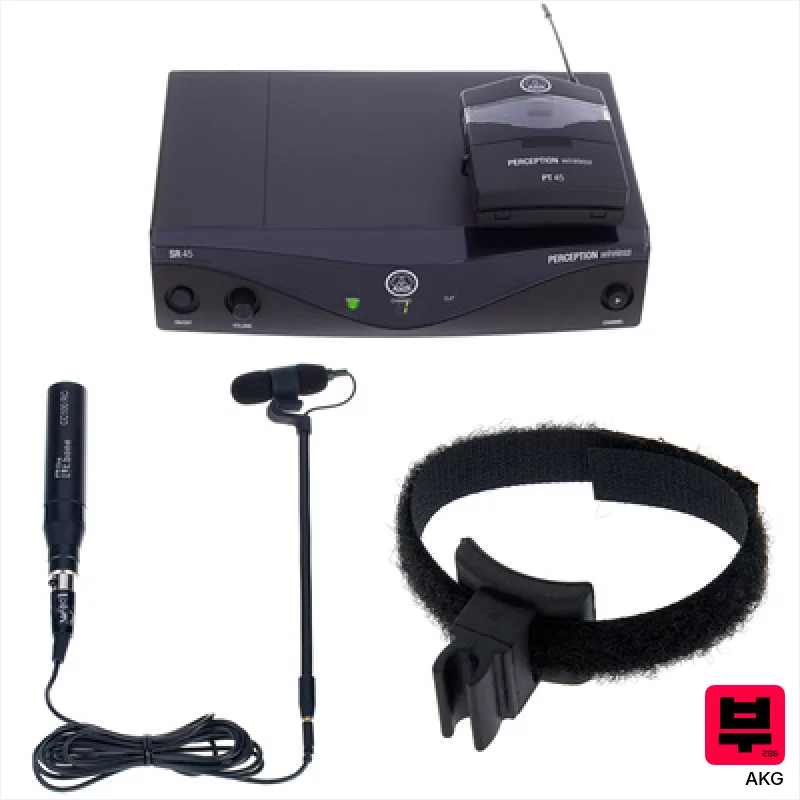
AKG PW45 Ovid Flute Bundle Band M
- • Solid UHF transmission, minimizing dropouts on stage.
- • The Ovid CC 100 RC condenser mic captures flute detail accurately.
- • Compact pocket transmitter offers convenient portability and discreet use.
- • Integrated antennas in the receiver provide reliable signal reception.
- • Limited frequency band requires careful channel selection in crowded RF environments.
- • AA battery operation can be inconvenient for long performances; rechargeable option is a plus.
- • Cardioid pickup pattern may pick up unwanted stage noise if not positioned carefully.
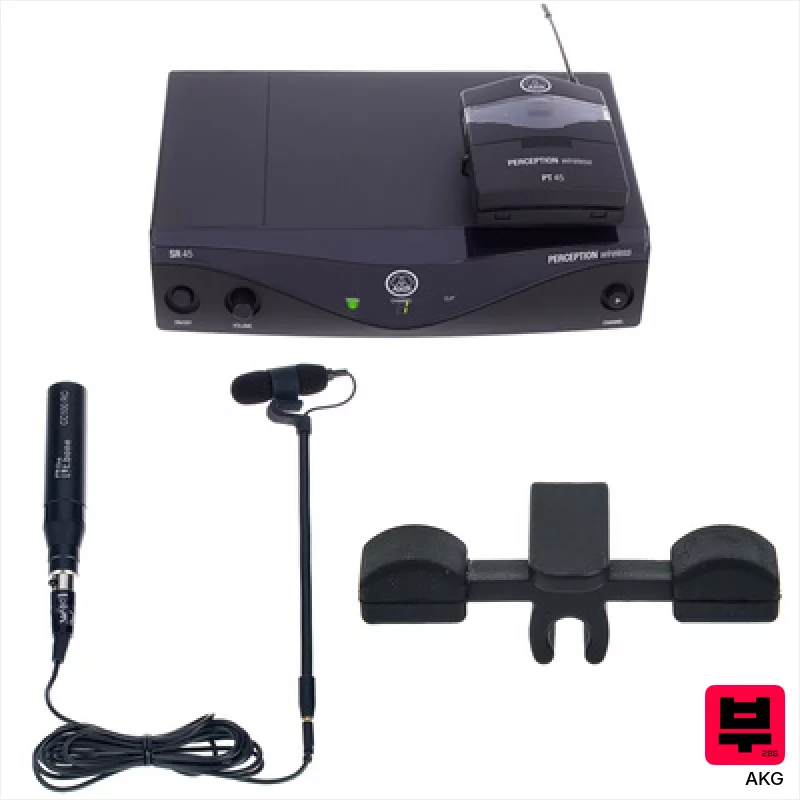
AKG PW45 Ovid Brass Bundle Band M
- • Solid build quality for a budget-friendly wireless system
- • Ovid system offers decent range and parallel operation
- • Pocket transmitter is compact and comfortable for stage use
- • t.bone CC 100 RC condenser mic provides clear, detailed brass tone
- • Frequency range is limited, potential for interference in crowded RF environments
- • AA battery operation can be inconvenient for long gigs; rechargeable option helps
- • Cardioid pattern limits flexibility for certain performance scenarios
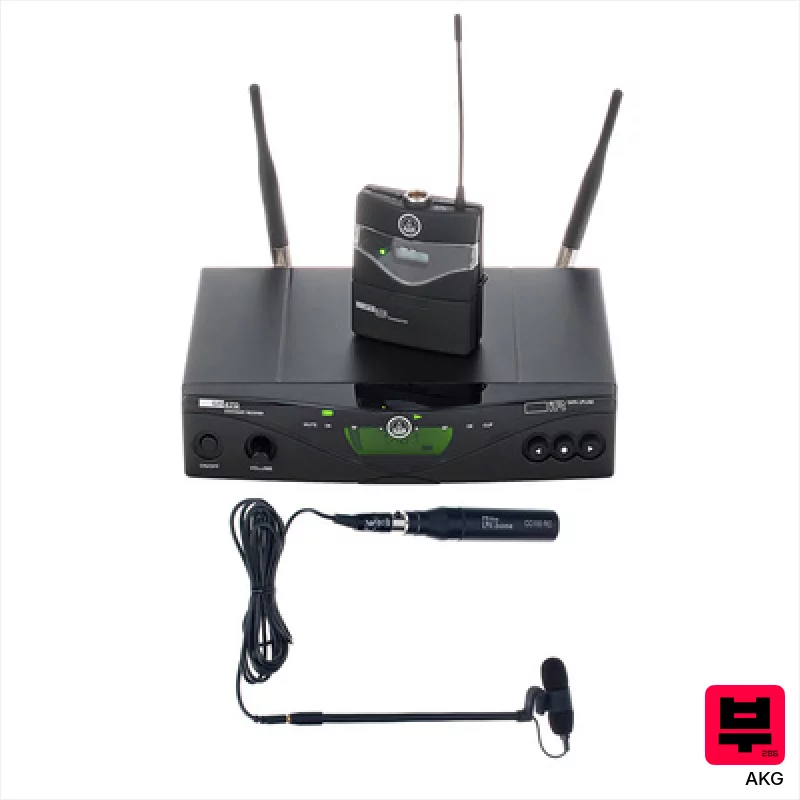
AKG WMS 470 Ovid Bundle Band 10
- • Robust metal receiver casing provides excellent protection during gigging.
- • Infrared frequency transmission simplifies channel setup and avoids interference.
- • Pocket transmitter design offers comfortable handheld operation for guitarists.
- • Rack-mountable receiver saves space in a studio or live rig.
- • AA battery power can be inconvenient compared to rechargeable options.
- • Band 10 frequency range may have limited availability in some regions.
- • Limited channel count compared to higher-end wireless systems.
Wireless Microphones for Instruments by the numbers
Measured across all 66 models in this category, so «wide», «short» or «expensive» mean something you can check.
How to Choose the Best Wireless Microphones for Instruments
Sound Quality
AKG tends to deliver a more transparent and natural sound than some competitors. You're not getting a colored or overly processed tone - it's more about accurately capturing the instrument's character, which is crucial for preserving that vintage amp mojo or the crisp articulation of a modern pickup. Some other systems can sound a little tinny or compressed.
Frequency Response & Clarity
AKG systems generally offer a wide frequency response, allowing for a full low-end thump and clear high-end sparkle without harshness. It's the difference between a bright, sparkly clean and an ice-picky harsh top end - AKG usually leans towards the former, which is what you want for a balanced mix.
Build Quality & Durability
These aren't disposable systems. AKG gear is built to take a beating - gigging for years, being tossed in cases, the whole deal. The receivers feel solid, the transmitters are robust, and the components are generally well-sourced, though budget models will still show some cost-cutting measures.
Dynamic Range & Latency
Good dynamic range is essential for capturing the nuances of your playing, from subtle fingerpicking to aggressive power chords. AKG's systems typically offer excellent dynamic range, and the latency is low enough that it won't be an issue for most players - a real problem with some cheaper systems where timing feels 'off'.
System Features & Flexibility
AKG offers a range of features like multiple channels, adjustable RF gain, and sometimes even IR (Infrared) sync. This flexibility is key for crowded RF environments or complex setups, and it helps avoid those frustrating dropouts you get when other bands are hogging the spectrum.
Buying Guide
Don't fall for the 'budget' wireless trap. Seriously, a cheap system will likely introduce noise, dropouts, and a compromised sound that'll make you regret ditching the cable in the first place. AKG's entry-level systems are decent, but the mid-range models offer a significant step up in performance and reliability. Pay attention to the frequency band - 500MHz is still common, but 2.4GHz is becoming the standard for cleaner signal and less interference.
How This List Is Built
We don't play these instruments — we're a catalog, not a review desk, and we'd rather say so than pretend otherwise. This page covers 5 of 66 wireless microphones for instruments from the Thomann catalogue, which is the largest single source of specification data in this category: 5 in detail, the rest listed with their specifications.
Position is computed, not curated. We parse the manufacturer's own description into actual values — nut width, scale, fret count, fingerboard radius, size, alloy — and rank on them: how many specifications a model has published, how many of them are measurable numbers, and how precisely it meets this page's criterion. A product image adds a little. Price is not a ranking signal: it tells you nothing about whether a neck fits your hand. The same inputs always produce the same order, so nothing here is shuffled to look fresh.
What this list is good for: narrowing a category down to a shortlist by spec and budget. What it isn't: a substitute for hearing an instrument. Before you buy, read hands-on reviews and, where you can, play it. Full methodology.

