AudioFu Chart · October 2026
Best Travel Guitars for Professional 2026
The top pick is Furch LJ 11-SR EAS-VTC Little Jane ($2,242). Traveler Guitar Ultra Light Electric SW gives you the most for the money at $391. Ranked by the AudioFu Index from 30 models across 7 brands, prices checked every night.
Last updated: October 21, 2026
Top 10
Full detail for the 10 highest AudioFu Index scores. Every other model is listed below.
-
- Nut width45 mm (1.77")
- Scale615 mm (24.21")
- Frets18 frets
This Little Jane comes with a solid spruce top and rosewood sides for a bright, full sound. It packs 18 frets and has the LR Baggs EAS.VTC pickup built in right out of the box. It is a great choice for players who need a reliable travel guitar that sounds good in any setting.
Pros
- Solid AAA spruce top for strong projection
- Solid AAA rosewood back and sides
- LR Baggs EAS.VTC pickup system included
Cons
- No string type or brand listed
- Weight not specified in description
41AudioFu
IndexStableno change since Aug 17Aug 17$2,242 now$2,242€1,999 at Thomann · in stockCheck price ↗ -
- Nut width45 mm (1.77")
- Scale615 mm (24.21")
The Little Jane is a seriously impressive travel guitar. The all-mahogany build gives it a really intimate, woody voice, and the L.R. Baggs pickup sounds fantastic amplified – great for singer-songwriters or anyone needing a compact, high-quality instrument on the go.
Pros
- Solid mahogany construction delivers a warm, focused, and surprisingly resonant tone.
- L.R. Baggs EAS-VTC system provides a natural amplified sound with excellent feedback rejection.
- Ebony fingerboard and bridge offer exceptional clarity and sustain for precise playing.
Cons
- Mahogany body limits tonal versatility; less bright than spruce-topped guitars.
- Smaller body size sacrifices some projection and low-end response compared to full-size guitars.
47AudioFu
IndexStableno change since Aug 17Aug 17$1,883 now$1,883€1,679 at Thomann · in stockCheck price ↗ -
- Nut width45 mm (1.77")
- Scale615 mm (24.21")
This Czech-made travel guitar packs solid spruce and rosewood into a compact cutaway body. The L.R. Baggs pickup makes it ready for gigs without losing clarity. It's a smart choice for musicians who need reliable tone in small spaces but must keep size in mind.
Pros
- Solid Engelmann spruce top delivers bright, punchy attack.
- Full solid rosewood back and sides add deep, warm resonance.
- Cutaway design lets you reach higher frets easily.
Cons
- Travel body size limits volume for loud venues.
- No string gauge options listed in the specs.
39AudioFu
IndexStableno change since Aug 17Aug 17$1,345 now$1,345€1,199 at Thomann · in stockCheck price ↗ -
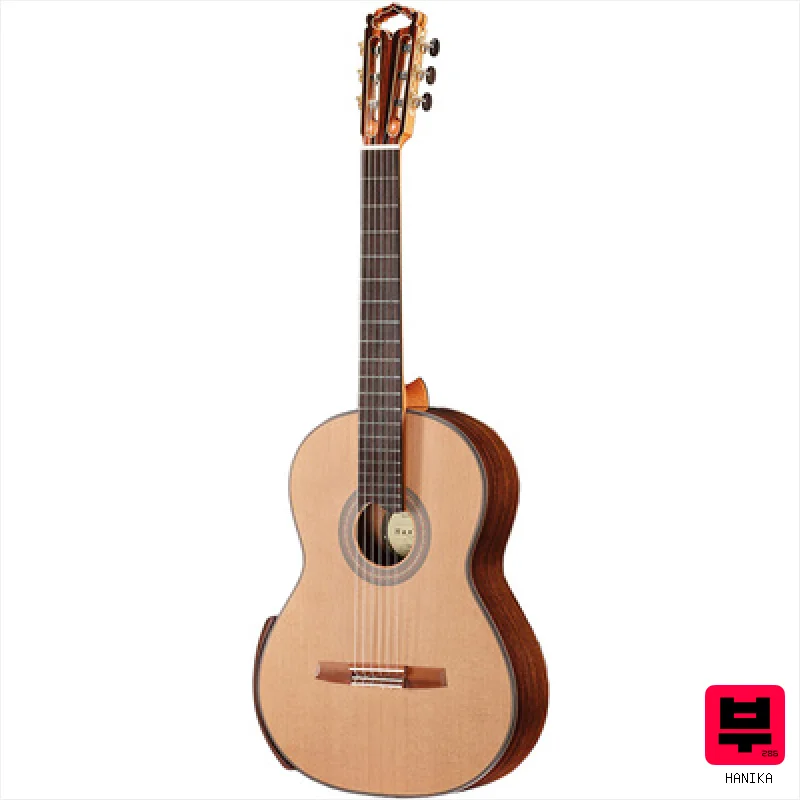
- Nut width43 mm (1.69")
- Scale615 mm (24.21")
- FingerboardEbony fingerboard
This Czech-made guitar packs solid wood all over, giving it a big sound for its tiny travel size. The cutaway helps reach the upper frets while the booster port pushes the tone forward. It's great for players who want a natural, acoustic voice without extra bells and whistles. Just be ready to stretch your fingers a bit on the narrow neck. Perfect for gigs where you need volume and clarity without any pickups.
Pros
- Solid spruce top for bright, responsive tone
- Solid rosewood back and sides for warmth
- Cutaway design makes high notes easier
Cons
- 43mm nut width feels tight for some players
- No electronics listed for amplified use
41AudioFu
IndexStableno change since Aug 17Aug 17$1,176 now$1,176€1,049 at Thomann · in stockCheck price ↗ -
- Nut width41.4 mm (1.63")
- Scale628 mm (24.72")
- BodyMahogany body
- FingerboardWalnut fingerboard
- Weight1.93 kg
This guitar uses mahogany for a warm sound and jumbo frets for easy playing. The P90 pickup gives it a gritty edge perfect for rock or blues. It is compact enough to carry anywhere but has only one pickup and a single tone control.
Pros
- Mahogany body and neck provide warm, resonant tone
- Jumbo nickel silver frets ensure smooth playing feel
- Passive P90 pickup delivers raw, gritty sound
Cons
- Only one pickup limits tonal variety
- Single control knob lacks tone shaping options
64AudioFu
IndexStableno change since Aug 17Aug 17$560 now$560€499 at Thomann · in stockCheck price ↗ -
- Nut width41.4 mm (1.63")
- Scale628 mm (24.72")
- Frets22 frets
- Fingerboard radius400 mm (15.75")
- BodyMahogany body
This guitar packs a full-size sound into a tiny mahogany body. The Indian laurel neck plays smoothly, and the active humbucker gives you a strong tone right out of the box. It is perfect for players who want a loud, portable instrument without needing a full-size guitar.
Pros
- Mahogany body and bolt-on neck for solid structure
- Indian laurel fingerboard offers smooth playability
- Active full-size humbucker delivers punchy output
Cons
- Only two controls limit tone shaping options
- Compact scale length may feel tight to some
62AudioFu
IndexStableno change since Aug 17Aug 17$829 now$829€739 at Thomann · in stockCheck price ↗ -
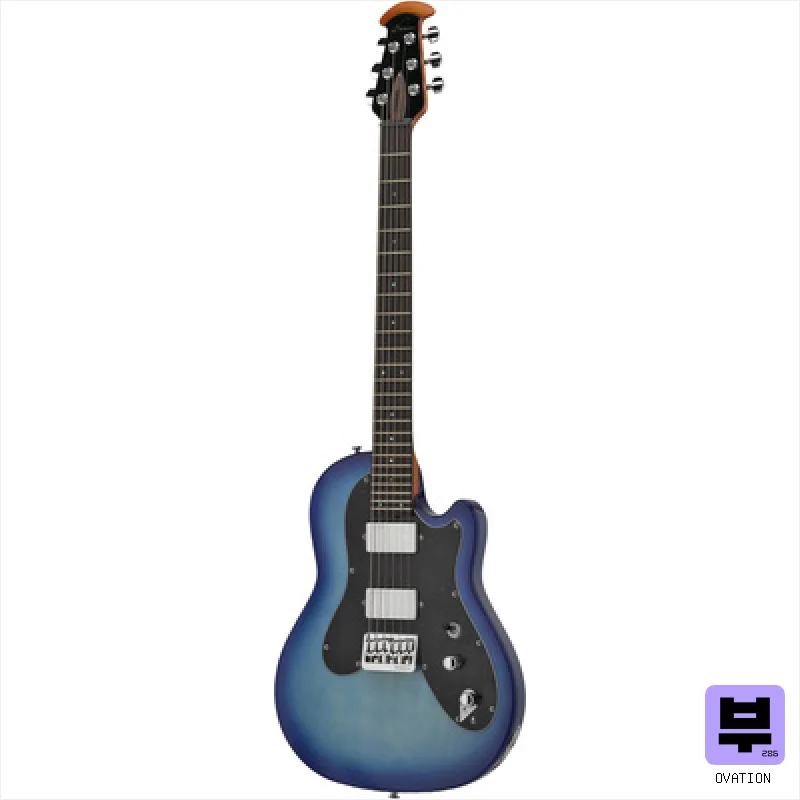
Journey Instruments OE990CB Travel El. Guitar CB
Not on Reverb yet3 finishes at Thomann
- Nut width42.9 mm (1.69")
- Scale635 mm (25")
- Fingerboard radius406 mm (15.98")
- Neck profileC-shape neck
- BodyPoplar body
The OE990CB is a seriously clever bit of kit for gigging musicians needing portability. The collapsible design is genuinely useful, and the humbuckers give you a surprising amount of tonal flexibility. It's ideal for songwriters, buskers, or anyone needing a travel-friendly electric with a solid, playable feel.
Pros
- Flamed maple top adds visual appeal and subtle warmth
- Richlite fretboard offers a stable, smooth playing surface
- Humbucker/coil-split versatility covers blues, rock, and more
Cons
- Poplar body can sound a bit 'plain' compared to mahogany or ash
- Shorter 25in scale limits low-end extension and sustain
52AudioFu
IndexStableno change since Aug 17Aug 17$560 now$560€499 at Thomann · in stockCheck price ↗ -
- Nut width44.5 mm (1.75")
- Fingerboard radius400 mm (15.75")
- FingerboardWalnut fingerboard
- Weight1.42 kg
This guitar feels surprisingly light at just over three pounds, making it perfect for students or road trippers. The hard maple body and neck-through design give it a solid feel, while the two humbuckers deliver a punchy sound. It works well for jam sessions in small venues, though the shorter scale might feel tight to players used to longer strings.
Pros
- Lightweight 1.42 kg body for easy transport
- Hard maple neck-through-body construction
- Dual-rail humbucker pickups for thick tone
Cons
- Short 628 mm scale length limits range
- No active preamp circuit for signal boost
74AudioFu
IndexStableno change since Aug 17Aug 17$391 now$391€349 at Thomann · in stockCheck price ↗ -
- Nut width41.4 mm (1.63")
- Scale647.7 mm (25.5")
- Fingerboard radius400 mm (15.75")
- BodyAlder body
- FingerboardWalnut fingerboard
This guitar packs a solid alder body and maple bolt-on neck into a travel-friendly size. The full-size Alnico pickups give you a nice, punchy sound perfect for small gigs. It is a great choice for players who need reliable tuning and a compact size, though you will only have two pickup options.
Pros
- Solid alder body for sturdy, bright resonance
- Maple bolt-on neck offers tight, stable tuning
- Full-size Alnico single coils deliver punchy tone
Cons
- 25.5 scale length feels short for larger hands
- Only two passive pickups limit tone options
50AudioFu
IndexStableno change since Aug 17Aug 17$560 now$560€499 at Thomann · in stockCheck price ↗ -
- Nut width44.5 mm (1.75")
- Scale628 mm (24.72")
- BodyMaple body
- FingerboardMaple fingerboard
- Weight2.15 kg
This guitar packs a built-in headphone amp that offers four distinct modes for practice. The maple construction is sturdy, though the battery-powered system means you need two AA cells running. It fits in a gig bag and plays well for solo players who want clean tones or heavy distortion without plugging in.
Pros
- Maple body and neck-through-body construction feel solid and responsive.
Cons
- Only two batteries power the built-in amplifier system.
48AudioFu
IndexStableno change since Aug 17Aug 17$560 now$560€499 at Thomann · in stockCheck price ↗
All 30 travel guitars
Same index, same nightly prices — compact. Colour options of one model share a row. Tap a photo to zoom.
- 11
Traveler Guitar EG-3 Standard BBTraveler Guitar48Stable$560€499$560€499Check ↗
- 12
Journey Instruments OEB990B Travel Bass BPJourney Instruments · 2 finishes47Stable$593€529$593€529Check ↗
- 13
Traveler Guitar Ultra-Light Elect. Deluxe OGMTraveler Guitar · 2 finishes55Stable$481€429$481€429Check ↗
- 14
Traveler Guitar UltraLight Bass 5 Gloss BlackTraveler Guitar48Stable$504€449$504€449Check ↗
- 15
Traveler Guitar Escape Mark III Steel BK SatinTraveler Guitar46Stable$515€459$515€459Check ↗
- 16
Traveler Guitar Escape Mark III Nylon NaturalTraveler Guitar46Stable$515€459$515€459Check ↗
- 17
Journey Instruments OF882C Acacia AcousticJourney Instruments40Stable$986€879$986€879Check ↗
- 18
Furch Pioneer-EM a 43mmFurch39Stable$952€849$952€849Check ↗
- 19
Furch Pioneer-EM aFurch39Stable$952€849$952€849Check ↗
- 20
Furch Pioneer-MM a 43mmFurch39Stable$1,042€929$1,042€929Check ↗
- 21
Traveler Guitar Ultra Light Acoustic ABTraveler Guitar · 2 finishes48Stable$335€299$335€299Check ↗
- 22
Traveler Guitar Ultra-Light Acoustic Lefty ABTraveler Guitar44Stable$335€299$335€299Check ↗
- 23
Flight Mini Bass TBL Solid BodyFlight38Stable$335€299$335€299Check ↗
- 24
Ibanez AUP10FMNE-TBOIbanez · 3 finishes50Stable$313€279$313€279Check ↗
- 25
Guild Travel SpruceGuild36Stable$279€249$279€249Check ↗
- 26
Harley Benton GS-Travel-E Mahogany BundleHarley Benton29Stable$257€229$257€229Check ↗
- 27
Harley Benton GS-Travel Spruce BundleHarley Benton28Stable$163€145$163€145Check ↗
- 28
Harley Benton GS-Travel-E Spruce BundleHarley Benton28Stable$257€229$257€229Check ↗
- 29
Harley Benton Custom Line CLGS-10S BundleHarley Benton26Stable$178€159$178€159Check ↗
- 30
Harley Benton Traveler-E-Steel SetHarley Benton26Stable$178€159$178€159Check ↗
Travel Guitars by the numbers
Measured across all 46 models we track, not a sample.
Median $560 — half of all travel guitars here cost less.
median of 43 models · 41.4 mm (1.63")–45 mm (1.77")
median of 43 models · 432 mm (17.01")–658 mm (25.91")
median of 16 models · 305 mm (12.01")–406 mm (15.98")
most common · 7 models
How the AudioFu Index works
Five measured signals and nothing else — no stars from strangers, no “tested by experts” we didn’t do. The weights are fixed and public. We don’t play these instruments; we measure the market around them.
This chart covers 46 travel guitars from the Thomann catalogue. Before you buy, read hands-on reviews and, where you can, play it. Full methodology.
AudioFu earns a commission when you buy through our Thomann links. It never changes the order — the index does.
- Demand40%
How many of this exact model are for sale on Reverb right now — what musicians actually buy and resell.
- Lineup20%
How many finishes Thomann stocks — makers expand the models that sell.
- Price15%
Where the price has moved since we started tracking in August.
- Specs15%
How completely the maker documents it.
- Maker10%
How deep the brand’s range is in this category.
Questions
What should I look for when buying travel guitars?
Key factors include build quality, sound characteristics, playability, brand reputation, warranty coverage, and value for money. Consider your musical style, skill level, and intended use to find the best match.
How much should I spend on travel guitars?
Budget depends on your needs and experience level. Beginners can find quality options for $200-500, intermediate players should consider $500-1500 range, while professionals often invest $1500+ for premium features.
Are expensive travel guitars worth the investment?
Higher-priced travel guitars typically offer better materials, craftsmanship, and performance. They're worth it if you're serious about music, perform regularly, or need professional-grade features.
What are the best brands for travel guitars?
Top brands combine quality, innovation, and reliability. We evaluate brands based on build quality, sound performance, durability, and customer satisfaction to recommend the best options for different budgets.
Should I buy travel guitars online or in-store?
Both have advantages. Online offers better prices and selection, while stores allow hands-on testing. We recommend researching online first, then testing in stores if possible. Many online retailers offer excellent return policies.