AudioFu
AudioFu Chart · October 2026
Best Transmitters Under $100 2026
The top pick is the t.bone free 300 Handheld 823 ($77). Swissonic Bluetooth Receiver gives you the most for the money at $33. Ranked by the AudioFu Index from 43 models across 10 brands, prices checked every night.
Last updated: October 12, 2026
Top 10
Full detail for the 10 highest AudioFu Index scores. Every other model is listed below.
-
- Weight0.3 kg
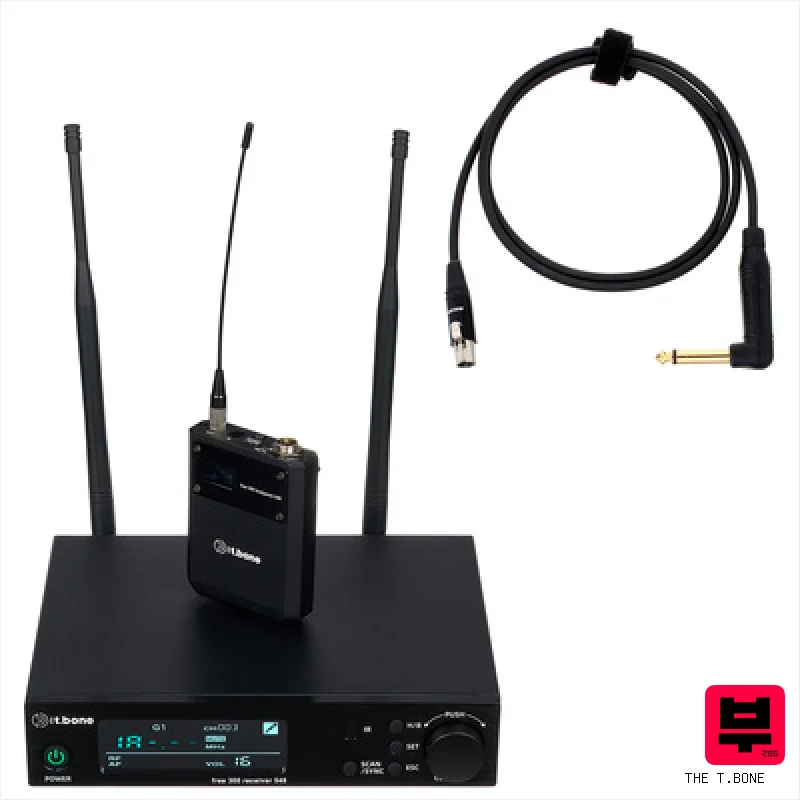
This transmitter lets you pair with a Free 300 receiver using the 823 or 865 MHz bands. Its built-in antenna and LCD screen make it simple to use on stage. The eight-hour battery life is great for long sets, but remember you must buy your own AA batteries.
Pros
- Cardioid pattern rejects off-axis noise for clean vocals
- Built-in antenna means no extra cables needed
- Eight hours of talk time lasts most gigs
Cons
- Requires two AA batteries which are not included
- No wireless receiver mentioned in this description
-
Alto Professional Bluetooth Total 2-Channel Bluetooth Receiver
Bluetooth Total 2 · Alto
14 for sale on Reverb1 finish at Thomann
The Alto Bluetooth Total 2 is a surprisingly handy little unit for performers needing wireless audio transmission. It’s a budget-friendly solution for solo acoustic acts, vocalists, or anyone wanting to ditch the cables – especially useful for smaller venues or rehearsal spaces. Just be aware it’s not a high-end studio solution, but a solid performer for the price.
Pros
- Compact design simplifies stage setup, eliminating cable clutter
- Bluetooth 5.0 ensures a stable, reliable wireless connection
- Stereo Link function expands versatility for stereo applications
Cons
- Plastic construction feels somewhat flimsy for frequent gigging
- Limited frequency response may impact nuanced audio detail
-
- Weight0.06 kg
This Fun Generation system is a surprisingly neat little package for basic wireless vocal or instrument needs. It’s a solid option for solo performers, small groups, or presentations where a simple, budget-friendly wireless solution is required. Just be mindful of the limited range and frequency options – it's not a replacement for a full-blown professional system.
Pros
- Compact and lightweight design eases portability and setup
- XLR connectivity offers compatibility with professional audio gear
- Predefined frequencies simplify operation, ideal for quick deployments
Cons
- Limited frequency selection restricts use in crowded RF environments
- Short range may be problematic for larger venues or stages
42AudioFu
Index↓ 7.1%since Aug 14 · lowest so far$95 · Aug 14$89 now$89€79 at Thomann · in stockCheck price ↗ -
The XVive P3 is a neat little solution for easily streaming audio from your phone or laptop to a mixer or powered speakers. It’s perfect for DJs, mobile performers, or anyone needing a simple Bluetooth audio feed—just don’t expect studio-grade audio quality, and be aware of range limitations.
Pros
- Robust ABS housing feels surprisingly durable for the price point.
- USB-C charging is a welcome modern convenience.
- Stereo-Link function simplifies multi-device setups.
Cons
- 30.5m range is optimistic; real-world performance will vary.
- XLR output limits compatibility with consumer audio devices.
-
This Swissonic Bluetooth Receiver is a handy little gadget for anyone needing simple wireless audio – think presenters, podcasters, or even a vocalist who wants to roam the stage without tripping over cables. The build is practical, the XLR output is a nice touch for pro gear, and the price makes it a seriously accessible wireless solution.
Pros
- Compact size facilitates discreet, portable wireless operation
- XLR output provides professional-grade audio connectivity
- Built-in battery offers convenient, cable-free power solutions
Cons
- Limited channel count restricts use in crowded RF environments
- Plastic housing feels somewhat less robust than metal alternatives
37AudioFu
Index↓ 17.1%since Aug 14 · lowest so far$39 · Aug 14$33 now$33€29 at Thomann · in stockCheck price ↗ -
- Weight0.12 kg
This tiny Bluetooth box lets you stream audio from phones or headphones without cables. It handles up to ten meters away and runs for a solid six to eight hours. Great for musicians who need a simple, affordable way to send sound wirelessly.
Pros
- Compact 38x39mm size fits easily in a pocket
- AptX Low technology reduces Bluetooth lag for music
- Rechargeable 260mAh battery lasts 6 to 8 hours
Cons
- No speaker built-in so you need headphones or speakers
- Charging time duration is missing from the specs
-
This Sirus Stereo Link is a budget-friendly option for smaller gigs or rehearsals where wireless stereo transmission is needed. It's ideal for keyboard players, stereo acoustic duos, or anyone needing a simple, compact wireless link. Just be mindful of potential interference, as the 5.8 GHz band can get busy.
Pros
- Compact form factor simplifies stage setup and transport.
- Dual XLR/TRS inputs offer flexible connection options.
- Mono/stereo switch provides adaptable signal routing.
Cons
- 30m range is limited, unsuitable for large venues.
- 5.8 GHz band is prone to interference in crowded RF environments.
-
The Omnitronic BDT-5.2 is a clever little gadget for musicians needing a wireless audio connection—think sending a keyboard signal to a PA or streaming a guitar directly to a sound system. It’s surprisingly good for the price, offering aptX HD support, but don't expect professional-grade performance or build quality. A solid option for bedroom producers or small-scale gigs.
Pros
- Compact size makes it incredibly portable for gigging musicians.
- Dual Link capability allows for seamless stereo transmission.
- Supports aptX HD for noticeably better audio quality compared to standard Bluetooth.
Cons
- Plastic housing feels somewhat cheap given the intended use.
- 20m range is optimistic; expect reduced performance with obstacles.
35AudioFu
Index↓ 8.2%since Aug 14 · lowest so far$55 · Aug 14$50 now$50€45 at Thomann · in stockCheck price ↗ -
The Alto Bluetooth Ultimate is a clever little device for simplifying wireless audio – perfect for live sound reinforcement, presentations, or even podcasting where a clean, cable-free setup is key. It’s not going to replace a dedicated, high-end wireless system, but it offers a surprisingly capable solution at an affordable price point for musicians and presenters on a budget.
Pros
- Balanced XLR connectivity provides professional audio quality.
- Bluetooth 5.0 ensures a stable, reliable wireless connection.
- Stereo Link function expands versatility for multi-mic setups.
Cons
- Plastic construction feels budget-oriented, lacking premium robustness.
- Limited frequency response may not suit critical recording applications.
34AudioFu
Index↓ 4.2%since Aug 14 · lowest so far$81 · Aug 14$77 now$77€69 at Thomann · in stockCheck price ↗ -
The Omnitronic BDT-5.0 is a handy little box for folks needing a flexible Bluetooth audio solution. It’s perfect for smaller venues, mobile DJs, or anyone needing to quickly route audio between devices. Just be aware of its limitations in noisy RF environments and the reliance on external power.
Pros
- Compact size makes it incredibly portable for rehearsals and gigs
- Dual-link capability allows for simultaneous audio streams, crucial for DJs
- LCD display provides clear visual feedback on settings and connections
Cons
- Plastic housing feels somewhat cheap for frequent travel and handling
- Limited frequency band restricts use in crowded wireless environments
33AudioFu
Index↓ 5.1%since Aug 14 · lowest so far$44 · Aug 14$41 now$41€37 at Thomann · in stockCheck price ↗
All 43 transmitters
Same index, same nightly prices — compact. Colour options of one model share a row. Tap a photo to zoom.
- 11
Rode Wireless ME TXRode33↓ 17.9%$77€69$77€69Check ↗
- 12
the t.bone freeU PT 600 Bodypackthe t.bone32Stable$44€39$44€39Check ↗
- 13
the t.bone freeU PT 823 Bodypackthe t.bone32Stable$44€39$44€39Check ↗
- 14
the t.bone freeU Twin PT 823 Bodypackthe t.bone32Stable$45€40$45€40Check ↗
- 15
the t.bone freeU Twin PT 863 Bodypackthe t.bone32Stable$45€40$45€40Check ↗
- 16
the t.bone freeU HT 823 Handheldthe t.bone32Stable$45€40$45€40Check ↗
- 17
the t.bone freeU HT 600 Handheldthe t.bone32Stable$46€41$46€41Check ↗
- 18
the t.bone freeU PT 863 Bodypackthe t.bone32Stable$47€42$47€42Check ↗
- 19
the t.bone freeU HT 863 Handheldthe t.bone32Stable$49€44$49€44Check ↗
- 20
the t.bone freeU Twin HT 823 Handheldthe t.bone32Stable$50€45$50€45Check ↗
- 21
the t.bone freeU Twin HT 863 Handheldthe t.bone32Stable$50€45$50€45Check ↗
- 22
the t.bone Tour Guide Mini MKII TXthe t.bone32Stable$55€49$55€49Check ↗
- 23
the t.bone Tour Guide Talkback TMthe t.bone32Stable$77€69$77€69Check ↗
- 24
the t.bone free solo Handheld 600 MHzthe t.bone32Stable$89€79$89€79Check ↗
- 25
the t.bone free solo Handheld 823 MHzthe t.bone32Stable$89€79$89€79Check ↗
- 26
the t.bone free solo Handheld 863 MHzthe t.bone32Stable$89€79$89€79Check ↗
- 27
the t.bone free solo Handheld 520 MHzthe t.bone32Stable$89€79$89€79Check ↗
- 28
the t.bone free solo Handheld 590 MHzthe t.bone32Stable$89€79$89€79Check ↗
- 29
the t.bone free solo Handheld 660 MHzthe t.bone32Stable$89€79$89€79Check ↗
- 30
the t.bone free solo Bodypack 863 MHzthe t.bone32Stable$100€89$100€89Check ↗
- 31
the t.bone free solo Bodypack 823 MHzthe t.bone32Stable$100€89$100€89Check ↗
- 32
the t.bone free solo Bodypack 600 MHzthe t.bone32Stable$100€89$100€89Check ↗
- 33
the t.bone free solo Bodypack 520 MHzthe t.bone32Stable$100€89$100€89Check ↗
- 34
the t.bone free solo Bodypack 590 MHzthe t.bone32Stable$100€89$100€89Check ↗
- 35
the t.bone free solo Bodypack 660 MHzthe t.bone32Stable$100€89$100€89Check ↗
- 36
Fun Generation BT ReceiverFun Generation31Stable$44€39$44€39Check ↗
- 37
Albrecht ATT400 Tourist TransmitterAlbrecht30↓ 11.9%$83€74$83€74Check ↗
- 38
Sirus Quad B 470Sirus28Stable$77€69$77€69Check ↗
- 39
Sirus Quad B 823 MKIISirus28Stable$77€69$77€69Check ↗
- 40
Sirus Quad H 470Sirus28Stable$89€79$89€79Check ↗
- 41
Sirus Quad H 823 MKIISirus28Stable$89€79$89€79Check ↗
- 42
Sirus Quad C 470Sirus28Stable$95€85$95€85Check ↗
- 43
Sirus Quad C 823 MKIISirus28Stable$95€85$95€85Check ↗
Transmitters by the numbers
Measured across all 48 models we track, not a sample.
Median $77 — half of all transmitters here cost less.
median of 6 models · 0.06 kg–0.3 kg
How to choose the best transmitters
Range
Don't expect stadium-filling distances. Most sub-$100 systems are good for 30-50 feet, line-of-sight. Walls and crowds will kill that range instantly - be realistic about your needs.
Frequency Stability
Cheap transmitters are notorious for drifting, especially in environments with a lot of RF interference. This manifests as warbling or dropouts - a total killer for vocals. We're looking for units that hold a consistent frequency.
Audio Quality
Don't expect pristine studio clarity. You'll likely get a slightly compressed sound, maybe a little muddy in the low-mids, but it shouldn't sound actively bad. We're prioritizing clarity and articulation over "warmth" at this price point.
Build Quality
Plastic is the name of the game. These aren't built like a tank, so handle them with care. We're assessing how well they'll survive a few bumps and bruises from gigging.
Battery Life
Expect around 4-6 hours of use per charge or set of batteries. It's not amazing, but it's workable if you have spares handy. Running out of juice mid-song is not a good look.
Buying guide
Alright, so you need a wireless mic but your budget's tighter than a Les Paul neck. It's a common situation - I've been there, gigging with borrowed gear and figuring out how to make it work. Forget those fancy, multi-channel systems costing a grand; we're diving into transmitters under $100, focusing on bang-for-your-buck and what you can realistically expect. Let's find something that won't leave you sounding like you're underwater.
At this price, you're making trade-offs. Don't expect rock-solid reliability or pristine audio. Most transmitters in this range use 2.4GHz, which means potential interference from Wi-Fi routers and Bluetooth devices.
Look for models with decent reviews regarding frequency stability, and be prepared to experiment with placement to minimize interference. If you absolutely need a clean signal, you'll have to spend more.
How the AudioFu Index works
Five measured signals and nothing else — no stars from strangers, no “tested by experts” we didn’t do. The weights are fixed and public. We don’t play these instruments; we measure the market around them.
This chart covers 48 transmitters from the Thomann catalogue. Before you buy, read hands-on reviews and, where you can, play it. Full methodology.
AudioFu earns a commission when you buy through our Thomann links. It never changes the order — the index does.
- Demand40%
How many of this exact model are for sale on Reverb right now — what musicians actually buy and resell.
- Lineup20%
How many finishes Thomann stocks — makers expand the models that sell.
- Price15%
Where the price has moved since we started tracking in August.
- Specs15%
How completely the maker documents it.
- Maker10%
How deep the brand’s range is in this category.
Questions
Can I use this for vocals in a band?
It's doable, but be prepared for potential feedback and interference. A headset mic is a good idea to minimize handling noise, and positioning is key - keep the transmitter away from loud amps and other sources of RF.
What's the deal with licensing?
Most of these operate in the unlicensed 2.4GHz band, so you generally don't need a license. Double-check the specific model's documentation just to be sure, though.
How do I deal with interference?
Try changing channels if the unit has multiple options. Physical distance from Wi-Fi routers is your friend. Sometimes, even a slight shift in position can make a difference.
Are these good for recording?
For casual recording or bedroom practice, they can work. But the audio quality won't be as good as a wired mic, and you might pick up unwanted noise. It's a compromise.
What's the difference between UHF and 2.4GHz?
UHF systems are generally less prone to interference, but require licensing in some areas and are pricier. 2.4GHz is convenient and cheap, but more susceptible to Wi-Fi and Bluetooth noise.