AudioFu
AudioFu Chart · October 2026
Best Sirus Transmitters 2026
The top pick is Sirus Quad B 823 MKII ($77). Ranked by the AudioFu Index from 6 models, prices checked every night.
Last updated: October 12, 2026
Top 6
Full detail for the 6 highest AudioFu Index scores. Every other model is listed below.
-
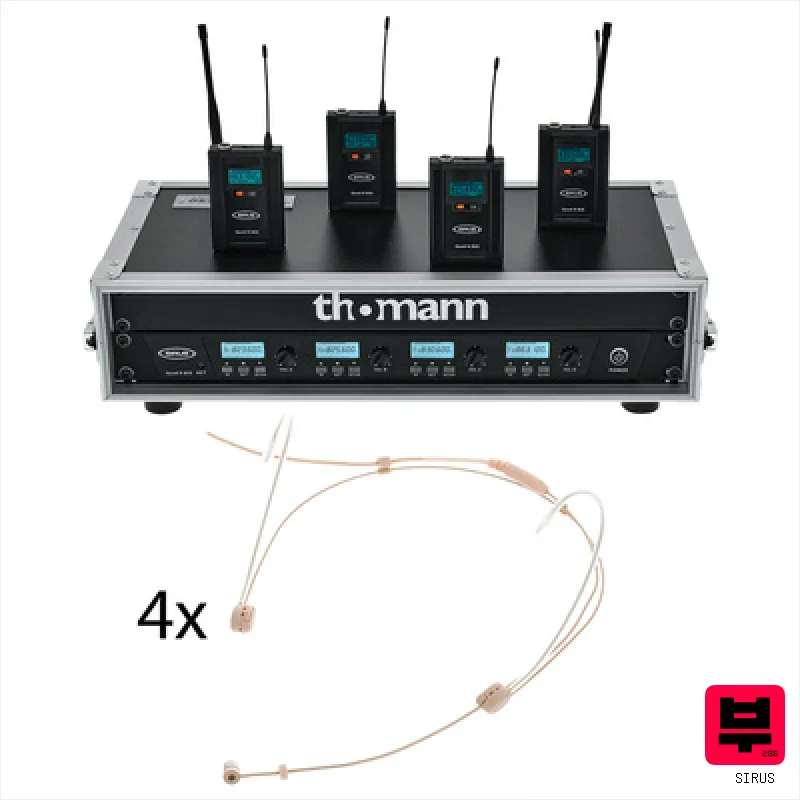
This Sirus Quad B 823 MKII is a surprisingly capable little transmitter. It's a great budget-friendly option for vocalists, presenters, or anyone needing wireless freedom without the premium price tag. The compact size and easy sync make it a practical choice for smaller gigs and events.
Pros
- Mini-XLR connector offers wider compatibility with existing gear.
- Infrared sync simplifies setup, avoiding potential frequency coordination headaches.
- Switchable power allows for extended battery life or increased range.
Cons
- Limited frequency band might face interference in congested RF environments.
- AA batteries add to ongoing operating costs and potential for failure.
-
The Sirus Quad B 470 is a surprisingly capable little transmitter. It's a great budget-friendly option for presenters, interviewers, or anyone needing discreet wireless audio. Just be mindful of potential interference in heavily used RF areas, and factor in the AA battery expense.
Pros
- Mini-XLR connector offers robust connection and compatibility with existing systems.
- Infrared synchronization simplifies setup, avoiding complex frequency coordination.
- Switchable power allows for balancing battery life and signal strength.
Cons
- 470-526 MHz band can be prone to interference in crowded RF environments.
- Reliance on AA batteries adds cost and potential inconvenience compared to rechargeable options.
-
Okay, look, for the price, the Sirus Quad H 823 MKII is a pretty decent handheld. It’s a solid, no-frills option perfect for budget-conscious bands, karaoke, or simple presentations where you don't need pristine audio quality. Just be aware it's a dynamic mic, so it won't be as detailed as a condenser.
Pros
- Solid build quality for the price point; feels surprisingly robust.
- Cardioid pattern effectively minimizes stage feedback and bleed.
- Infrared sync simplifies receiver pairing; avoids frustrating manual adjustments.
Cons
- The frequency band is relatively narrow, potentially limiting channel availability.
- Dynamic capsule lacks the sensitivity of condenser mics for quiet vocals.
-
This Sirus Quad H 470 is a budget-friendly option for performers needing a basic wireless handheld. The build feels surprisingly robust for the price, and the IR sync makes setup easy. It's a solid choice for karaoke, small bands, or public speaking where pristine audio isn't the absolute top priority.
Pros
- Solid, matte black finish gives a professional, understated aesthetic.
- Infrared sync simplifies channel matching with the receiver unit.
- Cardioid polar pattern effectively isolates vocals, minimizing stage noise.
Cons
- 470-526 MHz frequency band is susceptible to interference in crowded RF environments.
- AA battery power is less convenient than rechargeable internal options.
-
This Sirus Quad C 823 MKII is a decent budget-friendly option for conference rooms or lecture halls needing basic wireless audio. The gooseneck is surprisingly stable, and the cardoid pickup pattern helps isolate voices. It’s best suited for situations where portability and simplicity are key, and top-tier build quality isn't a primary concern.
Pros
- Solid gooseneck provides stable mic positioning during meetings.
- Cardioid pattern minimizes room noise and feedback effectively.
- Infrared sync simplifies channel setup; surprisingly reliable.
Cons
- Plastic construction feels budget-oriented; lacks premium durability.
- Limited frequency band may encounter interference in crowded RF environments.
-
This Sirus Quad C 470 is a solid, budget-friendly option for conference rooms or lecture halls. The gooseneck design keeps the mic stable, and the IR sync makes setup a breeze. It's a no-fuss solution for straightforward audio pickup – not designed for high-end studio recording, but perfect for clear, reliable communication.
Pros
- Gooseneck offers stable positioning for conference use
- IR synchronization simplifies pairing with the receiver
- Cardioid pickup minimizes room noise and feedback
Cons
- Plastic construction feels somewhat budget-oriented and less robust
- Limited frequency band could face interference in crowded RF environments
Transmitters by the numbers
Measured across all 325 models we track, not a sample.
median of 32 models · 0.06 kg–1.1 kg
median of 19 models · 9.5"–19"
How to choose the best transmitters
Frequency Stability
Sirus transmitters are known for locking onto frequencies and staying there. This means less dropouts and fewer frantic frequency scans mid-set - a huge deal for live performance. Their auto-frequency selection is genuinely useful, avoiding congested areas.
Audio Transparency
Let's be honest, wireless can color the tone. Sirus aims for transparency; you shouldn't hear a noticeable difference between a wired and wireless signal. They don't add that harsh, brittle high-end some systems do, and the low-midrange stays present - vital for vocal clarity.
Build Quality & Durability
These aren't disposable plastic toys. The transmitters feel solid, the antennas are robust, and the overall construction inspires confidence. They've taken a few accidental drops in the past, and they've kept ticking. That matters when you're hauling gear around.
Battery Life
Nobody wants to deal with dead batteries halfway through a set. Sirus consistently delivers respectable battery life, typically 6-8 hours depending on usage. It's not class-leading, but it's reliable and avoids the anxiety of constantly swapping packs.
User Interface & Ease of Use
The menus are intuitive, the controls are logically laid out, and pairing is straightforward. This is a system you can pick up and use without needing a PhD in RF engineering - a huge plus for bands with rotating members or less tech-savvy folks.
Buying guide
Okay, so you're looking at going wireless? Smart move, especially if you're dealing with stage clutter or need that freedom for a performance. Sirus has been quietly building a reputation for solid, reliable wireless systems for years, and they're not chasing flashy gimmicks. They're about getting the job done, consistently, without the headaches you get with some of the bigger names - and without breaking the bank completely.
Sirus isn't the absolute cheapest, but they offer a sweet spot for reliability and performance. Don't expect boutique-level audio fidelity - it's wireless, after all - but you'll get a clean, usable signal. Pay attention to the frequency band - UHF is generally more reliable than 2.4 GHz, especially in crowded environments.
And seriously, invest in some quality rechargeable batteries; cheap ones will drain quickly and impact performance.
How the AudioFu Index works
Five measured signals and nothing else — no stars from strangers, no “tested by experts” we didn’t do. The weights are fixed and public. We don’t play these instruments; we measure the market around them.
This chart covers 6 transmitters from the Thomann catalogue (of 325 in the category). Before you buy, read hands-on reviews and, where you can, play it. Full methodology.
AudioFu earns a commission when you buy through our Thomann links. It never changes the order — the index does.
- Demand40%
How many of this exact model are for sale on Reverb right now — what musicians actually buy and resell.
- Lineup20%
How many finishes Thomann stocks — makers expand the models that sell.
- Price15%
Where the price has moved since we started tracking in August.
- Specs15%
How completely the maker documents it.
- Maker10%
How deep the brand’s range is in this category.
Questions
How do Sirus transmitters compare to Shure's offerings?
Shure's top-tier systems are undeniably more refined, but you pay a premium. Sirus offers comparable reliability for significantly less, making them a great value if you're not needing the absolute bleeding edge in audio quality.
Are Sirus systems prone to interference?
Like any wireless system, interference is a potential issue. Sirus's auto-frequency selection helps, but being mindful of potential sources of interference (LED displays, dimmers) is always good practice.
Can I use Sirus transmitters with any microphone?
Generally, yes. Sirus uses standard TA4F connectors. However, some microphones might require an adapter depending on their connector type. Always check compatibility beforehand.
What's the range I can realistically expect?
Advertised range is often optimistic. In a real-world scenario, expect around 50-75 feet with a clear line of sight. Walls, crowds, and other obstructions will reduce that significantly.
Are Sirus transmitters easy to troubleshoot?
Sirus has decent documentation and a helpful online community. Most common issues - dropouts, pairing problems - are easily resolved with a little research or a quick search of online forums. They aren't as complex as some other systems.