
Best Resonator Guitars for Intermediate 2026
So, you're past the beginner acoustic phase and itching for that signature resonator twang? It's a fantastic direction - resonators add a whole new dimension to your playing, but stepping up can be tricky. This isn't a 'buy the cheapest one' situation; intermediate players need something playable, resonant, and capable of handling a gig or a decent recording. Let's find you a resonator that won't leave you frustrated and sounding thin.
Last updated: October 7, 2026
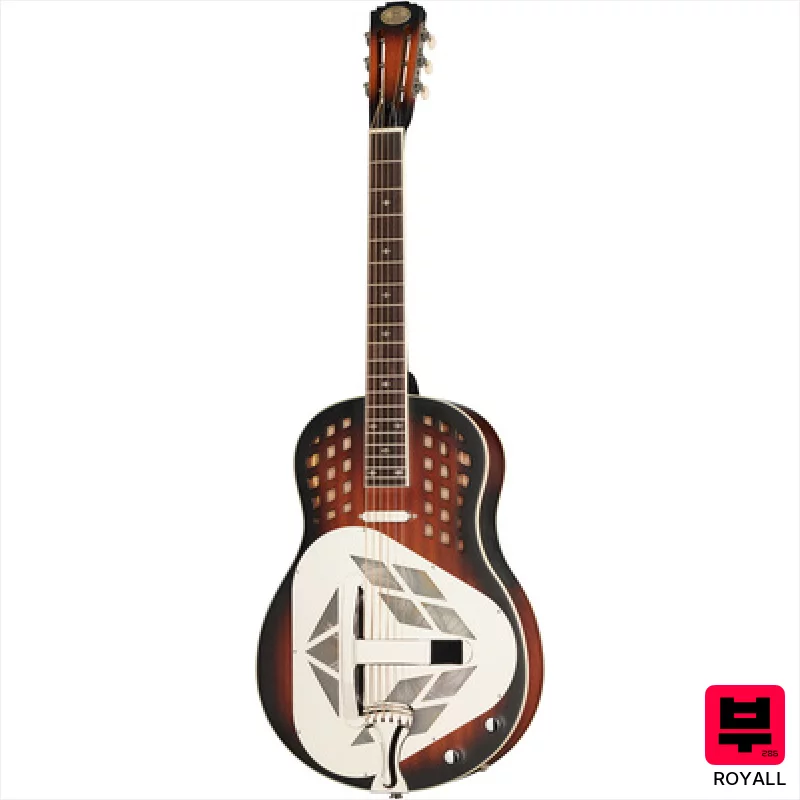
Royall DLT12SC/DSB DELTA
- • Handmade cones deliver exceptional, complex resonator tone.
- • Mahogany body provides warmth and projection, surprisingly balanced.
- • Lipstick pickup captures a gritty, vintage-voiced character.
- • Solid build quality; ivoroid binding and bone nut indicate attention to detail.
- • The 648mm scale might feel long for players accustomed to shorter scales.
- • Tri-cone resonators can be sensitive to playing style, requiring adjustment.
- • While versatile, it's primarily geared towards bluegrass and roots music.
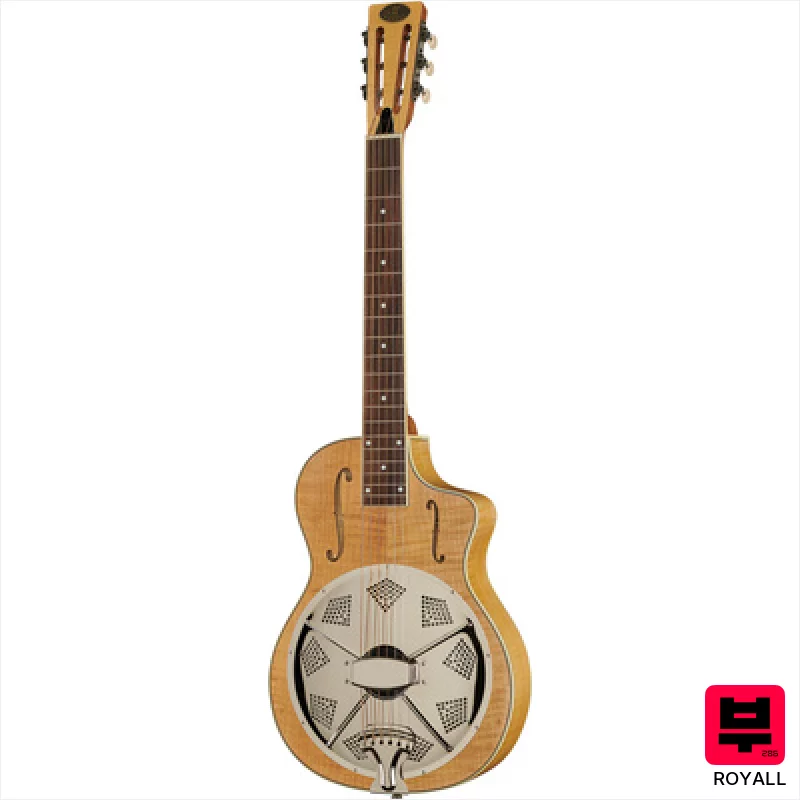
Royall BB14C/FL Bantam Blazer
- • Flamed maple body offers striking aesthetics and focused tone.
- • Mahogany neck provides comfortable feel and warmth.
- • Biscuit bridge enhances resonator projection and sustain.
- • Bone nut improves tuning stability and string response.
- • The shorter scale length may feel cramped for players with larger hands.
- • Aged hardware, while visually appealing, can be prone to oxidation.
- • Limited tonal versatility; primarily suited for bluegrass and resonator styles.
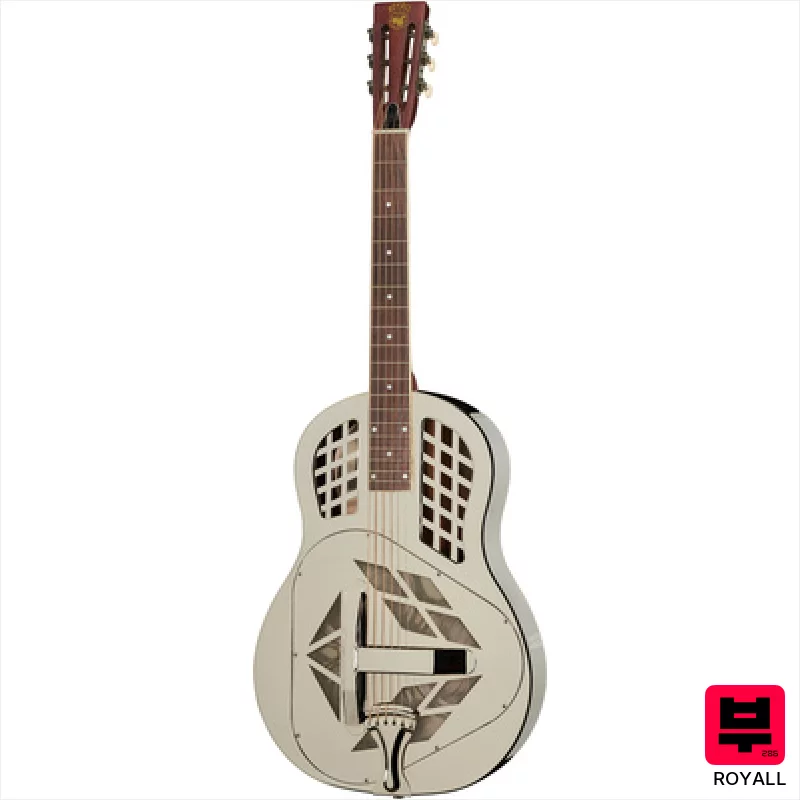
Royall TMP12/NI Tampa
- • Bell bronze body delivers a warm, resonant, and complex tone.
- • Tri-Cone design offers exceptional volume and projection, ideal for bluegrass.
- • Mahogany neck provides comfortable playability and sustain.
- • Vintage-style hardware and aged nickel finish enhance the classic aesthetic.
- • The weight, typical of bronze resonators, can be fatiguing during extended playing.
- • 46mm nut width might feel narrow for players accustomed to wider necks.
- • Limited versatility outside of bluegrass and resonator-centric genres.
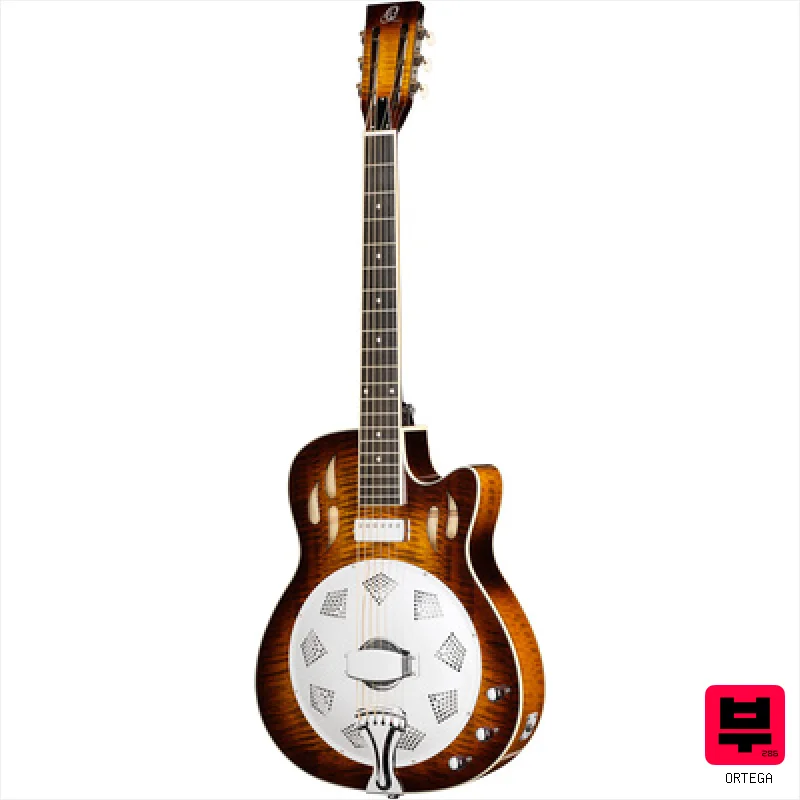
Ortega RRG50CE-SSB
- • Solid flamed maple top delivers bright attack
- • Ebony fingerboard offers smooth playability
- • Passive humbucker ensures reliable output
- • Includes gig bag for transport convenience
- • Weight is not specified in description
- • Plastic binding lacks traditional wood feel
- • No active electronics mentioned for tone shaping
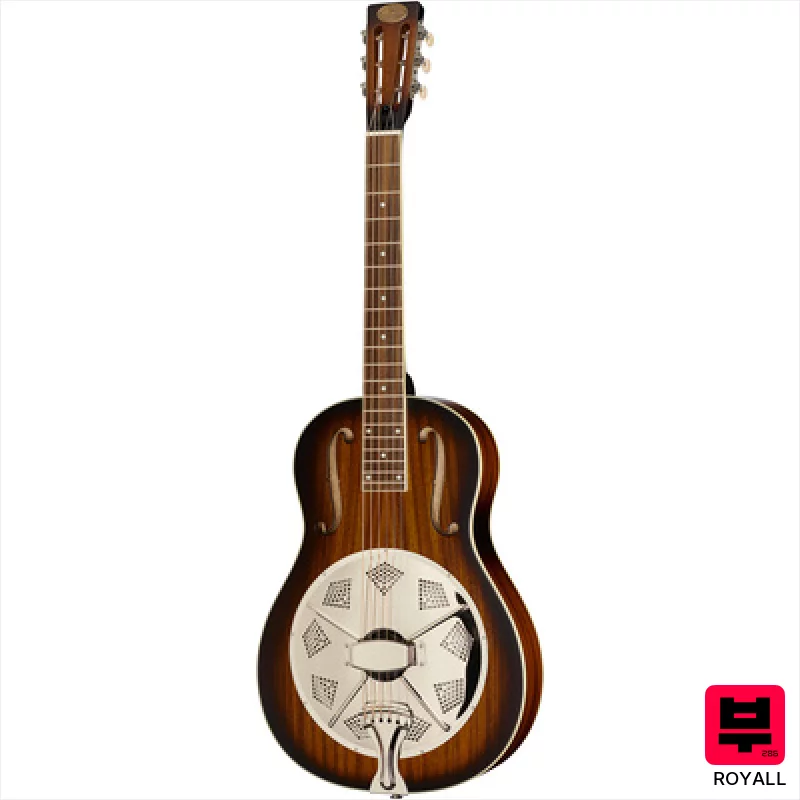
Royall HB12/SB Hobo
- • Handmade aluminum cone delivers a focused, powerful resonator tone.
- • Mahogany body provides warmth and sustain characteristic of bluegrass instruments.
- • Bone nut and 2-way truss rod offer precise setup and stability.
- • Vintage-style tailpiece and tuners enhance aesthetics and contribute to classic feel.
- • Technical wood fingerboard might not offer the premium feel of rosewood or ebony.
- • 46mm nut width could be a challenge for players with smaller hands.
- • Limited tonal versatility; primarily suited for bluegrass and resonator styles.
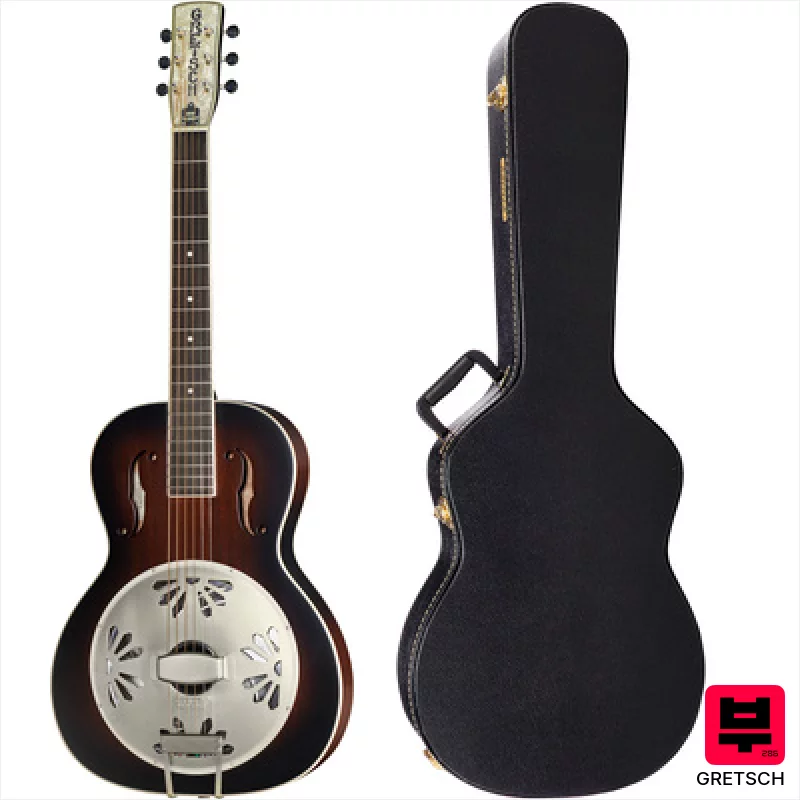
Gretsch G9240 Alligator Biscuit Bundle
- • Mahogany body provides a warm, resonant foundation for the tone
- • Katalox fretboard offers a smooth, fast playing experience with excellent note definition
- • Biscuit bridge enhances sustain and contributes to a classic resonator sound
- • Included hardshell case protects the instrument during transport and storage
- • Medium 'V' neck profile isn't universally preferred; might not suit all hand shapes
- • Limited tonal versatility compared to electric guitars; primarily bluegrass/country focused
- • Mahogany body can be relatively heavy, potentially causing fatigue during extended playing sessions
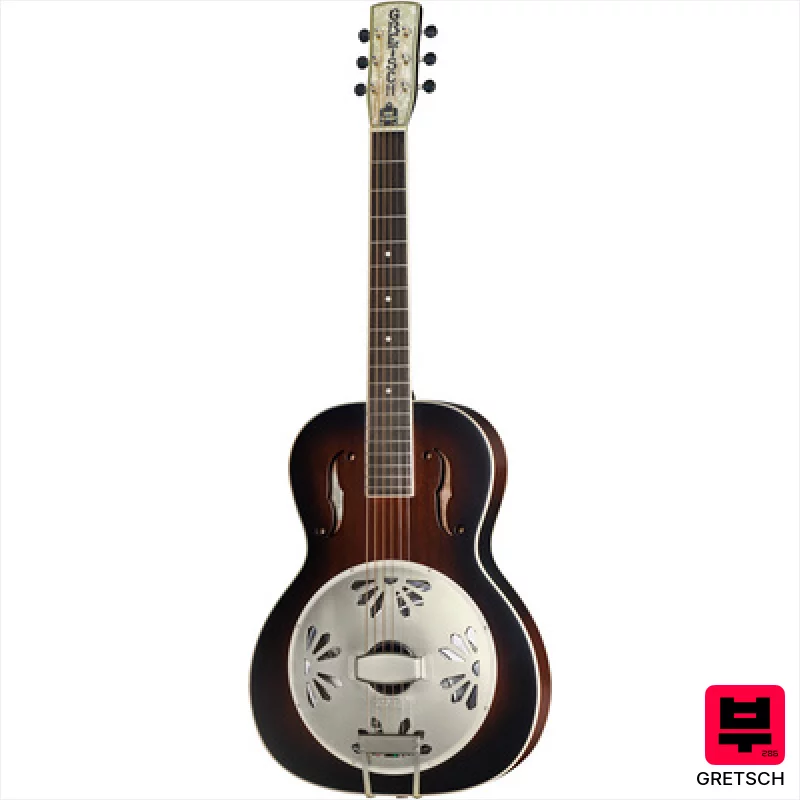
Gretsch G9240 Alligator Biscuit
- • Mahogany body delivers warm, resonant tone with excellent sustain
- • Katalox fretboard offers a smooth playing experience and unique look
- • Biscuit bridge enhances clarity and responsiveness of the resonator cone
- • Grover Sta-Tite tuners provide reliable tuning stability for gigging
- • Medium V neck profile isn't for everyone; might feel bulky to some
- • Limited tonal versatility compared to a full-bodied acoustic or electric
- • Mahogany construction can be prone to feedback at higher volumes
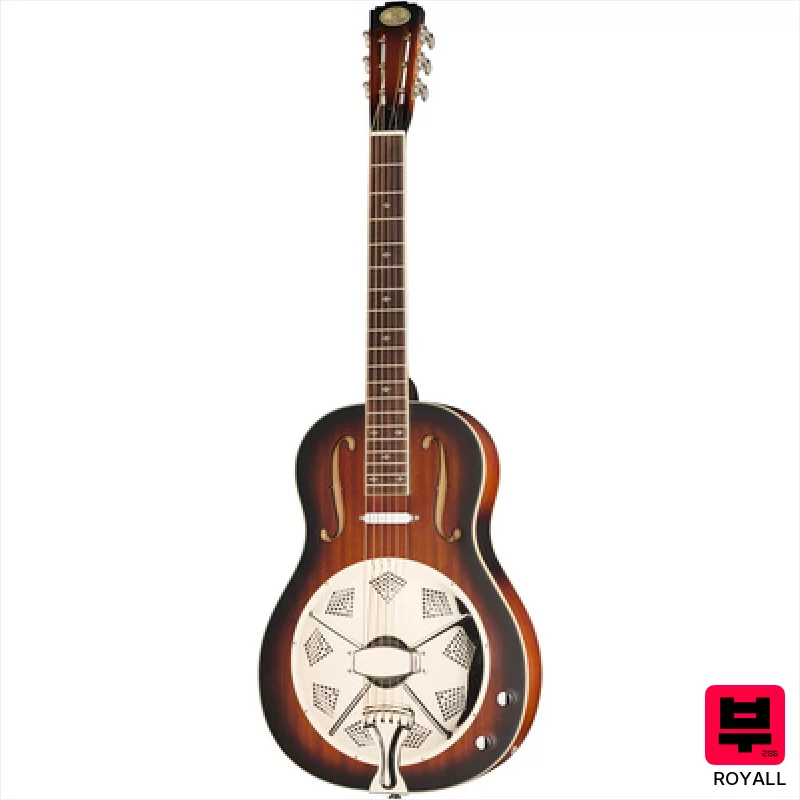
Royall HB12SC/SB HOBO
- • Handmade aluminum cone delivers a surprisingly warm, responsive tone.
- • Ebony fingerboard provides exceptional clarity and fast playing feel.
- • Lipstick pickup captures a gritty, vintage resonator character.
- • Solid mahogany body adds warmth and sustain, nicely balanced.
- • Mahogany body, while warm, can feel a bit dense for extended playing sessions.
- • 46mm nut width might feel narrow for players accustomed to wider necks.
- • Limited tonal versatility; primarily suited for bluegrass and roots music.
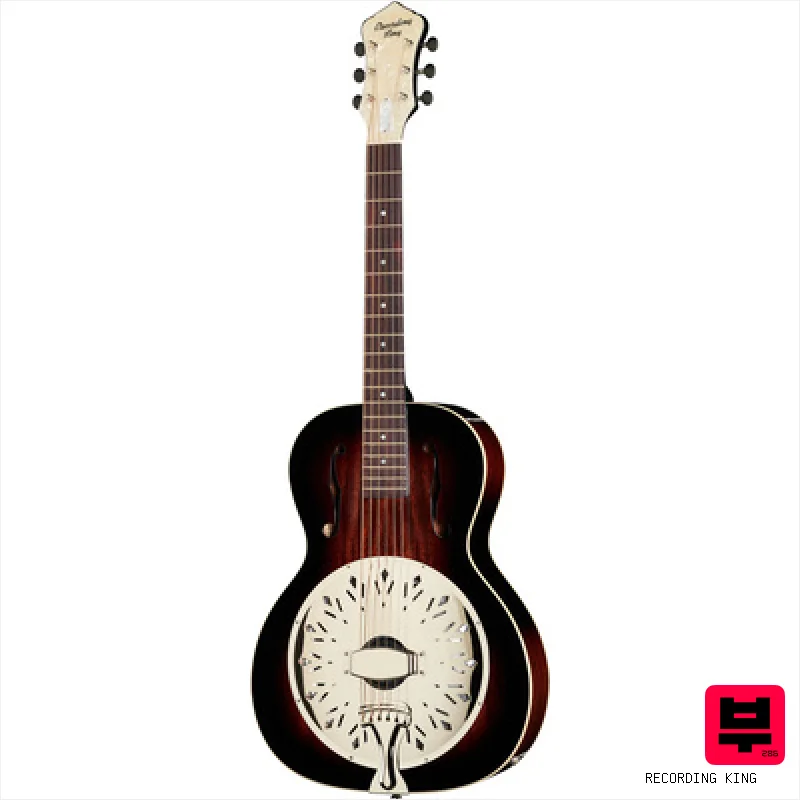
Recording King RR-41E-VS ResonatorRattlesnake
- • Solid mahogany body provides a warm, rich acoustic foundation for bluegrass.
- • Heavy instrument may be difficult for smaller players to carry around.
- • Standard pickup lacks advanced blending or EQ controls for tone shaping.
- • Single pickup system offers limited tonal variety compared to dual systems.
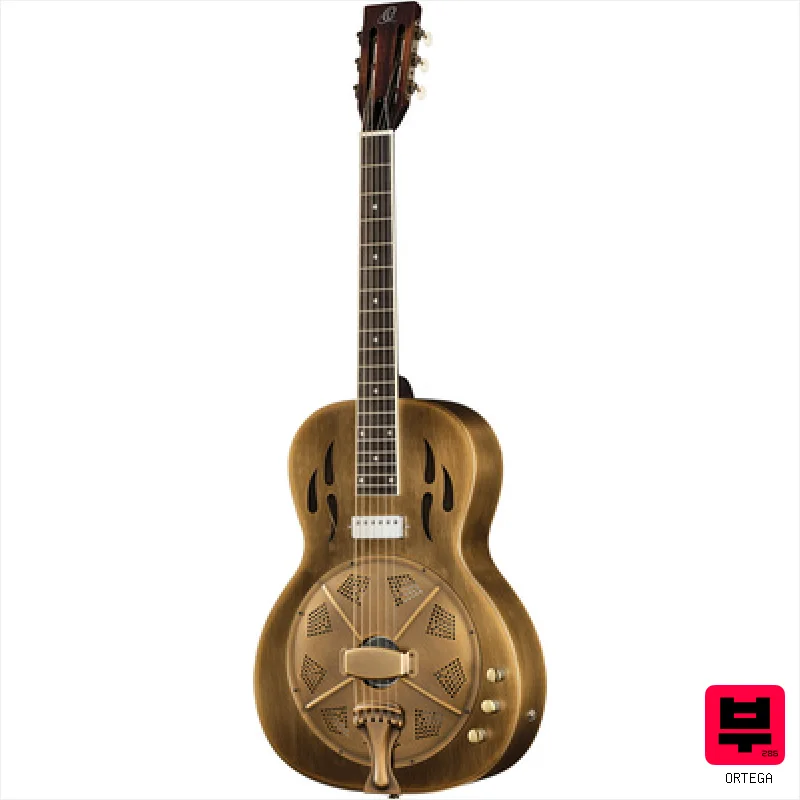
Ortega RRG60E
- • Solid mahogany neck ensures stable playability.
- • Rosewood fretboard offers smooth finger movement.
- • Built-in passive pickup aids modern amplification.
- • Includes professional gig bag for easy transport.
- • No cone material details listed in specs.
- • Weight specification is missing from data.
- • Body material description is ambiguous.
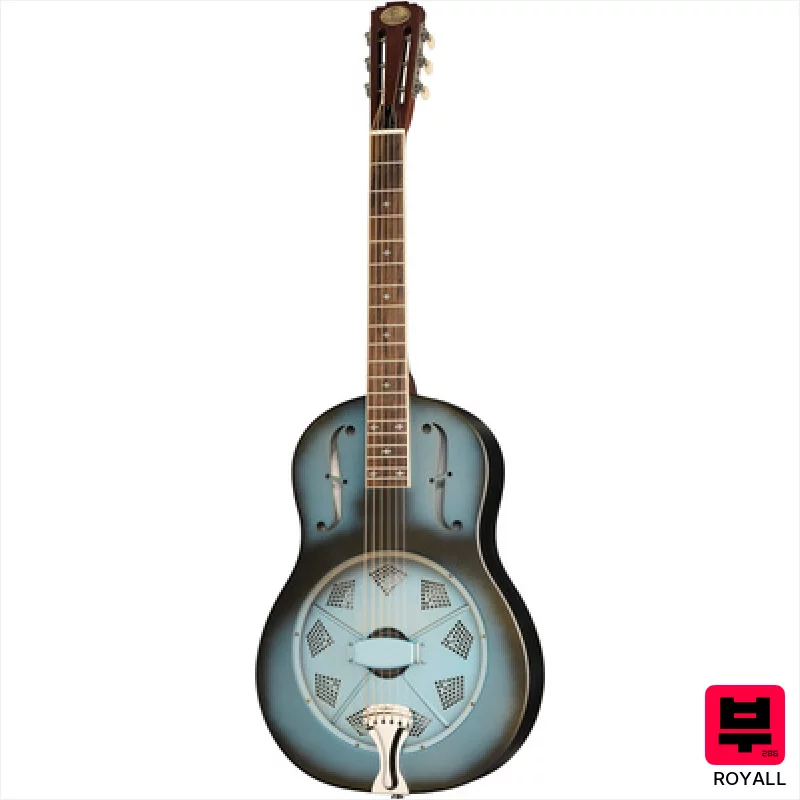
Royall PB12/ANI Pony Boy
- • Handmade aluminum cone delivers a surprisingly complex, vintage tone.
- • Mahogany neck provides comfortable feel and good sustain.
- • Biscuit bridge design enhances resonance and projection.
- • Quality aged hardware adds visual appeal and a vintage vibe.
- • Technical wood fretboard may not appeal to players seeking premium feel.
- • Limited versatility; best suited for bluegrass and resonator-specific styles.
- • Steel body contributes to a relatively heavy instrument.
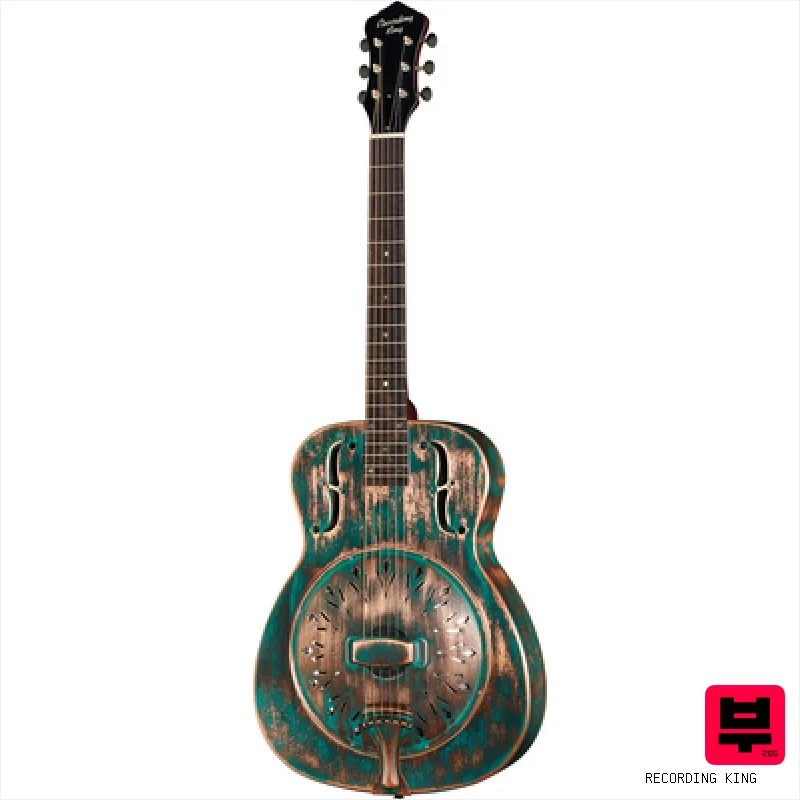
Recording King RM-997-VG Resonator
- • Solid mahogany neck with stable construction
- • Distinctive European handspun resonator cone
- • Durable nickel-plated bell brass body
- • Classic roundneck style design
- • Heavy brass body adds significant weight
- • No active electronics for modern amplification
- • Limited control options for tone shaping
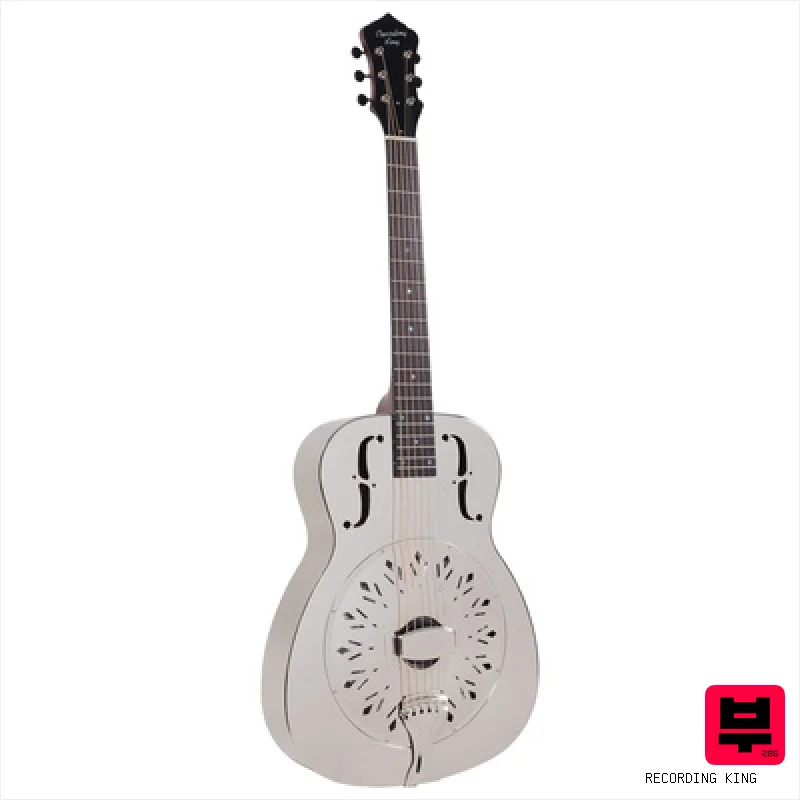
Recording King RM-998-D
- • Solid nickel-plated bell brass body feels heavy and durable.
- • Aluminium cone offers a bright, cutting bluegrass tone.
- • Mahogany neck provides a warm, responsive playing feel.
- • Round neck design fits comfortably under the chin.
- • Rosewood fretboard can be slippery when wet.
- • No pickup system is mentioned in the specs.
- • Heavy weight may be hard for small players.
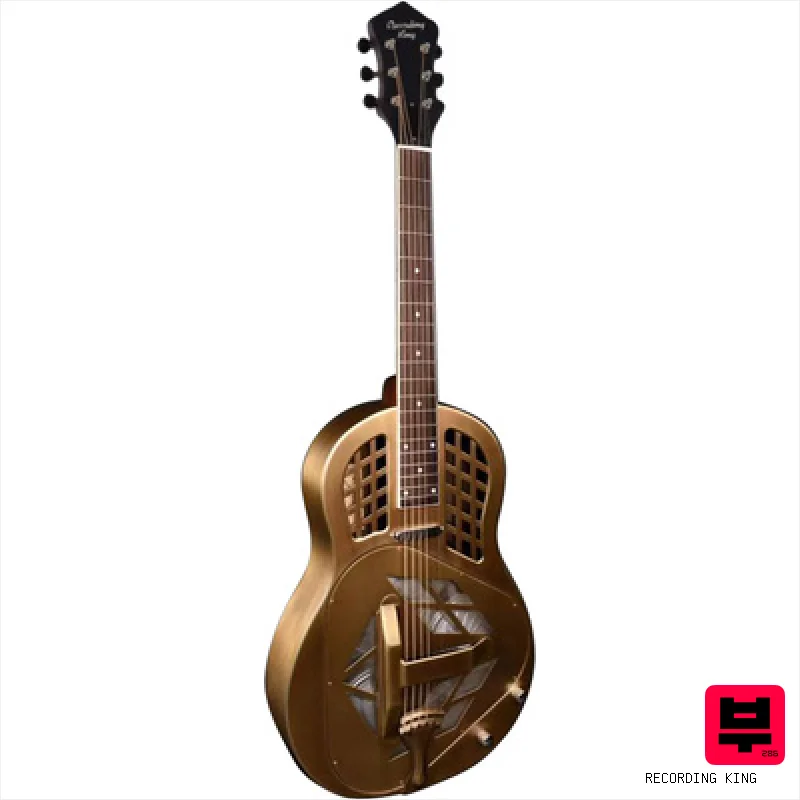
Recording King RM-999E-AB
- • European spun aluminum tricone offers bright, cutting resonance
- • Solid mahogany neck provides sturdy, warm playability
- • Single coil pickup delivers clear, direct bluegrass tone
- • Antique brass finish adds classic visual character
- • Brass body adds significant weight for players
- • Only two controls limit tone shaping options
- • No electronic outputs for modern mixing setups
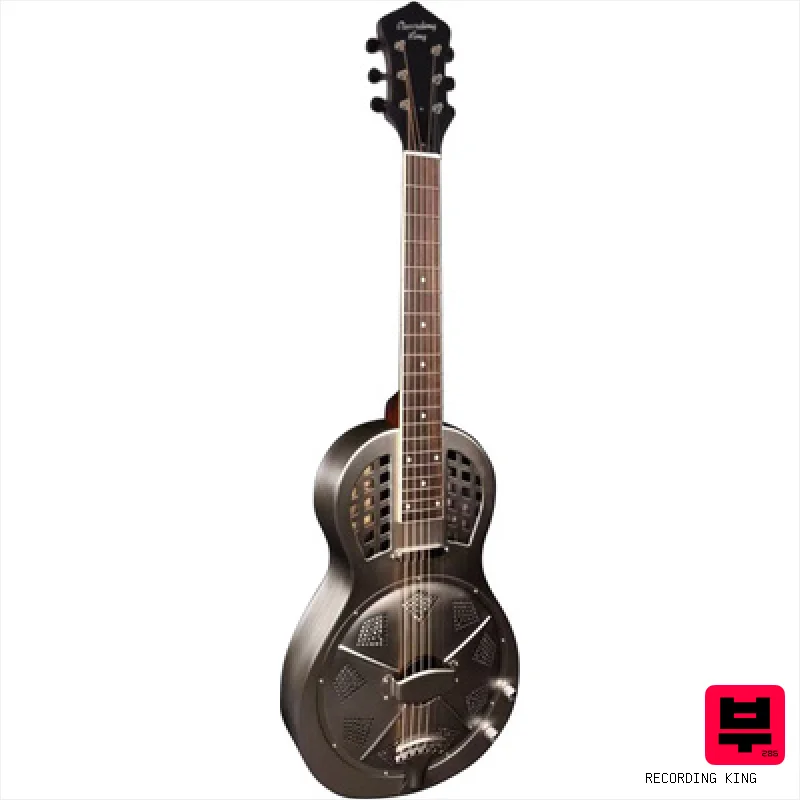
Recording King RM-960E-AS
- • Solid brass body provides a warm, traditional tone.
- • European spun aluminum cone delivers consistent response.
- • Single coil pickup offers clean, direct sound.
- • Bone nut and mahogany neck ensure playability.
- • Lacks a master volume control for amplification.
- • No pickup selector switch for tone variation.
- • Simple two-control layout limits modern tone shaping.
Every resonator guitars that matches
64 models match this page. The 15 above are covered in detail; the rest are listed here with their published specifications.
| # | Model | Specifications | Price |
|---|---|---|---|
| 16 | Recording King RM-995E-BN | Nut width 46 mm (1.81") · Scale 648 mm (25.51") · Fingerboard Rosewood fingerboard | $1,013 |
| 17 | Recording King RM-996SE-PN Sandblasted | Nut width 46 mm (1.81") · Scale 648 mm (25.51") · Fingerboard Rosewood fingerboard | $1,013 |
| 18 | Recording King RM-999E-RN | Nut width 46 mm (1.81") · Scale 648 mm (25.51") · Fingerboard Rosewood fingerboard | $1,013 |
| 19 | Royall CH12/BRS Chess 12 | Nut width 46 mm (1.81") · Scale 648 mm (25.51") · Body Mahogany body | $957 |
| 20 | Gretsch G9220 Bobtail Roundneck | Scale 635 mm (25") · Frets 19 frets · Body Mahogany body | $867 |
| 21 | Royall DLT12/DSB Delta | Nut width 46 mm (1.81") · Scale 648 mm (25.51") · Body Mahogany body | $822 |
| 22 | Gretsch G9201 Honey Dipper | Scale 635 mm (25") · Frets 19 frets | $991 |
| 23 | Ortega RRG40CE-DBK-L | Nut width 43 mm (1.69") · Scale 628 mm (24.72") · Frets 19 frets | $500 |
| 24 | Ortega RRG40CE-DBK | Nut width 43 mm (1.69") · Scale 648 mm (25.51") · Frets 20 frets | $498 |
| 25 | Recording King RPH-R2-E-BRB Dirty 30´s Minnie | Nut width 43 mm (1.69") · Scale 645 mm (25.39") · Frets 20 frets · Neck profile C-shape neck | $416 |
| 26 | Ortega RRG30E-WB | Nut width 43 mm (1.69") · Scale 628 mm (24.72") · Frets 19 frets | $463 |
| 27 | Gretsch G9230 Bobtail Squareneck | Scale 635 mm (25") | $900 |
| 28 | Dobro Hound Dog M-14 | Scale 628 mm (24.72") | $878 |
| 29 | National Reso-Phonic Style O 14 Fret LH | Nut width 46 mm (1.81") · Scale 635 mm (25") · Frets 19 frets · Fingerboard Ebony fingerboard · Weight 3.7 kg | $5,069 |
| 30 | Recording King RPH-R2-E-MBK Dirty 30´s Minnie | Nut width 43 mm (1.69") · Scale 645 mm (25.39") · Frets 20 frets · Neck profile C-shape neck | $337 |
| 31 | Harley Benton Custom Line N-150CE BK w/Bag | Nut width 43 mm (1.69") · Scale 635 mm (25") · Frets 20 frets · Neck profile U-shape neck · Body Sapele body | $258 |
| 32 | Beard Guitars Road-O-Phonic HSDS TS | Nut width 48 mm (1.89") · Scale 635 mm (25") · Frets 19 frets · Body Poplar body · Fingerboard Ebony fingerboard | $5,971 |
| 33 | Beard Guitars Road-O-Phonic TS | Nut width 48 mm (1.89") · Scale 635 mm (25") · Frets 19 frets · Body Poplar body · Fingerboard Ebony fingerboard | $5,070 |
| 34 | Harley Benton Custom Line N-150CE Natural | Nut width 43 mm (1.69") · Scale 635 mm (25") · Frets 20 frets · Neck profile U-shape neck · Body Sapele body | $247 |
| 35 | Harley Benton Custom Line N-150CE Black | Nut width 43 mm (1.69") · Scale 635 mm (25") · Frets 20 frets · Neck profile U-shape neck · Body Sapele body | $247 |
| 36 | National Reso-Phonic Style O Deluxe | Nut width 46 mm (1.81") · Scale 635 mm (25") · Frets 19 frets · Weight 4 kg | $5,632 |
| 37 | National Reso-Phonic Style O Replicon 14fret | Nut width 46.4 mm (1.82") · Scale 635 mm (25") · Frets 19 frets · Weight 4.08 kg | $5,520 |
| 38 | National Reso-Phonic Style O | Nut width 46 mm (1.81") · Scale 635 mm (25") · Frets 19 frets · Weight 4 kg | $5,294 |
| 39 | National Reso-Phonic Style O 14 Fret | Nut width 46 mm (1.81") · Scale 635 mm (25") · Frets 19 frets · Weight 3.7 kg | $5,181 |
| 40 | National Reso-Phonic Estralita Deluxe | Nut width 46 mm (1.81") · Scale 635 mm (25") · Frets 19 frets · Weight 3.7 kg | $4,843 |
| 41 | Recording King RR-36S-VS Squarneck | Scale 648 mm (25.51") · Body Mahogany body | $445 |
| 42 | Recording King RPH-R2-MBK Dirty 30s Resonator | Nut width 43 mm (1.69") · Scale 645 mm (25.39") · Frets 20 frets | $326 |
| 43 | Harley Benton Delta Blues Resonator w/Bag | Nut width 48.5 mm (1.91") · Scale 628 mm (24.72") · Body Sapele body | $348 |
| 44 | Beard Guitars E-Model SN ASB | Nut width 47.6 mm (1.87") · Scale 635 mm (25") · Frets 19 frets · Fingerboard Ebony fingerboard | $5,632 |
| 45 | National Reso-Phonic NRP Rubbed Steel 12 Fret | Nut width 46.2 mm (1.82") · Scale 635 mm (25") · Frets 19 frets · Fingerboard Ebony fingerboard | $4,506 |
| 46 | National Reso-Phonic Raw Steel SingCone 14 Fr. LH | Nut width 46.2 mm (1.82") · Scale 635 mm (25") · Frets 19 frets · Fingerboard Ebony fingerboard | $3,829 |
| 47 | Royall KOA12DS | Nut width 46 mm (1.81") · Scale 648 mm (25.51") · Frets 19 frets · Fingerboard Rosewood fingerboard | $1,284 |
| 48 | Royall KOA12SC Resonator Guitar | Nut width 46 mm (1.81") · Scale 648 mm (25.51") · Frets 12 frets · Fingerboard Rosewood fingerboard | $1,126 |
| 49 | Harley Benton Delta Blues Resonator | Nut width 48.5 mm (1.91") · Scale 628 mm (24.72") · Body Sapele body | $337 |
| 50 | Dobro Hound Dog Round Neck | Nut width 44.5 mm (1.75") | $495 |
| 51 | National Reso-Phonic NRP Rubbed Steel 14 Fret | Nut width 46.2 mm (1.82") · Scale 635 mm (25") · Frets 19 frets | $4,506 |
| 52 | National Reso-Phonic Raw Steel Single Cone 14 Fret | Nut width 46.2 mm (1.82") · Scale 635 mm (25") · Frets 19 frets | $3,830 |
| 53 | National Reso-Phonic Raw Steel Single Cone 12 Fret | Nut width 46.2 mm (1.82") · Scale 635 mm (25") · Frets 19 frets | $3,829 |
| 54 | Royall WE14NI West End | Nut width 46 mm (1.81") · Scale 648 mm (25.51") · Frets 19 frets | $1,238 |
| 55 | Gretsch G9221 Bobtail Steel RN AE | Nut width 44.5 mm (1.75") · Scale 635 mm (25") · Frets 19 frets | $1,126 |
| 56 | Beard Guitars Trailhead E-Model CE Tobacco | Scale 635 mm (25") · Frets 19 frets · Fingerboard Ebony fingerboard | $5,632 |
| 57 | Royall TMP12SC/MB Tampa SC Bk | Nut width 48 mm (1.89") · Scale 650 mm (25.59") · Fingerboard Rosewood fingerboard | $1,295 |
| 58 | Recording King RM-994E-AC Cutaway | Nut width 46 mm (1.81") · Scale 648 mm (25.51") · Fingerboard Rosewood fingerboard | $1,126 |
| 59 | Recording King RM-994E-PN Cutaway | Nut width 46 mm (1.81") · Scale 648 mm (25.51") · Fingerboard Rosewood fingerboard | $1,126 |
| 60 | Royall KOA12US Resonator Guitar | Nut width 46 mm (1.81") · Scale 648 mm (25.51") · Fingerboard Rosewood fingerboard | $1,126 |
| 61 | Recording King RR-36 Roundneck | Scale 648 mm (25.51") | $393 |
| 62 | Gretsch G9201 Honey Dipper Bundle | Scale 635 mm (25") · Frets 19 frets | $1,144 |
| 63 | Beard Guitars Trailhead E-Model SN Tobacco | Scale 635 mm (25") · Fingerboard Ebony fingerboard | $5,859 |
| 64 | Gold Tone PBS | Scale 635 mm (25") | $1,577 |
Resonator Guitars by the numbers
Measured across all 64 models in this category, so «wide», «short» or «expensive» mean something you can check.
How to Choose the Best Resonator Guitars
Playability
Neck profile and action are crucial. An intermediate player is developing technique - a thick, unwieldy neck or high action will hinder progress and make those fast bluegrass runs a struggle. We're looking for comfortable, manageable necks that allow for clean articulation.
Cone Material & Response
The cone is the heart of a resonator. Brass cones offer that classic, metallic bite - perfect for cutting through a mix. Spider cone resonators (like those found on some vintage models) have a warmer, more complex tone but can be harder to control. Knowing the tonal difference is vital.
Bracing & Tone Control
The bracing pattern significantly impacts sustain and tone. Heavier bracing generally results in a more focused, punchy sound, while lighter bracing allows for more resonance and warmth. Some resonators even have tone controls (often a simple thumb roller) - a surprising but welcome feature for shaping your tone.
Construction Quality & Hardware
Let's be honest, cheaper resonators often cut corners on hardware. Chrome plating flakes, tuners slip, and the whole thing feels flimsy. Solid construction and decent hardware aren't just about aesthetics; they impact tuning stability and overall reliability on stage.
Volume & Headroom
Resonators can get loud, but some have more 'headroom' than others - meaning they can handle increased volume and dynamics without collapsing into muddy breakup. This is especially important if you're playing with a band or recording in a controlled environment.
Buying Guide
Don't chase the cheapest option; it will likely have a rough action, a dull cone, and questionable hardware. Focus on finding a resonator with a comfortable neck profile and a cone that suits your desired tone. A slightly higher price point often means better bracing, more reliable hardware, and a more responsive cone - all things that will make your playing experience significantly better. And seriously, check the tuners - a poorly tuned resonator is a frustrating resonator.
How This List Is Built
We don't play these instruments — we're a catalog, not a review desk, and we'd rather say so than pretend otherwise. This page covers 64 resonator guitars from the Thomann catalogue, which is the largest single source of specification data in this category: 15 in detail, the rest listed with their specifications.
Position is computed, not curated. We parse the manufacturer's own description into actual values — nut width, scale, fret count, fingerboard radius, size, alloy — and rank on them: how many specifications a model has published, how many of them are measurable numbers, and how precisely it meets this page's criterion. A product image adds a little. Price is not a ranking signal: it tells you nothing about whether a neck fits your hand. The same inputs always produce the same order, so nothing here is shuffled to look fresh.
What this list is good for: narrowing a category down to a shortlist by spec and budget. What it isn't: a substitute for hearing an instrument. Before you buy, read hands-on reviews and, where you can, play it. Full methodology.

