
Best Resonator Guitars for Beginner 2026
So, you're thinking about a resonator? Awesome choice - they're just plain cool and offer a unique vibe you won't get from a standard acoustic. But jumping into resonators can be a bit overwhelming, especially as a beginner. This isn't about shredding bluegrass; it's about finding a resonator that's playable, sounds decent, and won't make you want to throw it across the room after an hour of struggling. Let's break down what to look for.
Last updated: October 8, 2026
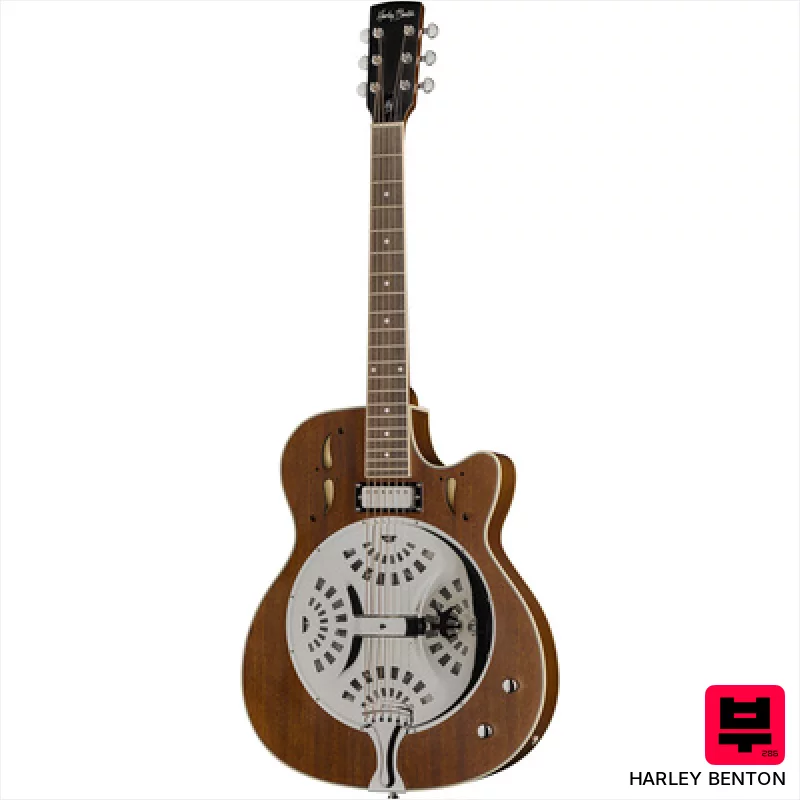
Harley Benton Custom Line N-150CE Natural
- • Sapele body provides a warm, resonant tone with surprising projection.
- • Rising P3004 mini-humbucker delivers a surprisingly articulate and punchy amplified voice.
- • Purple Heart fingerboard offers a smooth, fast playing experience with a unique feel.
- • Well-executed binding and bone nut elevate the instrument beyond its price point.
- • ABS binding and inlays, while functional, lack the premium feel of wood.
- • Okoume neck, while playable, may exhibit slight movement with humidity changes.
- • Mini-jumbo body size could be unwieldy for smaller players or travel.
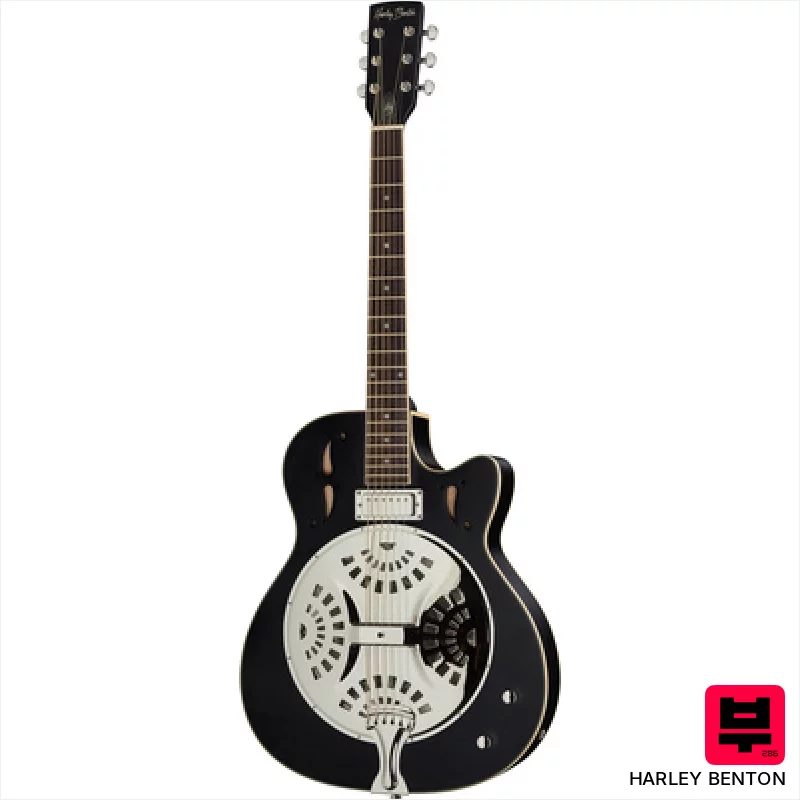
Harley Benton Custom Line N-150CE Black
- • Sapele body offers a surprisingly warm and resonant tone.
- • Rising P3004 mini-humbucker delivers a focused, articulate amplified sound.
- • Purple Heart/Maple bridge provides good sustain and stability.
- • Okoume neck feels comfortable with a familiar U profile.
- • ABS binding and inlays feel a bit cheap compared to higher-end resonators.
- • Satin black finish can show fingerprints and smudges easily.
- • While versatile, it's primarily geared toward bluegrass and roots music.
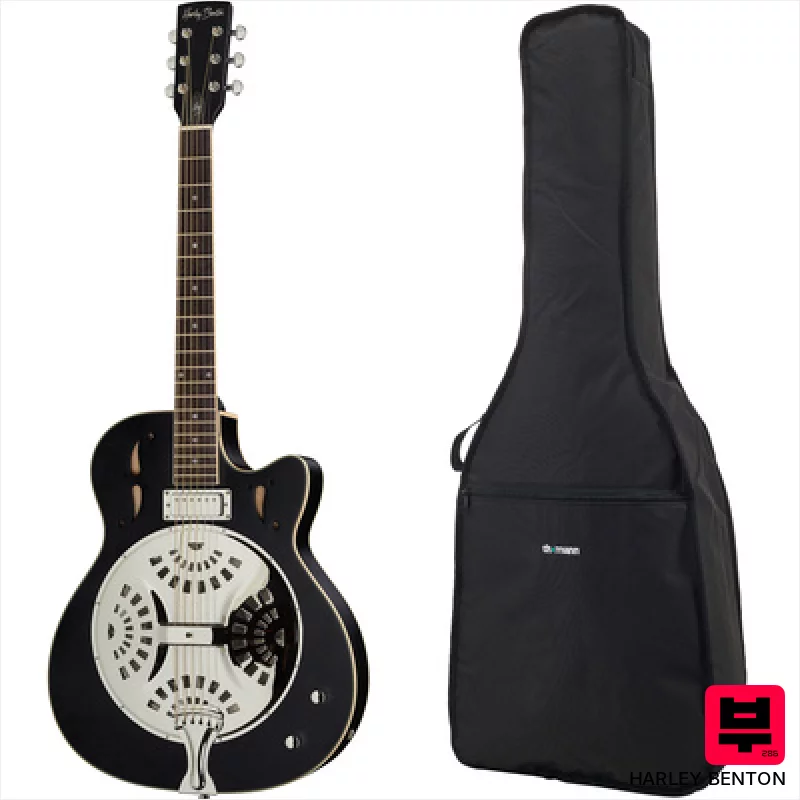
Harley Benton Custom Line N-150CE BK w/Bag
- • Sapele body delivers a warm, resonant tone with surprising projection.
- • Rising P3004 mini-humbucker provides a versatile, articulate amplified sound.
- • Purple Heart/Maple bridge contributes to a focused and controlled resonance.
- • Okoume neck offers a comfortable playing feel with a traditional 'U' profile.
- • ABS binding, while functional, feels less refined than traditional materials.
- • Shorter scale length (635mm) might feel cramped for players with larger hands.
- • Factory strings are decent, but a quality upgrade will noticeably enhance tone.

Recording King RPH-R2-E-MBK Dirty 30´s Minnie
- • Solid spruce top provides a bright attack for bluegrass cutting through mixes.
- • Whitewood back and sides offer a warm, resonant body for acoustic resonance.
- • Mini humbucker pickup delivers a strong, clear signal for amplified playing.
- • 9.5 inch cone ensures a full, punchy tone typical of classic resonators.
- • Matte black finish may show scratches easily during transport.
- • Lacks volume control knobs for adjusting output levels on stage.
- • No case included means extra cost to protect the instrument.

Recording King RPH-R2-MBK Dirty 30s Resonator
- • Solid spruce top drives strong resonance for bluegrass cuts
- • Whitewood back and sides offer warm, balanced mid frequencies
- • 9.5-inch resonator cone delivers bright, cutting ring
- • Bone nut ensures precise intonation and smooth fretting action
- • No adjustable pickup controls limit volume shaping options
- • Nato wood neck may lack the stability of maple alternatives
- • Matte black finish offers no protection against scratches

Recording King RPH-R2-E-BRB Dirty 30´s Minnie
- • Solid spruce top for bright acoustic resonance
- • Whitewood back and sides offer warm midrange
- • Mini humbucker pickup delivers clean signal
- • Traditional 30s style for authentic bluegrass tone
- • No specified weight makes handling uncertain
- • Single pickup lacks output blending options
- • No case included adds carrying inconvenience
- • Limited fretboard finish for playability
- • Standard scale length restricts long string options
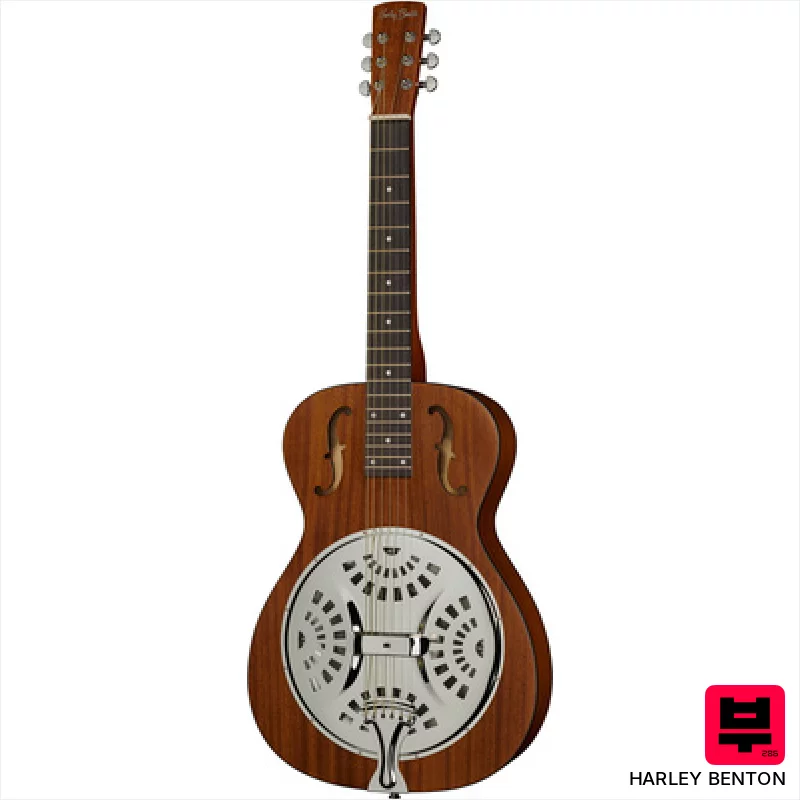
Harley Benton Delta Blues Resonator
- • Sapele body provides a warm, resonant foundation for the resonator's voice.
- • Square neck facilitates easy open-tuned playing for bluegrass and slide.
- • Bone nut improves tuning stability and sustain compared to plastic alternatives.
- • Amaranth fingerboard offers a smooth playing experience and resists wear.
- • Square neck limits versatility; not ideal for standard tuning playing.
- • Sapele can be a bit plain aesthetically; lacks figured grain options.
- • Die-cast tuners are functional, but might feel a touch budget-oriented.
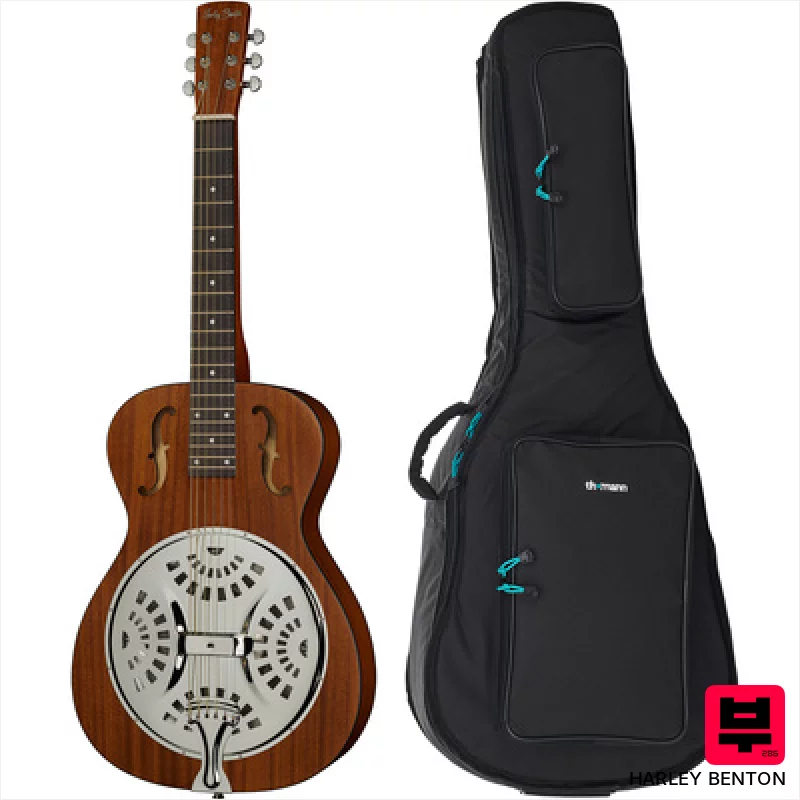
Harley Benton Delta Blues Resonator w/Bag
- • Sapele body provides a warm, resonant foundation for the resonator tone.
- • Square neck setup ideal for open-tuned slide playing, authentic Delta blues style.
- • Bone nut enhances sustain and tuning stability compared to plastic alternatives.
- • Gig bag with backpack straps offers excellent portability and protection.
- • Square neck limits standard fretted playing versatility; requires retuning for conventional use.
- • Sapele can be prone to movement with humidity changes; requires diligent care.
- • Die-cast tuners are functional, but higher-end options would offer finer adjustments.

Ortega RRG30E-WB
- • Mahogany body provides a warm, woody tone ideal for bluegrass and folk.
- • Lipstick single coil pickup delivers a surprisingly articulate and punchy amplified sound.
- • Slotted headstock and 43mm nut width cater specifically to bluegrass playing styles.
- • Blackwood fingerboard offers a smooth, comfortable playing experience and good sustain.
- • Distressed finish might not appeal to players seeking a pristine aesthetic.
- • Mahogany construction can be slightly heavier than instruments with different woods.
- • Passive pickup requires a good amp to truly shine and may lack versatility.

Ortega RRG40CE-DBK
- • Mahogany construction delivers warm, woody tones ideal for bluegrass.
- • Lipstick pickup provides a surprisingly articulate and bluesy voice.
- • Slotted headstock and 2-way truss rod offer reliable tuning stability.
- • Distressed finish adds vintage charm and a unique aesthetic appeal.
- • Mahogany body can be somewhat dense, contributing to a heavier instrument.
- • Passive Lipstick pickup lacks the high-output versatility of active systems.
- • Blackwood fingerboard might feel a bit dry for some players without conditioning.
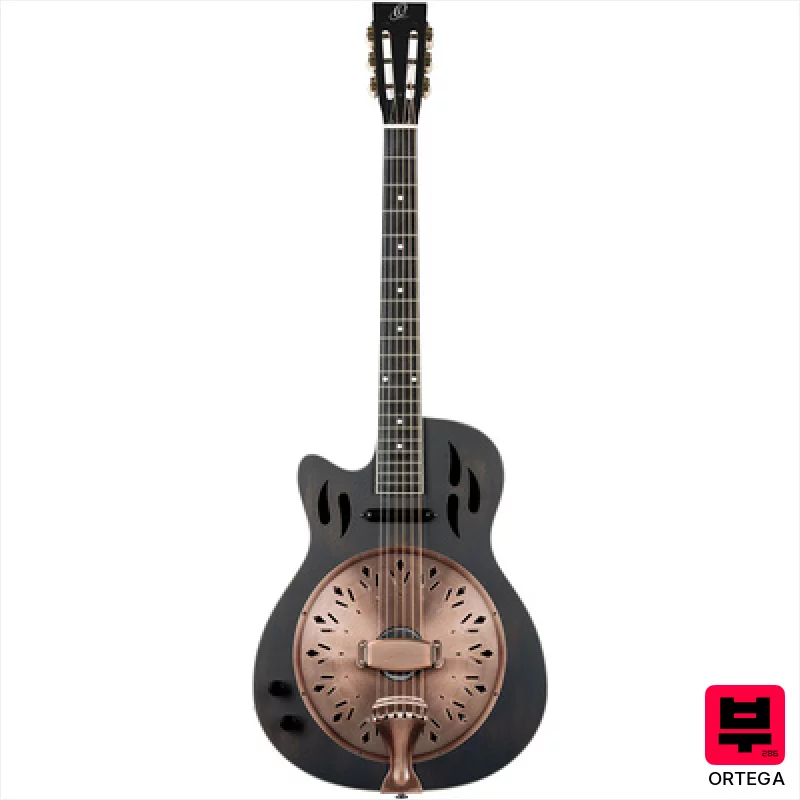
Ortega RRG40CE-DBK-L
- • Mahogany top delivers warm, woody tones ideal for bluegrass and folk.
- • Lipstick pickup provides a surprisingly articulate and punchy amplified sound.
- • Slotted headstock adds a touch of vintage aesthetic and tuning stability.
- • 2-Way truss rod allows for easy neck adjustments, accommodating various string gauges.
- • Distressed finish may not appeal to players seeking a pristine aesthetic.
- • 43mm nut width can feel cramped for players accustomed to wider necks.
- • Passive pickups may lack the high-output versatility of active systems.
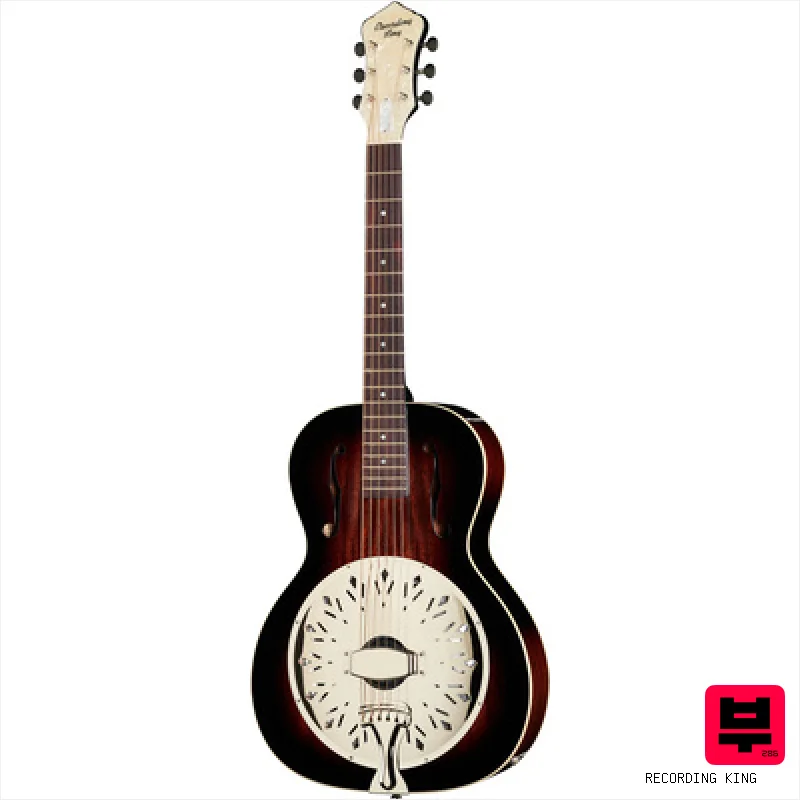
Recording King RR-41E-VS ResonatorRattlesnake
- • Solid mahogany body provides a warm, rich acoustic foundation for bluegrass.
- • Heavy instrument may be difficult for smaller players to carry around.
- • Standard pickup lacks advanced blending or EQ controls for tone shaping.
- • Single pickup system offers limited tonal variety compared to dual systems.
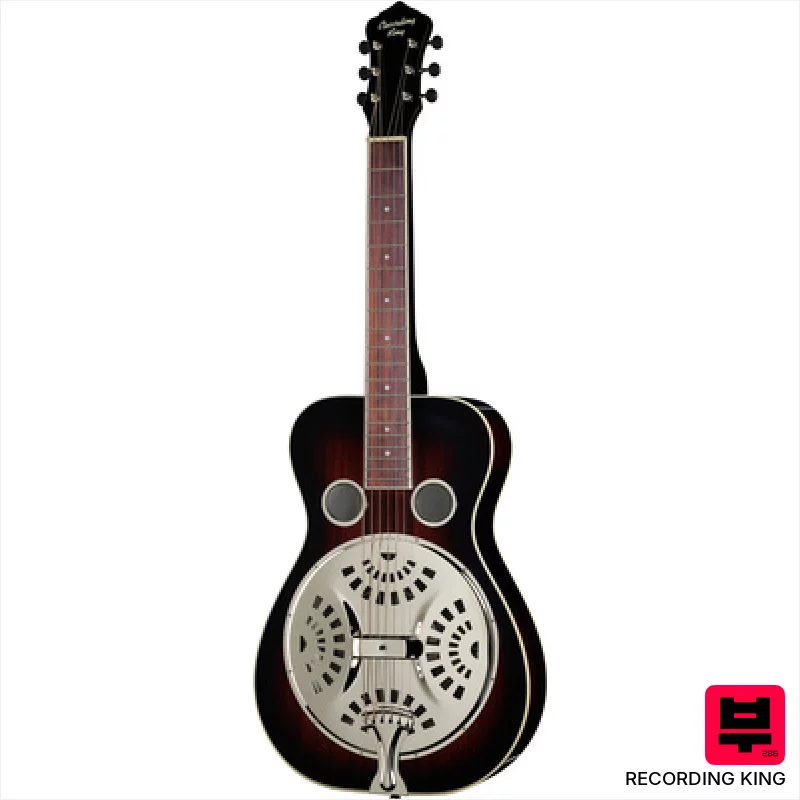
Recording King RR-36S-VS Squarneck
- • Mahogany body delivers warm, woody tones ideal for bluegrass and old-time.
- • Sand cast spider bridge enhances resonance and vintage character.
- • Padauk fretboard offers a smooth, fast playing experience, surprisingly responsive.
- • Vintage Sunburst finish is visually appealing and enhances the instrument's character.
- • Squarneck limits versatility; primarily suited for open G tuning.
- • Mahogany construction can be prone to feedback at higher volumes.
- • Ebony/Maple saddle combination may introduce a slight metallic edge to the tone.
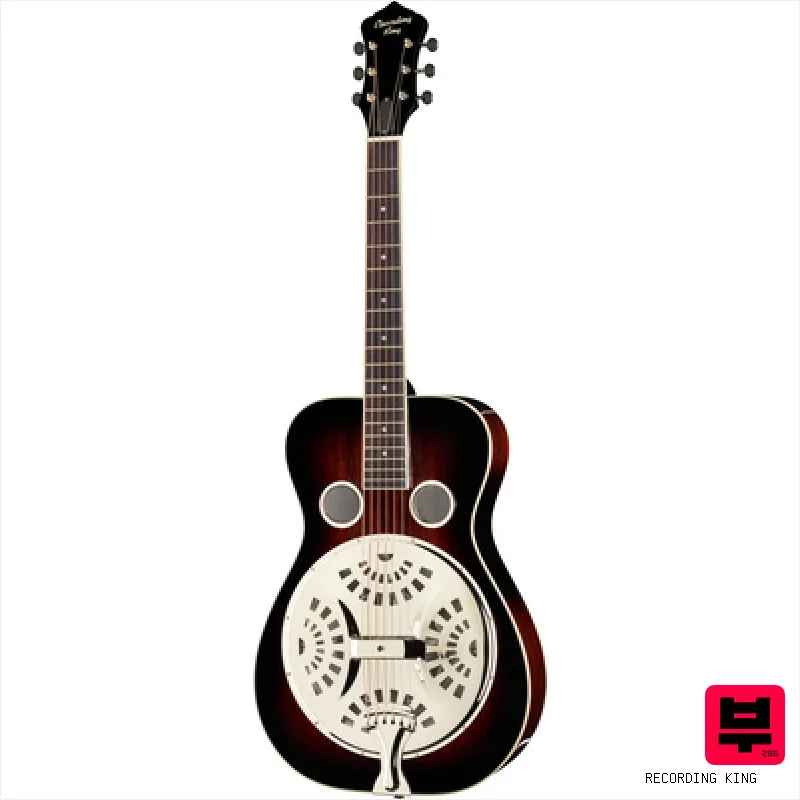
Recording King RR-36 Roundneck
- • Solid mahogany body for warm, thick tone
- • Parallelogram bracing adds structural strength
- • Spider bridge design ensures solid resonance
- • Vintage sunburst finish looks classic
- • Heavy instrument due to full mahogany body
- • No built-in electronic pickups or controls
- • Lacks modern accessories like pickups
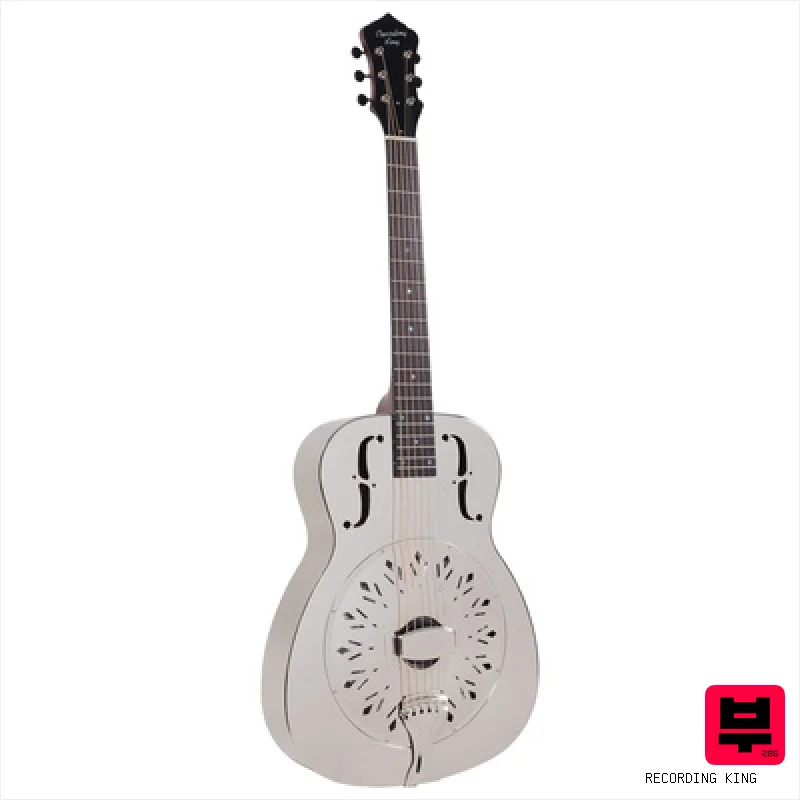
Recording King RM-998-D
- • Solid nickel-plated bell brass body feels heavy and durable.
- • Aluminium cone offers a bright, cutting bluegrass tone.
- • Mahogany neck provides a warm, responsive playing feel.
- • Round neck design fits comfortably under the chin.
- • Rosewood fretboard can be slippery when wet.
- • No pickup system is mentioned in the specs.
- • Heavy weight may be hard for small players.
Every resonator guitars that matches
64 models match this page. The 15 above are covered in detail; the rest are listed here with their published specifications.
| # | Model | Specifications | Price |
|---|---|---|---|
| 16 | Dobro Hound Dog Round Neck | Nut width 44.5 mm (1.75") | $491 |
| 17 | National Reso-Phonic Style O 14 Fret LH | Nut width 46 mm (1.81") · Scale 635 mm (25") · Frets 19 frets · Fingerboard Ebony fingerboard · Weight 3.7 kg | $5,027 |
| 18 | Beard Guitars Road-O-Phonic HSDS TS | Nut width 48 mm (1.89") · Scale 635 mm (25") · Frets 19 frets · Body Poplar body · Fingerboard Ebony fingerboard | $5,923 |
| 19 | Beard Guitars Road-O-Phonic TS | Nut width 48 mm (1.89") · Scale 635 mm (25") · Frets 19 frets · Body Poplar body · Fingerboard Ebony fingerboard | $5,029 |
| 20 | Royall DLT12SC/DSB DELTA | Nut width 46 mm (1.81") · Scale 648 mm (25.51") · Frets 19 frets · Body Mahogany body · Fingerboard Rosewood fingerboard | $994 |
| 21 | Royall BB14C/FL Bantam Blazer | Nut width 46 mm (1.81") · Scale 640 mm (25.2") · Frets 19 frets · Body Maple body · Fingerboard Rosewood fingerboard | $837 |
| 22 | National Reso-Phonic Style O Deluxe | Nut width 46 mm (1.81") · Scale 635 mm (25") · Frets 19 frets · Weight 4 kg | $5,586 |
| 23 | National Reso-Phonic Style O Replicon 14fret | Nut width 46.4 mm (1.82") · Scale 635 mm (25") · Frets 19 frets · Weight 4.08 kg | $5,474 |
| 24 | National Reso-Phonic Style O | Nut width 46 mm (1.81") · Scale 635 mm (25") · Frets 19 frets · Weight 4 kg | $5,251 |
| 25 | National Reso-Phonic Style O 14 Fret | Nut width 46 mm (1.81") · Scale 635 mm (25") · Frets 19 frets · Weight 3.7 kg | $5,139 |
| 26 | National Reso-Phonic Estralita Deluxe | Nut width 46 mm (1.81") · Scale 635 mm (25") · Frets 19 frets · Weight 3.7 kg | $4,804 |
| 27 | Beard Guitars E-Model SN ASB | Nut width 47.6 mm (1.87") · Scale 635 mm (25") · Frets 19 frets · Fingerboard Ebony fingerboard | $5,586 |
| 28 | National Reso-Phonic NRP Rubbed Steel 12 Fret | Nut width 46.2 mm (1.82") · Scale 635 mm (25") · Frets 19 frets · Fingerboard Ebony fingerboard | $4,470 |
| 29 | National Reso-Phonic Raw Steel SingCone 14 Fr. LH | Nut width 46.2 mm (1.82") · Scale 635 mm (25") · Frets 19 frets · Fingerboard Ebony fingerboard | $3,798 |
| 30 | Royall KOA12DS | Nut width 46 mm (1.81") · Scale 648 mm (25.51") · Frets 19 frets · Fingerboard Rosewood fingerboard | $1,273 |
| 31 | Royall KOA12SC Resonator Guitar | Nut width 46 mm (1.81") · Scale 648 mm (25.51") · Frets 12 frets · Fingerboard Rosewood fingerboard | $1,117 |
| 32 | Royall TMP12/NI Tampa | Nut width 46 mm (1.81") · Scale 640 mm (25.2") · Frets 19 frets · Fingerboard Rosewood fingerboard | $1,061 |
| 33 | Ortega RRG50CE-SSB | Nut width 43 mm (1.69") · Scale 628 mm (24.72") · Frets 20 frets · Fingerboard Ebony fingerboard | $871 |
| 34 | Royall HB12/SB Hobo | Nut width 46 mm (1.81") · Scale 648 mm (25.51") · Frets 19 frets · Body Mahogany body | $837 |
| 35 | Gretsch G9240 Alligator Biscuit Bundle | Nut width 44.5 mm (1.75") · Scale 635 mm (25") · Frets 19 frets · Body Mahogany body | $794 |
| 36 | Gretsch G9240 Alligator Biscuit | Nut width 44.5 mm (1.75") · Scale 635 mm (25") · Frets 19 frets · Body Mahogany body | $636 |
| 37 | Royall HB12SC/SB HOBO | Nut width 46 mm (1.81") · Frets 19 frets · Body Mahogany body · Fingerboard Ebony fingerboard | $938 |
| 38 | National Reso-Phonic NRP Rubbed Steel 14 Fret | Nut width 46.2 mm (1.82") · Scale 635 mm (25") · Frets 19 frets | $4,470 |
| 39 | National Reso-Phonic Raw Steel Single Cone 14 Fret | Nut width 46.2 mm (1.82") · Scale 635 mm (25") · Frets 19 frets | $3,799 |
| 40 | National Reso-Phonic Raw Steel Single Cone 12 Fret | Nut width 46.2 mm (1.82") · Scale 635 mm (25") · Frets 19 frets | $3,798 |
| 41 | Royall WE14NI West End | Nut width 46 mm (1.81") · Scale 648 mm (25.51") · Frets 19 frets | $1,228 |
| 42 | Gretsch G9221 Bobtail Steel RN AE | Nut width 44.5 mm (1.75") · Scale 635 mm (25") · Frets 19 frets | $1,117 |
| 43 | Ortega RRG60E | Nut width 43 mm (1.69") · Scale 628 mm (24.72") · Frets 20 frets | $994 |
| 44 | Royall PB12/ANI Pony Boy | Nut width 46 mm (1.81") · Scale 640 mm (25.2") · Frets 19 frets | $893 |
| 45 | Recording King RM-997-VG Resonator | Nut width 44.5 mm (1.75") · Scale 632 mm (24.88") · Frets 19 frets | $731 |
| 46 | Beard Guitars Trailhead E-Model CE Tobacco | Scale 635 mm (25") · Frets 19 frets · Fingerboard Ebony fingerboard | $5,586 |
| 47 | Royall TMP12SC/MB Tampa SC Bk | Nut width 48 mm (1.89") · Scale 650 mm (25.59") · Fingerboard Rosewood fingerboard | $1,284 |
| 48 | Recording King RM-994E-AC Cutaway | Nut width 46 mm (1.81") · Scale 648 mm (25.51") · Fingerboard Rosewood fingerboard | $1,117 |
| 49 | Recording King RM-994E-PN Cutaway | Nut width 46 mm (1.81") · Scale 648 mm (25.51") · Fingerboard Rosewood fingerboard | $1,117 |
| 50 | Royall KOA12US Resonator Guitar | Nut width 46 mm (1.81") · Scale 648 mm (25.51") · Fingerboard Rosewood fingerboard | $1,117 |
| 51 | Recording King RM-999E-AB | Nut width 46 mm (1.81") · Scale 648 mm (25.51") · Fingerboard Rosewood fingerboard | $1,061 |
| 52 | Recording King RM-960E-AS | Nut width 46 mm (1.81") · Scale 648 mm (25.51") · Fingerboard Rosewood fingerboard | $1,005 |
| 53 | Recording King RM-995E-BN | Nut width 46 mm (1.81") · Scale 648 mm (25.51") · Fingerboard Rosewood fingerboard | $1,005 |
| 54 | Recording King RM-996SE-PN Sandblasted | Nut width 46 mm (1.81") · Scale 648 mm (25.51") · Fingerboard Rosewood fingerboard | $1,005 |
| 55 | Recording King RM-999E-RN | Nut width 46 mm (1.81") · Scale 648 mm (25.51") · Fingerboard Rosewood fingerboard | $1,005 |
| 56 | Royall CH12/BRS Chess 12 | Nut width 46 mm (1.81") · Scale 648 mm (25.51") · Body Mahogany body | $949 |
| 57 | Gretsch G9220 Bobtail Roundneck | Scale 635 mm (25") · Frets 19 frets · Body Mahogany body | $860 |
| 58 | Royall DLT12/DSB Delta | Nut width 46 mm (1.81") · Scale 648 mm (25.51") · Body Mahogany body | $815 |
| 59 | Gretsch G9201 Honey Dipper Bundle | Scale 635 mm (25") · Frets 19 frets | $1,134 |
| 60 | Gretsch G9201 Honey Dipper | Scale 635 mm (25") · Frets 19 frets | $982 |
| 61 | Beard Guitars Trailhead E-Model SN Tobacco | Scale 635 mm (25") · Fingerboard Ebony fingerboard | $5,811 |
| 62 | Gold Tone PBS | Scale 635 mm (25") | $1,564 |
| 63 | Gretsch G9230 Bobtail Squareneck | Scale 635 mm (25") | $893 |
| 64 | Dobro Hound Dog M-14 | Scale 628 mm (24.72") | $871 |
Resonator Guitars by the numbers
Measured across all 64 models in this category, so «wide», «short» or «expensive» mean something you can check.
How to Choose the Best Resonator Guitars
Playability (Action & Neck Profile)
Resonators often have higher action than standard acoustics, which can be tough on beginner fingers. A comfortable neck profile - not too thick, not too thin - is crucial. Look for something with a manageable action that you can reasonably press down without excessive buzzing.
Body Size & Construction (Spoke Bracing)
Smaller bodies (like parlor or travel sizes) are generally easier to handle, especially when you're starting out. Spoke bracing - the internal supports - significantly impacts sustain and resonance; cheaper resonators often skimp here, leading to a weaker, more brittle tone.
Tone (Cone Material & Design)
The cone is where the magic happens. Brass cones are common and offer a bright, cutting tone, good for bluegrass. Aluminum cones tend to be warmer and more mellow. As a beginner, brass is often a good starting point, but don't expect a vintage-level richness - that comes with better materials and craftsmanship.
Tuning Stability
Resonators, especially cheaper ones, can be finicky when it comes to staying in tune. The bridge is a key area to check - a poorly fitted bridge will lead to constant retuning headaches. A good setup (which you'll likely need regardless) can help, but a poorly constructed instrument will fight you every step of the way.
Pickup Voicing (If Electric)
Many resonators have built-in pickups for amplification. Beginner-friendly models often have simple, functional pickups. Don't expect studio-grade recording quality; the goal is to cut through a band rehearsal or small gig, not to replace your high-end amp's clean channel.
Buying Guide
Don't chase the 'vintage' tone right away - that's a rabbit hole. Focus on playability first. A resonator that's hard to play will discourage you faster than a slightly less-than-perfect tone. Be prepared to spend some money on a professional setup; it's almost mandatory to get a resonator playing comfortably. And remember, a lot of cheaper resonators will have a noticeable 'ice-picky' high-end - it's a trade-off for the resonator effect, but can be fatiguing.
How This List Is Built
We don't play these instruments — we're a catalog, not a review desk, and we'd rather say so than pretend otherwise. This page covers 64 resonator guitars from the Thomann catalogue, which is the largest single source of specification data in this category: 15 in detail, the rest listed with their specifications.
Position is computed, not curated. We parse the manufacturer's own description into actual values — nut width, scale, fret count, fingerboard radius, size, alloy — and rank on them: how many specifications a model has published, how many of them are measurable numbers, and how precisely it meets this page's criterion. A product image adds a little. Price is not a ranking signal: it tells you nothing about whether a neck fits your hand. The same inputs always produce the same order, so nothing here is shuffled to look fresh.
What this list is good for: narrowing a category down to a shortlist by spec and budget. What it isn't: a substitute for hearing an instrument. Before you buy, read hands-on reviews and, where you can, play it. Full methodology.

