
Best Resonator Guitars for Americana 2026
So, you're diving into the Americana world - fantastic choice. A resonator guitar isn't just a novelty; it's a tonal powerhouse that can add grit, warmth, and that signature slide sound that defines the genre. Finding the right one for your style, whether you're laying down rhythm or wailing a lead, can be overwhelming. Let's cut through the noise and find you a resonator that sings.
Last updated: July 8, 2026 • Next update: July 15, 2026

National Reso-Phonic Raw Steel Single Cone 12 Fret
- • Solid steel construction delivers exceptional resonance and sustain.
- • 12-fret design enhances warmth and facilitates comfortable fingerstyle playing.
- • Ebony fretboard provides smooth playability and precise intonation.
- • Raw steel finish develops a unique, personalized patina over time.
- • The solid steel build results in a noticeably heavier instrument.
- • Limited tonal versatility compared to guitars with more complex bracing or electronics.
- • Raw steel finish requires diligent care to prevent rust and maintain appearance.

Recording King RR-36-BK Black
- • Mahogany top delivers a warm, woody tone with surprising clarity.
- • SpiderCone resonator provides a lively, complex, and vintage-voiced projection.
- • Padauk fingerboard offers a smooth, fast playing experience with excellent note definition.
- • Butterbean tuners are surprisingly stable and accurate for the price point.
- • High-gloss black finish can be a fingerprint magnet and susceptible to scratches.
- • 44mm nut width might feel narrow for players accustomed to wider necks.
- • Mahogany construction, while warm, lacks the aggressive bite of some maple resonators.
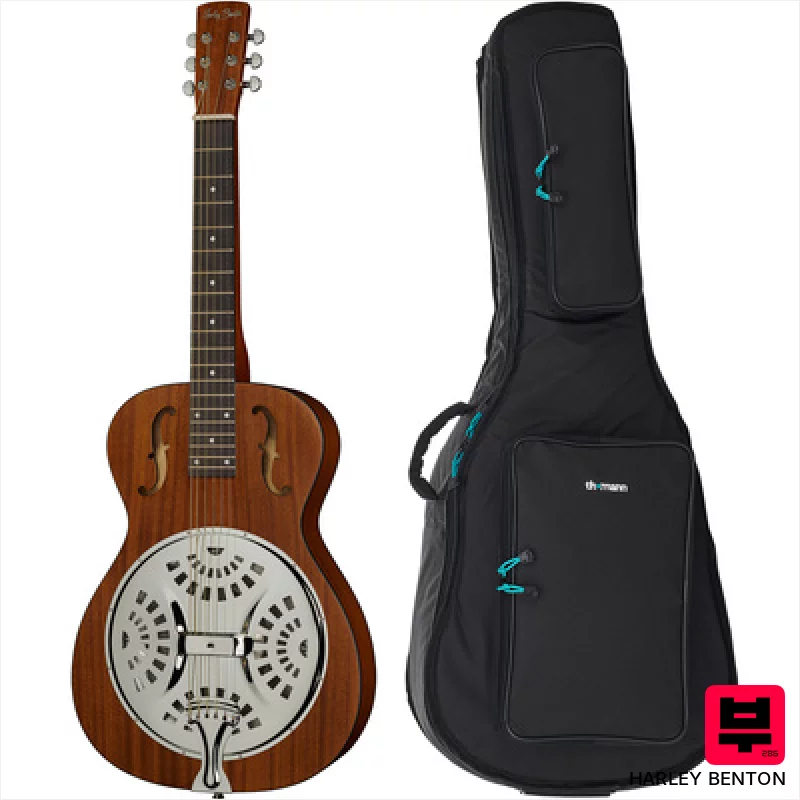
Harley Benton Delta Blues Resonator w/Bag
- • Sapele body provides a warm, resonant foundation for the resonator tone.
- • Square neck setup ideal for open-tuned slide playing, authentic Delta blues style.
- • Bone nut enhances sustain and tuning stability compared to plastic alternatives.
- • Gig bag with backpack straps offers excellent portability and protection.
- • Square neck limits standard fretted playing versatility; requires retuning for conventional use.
- • Sapele can be prone to movement with humidity changes; requires diligent care.
- • Die-cast tuners are functional, but higher-end options would offer finer adjustments.

Harley Benton Custom Line CLR-ResoElectric
- • Chrome body offers unique aesthetics and surprising resonance
- • Mahogany neck provides comfortable feel and warm tonal foundation
- • Lipstick pickups deliver a distinct, gritty, bluesy voice
- • Wenge fretboard adds snap and clarity to the overall tone
- • Chrome finish can be a fingerprint magnet requiring frequent cleaning
- • Resonator cone size might limit low-end thump compared to larger models
- • Scale length is shorter, potentially affecting intonation for advanced players

Royall KOA12SC Resonator Guitar
- • Hawaiian koa top delivers a rich, warm, and resonant tone characteristic of premium resonators.
- • Tricone design with three cones provides a powerful, complex, and shimmering projection.
- • Wilkinson vintage-style tuners ensure rock-solid tuning stability, crucial for bluegrass and beyond.
- • Matte neck finish enhances playability, reducing stickiness during extended playing sessions.
- • Koa construction makes it noticeably heavier than standard resonator models.
- • The 46mm nut width might feel slightly wider for players accustomed to narrower necks.
- • While versatile, its focused tone leans towards bluegrass and roots music; less suited for subtle genres.
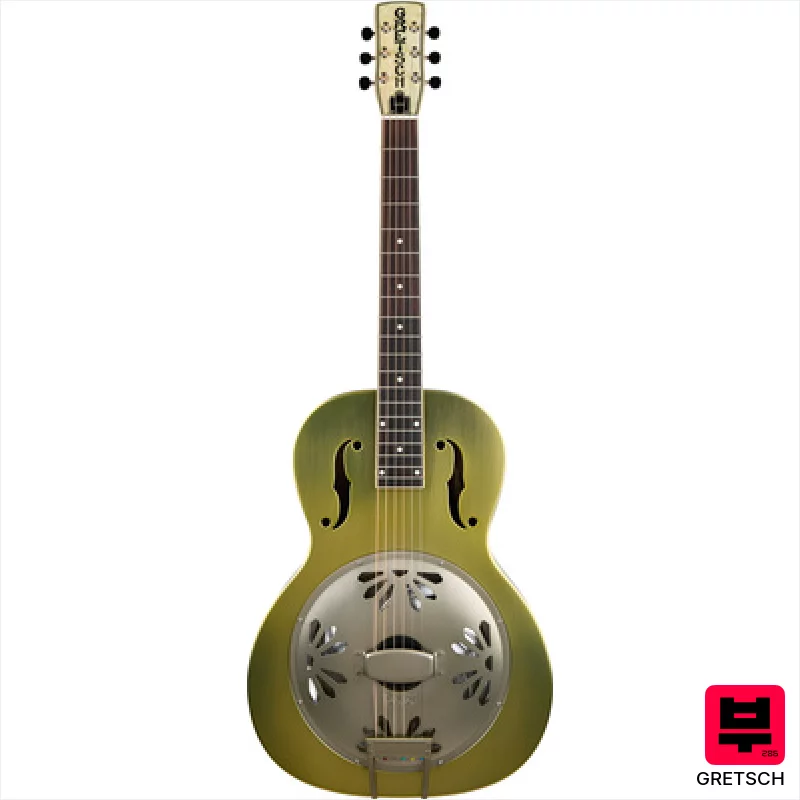
Gretsch G9202 Honey Dipper BELL BRNZ
- • Bell brass body delivers warm, complex, vintage-inspired tone.
- • Padauk fingerboard offers smooth playability and a unique feel.
- • Medium 'V' neck profile is comfortable for a variety of playing styles.
- • Grover Sta-Tite tuners ensure stable tuning and a classic aesthetic.
- • Bell brass can be prone to dents and finish wear with rough handling.
- • The shorter scale length limits versatility for some playing styles, especially lower tunings.
- • The aged pearloid inlays, while aesthetically pleasing, might not appeal to all players.
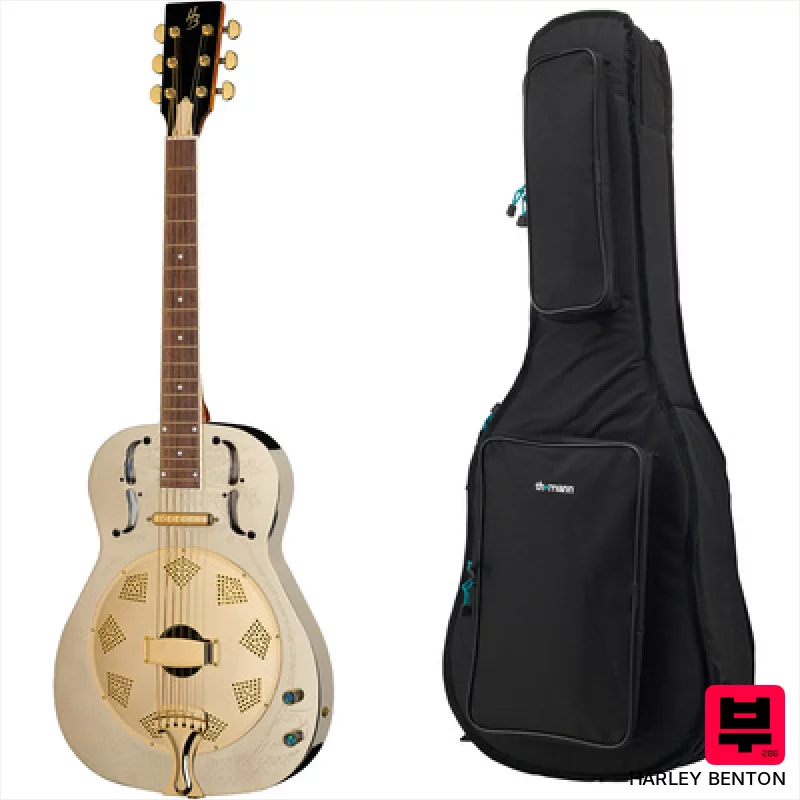
Harley Benton Custom Line CLR-ResoEl. w/Bag
- • Chrome body offers a striking, vintage aesthetic and unique sonic character.
- • Mahogany neck provides warmth and sustain, a comfortable playing feel.
- • Lipstick single coils deliver a raw, bluesy tone with plenty of bite.
- • Wenge fretboard adds snap and clarity to the overall sound projection.
- • Chrome body can be prone to fingerprints and superficial scratches.
- • Single cone design limits the complex, layered resonance of multi-cone resonators.
- • Neck profile might be too thin for players preferring a thicker feel.
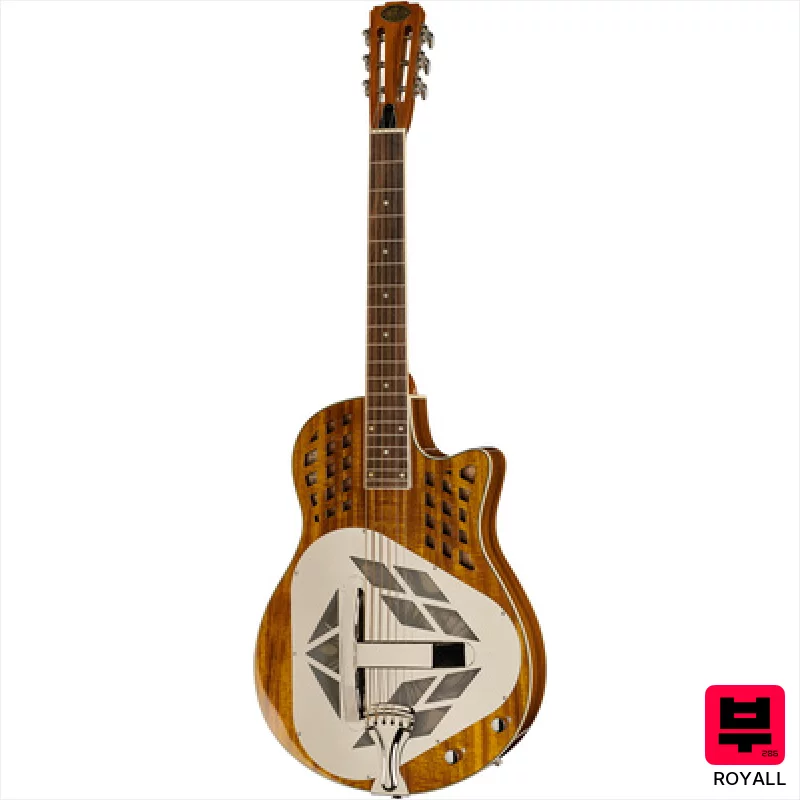
Royall KOA12US Resonator Guitar
- • Koa body delivers a warm, focused tone with excellent projection.
- • Tricone resonator design provides a complex, shimmering, and vintage-inspired voice.
- • Mahogany neck with dual truss rod ensures stability and comfortable playability.
- • Wilkinson tuners offer reliable tuning stability, crucial for resonator performance.
- • Koa construction makes it a premium-priced instrument, potentially limiting accessibility.
- • Undersaddle pickup can sound somewhat thin compared to a soundhole pickup.
- • The larger body size and resonator construction result in a heftier instrument.
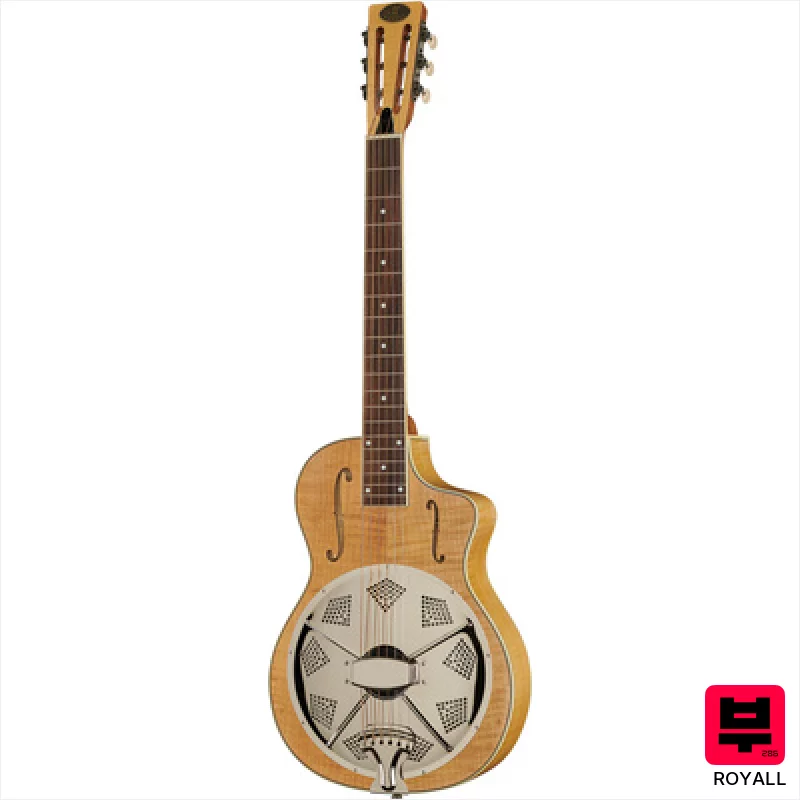
Royall BB14C/FL Bantam Blazer
- • Flamed maple body offers striking aesthetics and focused tone.
- • Mahogany neck provides comfortable feel and warmth.
- • Biscuit bridge enhances resonator projection and sustain.
- • Bone nut improves tuning stability and string response.
- • The shorter scale length may feel cramped for players with larger hands.
- • Aged hardware, while visually appealing, can be prone to oxidation.
- • Limited tonal versatility; primarily suited for bluegrass and resonator styles.
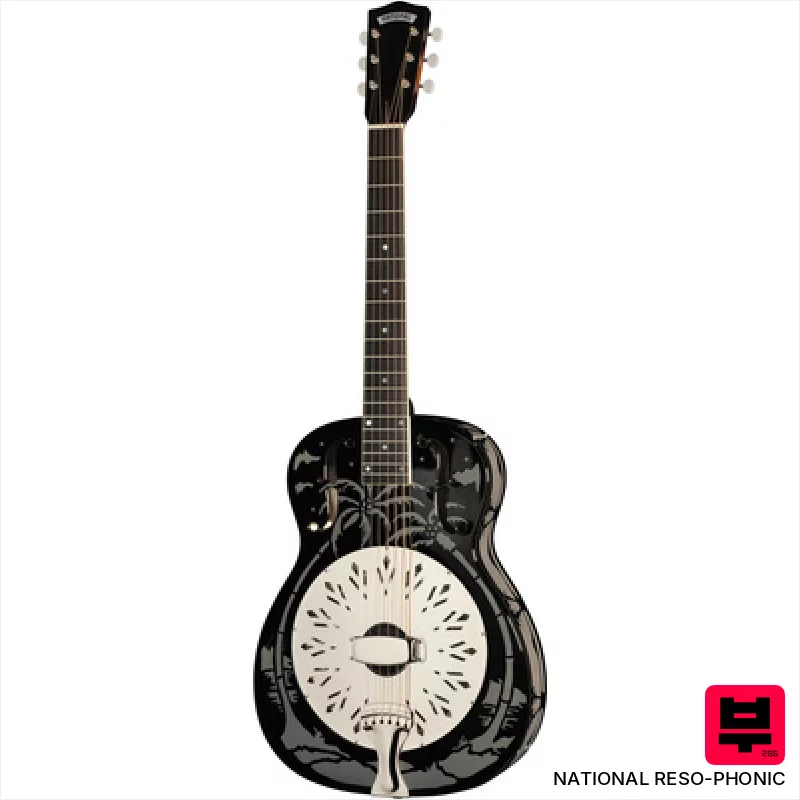
National Reso-Phonic Style O 14 Fret LH
- • Handmade 9.5” resonator delivers exceptional projection and vintage tone.
- • Ebony fingerboard and bone nut contribute to smooth playability and sustain.
- • 14-fret design enhances access to higher registers for complex playing.
- • Solid brass body provides robust construction and a warm, resonant character.
- • Premium-priced, representing a significant investment for many players.
- • The heavier weight (3.7kg) can be fatiguing during extended performances.
- • Limited versatility; primarily suited for bluegrass and roots music styles.

Gold Tone PBS
- • Paul Beard cone delivers exceptional volume and shimmering tone.
- • Mahogany construction provides a warm, resonant foundation.
- • Blackwood fretboard offers smooth playability and comfortable feel.
- • Die-cast tuners ensure precise and stable tuning, critical for open G.
- • The all-mahogany build can be a bit heavy for extended playing sessions.
- • Square neck limits versatility; primarily suited for bluegrass and open tunings.
- • High-gloss finish may be prone to fingerprints and requires careful maintenance.

Ortega RRG30E-WB
- • Mahogany body provides a warm, woody tone ideal for bluegrass and folk.
- • Lipstick single coil pickup delivers a surprisingly articulate and punchy amplified sound.
- • Slotted headstock and 43mm nut width cater specifically to bluegrass playing styles.
- • Blackwood fingerboard offers a smooth, comfortable playing experience and good sustain.
- • Distressed finish might not appeal to players seeking a pristine aesthetic.
- • Mahogany construction can be slightly heavier than instruments with different woods.
- • Passive pickup requires a good amp to truly shine and may lack versatility.
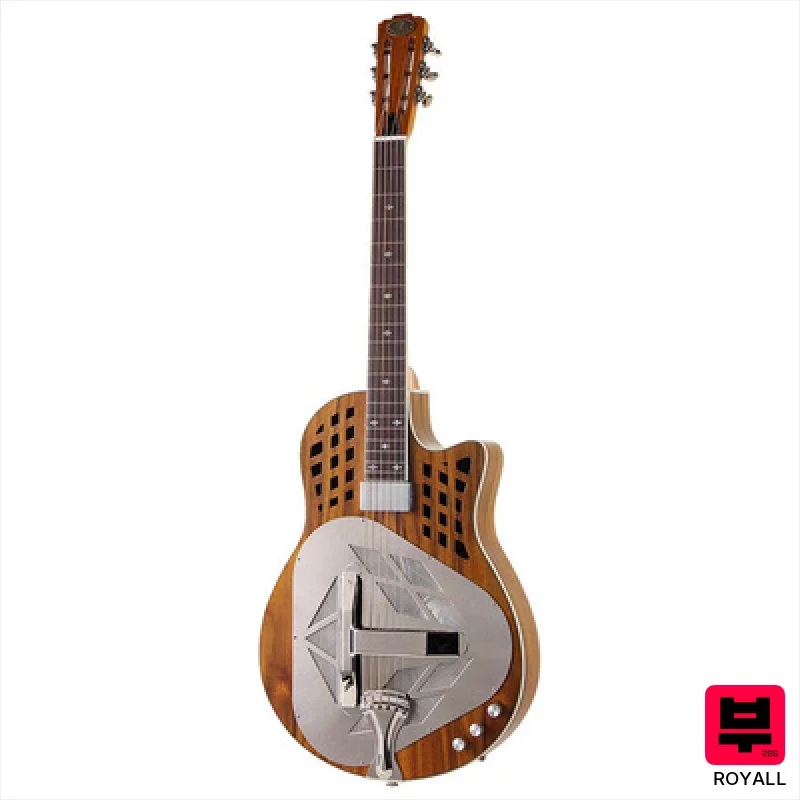
Royall KOA12DS
- • Hawaiian koa top delivers a warm, focused, and resonant tone.
- • Tricone design produces a uniquely bright and complex metallic shimmer.
- • Mahogany neck with matte finish offers exceptional playability and comfort.
- • Wilkinson vintage-style tuners ensure reliable tuning stability.
- • KOA12DS's heavier build might fatigue players during extended playing sessions.
- • Tricone resonance can be less versatile for genres outside bluegrass/country.
- • Undersaddle pickup may lack the nuance of a higher-end magnetic system.

Royall CH12/BRS Chess 12
- • Mahogany body delivers warm, resonant tones characteristic of bluegrass instruments
- • Tri-cone resonator setup provides powerful projection and distinctive metallic shimmer
- • Bone nut and 46mm nut width offer comfortable playability for fingerstyle and flatpicking
- • Vintage-style hardware and aged finish contribute to a classic, authentic aesthetic
- • Technical wood fretboard might not offer the same feel as rosewood or ebony
- • Limited versatility; primarily suited for bluegrass and resonator-centric styles
- • Heavier than a standard acoustic due to the resonator construction
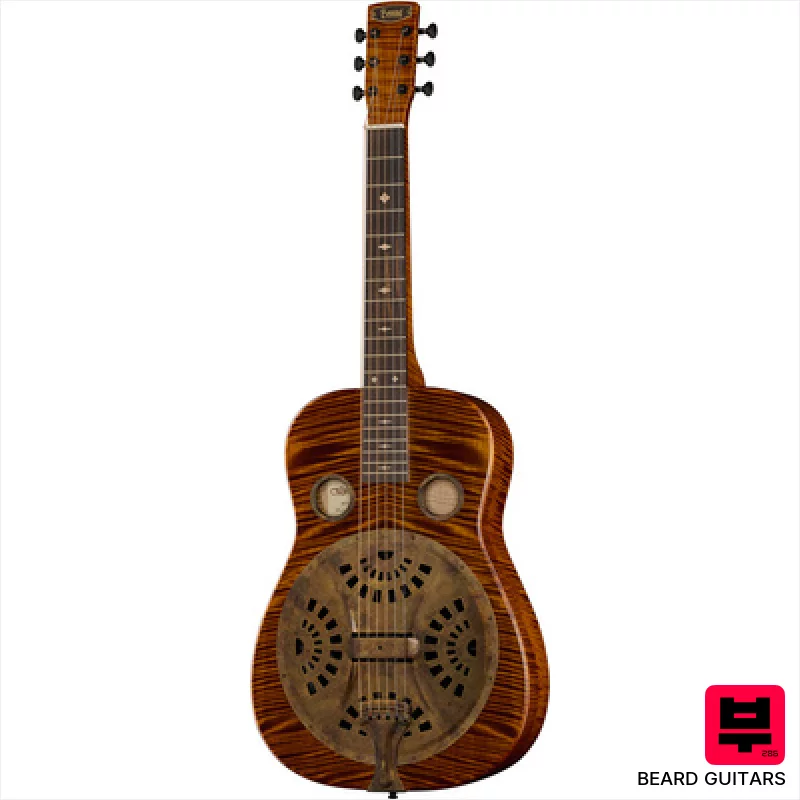
Beard Guitars Trailhead E-Model SN Tobacco
- • Solid flamed maple construction delivers exceptional clarity and projection.
- • Beard Vesper Spider cone provides a uniquely articulate and complex resonator tone.
- • Fishman Nashville Spider-style pickup captures the resonator's voice faithfully and powerfully.
- • Ebony fingerboard and Gotoh tuners offer precision and smooth playability.
- • Solid maple construction contributes to a notably heavier instrument overall.
- • Squareneck design inherently limits versatility outside of open-tuned resonator styles.
- • Premium-priced, making it a significant investment for many players.
How to Choose the Best Resonator Guitars
Tone/Resonance
Americana isn't about pristine cleans; it's about character. We're looking for resonators with a good low-end thump without being muddy, a fat midrange honk that can cut through, and a responsive high end that doesn't get ice-picky. A spider cone tends to be warmer and more complex than a biscuit bridge.
Construction (Cone Material & Body Wood)
The cone material - usually bronze, brass, or aluminum - drastically affects the tone. Mahogany bodies generally offer warmth and sustain, while maple can add clarity and bite. Knowing how these materials interact is key to getting the right sound.
Playability (Neck Profile & Action)
A comfortable neck is non-negotiable. Chunky vintage profiles can be a workout, while thinner profiles are easier to navigate for faster playing. Action, especially for slide, needs to be low enough to be playable without excessive fret buzz. Higher action can make slide sound choked and unresponsive.
Versatility (Pickup Options & Controls)
While a purely acoustic resonator is great for recording, a pickup opens up options for gigging and amplifying. Look for pickups that don't overly emphasize the high-end and offer a natural, warm response. Some models offer tone controls, which can be a lifesaver when dealing with less-than-ideal PA systems.
Build Quality & Hardware
Cheap resonators often cut corners on hardware - the tuners might be sloppy, the finish might be thin, and the resonator itself might feel flimsy. These things affect sustain, tuning stability, and overall durability. Solid hardware is worth the investment.
Buying Guide
Don't chase the 'loudest' resonator; chase the one that speaks to your ear. Entry-level resonators can be a good starting point, but be prepared for compromises in build quality and tone. Spending a bit more on a model with a solid wood body and quality hardware will pay dividends in the long run - especially if you plan on gigging regularly. Consider the cone type and body wood carefully - those choices will define your core tone more than any pickup.
Our Methodology
We don't just look at spec sheets here. We've spent countless hours playing these resonators - in rehearsal rooms, on dimly lit stages, and tracking in studios. Our evaluations are based on how they feel in your hands, how they respond to your playing dynamics, and most importantly, how they cut through a mix with other Americana instruments like mandolins, banjos, and upright bass.

