
Best Resonator Guitars for Blues 2026
Alright, so you're looking to inject some grit and soul into your blues playing with a resonator? Smart move. They're not just for bluegrass anymore - a good reso can deliver that raw, throaty voice you need, whether you're chasing Son House's ghost or laying down a slide lick in a smoky bar. But not all resonators are created equal; let's find the right one for your blues needs.
Last updated: October 8, 2026
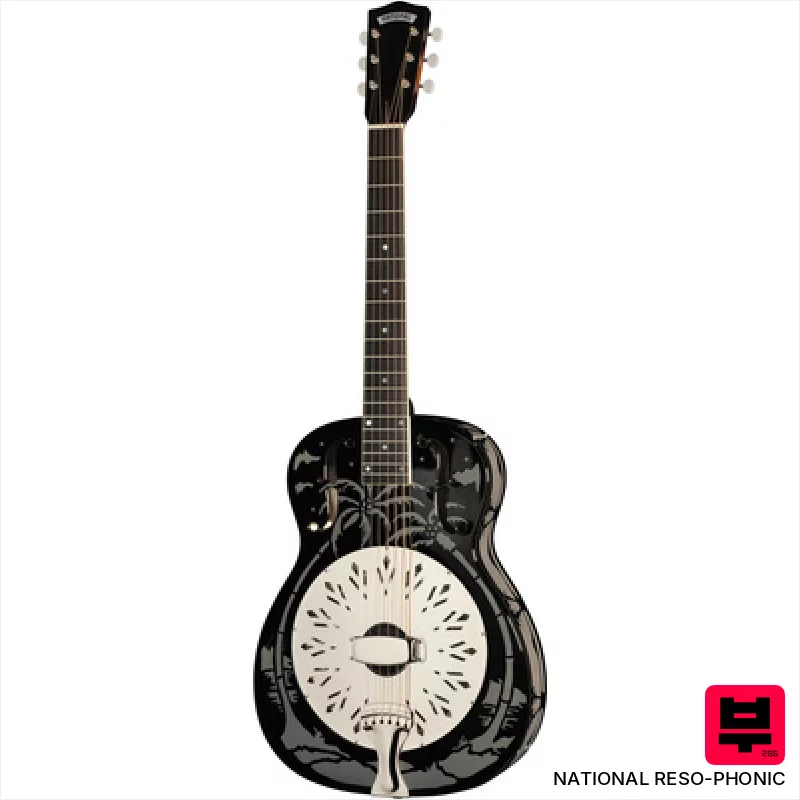
National Reso-Phonic Style O 14 Fret LH
- • Handmade 9.5” resonator delivers exceptional projection and vintage tone.
- • Ebony fingerboard and bone nut contribute to smooth playability and sustain.
- • 14-fret design enhances access to higher registers for complex playing.
- • Solid brass body provides robust construction and a warm, resonant character.
- • Premium-priced, representing a significant investment for many players.
- • The heavier weight (3.7kg) can be fatiguing during extended performances.
- • Limited versatility; primarily suited for bluegrass and roots music styles.

Beard Guitars Road-O-Phonic HSDS TS
- • Handspun aluminum cone delivers exceptional, resonant tone and sustain
- • Lollar pickups provide a versatile range of classic and modern sounds
- • Hipshot DoubleShot tuning system enables quick and easy tuning changes
- • Ebony fingerboard offers smooth playability and excellent note definition
- • The poplar body, while resonant, isn't as premium-feeling as mahogany or maple
- • Squareneck design limits playing style to primarily open-tuned lap steel
- • High-end price point puts it out of reach for many players
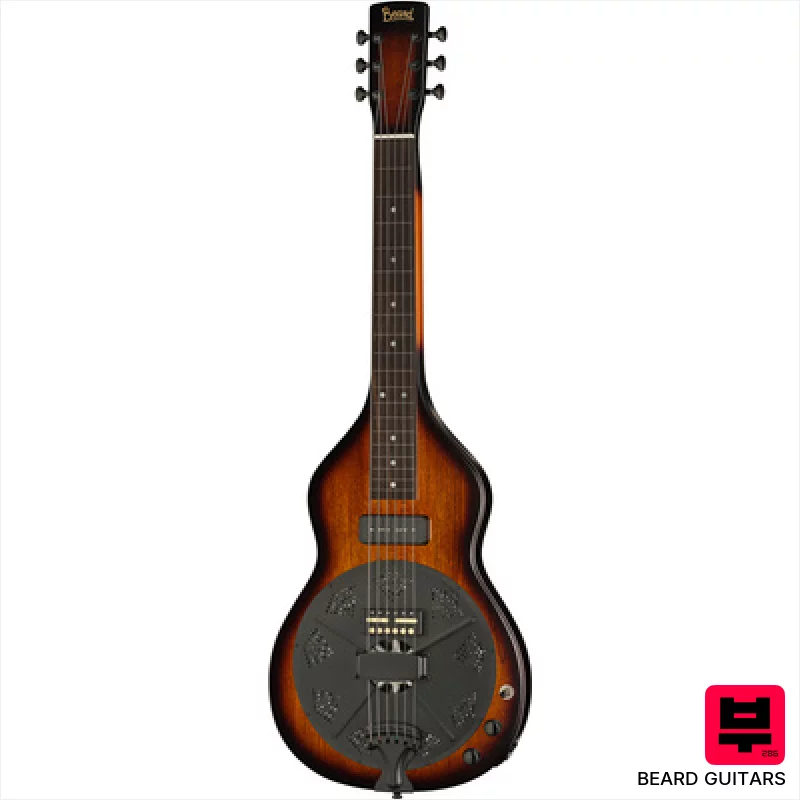
Beard Guitars Road-O-Phonic TS
- • Handspun aluminum cone delivers a uniquely powerful, resonant, and complex tone.
- • Lollar pickups provide versatile tonal options, from gritty blues to sparkling clarity.
- • Ebony fingerboard offers exceptional playability and a smooth, articulate feel.
- • Fishman Power Chip preamp ensures a clean, amplified signal with adjustable EQ.
- • Squareneck design inherently limits versatility to open-tuned playing styles.
- • Poplar body, while resonant, isn't as tonally complex as more premium woods.
- • Premium-priced, making it a significant investment for most players.
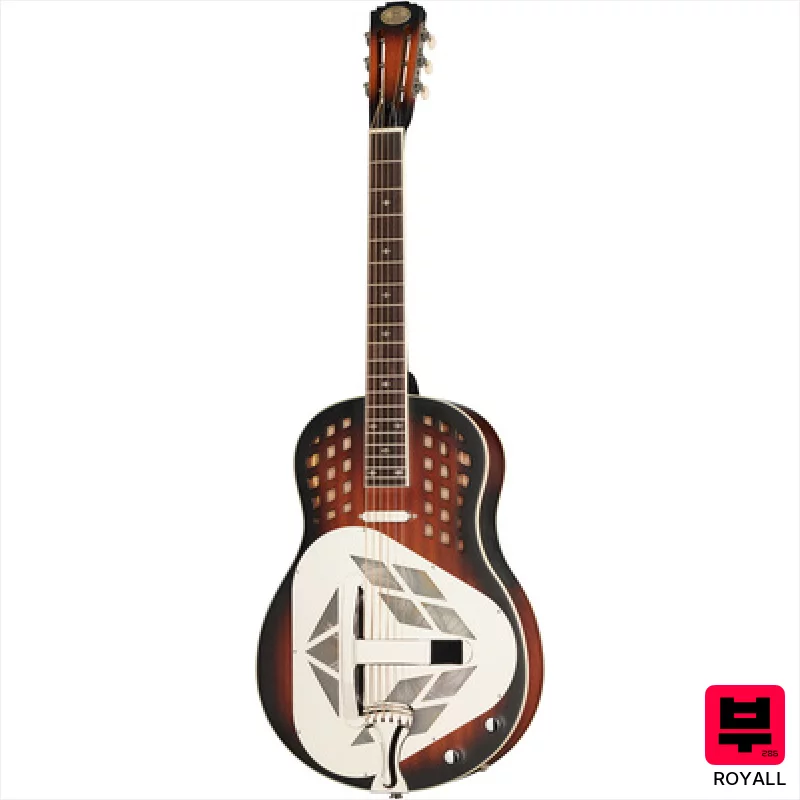
Royall DLT12SC/DSB DELTA
- • Handmade cones deliver exceptional, complex resonator tone.
- • Mahogany body provides warmth and projection, surprisingly balanced.
- • Lipstick pickup captures a gritty, vintage-voiced character.
- • Solid build quality; ivoroid binding and bone nut indicate attention to detail.
- • The 648mm scale might feel long for players accustomed to shorter scales.
- • Tri-cone resonators can be sensitive to playing style, requiring adjustment.
- • While versatile, it's primarily geared towards bluegrass and roots music.
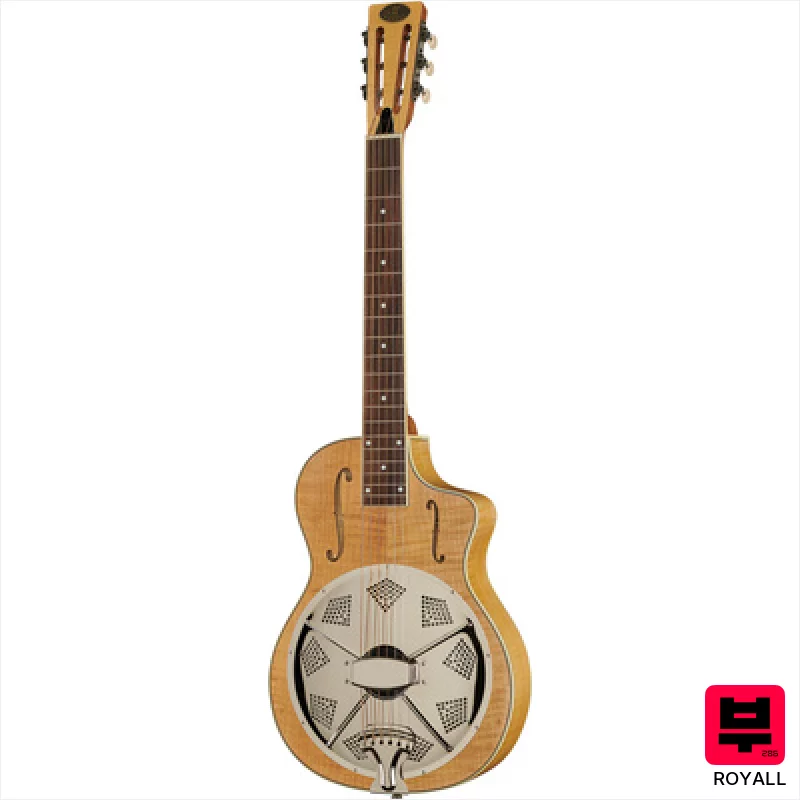
Royall BB14C/FL Bantam Blazer
- • Flamed maple body offers striking aesthetics and focused tone.
- • Mahogany neck provides comfortable feel and warmth.
- • Biscuit bridge enhances resonator projection and sustain.
- • Bone nut improves tuning stability and string response.
- • The shorter scale length may feel cramped for players with larger hands.
- • Aged hardware, while visually appealing, can be prone to oxidation.
- • Limited tonal versatility; primarily suited for bluegrass and resonator styles.
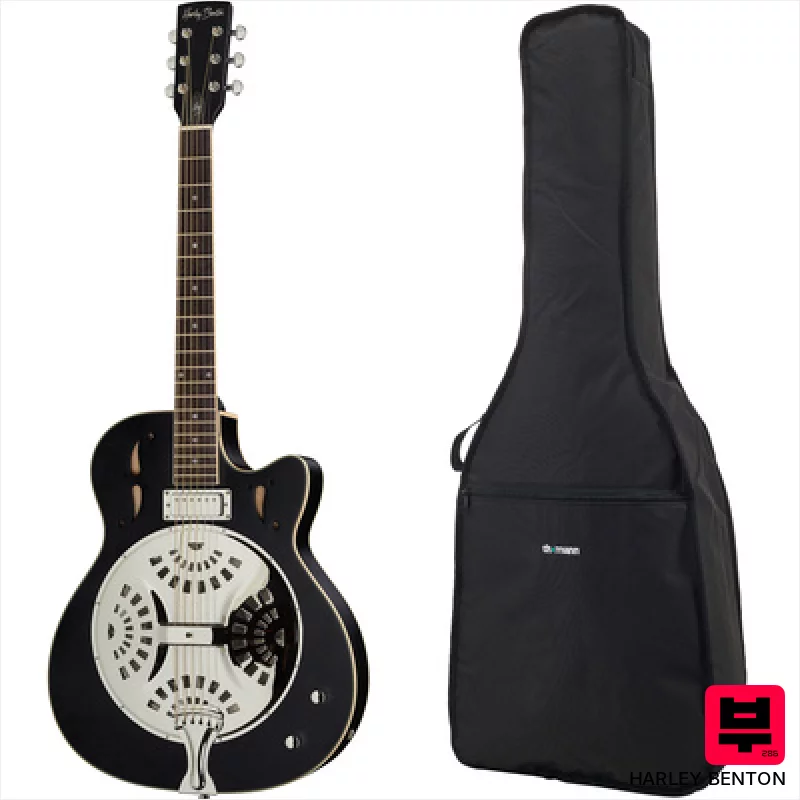
Harley Benton Custom Line N-150CE BK w/Bag
- • Sapele body delivers a warm, resonant tone with surprising projection.
- • Rising P3004 mini-humbucker provides a versatile, articulate amplified sound.
- • Purple Heart/Maple bridge contributes to a focused and controlled resonance.
- • Okoume neck offers a comfortable playing feel with a traditional 'U' profile.
- • ABS binding, while functional, feels less refined than traditional materials.
- • Shorter scale length (635mm) might feel cramped for players with larger hands.
- • Factory strings are decent, but a quality upgrade will noticeably enhance tone.
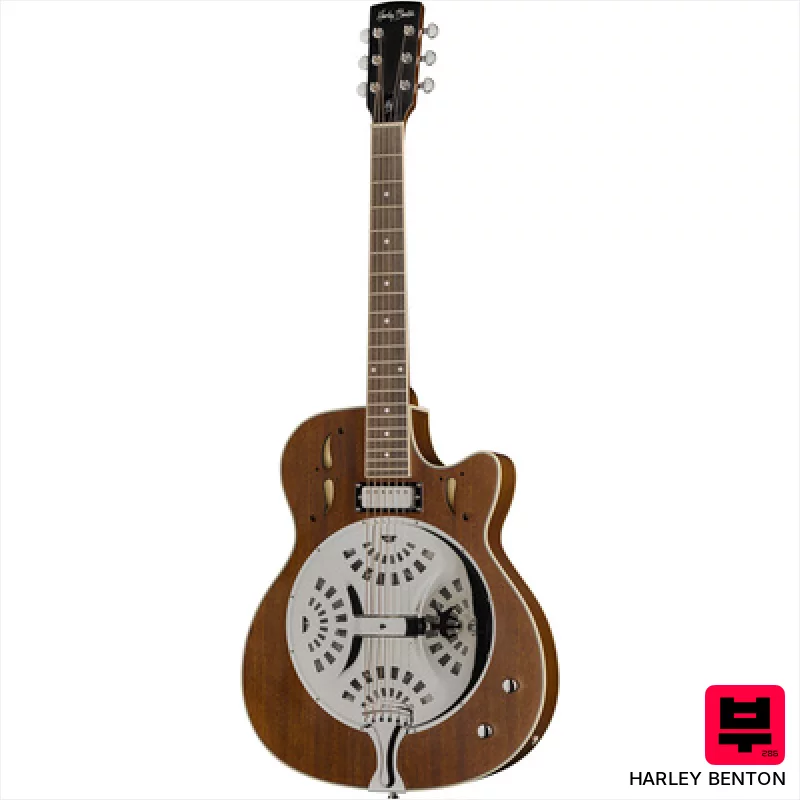
Harley Benton Custom Line N-150CE Natural
- • Sapele body provides a warm, resonant tone with surprising projection.
- • Rising P3004 mini-humbucker delivers a surprisingly articulate and punchy amplified voice.
- • Purple Heart fingerboard offers a smooth, fast playing experience with a unique feel.
- • Well-executed binding and bone nut elevate the instrument beyond its price point.
- • ABS binding and inlays, while functional, lack the premium feel of wood.
- • Okoume neck, while playable, may exhibit slight movement with humidity changes.
- • Mini-jumbo body size could be unwieldy for smaller players or travel.
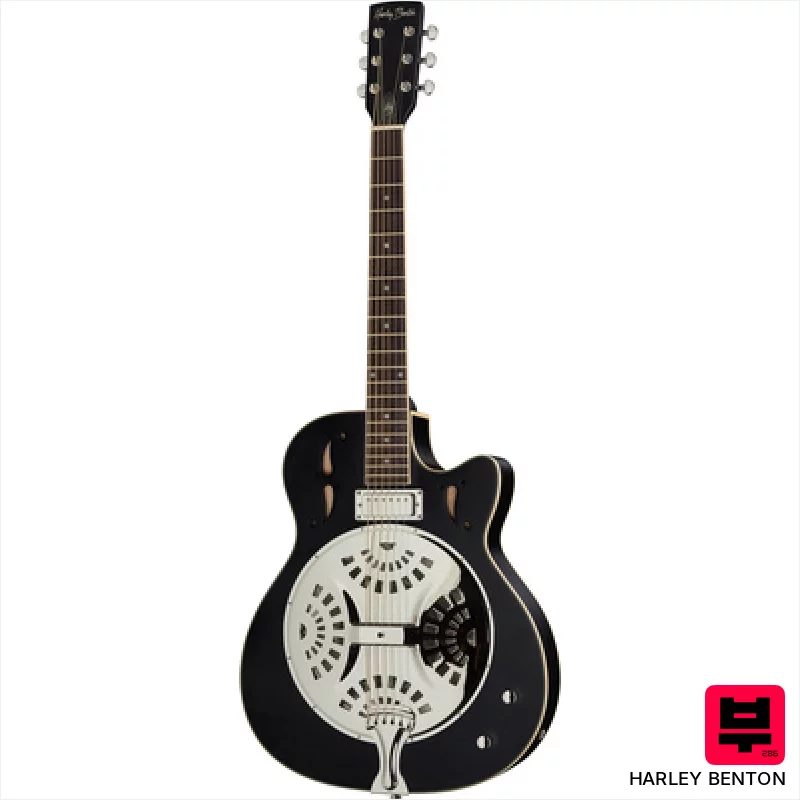
Harley Benton Custom Line N-150CE Black
- • Sapele body offers a surprisingly warm and resonant tone.
- • Rising P3004 mini-humbucker delivers a focused, articulate amplified sound.
- • Purple Heart/Maple bridge provides good sustain and stability.
- • Okoume neck feels comfortable with a familiar U profile.
- • ABS binding and inlays feel a bit cheap compared to higher-end resonators.
- • Satin black finish can show fingerprints and smudges easily.
- • While versatile, it's primarily geared toward bluegrass and roots music.
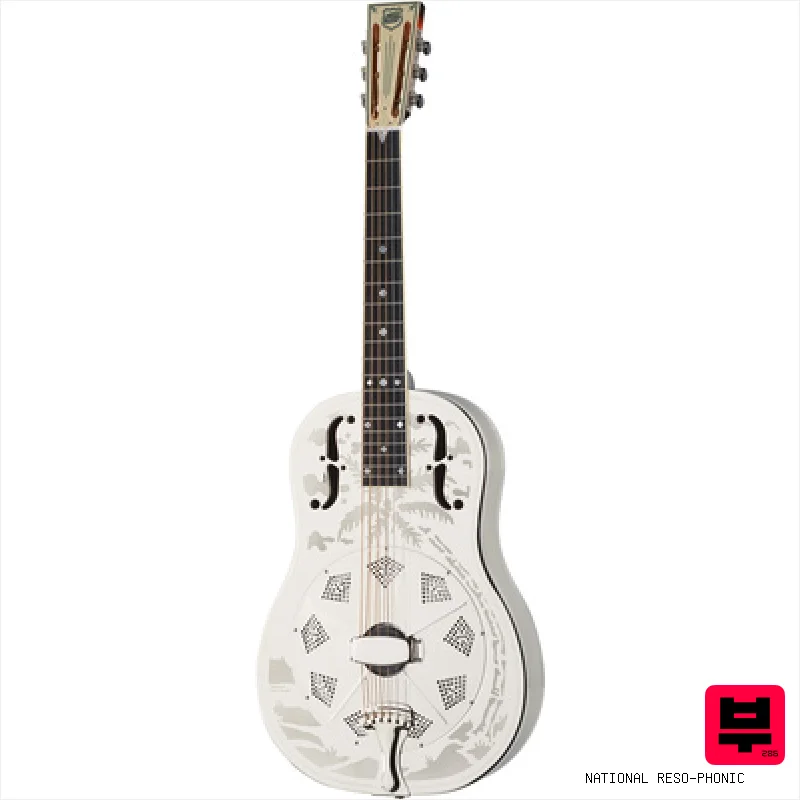
National Reso-Phonic Style O Deluxe
- • Handmade 9.5-inch resonator delivers deep vintage tone.
- • Ebony fretboard provides smooth, fast playing feel.
- • Ivoroid binding and headstock add classic durability.
- • Solid brass body construction ensures rich sustain.
- • No pickups listed means no electric amplification options.
- • 4 kg weight may feel heavy for small players.
- • Scale length is 635 mm, which is shorter than standard.
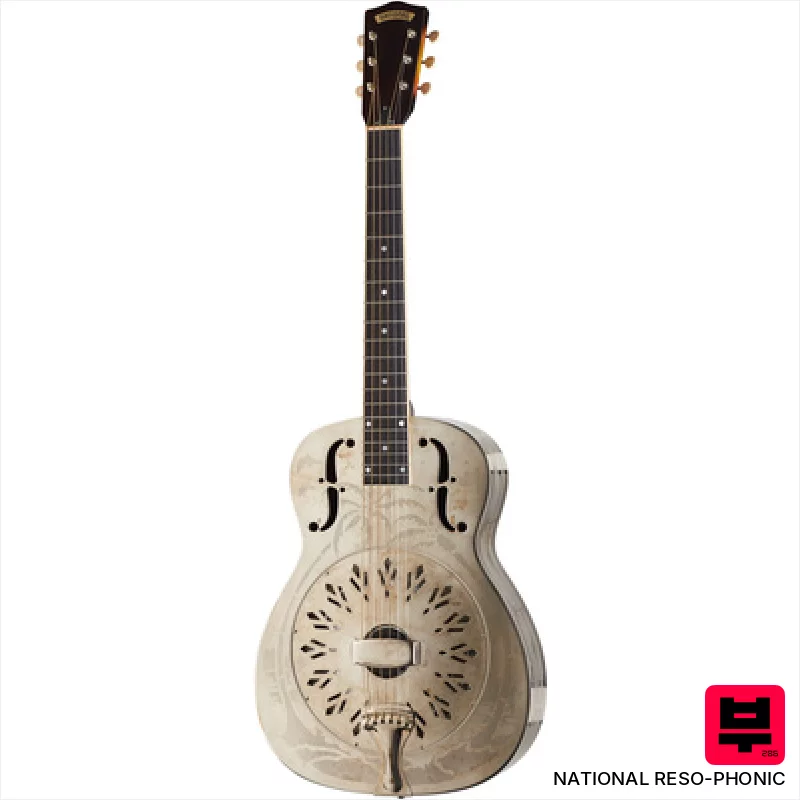
National Reso-Phonic Style O Replicon 14fret
- • Nickel-plated brass body delivers a warm, complex vintage tone.
- • 14-fret design enhances upper register access and projection.
- • Handmade 9.5in resonator offers exceptional responsiveness and volume.
- • Bolted maple neck provides stability and a comfortable, familiar feel.
- • Premium-priced, representing a significant investment for most players.
- • Aged finish may not appeal to those seeking a pristine aesthetic.
- • Relatively heavy at approximately 4.08 kg, can be fatiguing over long sessions.

National Reso-Phonic Style O
- • Nickel-plated brass body delivers a rich, complex vintage tone.
- • Ebony fretboard and W.106 fret wire offer exceptional playability and clarity.
- • Maple biscuit bridge provides excellent sustain and focused projection.
- • Handmade resonator ensures meticulous craftsmanship and superior resonance.
- • Premium-priced, making it a significant investment for many players.
- • Relatively heavy at 4.0 kg, which can be tiring during extended playing.
- • Limited versatility; excels in bluegrass and roots music, less suited for other genres.

National Reso-Phonic Style O 14 Fret
- • Nickel-brass body delivers warm, complex resonator tones.
- • 14-fret design enhances upper register access and feel.
- • Ebony fretboard and bone nut provide smooth playability and clarity.
- • Handmade resonator ensures exceptional responsiveness and projection.
- • Premium-priced, representing a significant investment for most players.
- • Relatively heavy, requiring some acclimation for extended playing.
- • Limited tonal versatility compared to more modern hybrid instruments.
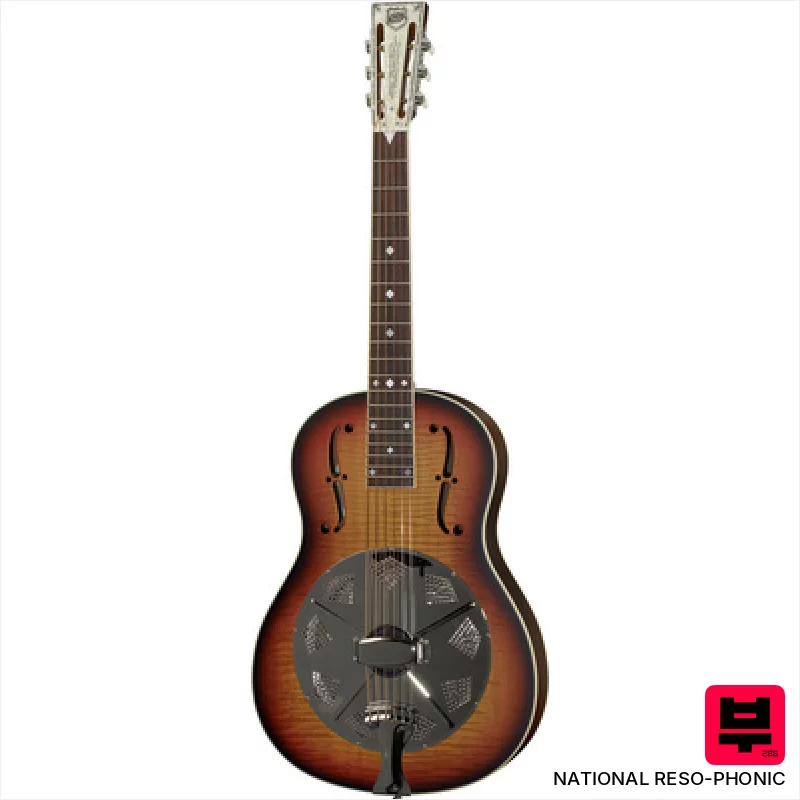
National Reso-Phonic Estralita Deluxe
- • Maple top delivers focused, articulate tone with excellent projection
- • Handmade 9.5 in resonator provides rich, complex harmonic overtones
- • Walnut construction offers warmth and sustain, a refined aesthetic
- • Ebony fingerboard and W.106 fret wire ensure smooth, effortless playability
- • Premium-priced, representing a significant investment for most players
- • Limited versatility; excels in bluegrass but less suited for other genres
- • Relatively heavy at 3.7 kg, which can be fatiguing for extended playing

Beard Guitars E-Model SN ASB
- • Solid flamed maple construction delivers exceptional resonance and clarity.
- • Fishman Nashville Spider pickup provides articulate, powerful amplified tone.
- • Ebony fingerboard and bone nut enhance playability and sustain.
- • Beard’s open body design maximizes projection and responsiveness for bluegrass.
- • Premium-priced, placing it beyond the reach of many players.
- • Relatively heavy due to solid maple construction; may fatigue some players.
- • Squareneck design limits versatility; primarily suited for open-tuned bluegrass.
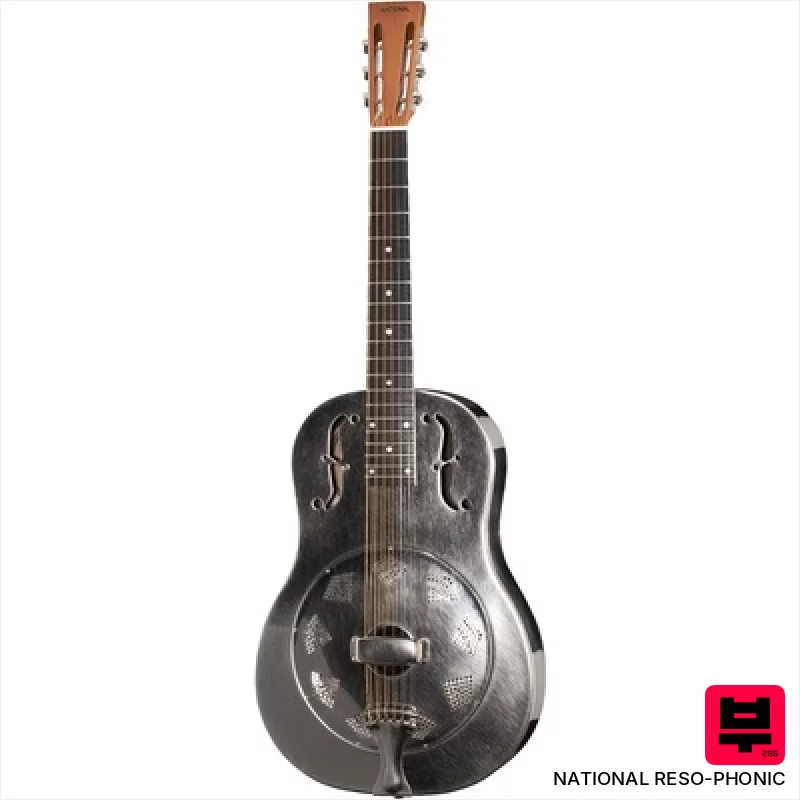
National Reso-Phonic NRP Rubbed Steel 12 Fret
- • Exceptional projection and sustain from the 9.5 inch single cone.
- • The mahogany neck provides a comfortable, responsive playing feel.
- • Ebony fingerboard offers precise intonation and smooth action.
- • Rubbed steel finish delivers a unique vintage aesthetic and tactile feel.
- • The steel body construction makes it noticeably heavier than most guitars.
- • Limited tonal versatility compared to more complex resonator designs.
- • The 12-fret design requires a slightly different playing technique.
Every resonator guitars that matches
64 models match this page. The 15 above are covered in detail; the rest are listed here with their published specifications.
| # | Model | Specifications | Price |
|---|---|---|---|
| 16 | National Reso-Phonic Raw Steel SingCone 14 Fr. LH | Nut width 46.2 mm (1.82") · Scale 635 mm (25") · Frets 19 frets · Fingerboard Ebony fingerboard | $3,798 |
| 17 | Royall KOA12DS | Nut width 46 mm (1.81") · Scale 648 mm (25.51") · Frets 19 frets · Fingerboard Rosewood fingerboard | $1,273 |
| 18 | Royall KOA12SC Resonator Guitar | Nut width 46 mm (1.81") · Scale 648 mm (25.51") · Frets 12 frets · Fingerboard Rosewood fingerboard | $1,117 |
| 19 | Royall TMP12/NI Tampa | Nut width 46 mm (1.81") · Scale 640 mm (25.2") · Frets 19 frets · Fingerboard Rosewood fingerboard | $1,061 |
| 20 | Ortega RRG50CE-SSB | Nut width 43 mm (1.69") · Scale 628 mm (24.72") · Frets 20 frets · Fingerboard Ebony fingerboard | $871 |
| 21 | Royall HB12/SB Hobo | Nut width 46 mm (1.81") · Scale 648 mm (25.51") · Frets 19 frets · Body Mahogany body | $837 |
| 22 | Gretsch G9240 Alligator Biscuit Bundle | Nut width 44.5 mm (1.75") · Scale 635 mm (25") · Frets 19 frets · Body Mahogany body | $794 |
| 23 | Gretsch G9240 Alligator Biscuit | Nut width 44.5 mm (1.75") · Scale 635 mm (25") · Frets 19 frets · Body Mahogany body | $636 |
| 24 | Recording King RR-41E-VS ResonatorRattlesnake | Nut width 44.5 mm (1.75") · Scale 635 mm (25") · Frets 19 frets · Body Mahogany body | $591 |
| 25 | Recording King RPH-R2-E-BRB Dirty 30´s Minnie | Nut width 43 mm (1.69") · Scale 645 mm (25.39") · Frets 20 frets · Neck profile C-shape neck | $412 |
| 26 | Recording King RPH-R2-E-MBK Dirty 30´s Minnie | Nut width 43 mm (1.69") · Scale 645 mm (25.39") · Frets 20 frets · Neck profile C-shape neck | $334 |
| 27 | Royall HB12SC/SB HOBO | Nut width 46 mm (1.81") · Frets 19 frets · Body Mahogany body · Fingerboard Ebony fingerboard | $938 |
| 28 | National Reso-Phonic NRP Rubbed Steel 14 Fret | Nut width 46.2 mm (1.82") · Scale 635 mm (25") · Frets 19 frets | $4,470 |
| 29 | National Reso-Phonic Raw Steel Single Cone 14 Fret | Nut width 46.2 mm (1.82") · Scale 635 mm (25") · Frets 19 frets | $3,799 |
| 30 | National Reso-Phonic Raw Steel Single Cone 12 Fret | Nut width 46.2 mm (1.82") · Scale 635 mm (25") · Frets 19 frets | $3,798 |
| 31 | Royall WE14NI West End | Nut width 46 mm (1.81") · Scale 648 mm (25.51") · Frets 19 frets | $1,228 |
| 32 | Gretsch G9221 Bobtail Steel RN AE | Nut width 44.5 mm (1.75") · Scale 635 mm (25") · Frets 19 frets | $1,117 |
| 33 | Ortega RRG60E | Nut width 43 mm (1.69") · Scale 628 mm (24.72") · Frets 20 frets | $994 |
| 34 | Royall PB12/ANI Pony Boy | Nut width 46 mm (1.81") · Scale 640 mm (25.2") · Frets 19 frets | $893 |
| 35 | Recording King RM-997-VG Resonator | Nut width 44.5 mm (1.75") · Scale 632 mm (24.88") · Frets 19 frets | $731 |
| 36 | Recording King RM-998-D | Nut width 43 mm (1.69") · Scale 632 mm (24.88") · Frets 19 frets | $620 |
| 37 | Ortega RRG40CE-DBK-L | Nut width 43 mm (1.69") · Scale 628 mm (24.72") · Frets 19 frets | $496 |
| 38 | Ortega RRG40CE-DBK | Nut width 43 mm (1.69") · Scale 648 mm (25.51") · Frets 20 frets | $494 |
| 39 | Ortega RRG30E-WB | Nut width 43 mm (1.69") · Scale 628 mm (24.72") · Frets 19 frets | $459 |
| 40 | Recording King RPH-R2-MBK Dirty 30s Resonator | Nut width 43 mm (1.69") · Scale 645 mm (25.39") · Frets 20 frets | $323 |
| 41 | Beard Guitars Trailhead E-Model CE Tobacco | Scale 635 mm (25") · Frets 19 frets · Fingerboard Ebony fingerboard | $5,586 |
| 42 | Royall TMP12SC/MB Tampa SC Bk | Nut width 48 mm (1.89") · Scale 650 mm (25.59") · Fingerboard Rosewood fingerboard | $1,284 |
| 43 | Recording King RM-994E-AC Cutaway | Nut width 46 mm (1.81") · Scale 648 mm (25.51") · Fingerboard Rosewood fingerboard | $1,117 |
| 44 | Recording King RM-994E-PN Cutaway | Nut width 46 mm (1.81") · Scale 648 mm (25.51") · Fingerboard Rosewood fingerboard | $1,117 |
| 45 | Royall KOA12US Resonator Guitar | Nut width 46 mm (1.81") · Scale 648 mm (25.51") · Fingerboard Rosewood fingerboard | $1,117 |
| 46 | Recording King RM-999E-AB | Nut width 46 mm (1.81") · Scale 648 mm (25.51") · Fingerboard Rosewood fingerboard | $1,061 |
| 47 | Recording King RM-960E-AS | Nut width 46 mm (1.81") · Scale 648 mm (25.51") · Fingerboard Rosewood fingerboard | $1,005 |
| 48 | Recording King RM-995E-BN | Nut width 46 mm (1.81") · Scale 648 mm (25.51") · Fingerboard Rosewood fingerboard | $1,005 |
| 49 | Recording King RM-996SE-PN Sandblasted | Nut width 46 mm (1.81") · Scale 648 mm (25.51") · Fingerboard Rosewood fingerboard | $1,005 |
| 50 | Recording King RM-999E-RN | Nut width 46 mm (1.81") · Scale 648 mm (25.51") · Fingerboard Rosewood fingerboard | $1,005 |
| 51 | Royall CH12/BRS Chess 12 | Nut width 46 mm (1.81") · Scale 648 mm (25.51") · Body Mahogany body | $949 |
| 52 | Gretsch G9220 Bobtail Roundneck | Scale 635 mm (25") · Frets 19 frets · Body Mahogany body | $860 |
| 53 | Royall DLT12/DSB Delta | Nut width 46 mm (1.81") · Scale 648 mm (25.51") · Body Mahogany body | $815 |
| 54 | Harley Benton Delta Blues Resonator w/Bag | Nut width 48.5 mm (1.91") · Scale 628 mm (24.72") · Body Sapele body | $345 |
| 55 | Harley Benton Delta Blues Resonator | Nut width 48.5 mm (1.91") · Scale 628 mm (24.72") · Body Sapele body | $334 |
| 56 | Gretsch G9201 Honey Dipper Bundle | Scale 635 mm (25") · Frets 19 frets | $1,134 |
| 57 | Gretsch G9201 Honey Dipper | Scale 635 mm (25") · Frets 19 frets | $982 |
| 58 | Beard Guitars Trailhead E-Model SN Tobacco | Scale 635 mm (25") · Fingerboard Ebony fingerboard | $5,811 |
| 59 | Recording King RR-36S-VS Squarneck | Scale 648 mm (25.51") · Body Mahogany body | $441 |
| 60 | Gold Tone PBS | Scale 635 mm (25") | $1,564 |
| 61 | Gretsch G9230 Bobtail Squareneck | Scale 635 mm (25") | $893 |
| 62 | Dobro Hound Dog M-14 | Scale 628 mm (24.72") | $871 |
| 63 | Dobro Hound Dog Round Neck | Nut width 44.5 mm (1.75") | $491 |
| 64 | Recording King RR-36 Roundneck | Scale 648 mm (25.51") | $390 |
Resonator Guitars by the numbers
Measured across all 64 models in this category, so «wide», «short» or «expensive» mean something you can check.
How to Choose the Best Resonator Guitars
Tone
Blues resonators need that characteristic 'growl' - a focused midrange with a touch of rasp, not just a sparkly, clean tone. Think about the difference between a vintage National and a modern Dobro; the Nationals generally have more of that sought-after grit. We're looking for something that cuts through a mix without getting muddy.
Scale Length
Shorter scale lengths (typically 24.9" or less) are common on resonator guitars and often lend themselves to easier bending and a warmer, more immediate feel, crucial for blues slide playing. Longer scales offer a bit more clarity and sustain, but can be a bit harder to wrangle with a slide.
Body Type (Biscuit vs. Cone vs. Spider Bridge)
Biscuit bridges tend to be more resonant and have a more raw, open tone. Cone bridges often offer a tighter, more focused sound. Spider bridges are a compromise, but can be very versatile. Your choice here will drastically affect the instrument's voice.
Bracing
Modern bracing patterns are generally stiffer than vintage designs. Stiffer bracing provides more projection and headroom, which is vital when playing with a full band. However, it can sometimes reduce the overall resonance and 'liveliness' of the instrument.
Playability (Neck Profile & Action)
A comfortable neck is non-negotiable. Blues playing demands fluidity, and a thick, unwieldy neck will just get in the way. Action needs to be low enough for easy bending, but not so low that you get fret buzz - a tricky balance.
Buying Guide
Don't get lured in by the price tag alone. Cheaper resonators often cut corners on bracing and hardware, resulting in a weaker, less resonant sound. A solid wood body (even if it's mahogany) is preferable to laminate for better tone and sustain. Spending a bit more for a decent pickup system is also a smart move if you plan on recording or playing through an amp.
How This List Is Built
We don't play these instruments — we're a catalog, not a review desk, and we'd rather say so than pretend otherwise. This page covers 64 resonator guitars from the Thomann catalogue, which is the largest single source of specification data in this category: 15 in detail, the rest listed with their specifications.
Position is computed, not curated. We parse the manufacturer's own description into actual values — nut width, scale, fret count, fingerboard radius, size, alloy — and rank on them: how many specifications a model has published, how many of them are measurable numbers, and how precisely it meets this page's criterion. A product image adds a little. Price is not a ranking signal: it tells you nothing about whether a neck fits your hand. The same inputs always produce the same order, so nothing here is shuffled to look fresh.
What this list is good for: narrowing a category down to a shortlist by spec and budget. What it isn't: a substitute for hearing an instrument. Before you buy, read hands-on reviews and, where you can, play it. Full methodology.

