
Best Other Classical Guitars for Intermediate 2026
So, you're past the absolute beginner classical guitar phase, fingers are developing some calluses, and you're starting to crave something more than that basic student instrument. That's awesome. Stepping up to a 'proper' classical guitar - one that isn't just a plywood box - unlocks a whole different level of responsiveness and tone. This list isn't about Stradivarius copies, but guitars that offer real improvement for the intermediate player, balancing price and performance.
Last updated: April 11, 2026

Cordoba Stage Guitar Natural Amber w/B
- • Solid maple top delivers a bright, articulate tone with clear projection.
- • Fishman pickup system provides a usable, amplified sound for stage performance.
- • Fusion neck profile offers a comfortable transition for steel-string players.
- • Mahogany chambered body reduces weight for improved playing comfort and resonance.
- • Maple top can sound slightly sterile without careful EQ adjustments during amplification.
- • Pau ferro fingerboard might feel a bit drier compared to ebony for some players.
- • Flamed maple veneer, while visually appealing, is purely cosmetic and doesn't affect tone significantly.

Cordoba Stage Guitar Edge Burst w/Bag
- • Solid maple top delivers a bright, articulate voice with excellent projection
- • Chambered mahogany body provides surprising resonance and comfortable ergonomics
- • Fishman pickup system offers a clean, amplified tone ideal for stage performance
- • Fusion neck profile and Pau Ferro fingerboard enhance playability and feel
- • Edge Burst finish, while attractive, can be prone to fingerprints and smudging
- • Mahogany body, while resonant, might lack the deep lows some prefer in a classical
- • Gig bag is functional but offers minimal protection compared to a hard case
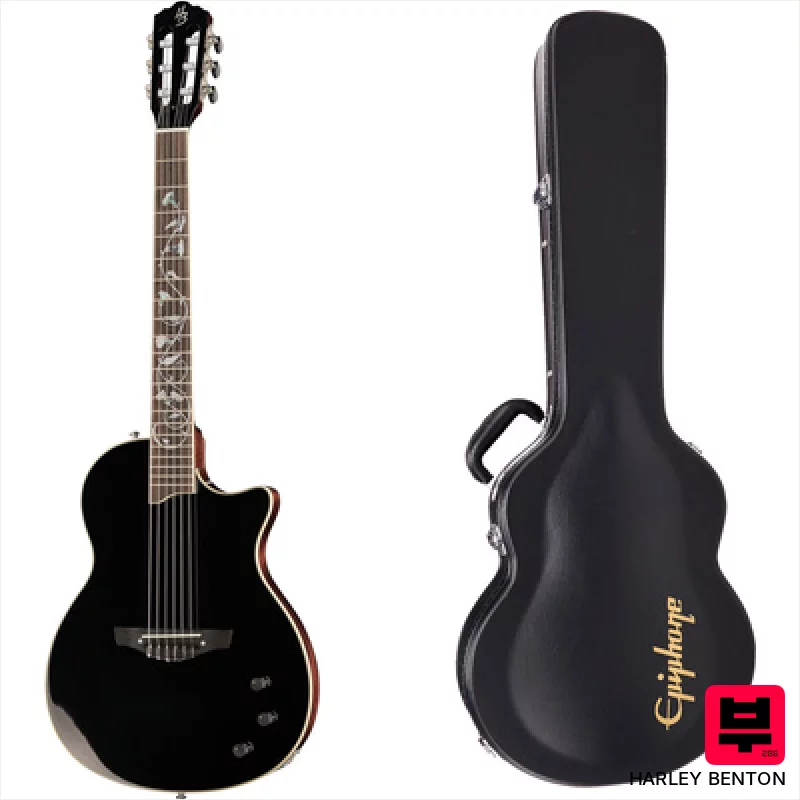
Harley Benton Nashville Nylon Plus BK w/Case
- • Solid Canadian spruce top delivers a surprisingly articulate and responsive tone
- • Fishman Sonicore/VTB system offers a usable amplified sound for stage or recording
- • Ovangkol fingerboard provides a smooth playing experience and warm tonal character
- • Comfort U neck profile and 46mm nut width cater to players transitioning from steel-string
- • Mahogany body chambering might reduce sustain compared to a solid body design
- • Savarez 500C strings are decent, but a worthwhile upgrade for nuanced tone
- • Ebony bridge, while functional, may not be as tonally resonant as higher-end options
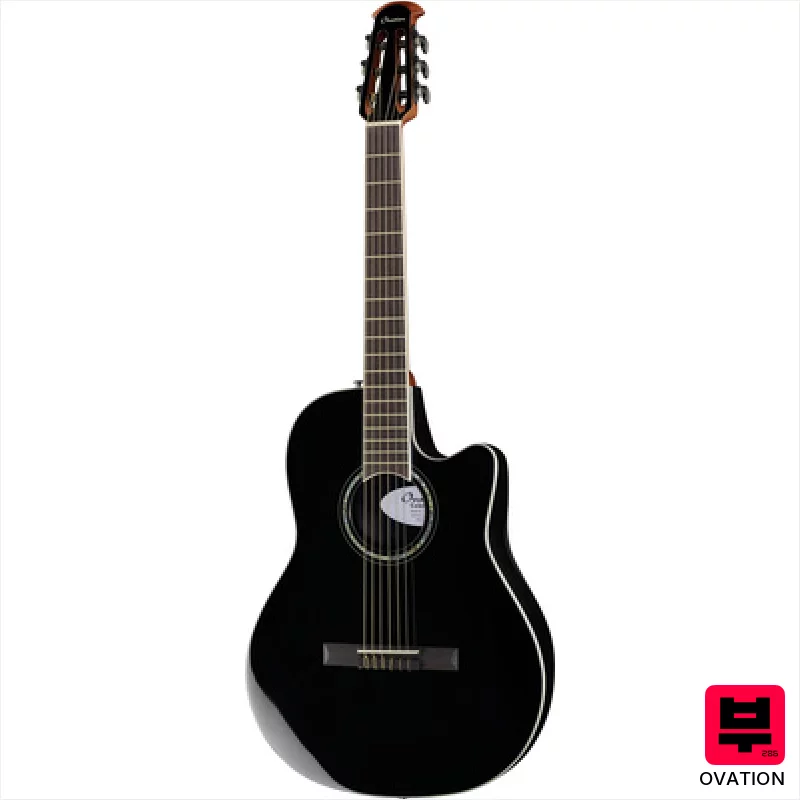
Ovation Celebrity Tradition CS24C-5-G
- • Solid cedar top delivers warm, responsive classical tone
- • Lyrachord body provides surprising acoustic projection and resonance
- • CT-600A pickup system offers clean amplified sound with tuner
- • Rounded C neck profile enhances playability, especially for transitioning players
- • Lyrachord body, while resonant, lacks the traditional wood complexity of all-wood builds
- • Ovangkol fingerboard can feel slightly harder than rosewood for extended playing
- • Cutaway compromises some upper body resonance and aesthetic appeal

Thomann Classica Fusion 8 Strin Bundle
- • Solid Engelmann spruce top delivers a surprisingly rich, responsive tone for the price.
- • Sapele back and sides provide warmth and projection, a good foundation for development.
- • Acacia neck offers stability and a comfortable feel, common in higher-end classical guitars.
- • Includes a basic accessory pack – tuner and gig bag – a practical value-add for beginners.
- • Dark acacia fingerboard may feel slightly less smooth than ebony, impacting playability slightly.
- • The 'economy' gig bag is functional, but lacks robust protection for serious travel.
- • 70.5mm nut width will feel wide to players accustomed to narrower classical necks.

Kala KA-GTR-MTN-E Thinline Nylon
- • Solid mahogany top delivers a warm, focused, and surprisingly resonant tone.
- • Ebony fingerboard offers smooth playability and excellent note definition.
- • Fishman Presys II pickup system provides reliable amplified sound with tuner.
- • Mahogany construction contributes to a balanced tonal character and comfortable feel.
- • Thinline design might lack the projection of a full-bodied classical guitar.
- • Ebony fingerboard, while smooth, can be brittle and susceptible to dryness.
- • The Savarez/carbon strings are decent, but an upgrade would significantly enhance the tone.

Harley Benton Nashville Nylon Plus BK w/Bag
- • Solid Canadian Spruce top delivers surprisingly bright and responsive tone
- • Fishman Sonicore/VTB system offers usable amplified sound for performance
- • Ovangkol fingerboard provides a smooth, fast playing experience
- • Comfort U neck profile suits players with varying hand sizes and preferences
- • Chambered body, while lighter, might compromise sustain slightly compared to solid construction
- • Savarez 500C strings are decent, but an upgrade would improve the overall tone
- • Ebony bridge, while functional, might feel less premium than a higher-grade alternative

Cordoba Stage Guitar Black Burst
- • Solid maple top delivers a bright, articulate tone with excellent projection.
- • Fishman Stage system provides clear amplified sound with useful EQ controls.
- • Ergonomic, thinline body offers comfortable playing for extended periods.
- • Ebony fingerboard provides a smooth, fast playing experience with great note definition.
- • Mahogany body, while resonant, can lack some of the overt complexity of rosewood.
- • Black Burst finish, while attractive, can be prone to fingerprints and smudging.
- • While versatile, it's primarily geared towards stage performance; recording nuances might be limited.

Thomann Classica Fusion 7 Strin Bundle
- • Solid Engelmann spruce top delivers a surprisingly bright and responsive tone.
- • Sapele back and sides provide warmth and projection for balanced sound.
- • Acacia neck offers decent stability and a comfortable playing feel for most.
- • 7-string configuration expands harmonic possibilities and soloing options.
- • Dark acacia fingerboard can feel slightly slick; may require adjustments for some players.
- • Entry-level machine heads might benefit from an upgrade for tuning stability.
- • The included accessory pack is very basic; a better gig bag would be beneficial.
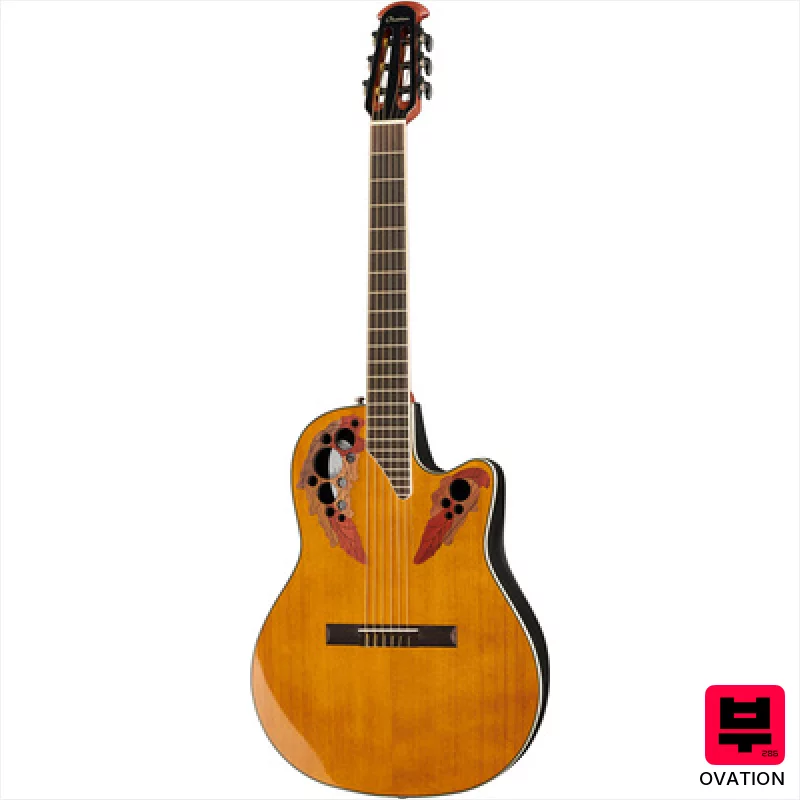
Ovation Celebrity Elite CE44C-4A-G
- • Solid cedar top delivers a warm, responsive tone ideal for classical and fingerstyle.
- • The Mid-Depth Bowl-Body provides excellent acoustic projection and comfortable ergonomics.
- • Ovation Slim pickup with OP4BT preamp offers clean amplified sound and a convenient tuner.
- • New headstock angle improves string tension and enhances overall sustain and resonance.
- • Lyracord back and sides, while functional, lack the premium resonance of all-wood construction.
- • The rounded C neck profile might not appeal to purists seeking a traditional classical feel.
- • While versatile, the amplified tone is best suited for quieter stage environments, lacking aggressive distortion capabilities.

Traveler Guitar Ultra-Light Nylon - Mahogany
- • Mahogany body provides a warm, focused acoustic tone.
- • Neck-through design enhances sustain and improves access to higher frets.
- • Traveler Piezo pickup offers surprisingly decent amplified sound for travel.
- • Compact design and included legrest make it genuinely comfortable for travel practice.
- • Passive piezo pickup lacks the nuance of a magnetic or condenser mic.
- • Open-gear tuners are visually appealing but less precise than sealed gears.
- • Mahogany body, while warm, lacks the projection of a rosewood or maple back/sides.

Harley Benton Nashville Nylon Plus Black
- • Solid Canadian Spruce top delivers a surprisingly resonant and clear tone
- • Fishman Sonicore/VTB combo provides usable amplified sound for stage or recording
- • Comfort U neck profile feels familiar and playable for steel-string players
- • Ovangkol fingerboard offers a warm, dark tone and smooth playing experience
- • Mahogany chambering may slightly reduce sustain compared to a fully solid body
- • Ebony bridge, while visually appealing, might be a bit brittle for heavy playing
- • Savarez 500C strings are decent, but an upgrade would significantly improve tone
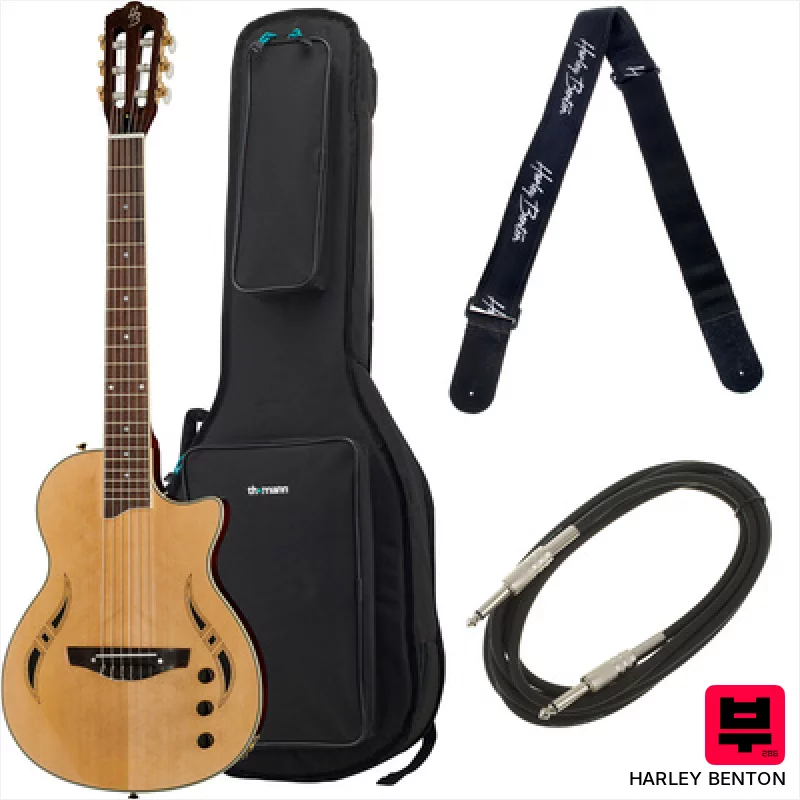
Harley Benton Custom Line Nashville Bundle
- • Solid spruce top delivers a surprisingly bright and articulate tone for a nylon-string.
- • Mahogany body provides warmth and sustain, nicely balancing the spruce's brightness.
- • Piezo pickup system offers usable amplified tones for basic performance needs.
- • Jatoba fretboard is durable and feels smoother than rosewood, a nice upgrade.
- • The 'deluxe' gold-plated machine heads are often a point of failure – be prepared to potentially replace them.
- • Solid body construction makes it heavier than a traditional hollow-body nylon guitar.
- • The piezo pickup's sound is serviceable, but lacks the nuance of a dedicated acoustic pickup system.
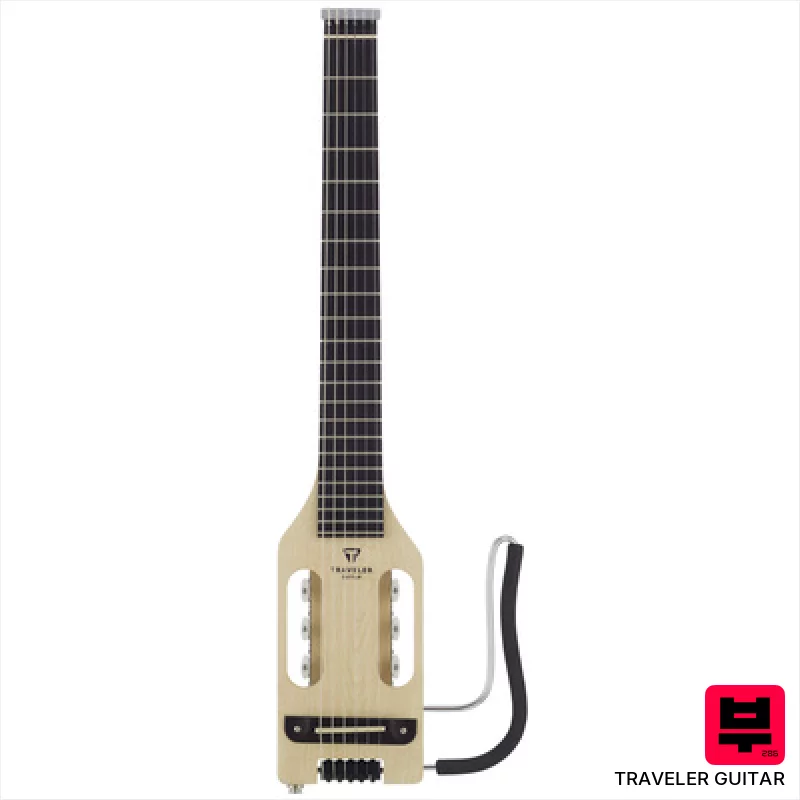
Traveler Guitar Ultra Light Nylon Natural
- • East American maple body offers surprisingly resonant, clear tones.
- • Neck-thru design enhances sustain and contributes to comfortable playability.
- • Traveler piezo system delivers a usable amplified signal, surprisingly natural.
- • Closed machine heads provide stable tuning and a refined aesthetic.
- • The shorter scale length limits low-end response compared to a full-size nylon guitar.
- • Black walnut fretboard, while attractive, may not offer the same feel as ebony.
- • Satin finish, while visually appealing, can feel a bit slippery for some players.
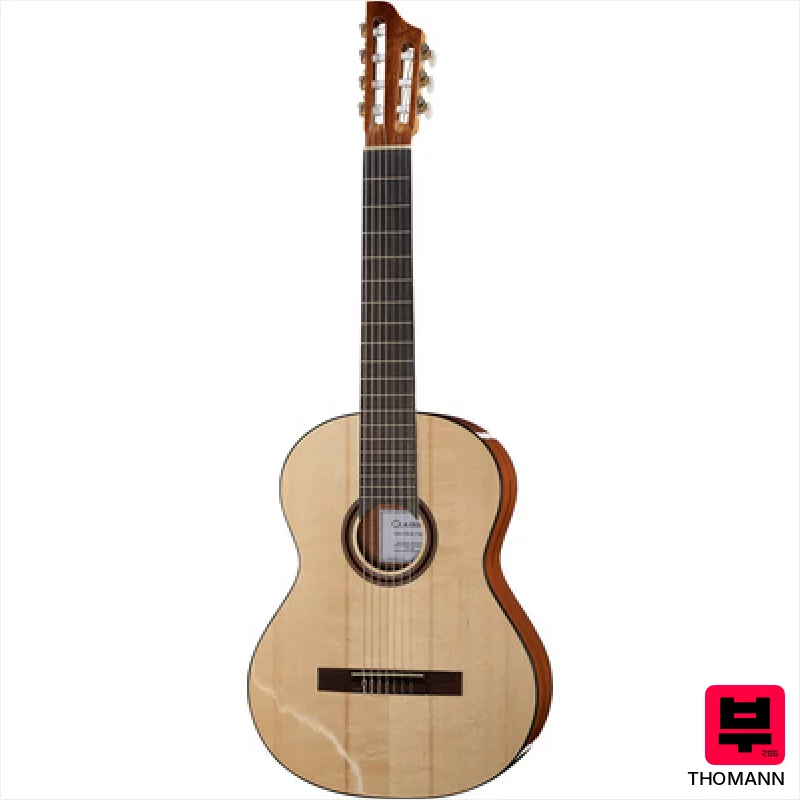
Thomann Classica Fusion 7 String
- • Solid Engelmann spruce top delivers a warm, responsive tone.
- • APC Torres bracing enhances projection and clarity, surprisingly well.
- • Acacia neck provides comfortable playability and stability.
- • Dark acacia fingerboard and binding offer a refined, visually appealing aesthetic.
- • Sapele back and sides, while functional, limit the overall tonal complexity.
- • Acacia neck, while playable, might feel slightly less stable than mahogany.
- • 7-string classical guitars have a steeper learning curve for traditional players.
How to Choose the Best Other Classical Guitars
Playability (Action & Neck Profile)
This is paramount. An intermediate player needs an action that isn't punishing but still allows for clean execution. A comfortable, consistent neck profile - not too chunky, not too thin - will prevent fatigue during longer practice sessions and gigs. A high action might sound impressive, but it'll slow your progress.
Sound Projection & Responsiveness
We're looking for guitars that respond well to a lighter touch, allowing for nuanced dynamics. That means good bass response without being muddy, a clear fundamental, and enough projection to be heard without relying solely on amplification - crucial for small venues or recording acoustic sets.
Tonewood Quality (and Construction)
Spruce tops are pretty standard, but the back and sides - rosewood, mahogany, cypress - significantly impact the tone. Solid wood construction is a must; laminates often sound lifeless and lack sustain. Even on a budget, you can find guitars with decent wood choices that offer a more complex sound.
Bracing Pattern & Voicing
The internal bracing is the skeleton of the guitar's sound. Different patterns (Fan, Lattice, etc.) influence sustain, projection, and overall tonal character. A guitar with a well-executed bracing pattern will have better articulation and a more even response across the fretboard.
Hardware & Stability
Decent tuners are non-negotiable. Cheap tuners will fight you and make intonation a nightmare. Also, look for a stable build - a well-fitted neck joint and a properly compensated saddle are essential for consistent tuning and intonation over time.
Buying Guide
Don't chase 'loudness' - focus on clarity and responsiveness. A guitar that's overly bright might sound good initially, but it'll quickly fatigue your ears and be harder to record. Be realistic about your budget; corners are cut somewhere, and often it's in the wood quality or bracing. A well-set-up, slightly less expensive guitar will always outperform a poorly set-up, 'better' guitar.
How This List Is Built
We don't play these instruments — we're a catalog, not a review desk, and we'd rather say so than pretend otherwise. This page ranks 15 other classical guitars from the Thomann catalogue, which is the largest single source of specification data in this category.
Position is computed, not curated. Four signals, in order of weight: how completely the manufacturer documents the instrument (number of published specifications), where it sits in the price range, how specific the model designation is — which filters out generic accessories — and whether a product image exists. The same inputs always produce the same order, so nothing here is shuffled to look fresh.
What this list is good for: narrowing a category down to a shortlist by spec and budget. What it isn't: a substitute for hearing an instrument. Before you buy, read hands-on reviews and, where you can, play it. Full methodology.

