
Best Other Classical Guitars for Advanced 2026
Okay, so you've spent years wrestling with a basic classical guitar, building chops and developing your technique. Now you're ready to move up, but the standard Ramirez or Cordoba isn't cutting it anymore. We're talking about instruments that offer nuanced response, projection that cuts through a chamber orchestra, and a level of complexity that rewards a seasoned player's touch - these "other" classical guitars are a serious step up.
Last updated: April 11, 2026
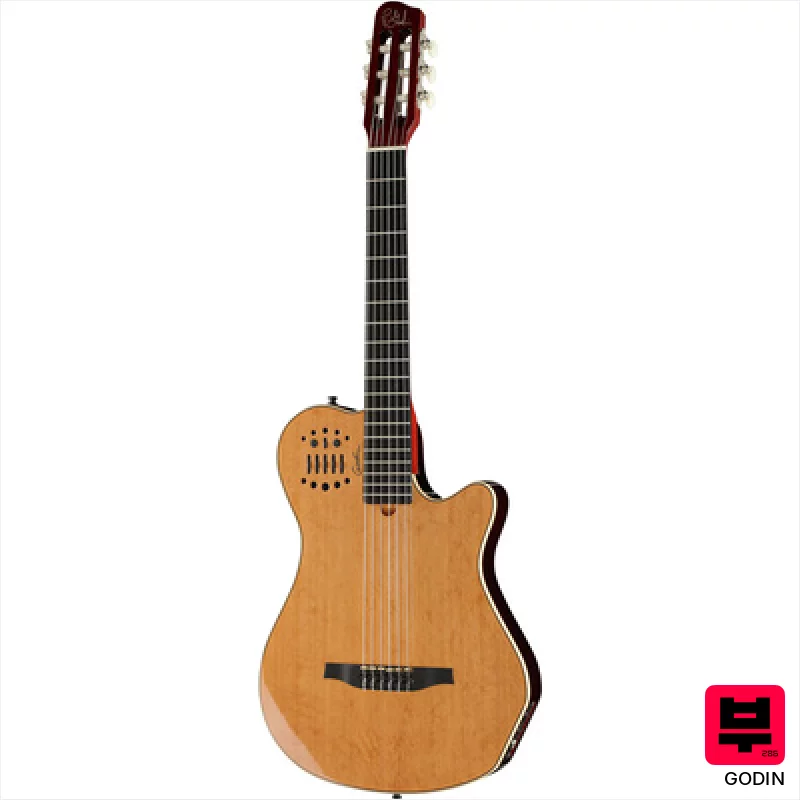
Godin Multiac Grand Concert Natur
- • Solid cedar top delivers warm, responsive classical tone.
- • LR Baggs pickup system provides excellent amplified clarity and MIDI control.
- • Richlite fingerboard offers a smooth, consistent playing experience.
- • Mahogany construction contributes to a balanced, resonant voice.
- • Richlite, while stable, lacks the traditional feel of ebony for some players.
- • The gig bag is adequate but a hardshell case would offer better protection.
- • The MIDI functionality, while a strength, requires additional investment in a MIDI controller.
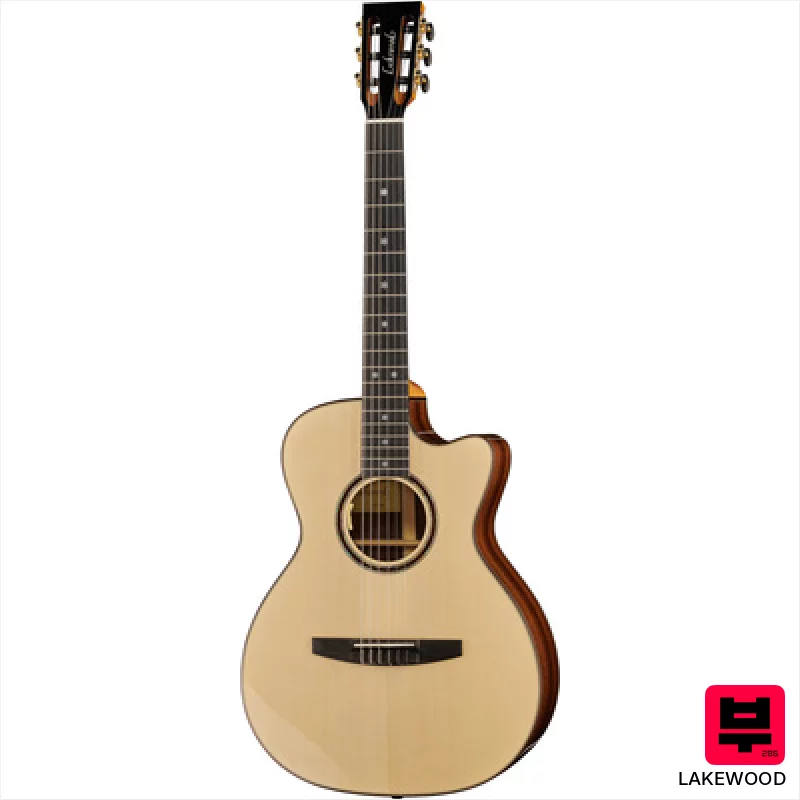
Lakewood M-32 CP Crossover 2024
- • AAA spruce top delivers exceptional projection and clarity
- • East Indian rosewood provides a warm, resonant bass response
- • Cedro neck offers a comfortable, fast playing experience
- • Integrated pickup system allows for amplified performance with excellent tone
- • Premium-priced, limiting accessibility for some players
- • Crossover design might not appeal to traditionalists
- • Rosewood binding, while elegant, adds slight weight
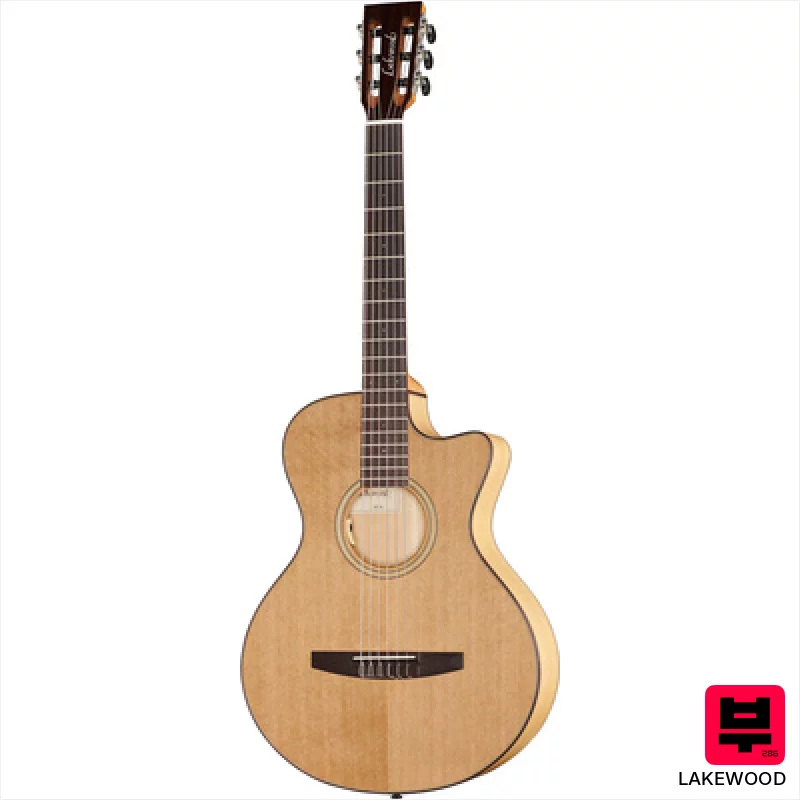
Lakewood A-36 CP Crossover
- • Solid AAA cedar top delivers a warm, responsive, and nuanced tone.
- • L.R. Baggs Anthem SL pickup provides a natural amplified sound with excellent feedback rejection.
- • German craftsmanship ensures exceptional build quality, stability, and long-term reliability.
- • Crossover bracing enhances projection and sustain while maintaining a comfortable playing feel.
- • Cypress back and sides may lack the complexity of rosewood for some players.
- • Silk-matte finish, while beautiful, may require more diligent care to prevent smudging.
- • Nut width of 46mm may feel a bit wide for players accustomed to narrower classical necks.
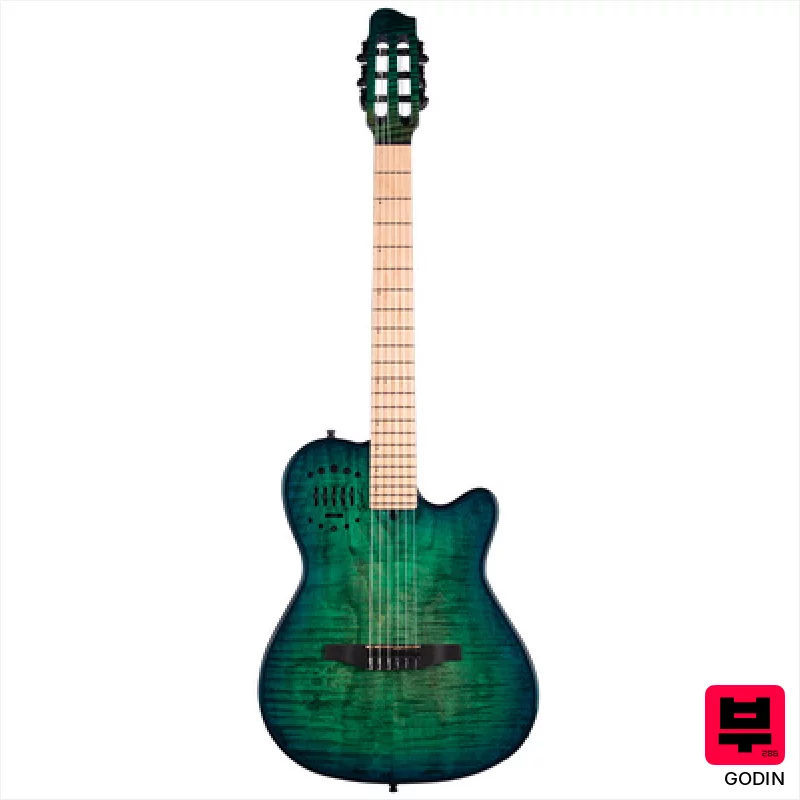
Godin Multiac Nylon Opalburst Ltd
- • Solid cedar top delivers a warm, responsive acoustic tone with surprising projection.
- • L.R. Baggs pickup and Lyric mic blend seamlessly for versatile amplified sounds.
- • Maple burl veneer adds stunning aesthetics and a touch of luxury.
- • Bolt-on neck provides stability and a comfortable, modern feel for faster playing.
- • Silver maple construction, while resonant, might lack the depth of mahogany or rosewood.
- • The 25.5-inch scale might feel less familiar to traditional classical players.
- • Premium-priced, placing it out of reach for many budget-conscious musicians.
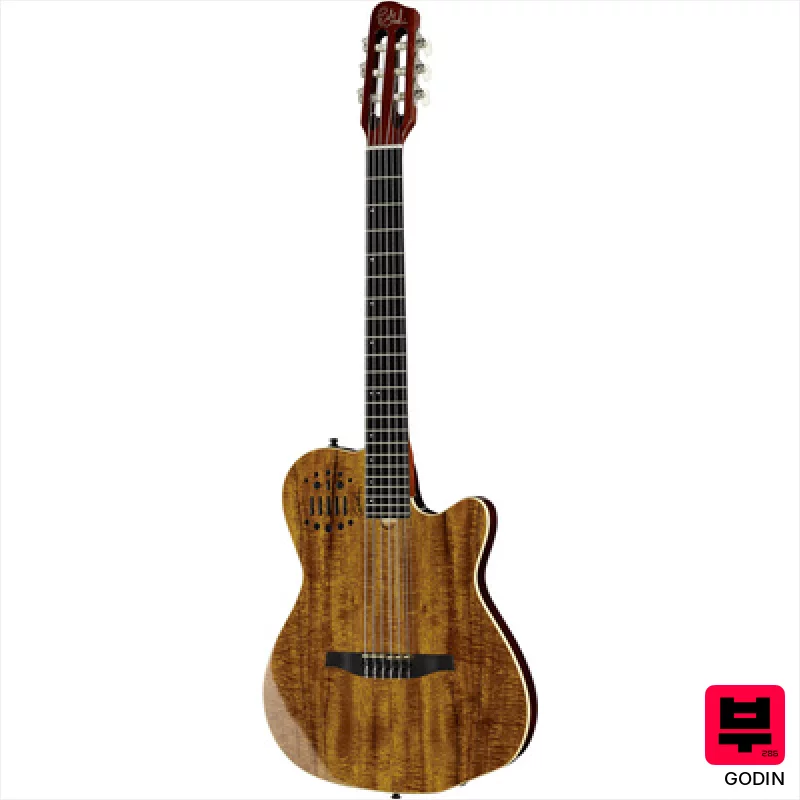
Godin ACS KOA Extreme HG
- • Koa top delivers a rich, complex, and resonant tone with excellent projection
- • LR Baggs electronics offer clean, amplified sound ideal for stage performance
- • Richlite fingerboard provides a smooth, consistent playing experience and resists temperature changes
- • 16:1 gear ratio tuning machines ensure precise and stable tuning, even with heavy use
- • Koa top makes it a premium-priced instrument, potentially limiting accessibility for some
- • Slightly heavier than some nylon-string guitars due to the chambered body construction
- • Richlite, while durable, lacks the traditional aesthetic feel of ebony for some purists
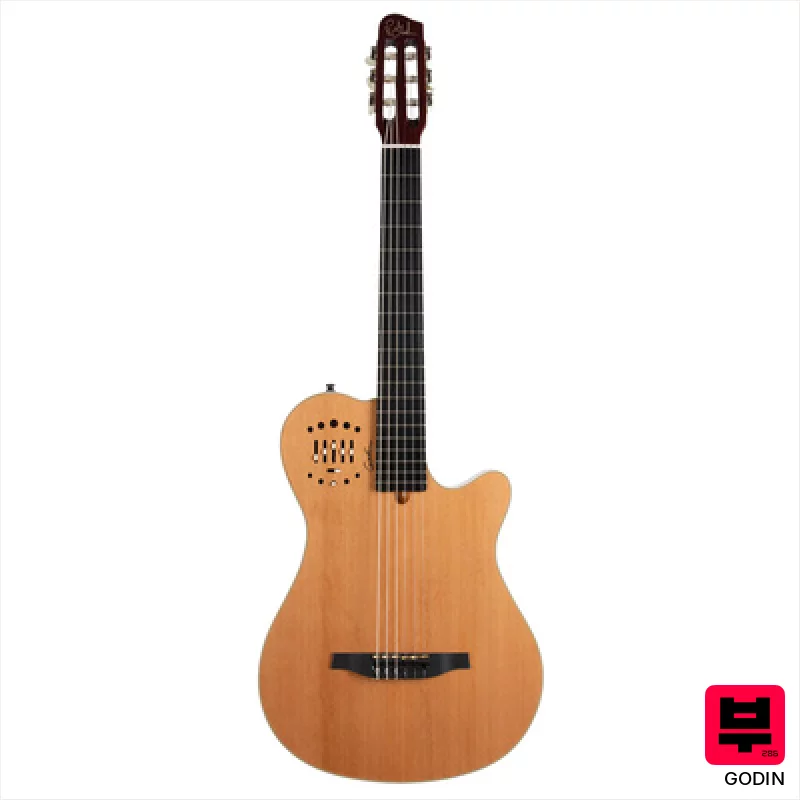
Godin Multiac Grand Concert Deluxe
- • Solid cedar top delivers warm, responsive classical tone.
- • LR Baggs electronics offer exceptional amplified clarity and versatility.
- • Richlite fretboard provides a stable, consistent playing surface.
- • Mahogany construction contributes to a balanced, resonant voice.
- • The Richlite fretboard, while stable, lacks the traditional feel of ebony.
- • The weight, typical of mahogany instruments, can be a factor for some players.
- • The hybrid nature might not fully satisfy dedicated classical or electric purists.
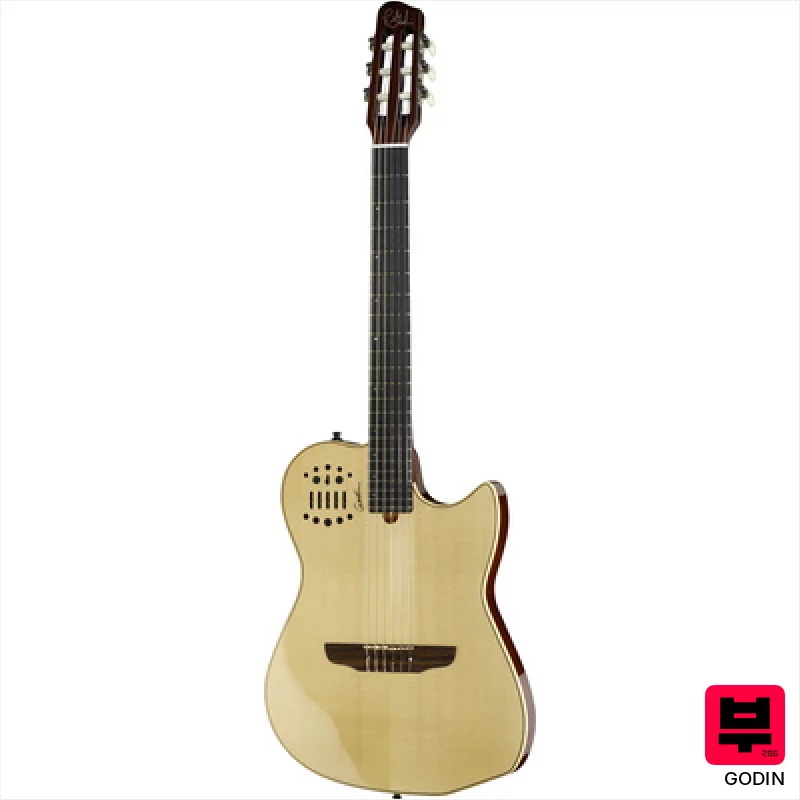
Godin Multiac Nylon Natur
- • Solid Spruce top delivers a clear, resonant, and balanced tone.
- • LR Baggs pickups provide exceptional amplified nylon tone with minimal feedback.
- • Richlite fingerboard offers a smooth playing experience and consistent stability.
- • The Roland GR connector unlocks vast MIDI synth and modeling possibilities.
- • Mahogany body can be a bit dense, resulting in a heavier instrument.
- • Richlite, while stable, lacks the traditional feel of ebony for some players.
- • The preamp’s EQ controls might feel limited for complex tonal shaping.
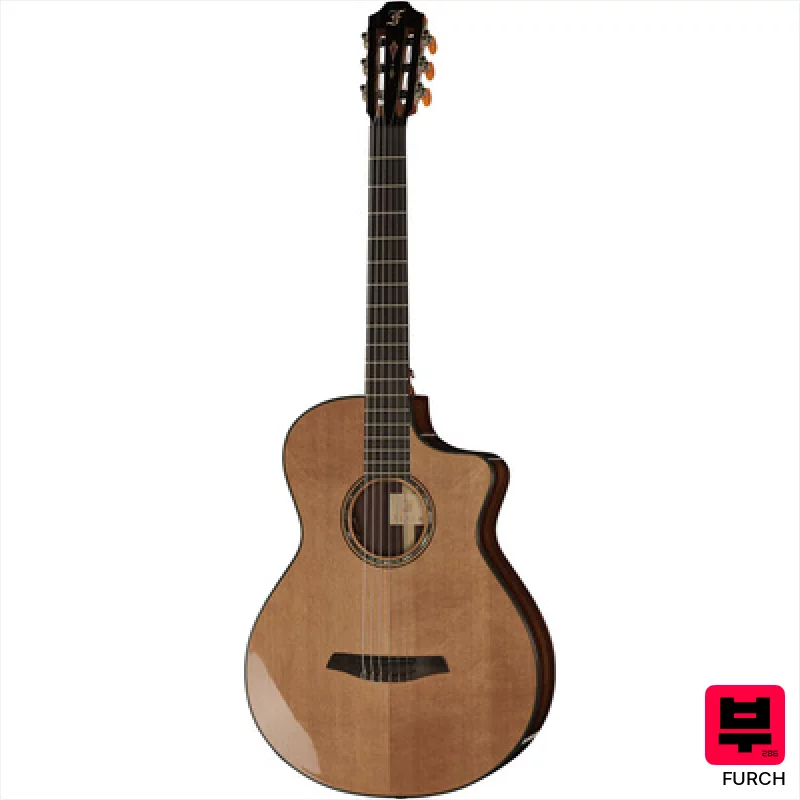
Furch GNc4-CR w/-VTC a Nylon
- • Solid Cedar top delivers a warm, responsive, and expressive tone.
- • Rosewood back/sides add depth and sustain, beautifully balanced.
- • LR Baggs EAS-VTC pickup system provides exceptional amplified clarity and naturalness.
- • Mahogany neck offers stability and a comfortable, familiar feel for many players.
- • The high-gloss finish, while beautiful, may feel a bit thick for some players’ preference.
- • Rosewood's tonal character might be too mellow for those seeking a brighter, more aggressive nylon sound.
- • Premium-priced, representing a significant investment for many aspiring classical guitarists.
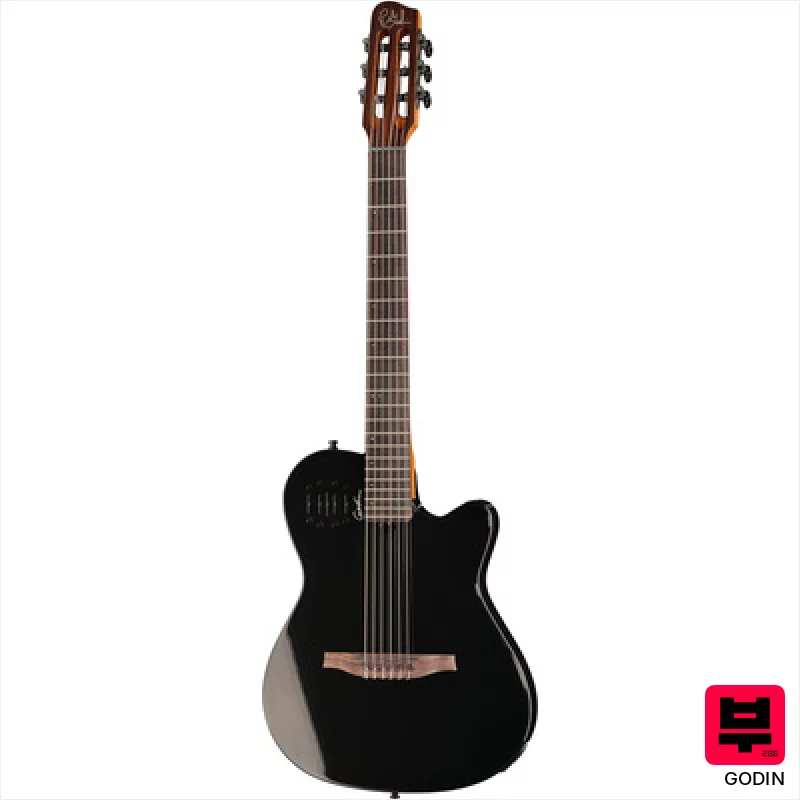
Godin Multiac Mundial Onyx Black
- • Solid cedar top delivers a warm, responsive acoustic voice with excellent projection.
- • Double Source Custom preamp provides exceptional versatility for stage and recording.
- • Silver maple hollowbody construction keeps the guitar surprisingly lightweight and resonant.
- • Graph Tech nut and Godin 16:1 machine heads ensure precise tuning and reliable performance.
- • Rosewood fingerboard, while classic, might feel a bit drier than some players prefer.
- • The Onyx Black high-gloss finish can be a fingerprint magnet and requires careful maintenance.
- • While versatile, the pickup system leans toward amplified classical/acoustic, not ideal for all genres.
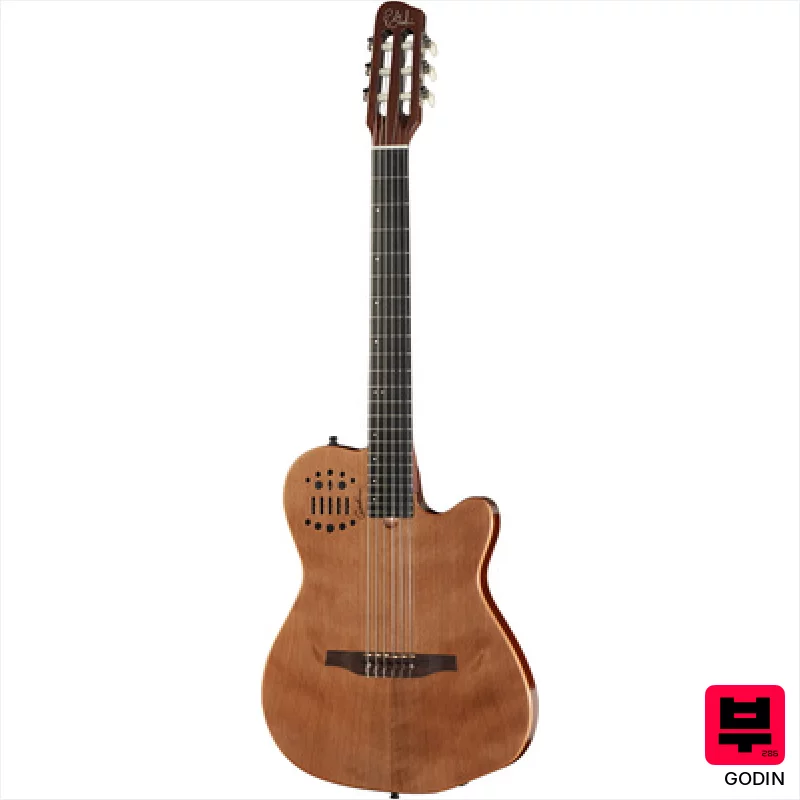
Godin ACS Nylon
- • Solid cedar top delivers a warm, responsive, and articulate tone ideal for nylon strings.
- • Richlite fretboard and bridge offer excellent stability and a smooth playing experience.
- • Custom RMC pickups with preamp provide amplified versatility, surprisingly clean and clear.
- • Integrated Roland GR connector unlocks modeling possibilities for a wide range of sounds.
- • Maple body construction may lack the warmth of more traditional nylon guitar woods.
- • Richlite, while stable, lacks the traditional aesthetic appeal of ebony.
- • The preamp and MIDI functionality add complexity, potentially overwhelming some players.

Hanika 8-Pro
- • Solid spruce top delivers exceptional projection and clarity across the extended range.
- • Symmetrical Torres bracing enhances responsiveness and tonal complexity, a Hanika hallmark.
- • Cedro neck with grenadilla reinforcement provides stability and a smooth, comfortable playing feel.
- • Rubner machine heads guarantee precise tuning and reliable performance, a premium touch.
- • The 59mm nut width demands adaptation for players accustomed to narrower classical guitar necks.
- • Solid rosewood back and sides can be susceptible to environmental changes, requiring care.
- • Premium-priced, limiting accessibility for players on a tighter budget.

Godin Multiac Nylon Oceanburst Ltd
- • Solid cedar top delivers warm, complex overtones and projection
- • Richlite fingerboard offers a smooth, consistent playing experience
- • Custom L.R. Baggs pickup system provides excellent amplified tone clarity
- • Bolt-on neck construction provides stability and reliable action adjustment
- • Oceanburst finish, while beautiful, might be polarizing for some players
- • Richlite, while durable, lacks the traditional feel of ebony
- • The 25.5in scale might feel slightly less comfortable for seasoned classical players

Hanika 7-Pro
- • Solid spruce top delivers exceptional projection and clarity.
- • Symmetrical Torres bracing enhances sustain and tonal complexity.
- • Cedro/grenadilla neck provides stability and a responsive feel.
- • Rubner machine heads ensure precise and reliable tuning stability.
- • The 60.6mm nut width may feel wide for players accustomed to narrower necks.
- • Rosewood back and sides can be prone to movement with humidity fluctuations.
- • Premium-priced, limiting accessibility for many intermediate players.
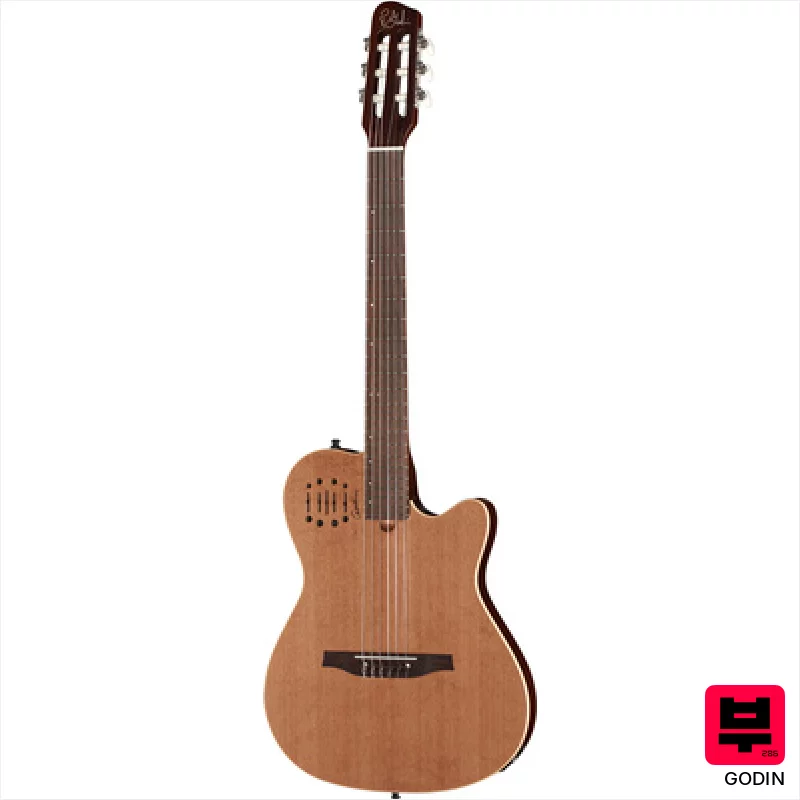
Godin Multiac Nylon Encore Natur
- • Solid cedar top delivers a warm, responsive acoustic tone with surprising projection.
- • Godin’s Dual Source system offers versatile amplified options – acoustic and electric.
- • Mahogany neck provides excellent sustain and a comfortable, familiar feel.
- • Graphtech nut minimizes friction and improves tuning stability, a welcome detail.
- • Maple body can occasionally sound a bit 'boxy' without careful EQ adjustments.
- • 25.5 in scale is less common for nylon string, potentially limiting fingerstyle comfort for some.
- • The included gigbag is functional, but a hardshell case would be a worthwhile upgrade.
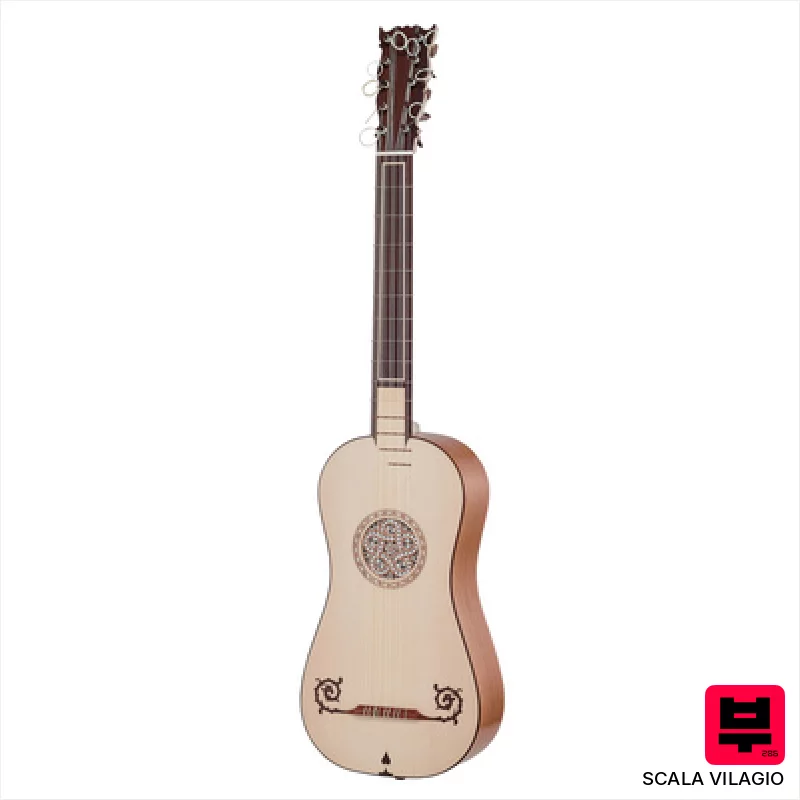
Scala Vilagio T.H. Baroque Guitar Stradivari
- • Alpine spruce top delivers a clear, resonant, and surprisingly powerful tone
- • Cherry wood back and sides provide warmth and a focused midrange
- • Handmade construction by Tibor Haluscak guarantees exceptional craftsmanship and detail
- • Cherry wood pegs offer a unique aesthetic and surprisingly smooth tuning experience
- • Cherry wood can be somewhat less responsive than traditional rosewood or maple
- • The Nylgut strings, while historically accurate, lack the complexity of gut strings
- • The shorter scale length might feel cramped for players accustomed to longer instruments
Every other classical guitars that matches
77 models match this page. The 15 above are covered in detail; the rest are listed here with their published specifications.
| # | Model | Specifications | Price |
|---|---|---|---|
| 16 | Godin Multiac Mundial Kanyon Burst | Nut width 48.3 mm (1.9") · Scale 648 mm (25.51") · Fingerboard radius 406 mm (15.98") · Fingerboard Rosewood fingerboard | $1,979 |
| 17 | Godin Multiac Mundial Arctik Blue | Nut width 48.3 mm (1.9") · Scale 648 mm (25.51") · Fingerboard radius 406 mm (15.98") · Fingerboard Rosewood fingerboard | $1,869 |
| 18 | Yamaha SLG200N TBS | Nut width 50 mm (1.97") · Scale 650 mm (25.59") · Frets 19 frets · Body Mahogany body · Weight 2.1 kg | $901 |
| 19 | Yamaha SLG200N TBK | Nut width 50 mm (1.97") · Scale 650 mm (25.59") · Frets 19 frets · Body Mahogany body · Weight 2.1 kg | $901 |
| 20 | Godin Multiac Grand Concert Mah Del | Nut width 50.8 mm (2") · Scale 651.8 mm (25.66") | $3,299 |
| 21 | Yamaha SLG200N CRB | Nut width 50 mm (1.97") · Scale 650 mm (25.59") · Frets 19 frets · Body Mahogany body · Weight 2.1 kg | $842 |
| 22 | Godin ACS Nylon Slim NT Cedar | Nut width 43.2 mm (1.7") · Scale 648 mm (25.51") | $2,529 |
| 23 | Godin G-Tour Nylon Matte Black EQ | Nut width 41.9 mm (1.65") · Scale 648 mm (25.51") · Fingerboard Rosewood fingerboard | $1,920 |
| 24 | Cordoba Fusion 12 White Sands | Nut width 48 mm (1.89") · Scale 650 mm (25.59") · Fingerboard radius 406 mm (15.98") · Fingerboard Ebony fingerboard | $1,209 |
| 25 | Cordoba Fusion 12 Cinnamon Burst | Nut width 48 mm (1.89") · Scale 650 mm (25.59") · Fingerboard radius 406 mm (15.98") · Fingerboard Ebony fingerboard | $1,154 |
| 26 | Cordoba Stage Limited Ziricote | Nut width 48 mm (1.89") · Scale 650 mm (25.59") · Fingerboard radius 406 mm (15.98") · Fingerboard Pau ferro fingerboard | $963 |
| 27 | Scala Vilagio T.H. Art Nouveau Guitar | Scale 630 mm (24.8") | $4,389 |
| 28 | Journey Instruments OC660M BK | Nut width 47.8 mm (1.88") · Scale 648 mm (25.51") | $1,538 |
| 29 | Cordoba Fusion 12 Rose II | Nut width 48 mm (1.89") · Scale 650 mm (25.59") · Fingerboard Pau ferro fingerboard | $934 |
| 30 | Cordoba Stage Guitar Traditional CD | Nut width 52 mm (2.05") · Frets 22 frets · Fingerboard Pau ferro fingerboard | $864 |
| 31 | Ovation Pro Series Classic 1773AX-4-G | Nut width 47.6 mm (1.87") · Scale 648 mm (25.51") | $1,099 |
| 32 | Larry Carlton G5N Natural | Nut width 48 mm (1.89") · Scale 648 mm (25.51") · Frets 22 frets · Fingerboard radius 500 mm (19.69") · Body Mahogany body · Fingerboard Rosewood fingerboard | $604 |
| 33 | Larry Carlton G5N Tobacco Sunburst | Nut width 48 mm (1.89") · Scale 648 mm (25.51") · Frets 22 frets · Fingerboard radius 500 mm (19.69") · Body Mahogany body · Fingerboard Rosewood fingerboard | $604 |
| 34 | Yamaha SLG200N NA | Nut width 50 mm (1.97") · Scale 650 mm (25.59") · Frets 19 frets · Body Mahogany body · Weight 2.1 kg | $800 |
| 35 | Harley Benton Nashville Nylon Natural | Nut width 48 mm (1.89") · Scale 648 mm (25.51") · Fingerboard radius 400 mm (15.75") · Body Mahogany body · Fingerboard Jatoba fingerboard | $329 |
| 36 | Thomann Classica Fusion 8 Strin Bundle | Nut width 70.5 mm (2.78") · Scale 650 mm (25.59") · Frets 19 frets · Strings 8-string | $424 |
| 37 | Thomann Classica Fusion 8 String | Nut width 70.5 mm (2.78") · Scale 650 mm (25.59") · Frets 19 frets · Strings 8-string | $406 |
| 38 | Thomann Classica Fusion 7 Strin Bundle | Nut width 62 mm (2.44") · Scale 650 mm (25.59") · Frets 19 frets · Strings 7-string | $402 |
| 39 | Thomann Classica Fusion 7 String | Nut width 62 mm (2.44") · Scale 650 mm (25.59") · Frets 19 frets · Strings 7-string | $384 |
| 40 | Cordoba Stage Guitar Natural Amber w/B | Nut width 48 mm (1.89") · Frets 22 frets · Fingerboard radius 406 mm (15.98") · Fingerboard Pau ferro fingerboard | $769 |
| 41 | Cordoba Stage Guitar Edge Burst w/Bag | Nut width 48 mm (1.89") · Frets 22 frets · Fingerboard radius 406 mm (15.98") · Fingerboard Pau ferro fingerboard | $769 |
| 42 | Kala KA-GTR-MTN-E Thinline Nylon | Nut width 47.5 mm (1.87") · Scale 648 mm (25.51") · Frets 20 frets · Fingerboard Ebony fingerboard | $582 |
| 43 | Harley Benton Nashville Nylon Plus BK w/Case | Nut width 46 mm (1.81") · Scale 648 mm (25.51") · Fingerboard radius 400 mm (15.75") · Body Mahogany body | $567 |
| 44 | Harley Benton Nashville Nylon Plus BK w/Bag | Nut width 46 mm (1.81") · Scale 648 mm (25.51") · Fingerboard radius 400 mm (15.75") · Body Mahogany body | $461 |
| 45 | Harley Benton Nashville Nylon Plus Black | Nut width 46 mm (1.81") · Scale 648 mm (25.51") · Fingerboard radius 400 mm (15.75") · Body Mahogany body | $439 |
| 46 | Traveler Guitar Ultra-Light Nylon - Mahogany | Nut width 49 mm (1.93") · Scale 629 mm (24.76") · Body Mahogany body · Weight 1.36 kg | $362 |
| 47 | Harley Benton Custom Line Nashville Bundle | Nut width 48 mm (1.89") · Scale 648 mm (25.51") · Frets 21 frets · Body Mahogany body | $361 |
| 48 | Harley Benton Custom Line Nashville Bundle | Nut width 48 mm (1.89") · Scale 648 mm (25.51") · Frets 21 frets · Body Mahogany body | $350 |
| 49 | Harley Benton Nashville Nylon | Nut width 48 mm (1.89") · Scale 648 mm (25.51") · Frets 21 frets · Body Mahogany body | $329 |
| 50 | Cordoba Mini II EB-CE Natural | Nut width 48 mm (1.89") · Scale 580 mm (22.83") · Frets 19 frets · Fingerboard Pau ferro fingerboard | $307 |
| 51 | Gretsch G9126-ACE Guitar Ukulele | Nut width 48 mm (1.89") · Scale 432 mm (17.01") · Frets 19 frets · Body Mahogany body | $307 |
| 52 | Yamaha SLG200NW NA | Nut width 52 mm (2.05") · Frets 19 frets · Weight 2.1 kg | $800 |
| 53 | Journey Instruments OC520 | Nut width 52 mm (2.05") · Scale 650 mm (25.59") · Frets 18 frets | $714 |
| 54 | ESP LTD TL-6N Nylon | Nut width 48 mm (1.89") · Scale 635 mm (25") · Frets 22 frets | $549 |
| 55 | Ovation Celebrity Elite CE44C-4A-G | Nut width 48 mm (1.89") · Scale 650 mm (25.59") · Frets 23 frets | $549 |
| 56 | Ortega RGLE18ACA | Nut width 47 mm (1.85") · Scale 435 mm (17.13") · Frets 18 frets | $424 |
| 57 | Traveler Guitar Ultra Light Nylon Natural | Nut width 49.2 mm (1.94") · Scale 628 mm (24.72") · Weight 1.4 kg | $362 |
| 58 | Cordoba Mini II FMH | Nut width 48 mm (1.89") · Scale 580 mm (22.83") · Frets 19 frets | $208 |
| 59 | Ortega RGL5CE Guitarlele | Nut width 47 mm (1.85") · Scale 435 mm (17.13") · Frets 18 frets | $186 |
| 60 | Cordoba Stage Guitar Black Burst | Nut width 48 mm (1.89") · Frets 22 frets · Fingerboard Ebony fingerboard | $813 |
| 61 | Ortega RCE159RW-8 | Frets 22 frets · Strings 8-string · Fingerboard Rosewood fingerboard | $791 |
| 62 | Ortega RCE158RW-8 | Frets 22 frets · Strings 8-string · Fingerboard Rosewood fingerboard | $791 |
| 63 | Angel Lopez EC3000CBK | Nut width 48 mm (1.89") · Scale 646 mm (25.43") · Body Spruce body | $362 |
| 64 | Ovation Celebrity Tradition CS24C-5-G | Nut width 48 mm (1.89") · Scale 650 mm (25.59") | $516 |
| 65 | La Mancha Opalo SX-FEN | Nut width 48 mm (1.89") · Scale 650 mm (25.59") | $505 |
| 66 | Angel Lopez EC3000 Maho N | Nut width 48 mm (1.89") · Scale 646 mm (25.43") | $362 |
| 67 | Angel Lopez EC3000CNA | Nut width 48 mm (1.89") · Scale 646 mm (25.43") | $362 |
| 68 | La Mancha C-Lime-TN-R | Nut width 48 mm (1.89") · Scale 650 mm (25.59") | $329 |
| 69 | Ortega RQ39E Requinto | Nut width 50 mm (1.97") · Scale 535 mm (21.06") | $329 |
| 70 | Ortega RQ39 Requinto | Nut width 50 mm (1.97") · Scale 535 mm (21.06") | $274 |
| 71 | Cordoba Mini II MH-CE | Nut width 48 mm (1.89") · Scale 580 mm (22.83") | $237 |
| 72 | Ortega RQC25 Requinto | Nut width 50 mm (1.97") · Scale 535 mm (21.06") | $175 |
| 73 | Ortega RQ25 Requinto | Nut width 50 mm (1.97") · Scale 535 mm (21.06") | $171 |
| 74 | Cordoba Mini II MH | Nut width 48 mm (1.89") · Scale 580 mm (22.83") | $164 |
| 75 | Harley Benton CG-400CE Thinline BK | Nut width 48 mm (1.89") · Scale 650 mm (25.59") | $109 |
| 76 | Cordoba GK Studio Negra Wine Red | Nut width 50 mm (1.97") | $527 |
| 77 | La Mancha C-Lime-TN-CER | Scale 650 mm (25.59") | $472 |
Other Classical Guitars by the numbers
Measured across all 77 models in this category, so «wide», «short» or «expensive» mean something you can check.
How to Choose the Best Other Classical Guitars
Response & Articulation
Advanced players need immediate, clear response to subtle shifts in dynamics. A sluggish instrument will bury you in an ensemble; we're looking for guitars that reward nuanced phrasing and clean articulation, especially in complex passages.
Sustain & Projection
It's not just about volume, it's about how the note hangs in the air. A good classical guitar needs to sustain notes long enough to be heard clearly, even when competing with other instruments or in a larger acoustic space. We're listening for a rich, resonant bloom, not just a quick fade.
Neck Profile & Playability
Forget comfortable, we're looking for precise. An advanced player needs a neck profile that allows for effortless legato and accurate finger placement. A neck that's too thick or too thin will fight you; it needs to feel like an extension of your hand.
Tonewood Combination & Voicing
Spruce tops are common, but the back and sides - mahogany, rosewood, or even less common woods like ziricote - dramatically impact the tone. We're assessing the tonal balance - is it overly bright, muddy, or does it offer a complex, layered voicing that responds well to different playing styles?
Headroom & Dynamic Range
A guitar with limited headroom will quickly compress and sound muddy when played with intensity. We need instruments that can handle a wide dynamic range, from a whisper-quiet adagio to a powerful, driving flamenco rhythm without losing clarity.
Buying Guide
Don't chase the 'loudest' guitar; prioritize responsiveness and nuanced tone. Many manufacturers will use thinner spruce tops to increase volume, but this often sacrifices sustain and complexity. Be wary of guitars with overly aggressive break-up - a little bit of warmth is good, but a harsh, brittle tone will limit your expressive range. Spending more can get you better wood and more precise construction, but research the specific models and luthiers - a well-made, slightly less expensive guitar will often outperform a poorly made flagship.
How This List Is Built
We don't play these instruments — we're a catalog, not a review desk, and we'd rather say so than pretend otherwise. This page covers 77 other classical guitars from the Thomann catalogue, which is the largest single source of specification data in this category: 15 in detail, the rest listed with their specifications.
Position is computed, not curated. We parse the manufacturer's own description into actual values — nut width, scale, fret count, fingerboard radius, size, alloy — and rank on them: how many specifications a model has published, how many of them are measurable numbers, and how precisely it meets this page's criterion. A product image adds a little. Price is not a ranking signal: it tells you nothing about whether a neck fits your hand. The same inputs always produce the same order, so nothing here is shuffled to look fresh.
What this list is good for: narrowing a category down to a shortlist by spec and budget. What it isn't: a substitute for hearing an instrument. Before you buy, read hands-on reviews and, where you can, play it. Full methodology.

