
Best MIDI Tools Under $200 2026
So, you're diving into MIDI but your wallet's whispering sweet nothings about ramen? Totally get it. Getting into the MIDI world doesn't have to bankrupt you; there's some seriously usable gear you can snag for under $200. Let's ditch the hype and look at some MIDI tools that'll actually improve your workflow, whether you're layering synths in your bedroom studio or triggering loops at a gig.
Last updated: September 28, 2026
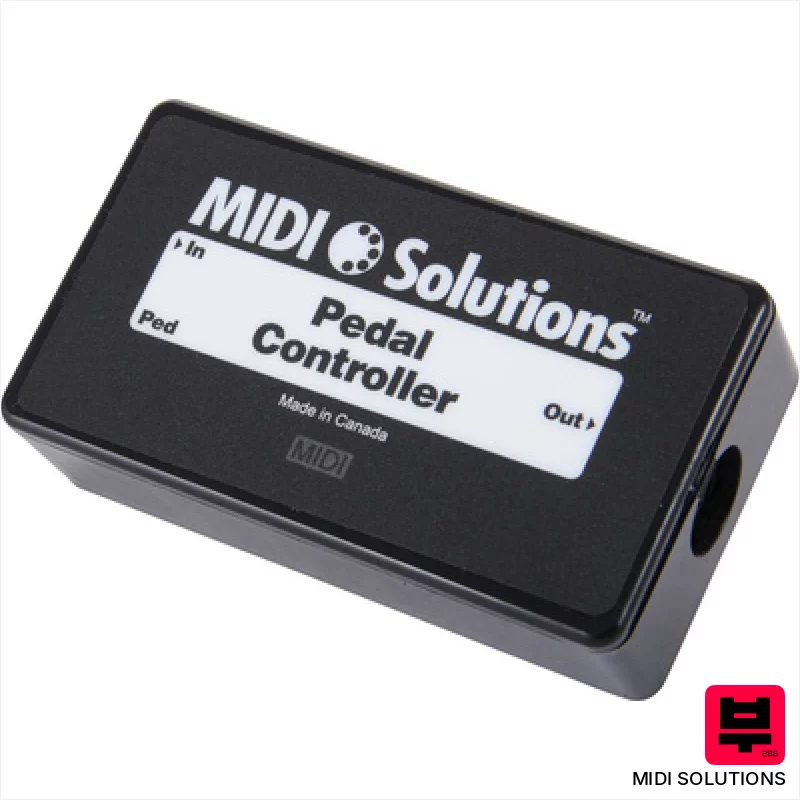
MIDI Solutions Pedal to MIDI Converter
- • Robust MIDI conversion for expression pedals
- • Compact size ideal for pedalboards and studios
- • Solid MIDI implementation, reliable data transmission
- • MIDI Solutions’ reputation for quality MIDI hardware
- • Limited to single pedal input; no multiple pedal support
- • Basic functionality; lacks advanced curve shaping or filtering
- • Construction feels somewhat plasticky, not premium
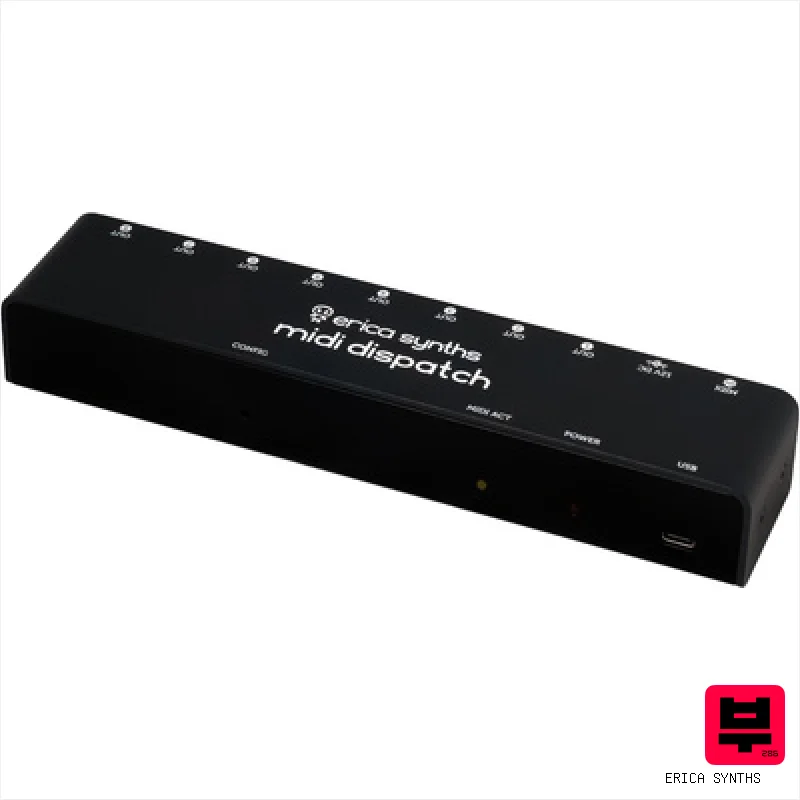
Erica Synths MIDI Dispatch
- • Zero latency routing for instant signal flow
- • Eight separate output channels for flexible mixing
- • Web interface lets you adjust settings anywhere
- • Compact size fits easily on any studio desk
- • Only one input port limits source flexibility
- • No built-in clock or timing features mentioned
- • Limited power options reduce portability convenience

Dtronics DT-QT
- • Fast switching minimizes timing issues across multiple devices.
- • Buffered outputs maintain signal integrity over longer cable runs.
- • Compact size makes it easy to integrate into tight studio setups.
- • Signal Cleaner can rescue corrupted MIDI data from problematic gear.
- • Plastic housing feels less robust than metal alternatives.
- • Limited to one input; no merging capabilities.
- • USB power only – no external power adapter option.
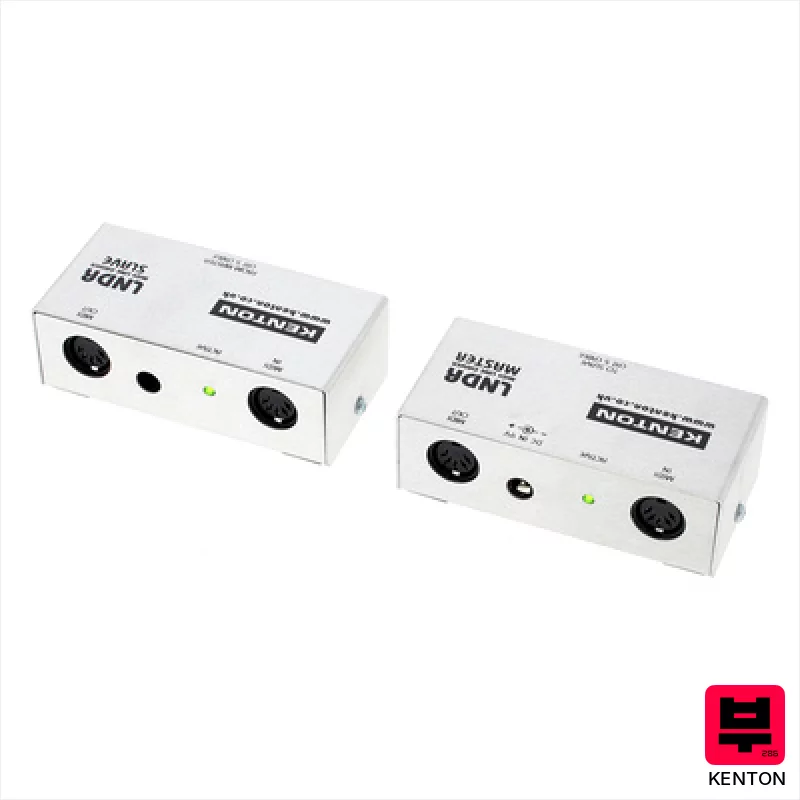
Kenton LNDR Linedriver
- • Extends MIDI signal distance drastically, bypassing cable limitations
- • Robust CAT5 infrastructure offers reliable, noise-free transmission
- • Kenton’s build quality ensures long-term operational stability
- • Simple setup minimizes complexity, ideal for studio integration
- • Limited to MIDI data – no audio or other signal transmission
- • Requires existing CAT5 network cabling infrastructure
- • Small form factor can be challenging in cramped spaces
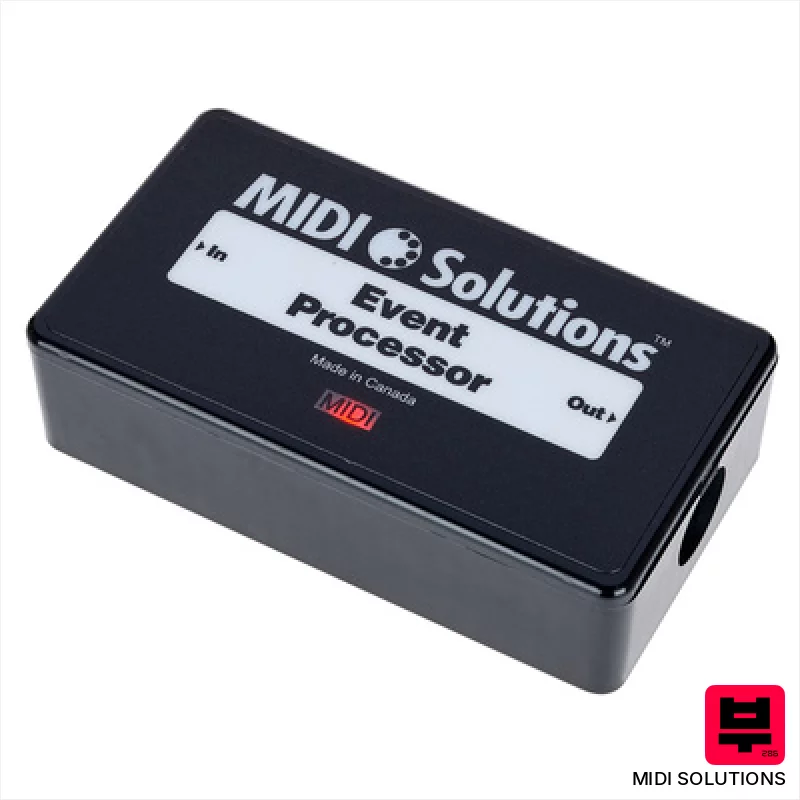
MIDI Solutions Event Processor
- • Highly flexible event filtering and assignment capabilities.
- • Robust MIDI clock synchronization for precise triggering.
- • Compact size minimizes rack space or desktop clutter.
- • MIDI Solutions’ reputation for rock-solid, reliable MIDI implementation.
- • Steep learning curve for complex event routing scenarios.
- • Limited number of preset slots requires careful management.
- • Relatively basic visual feedback – relies heavily on external monitoring.

MIDI Solutions Footswitch To MIDI Controller
- • Robust MIDI conversion from simple footswitch signals
- • MIDI Solutions’ renowned build quality ensures long-term reliability
- • Compact design minimizes footprint in studio or live setups
- • Powered via MIDI simplifies cabling and reduces power demands
- • Limited to single footswitch input restricts complex control schemes
- • MIDI power dependency can be problematic with some MIDI interfaces
- • Lacks advanced features like preset recall or custom mapping
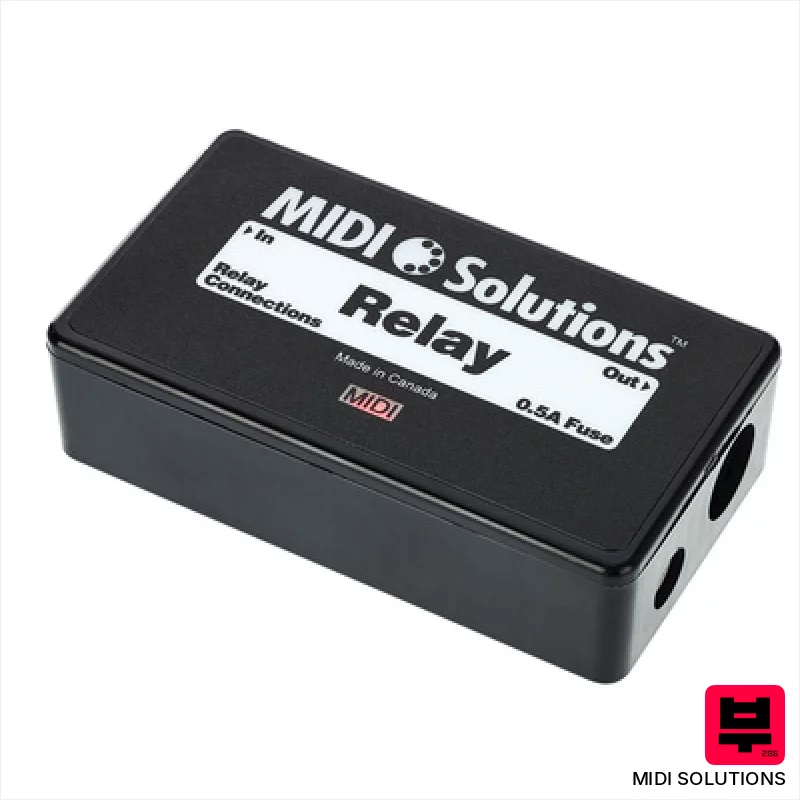
MIDI Solutions Relay
- • Reliable MIDI triggering of external devices, expanding creative control.
- • Solid build quality; feels robust for studio and stage use.
- • Simple MIDI implementation avoids complex programming headaches.
- • Compact size allows for easy integration into existing setups.
- • Limited to single relay operation; not ideal for complex routing.
- • MIDI power dependency can be inconvenient in some environments.
- • 6.3mm jack connection feels a little dated.

MIDI Solutions Velocity Converter
- • Robust metal enclosure ensures durability on the road.
- • Precise velocity scaling avoids unwanted dynamic extremes.
- • Compact size minimizes rack space or desktop footprint.
- • MIDI Solutions’ reputation for rock-solid MIDI implementation.
- • Limited to velocity conversion; lacks other MIDI processing features.
- • No user-adjustable offset, velocity range can be restrictive.
- • Power supply is external, adding to cable clutter.

MIDI Solutions Router
- • Precise MIDI filtering prevents unwanted data transmission.
- • Ten user-definable settings offer significant workflow customization.
- • Robust metal enclosure ensures durability for studio and stage.
- • Simple interface minimizes learning curve for immediate usability.
- • Limited input ports restrict integration in complex MIDI setups.
- • Lack of MIDI Thru port limits chaining possibilities.
- • Compact size might be a challenge in cramped environments.
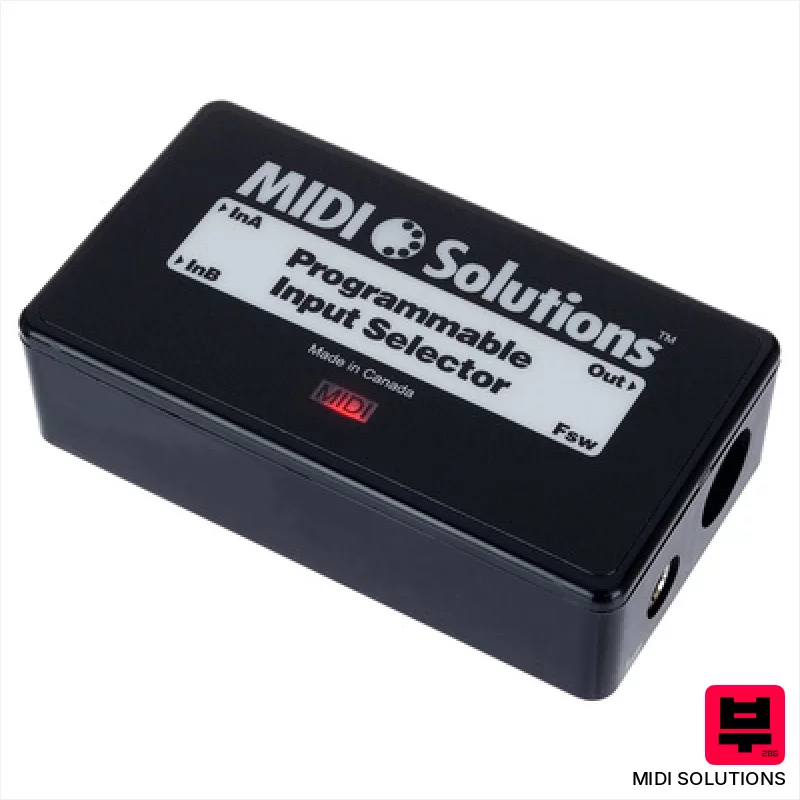
MIDI Solutions Programmable Input Selector
- • Rock-solid MIDI routing, eliminates cable clutter effectively
- • MIDI program change switching offers flexible performance options
- • LED display provides clear, at-a-glance status information
- • Compact size makes it ideal for pedalboards and tight studio spaces
- • Foot switch not included; adds to the overall cost and setup
- • Limited to two MIDI inputs; not suitable for complex routing needs
- • MIDI Solutions' menu navigation can be slightly unintuitive initially
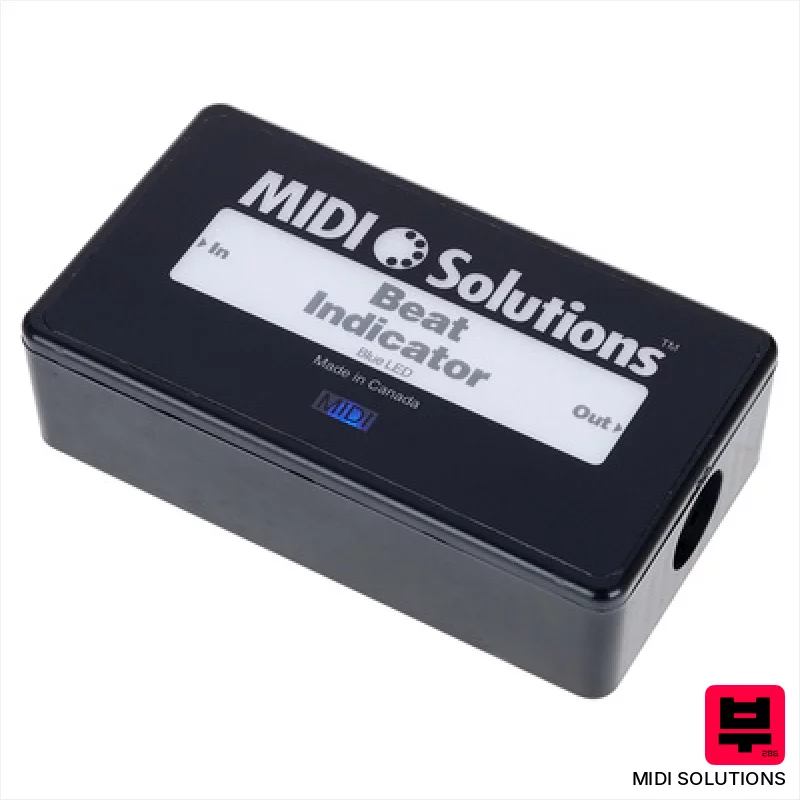
MIDI Solutions Beat Indicator
- • Bright LED provides clear visual beat reference.
- • Programmable delay/advance offers rhythmic flexibility.
- • Compact size makes it easily portable for gigs.
- • MIDI System Exclusive programming is standard for MIDI users.
- • Programming via SysEx can be initially daunting for beginners.
- • Limited to MIDI Clock; no direct audio input processing.
- • Single LED may be insufficient for very bright stage environments.

Expert Sleepers USAMO
- • Sample-accurate MIDI output eliminates timing drift and quantization issues
- • Dedicated hardware ensures low-latency, jitter-free MIDI reconstruction
- • Compact size (4.25 x 3.15 x 1.73 in) facilitates easy integration into any setup
- • Trim control allows for precise MIDI signal level adjustment
- • Requires a separate power supply, adding to initial investment and complexity
- • Relies heavily on the DAW and USAMO plugin for full functionality
- • Limited to MIDI output only; no MIDI input or other advanced features
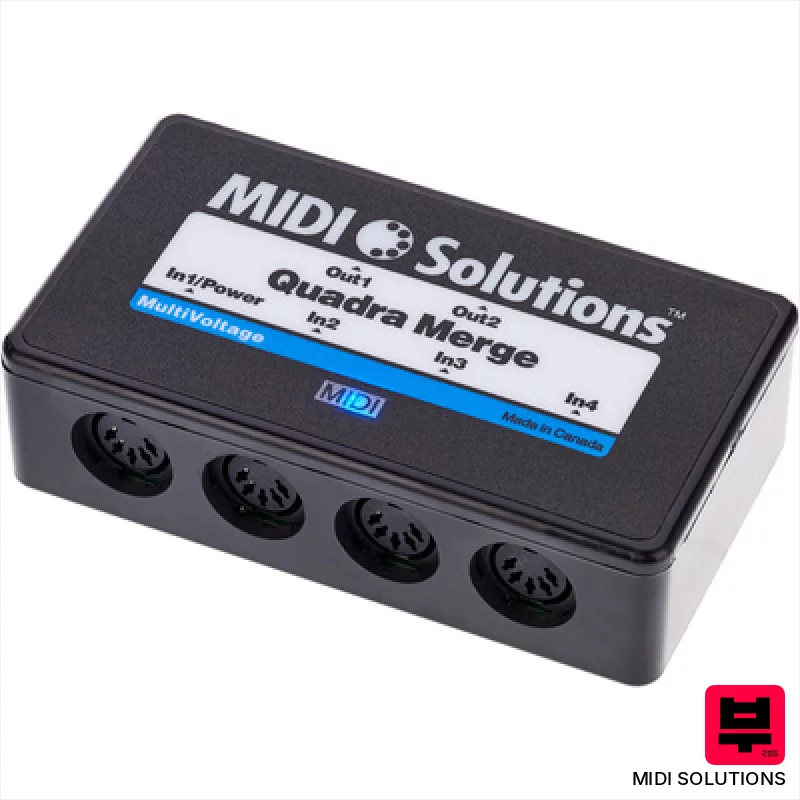
MIDI Solutions Quadra Merge V2
- • Rock-solid MIDI merging, essential for complex setups
- • Simple, intuitive operation – no software headaches
- • Compact size saves valuable rack space in a studio
- • Universal compatibility with both 3.3V and 5V MIDI gear
- • Limited filtering options compared to higher-end merge boxes
- • No MIDI Thru ports; strictly merge-only functionality
- • Powering via MIDI cable can be unreliable with long runs

Old Blood Noise Endeavors MTET MIDI To Expression Trans.
- • Four isolated expression outputs unlock nuanced, complex modulation.
- • Solid, compact enclosure feels robust and well-built, typical OBNX quality.
- • Tip-connected slider intelligently adapts to various expression pedal standards.
- • MIDI Thru port allows for signal chaining and expanded MIDI control.
- • Limited to expression control; lacks other MIDI conversion capabilities.
- • Requires a separate, standard 9V DC power supply, adding to the cost and clutter.
- • Four expression outputs might be overkill for simpler setups.
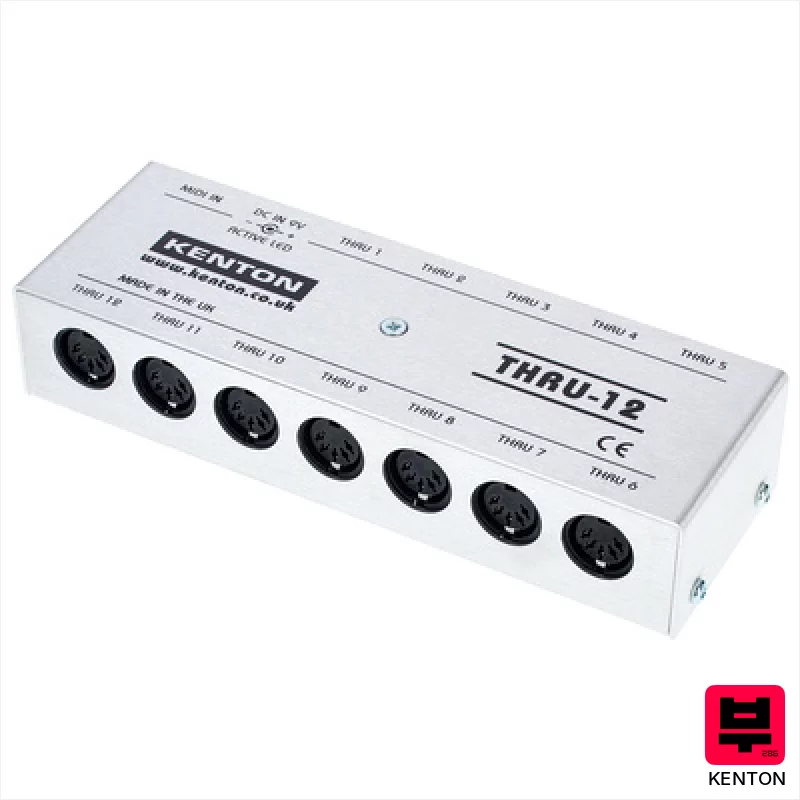
Kenton MIDI Thru 12
- • Rock-solid Kenton build quality; feels incredibly durable.
- • 12 Thru ports offer unparalleled MIDI expansion.
- • Lossless signal ensures pristine MIDI data transmission.
- • Includes a global power supply – very convenient.
- • Size can be a constraint in cramped studio setups.
- • Price point is premium for a simple Thru box.
- • No individual port isolation; potential for ground loops.
Every midi tools that matches
48 models match this page. The 15 above are covered in detail; the rest are listed here with their published specifications.
| # | Model | Specifications | Price |
|---|---|---|---|
| 16 | Doepfer Dark Link | not published | $147 |
| 17 | Kenton MIDI Merge-4 | not published | $143 |
| 18 | Kenton Midi USB Host | not published | $143 |
| 19 | Doepfer MCV4 | not published | $136 |
| 20 | Source Audio Neuro Hub v1 | not published | $136 |
| 21 | Conductive Labs XpandR 4x1 | not published | $101 |
| 22 | MIDI Solutions Merger V2 | not published | $101 |
| 23 | Miditech MIDI thru 7 V2 | not published | $90 |
| 24 | Conductive Labs MRCC Remote 7 | not published | $89 |
| 25 | MIDI Solutions Power Adapter PSA Bundle | not published | $79 |
| 26 | MIDI Solutions Quadra Thru V2 | not published | $79 |
| 27 | Kenton MIDI Thru 5 | not published | $78 |
| 28 | MIDI Solutions Power Adapter | not published | $74 |
| 29 | CME WIDI Uhost | not published | $71 |
| 30 | CME WIDI Thru6 BT | not published | $71 |
| 31 | MIDI Solutions Thru V2 | not published | $71 |
| 32 | CME WIDI Bud Pro | not published | $70 |
| 33 | Miditech 4merge USB Power Supply Set | not published | $68 |
| 34 | Miditech 4merge USB | not published | $63 |
| 35 | CME WIDI Jack DIN-5 MIDI Bundle | not published | $62 |
| 36 | CME WIDI Master | not published | $60 |
| 37 | Lehle MIDI Junction | not published | $56 |
| 38 | CME WIDI K.O.II | not published | $51 |
| 39 | Doepfer We Wheel Electronic | not published | $51 |
| 40 | Miditech Midi Thru 4 /Filter | not published | $50 |
| 41 | CME MIDI Thru5 WC | not published | $41 |
| 42 | CME WIDI Core | not published | $33 |
| 43 | Behringer Go Midi Host | not published | $29 |
| 44 | CME WIDI 25DIN5 | not published | $10 |
| 45 | CME WIDI 25TRS25 | not published | $10 |
| 46 | CME WIDI 25TRS35 | not published | $10 |
| 47 | CME WIDI USB-B OTG Cable Pack I | not published | $10 |
| 48 | CME WIDI USB micro-B OTG Pack II | not published | $9 |
MIDI Tools by the numbers
Measured across all 48 models in this category, so «wide», «short» or «expensive» mean something you can check.
How to Choose the Best MIDI Tools
Build Quality
At this price point, plastic is common. We're looking for robust plastics, decent knobs, and jacks that don't feel like they'll pull out with a firm tug. A flimsy build screams 'one-gig wonder'.
Latency
MIDI latency can ruin a performance. We're testing how quickly signals translate to sound, especially crucial for live performance or tight drum programming. Anything over 1ms is noticeable.
Connectivity
USB is practically mandatory these days, but MIDI I/O (in/out) is a huge bonus for older gear. Thru ports are also key for chaining multiple devices. Consider your existing setup.
Ease of Use
MIDI can be complex. We're prioritizing tools with intuitive layouts and clear labeling. A confusing interface wastes precious time, especially in a band rehearsal.
Software Integration
Does it play nice with your DAW? Some controllers offer basic software mapping, which can save a ton of time. Seamless integration minimizes headaches and maximizes creative flow.
Buying Guide
Don't expect miracles. Under $200, you're making trade-offs. Build quality will be the first thing to suffer - plastic cases and slightly mushy knobs are common. Latency is also a potential issue; look for reviews specifically addressing this. Spend your money on functionality - MIDI ports, assignable knobs, and solid USB connectivity are more important than flashy aesthetics. If you're gigging, a power supply is a must; battery power rarely lasts long enough.
How This List Is Built
We don't play these instruments — we're a catalog, not a review desk, and we'd rather say so than pretend otherwise. This page covers 48 midi tools from the Thomann catalogue, which is the largest single source of specification data in this category: 15 in detail, the rest listed with their specifications.
Position is computed, not curated. We parse the manufacturer's own description into actual values — nut width, scale, fret count, fingerboard radius, size, alloy — and rank on them: how many specifications a model has published, how many of them are measurable numbers, and how precisely it meets this page's criterion. A product image adds a little. Price is not a ranking signal: it tells you nothing about whether a neck fits your hand. The same inputs always produce the same order, so nothing here is shuffled to look fresh.
What this list is good for: narrowing a category down to a shortlist by spec and budget. What it isn't: a substitute for hearing an instrument. Before you buy, read hands-on reviews and, where you can, play it. Full methodology.

