
Best MIDI Tools Under $100 2026
Alright, so you're diving into MIDI but your bank account isn't exactly overflowing? Totally get it. MIDI tools don't have to be a crippling expense. We're talking about getting functional, usable gear that expands your sonic palette without breaking the gigging musician's budget - and that's what we'll cover here.
Last updated: September 28, 2026

Dtronics DT-QT
- • Fast switching minimizes timing issues across multiple devices.
- • Buffered outputs maintain signal integrity over longer cable runs.
- • Compact size makes it easy to integrate into tight studio setups.
- • Signal Cleaner can rescue corrupted MIDI data from problematic gear.
- • Plastic housing feels less robust than metal alternatives.
- • Limited to one input; no merging capabilities.
- • USB power only – no external power adapter option.

Miditech MIDI thru 7 V2
- • Reliable MIDI signal distribution for complex setups
- • Solid construction; feels robust despite the budget price
- • Simple, straightforward operation with clear LED indication
- • Compact size minimizes rack space or desktop clutter
- • MIDI buffering isn’t a primary feature; latency could be a factor
- • Plastic housing isn't as premium as all-metal alternatives
- • Limited error reporting; troubleshooting can be difficult

Conductive Labs MRCC Remote 7
- • Expands MRCC functionality significantly, adding five crucial MIDI outputs.
- • CAT6A cable included offers robust, reliable Ethernet connection.
- • Dual output options (DIN & TRS) provide flexible routing possibilities.
- • Compact design minimizes rack space or desktop footprint.
- • Lacks SysEx support, limiting advanced MIDI message transmission.
- • Dependent on the MRCC hub; not a standalone MIDI solution.
- • TRS sockets are type A & B, potentially incompatible with some gear.
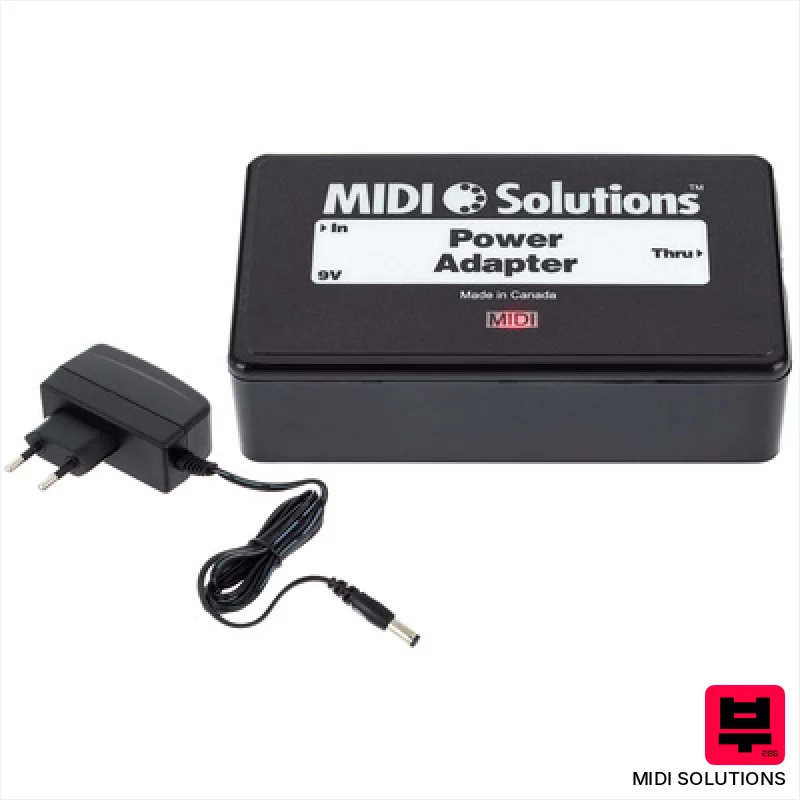
MIDI Solutions Power Adapter PSA Bundle
- • Amplifies MIDI signals reliably over longer cable runs
- • Provides essential power boost for MIDI devices struggling for voltage
- • Thomann power supply ensures consistent, regulated power delivery
- • Compact design minimizes clutter in a crowded studio setup
- • Requires a separate power supply, adding to the overall cost
- • Limited to 9V DC operation, unsuitable for other voltage devices
- • MIDI Thru port offers basic functionality, lacks advanced features
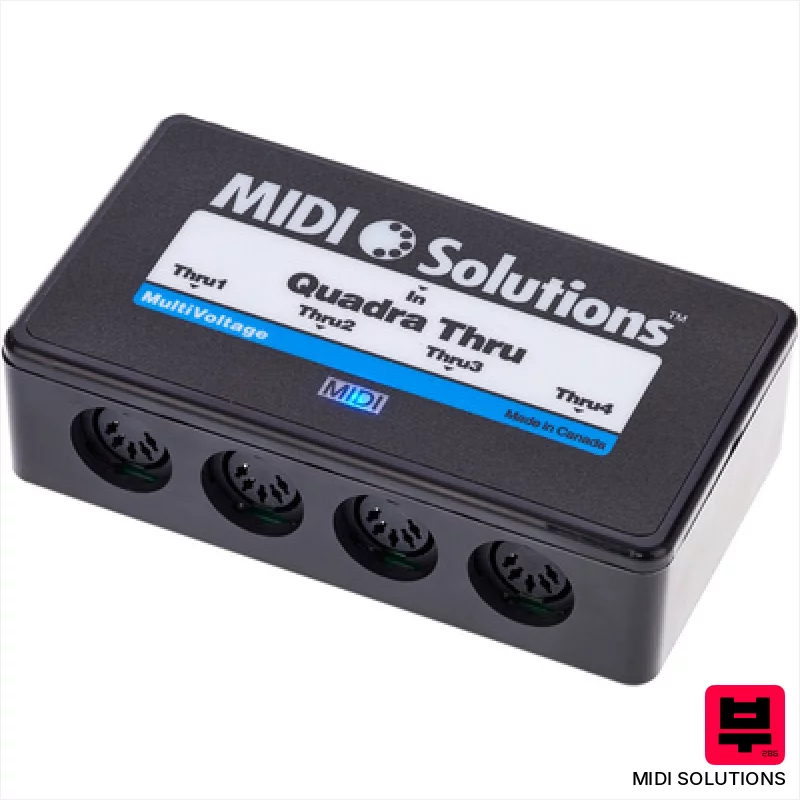
MIDI Solutions Quadra Thru V2
- • Reliable signal distribution for complex MIDI setups
- • Active design ensures strong signal, even over long cable runs
- • Compact size minimizes rack space or desk clutter
- • Robust construction; feels solid and built to last for years
- • Limited to a single MIDI input, restricting flexibility
- • No power indicator light for troubleshooting
- • Basic functionality; lacks advanced features like filtering or merging
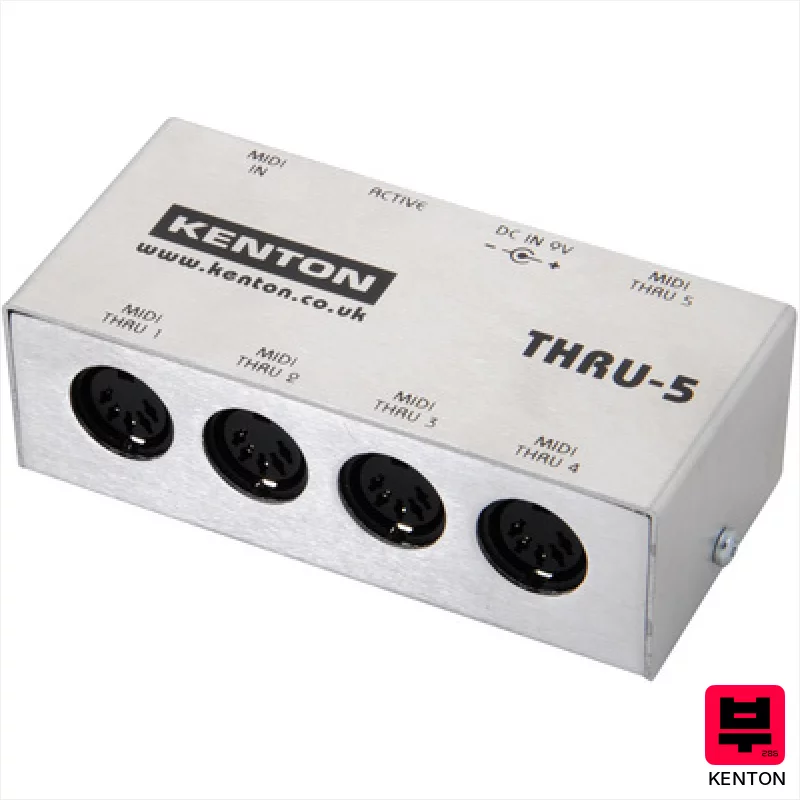
Kenton MIDI Thru 5
- • Robust aluminum chassis offers excellent durability for studio use
- • Kenton’s lossless MIDI transmission ensures pristine signal integrity
- • Simple, straightforward design avoids unnecessary complexity and menu diving
- • Compact size (100 x 50 x 35 mm) fits easily into tight spaces
- • Weight (600g) can be surprisingly hefty for its size
- • Limited to simple MIDI distribution; lacks advanced routing features
- • Power supply is external, adding to cable clutter.
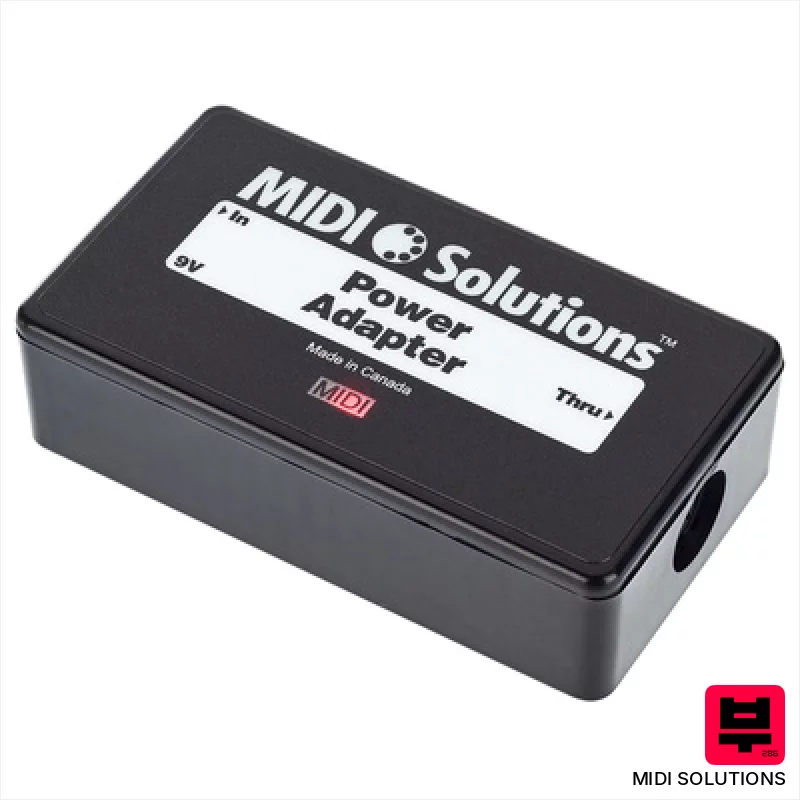
MIDI Solutions Power Adapter
- • Extends MIDI cable runs reliably, solving signal degradation issues
- • Provides clean, stable power for sensitive MIDI devices
- • Robust MIDI Thru port simplifies cascading MIDI chains
- • MIDI Solutions' reputation ensures reliable, professional-grade build quality
- • Requires a separate power supply, adding to overall cost and complexity
- • Limited to MIDI signal amplification; no data conversion capabilities
- • The adapter's footprint can be bulky in tight studio spaces
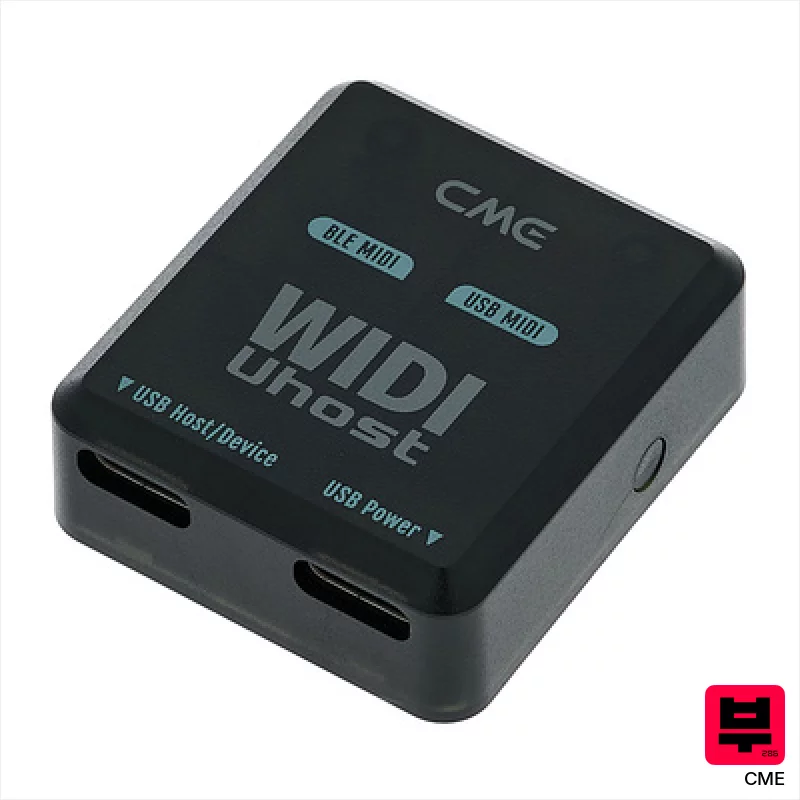
CME WIDI Uhost
- • Extremely compact and lightweight for ultimate portability.
- • Bluetooth 5 offers genuinely low latency for real-time performance.
- • Seamless integration with the WIDI ecosystem expands functionality.
- • Magnetic base provides convenient mounting options on various surfaces.
- • Limited to Bluetooth MIDI; lacks a traditional MIDI DIN port.
- • Reliance on USB-C for power can be restrictive in some setups.
- • Range of 20m is optimistic; walls and interference will reduce it.

CME WIDI Thru6 BT
- • Compact design maximizes desk space, ideal for crowded studios.
- • Bluetooth MIDI offers flexible, wireless connectivity options.
- • Six outputs allow complex routing to multiple devices.
- • Robust USB-C power ensures stable operation without external power.
- • Limited to MIDI data; no audio signal processing capabilities.
- • Small size might make it feel less substantial in hand.
- • Bluetooth range, while decent, isn't suitable for large venues.
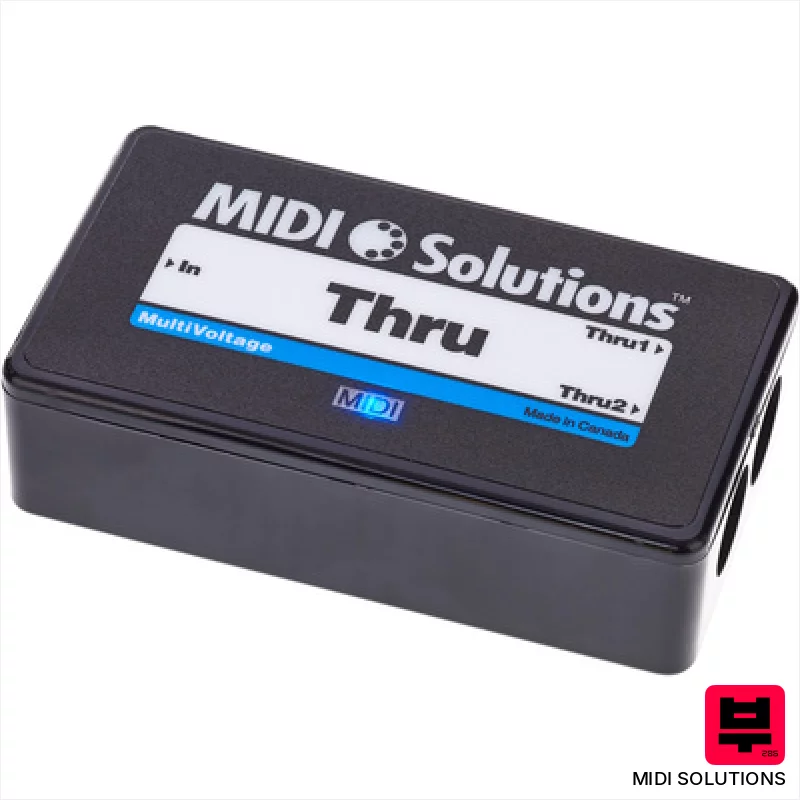
MIDI Solutions Thru V2
- • Reliable thru-boxing, crucial for complex MIDI setups
- • Active design ensures signal integrity over longer cable runs
- • Compact size minimizes rack space or desktop clutter
- • Universally compatible with both 3.3V and 5V MIDI gear
- • Limited to a single input, restricting cascading possibilities
- • No advanced features like filtering or merging capabilities
- • Simple design means no status isolation – potential for MIDI loops
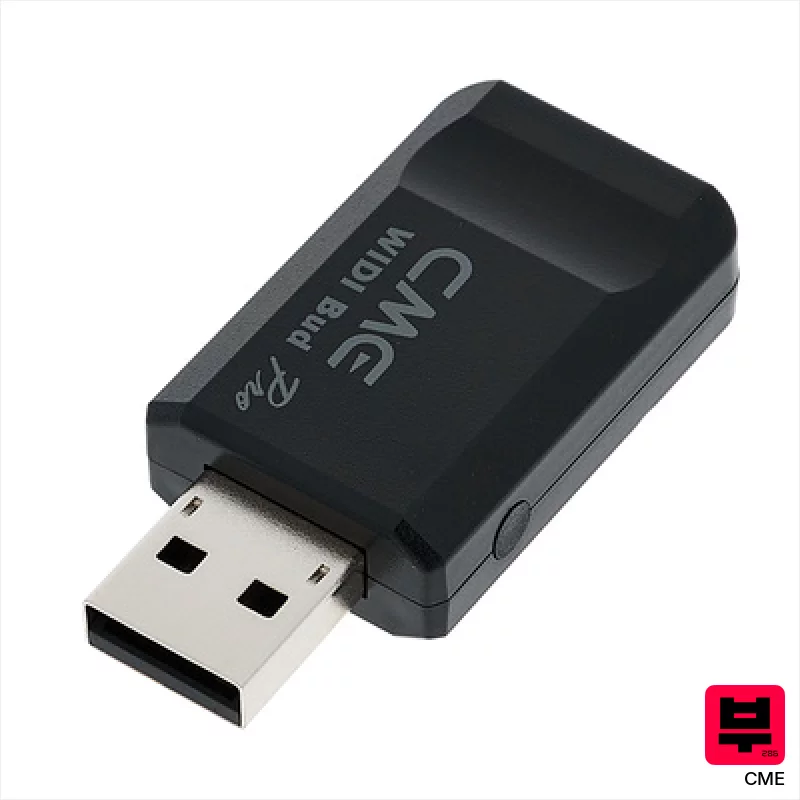
CME WIDI Bud Pro
- • Incredibly compact, easily integrates into tight studio setups.
- • Bluetooth 5 provides reliable, low-latency wireless MIDI transfer.
- • Automatic pairing simplifies setup, minimizing frustration.
- • Bidirectional data transmission handles complex MIDI clock sync flawlessly.
- • Limited range compared to dedicated 2.4GHz MIDI interfaces.
- • Relies on Bluetooth device compatibility; potential for dropouts.
- • No physical MIDI ports – purely wireless functionality.

Miditech 4merge USB Power Supply Set
- • Compact design simplifies complex MIDI routing setups.
- • USB power eliminates the need for separate power adapters.
- • Solid build quality suggests longevity and reliable performance.
- • 4-way merging significantly reduces cable clutter and improves workflow.
- • Lack of MIDI thru port limits expansion possibilities.
- • USB cable not included is a frustrating, cost-saving omission.
- • Limited power output may struggle with power-hungry MIDI devices.
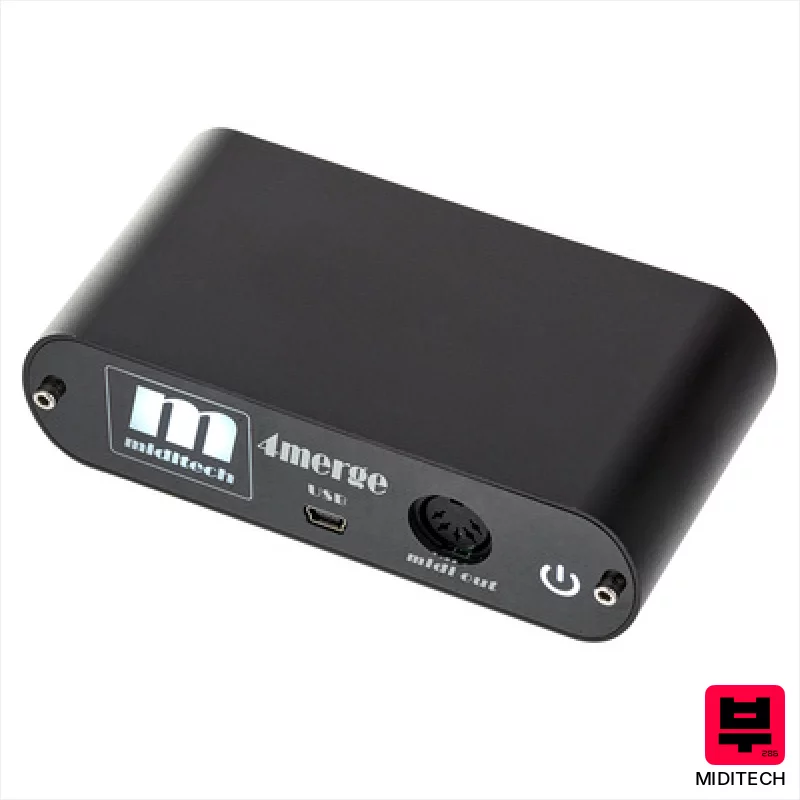
Miditech 4merge USB
- • Simple, reliable merging of multiple MIDI sources.
- • Compact size makes it ideal for cramped studio setups.
- • USB powered eliminates the need for a separate power brick.
- • Rock-solid MIDI clock synchronization, avoiding timing drift.
- • Plastic enclosure feels a little cheap, not particularly robust.
- • Limited advanced routing options compared to more expensive mergers.
- • No MIDI filtering capabilities – just merging.

CME WIDI Jack DIN-5 MIDI Bundle
- • Bluetooth 5 offers genuinely low-latency MIDI transmission for responsive playing.
- • DIN-5 connector expands MIDI connectivity beyond standard 3.5mm jacks.
- • Compact size and magnetic base offer convenient placement and portability.
- • WIDI ecosystem compatibility provides flexibility for expanding MIDI setups.
- • Reliance on Bluetooth introduces potential for interference and connection drops.
- • Powering via MIDI Out can limit options for certain MIDI devices.
- • Limited range compared to traditional wired MIDI solutions.

CME WIDI Master
- • Tiny form factor enables discreet MIDI routing in tight spaces
- • Automatic pairing simplifies setup, a huge time-saver
- • Low 3ms latency ensures near-imperceptible MIDI transmission delay
- • Supports SysEx data, expanding functionality beyond basic MIDI
- • Requires two units for bidirectional MIDI device communication
- • Powered solely via MIDI Out, limiting placement options
- • Bluetooth connectivity can be susceptible to wireless interference
Every midi tools that matches
27 models match this page. The 15 above are covered in detail; the rest are listed here with their published specifications.
| # | Model | Specifications | Price |
|---|---|---|---|
| 16 | Lehle MIDI Junction | not published | $56 |
| 17 | CME WIDI K.O.II | not published | $51 |
| 18 | Doepfer We Wheel Electronic | not published | $51 |
| 19 | Miditech Midi Thru 4 /Filter | not published | $50 |
| 20 | CME MIDI Thru5 WC | not published | $41 |
| 21 | CME WIDI Core | not published | $33 |
| 22 | Behringer Go Midi Host | not published | $29 |
| 23 | CME WIDI 25DIN5 | not published | $10 |
| 24 | CME WIDI 25TRS25 | not published | $10 |
| 25 | CME WIDI 25TRS35 | not published | $10 |
| 26 | CME WIDI USB-B OTG Cable Pack I | not published | $10 |
| 27 | CME WIDI USB micro-B OTG Pack II | not published | $9 |
MIDI Tools by the numbers
Measured across all 27 models in this category, so «wide», «short» or «expensive» mean something you can check.
How to Choose the Best MIDI Tools
Build Quality
Let's be honest, under $100, you're gonna feel some compromises. We're looking for something that won't fall apart mid-gig, even if it's mostly plastic. Sturdiness matters, especially if you're hauling gear.
Latency
MIDI latency is the killer. It can turn a fluid performance into a robotic mess. We tested each tool's latency with various DAWs to see if it's usable for real-time playing - anything over 10ms starts to feel noticeable.
Connectivity & Compatibility
USB 2.0 is pretty much the standard, but check for MIDI IN/OUT ports if you're connecting to older gear. Compatibility with your DAW (Ableton, Logic, Pro Tools, etc.) is a no-brainer, but confirm it before you buy.
Ease of Use
Complex menus and cryptic button layouts are a pain. We favored tools that are relatively intuitive and easy to program, especially for those new to MIDI. A clear display is a huge bonus.
Feature Set
What do you really need? Some tools offer advanced modulation, others focus on simple note triggering. We assessed which features are genuinely useful and which are just marketing fluff in this price range.
Buying Guide
At this price point, expect to make some trade-offs. Build quality is often the first thing to get scaled back - the plastic feels cheap, but it's usually functional. Latency is another area where you might notice a slight increase compared to higher-end gear. Prioritize latency and ease of use; a complicated tool that lags is worse than a simple one that responds well. Don't chase features you won't use; a basic MIDI foot controller that works reliably is far better than a feature-packed mess.
How This List Is Built
We don't play these instruments — we're a catalog, not a review desk, and we'd rather say so than pretend otherwise. This page covers 27 midi tools from the Thomann catalogue, which is the largest single source of specification data in this category: 15 in detail, the rest listed with their specifications.
Position is computed, not curated. We parse the manufacturer's own description into actual values — nut width, scale, fret count, fingerboard radius, size, alloy — and rank on them: how many specifications a model has published, how many of them are measurable numbers, and how precisely it meets this page's criterion. A product image adds a little. Price is not a ranking signal: it tells you nothing about whether a neck fits your hand. The same inputs always produce the same order, so nothing here is shuffled to look fresh.
What this list is good for: narrowing a category down to a shortlist by spec and budget. What it isn't: a substitute for hearing an instrument. Before you buy, read hands-on reviews and, where you can, play it. Full methodology.

