
Best MIDI Interfaces Under $50 2026
Alright, so you need MIDI connectivity but your wallet's looking a little thin? Believe me, I've been there. Getting your synths, drum machines, and controllers talking to your DAW doesn't have to break the bank. We're diving into the best MIDI interfaces you can snag for under $50 - and I'll tell you what you're really getting for your money.
Last updated: September 28, 2026
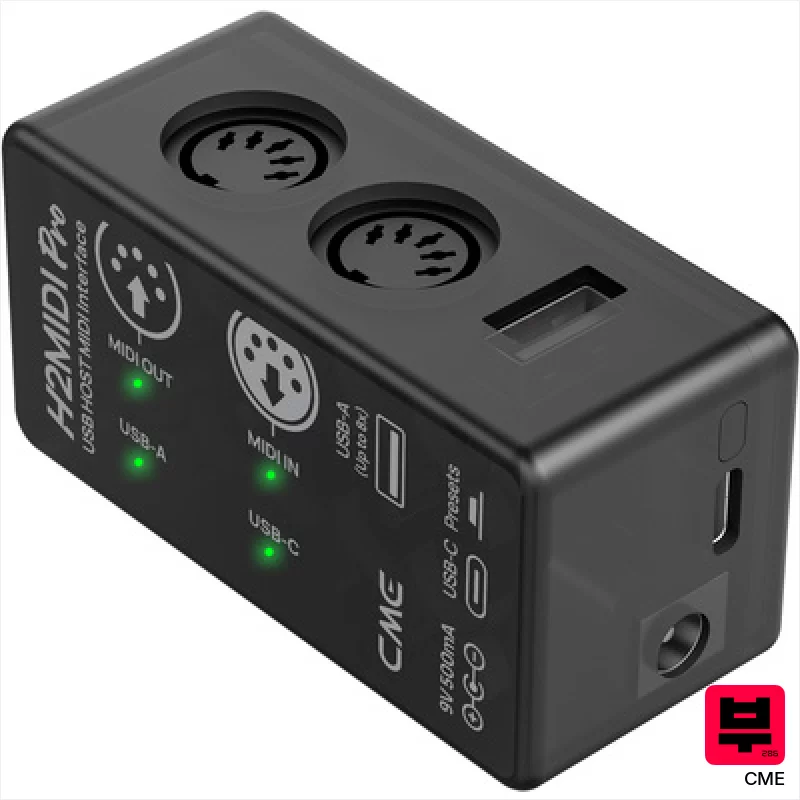
CME H2MIDI Pro
- • Extremely compact and lightweight, ideal for travel setups.
- • HxMIDI Tools software offers surprisingly robust routing capabilities.
- • Dual USB-C and USB-A connections provide flexible host/client options.
- • Bus-powered via USB-C simplifies integration with laptops and mobile devices.
- • Limited MIDI ports; only one input and one output.
- • 9V DC power option requires sourcing a separate power supply.
- • Plastic enclosure feels a bit fragile for constant gigging.

CME U4MIDI WC
- • Excellent value for the number of MIDI ports offered.
- • HxMIDI Tools software provides surprisingly deep routing capabilities.
- • Compact size makes it ideal for mobile setups and pedalboards.
- • USB-C power option simplifies integration with modern equipment.
- • Plastic enclosure feels a bit flimsy for frequent travel or heavy use.
- • Bluetooth MIDI requires the separate WIDI Core extension, adding cost.
- • Limited physical controls beyond the LED indicators.
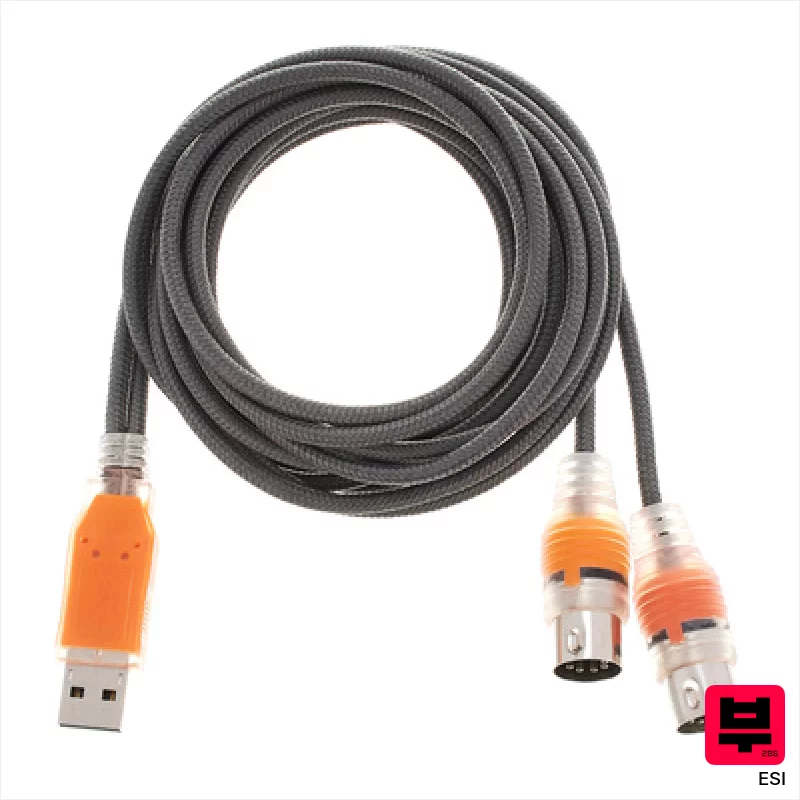
ESI MidiMate eX
- • Dual MIDI ports offer flexible input/output routing options
- • Automatic detection simplifies setup and troubleshooting
- • Power-over-MIDI feature minimizes cable clutter and power needs
- • Compact size makes it highly portable and studio-friendly
- • Plastic enclosure feels somewhat cheap compared to higher-end interfaces
- • Limited to basic 16-channel MIDI functionality, lacks advanced routing
- • Driver support, while broad, can occasionally be finicky on older systems

CME C2MIDI Pro
- • Retractable USB-C simplifies cable management and reduces clutter.
- • Standalone filtering/mapping removes computer dependency for basic tasks.
- • HxMIDI Tools software provides powerful, accessible MIDI manipulation.
- • Compact, lightweight design (89g) enhances portability and convenience.
- • Single MIDI In/Out limits complexity for larger studio setups.
- • USB-C only connectivity restricts compatibility with older devices.
- • Plastic housing feels somewhat budget-oriented, not premium.
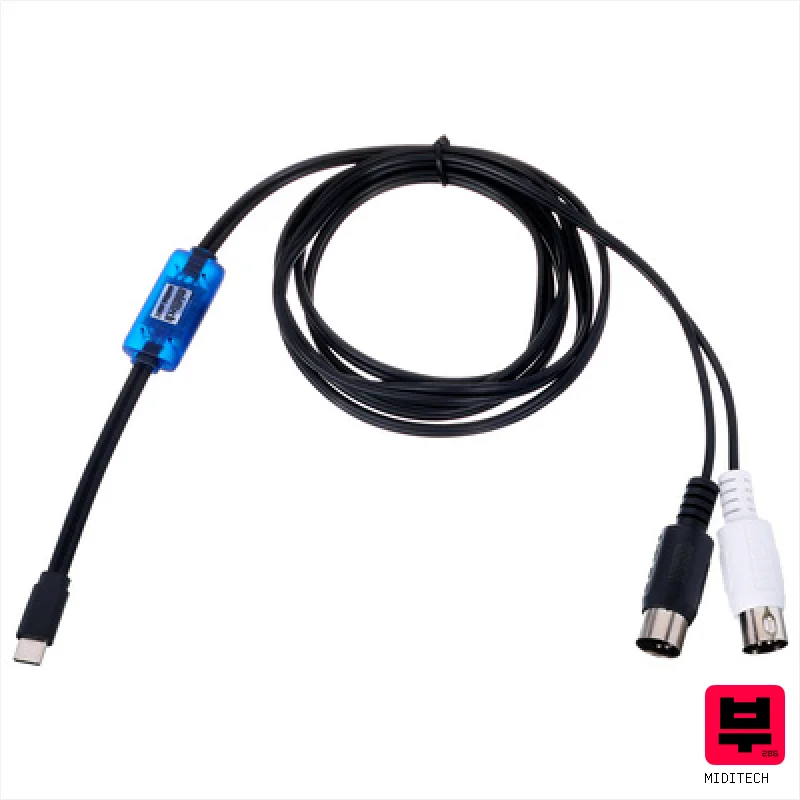
Miditech Midilink mini C
- • Works on any USB-C device without extra drivers
- • Supports up to 16 different MIDI channels
- • Very small and easy to carry anywhere
- • Uses standard USB-C for both data and power
- • No power adapter needed means no built-in power
- • Does not show weight in the provided text
- • Limited to one input and one output port

CME U2 MIDI Pro
- • Compact size minimizes desk clutter, ideal for mobile setups.
- • UxMIDI Tools software provides robust routing and filtering capabilities.
- • Class-compliant operation removes driver installation hassle.
- • USB-A connectivity offers broad compatibility with older devices.
- • Single MIDI In/Out limits complexity of routing scenarios.
- • USB-A connection feels dated compared to USB-C alternatives.
- • Plastic construction feels less premium than metal-encased interfaces.

Thomann Midi USB 1x1
- • Extremely affordable entry point into MIDI connectivity
- • Solid USB connectivity for reliable data transfer
- • Compact size makes it ideal for portable setups
- • Simple, no-frills design ensures plug-and-play operation
- • Limited to 1x1 MIDI I/O restricts more complex setups
- • Cable length (approximately 2m) might be restrictive for some
- • Windows 7 compatibility feels dated; lacks newer OS support
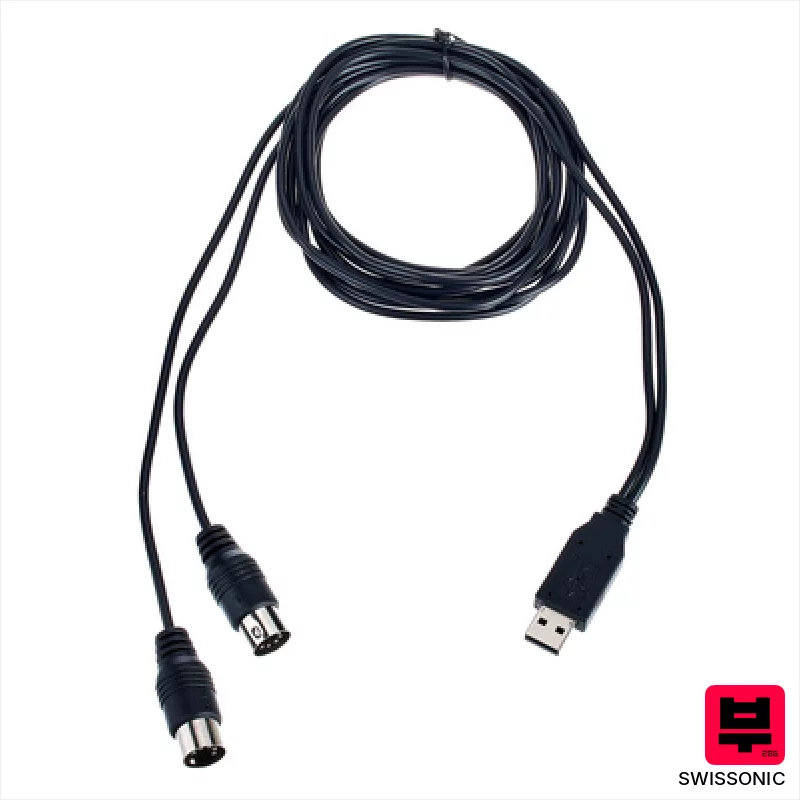
Swissonic MidiConnect 2
- • Extremely affordable entry point to USB MIDI connectivity
- • Automatic input/output detection simplifies setup considerably
- • Compact size and 1.8m cable offer decent portability
- • Broad OS compatibility ensures functionality across older and newer systems
- • Plastic construction feels somewhat flimsy and not very durable
- • Limited to two MIDI ports – not ideal for complex setups
- • Lacks advanced features like MIDI clock sync or bi-directional MIDI
MIDI Interfaces by the numbers
Measured across all 8 models in this category, so «wide», «short» or «expensive» mean something you can check.
How to Choose the Best MIDI Interfaces
Latency
This is king. Even a few milliseconds of lag can mess with your feel, especially when playing keys or sequencing. Expect some latency at this price point, but we're looking for the lowest possible.
Build Quality
Let's be real, $50 doesn't buy you a tank. We're checking for flimsy connectors, questionable plastic, and overall construction that suggests it won't snap in half if you bump it on stage.
Driver Stability
Nothing's worse than a MIDI interface that randomly disconnects. Driver stability across different operating systems (Windows, macOS) is crucial, especially if you gig.
Port Count & Type
Most budget interfaces offer 1-in, 1-out. We're assessing if that's enough for your needs. USB type (A or C) also matters for compatibility with your computer.
Power Delivery
Some cheaper interfaces rely on USB power alone, which can sometimes lead to dropouts or issues with power-hungry MIDI devices. We're noting any limitations here.
Buying Guide
At this price, you're making compromises. Don't expect pristine audio quality or advanced routing capabilities. The biggest trade-off is usually latency and build; the plastic will feel cheap, and you might notice a slight delay. Prioritize driver stability above all else - a reliable connection is worth more than a few extra milliseconds of latency. If you're gigging, consider a power adapter to avoid USB power issues.
How This List Is Built
We don't play these instruments — we're a catalog, not a review desk, and we'd rather say so than pretend otherwise. This page covers 8 midi interfaces from the Thomann catalogue, which is the largest single source of specification data in this category: 8 in detail, the rest listed with their specifications.
Position is computed, not curated. We parse the manufacturer's own description into actual values — nut width, scale, fret count, fingerboard radius, size, alloy — and rank on them: how many specifications a model has published, how many of them are measurable numbers, and how precisely it meets this page's criterion. A product image adds a little. Price is not a ranking signal: it tells you nothing about whether a neck fits your hand. The same inputs always produce the same order, so nothing here is shuffled to look fresh.
What this list is good for: narrowing a category down to a shortlist by spec and budget. What it isn't: a substitute for hearing an instrument. Before you buy, read hands-on reviews and, where you can, play it. Full methodology.

