AudioFu
AudioFu Chart · October 2026
Best MIDI Interfaces 2026
The top pick is Strymon Conduit Midi Hub ($179). CME U4MIDI WC gives you the most for the money at $45. Black Lion Audio MIDI Eight USB-C MIDI Interface leads the high end. Ranked by the AudioFu Index from 26 models across 10 brands, prices checked every night.
Last updated: October 17, 2026
Narrow the chart
All MIDI InterfacesTop 10
Full detail for the 10 highest AudioFu Index scores. Every other model is listed below.
-
The Conduit is a clever solution for Strymon pedal users wanting deep MIDI control, especially for those already comfortable with computer-based editing. It's a well-built, streamlined hub that simplifies complex pedalboard routing, making it perfect for gigging musicians and studio engineers who want to unlock the full potential of their effects.
Pros
- Four 6.3mm jacks simplify pedal chaining, a Strymon hallmark.
- Robust build quality reflects Strymon's reputation for durability.
- Seamless computer integration for advanced preset manipulation and SysEx.
Cons
- Limited channel count compared to more expensive, full-featured interfaces.
- Power adapter dependency restricts portability and adds a cable.
63AudioFu
IndexStableno change since Aug 14Aug 14$179 now$179€159 at Thomann · in stockCheck price ↗ -
Black Lion Audio MIDI Eight USB-C MIDI Interface
MIDI Eight · Black Lion Audio
8 for sale on Reverb1 finish at Thomann
- Size19"
- Weight2.63 kg
This interface handles big setups by giving you eight MIDI channels and a built-in hub. It works alone without a computer, which is great for live shows or quick tests. Just remember the USB ports only give power, not data, so plan your connections carefully.
Pros
- Eight MIDI inputs and outputs handle huge setups
- Standalone mode lets you run without a computer
- USB 3.2 hub powers many connected devices easily
Cons
- USB ports only power devices, no data transfer
- Front panel lacks knobs or faders for mixing
62AudioFu
IndexStableno change since Sep 13Sep 13$438 now$438€389 at Thomann · in stockCheck price ↗ -
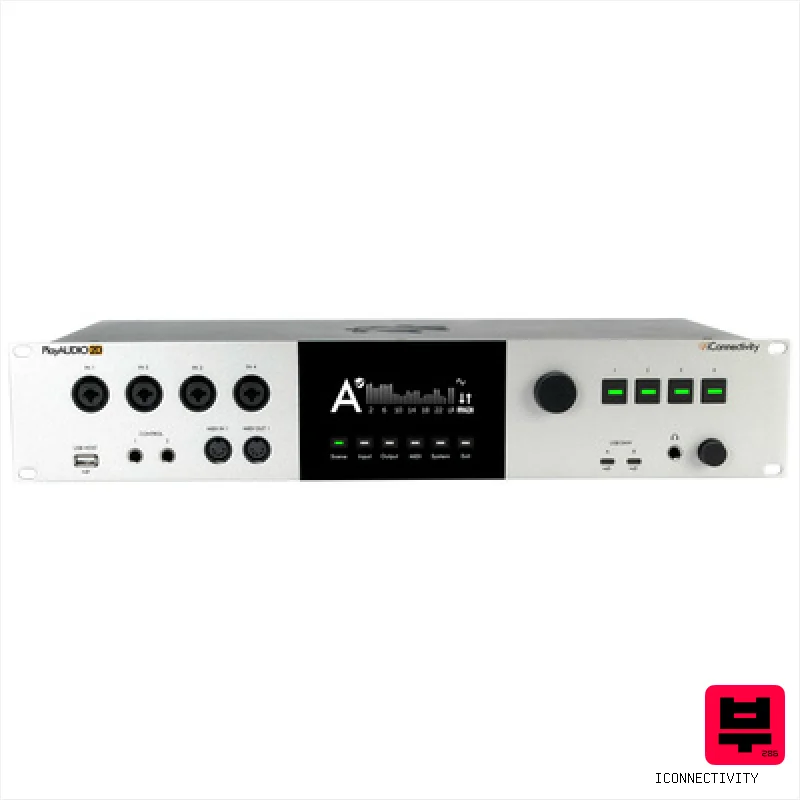
iConnectivity MioXL USB / Network MIDI Interface
mioXL · iConnectivity
6 for sale on Reverb1 finish at Thomann
- Size19"
The mioXL is a powerhouse for serious MIDI routing and network needs. If you’re a producer, composer, or live performer juggling multiple synths, computers, and controllers, this interface will become your central hub, offering unparalleled control and flexibility—though be prepared to invest some time learning its intricacies.
Pros
- Extensive MIDI I/O provides unmatched routing flexibility.
- RTP-MIDI networking simplifies complex multi-computer setups.
- Touch-sensitive control panel offers intuitive, immediate adjustments.
Cons
- Price point places it beyond budget-conscious MIDI users.
- Reliance on external Wi-Fi hub for wireless functionality is inconvenient.
56AudioFu
Index↓ 2.6%since Aug 14 · lowest so far$437 · Aug 14$425 now$425€378 at Thomann · in stockCheck price ↗ -
The ESI M4U eX is a solid, affordable MIDI interface for musicians and producers needing a lot of ports. Its thru/merge functionality is a real bonus, making it versatile for complex routing scenarios. It's a great choice for those wanting reliable performance without a premium price tag.
Pros
- 8 ports offer exceptional flexibility for complex setups
- USB 3.0 ensures rock-solid latency for demanding projects
- Thru/Merge capabilities expand routing options significantly
Cons
- Plastic enclosure feels a bit budget-oriented, lacks premium heft
- LED indicators, while colorful, can be overly bright in a dark room
55AudioFu
Index↓ 24.7%since Aug 14 · lowest so far$223 · Aug 14$168 now$168€149 at Thomann · in stockCheck price ↗ -
The mioXM is a seriously powerful little box for anyone wrestling with MIDI spaghetti. It's ideal for studio musicians, electronic producers, or anyone needing robust MIDI routing and network capabilities – especially those working with mobile devices and multiple computers. It’s a clever solution for complex MIDI environments.
Pros
- Rock-solid MIDI routing, essential for complex setups.
- RTP-MIDI networking a huge boon for mobile workflows.
- Touch-sensitive controls offer intuitive, tactile adjustments.
Cons
- The touch panel can be a little finicky with complex gestures.
- WIFI functionality needs a separate hub, adding to the cost and complexity.
51AudioFu
Index↓ 2.6%since Aug 14 · lowest so far$255 · Aug 14$249 now$249€221 at Thomann · in stockCheck price ↗ -
- Weight0.18 kg
The Nektar MIDIFLEX 4 is a surprisingly capable little MIDI interface, especially considering the price. Its merge/split functions are genuinely useful for routing multiple MIDI devices, and the included Bitwig 8-Track is a great starting point for those new to music production. It’s a perfect solution for bedroom producers or anyone needing basic MIDI routing without breaking the bank.
Pros
- Robust aluminum housing provides excellent durability for studio use
- Flexible routing options (merge/split) offer surprising versatility
- Autosense functionality simplifies setup and eliminates compatibility headaches
Cons
- Limited number of MIDI ports might restrict complex setups
- Compact size could be a challenge in cramped workspaces
-
- Weight0.4 kg
The Miditech MIDIface 4x4 is a seriously handy little box. It's perfect for anyone needing simple MIDI routing, merging, or a standalone thru for older synths. The price point makes it a great value for home studios and smaller live rigs where you need a bit more MIDI control.
Pros
- Four MIDI inputs offer flexibility for complex setups.
- Standalone merge/thru functionality is genuinely useful and convenient.
- Compact size makes it easy to integrate into tight studio spaces.
Cons
- Plastic enclosure feels a bit cheap for prolonged, gigging use.
- Standalone mode requires external power, adding to cable clutter.
-
- Size19"
This interface works out of the box on any USB port without extra drivers. The metal case feels sturdy, and the little lights tell you which port is active. It is great for recording bands with many instruments because it handles 256 channels easily. Anyone building a home studio will like the simple USB design.
Pros
- No drivers needed for instant setup
- Supports USB 1, 2, and 3 speeds
- Each MIDI port has a status light
Cons
- No power adapter included in the box
- No detailed specs on the weight listed
49AudioFu
IndexStableno change since Aug 17Aug 17$438 now$438€389 at Thomann · in stockCheck price ↗ -
The CME U4MIDI WC is a seriously clever little box. It’s a fantastic, budget-friendly option for musicians needing multiple MIDI connections on the go or wanting to integrate with pedalboards. It's perfect for bedroom producers, gigging musicians, or anyone needing a flexible and compact MIDI hub.
Pros
- Excellent value for the number of MIDI ports offered.
- HxMIDI Tools software provides surprisingly deep routing capabilities.
- Compact size makes it ideal for mobile setups and pedalboards.
Cons
- Plastic enclosure feels a bit flimsy for frequent travel or heavy use.
- Bluetooth MIDI requires the separate WIDI Core extension, adding cost.
48AudioFu
Index↓ 13.0%since Aug 14 · lowest so far$52 · Aug 14$45 now$45€40 at Thomann · in stockCheck price ↗ -
The ESI M8U eX is a workhorse MIDI interface perfect for studios and live rigs needing extensive MIDI connectivity. Its flexible routing and solid construction make it a reliable choice for handling complex setups, especially if you’re working with vintage synths or a large collection of MIDI gear.
Pros
- 16 bidirectional ports offer incredible routing flexibility.
- Solid build quality; the metal chassis feels robust and durable.
- Automatic port detection simplifies complex MIDI setups significantly.
Cons
- The larger size (12.8 in x 5.7 in x 1.8 in) limits desktop space.
- Driver dependency on older macOS versions could be a concern for some.
47AudioFu
Index↓ 22.7%since Aug 14 · lowest so far$336 · Aug 14$260 now$260€231 at Thomann · in stockCheck price ↗
All 26 MIDI interfaces
Same index, same nightly prices — compact. Colour options of one model share a row. Tap a photo to zoom.
- 11
iConnectivity mioXC USB-C MIDI InterfacemioXC · iConnectivity46Stable$54€48$54€48Check ↗
- 12
CME H4MIDI WCCME46↓ 7.8%$66€59$66€59Check ↗
- 13
CME H2MIDI ProCME45↓ 6.5%$48€43$48€43Check ↗
- 14
Miditech MIDIface 8x8Miditech44↓ 6.3%$168€149$168€149Check ↗
- 15
CME U6 MIDI ProCME43↓ 2.2%$51€45$51€45Check ↗
- 16
CME U2 MIDI ProCME42Stable$21€19$21€19Check ↗
- 17
CME C2MIDI ProCME42Stable$30€27$30€27Check ↗
- 18
ESI MidiMate eXESI42↓ 3.8%$31€28$31€28Check ↗
- 19
CME H12MIDI ProCME42Stable$209€186$209€186Check ↗
- 20
Miditech Midilink mini CMiditech41Stable$22€20$22€20Check ↗
- 21
Miditech MIDIface 2x2Miditech41Stable$55€49$55€49Check ↗
- 22
Miditech MIDIface 4x4Miditech41Stable$66€59$66€59Check ↗
- 23
panda audio midiBeam 4Controlpanda audio37Stable$68€60$68€60Check ↗
- 24
panda audio midiBeam v2panda audio37Stable$208€185$208€185Check ↗
- 25
Swissonic MidiConnect 2Swissonic35Stable$17€15$17€15Check ↗
- 26
Thomann Midi USB 1x1Thomann35Stable$19€17$19€17Check ↗
MIDI Interfaces by the numbers
Measured across all 27 models we track, not a sample.
Median $66 — half of all MIDI interfaces here cost less.
How to choose the best MIDI interfaces
Latency
This is the big one. Lower latency means tighter synchronization between your controller and your sounds, crucial for playing anything beyond a slow ballad. A few milliseconds can be the difference between a playable performance and a frustrating lag. Look for interfaces with drivers known for low latency, especially if you're a keyboard player or drummer.
Connectivity
Beyond just the number of MIDI ports (in and out), consider the type. 5-pin DIN is the standard, but some older gear uses the chunky MIDI-B connector - make sure the interface you choose can handle what you have. Thru ports are essential for daisy-chaining gear.
MIDI Clock Sync
A stable MIDI clock signal is vital for keeping everything in time. Look for interfaces that offer multiple clock sources (internal, external, USB) and accurate clock resolution. A drifting clock will ruin your groove and make syncing external sequencers a nightmare.
Driver Stability
This is where a lot of cheap interfaces fall apart. Unstable drivers can cause dropouts, crashes, and general MIDI mayhem. Research the manufacturer's reputation and check online forums for user experiences - a reliable driver is worth its weight in gold.
USB Performance
USB 2.0 is generally fine for most MIDI applications, but if you're running a ton of MIDI data, or using a high-resolution MIDI controller, USB 3.0 can offer a more robust connection. It's also worth noting that some USB ports on older computers can be problematic - try different ports if you're experiencing issues.
Buying guide
So, you're tired of wrestling with USB MIDI cables that drop out mid-song or struggling to get your vintage synth talking to your DAW? A dedicated MIDI interface is a game-changer, plain and simple. It's not just about connectivity; it's about rock-solid performance, lower latency, and often, better MIDI filtering and routing. Let's break down what to look for to avoid another frustrating gig or recording session.
Don't get caught up in unnecessary features. A simple, reliable interface with low latency and solid drivers is often all you need. Cheap interfaces frequently cut corners on component quality and driver development, leading to frustration down the line.
Spending a little more on a reputable brand with a good track record is almost always a worthwhile investment - especially if you're gigging.
How the AudioFu Index works
Five measured signals and nothing else — no stars from strangers, no “tested by experts” we didn’t do. The weights are fixed and public. We don’t play these instruments; we measure the market around them.
This chart covers 27 MIDI interfaces from the Thomann catalogue. Before you buy, read hands-on reviews and, where you can, play it. Full methodology.
AudioFu earns a commission when you buy through our Thomann links. It never changes the order — the index does.
- Demand40%
How many of this exact model are for sale on Reverb right now — what musicians actually buy and resell.
- Lineup20%
How many finishes Thomann stocks — makers expand the models that sell.
- Price15%
Where the price has moved since we started tracking in August.
- Specs15%
How completely the maker documents it.
- Maker10%
How deep the brand’s range is in this category.
Questions
What's the difference between a MIDI interface and a USB MIDI cable?
A USB MIDI cable essentially acts as a direct conduit. A MIDI interface processes the MIDI data, providing better timing, isolation, and often more flexible routing options. Think of it like the difference between a garden hose and a sophisticated irrigation system.
Do I need a MIDI interface if I have a USB MIDI keyboard?
Most USB MIDI keyboards have built-in interfaces, but a dedicated interface can still offer advantages like lower latency and improved clock stability, especially when syncing multiple devices.
What does 'MIDI filtering' do?
MIDI filtering allows you to selectively block or modify MIDI messages. This can be useful for removing unwanted MIDI data, correcting errors, or creating custom MIDI effects - a lifesaver when dealing with glitchy vintage gear.
Can I use a MIDI interface for audio as well?
Some MIDI interfaces also offer audio inputs and outputs. While convenient, it's generally better to have separate audio and MIDI interfaces for optimal performance - the audio circuitry can introduce noise and interference into your MIDI signals.
My MIDI interface isn't working - what should I do?
First, check the basics: power, cable connections, and driver installation. Then, try a different USB port and computer. Finally, consult the manufacturer's website for troubleshooting tips and driver updates - driver issues are surprisingly common.