
Best Gold Tone Mandolins 2026
So, you're looking at Gold Tone mandolins? Smart move. They've carved out a unique niche - offering surprisingly playable and decent-sounding instruments at a price point that doesn't require a second mortgage. While they won't blow away a Gibson or Collings, Gold Tone offers a lot of bang for your buck, especially if you're just starting out or need a reliable backup axe for gigs. Let's dig in and see what makes them tick.
Last updated: October 8, 2026

Gold Tone GME-4 E-Mandoline
- • Alder body provides a warm, resonant foundation for amplified tones.
- • Maple neck offers snappy response and comfortable playability for faster lines.
- • Dual-rail humbucker delivers a thick, cutting tone suitable for various genres.
- • Compensated bridge ensures accurate intonation across the fretboard.
- • Alder body can feel slightly 'soft' and prone to dents with heavy gigging.
- • Bolt-on neck construction limits high-end sustain compared to set-neck designs.
- • Tone controls are basic, offering limited shaping beyond volume and basic tone.

Gold Tone A-6 Mando Guitar TS
- • Solid spruce top delivers a bright, responsive tone with good projection
- • Slim neck profile and Zero Glide nut make for comfortable, fast playing
- • Adjustable truss rod allows for easy setup and seasonal adjustments
- • Maple back and sides provide warmth and balance to the overall sound
- • Open gear tuners can be a little finicky and require more careful tuning
- • Tabacco Sunburst satin finish, while attractive, might be prone to minor scratches
- • Limited tonal versatility; best suited for bluegrass and Americana styles
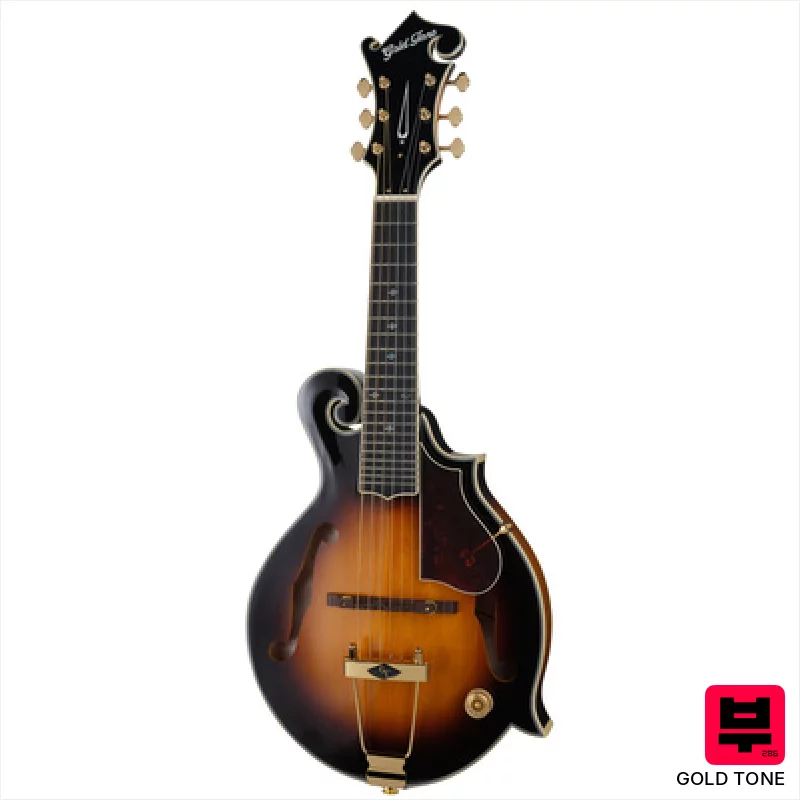
Gold Tone F6-Plus
- • Solid spruce top delivers bright, articulate bluegrass tones.
- • Maple back and sides add warmth and projection.
- • Adjustable ebony bridge allows for precise intonation tweaking.
- • Slim neck profile makes it comfortable for a wide range of players.
- • Open-gear tuners might require more frequent adjustments than sealed ones.
- • Sunburst satin finish is susceptible to fingerprints and minor scratches.
- • Pickup, while functional, won't satisfy advanced amplified mandolin needs.
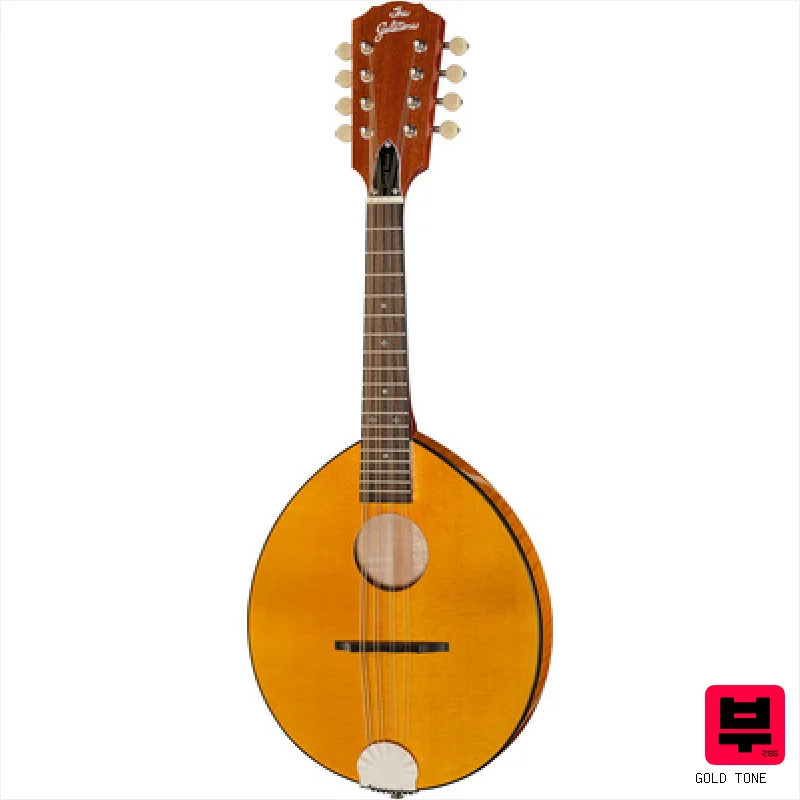
Gold Tone GM-10 Frypan Mandoline w/Case
- • Solid spruce top drives a bright, responsive attack for fast bluegrass picking.
- • Solid maple back and sides add warmth and sustain to the rich tone.
- • Zero glide nut ensures precise intonation across all 18 frets easily.
- • Tobacco sunburst finish looks professional and fits well in any stage setup.
- • Open machine heads are less stable than closed gear for quick tuning.
- • Cast tailpiece lacks the solid mounting of a fixed bridge design.
- • Weight is not specified, which is a concern for long playing sessions.

Gold Tone GME-5 E-Mandoline
- • Alder body provides a warm, balanced tone suitable for various genres
- • Maple neck offers comfortable playability and snappy response
- • Compensated saddle enhances intonation across the fretboard
- • Single-coil pickup delivers a bright, articulate bluegrass voice
- • Bolt-on neck construction may lack the sustain of a set-neck design
- • Cream finish can be prone to showing fingerprints and wear
- • Limited tonal versatility compared to mandolins with multiple pickups

Gold Tone F-6
- • Spruce top delivers bright, articulate bluegrass tones.
- • Maple back and sides add warmth and projection.
- • Slim neck profile facilitates comfortable, fast playing.
- • Integrated pickups allow for easy amplification and recording.
- • Ebony bridge may require occasional tweaking for optimal intonation.
- • Open-gear tuners aren't as precise as geared machines.
- • Sunburst satin finish can be prone to fingerprints and smudging.
Mandolins by the numbers
Measured across all 64 models in this category, so «wide», «short» or «expensive» mean something you can check.
How to Choose the Best Mandolins
Price/Value
Let's be honest, the biggest draw is the price. You're getting a playable mandolin for under $500, which is tough to beat. This inevitably means some compromises, but the value proposition is generally solid.
Build Quality & Materials
Gold Tone uses a lot of laminate woods - typically mahogany or spruce - which keeps costs down. The finish isn't always flawless, and hardware can feel a bit basic, but they're surprisingly resilient for the price. Expect a bit more fret buzz than you'd find on a higher-end instrument.
Tone Characteristics
Expect a punchy, slightly boxy tone. They don't have the complex overtones of a solid-wood mandolin, but they can still cut through a bluegrass band. The mahogany models tend to have a warmer, woodier tone, while the spruce models can be a bit brighter - though neither will ever be described as 'sweet'.
Playability
Gold Tone mandolins are generally easy to play. The neck profiles are comfortable, and the action is often set reasonably low from the factory, making them accessible to beginners. However, a professional setup is almost always recommended to really dial them in and eliminate any fret buzz.
Pickup Voicing (Acoustic-Electric Models)
If you're getting an acoustic-electric, the pickups are... serviceable. They're not going to win any awards for naturalness, often sounding a bit muddy and lacking in high-end sparkle. But for plugging into a PA for a gig, they get the job done, offering enough headroom to avoid unpleasant breakup.
Buying Guide
Gold Tone mandolins are a great entry point, but be realistic about what you're getting. Don't expect a vintage tone or flawless craftsmanship. A good setup is absolutely essential - budget around $50-100 for that. If you're serious about bluegrass, you'll likely upgrade eventually, but for a beginner or a reliable gigging instrument, a Gold Tone is hard to argue with.
How This List Is Built
We don't play these instruments — we're a catalog, not a review desk, and we'd rather say so than pretend otherwise. This page covers 6 of 64 mandolins from the Thomann catalogue, which is the largest single source of specification data in this category: 6 in detail, the rest listed with their specifications.
Position is computed, not curated. We parse the manufacturer's own description into actual values — nut width, scale, fret count, fingerboard radius, size, alloy — and rank on them: how many specifications a model has published, how many of them are measurable numbers, and how precisely it meets this page's criterion. A product image adds a little. Price is not a ranking signal: it tells you nothing about whether a neck fits your hand. The same inputs always produce the same order, so nothing here is shuffled to look fresh.
What this list is good for: narrowing a category down to a shortlist by spec and budget. What it isn't: a substitute for hearing an instrument. Before you buy, read hands-on reviews and, where you can, play it. Full methodology.

