
Best Mandolins for Intermediate 2026
So, you've been picking around on a beginner mandolin and you're ready to level up? That's awesome - the mandolin can be brutally unforgiving, but also incredibly rewarding. It's time to move beyond that basic instrument and find something that'll actually let you explore the nuances of bluegrass, Celtic, or whatever else you're into. This guide is for players who can already fret a basic chord progression and are looking for a mandolin that can handle more complex playing and recording without holding them back.
Last updated: October 8, 2026
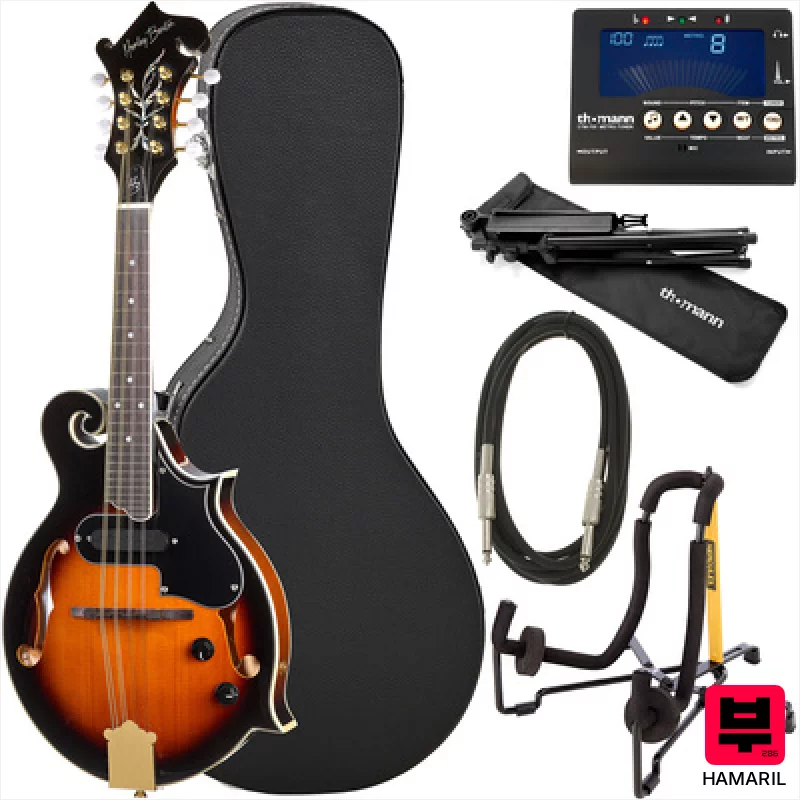
Hamaril Mandolin Set
- • Florentine body offers excellent projection and a classic bluegrass aesthetic.
- • Spruce top contributes a bright, responsive tone suitable for a variety of styles.
- • Magnetic single-coil pickups provide a usable amplified sound, surprisingly versatile.
- • Solid, sturdy case protects the mandolin from damage during transport and storage.
- • Basswood body can lack the tonal complexity of more premium tonewoods.
- • Teak neck, while playable, might feel a bit less refined than maple.
- • Limited onboard controls offer less sonic shaping compared to higher-end models.

Richwood RMF-80-Nt Mandoline
- • Solid wood construction delivers a surprisingly resonant and warm tone.
- • Ebony fingerboard and bone nut enhance playability and sustain.
- • 2-way adjustable truss rod allows for precise neck relief adjustments.
- • Vintage-style tuners offer reliable tuning stability and a classic aesthetic.
- • The natural matte finish might feel a bit plain for some players.
- • Mahogany back and sides can limit the top-end sparkle compared to maple.
- • While playable, the 28.5mm nut width might feel a bit wide for smaller hands.
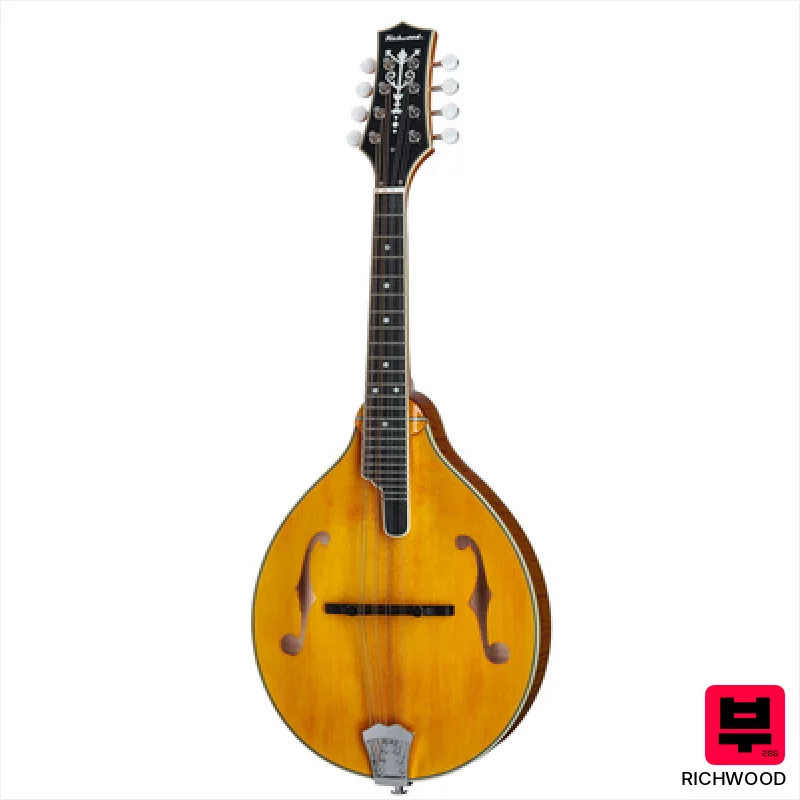
Richwood RMA-110-VS A-Style
- • Solid spruce top delivers a surprisingly bright, responsive tone.
- • Ebony fingerboard offers smooth playability and excellent note definition.
- • Flamed maple back and sides add visual appeal and warmth to the sound.
- • 2-way adjustable truss rod allows for easy neck relief adjustments.
- • Vintage style tuners can feel a bit soft and imprecise for advanced players.
- • Ivoride binding, while functional, isn’t quite the same as true ivory.
- • Solid maple construction can make it a little less forgiving of less-than-perfect technique.
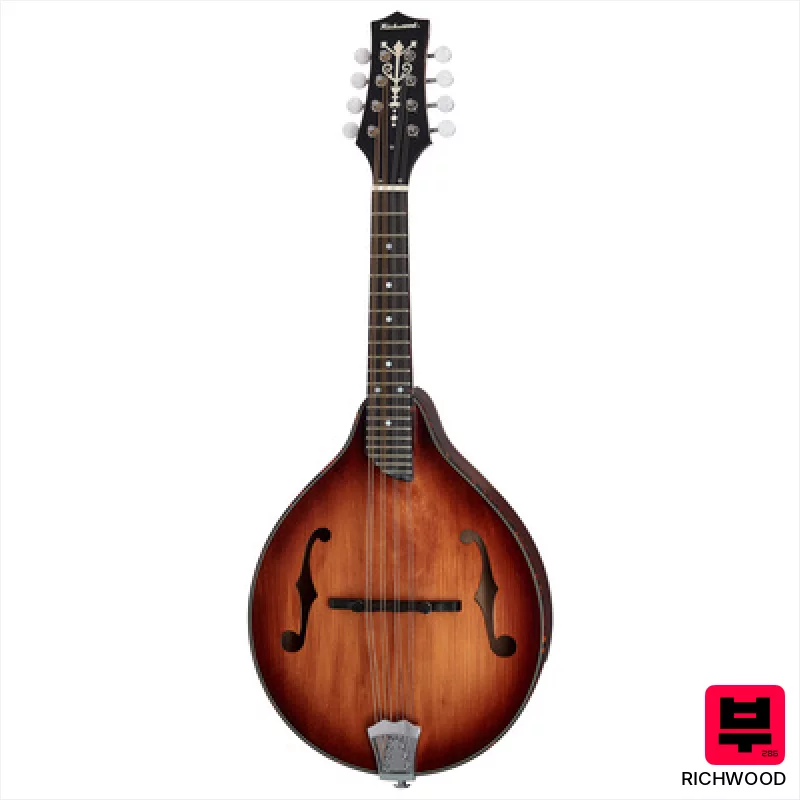
Richwood RMA-90-NT Mandoline
- • Solid spruce top delivers a bright, responsive, and clear tone.
- • Ebony fingerboard provides a smooth, fast playing experience.
- • Solid maple back and sides offer excellent projection and sustain.
- • Vintage-style machine heads allow for precise and stable tuning.
- • Walnut tint finish might be a bit too dark for some players' preferences.
- • Solid construction can make it slightly heavier than some A-style mandolins.
- • While versatile, it's primarily geared towards bluegrass and folk styles.
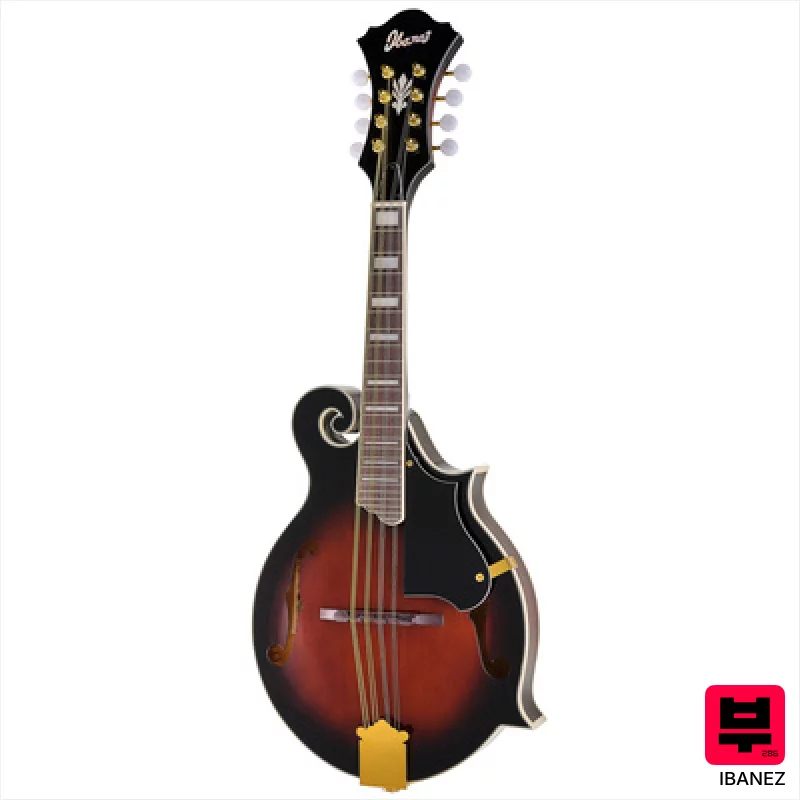
Ibanez M522S-DVS
- • Carved spruce top delivers a surprisingly resonant and articulate tone.
- • Mahogany neck provides a comfortable, warm feel and good sustain.
- • Laurel fingerboard is smooth, fast, and resists fret buzz well.
- • Golden machine heads offer stable tuning and a touch of visual flair.
- • Plastic nut is a cost-saving measure; upgrading improves sustain and tuning stability.
- • Scale length is shorter than traditional mandolins; limits low-end response slightly.
- • High-gloss finish can feel a bit thick and potentially hinder resonance compared to a satin finish.
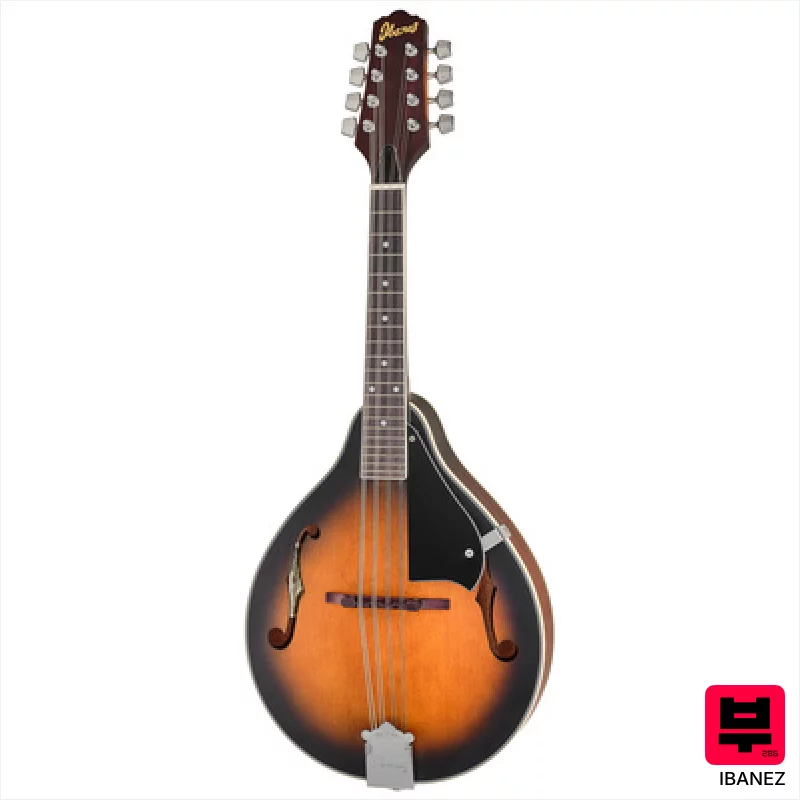
Ibanez M510-OVS
- • Mahogany back & sides offer a warm, balanced fundamental tone
- • Spruce top provides good projection and responsiveness
- • Laurel fingerboard is smooth, comfortable for playing
- • Chrome tuners ensure stable and accurate tuning
- • Plastic nut can impact sustain and tuning stability initially
- • Vintage Sunburst finish can be a bit thick, affecting resonance slightly
- • 30mm nut width might feel narrow for players used to wider necks
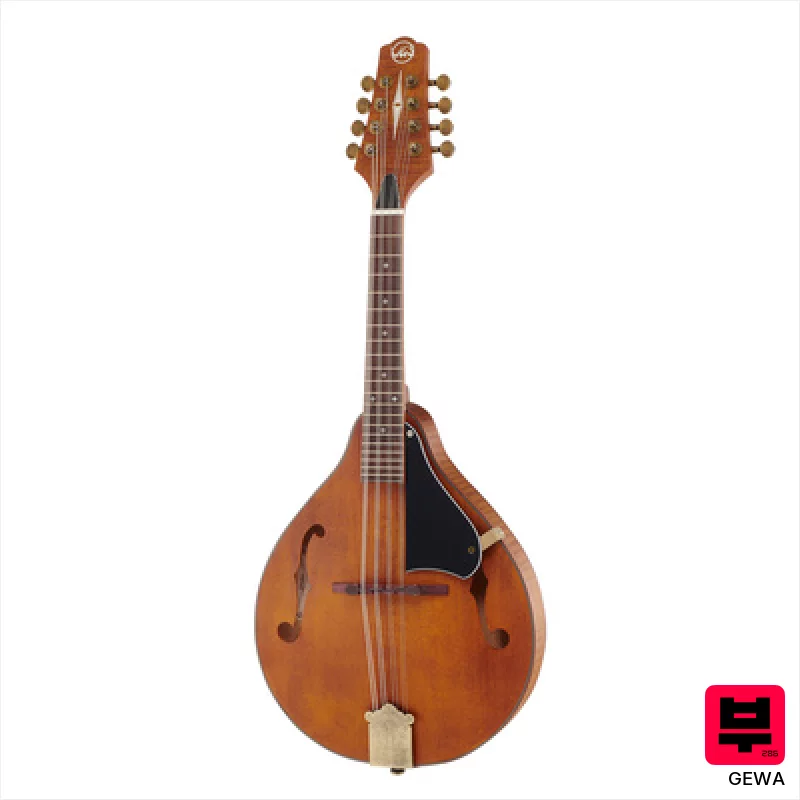
Gewa VGS Mandoline A-Antique
- • Solid spruce top provides a bright, responsive tone with good projection.
- • Flamed maple back adds visual appeal and contributes to a warm, focused sound.
- • Multiple bound fingerboard enhances playability and offers a premium feel for the price.
- • Antique brass hardware gives a vintage aesthetic and generally functions well.
- • The 'antique' finish might be a bit too thick and artificially aged for some players.
- • Nickel silver frets are standard at this price point, but a higher-grade fret wire would improve feel.
- • While versatile, it’s primarily geared towards bluegrass and folk styles; lacks the complexity for jazz.
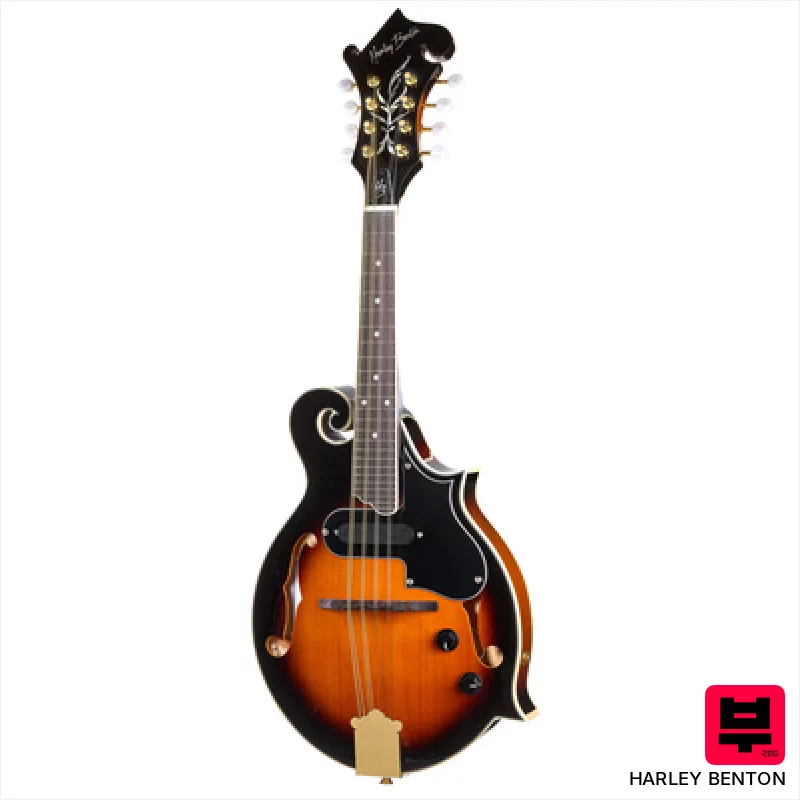
Harley Benton HBMA-100E- VS
- • Florentine body offers comfortable ergonomics for bluegrass styles
- • Spruce top delivers a surprisingly bright and responsive tone
- • Magnetic pickups provide a distinct, amplified bluegrass voice
- • Teak neck offers decent stability and a playable feel for the price
- • Basswood body lacks the resonance of more premium tonewoods
- • Blackwood fretboard can feel a bit dry and may require occasional oiling
- • Limited tonal versatility beyond traditional bluegrass sounds
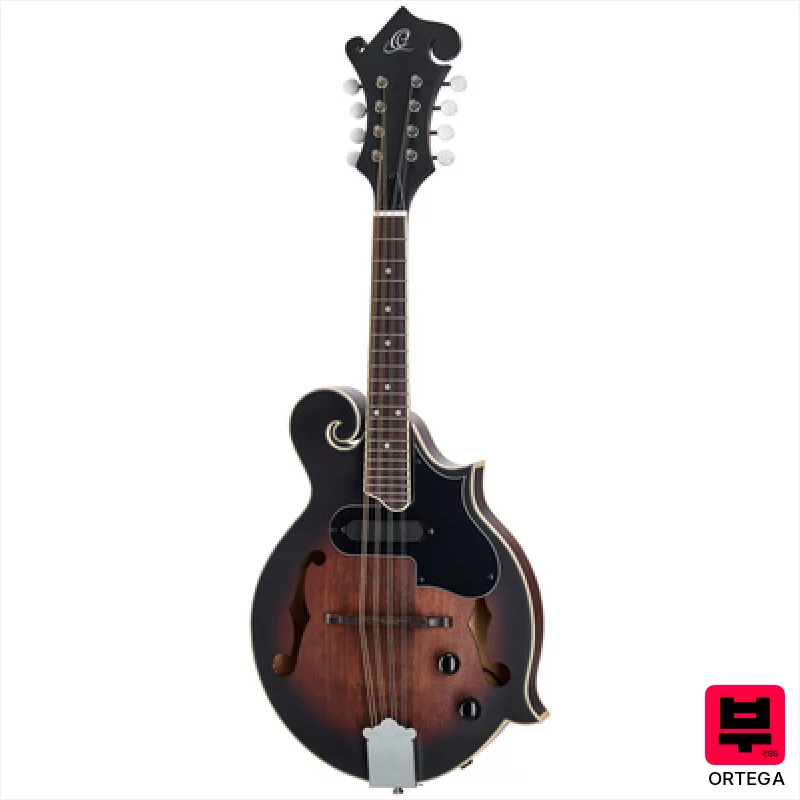
Ortega RMFE30-WB
- • Solid spruce top delivers a bright, responsive bluegrass tone.
- • Maple back and sides add warmth and projection to the sound.
- • Passive piezo pickup provides usable amplified sound without external power.
- • Rosewood fingerboard offers a smooth playing experience, comfortable for faster lines.
- • Whiskey Burst satin finish can appear a bit 'orange' under certain lighting.
- • Passive piezo pickup, while functional, lacks the nuance of higher-end systems.
- • 50mm body depth might feel slightly shallow for some players.

Ortega RMF30-WB
- • Solid spruce top delivers a bright, responsive bluegrass tone.
- • Maple back and sides add warmth and projection, nicely balanced.
- • Rosewood fingerboard offers a smooth playing experience and good sustain.
- • Chrome tuners provide stable tuning, a welcome touch at this price point.
- • Whiskey Burst satin finish can feel a bit thin and prone to fingerprints.
- • Rosewood fingerboard might dry out; regular oiling is recommended.
- • While versatile, it’s primarily suited for bluegrass and folk styles.
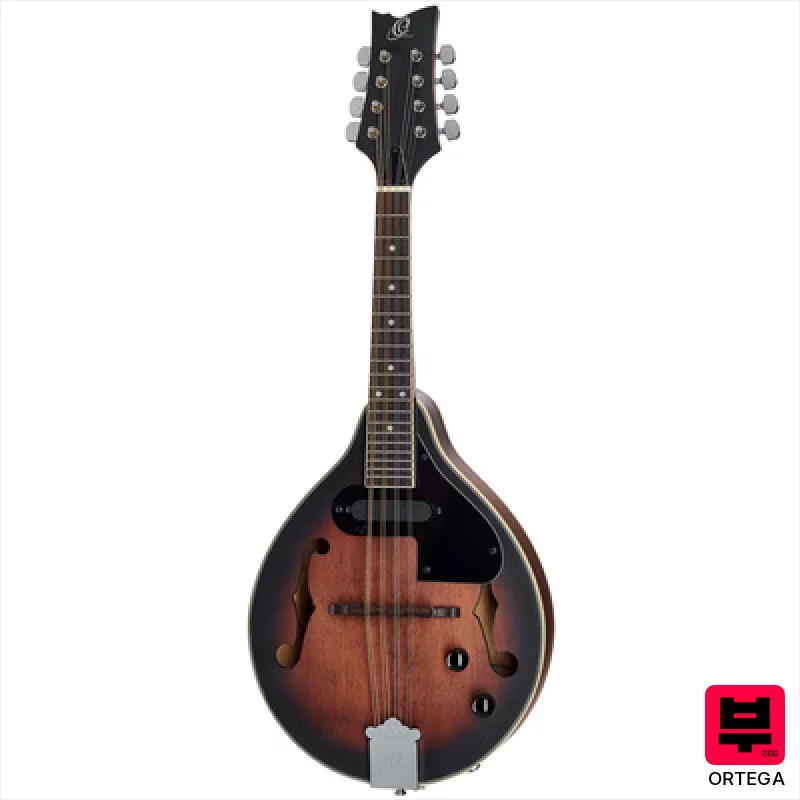
Ortega RMAE30-WB
- • Spruce top provides a bright, responsive tone suitable for bluegrass and folk.
- • Rosewood fingerboard offers a smooth playing experience, improving note clarity.
- • Passive piezo pickup delivers a usable amplified signal, surprisingly clean for the price.
- • Maple back and sides contribute to a focused, articulate tone with good projection.
- • The passive piezo pickup can sound a bit brittle and lacks warmth when amplified.
- • Whiskey Burst satin finish, while attractive, may show wear more readily than gloss finishes.
- • 50mm body depth can feel a little shallow for players accustomed to deeper mandolins.
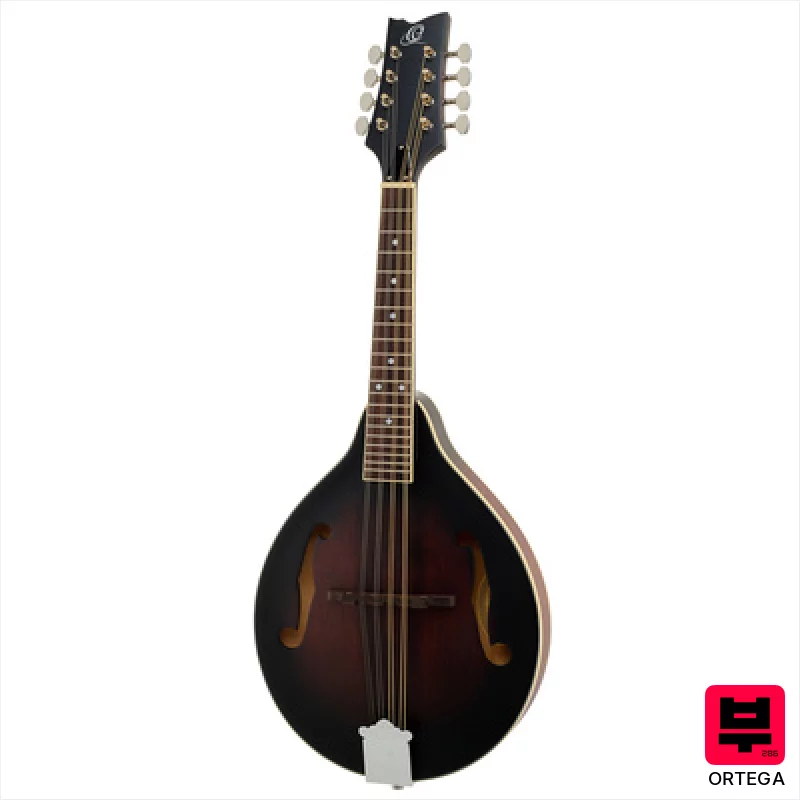
Ortega RMA30-WB LH
- • Solid spruce top provides a bright, responsive fundamental tone.
- • Maple back and sides offer focused projection and clarity.
- • Rosewood fingerboard provides comfortable playability and good note definition.
- • Left-handed model caters specifically to southpaw players, a rare find at this price.
- • Whiskey Burst satin finish can be prone to fingerprints and smudging.
- • Entry-level hardware (machine heads) might benefit from an upgrade for tuning stability.
- • A-style body lacks the visual flair of an F-style mandolin.
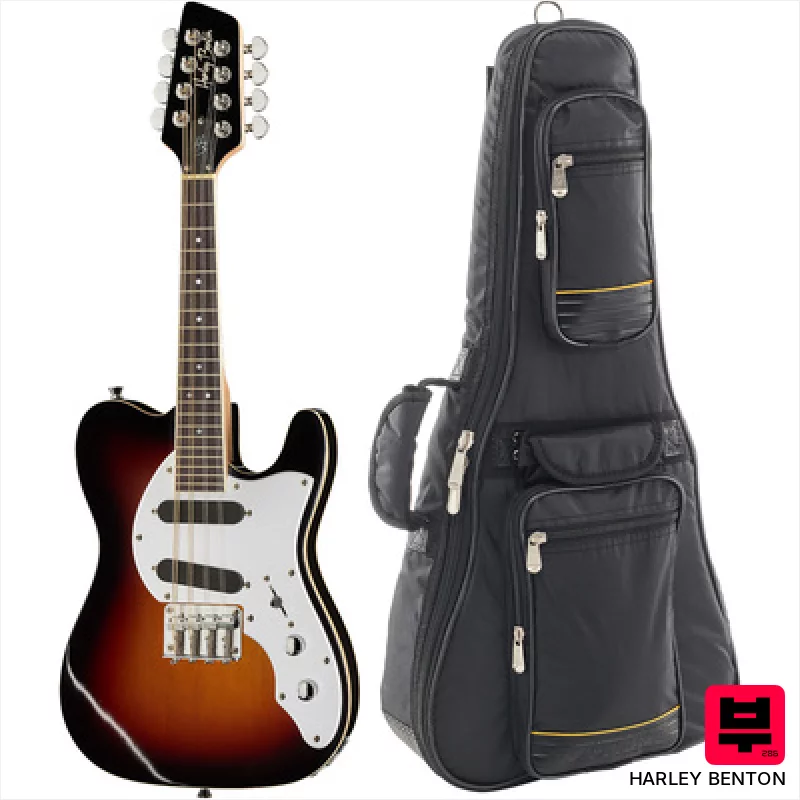
Harley Benton MA-500 SB w/Bag
- • Basswood body provides a surprisingly warm and resonant foundation.
- • Bolt-on maple neck offers a comfortable, familiar feel for guitar players.
- • Amaranth fretboard is slick and durable, improving playability.
- • Single coil pickups deliver a bright, articulate bluegrass tone with edge.
- • Basswood, while warm, lacks the complexity of higher-end tonewoods.
- • Bolt-on neck construction limits sustain compared to set-neck designs.
- • Chrome hardware might show fingerprints and require more frequent cleaning.

Harley Benton HBMA-100 VS w/Bag
- • Spruce top delivers surprisingly bright and resonant projection for the price.
- • Teak neck provides a comfortable, stable feel and good sustain.
- • Blackwood fingerboard and bridge contribute to a warmer tonal character.
- • Gig bag is genuinely useful, well-padded, and offers backpack carrying option.
- • Basswood body, while functional, lacks the tonal complexity of maple or mahogany.
- • Factory strings are basic and will likely need an immediate upgrade for optimal tone.
- • Cream binding application is a bit uneven, showing budget-conscious construction.

Harley Benton HBMA-100 VS
- • Spruce top delivers surprisingly bright and articulate bluegrass tones.
- • Teak neck provides a comfortable, stable platform for easy playing.
- • Blackwood fingerboard and bridge contribute to a decent sustain and tone.
- • Gold-plated hardware adds a touch of class and resists corrosion well.
- • Basswood body lacks the resonance of traditional mandolin woods like maple.
- • Factory strings are serviceable, but an upgrade will dramatically improve tone.
- • Cream binding application can be inconsistent, affecting aesthetic appeal.
Every mandolins that matches
64 models match this page. The 15 above are covered in detail; the rest are listed here with their published specifications.
| # | Model | Specifications | Price |
|---|---|---|---|
| 16 | The Loar LM-310F-BRB | Scale 349 mm (13.74") · Frets 20 frets | $401 |
| 17 | Ortega RMAE40SBK-L | Scale 345 mm (13.58") · Frets 20 frets | $382 |
| 18 | The Loar LM-110 Honey Creek BRB | Scale 353 mm (13.9") · Frets 20 frets | $301 |
| 19 | Recording King RFM-3-TS Mandoline | Scale 348 mm (13.7") · Frets 20 frets | $256 |
| 20 | Recording King RFM-3-BK Mandoline | Scale 348 mm (13.7") · Frets 20 frets | $256 |
| 21 | Ortega RMA30-WB | Scale 350 mm (13.78") · Frets 20 frets · Fingerboard Rosewood fingerboard | $199 |
| 22 | Epiphone Mandobird Vintage Sunburst | Strings 4-string · Fingerboard Laurel fingerboard | $372 |
| 23 | Ortega RMA31-WSB | Scale 350 mm (13.78") · Frets 20 frets · Fingerboard Rosewood fingerboard | $178 |
| 24 | Recording King RAM-3-TS Mandoline | Scale 348 mm (13.7") · Frets 20 frets | $200 |
| 25 | Richwood RMA-60-VS A-Style Mandoline | Nut width 31 mm (1.22") · Scale 350 mm (13.78") | $200 |
| 26 | Harley Benton MA-500 VS Bluegrass Series | Scale 350 mm (13.78") · Frets 20 frets · Body Basswood body · Fingerboard Laurel fingerboard | $133 |
| 27 | The Loar LM-110E-BRB | Scale 353 mm (13.9") | $446 |
| 28 | Richwood RMF-60-VS F-Style Mandoline | Scale 350 mm (13.78") | $334 |
| 29 | Ibanez M510E-BS | Nut width 30 mm (1.18") | $267 |
| 30 | Harley Benton HBMA-50E Mandoline BK w/Bag | Nut width 30 mm (1.18") · Scale 350 mm (13.78") · Frets 20 frets · Body Basswood body | $111 |
| 31 | Harley Benton HBMA-50E Mandoline VS w/Bag | Nut width 30 mm (1.18") · Scale 350 mm (13.78") · Frets 20 frets · Body Basswood body | $111 |
| 32 | Recording King RAM-3-BK Mandoline | Scale 348 mm (13.7") · Frets 20 frets | $167 |
| 33 | Harley Benton HBMA-50E Mandoline BK | Nut width 30 mm (1.18") · Scale 350 mm (13.78") · Frets 20 frets · Body Basswood body | $95 |
| 34 | Harley Benton HBMA-50E Mandoline VS | Nut width 30 mm (1.18") · Scale 350 mm (13.78") · Frets 20 frets · Body Basswood body | $95 |
| 35 | Harley Benton HBMA-50 Mandoline BK w/Bag | Nut width 30 mm (1.18") · Scale 350 mm (13.78") · Frets 20 frets · Body Basswood body | $79 |
| 36 | Harley Benton HBMA-50 Mandoline VS w/Bag | Nut width 30 mm (1.18") · Scale 350 mm (13.78") · Frets 20 frets · Body Basswood body | $77 |
| 37 | Gibson Custom F-5G Dark Burst | Nut width 30.2 mm (1.19") · Scale 353 mm (13.9") · Frets 20 frets · Fingerboard Ebony fingerboard | $7,152 |
| 38 | Richwood RMF-220-WN F-Style | Scale 350 mm (13.78") · Frets 24 frets · Strings 8-string · Fingerboard Ebony fingerboard | $893 |
| 39 | Harley Benton HBMA-50 Mandoline BK | Nut width 30 mm (1.18") · Scale 350 mm (13.78") · Frets 20 frets · Body Basswood body | $66 |
| 40 | Harley Benton HBMA-50 Mandoline VS | Nut width 30 mm (1.18") · Scale 350 mm (13.78") · Frets 20 frets · Body Basswood body | $66 |
| 41 | Gold Tone GME-4 E-Mandoline | Scale 352 mm (13.86") · Frets 20 frets · Body Alder body · Fingerboard Maple fingerboard | $591 |
| 42 | Ibanez M522S-BS | Nut width 30 mm (1.18") · Scale 350 mm (13.78") · Body Maple body · Fingerboard Laurel fingerboard | $513 |
| 43 | Gold Tone F6-Plus | Nut width 44.4 mm (1.75") · Scale 380 mm (14.96") · Frets 21 frets | $1,430 |
| 44 | Gold Tone A-6 Mando Guitar TS | Nut width 46 mm (1.81") · Scale 381 mm (15") · Frets 21 frets | $614 |
| 45 | Gewa VGS Mandoline F-2 Premium | Nut width 30 mm (1.18") · Scale 350 mm (13.78") · Frets 24 frets | $507 |
| 46 | Gibson 1923 F-5 Master Model Rei. CB | Scale 353.1 mm (13.9") · Frets 29 frets · Fingerboard Ebony fingerboard | $24,365 |
| 47 | Gibson Sierra Hull F-5G VOS SB | Scale 353 mm (13.9") · Frets 20 frets · Fingerboard Ebony fingerboard | $9,164 |
| 48 | Ortega RMF200PF Mandoline | Scale 350 mm (13.78") · Frets 24 frets · Fingerboard Maple fingerboard | $1,374 |
| 49 | Ortega RMFE200PF Mandoline | Scale 350 mm (13.78") · Frets 24 frets · Fingerboard Maple fingerboard | $1,374 |
| 50 | Ortega RMAE200PF Mandoline | Scale 350 mm (13.78") · Frets 20 frets · Fingerboard Maple fingerboard | $994 |
| 51 | Ortega RMFE100AVO | Scale 345 mm (13.58") · Frets 24 frets · Fingerboard Ebony fingerboard | $938 |
| 52 | Ortega RMA200PF Mandoline | Scale 350 mm (13.78") · Frets 20 frets · Fingerboard Maple fingerboard | $899 |
| 53 | Gold Tone GM-10 Frypan Mandoline w/Case | Scale 349 mm (13.74") · Frets 18 frets · Fingerboard Ebony fingerboard | $826 |
| 54 | Epiphone F-5 Studio WR Satin | Scale 353 mm (13.9") · Frets 20 frets · Fingerboard Laurel fingerboard | $670 |
| 55 | Ortega RMFE90TS | Scale 345 mm (13.58") · Frets 24 frets · Fingerboard Rosewood fingerboard | $670 |
| 56 | Gold Tone GME-5 E-Mandoline | Scale 349 mm (13.74") · Frets 20 frets · Body Alder body | $647 |
| 57 | Epiphone F-5 Studio VS Satin | Scale 353 mm (13.9") · Frets 20 frets · Fingerboard Laurel fingerboard | $591 |
| 58 | Richwood RMF-100-VS Mandoline | Scale 350 mm (13.78") · Frets 24 frets · Fingerboard Ebony fingerboard | $535 |
| 59 | The Loar LM-700 F-Mandolin VS | Scale 350 mm (13.78") · Frets 29 frets | $1,117 |
| 60 | Gold Tone F-6 | Nut width 44.4 mm (1.75") · Scale 378 mm (14.88") | $725 |
| 61 | The Loar LM-590-MS | Scale 349 mm (13.74") · Frets 20 frets | $614 |
| 62 | Ortega RMFE40SBK | Scale 345 mm (13.58") · Frets 24 frets | $513 |
| 63 | The Loar LM-520-VS | Scale 350 mm (13.78") | $647 |
| 64 | The Loar LM-310E-BRB | Scale 353 mm (13.9") | $558 |
Mandolins by the numbers
Measured across all 64 models in this category, so «wide», «short» or «expensive» mean something you can check.
How to Choose the Best Mandolins
Playability (Action & Neck Profile)
This is huge. An intermediate player needs an instrument they can actually play for hours without fatigue. Lower action is generally easier, but too low and you get fret buzz. A comfortable neck profile - often a C or D shape - makes a difference, especially when tackling faster passages and tremolo.
Tonewoods & Construction
Spruce tops are standard for a reason - they offer a good balance of clarity and projection. Mahogany back and sides tend to add warmth and a bit of that fat midrange honk that's so important in bluegrass. Dovetail neck joints are generally more stable and resonant than bolt-on, a subtle but noticeable difference.
Pickup Voicing (for amplified use)
If you plan on gigging, the pickup is critical. Cheap pickups often sound brittle and ice-picky. Look for something with a warmer, more natural voicing that doesn't exaggerate the high frequencies and offers reasonable headroom before breakup.
Hardware Quality (Tuners & Bridge)
Decent tuners are non-negotiable. Sloppy tuners will drive you crazy on stage, especially when you're trying to nail those fast runs. A well-fitted bridge is also essential for intonation and sustain.
Overall Articulation & Dynamics
An intermediate player needs a mandolin that responds to their playing. It should articulate cleanly, allowing individual notes to ring out, and offer a good dynamic range - from subtle whisper tones to driving, aggressive picking.
Buying Guide
Don't chase the flashiest headstock. At this level, you're paying for playability and tonal nuance. Solid wood construction is a definite step up from laminate, but be prepared to pay more. Watch out for mandolins with excessively high action or overly bright, harsh pickups - those are red flags. A good setup from a qualified luthier is almost always worth the investment.
How This List Is Built
We don't play these instruments — we're a catalog, not a review desk, and we'd rather say so than pretend otherwise. This page covers 64 mandolins from the Thomann catalogue, which is the largest single source of specification data in this category: 15 in detail, the rest listed with their specifications.
Position is computed, not curated. We parse the manufacturer's own description into actual values — nut width, scale, fret count, fingerboard radius, size, alloy — and rank on them: how many specifications a model has published, how many of them are measurable numbers, and how precisely it meets this page's criterion. A product image adds a little. Price is not a ranking signal: it tells you nothing about whether a neck fits your hand. The same inputs always produce the same order, so nothing here is shuffled to look fresh.
What this list is good for: narrowing a category down to a shortlist by spec and budget. What it isn't: a substitute for hearing an instrument. Before you buy, read hands-on reviews and, where you can, play it. Full methodology.

