
Best Effect Modules Under $500 2026
Alright, so you're diving into modular and realizing effects are just as crucial as oscillators and filters. But dropping a grand on a reverb? No way. This list is for those of us who want to sculpt some seriously interesting sounds without needing a second mortgage. We're focusing on modules under $500 - that sweet spot where you can actually get usable, characterful effects without feeling ripped off.
Last updated: September 28, 2026
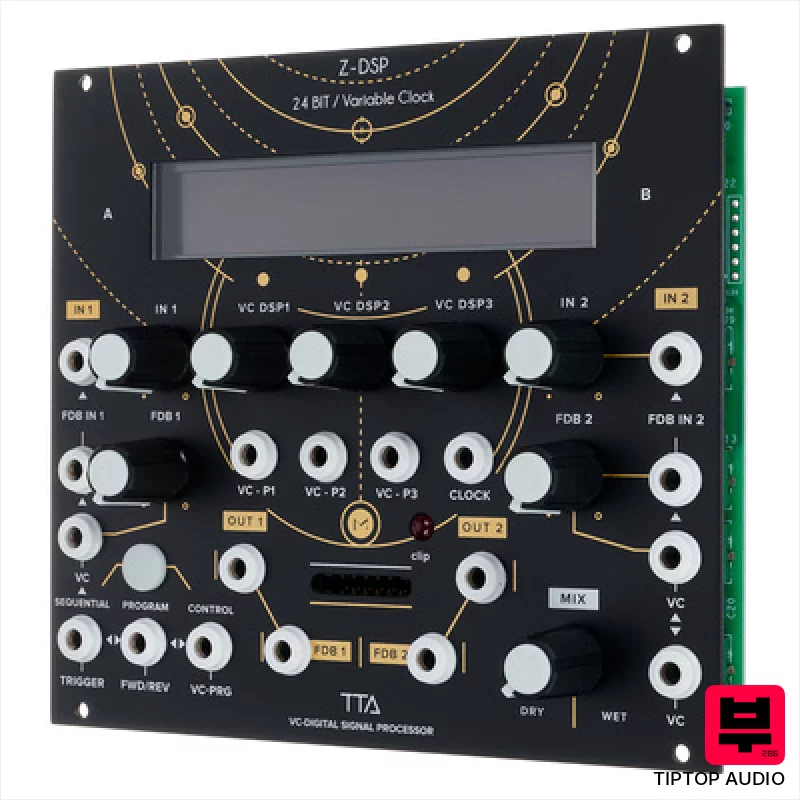
Tiptop Audio Z-DSP NS Black
- • Exceptional 24-bit resolution delivers pristine, detailed audio quality.
- • Cartridge system offers incredible flexibility and future-proofing for effects.
- • High output level avoids gain-staging headaches in complex modular setups.
- • Compact 28HP footprint maximizes space in tight Eurorack cases.
- • Cartridge cost adds up quickly for extensive effect experimentation.
- • Limited onboard memory may restrict complex user-created DSP programs.
- • Steeper learning curve for those unfamiliar with DSP concepts and CV modulation.
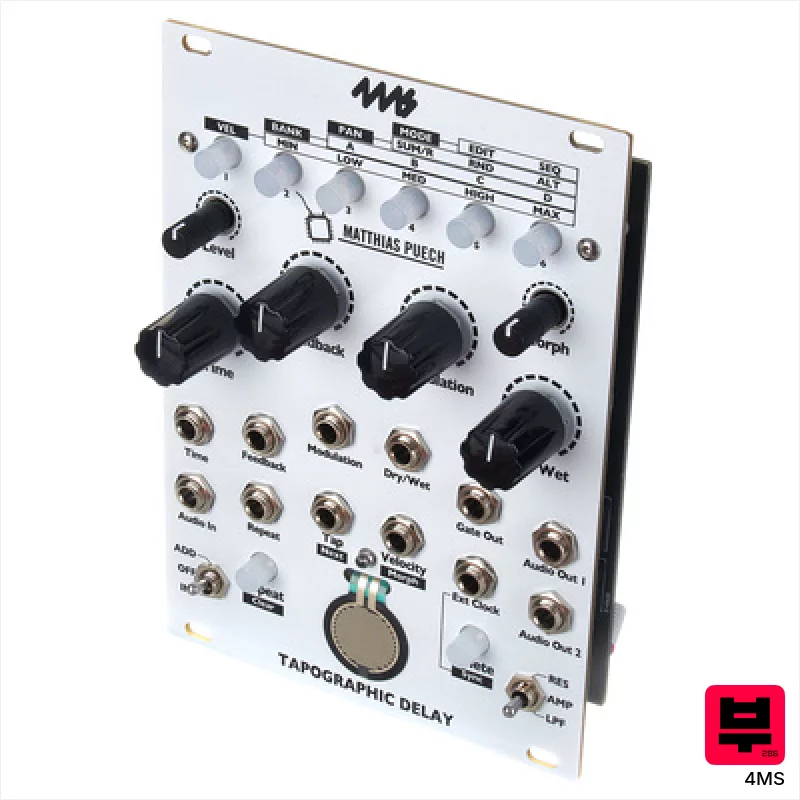
4ms Tapographic Delay
- • Velocity-sensitive tap input unlocks incredibly complex, evolving rhythms.
- • Individual tap filtering provides sculpting possibilities beyond typical delays.
- • Extensive CV control allows for deep integration within modular systems.
- • 32 taps and 174-second delay time offer truly massive sonic landscapes.
- • Intuitive morph time control facilitates seamless transitions between delay patterns.
- • Compact 18HP footprint maximizes space in crowded modular racks.
- • The learning curve is steep; mastering tap programming takes dedicated effort.
- • Power consumption is relatively high for a single module.
- • Limited preset recall can be frustrating for live performance scenarios.
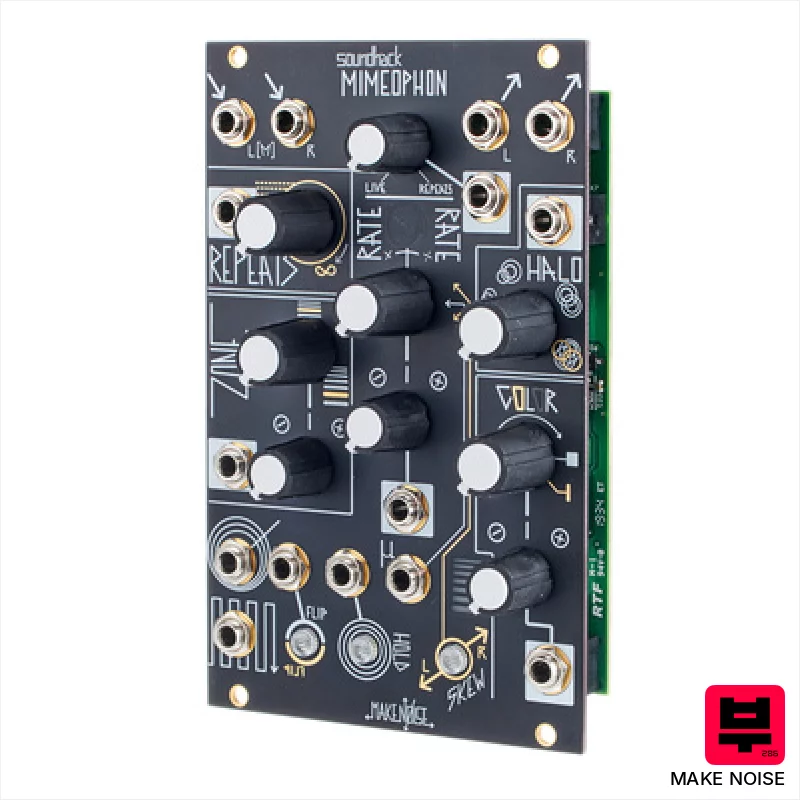
Make Noise Mimeophon
- • Exceptional stereo imaging via the Halo control creates expansive soundscapes
- • Karplus-Strong synthesis capability delivers unique, evolving textures
- • Skew function allows for inventive, asymmetrical delay effects
- • CV control over nearly all parameters fosters deep creative exploration
- • Relatively high power draw can strain smaller power supplies
- • Complex parameter interactions demand a steeper learning curve
- • Limited modulation input options compared to some competitors

OXI Instruments Meta
- • Exceptional sound quality across diverse effect types.
- • Compact 6HP form factor maximizes modular space.
- • Intuitive controls allow for dynamic live performance adjustments.
- • CV inputs unlock creative modulation possibilities for nuanced effects.
- • Limited effect selection compared to larger, dedicated effect racks.
- • 6HP size might restrict complex routing within a modular system.
- • Effect variations, while useful, could benefit from more distinct character.
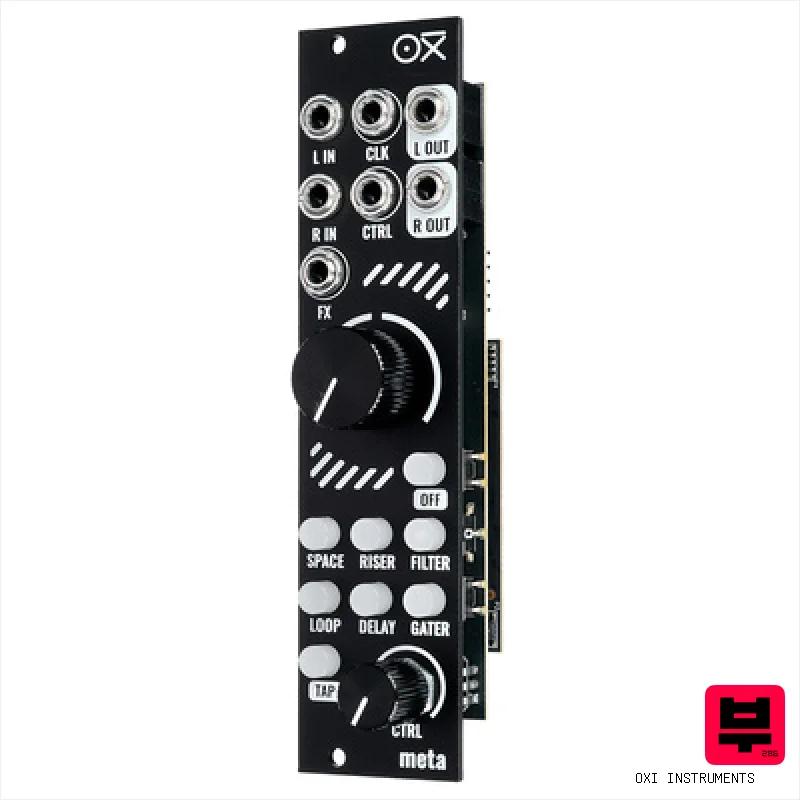
OXI Instruments Meta Black
- • Six distinct effect types give many sound options.
- • Two variations per effect create more texture.
- • Built-in CV input lets you automate parameters.
- • Stereo inputs and outputs handle dual tracks well.
- • High power draw of 110 mA needs good supply.
- • Shallow 22 mm depth limits rack space.
- • No stated input/output impedance specs listed.

Endorphin.es Ghost Silver
- • Exceptional 32-bit processing yields pristine, detailed effects.
- • Karplus-Strong synthesis via stereo delay unlocks unique textures.
- • Flexible routing and multiple CV inputs foster creative experimentation.
- • M/S processing adds impressive stereo width and depth to reverb.
- • Steep learning curve for complex signal routing and CV modulation.
- • Limited preset storage requires diligent parameter saving.
- • Physical size can be restrictive within densely populated racks.

Endorphin.es Ghost Black
- • Exceptional signal processing clarity at 32-bit/96kHz resolution.
- • Karplus-Strong synthesis via stereo delay offers unique textures.
- • Flexible M/S stereo widening dramatically enhances spatial depth.
- • Comprehensive CV control unlocks intricate modulation possibilities.
- • Steep learning curve due to routing complexity and sheer number of options.
- • Limited modulation destinations compared to larger, more expensive modules.
- • Physical size – relatively deep, requiring significant rack space.
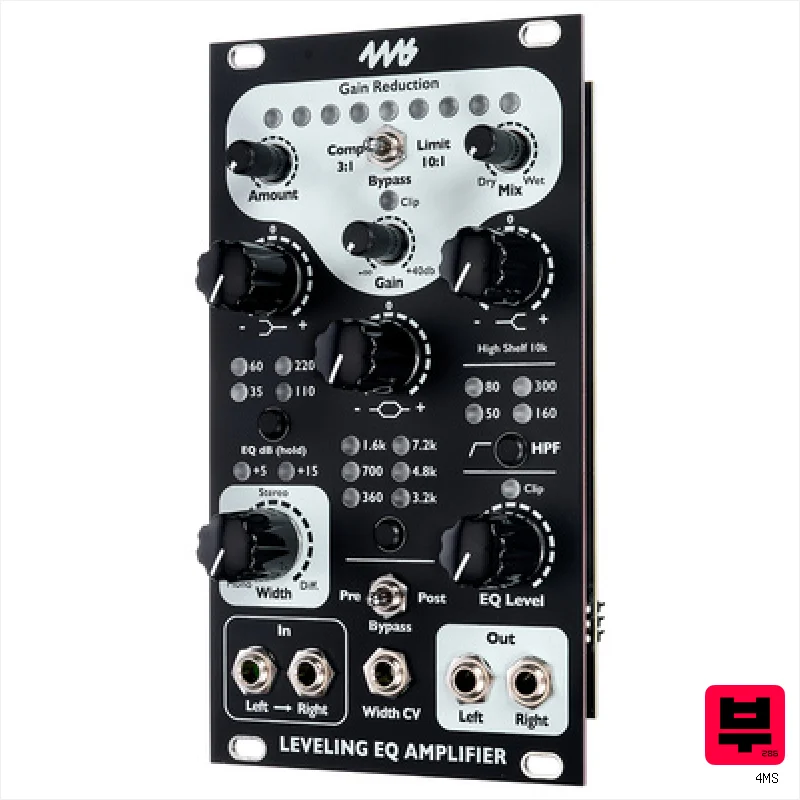
4ms Leveling EQ Amplifier (LEQA)
- • Optical compression models classic studio hardware
- • Two distinct compression ratios for limiting
- • Stereo width processor in one module
- • VU meter shows gain reduction clearly
- • No specific power consumption listed
- • CV input count not mentioned in text
- • Price point not detailed in description
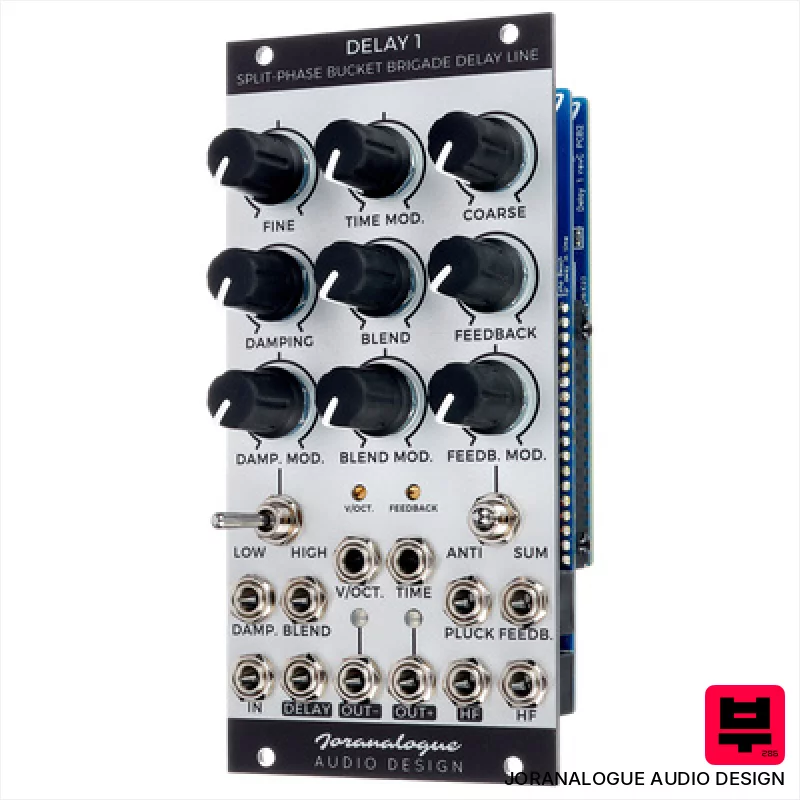
Joranalogue Audio Design Delay 1
- • Joranalogue's BBD chip delivers warm, authentic analog delay tones.
- • Extensive CV control offers deep modulation possibilities for creative sound design.
- • Damping filter with low/high-pass options shapes delay character effectively.
- • Compact 12U width makes it ideal for densely populated Eurorack racks.
- • Limited delay time range compared to digital alternatives, restricting longer echoes.
- • Feedback control can quickly become unruly, requiring careful calibration.
- • Power consumption is relatively high, impacting available headroom.
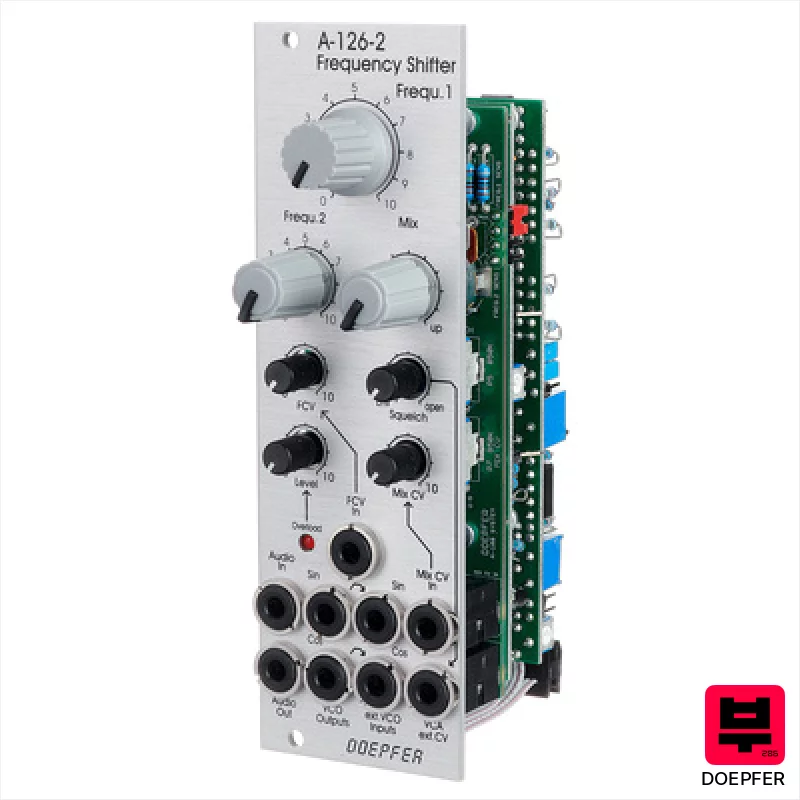
Doepfer A-126-2 Frequency Shifter
- • Excellent squelch function creates unique rhythmic textures.
- • Internal quadrature oscillator simplifies complex modulation setups.
- • Coarse/fine controls offer precise frequency shifting range.
- • Solid Doepfer build quality; feels robust and dependable.
- • 8HP footprint can be restrictive in smaller modular systems.
- • Squelch circuit can be a bit noisy at higher settings.
- • Limited modulation options beyond the included CV inputs.
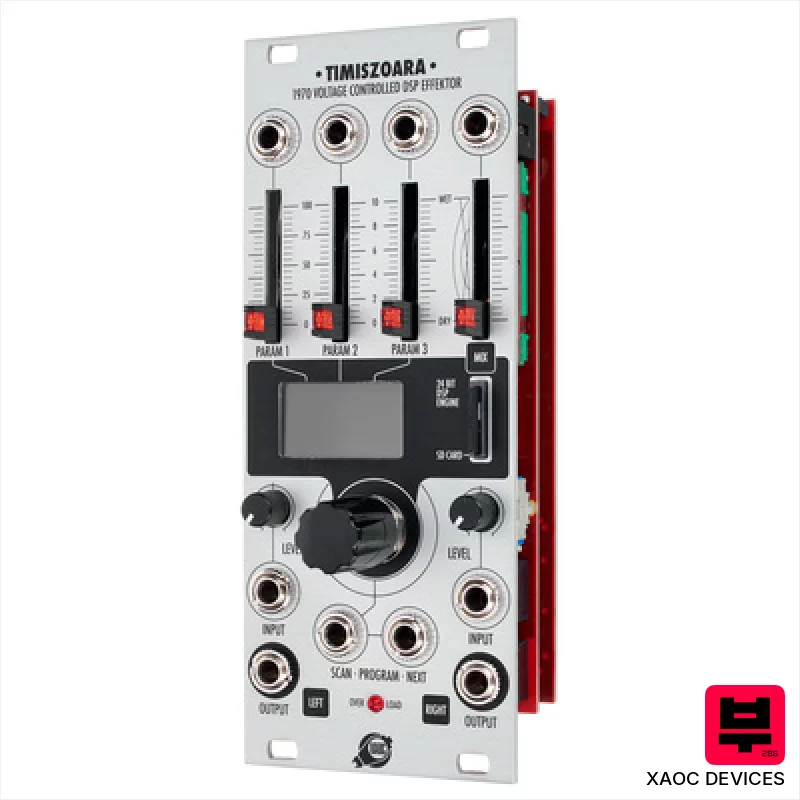
XAOC Devices Timiszoara
- • Exceptional DSP quality delivers pristine, nuanced effects.
- • Extensive preset library offers immediate sonic exploration.
- • Flexible CV control allows for dynamic, performance-driven effects.
- • Compact 10HP footprint maximizes space in tight modular setups.
- • Limited parameter editing per preset can feel restrictive.
- • OLED display, while functional, isn't the brightest in low-light conditions.
- • MicroSD card reliance for preset management is slightly inconvenient.
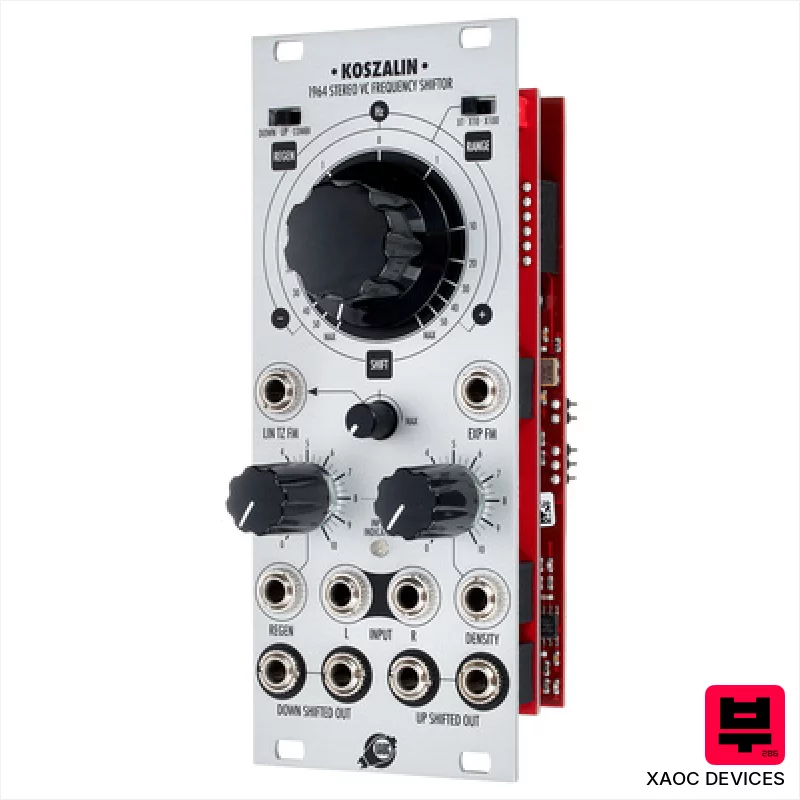
XAOC Devices Koszalin
- • Exceptional frequency shifting creates unique, evolving textures.
- • Through-Zero FM offers incredible harmonic complexity and experimentation.
- • Dense feedback modes generate powerful, chaotic soundscapes.
- • Intuitive control ranges cater to subtle shifts and aggressive modulation.
- • Limited input/output options restrict integration in complex setups.
- • Can quickly become overwhelming for users unfamiliar with FM synthesis.
- • Koszalin’s character leans heavily into experimental sound design.

Erica Synths Black Stereo Delay2
- • Versatile algorithms offer unique sonic textures for diverse applications.
- • Excellent 24-bit processing delivers clean, detailed delay signals.
- • CV inputs provide nuanced, expressive modulation capabilities.
- • Compact 12HP footprint maximizes space in crowded modular racks.
- • Limited preset storage (10) might require frequent manual adjustments.
- • Tape algorithm can exhibit subtle noise floor characteristic of analog emulation.
- • Spread control's effect can occasionally become overwhelming quickly.
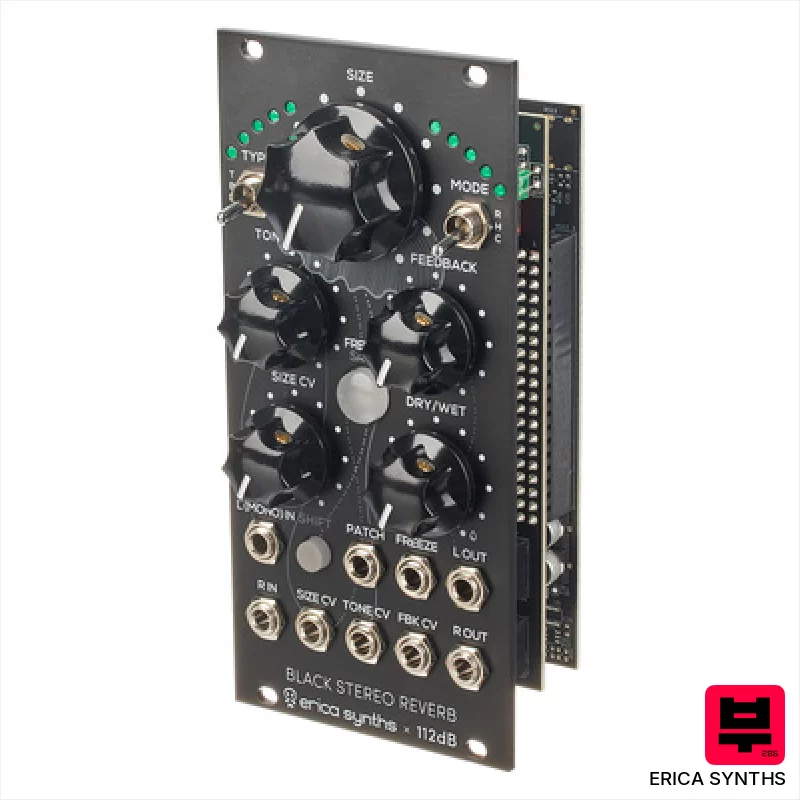
Erica Synths Black Stereo Reverb
- • Exceptional algorithm variety delivers uniquely colored reverb spaces.
- • Eurorack format allows seamless integration into modular setups.
- • Freeze function adds creative possibilities for textural soundscapes.
- • Solid build quality; Erica Synths’ reputation for robust modules shines.
- • Limited parameter control compared to dedicated reverb units.
- • Power draw might be restrictive for smaller Eurorack cases.
- • BBD algorithm can introduce noticeable noise at higher feedback settings.
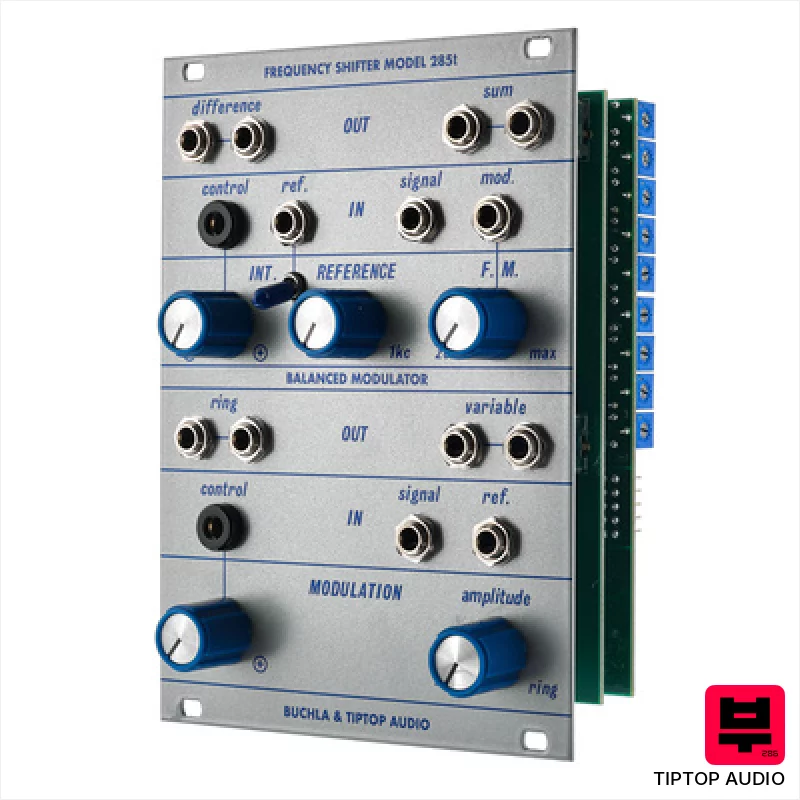
Tiptop Audio Model 285t
- • Internal oscillator provides surprisingly rich, usable tones.
- • Sum/difference outputs offer creative signal routing possibilities.
- • Ring modulation is genuinely powerful and versatile for sound design.
- • Robust build quality; Tiptop's reputation for durability holds true.
- • 18HP can be limiting in smaller modular setups.
- • Limited modulation destinations beyond the CV attenuators.
- • The internal oscillator's range is somewhat narrow for complex textures.
Every effect modules that matches
57 models match this page. The 15 above are covered in detail; the rest are listed here with their published specifications.
Effect Modules by the numbers
Measured across all 57 models in this category, so «wide», «short» or «expensive» mean something you can check.
How to Choose the Best Effect Modules
Sound Quality
This is obvious, but we're talking about usable tone. Does it add something unique, or is it just a digital approximation of something better? We're looking for character, not sterile perfection.
Versatility
Can it do more than one thing? A good module can be dialed to a subtle shimmer or a full-on chaotic wash, offering flexibility for different musical situations - from mellow pads to aggressive leads.
Build Quality
We're not expecting aerospace-grade components, but flimsy pots and questionable wiring are a recipe for disaster, especially if you're gigging. Reliability matters.
Ease of Use
A complex module shouldn't be a headache to program. Intuitive controls and a clear signal path will save you time and frustration, especially when you're trying to dial in a sound quickly during a rehearsal.
Power Consumption
This is crucial in Eurorack. Modules eating too many milliamps can quickly overload your PSU. We'll note the power draw so you don't blow up your system.
Buying Guide
At this price point, expect some compromises. You're probably not getting a boutique-level reverb with endless parameters. Corners often get cut in the modulation matrix - don't expect CV-everything. However, you can find modules with genuinely inspiring sounds and solid functionality. Prioritize modules that offer a unique sonic signature or a clever twist on a classic effect; those are the ones you'll reach for again and again. Don't chase the 'latest and greatest' - focus on finding something that inspires you.
How This List Is Built
We don't play these instruments — we're a catalog, not a review desk, and we'd rather say so than pretend otherwise. This page covers 57 effect modules from the Thomann catalogue, which is the largest single source of specification data in this category: 15 in detail, the rest listed with their specifications.
Position is computed, not curated. We parse the manufacturer's own description into actual values — nut width, scale, fret count, fingerboard radius, size, alloy — and rank on them: how many specifications a model has published, how many of them are measurable numbers, and how precisely it meets this page's criterion. A product image adds a little. Price is not a ranking signal: it tells you nothing about whether a neck fits your hand. The same inputs always produce the same order, so nothing here is shuffled to look fresh.
What this list is good for: narrowing a category down to a shortlist by spec and budget. What it isn't: a substitute for hearing an instrument. Before you buy, read hands-on reviews and, where you can, play it. Full methodology.

