
Best Effect Modules for Intermediate 2026
Okay, so you're past the basic Eurorack modules and starting to really sculpt sounds - that's awesome. Effect modules are the next level, and honestly, it's a rabbit hole. But picking the right ones at this stage isn't just about cool sounds; it's about expanding your skillset without getting completely overwhelmed. Let's talk about modules that'll push you without sending you spiraling into a pile of patch cables and frustration.
Last updated: September 28, 2026
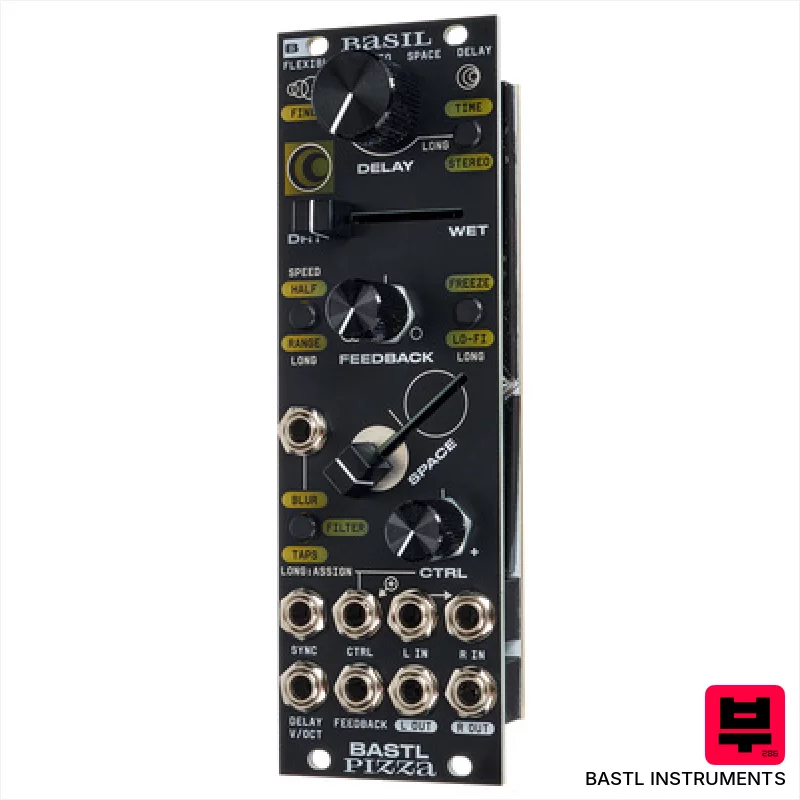
Bastl Instruments Basil
- • Unique 'freeze' mode offers surprisingly musical textures.
- • Bastl's build quality feels solid, with robust buttons and knobs.
- • Space control provides nuanced stereo manipulation beyond basic ping-pong.
- • CV inputs offer excellent modulation possibilities for evolving delays.
- • 8HP footprint can be restrictive in smaller Eurorack cases.
- • Lo-fi mode can be a bit harsh for some users' tastes.
- • Limited preset storage; relies heavily on manual tweaking.
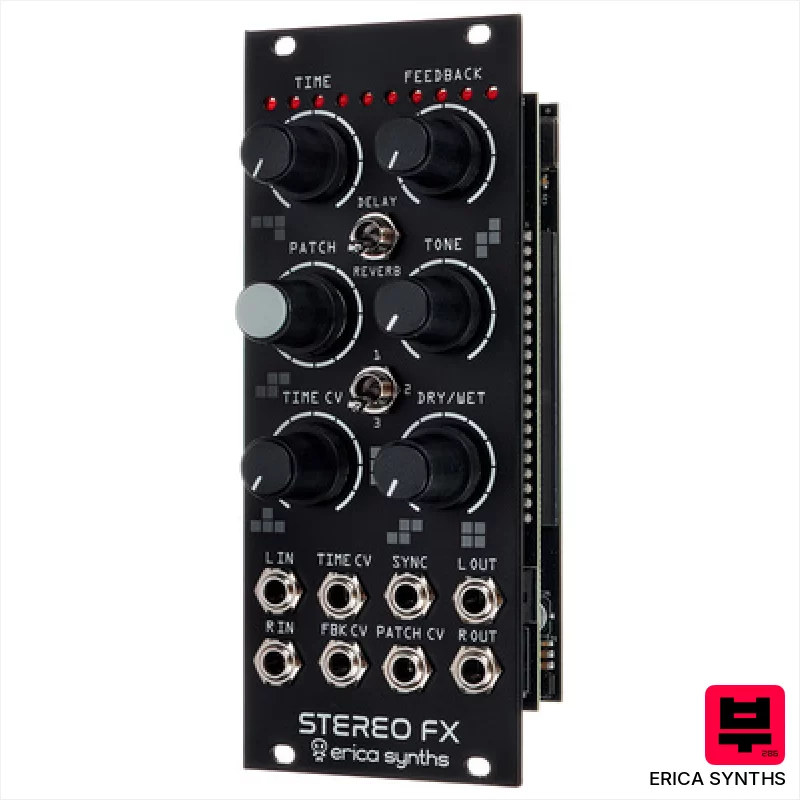
Erica Synths Drum Stereo FX
- • Excellent stereo imaging creates wide, immersive sonic spaces.
- • Flexible delay/reverb combinations offer surprising textural possibilities.
- • Tap tempo and clock sync are rock-solid for rhythmic effects.
- • Compact 10HP footprint maximizes modular space efficiency.
- • Limited preset recall feels restrictive for complex effect chains.
- • Tone control lacks nuance; shaping can be a bit abrupt.
- • Power draw, while not excessive, can impact smaller power supplies.

Erica Synths Black Spring Reverb
- • Unique spring reverb character, distinct from digital emulations
- • Integrated vactrol compressor adds subtle warmth and dynamic shaping
- • RCA outputs allow for chaining with external spring tanks for extended experimentation
- • Compact design maximizes space within Eurorack setups, surprisingly robust build quality
- • Feedback control can be challenging to tame without careful CV modulation
- • Limited tonal palette compared to more versatile reverb modules
- • RCA connections are less convenient than standard Eurorack patching options
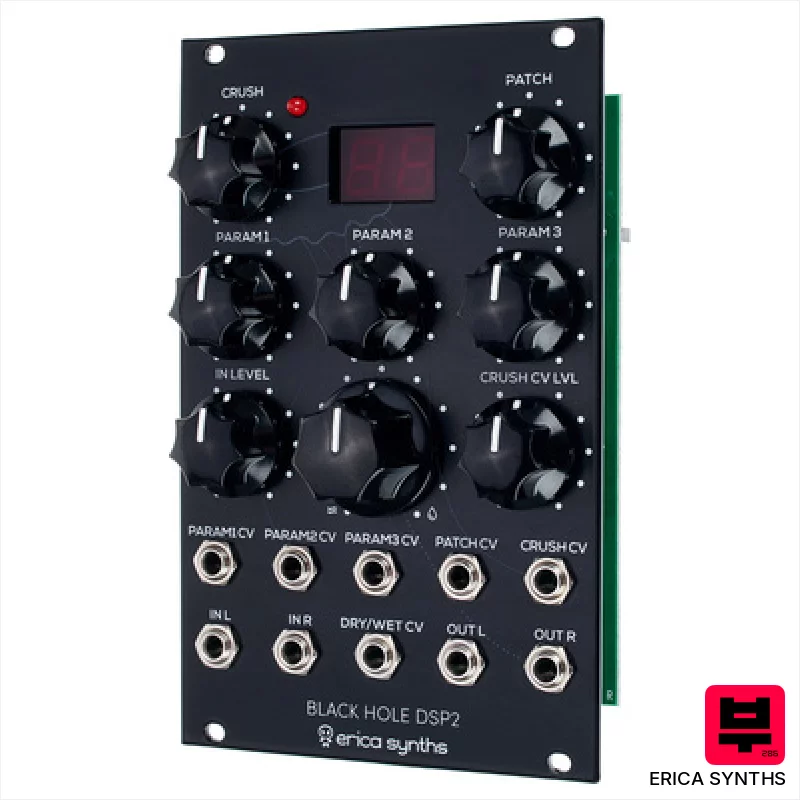
Erica Synths Black Hole DSP 2
- • Exceptional DSP quality, rivals much pricier commercial units
- • Intuitive 7-segment display simplifies effect selection and tweaking
- • Versatile stereo in/out expands sonic possibilities beyond mono signals
- • CV control over parameters unlocks creative, dynamic soundscapes
- • 16 TE width demands significant space in a modular setup
- • Steeper learning curve for those unfamiliar with DSP effects processing
- • Limited parameter resolution per effect might frustrate some purists
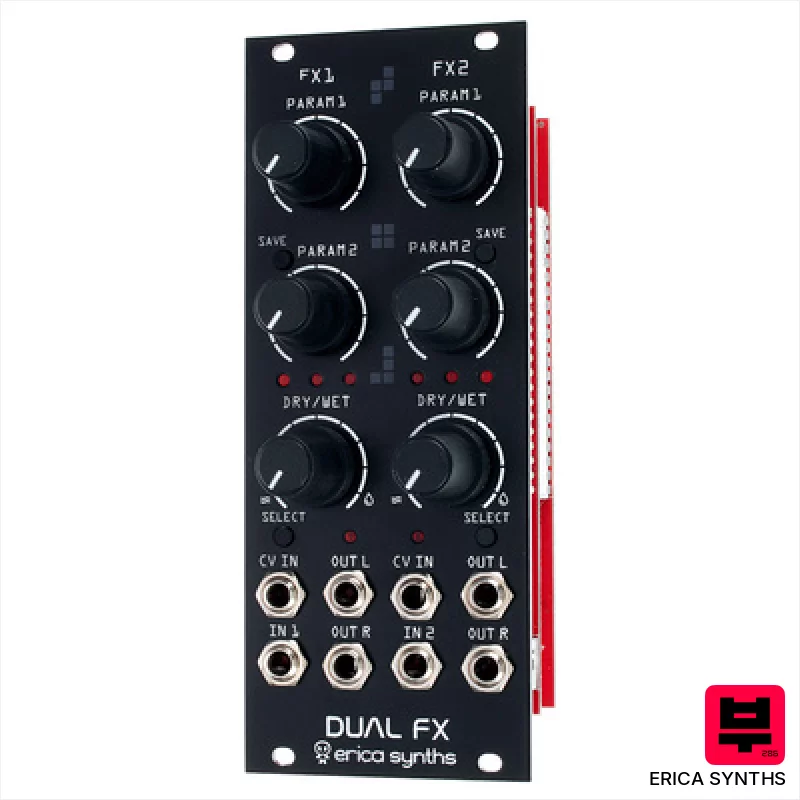
Erica Synths Dual FX
- • Excellent effect quality, especially the reverb algorithms
- • Compact 10TE module saves valuable rack space
- • Versatile dual-channel design allows for complex routing
- • CV control offers dynamic, performance-oriented modulation
- • Limited parameter control per effect can feel restrictive
- • Power draw is a bit higher than some competing modules
- • Effect selection, while diverse, may not suit all genres

Intellijel Designs Springray II
- • Exceptional spring reverb character, nuanced and musical.
- • Integrated parametric EQ provides precise tonal shaping.
- • Limiter prevents harsh feedback, maintaining control.
- • Multiple spring tank options expand sonic possibilities.
- • Requires a Springray module, adding to overall cost.
- • Power consumption is relatively high for a single module.
- • Limited modulation options beyond EQ control.
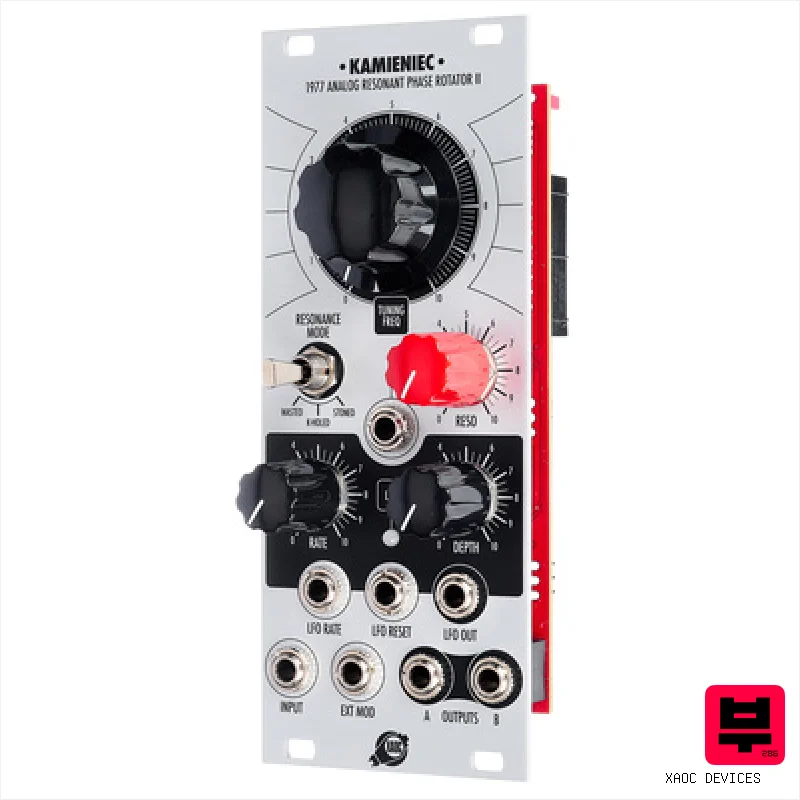
XAOC Devices Kamieniec II
- • Classic 1970s analogue phaser sound
- • Three selectable resonance modes
- • Internal triangular waveform LFO
- • CV inputs for frequency control
- • Optional expansion module costs extra
- • No specified filter cutoff control
- • Compact depth limits cable routing
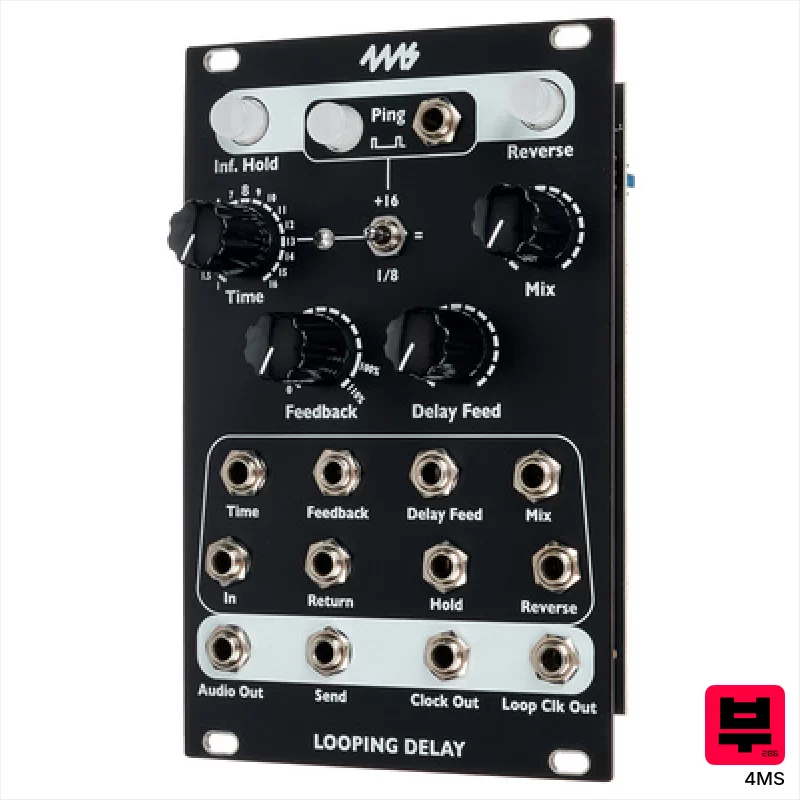
4ms Looping Delay
- • Excellent sound quality; clean digital clarity with warmth.
- • Flexible feedback path allows for unique textures and self-oscillation.
- • Extensive CV control offers deep modulation possibilities.
- • Hold and Reverse functions dramatically expand looping creativity.
- • Mono loop time is somewhat limiting for complex stereo arrangements.
- • The interface can feel dense and require a learning curve.
- • Power draw is a bit higher than some comparable modules.
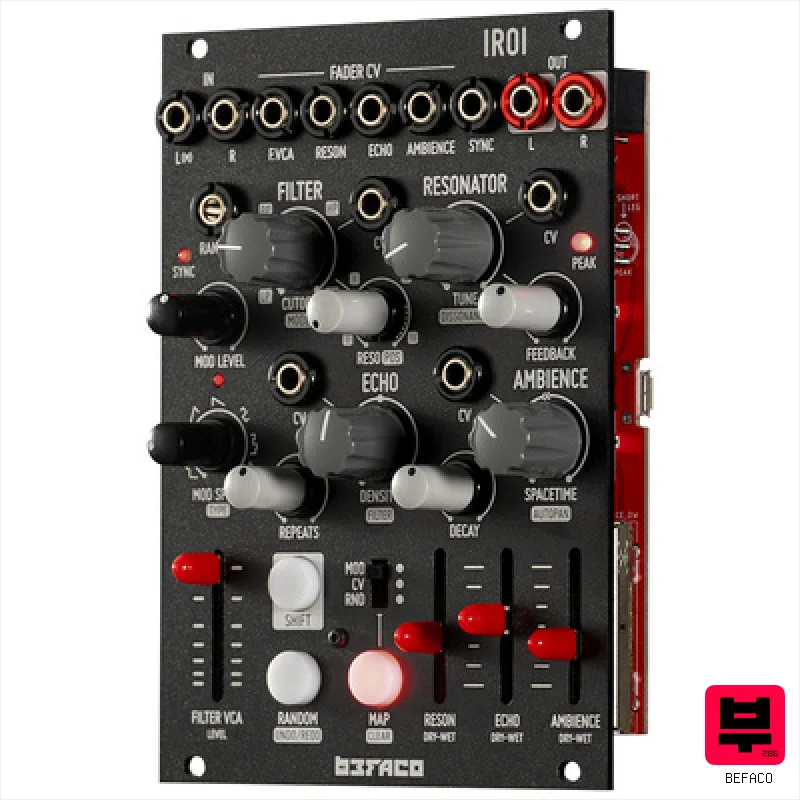
Befaco Iroi
- • Multi-mode filters offer low, band, high, and comb settings.
- • Five waveforms plus internal modulation source add depth.
- • Stereo inputs and outputs create rich spatial effects.
- • Random generator and envelope follower enable unique textures.
- • 18 HP width is wider than standard Eurorack slots.
- • No specific filter type mentioned other than multi-mode.
- • Depth of 27 mm is slightly thicker than typical modules.
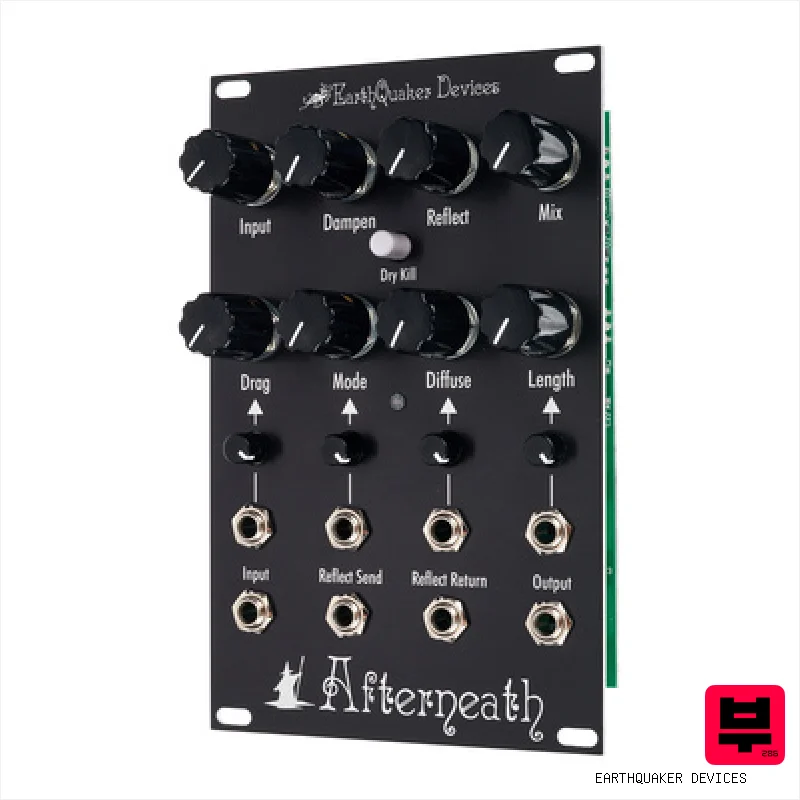
EarthQuaker Devices Afterneath Reverberator
- • Spreads sound atmospherically with magical reverb textures.
- • Nine modes let you choose specific scale functions.
- • Skiff-compatible design protrudes less than 31.75 mm.
- • Four CV inputs allow drag, mode, diffuse, and length control.
- • No power consumption rating is listed in the text.
- • Input range varies by setting rather than being fixed.
- • Physical dimensions beyond the rear protrusion are not given.

Cosmotronic Messor Silver
- • Excellent stereo imaging; subtly enhances without obvious coloration.
- • Flexible sidechain filter offers precise rhythmic shaping possibilities.
- • Responsive CV inputs allow for dynamic, performance-driven compression.
- • Well-executed build quality; feels robust for its size and price.
- • Limited gain range compared to high-end mastering compressors.
- • Attack times, while adjustable, feel slightly constrained at the fastest settings.
- • Sidechain filter's resonance can introduce unwanted artifacts at extreme settings.

Cosmotronic Messor
- • Excellent transient shaping capabilities for punchy drums and percussive elements.
- • Integrated sidechain filter offers unique tonal sculpting possibilities.
- • CV control over key parameters allows for dynamic and expressive manipulation.
- • Saturation stage adds warmth and character when subtle compression isn't enough.
- • 8 TE width can be restrictive in smaller Eurorack cases.
- • Limited headroom compared to higher-end stereo compressors.
- • Attack times, while adjustable, can feel slightly sluggish at the slower end.
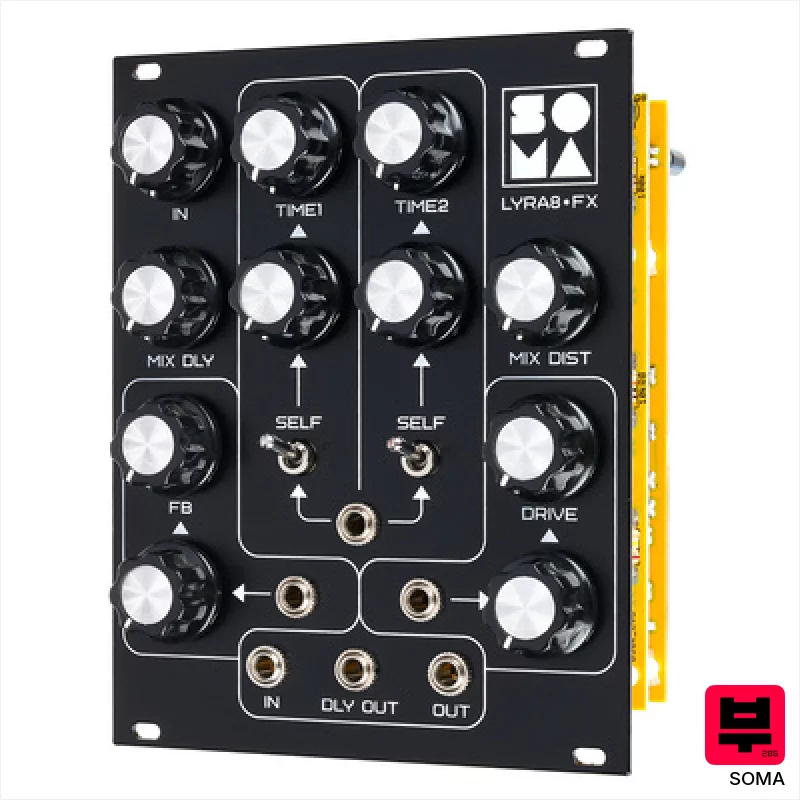
SOMA Lyra-8 FX Black
- • Exceptional Lyra-8 analogue warmth, instantly recognizable and lush.
- • Black panel adds a distinct aesthetic, appealing to minimalist setups.
- • Dual delays create complex, evolving textures and rhythmic interest.
- • CV control allows for dynamic, performance-driven modulation possibilities.
- • Limited HP footprint requires careful Eurorack patching considerations.
- • Lyra-8's signature sound isn't for everyone; can be overwhelming.
- • Effect depth is relatively shallow; not a full suite of processing.
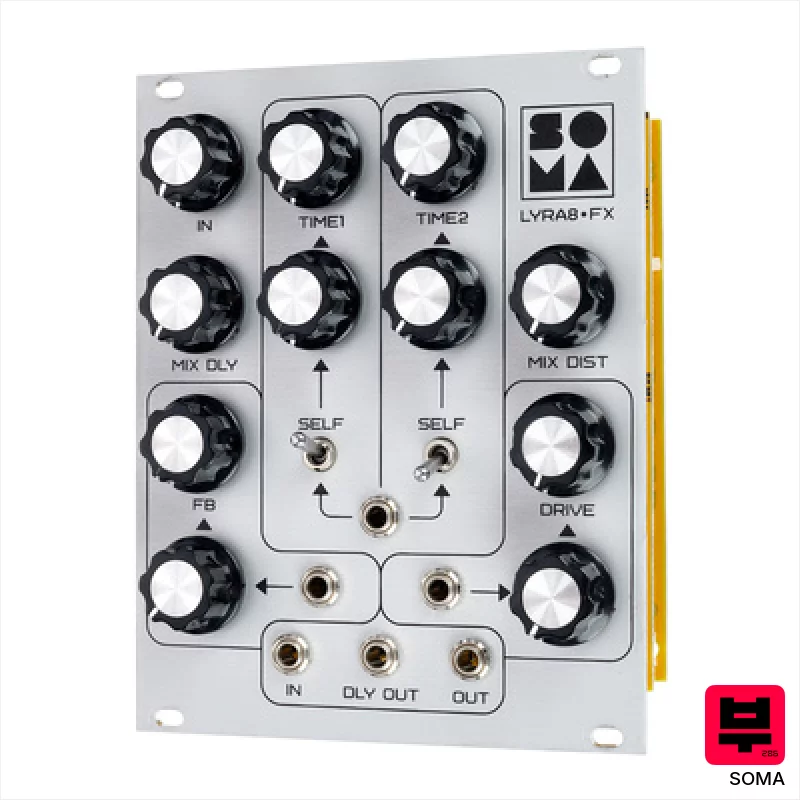
SOMA Lyra-8 FX
- • Unique Lyra-8 analogue warmth, instantly recognizable sound
- • Flexible total feedback modulation via CV creates evolving textures
- • Distortion stage adds grit and character without harshness
- • Compact 20HP footprint maximizes modular space efficiency
- • Limited to Lyra-8's characteristic sonic palette; less versatile than broader FX
- • CV input range might require voltage scaling for some modules
- • No dedicated mix controls; relies on external routing for wet/dry balance
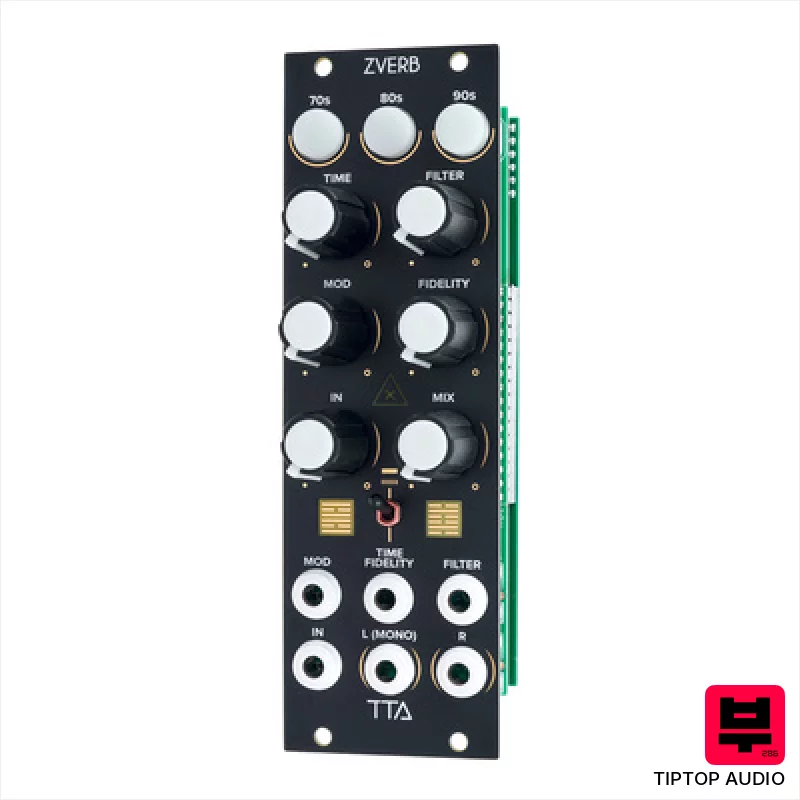
Tiptop Audio ZVERB Black
- • Excellent algorithm variety for diverse sonic textures
- • Fidelity control noticeably cleans up the digital artifacts
- • Compact 8HP footprint maximizes modular space
- • CV modulation adds expressive, evolving reverb tails
- • Limited modulation destinations compared to higher-end reverb modules
- • Mono input restricts stereo processing capabilities
- • DSP clocking can still exhibit minor artifacts at extreme settings
Every effect modules that matches
67 models match this page. The 15 above are covered in detail; the rest are listed here with their published specifications.
Effect Modules by the numbers
Measured across all 67 models in this category, so «wide», «short» or «expensive» mean something you can check.
How to Choose the Best Effect Modules
Playability
It's not just about the sound, but how intuitive the controls are under pressure. Can you tweak a reverb to sound less cavernous without fumbling in the dark? Modules with clear labeling and sensible ranges win.
Feature Set vs. Complexity
Some modules cram in a million features, which is great...until you're trying to dial in a subtle delay on stage. We're looking for a balance - enough depth to inspire, but not so much it becomes a liability.
Learning Curve
Intermediate players have a foundation, but still need modules that offer discovery without a PhD in DSP. Modules that have clear operational pathways and offer some forgiving parameters are ideal.
Signal Flow & Flexibility
Can you run audio through it in series or parallel? Does it have input/output attenuators or offset capabilities? These small details make a huge difference in sculpting complex textures.
Noise Floor
Let's be real, Eurorack can be noisy. A module with a low noise floor isn't just about pristine clean sounds; it's about preserving the dynamics of your signal and avoiding that muddy low-end hum.
Buying Guide
Don't chase the boutique hype. Plenty of excellent effect modules exist in the $100-$250 range. Watch out for modules that rely heavily on menu diving - those are a pain to use live. Paying extra for things like multiple feedback paths, a wider range of modulation inputs, or a truly low noise floor is worthwhile, but understand you're paying for utility, not just coolness.
How This List Is Built
We don't play these instruments — we're a catalog, not a review desk, and we'd rather say so than pretend otherwise. This page covers 67 effect modules from the Thomann catalogue, which is the largest single source of specification data in this category: 15 in detail, the rest listed with their specifications.
Position is computed, not curated. We parse the manufacturer's own description into actual values — nut width, scale, fret count, fingerboard radius, size, alloy — and rank on them: how many specifications a model has published, how many of them are measurable numbers, and how precisely it meets this page's criterion. A product image adds a little. Price is not a ranking signal: it tells you nothing about whether a neck fits your hand. The same inputs always produce the same order, so nothing here is shuffled to look fresh.
What this list is good for: narrowing a category down to a shortlist by spec and budget. What it isn't: a substitute for hearing an instrument. Before you buy, read hands-on reviews and, where you can, play it. Full methodology.

