
Best Dynamic Allround Microphones Under $1,000 2026
Alright, let's talk about getting a solid dynamic mic without emptying your bank account. You need something that can handle a screaming vocal, a thumping kick drum, and maybe even a decent acoustic guitar - all without sounding like you're recording through a tin can. This list isn't about chasing the Neumann U87 dream; it's about finding that sweet spot where performance meets affordability. We're aiming for serious bang-for-your-buck in the under-$1000 range.
Last updated: April 11, 2026
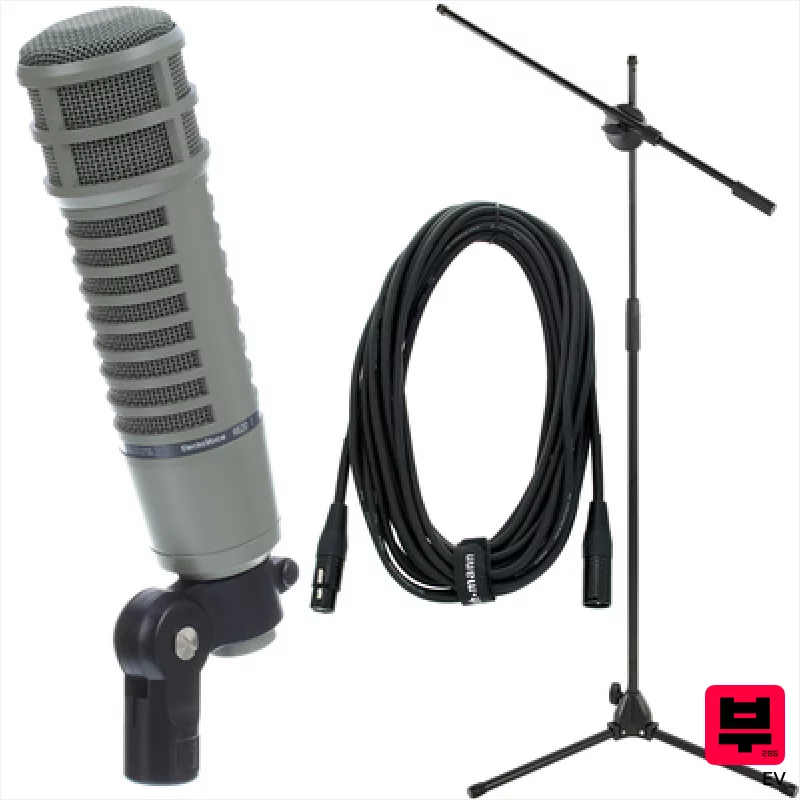
EV RE20 RE-Series Bundle
- • RE20’s Variable-D design delivers incredibly consistent off-axis response
- • Millennium stand offers robust stability and a wide reach for recording
- • Included pro snake cable ensures clean signal transmission and durability
- • RE20 excels on vocals, instruments, and speech – a true workhorse mic
- • The RE20's weight can be fatiguing for extended handheld use
- • Bundle’s stand is functional but lacks premium features of higher-end stands
- • While versatile, it's not ideal for extremely nuanced or detailed acoustic instruments

the t.bone BC 500 Swivel Mic Arm Bundle
- • Solid build quality for the price point; feels surprisingly robust.
- • Swivel arm offers excellent positioning flexibility for streaming/recording.
- • Cardioid pattern effectively minimizes room noise for cleaner recordings.
- • 200Hz low-cut helps tame boomy vocals or instruments nicely.
- • Mic's sensitivity (-58dB) might require a preamp for quieter sources.
- • Plastic cable management on the arm isn't the most premium solution.
- • While versatile, it’s not a studio-grade mic for critical vocal work.

Shure MV7 Plus White
- • Excellent USB/XLR hybrid versatility for studio and streaming setups.
- • Integrated touch panel simplifies gain, monitor mix adjustments on-mic.
- • ShurePlus MOTIV software unlocks powerful DSP for polished audio.
- • Robust build quality with a substantial, dampened metal chassis.
- • Limited frequency response compared to higher-end studio condensers.
- • Cardioid pattern restricts stereo recording possibilities; less versatile.
- • USB performance, while decent, isn’t a substitute for dedicated audio interface.
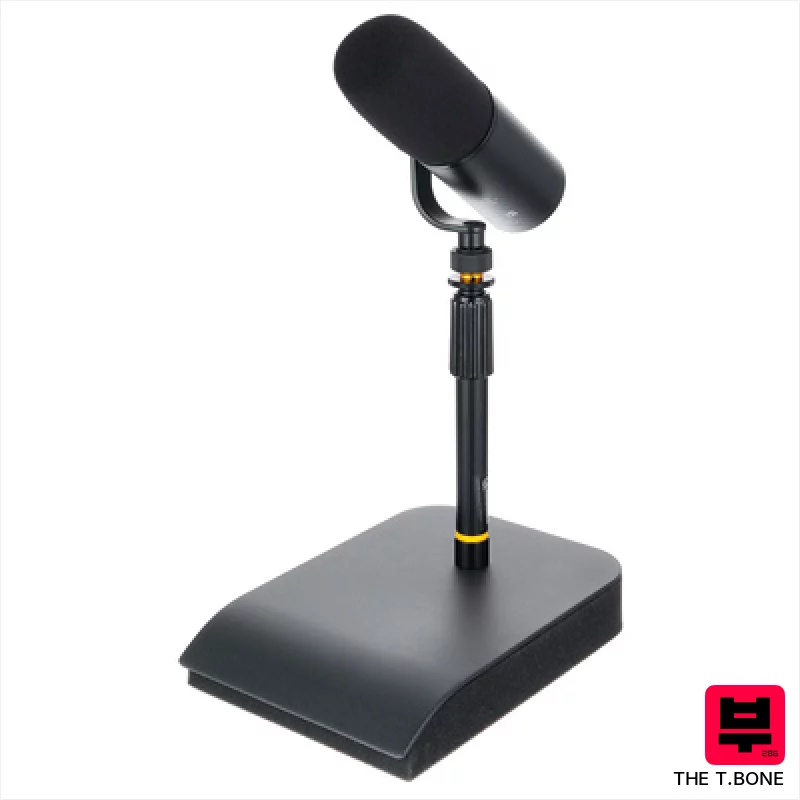
the t.bone BC 500 Desk Stand Bundle
- • Surprisingly decent broadcast clarity for the price point; voice sounds natural.
- • The included desk stand is functional and padded, preventing mic vibrations.
- • Cardioid pattern effectively isolates vocals, minimizing room noise.
- • Low-cut filter helps tame boomy low frequencies common in close-mic'd vocals.
- • Build quality feels somewhat plasticky; not a studio-grade robust feel.
- • Sensitivity is quite low, necessitating a preamp with ample gain.
- • Frequency response, while adequate, lacks the finesse of more expensive mics.
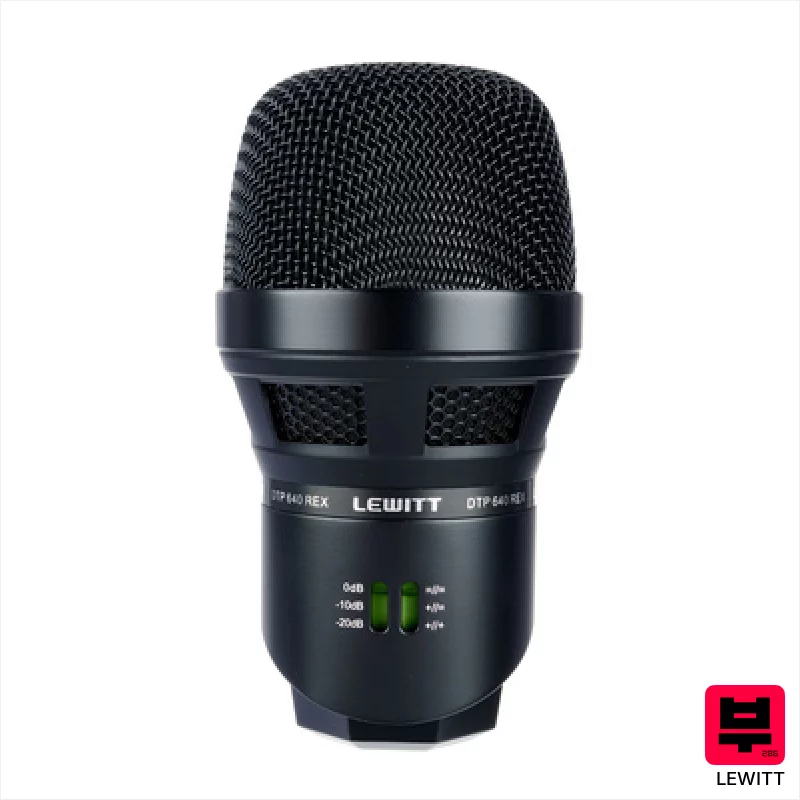
Lewitt DTP 640 REX
- • Robust build with solid metal housing inspires confidence.
- • Dual-capsule design offers unique blending/routing flexibility.
- • Cardioid pattern minimizes room noise, great for tracking.
- • Extended frequency response captures detail across a wide spectrum.
- • The weight (0.75 kg) can be cumbersome for extended handheld use.
- • Higher impedance dynamic capsule may require a preamp with sufficient gain.
- • Condenser capsule necessitates phantom power, limiting some interface options.

Shure SM57LC Bundle III
- • Rugged all-steel construction ensures decades of reliable use.
- • Cardioid pattern excels at isolating instruments in noisy environments.
- • Bright, clean sound captures detail across a wide range of instruments.
- • Versatile enough for both live performance and studio recording applications.
- • Can sound 'muddy' on certain vocals without careful EQ adjustments.
- • Lacks the extended frequency response of higher-end condenser microphones.
- • The capsule’s design can exhibit proximity effect, requiring mic placement awareness.

Shure MV7 Plus
- • Excellent vocal clarity with a controlled, broadcast-ready sound.
- • Intuitive touch panel simplifies gain and monitoring adjustments on-mic.
- • ShurePlus MOTIV software unlocks powerful, customizable DSP effects.
- • Robust build quality; feels solid and professional in the hand.
- • Limited polar pattern selection restricts versatility for certain recording scenarios.
- • Frequency response leans slightly dull; may require EQ for brighter sources.
- • USB connectivity prioritizes convenience over absolute audio fidelity for critical recordings.

AKG D-7S Bundle
- • Robust Varimotion diaphragm delivers clear, detailed vocal reproduction
- • Supercardioid pattern excels in live settings, minimizing feedback
- • Included Roadworx stand is surprisingly sturdy and functional
- • Complete bundle provides immediate usability – mic, stand, cable included
- • 600 Ohm impedance requires a preamp with ample gain
- • Supercardioid pattern can be unforgiving with mic placement
- • Lacks the warmth and character of higher-end studio mics
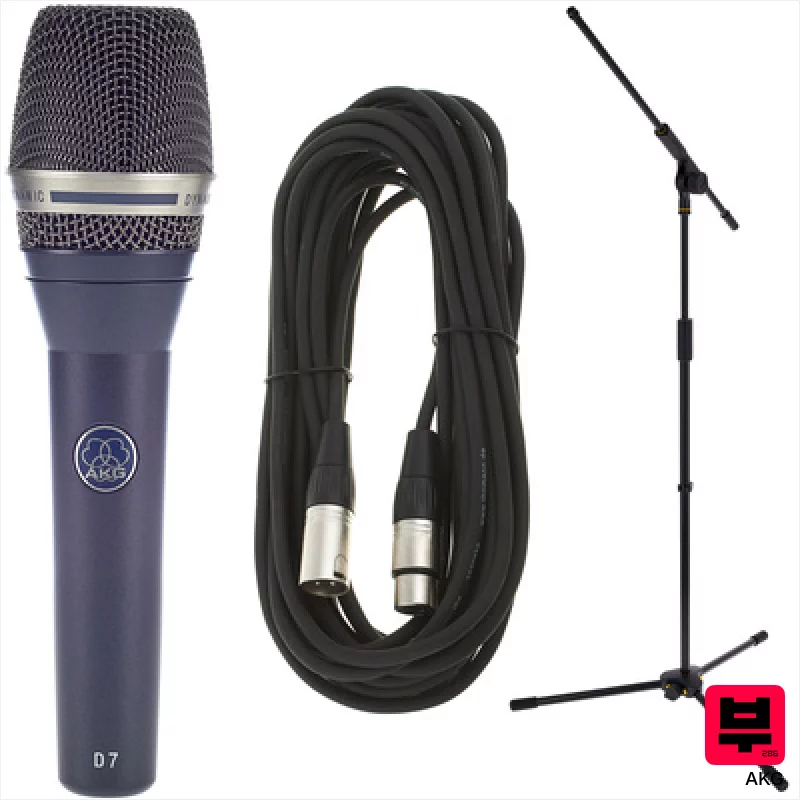
AKG D-7 Bundle
- • Supercardioid pattern effectively rejects stage bleed, crucial for live vocals.
- • Roadworx stand offers stable, adjustable positioning; feels surprisingly sturdy.
- • Laminate Varimotion diaphragm delivers a surprisingly detailed and clear sound for a dynamic.
- • Included XLR cable is a decent quality, eliminating immediate additional purchase needs.
- • The D-7’s sound profile is somewhat mid-focused, lacking low-end warmth for some vocal styles.
- • While the stand is functional, its build quality feels a little plasticky compared to higher-end models.
- • The microphone's weight (340g) can be fatiguing during extended performances.
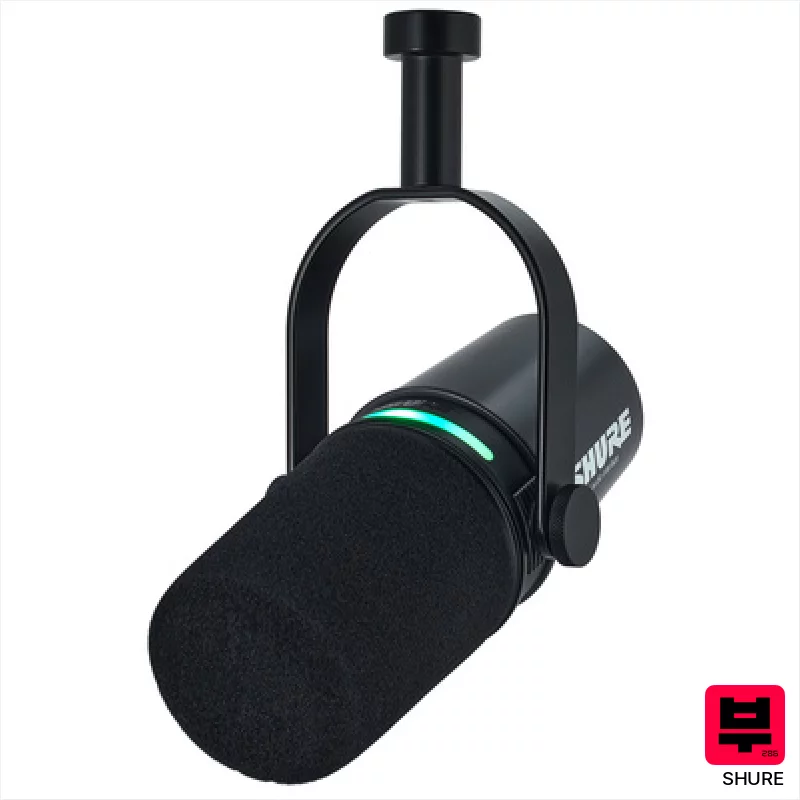
Shure MV7i
- • Integrated interface eliminates external gear, simplifying recording setups significantly.
- • The touch panel provides intuitive, on-mic control over essential parameters.
- • SmartGate auto-noise reduction is surprisingly effective, a boon for less-than-ideal rooms.
- • Solid build quality; the metal construction feels robust and durable for desk use.
- • Limited XLR input gain; may struggle with very quiet sources or low-output mics.
- • The 'auto-level' mode can sometimes sound overly processed and unnatural.
- • The all-in-one design restricts flexibility compared to separate mic and interface.
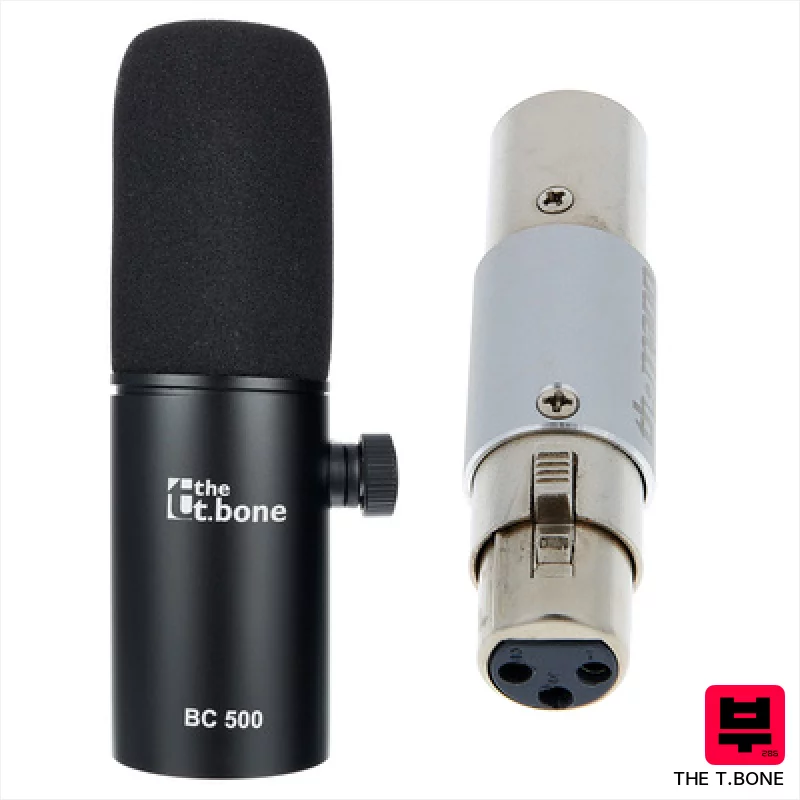
the t.bone BC 500 Bundle
- • Solid broadcast quality for vocals and instruments at a budget price.
- • The included FetAmp noticeably boosts the mic's signal and clarity.
- • Cardioid pattern effectively minimizes room noise for cleaner recordings.
- • Durable metal construction feels surprisingly robust for its price point.
- • The low-cut filter can be a little aggressive, requiring careful EQ adjustments.
- • The frequency response, while broad, lacks a truly premium, refined character.
- • The bundled FetAmp, while useful, is a basic model limiting advanced gain control.
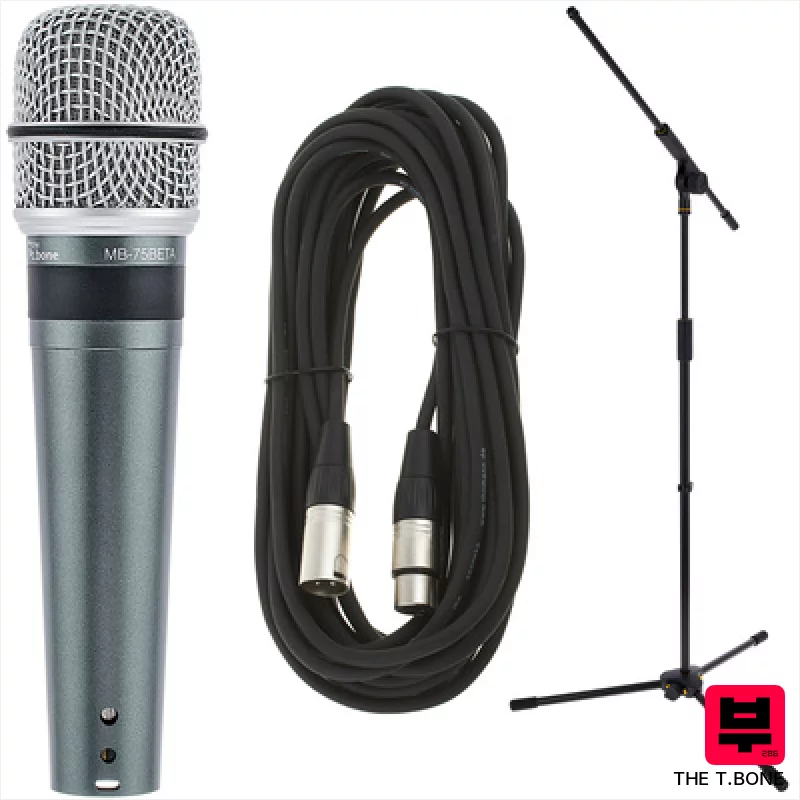
the t.bone MB75 Beta Bundle
- • Surprisingly robust build for the price point; feels solid in hand.
- • Supercardioid pattern offers excellent isolation on stage.
- • Included stand is functional and saves on initial investment.
- • Versatile enough for drums, guitar amps, and even vocals in a pinch.
- • The cable is a basic, thin XLR – upgrade recommended for serious use.
- • Sensitivity is low, requiring more preamp gain, potential for noise.
- • Supercardioid pattern can be tricky to manage; prone to feedback.
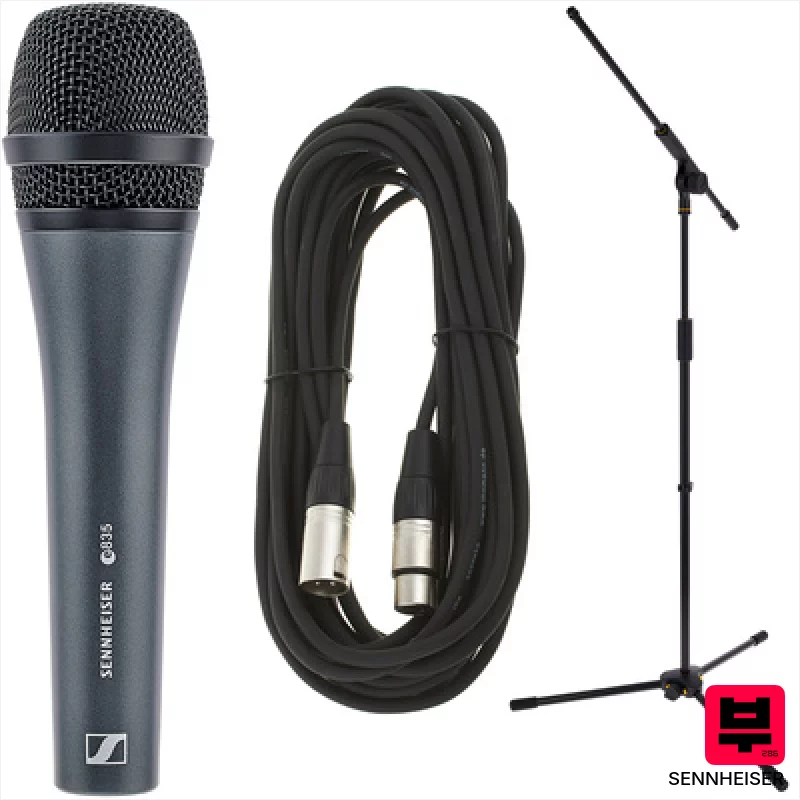
Sennheiser E835 Bundle
- • Robust build quality, feels solid and reliable on stage
- • Cardioid pattern effectively isolates vocals from stage noise
- • Included mic stand and cable offer immediate usability
- • Versatile enough for vocals, percussion, and amplified instruments
- • The stand is basic, not ideal for complex stage setups
- • Sound profile leans towards a slightly mid-focused character
- • Cable length might be restrictive for some stage configurations
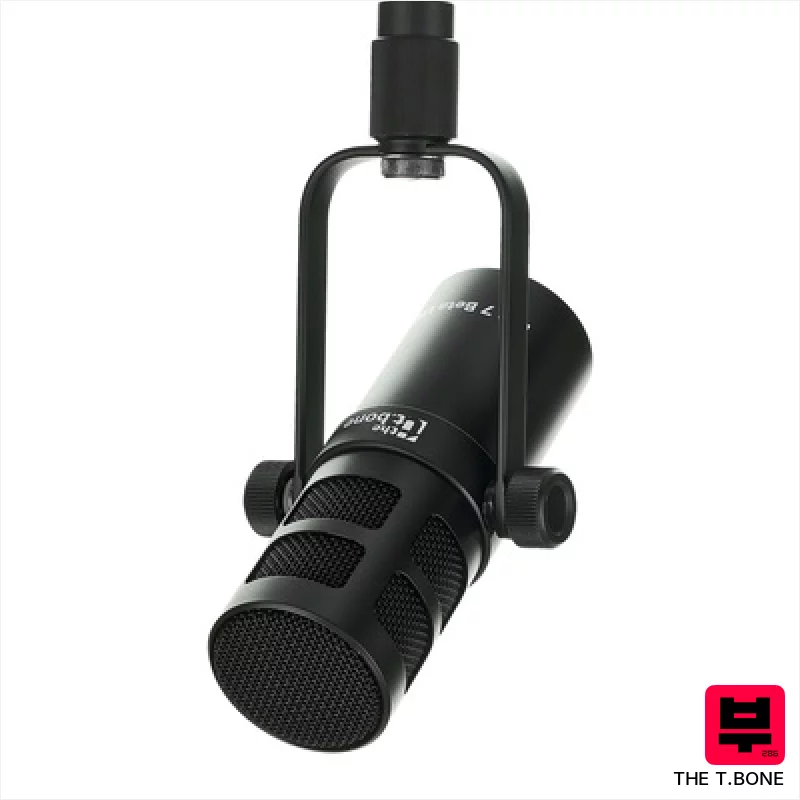
the t.bone MB 7 Beta USB
- • Solid build quality for the price, feels surprisingly robust.
- • USB-C connectivity offers modern convenience and clean signal.
- • Cardioid pattern effectively minimizes room noise and bleed.
- • Integrated pop filter and shockmount simplify recording setup.
- • Sensitivity is quite low, requiring preamp gain or a boosted signal.
- • The frequency response leans slightly dull, lacking high-end sparkle.
- • XLR output lacks true phantom power compatibility, limiting some use cases.
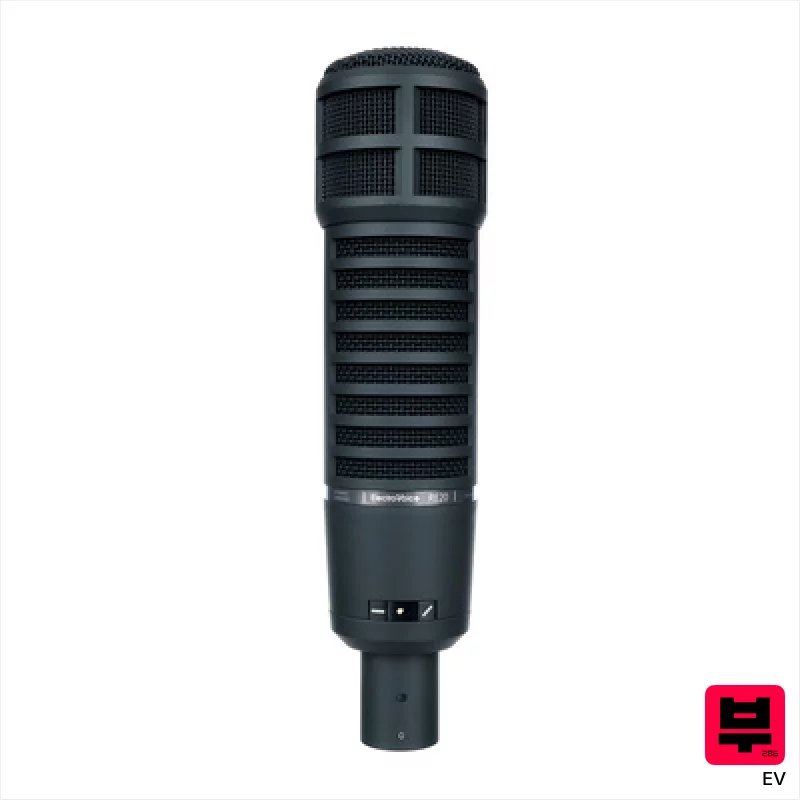
EV RE20-Black
- • Variable-D minimizes proximity effect, delivering consistent tone
- • Rugged all-metal build feels incredibly solid and durable
- • Cardioid pattern excels at isolating instruments on stage
- • Extended frequency response captures detailed, natural sound
- • Its size and weight can be cumbersome for some mic stands
- • Limited polar pattern options restrict versatility in complex recording scenarios
- • Premium-priced, a significant investment for budget-conscious users
How to Choose the Best Dynamic Allround Microphones
Frequency Response
A flatter response generally means more versatility, but some mics intentionally shape the EQ for a specific 'character.' Watch out for overly hyped highs that can sound ice-picky - you can always add brightness, but you can't easily take it away.
Off-Axis Rejection
This is crucial for live sound and recording multiple sources. Poor off-axis rejection means bleed and a muddy mix. A good mic will reject unwanted sounds coming from the sides and rear.
Sensitivity & SPL Handling
Higher sensitivity means you'll need less gain, which can reduce noise. High SPL handling is essential for loud sources like drums and guitar amps - you don't want it distorting prematurely.
Durability & Build Quality
Dynamic mics are workhorses. Cheap plastic parts and a flimsy clip won't last long on a gigging musician's kit. Look for solid construction and robust components.
Polar Pattern
Most of these will be cardioid, which is a good all-rounder. But consider subcardioid or supercardioid if you need even tighter isolation, though they can be trickier to use.
Buying Guide
At this price point, you're making trade-offs. Don't expect pristine, studio-grade clarity. You'll likely encounter some muddiness in the low-mids or a slightly less detailed high-end compared to condenser mics. Focus on versatility - a mic that can handle a variety of sources is more valuable than a mic that excels at just one thing. Spend a little more for better build quality; a mic that fails mid-set is worthless.
How This List Is Built
We don't play these instruments — we're a catalog, not a review desk, and we'd rather say so than pretend otherwise. This page ranks 15 dynamic allround microphones from the Thomann catalogue, which is the largest single source of specification data in this category.
Position is computed, not curated. Four signals, in order of weight: how completely the manufacturer documents the instrument (number of published specifications), where it sits in the price range, how specific the model designation is — which filters out generic accessories — and whether a product image exists. The same inputs always produce the same order, so nothing here is shuffled to look fresh.
What this list is good for: narrowing a category down to a shortlist by spec and budget. What it isn't: a substitute for hearing an instrument. Before you buy, read hands-on reviews and, where you can, play it. Full methodology.

