
Best DAW Controllers for Daw Control 2026
So, you're tired of mouse clicks and keyboard shortcuts in your DAW? Smart move. A decent controller can seriously streamline your workflow, especially if you're tracking bands, building complex arrangements, or just trying to keep your creative momentum going. It's not about making your tracks sound better - although a smoother workflow can lead to better decisions - it's about making the process less tedious and more intuitive.
Last updated: July 22, 2026 • Next update: July 29, 2026
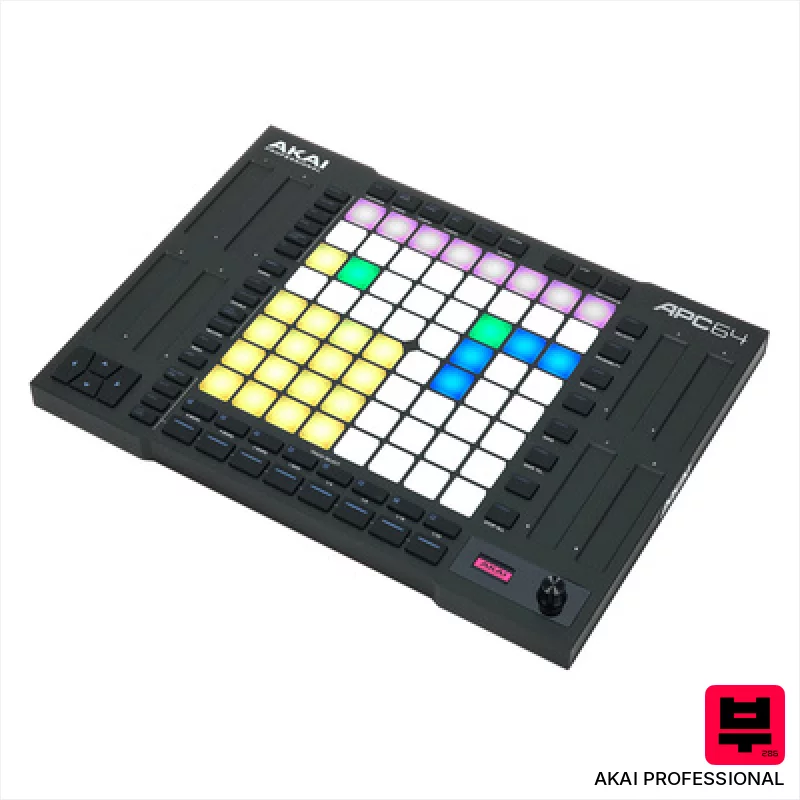
AKAI Professional APC64
- • Excellent Ableton Live integration, streamlining workflow significantly.
- • The 8x8 pad matrix offers intuitive clip launching and sequencing.
- • Touch strips provide tactile control over key Ableton parameters.
- • Integrated 8-track sequencer expands creative possibilities beyond Live.
- • Limited compatibility outside of Ableton Live; less versatile for other DAWs.
- • Plastic build feels somewhat budget-oriented, though structurally sound.
- • Smaller pad size might be challenging for some users' fingers.
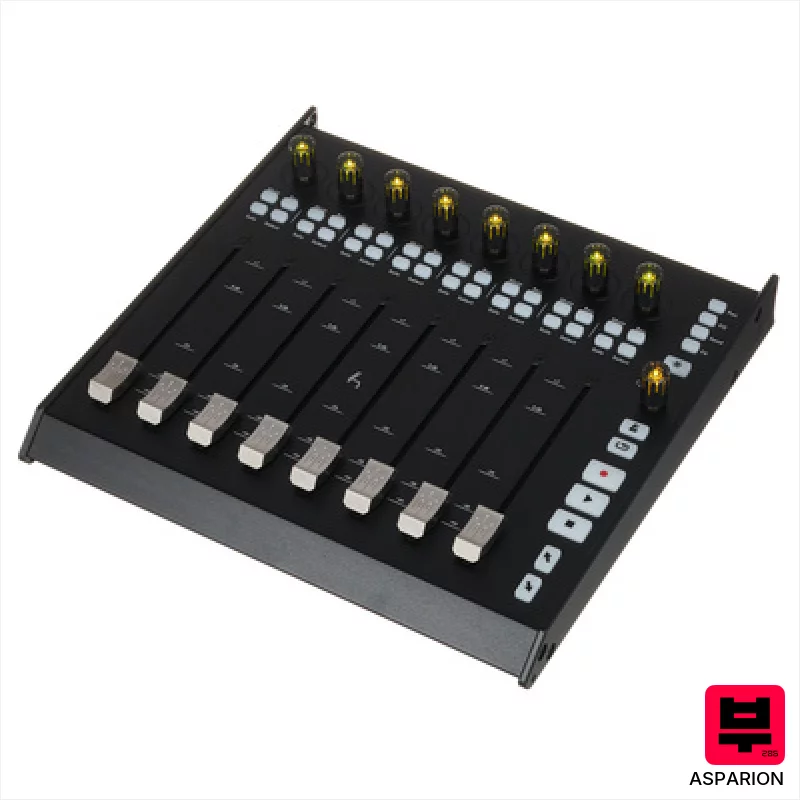
Asparion D700FT
- • High-resolution faders offer precise, repeatable automation control.
- • RGB encoders provide excellent visual feedback in low-light environments.
- • Expandability to 64 channels is a huge boon for larger projects.
- • Solid build quality suggests durability for studio use.
- • Windows 7 support feels dated; newer OS compatibility is crucial.
- • Relatively heavy, portability is a significant limitation.
- • Price point places it firmly in the premium-priced category.

SSL UF1
- • Solid metal chassis feels exceptionally robust and well-built.
- • Motorized fader offers smooth, accurate level adjustments with SSL's signature feel.
- • Intuitive knob functionality with push-function adds versatile parameter control.
- • Compact size makes it ideal for smaller studios without sacrificing features.
- • Limited number of knobs compared to larger console emulations.
- • Programming via SSL 360° software can be initially complex for some users.
- • Lack of dedicated transport buttons beyond the core set.

Native Instruments Maschine MK3 Black ISO Bundle
- • Excellent dynamic pads offer nuanced aftertouch expression.
- • High-resolution displays provide clear visual feedback, crucial for workflow.
- • Integrated audio interface simplifies recording and eliminates extra hardware.
- • Maschine software is incredibly deep, offering immense creative possibilities.
- • The Smart Strip takes practice to master; not immediately intuitive.
- • ISO bundle's included software can feel overwhelming for complete beginners.
- • Build quality, while solid, feels mostly plastic, not premium metal.
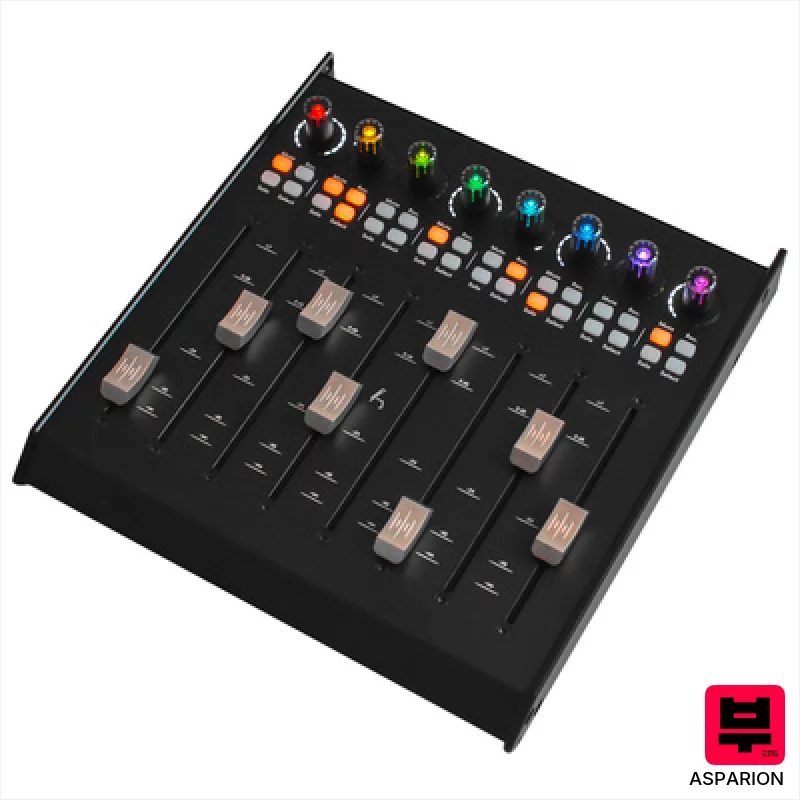
Asparion D700F
- • Solid metal housing provides exceptional durability and a premium feel.
- • Motorized faders offer precise recall and automation capabilities.
- • High-resolution fader grid ensures accurate level adjustments and fine-tuning.
- • RGB encoders offer visual feedback and customizable workflow integration.
- • Requires D700 FT base unit, limiting standalone functionality and adding to cost.
- • Windows 7 support is increasingly limiting for modern studio setups.
- • Limited channel count per unit necessitates multiple expansions for larger projects.
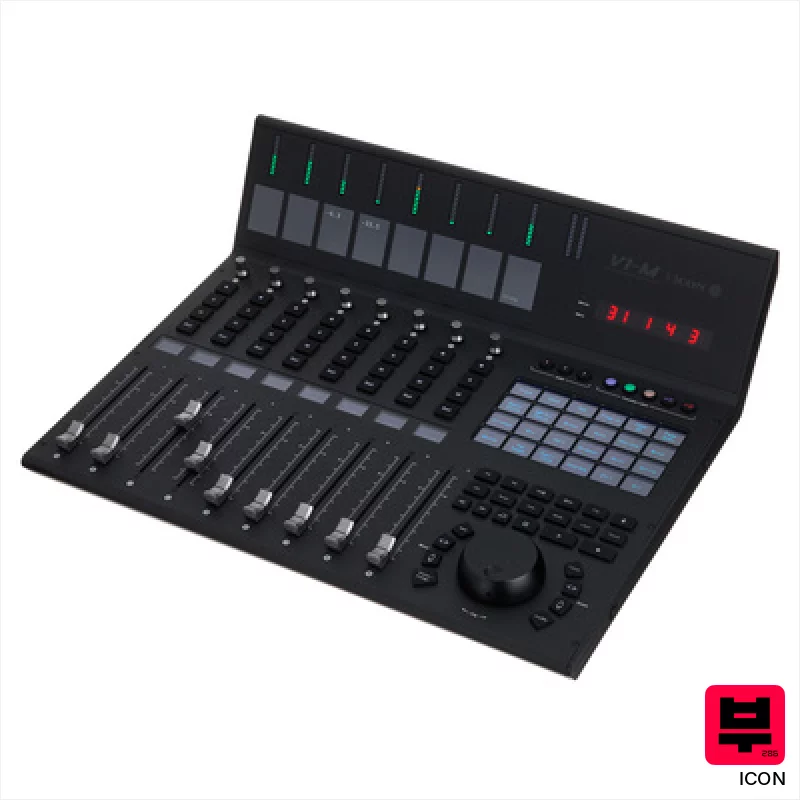
Icon V1-M
- • Exceptional build quality with solid metal fader rails and robust chassis.
- • The OLED touchscreen offers genuinely useful, customizable control mapping.
- • Simultaneous control of multiple DAWs streamlines complex workflows.
- • Optical jog wheel feels precise and responsive, a welcome tactile upgrade.
- • The price point puts it out of reach for many home recording enthusiasts.
- • The learning curve can be steep given the extensive customization options.
- • The reliance on software compatibility means updates are critical for continued functionality.
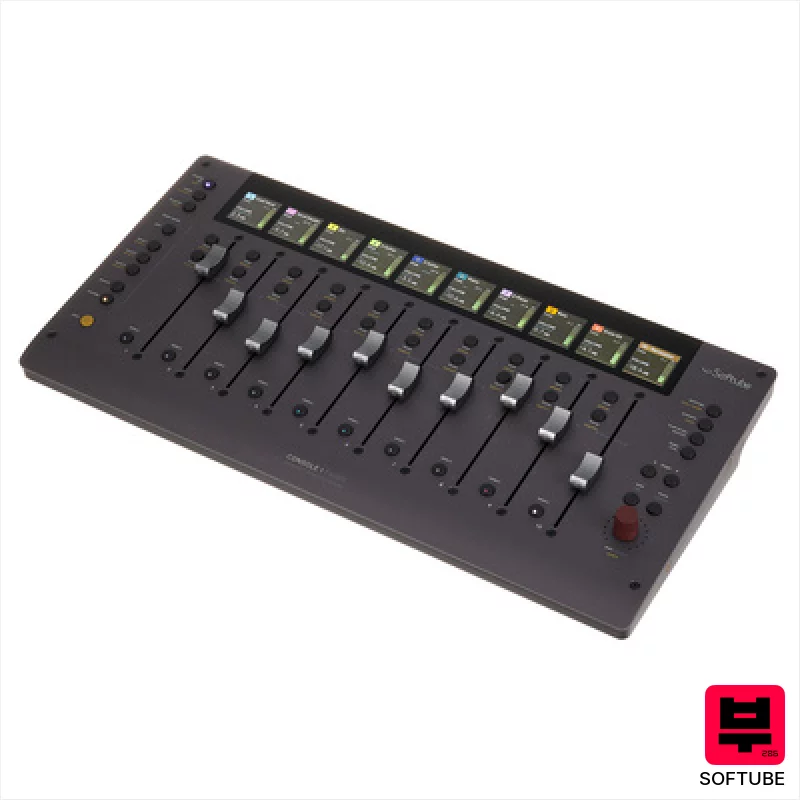
Softube Console 1 Fader Mk III
- • Solid aluminum chassis provides reassuring heft and premium feel.
- • Seamless Softube ecosystem integration elevates workflow significantly.
- • Customizable OLED screens offer clear, at-a-glance information.
- • Parameter mode unlocks quick access to essential processing.
- • Price point places it firmly in the high-end controller category.
- • Limited compatibility outside the Softube ecosystem can be restrictive.
- • Daisy-chaining USB-C adds complexity for some studio setups.
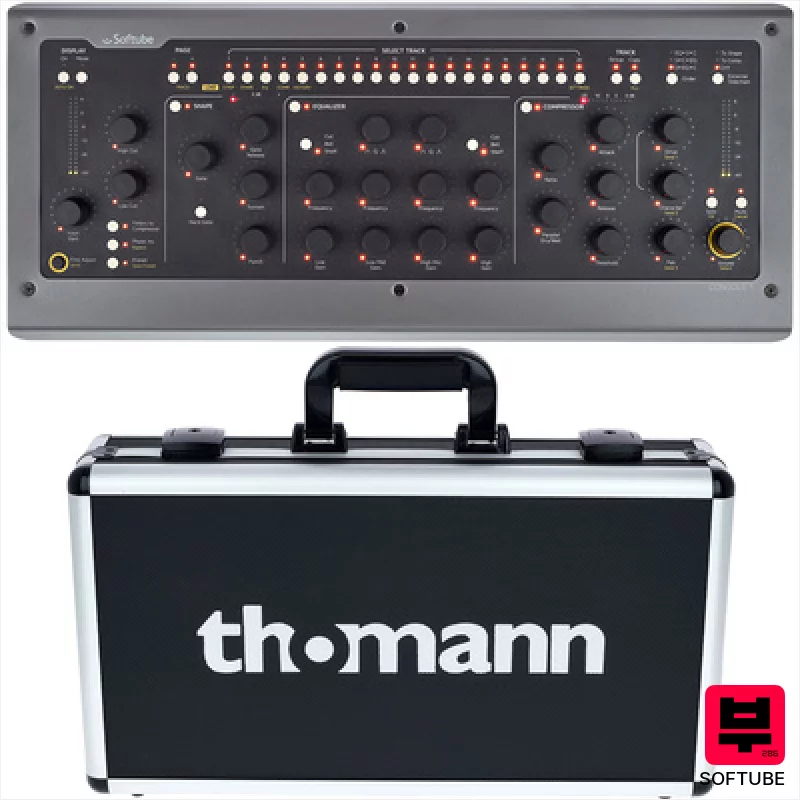
Softube Console 1 Mk 2 Case Bundle
- • Solid State Logic emulation adds authentic analog warmth and character.
- • High-quality faders offer precise, tactile control for mixing.
- • Seamless DAW integration across AU, VST, VST3, and AAX formats.
- • Included SSL 4000 E plugin provides a powerful starting point for mixing.
- • Case is not included, adding to the overall investment.
- • Plugin compatibility is limited to Softube and UAD ecosystems.
- • Motorized faders can feel a little sluggish compared to some high-end consoles.
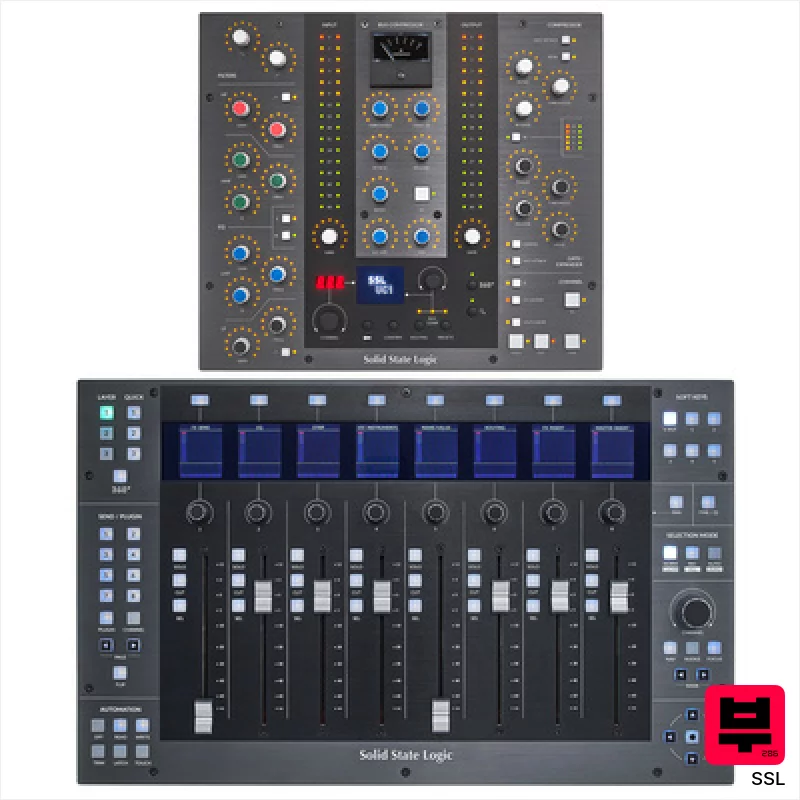
SSL UF8 UC1 Control Bundle
- • Solid metal chassis feels exceptionally robust and well-built.
- • Motorized faders offer precise recall and smooth automation.
- • SSL 360° software provides deep customization and workflow enhancements.
- • Integrated Vocalstrip & Drumstrip plugins offer immediate sonic value.
- • Cascading multiple UF8s can introduce latency depending on system resources.
- • Limited tactile feedback on rotary encoders; a click would be beneficial.
- • The learning curve for full SSL 360° customization can be steep.
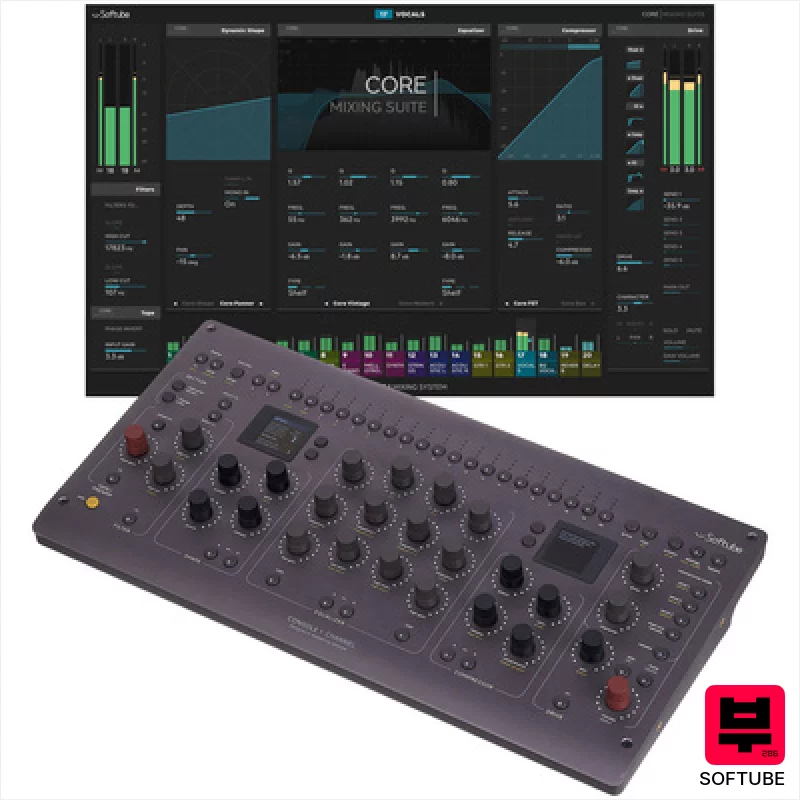
Softube Console 1 Channel Mk III
- • Excellent tactile feel from the high-quality rotary encoders.
- • Softube's Core Mixing Suite delivers genuinely usable analog character.
- • Dual high-resolution screens offer clear visual feedback and workflow efficiency.
- • Compact footprint allows for flexible placement in any studio setup.
- • Price point places it firmly in the premium-priced controller category.
- • Limited fader functionality restricts complex mixing workflows.
- • DAW integration, while broad, could benefit from deeper, more granular control.
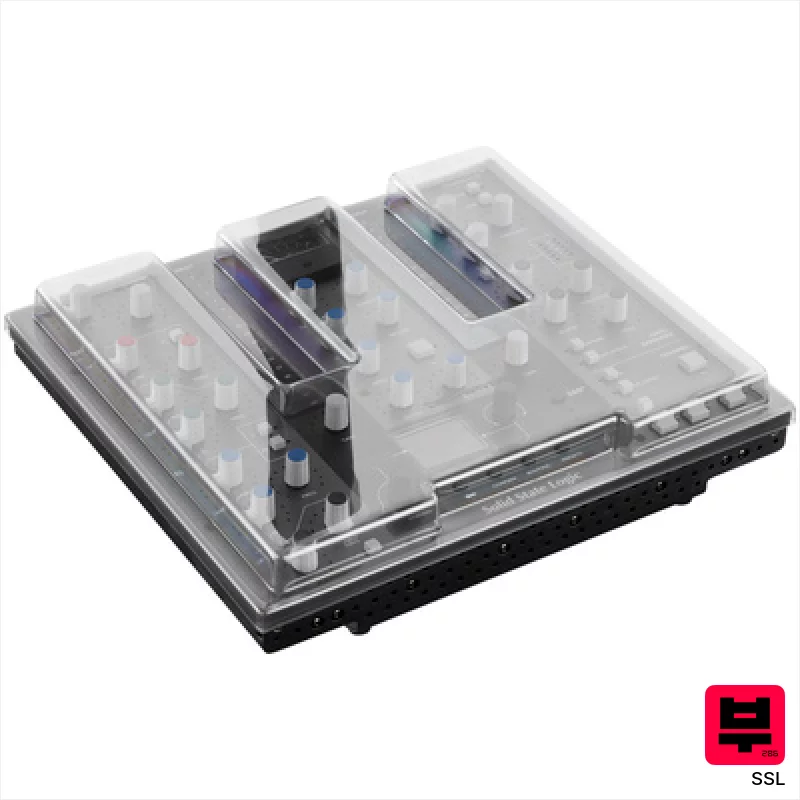
SSL UC1 Decksaver Bundle
- • Exceptional SSL workflow integration with Channel Strip 2 & Bus Compressor 2.
- • LED ring feedback provides intuitive visual parameter confirmation.
- • 360° software enables surprisingly flexible third-party plug-in mapping.
- • Decksaver protection safeguards investment from dust and accidental damage.
- • Price point places it firmly in the premium-priced category for home studios.
- • Reliance on SSL 360° software limits broader DAW compatibility.
- • Limited physical fader travel might frustrate experienced mixing engineers.

Reloop Keypad Pro
- • Velocity-sensitive keys offer expressive MIDI input for nuanced performances.
- • Integrated arpeggiator simplifies complex rhythmic ideas and sequences.
- • Bluetooth connectivity provides genuine mobile workflow flexibility.
- • Compact design maximizes desk space without sacrificing control.
- • Limited 25-key range restricts complex chord voicings and extended melodies.
- • Plastic construction feels somewhat budget-oriented despite functional design.
- • The '9-octave' claim is misleading; it's range, not physical keys.
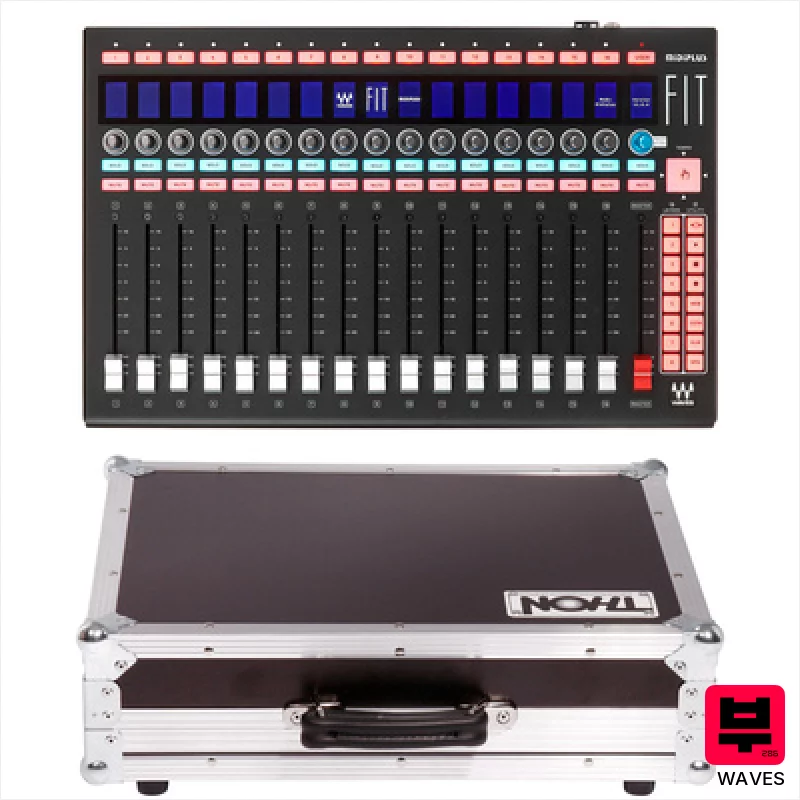
Waves FIT Case Bundle
- • Robust phenolic resin coating protects against stage wear and tear.
- • Motorized faders offer precise recall and automation capabilities.
- • The included flight case provides excellent protection during transport.
- • Rackmountable design integrates seamlessly into professional studio setups.
- • High-end price point makes it inaccessible to budget-conscious users.
- • Designed primarily for eMotion LV1; limited utility with other DAWs.
- • The weight (4.28kg) can be a challenge for frequent travel.
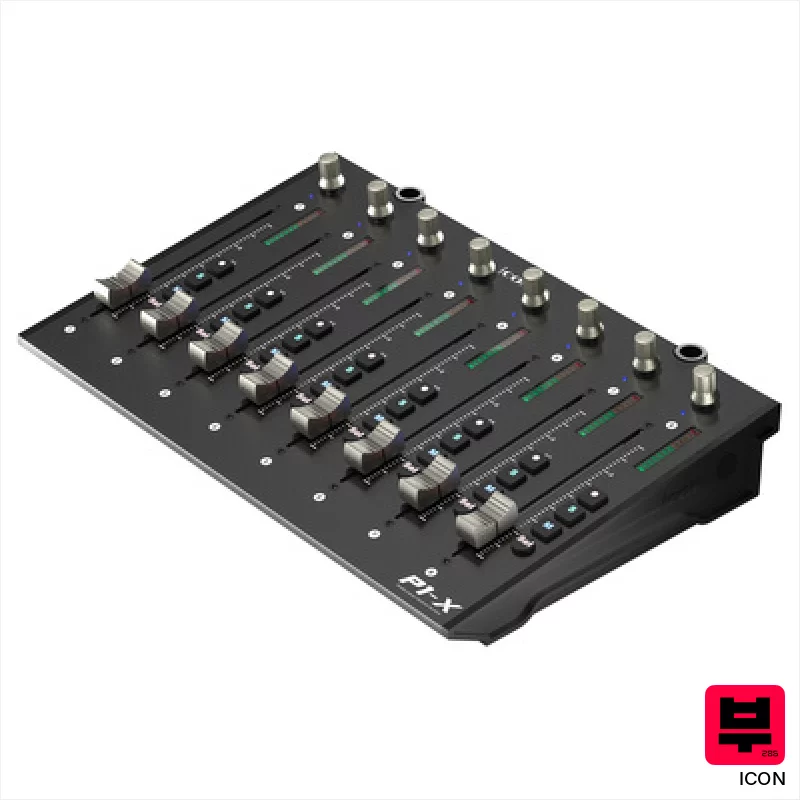
Icon P1-X
- • Excellent motorized fader feel with precise 12-bit resolution.
- • Solid build quality; the chassis feels robust and well-assembled.
- • Seamless integration with a wide array of popular DAWs and protocols.
- • Expandable architecture allows for future customization and growth.
- • Relies on the P1-M for core functionality; a standalone unit it is not.
- • Limited tactile feedback beyond the fader travel; lacks more nuanced control.
- • The compact size might feel cramped for users accustomed to larger control surfaces.
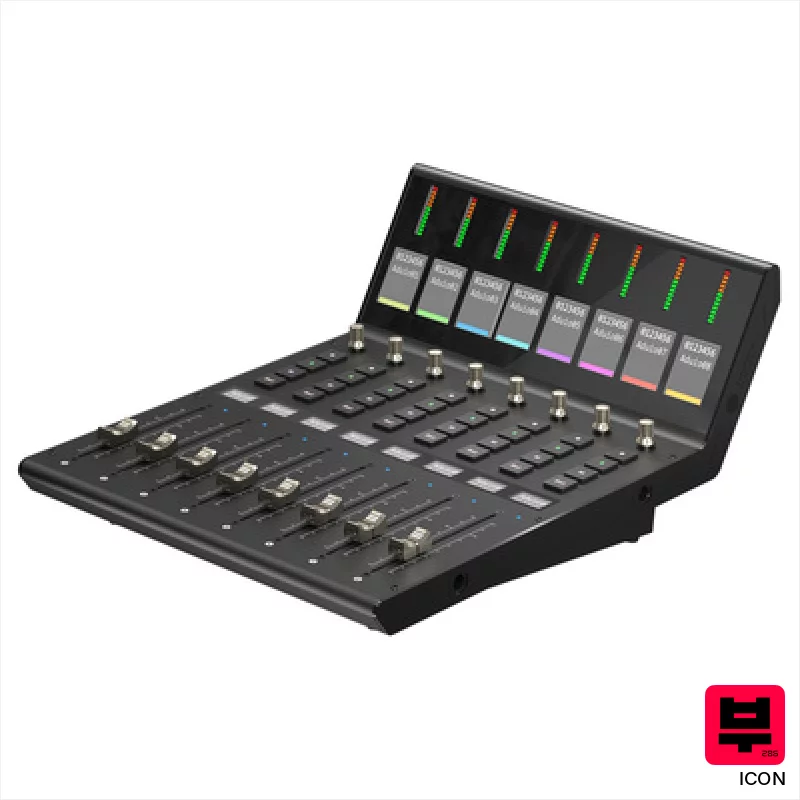
Icon V1-X
- • Excellent channel expansion for existing V1-M setups.
- • Motorized faders offer precise, recallable level adjustments.
- • Clear, legible TFT displays provide essential channel information.
- • Robust build quality feels professional and durable.
- • Price point places it firmly in the high-end controller category.
- • Requires a V1-M to function; not a standalone unit.
- • Limited standalone functionality; designed solely for DAW control.
How to Choose the Best DAW Controllers
Fader Accuracy & Feel
Cheap plastic faders feel like they're gonna snap off - you want something with a smooth, consistent action that translates accurately to your DAW's volume levels. A wobbly fader is a frustrating fader. Precise fader movement is key for subtle gainstaging.
Knob Quality & Range
Rotary encoders are your bread and butter for EQ, compression, and plugin parameters. Look for encoders with a wide range of rotation - 360 degrees is a good start - and a satisfying detent feel. Mushy, undefined detents are a recipe for frustration.
Transport Controls
These are the basics - play, pause, record, rewind, fast forward. But a well-implemented transport section should be logically laid out and responsive. You don't want to miss a take because you fumbled the record button.
Customization & Mapping
The best controllers let you assign almost any parameter to any knob or fader. A limited mapping system is a dealbreaker if you're trying to integrate it into a complex workflow. Consider the learning curve for remapping - some interfaces are much friendlier than others.
Build Quality & Portability
Let's be real, gear gets abused. Solid construction, sturdy knobs, and a reasonable weight are essential if you're hauling it to gigs or rehearsals. A flimsy plastic shell won't last long in a gig bag.
Buying Guide
Don't fall for the hype. A lot of these controllers promise the world, but the cheap ones use low-quality potentiometers that wear out fast. Invest in something with decent fader travel and encoders that feel solid. Consider your DAW - some controllers integrate better with certain DAWs than others, and that native integration can save you a ton of mapping headaches. Ultimately, it's about finding something that fits your workflow and budget, and won't become a source of constant frustration.
Our Methodology
We don't just look at spec sheets here. We've put these controllers through the wringer: tracking drums, mixing full bands, layering synths, even dragging them to a rehearsal space to see how they hold up to spilled beer and the general chaos of a gig. We're A/B'ing them against mouse and keyboard, paying attention to how they feel under our fingers, and, most importantly, how much they actually improve the recording/mixing process.

