
Best Broadcast Microphones for Voice Over 2026
So you're diving into voice over? Awesome. A decent mic makes a HUGE difference - trust me, I've heard VO tracks recorded with stuff that sounds like it was wrestled from a tin can. It's not just about capturing your voice; it's about sculpting a specific vibe, whether you're going for warm and conversational or authoritative and crisp. Let's look at some broadcast mics that'll actually get you there, and why they work, or don't.
Last updated: July 22, 2026 • Next update: July 29, 2026

Earthworks Audio Ethos Black
- • Exceptional clarity and detail across the frequency spectrum.
- • Robust stainless steel build feels incredibly solid and durable.
- • Supercardioid pattern effectively rejects off-axis noise sources.
- • Integrated windscreen minimizes plosives and wind noise exceptionally well.
- • Supercardioid pattern demands precise mic technique and placement.
- • The weight (almost 1 lb) can be fatiguing during extended use.
- • Limited polar pattern options restrict versatility for some applications.
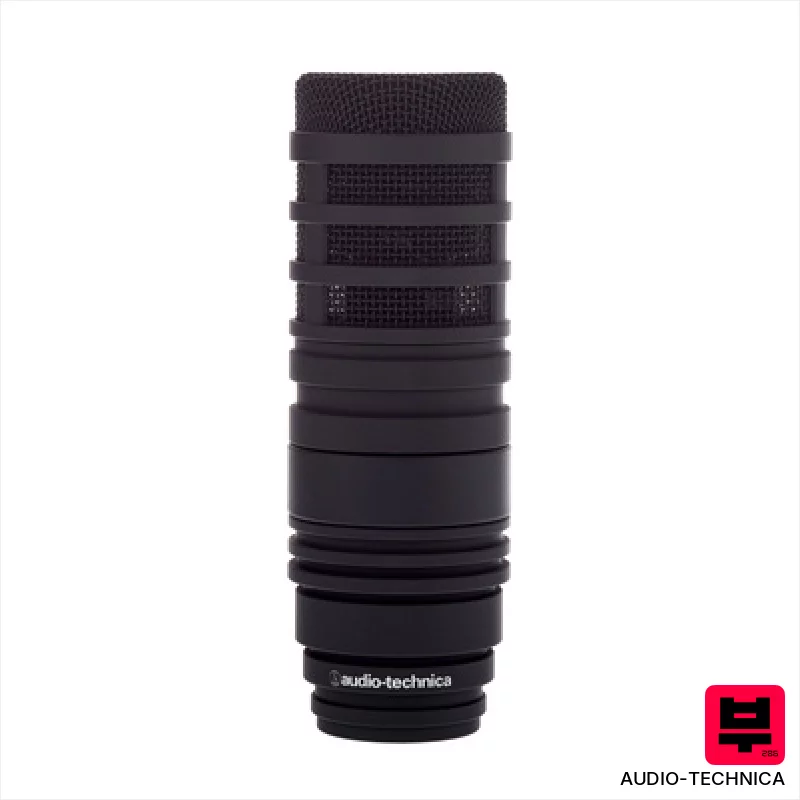
Audio-Technica BP40
- • Robust zinc die-cast construction feels incredibly solid and durable
- • Hypercardioid pattern excels at isolating vocals in noisy environments
- • Switchable low-cut filter effectively tames proximity effect and rumble
- • Clear, present vocal reproduction suits broadcast, podcasting, and voiceover work
- • High sensitivity demands careful gain staging to avoid unwanted noise
- • Hypercardioid pattern requires precise mic placement for optimal results
- • 450 Ohm impedance may need a preamp with sufficient gain and impedance matching
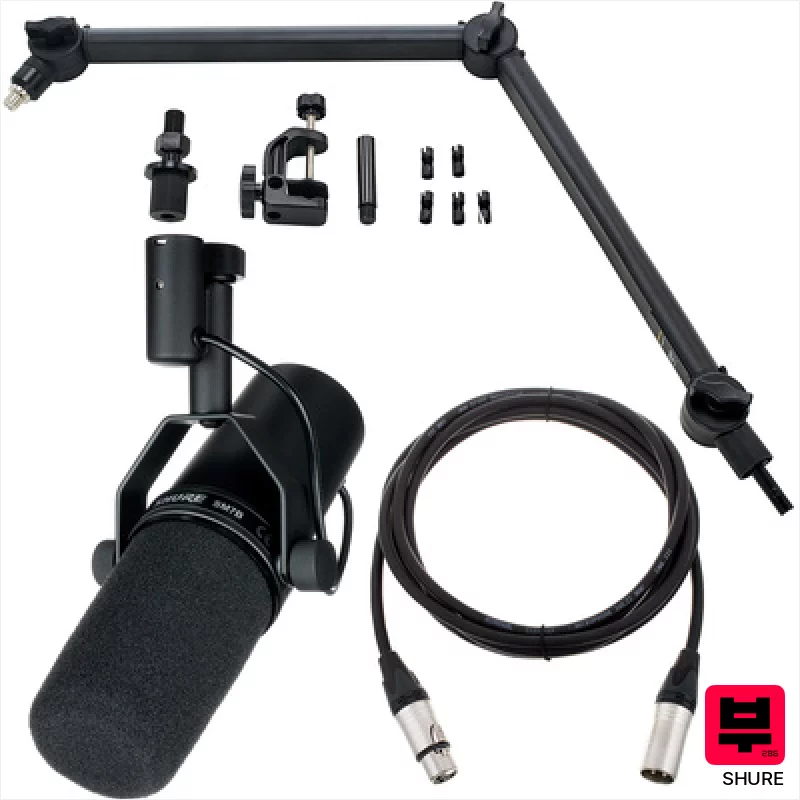
Shure SM 7 B Podcast Bundle
- • Exceptional off-axis rejection minimizes room noise effectively.
- • The included Roadworx arm provides stable, adjustable positioning.
- • Bass roll-off switch tames low-frequency rumble for cleaner recordings.
- • Solid aluminum arm construction feels robust and professional.
- • Requires a substantial preamp for optimal gain and low noise.
- • The weight makes it less portable and requires a sturdy base.
- • Cardioid pattern limits versatility for multi-microphone setups.
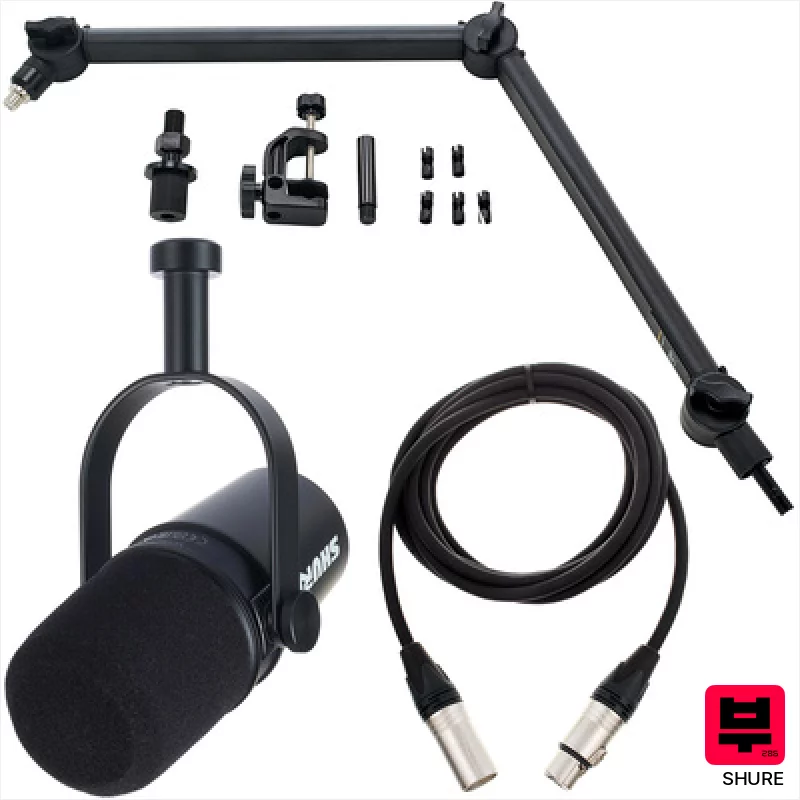
Shure MV7 X Podcast Bundle
- • The MV7X's dynamic capsule delivers a surprisingly clean, broadcast-ready vocal tone.
- • Roadworx arm provides rock-solid stability and excellent cable management.
- • XLR output unlocks professional audio interfaces and higher-quality preamps.
- • Included cable is a nice touch, eliminating immediate setup hurdles.
- • Limited frequency response compared to condenser mics; less high-end detail.
- • Aluminum arm, while sturdy, can pick up vibrations if not properly isolated.
- • The MV7X's design, while stylish, can be a bit bulky on smaller desks.
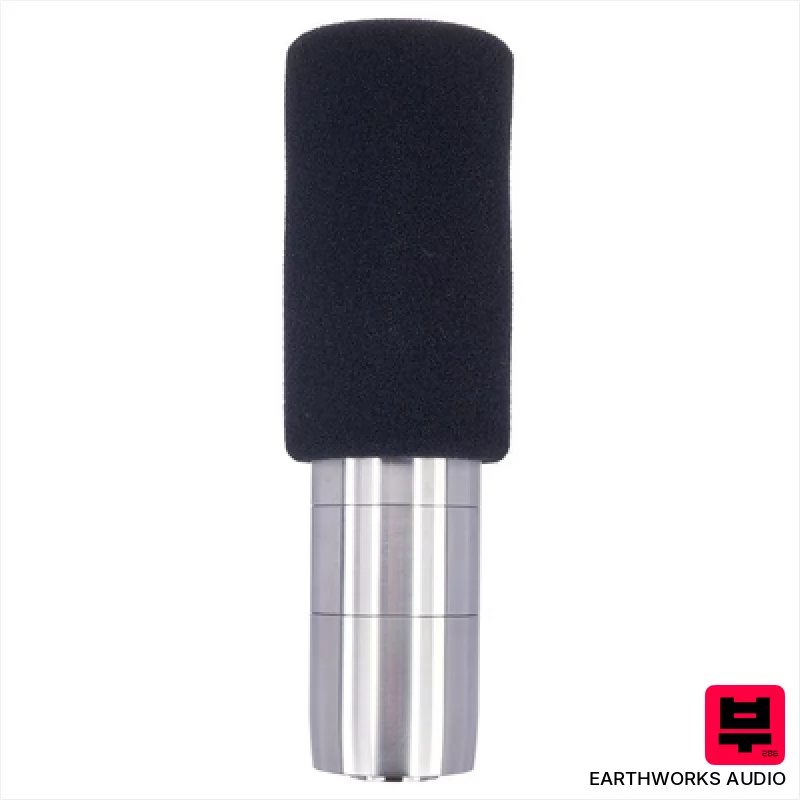
Earthworks Audio Ethos
- • Exceptional clarity and detail across the frequency spectrum.
- • Robust stainless steel build feels incredibly solid and durable.
- • The multi-stage windscreen effectively tames plosives and breath noise.
- • Surprisingly forgiving sweet spot for a supercardioid pattern.
- • The stainless steel construction makes it noticeably heavy for extended handheld use.
- • Supercardioid pattern demands careful mic placement to avoid feedback.
- • Limited tonal character; excels at neutrality, not coloration.

Heil Sound PR31 BW
- • Excellent off-axis rejection minimizes room noise effectively.
- • The dynamic capsule delivers a surprisingly detailed and articulate sound.
- • Robust all-metal construction feels exceptionally durable and professional.
- • Smooth, controlled high frequencies avoid harshness common in dynamic mics.
- • Can be slightly dark sounding, requiring EQ for brighter vocal styles.
- • Higher impedance necessitates a good preamp for optimal performance.
- • The substantial weight can be fatiguing during long recording sessions.
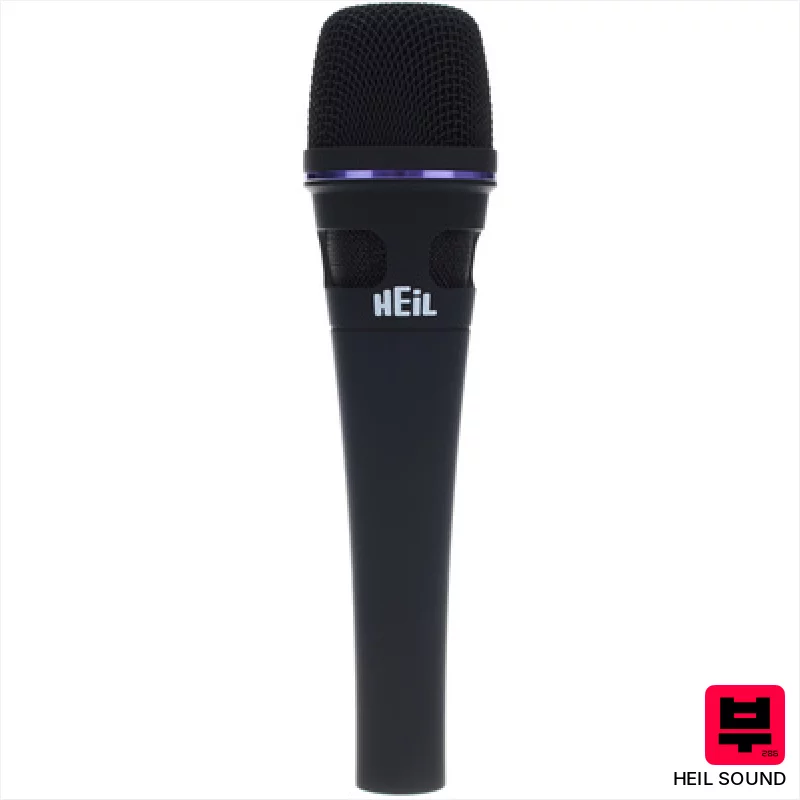
Heil Sound PR35
- • Robust rubberized body handles stage abuse exceptionally well
- • The integrated high-pass filter tames boomy lows effectively
- • Cardioid pattern offers excellent isolation in live settings
- • Smooth, detailed sound with surprising clarity for a dynamic mic
- • Can be slightly heavy for extended handheld use
- • Lacks the extended high-frequency response of condenser microphones
- • A more neutral sound profile might suit some vocalists better
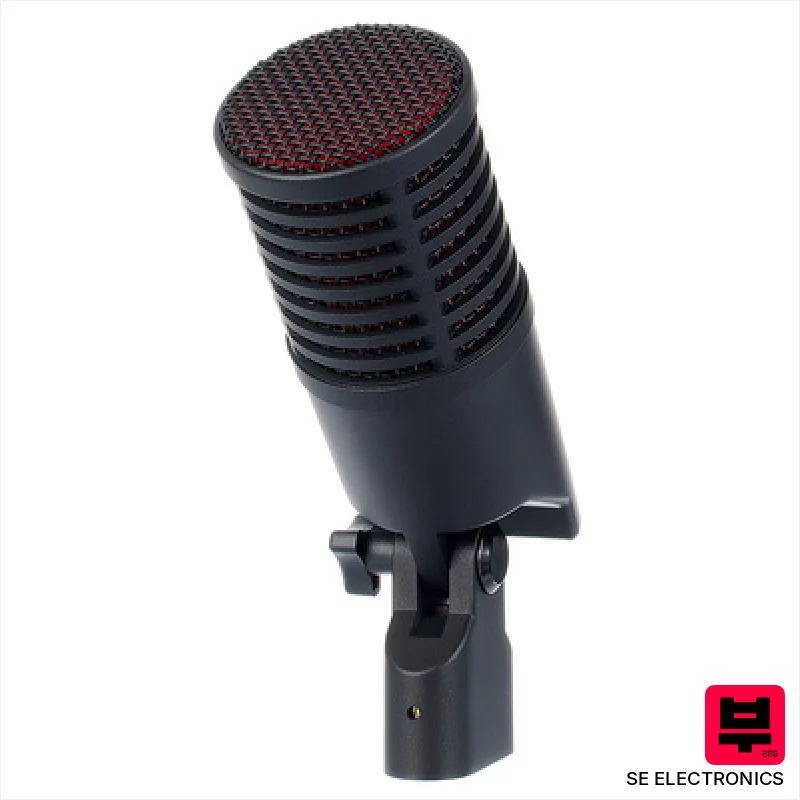
SE Electronics DynaCaster DCM 8
- • Excellent off-axis rejection minimizes room noise effectively.
- • Integrated preamp offers significant gain for quieter voices.
- • Bass filtering provides useful control over low-frequency rumble.
- • Robust metal construction feels surprisingly solid for the price.
- • The integrated preamp's boost can introduce noise at higher gain settings.
- • Cardioid pattern limits versatility for multi-mic recording scenarios.
- • Frequency response, while adequate, lacks the finesse of higher-end mics.

Heil Sound PR30
- • Robust construction with a zinc alloy body, feels built to last
- • Heil’s custom dynamic element delivers clear vocals with excellent proximity effect
- • Handles loud sources exceptionally well, great for podcasting and voiceovers
- • Cardioid pattern minimizes room noise, provides focused sound capture
- • Somewhat heavy, may require a sturdy stand for stability
- • Cardioid-only pattern limits versatility for multi-mic recording setups
- • Can be a bit bright for some voices without EQ adjustments
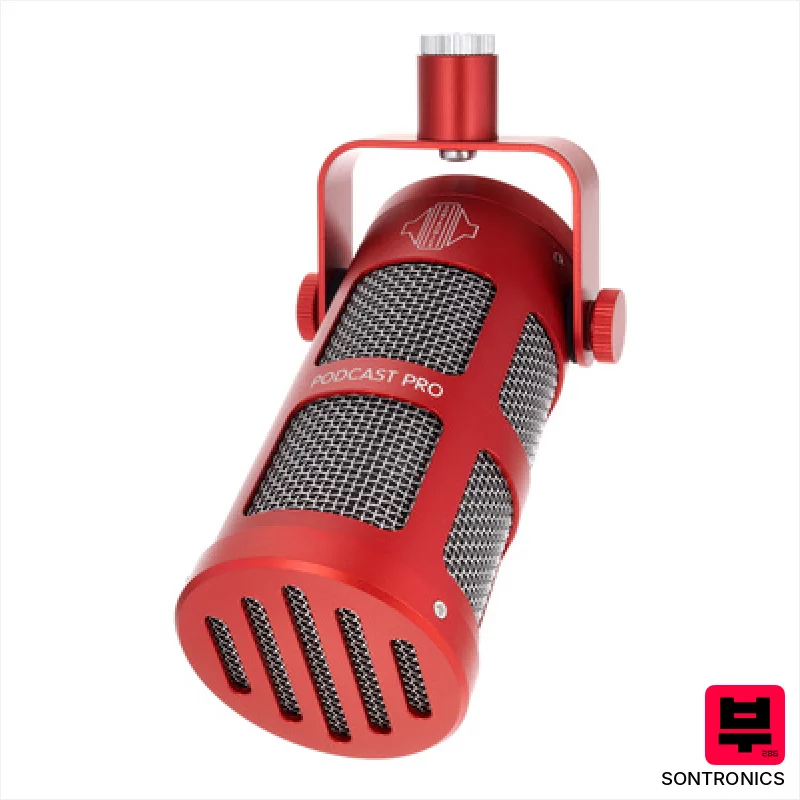
Sontronics Podcast Pro - Red
- • Solid build quality with a robust metal housing, feels premium
- • Supercardioid pattern effectively rejects background noise
- • Integrated pop filter minimizes plosives for cleaner recordings
- • Warm, present vocal tone suitable for voice-over work
- • High impedance requires a preamp or impedance matching device
- • Supercardioid's narrow pickup pattern demands precise mic placement
- • Red finish might not suit every studio aesthetic
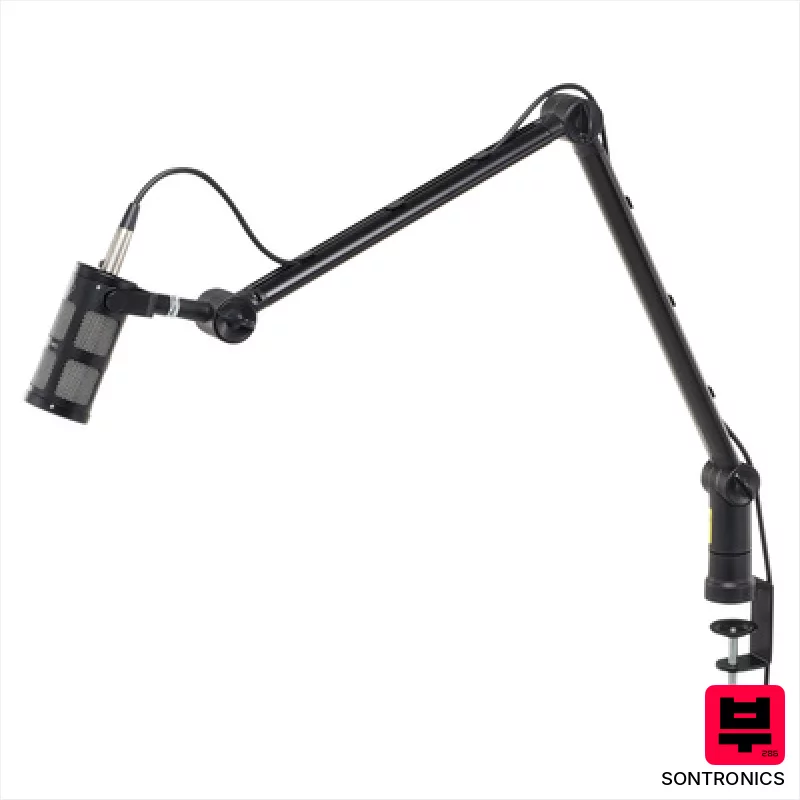
Sontronics Voicecasting Pack Black
- • Dynamic mic's supercardioid pickup isolates vocals well, minimizing room noise.
- • Elevate boom arm’s powder-coated aluminum feels robust and offers stable positioning.
- • Integrated pop protection reduces plosives, improving vocal clarity immediately.
- • The included cables offer both XLR and USB connectivity for flexibility.
- • Supercardioid pattern demands careful mic placement to avoid off-axis coloration.
- • While versatile, the mic's dynamic nature lacks the sensitivity for quiet sources.
- • The Elevate arm, while sturdy, can feel a bit bulky on smaller desks.
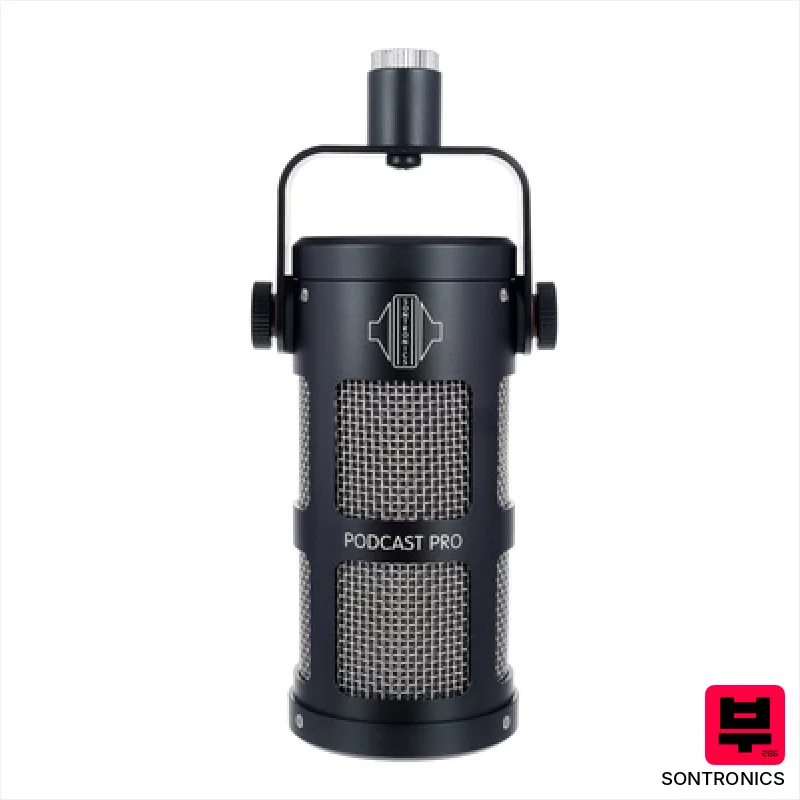
Sontronics Podcast Pro - Black
- • Solid build quality with a robust metal housing, feels substantial in hand
- • Supercardioid pattern offers excellent isolation from room noise
- • Integrated pop filter minimizes plosives effectively, improving vocal clarity
- • Surprisingly detailed sound for a dynamic mic – captures nuances well
- • 600 Ohm impedance requires a decent preamp for optimal gain and signal
- • Supercardioid pattern demands careful mic placement to avoid off-axis coloration
- • Limited versatility; best suited for close-mic vocal applications

Rode PodMic USB
- • Robust ceramic coating resists scratches, a significant upgrade.
- • Excellent off-axis rejection minimizes room noise effectively.
- • Integrated DSP offers convenient, usable audio enhancements.
- • USB-C connectivity provides reliable, modern digital connection.
- • Heavy build (896g) can be fatiguing in long recording sessions.
- • Cardioid pattern limits versatility for multi-mic setups.
- • DSP processing, while good, may not satisfy experienced engineers.
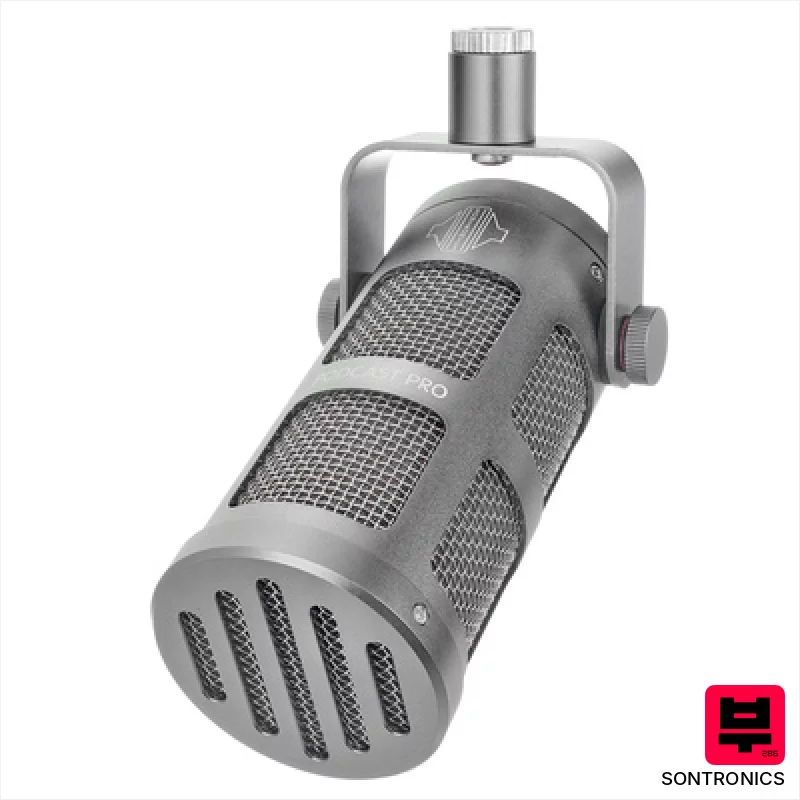
Sontronics Podcast Pro - Cosmic Grey
- • Solid build quality; the metal housing feels premium and durable.
- • Supercardioid pattern excels at isolating vocals in untreated rooms.
- • Integrated pop screen minimizes plosives without external accessories.
- • Warm, present vocal tone; suits spoken word and voice acting well.
- • 600 Ohm impedance requires a preamp or interface for optimal gain.
- • Supercardioid pattern demands precise mic placement for best results.
- • Limited frequency response compared to condenser microphones for broader applications.

Rode PodMic USB - PSA-1 Bundle
- • Robust ceramic coating offers excellent scratch resistance and a premium feel.
- • The integrated DSP provides surprisingly clean and usable audio with minimal fuss.
- • USB-C connectivity simplifies setup and offers reliable, modern digital connection.
- • Cardioid pattern effectively isolates vocals, minimizing room noise for clearer recordings.
- • The microphone's weight (nearly 2lbs) can be fatiguing during extended recording sessions.
- • Limited frequency response compared to studio condensers; lacks high-end sparkle.
- • While versatile, it's primarily optimized for spoken word, not ideal for nuanced instruments.
How to Choose the Best Broadcast Microphones
Tonal Balance
Voice over isn't about a hyped high-end; you want a balanced response, often leaning slightly warmer. That 'ice-pick' harshness that cuts through a mix in rock? Bad news for VO. We're looking for a smooth, natural sound with good low-mid presence for clarity, without sounding muddy. It's about capturing the natural articulation of your voice.
Polar Pattern
Cardioid is king for most VO work - it rejects room noise and focuses on your voice. Figure-8 can be useful for duets or interviews, but requires a much more controlled acoustic environment. Omni is rarely the right choice unless you're deliberately going for a room sound.
Sensitivity & Noise Floor
A mic that's too sensitive will pick up every little hum and click. A low noise floor is critical - you don't want to spend hours in post-production cleaning up unwanted hiss. Dynamic mics generally have lower noise floors than condensers, but that often comes with a trade-off in detail.
Transient Response
How quickly a mic reacts to the initial attack of your voice matters. A slow transient response can make your delivery sound sluggish. You want something that captures the nuances of your vocal performance, especially subtle inflections and breaths.
Proximity Effect
This is the boost in bass response you get when you're close to the mic. It can be used creatively to add warmth, but too much can make you sound boomy. Understanding and controlling the proximity effect is key to a polished VO sound.
Buying Guide
Don't fall for the hype. A shiny price tag doesn't guarantee a great VO mic. Cheaper mics often cut corners on build quality, resulting in a brittle sound or a noisy preamp. Spending a bit more on a reputable brand will get you a more consistent and reliable performer. Consider your acoustic treatment - a great mic won't fix a bad room, so factor that into your budget too.
Our Methodology
We're not relying on spec sheets here. We've spent years tracking bands, doing live sound, and recording demos - we've A/B'd mics against each other in real-world situations. Our tests involve everything from reading scripts to trying to capture subtle vocal dynamics, all to see how a mic translates in a practical VO setting. It's about feel, tone, and how it sits in a mix, not just numbers on a page.

