
Best Active Subwoofers for Electronic Music 2026
So you're building out a rig for electronic music? That low-end rumble isn't just about feeling it; it's about locking in with the groove, adding weight to your synths, and making sure your kick drum really cuts through a live set. Getting the right active subwoofer is crucial - a muddy, undefined low end can bury everything else. Let's break down the best options to nail that foundation, whether you're playing a club, recording a track, or just vibing in your studio.
Last updated: July 15, 2026 • Next update: July 22, 2026

Seeburg Acoustic Line G Sub 1801dp
- • Baltic birch construction ensures exceptional rigidity and durability.
- • Neodymium woofer delivers tight, powerful bass response with reduced weight.
- • DSP with FPGA processing provides incredible flexibility and precise tuning.
- • Cardioid pattern option effectively minimizes stage bleed for focused sound.
- • Premium-priced, representing a significant investment for smaller venues.
- • Size and weight (46kg) make transport and setup challenging for one person.
- • Limited preset options might restrict customization for highly specific applications.

Seeburg Acoustic Line G Sub 1802dp
- • Baltic birch construction with polyurea coating provides exceptional durability and road-worthiness.
- • The dual 18” neodymium drivers deliver seriously deep, impactful low-frequency extension.
- • DSP with DPLMx FPGA processing offers precise control and exceptionally clean sound.
- • Cardioid preset allows for focused bass reinforcement and stage monitoring flexibility.
- • The substantial weight (82kg) makes transportation and setup a two-person job.
- • Premium-priced, placing it outside the reach of budget-conscious users or smaller venues.
- • Limited connectivity beyond the core audio and network options may restrict some integration scenarios.

LD Systems Maui 11 G3 W Subwoofer
- • Robust Class D amp delivers impressive headroom and clarity.
- • Cardioid pattern option minimizes stage feedback effectively.
- • The 11.6” woofer provides surprisingly deep, controlled low-end response.
- • Solid MDF construction feels durable and ready for gigging.
- • Weight makes transport a challenge for solo performers or smaller vehicles.
- • Limited frequency extension above 200Hz necessitates pairing with full-range speakers.
- • White finish may not suit all stage aesthetics or user preferences.
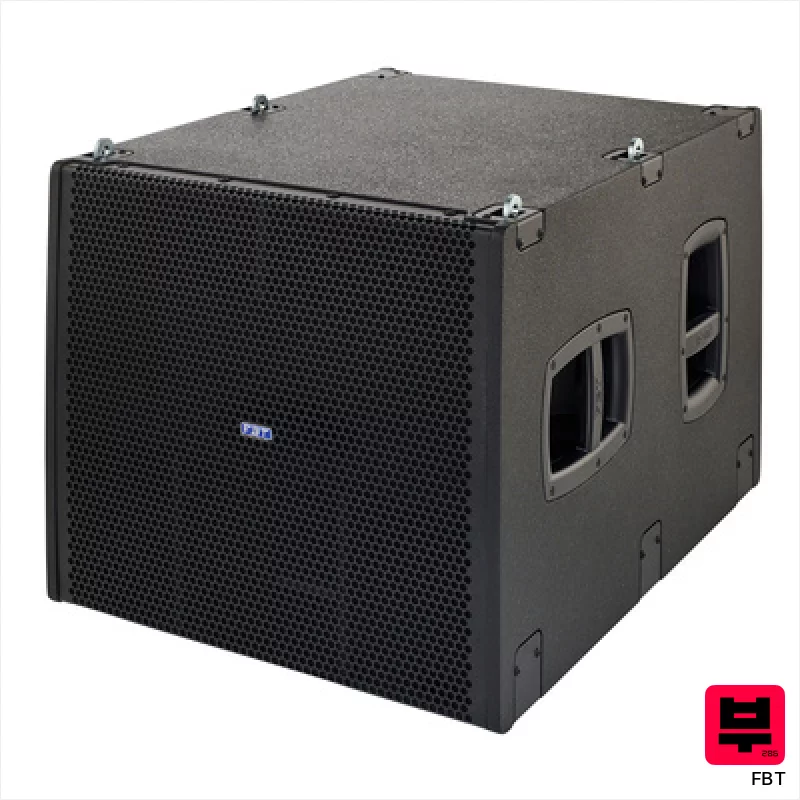
FBT Mitus 118FSA
- • Birch multiplex housing provides exceptional rigidity and dampening.
- • Class-D amplification delivers impressive power with efficiency.
- • The bandpass design optimizes low-frequency extension and impact.
- • Integrated DSP offers flexible EQ and phase adjustment for tuning.
- • Its substantial weight makes transportation a two-person job typically.
- • The bandpass design limits versatility for non-bass-heavy applications.
- • While powerful, the focused frequency range isn't ideal for full-range sound.

RCF SUB 708-AS MK3
- • Robust plywood enclosure provides excellent damping and road-worthiness.
- • 18” driver with a 3” voice coil delivers serious low-end extension.
- • Digital amplifier offers clean, efficient power with a soft limiter.
- • Switchable crossover offers flexibility for various top speaker pairings.
- • Weight makes transport a challenge for solo operators or smaller rigs.
- • While versatile, it's primarily designed for live sound, not studio monitoring.
- • The aesthetic is functional, but lacks premium visual flair.

LD Systems Maui 44 G2 Subwoofer
- • Robust 15” woofer delivers impactful low-end extension.
- • Cardioid pattern option minimizes stage feedback effectively.
- • Class-D amp provides efficient power with low distortion.
- • Solid build quality; feels substantial and roadworthy.
- • Significant weight makes transport a two-person job regularly.
- • Limited connectivity compared to some competitors in its class.
- • High-end price point might be prohibitive for smaller acts.
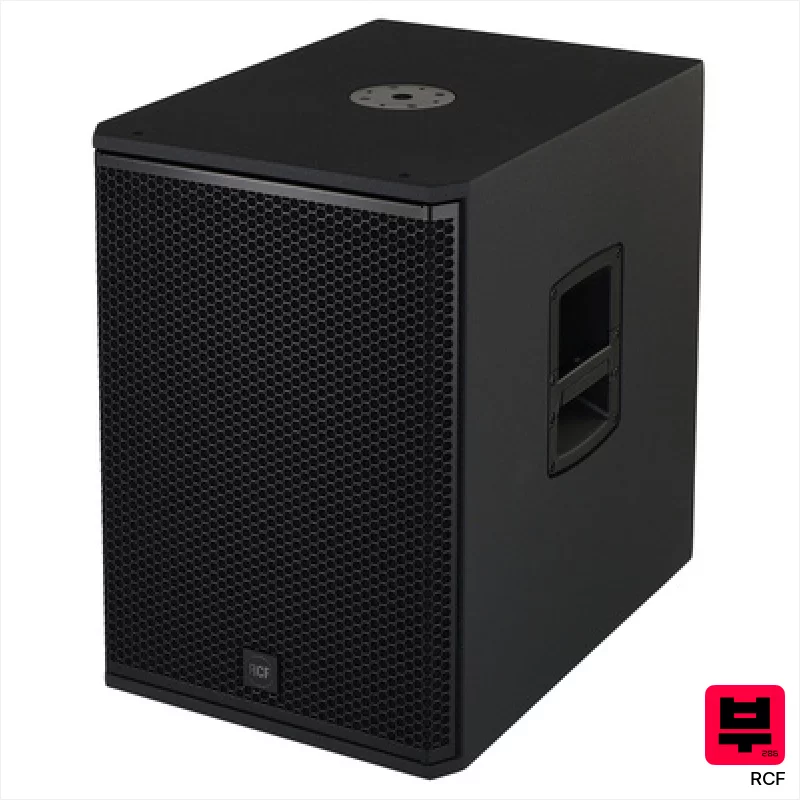
RCF Sub 905-AS MK3
- • Birch multiplex housing provides exceptional rigidity and resonance control.
- • The digital amplifier delivers clean, powerful output with impressive headroom.
- • Active equalization and adjustable crossover offer precise sonic tailoring.
- • Power Twist connector ensures a secure and reliable power connection.
- • At 31.3 kg, it's a substantial unit, demanding careful handling and transport.
- • The frequency range, while deep, might limit its suitability for some higher-frequency genres.
- • While versatile, its design leans towards live sound reinforcement, less ideal for studio monitoring.
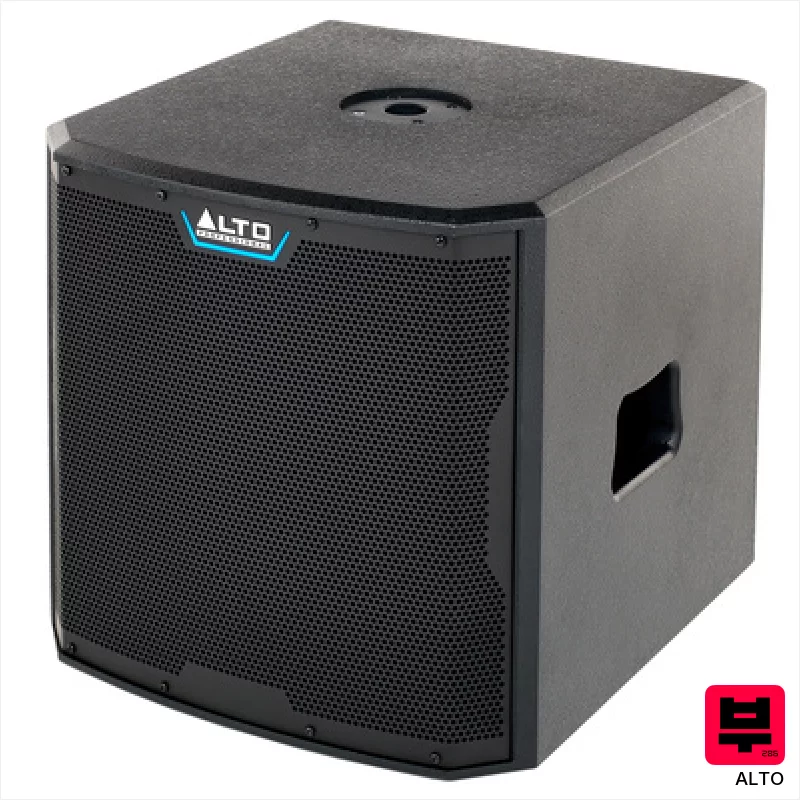
Alto TS 12S Subwoofer
- • Robust MDF construction offers surprising rigidity for the price.
- • High peak power provides serious headroom for larger venues.
- • The integrated stand flange simplifies setup and transport.
- • Phase inversion switch offers flexibility in system alignment.
- • The MDF, while reinforced, isn't as dense as premium birch ply.
- • Limited DSP options compared to higher-end competitors.
- • The weight, while manageable, will require two people for frequent moves.
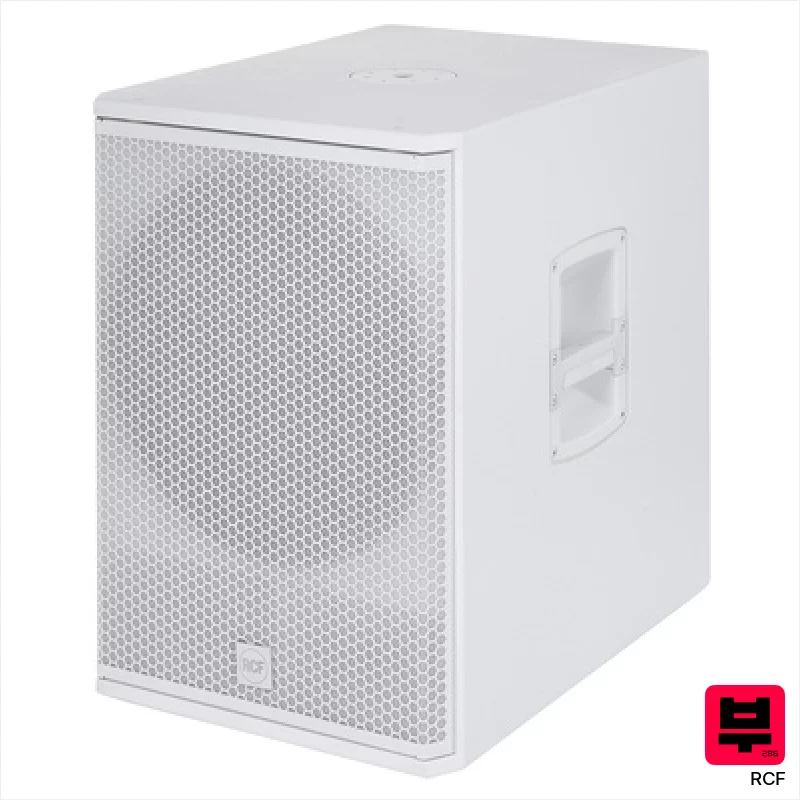
RCF Sub 15-AX W
- • Powerful Class-D amp delivers substantial low-end impact and headroom.
- • The 15” woofer with a 3” voice coil handles serious power without distortion.
- • Comprehensive DSP with 8-band EQ allows precise tonal shaping and customization.
- • Robust construction and integrated handles facilitate easy transport and setup.
- • The weight (26kg) makes it less ideal for solo performers or frequent travel.
- • White finish can be a practical drawback in some stage environments.
- • Limited versatility for extremely nuanced acoustic or classical applications.
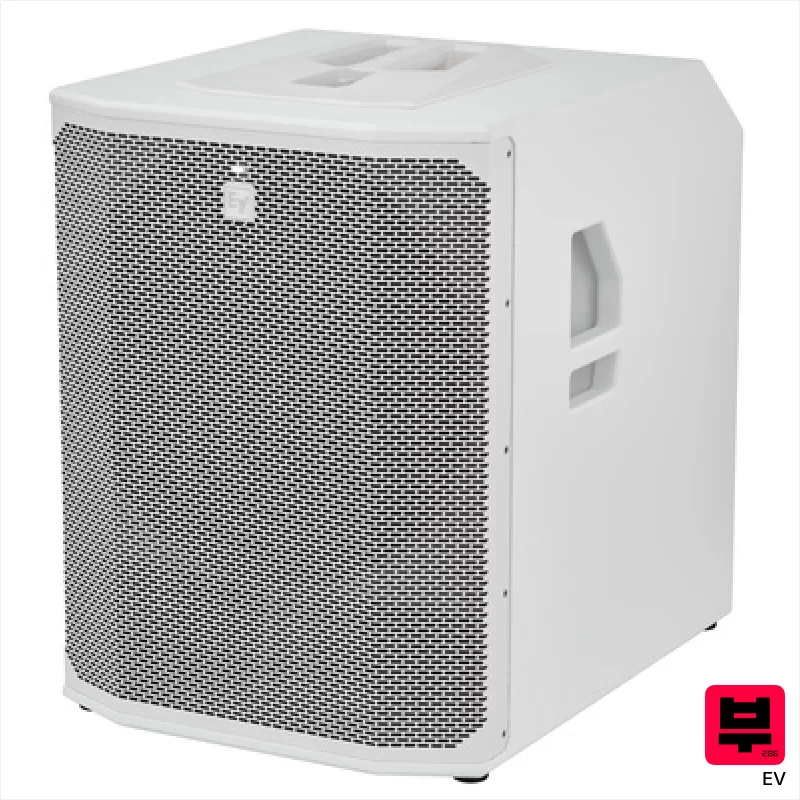
EV EVOLVE 90 Sub White
- • Robust 18” woofer delivers impactful, deep low-end extension.
- • XLR/TRS combo jacks offer flexible connectivity for various sources.
- • AES/EBU connectivity enables high-resolution digital audio transfer.
- • Cardioid pattern option provides directional control for stage monitoring.
- • Significant weight makes transport and setup a two-person job.
- • Limited frequency response above 160Hz necessitates pairing with satellite speakers.
- • White finish can be impractical for some stage environments and prone to marking.

LD Systems ICOA SUB Pro 21 A
- • Impressive low-frequency extension reaching down to 29Hz delivers powerful bass.
- • SysCore DSP offers comprehensive protection and precise EQ customization.
- • Bluetooth 5.1 with TWS provides flexible wireless connectivity options.
- • Robust construction with ergonomic handles and stacking grooves ensures portability.
- • The substantial weight will require multiple people for transport and setup.
- • The feature set, while extensive, might be overkill for smaller, simpler applications.
- • Passive cooling, while quiet, could be less effective in extremely hot environments.
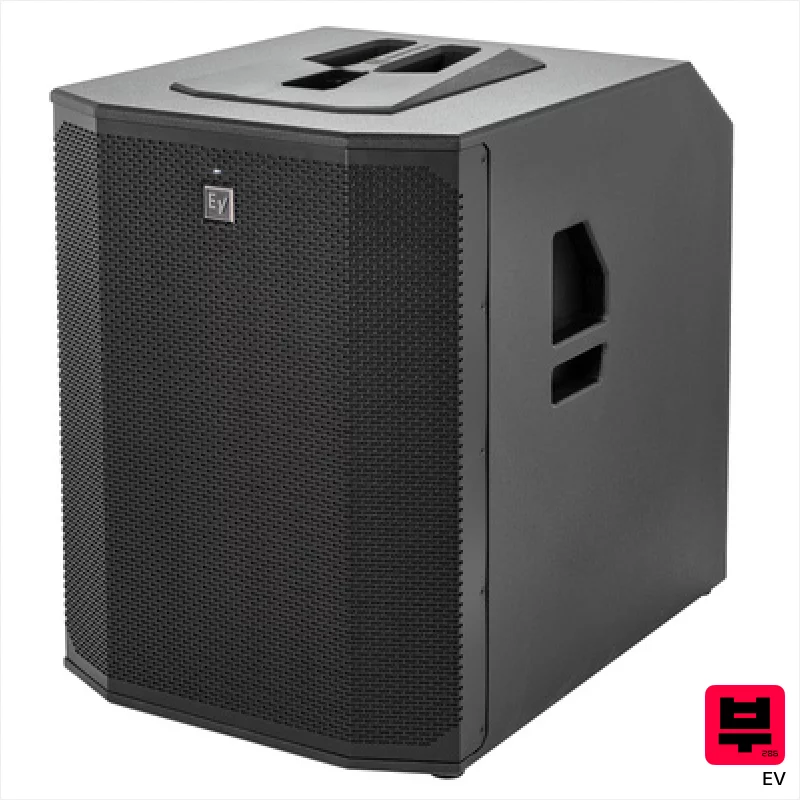
EV EVOLVE 90 Sub
- • Robust 18” woofer delivers powerful, clean low-end extension.
- • Integrated DSP provides excellent driver protection and clarity.
- • Flexible I/O options simplify integration with various systems.
- • Cardioid pattern capability enhances stage monitoring and feedback control.
- • Considerable weight makes transport and setup challenging for solo users.
- • Premium-priced, limiting accessibility for budget-conscious performers.
- • AES/EBU Thru output is a niche feature for most users.
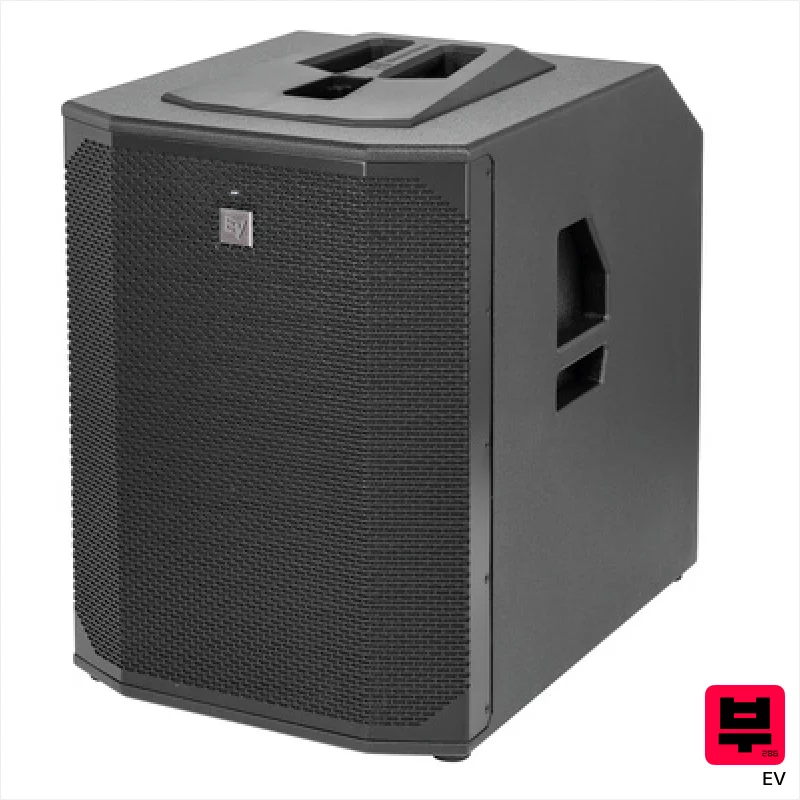
EV EVOLVE 70 Sub
- • Robust 15” woofer delivers impactful low-end extension and clarity.
- • Integrated DSP provides excellent driver protection and optimized EQ presets.
- • XLR/TRS combo inputs offer versatile connectivity for diverse signal sources.
- • Sub Out and Mix Out facilitate seamless integration into larger PA systems.
- • Significant weight (26.8kg) makes transport and setup a two-person job.
- • Limited frequency response above 160Hz necessitates pairing with full-range speakers.
- • Premium-priced point may be prohibitive for budget-conscious users.

DAS Audio Altea-S15A
- • Birch multiplex housing provides excellent resonance damping and durability.
- • Class D amplification delivers efficient power with minimal heat generation.
- • Cardioid presets offer focused sound projection for stage monitoring needs.
- • Robust construction feels solid, suggesting long-term reliability in demanding gigs.
- • 30kg weight makes transport a challenge without proper equipment or assistance.
- • Limited frequency extension below 40Hz might be a drawback for electronic music.
- • While versatile, it's primarily a sub, requiring a full PA system for complete coverage.
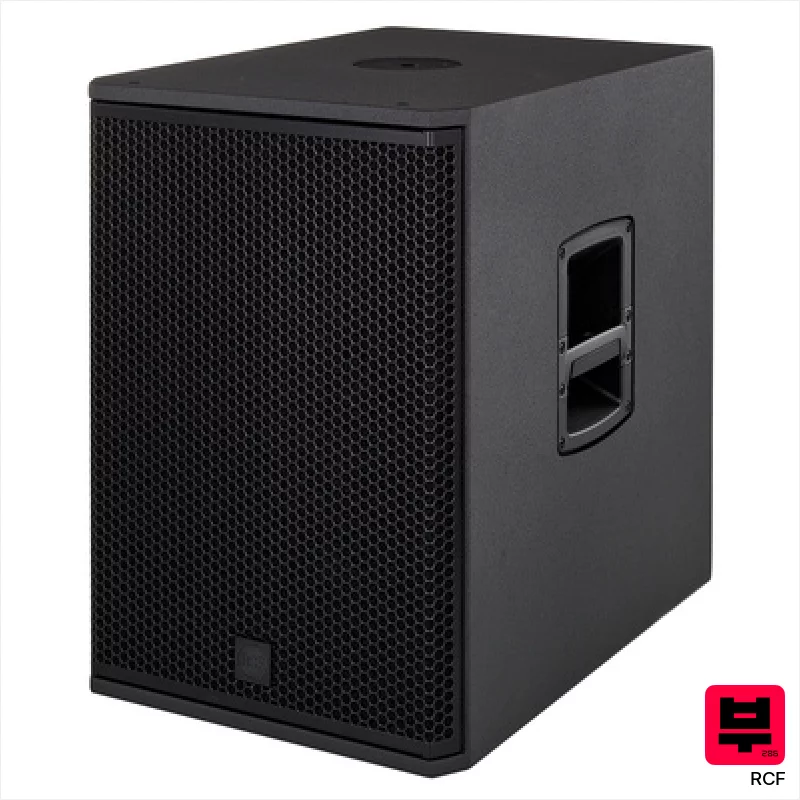
RCF Sub 15-AX
- • Birch multiplex housing provides exceptional rigidity and resonance control.
- • Digital amplifier ensures clean, powerful output with efficient headroom.
- • Active EQ and adjustable delay offer precise tonal shaping and system alignment.
- • High 133dB SPL capability delivers serious low-end impact for larger venues.
- • 26kg weight makes transportation a challenge for solo performers.
- • Limited frequency extension below 40Hz; not ideal for true sub-bass applications.
- • Birch construction, while premium, contributes to a higher overall price point.
How to Choose the Best Active Subwoofers
Low-Frequency Extension
Electronic music lives down low. You want a sub that can genuinely reproduce frequencies below 40Hz - that's where the real sub-bass rumble resides. Anything less and you're missing a huge chunk of the sonic landscape.
Transient Response & Articulation
A lot of subs just thump-they lack definition. You need a sub that can articulate individual bass notes clearly, even when things get busy. Sloppy transients muddy the mix and kill the groove.
Headroom & Power Handling
Electronic music can get loud. You need a sub with enough headroom to handle those peaks without distorting, especially when layering multiple synths or running a driving beat. Clipping is the enemy.
EQ & DSP Features
A built-in high-pass filter is a must. Some subs offer more advanced DSP like presets for different genres or even parametric EQ - these can be huge time savers and help you dial in the perfect low-end tone.
Port Design & Room Interaction
Ported subs can deliver more output, but they're also more prone to room modes and unwanted resonances. Sealed subs are often tighter and more controlled, but might lack the sheer oomph of a ported design. This is all about your space.
Buying Guide
Don't chase the loudest number on the spec sheet. That's often marketing fluff. Pay attention to transient response and overall clarity-a sub that sounds clean and defined at moderate volumes is more valuable than one that just blows your ears off at maximum. Used gear can be a great option to get more power for your money, but carefully inspect the drivers for wear and tear. A sub that's been pushed too hard will sound lifeless.
Our Methodology
We don't just look at specs here. We've spent countless hours A/B'ing these subs in real-world scenarios - live gigs with full bands, tracking sessions with multiple synths, and even just dialing in the perfect low-end thump for a late-night production session. Our evaluations are based on how they sound and how they perform, not just what's on the manufacturer's datasheet.

