
Best Rodec 500 Series Components 2026
Alright, let's talk Rodec 500 series. If you're chasing that classic, punchy, European vibe in your signal chain - think vintage Neve but with a bit more grit - Rodec is worth a serious look. They've been quietly building a reputation for serious tone, and their 500 modules offer a distinct flavor you won't find from the usual suspects. These aren't your cheap, slapped-together modules; they're built to last and impart a unique character to your sound.
Last updated: July 15, 2026 • Next update: July 22, 2026
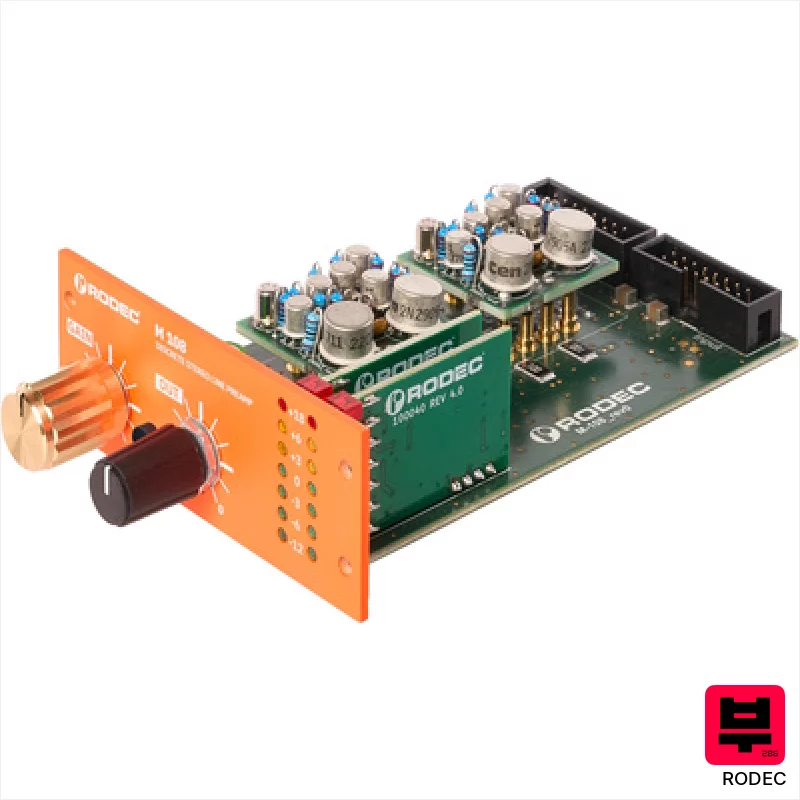
Rodec M 108 Line Pre
- • Discrete circuitry delivers exceptional clarity and headroom.
- • Vintage opamps impart a warm, musical character.
- • 70dB of gain handles hot signals with ease and precision.
- • Solid build quality suggests longevity and reliable operation.
- • Requires a Rodec K7 adapter for 500-series integration, adding cost.
- • Limited routing options compared to more complex processors.
- • Gain staging can be tricky, demanding careful attention.

Rodec M 501 Preamp
- • Lundahl transformers impart a seriously warm, vintage-inspired tone.
- • EQ section offers precise shaping with excellent filter quality.
- • 70dB of clean gain handles dynamic sources with ease and headroom.
- • Solid build quality; feels robust and well-engineered for studio use.
- • Premium-priced, a significant investment for a single 500 series module.
- • EQ, while excellent, lacks full parametric control for very nuanced adjustments.
- • Designed primarily for Rodec consoles, integration with other systems may require work.

Rodec M 101 Phono
- • Dual phono stages offer incredible tonal flexibility, from vintage warmth to modern clarity.
- • Discrete Rodec phono stage delivers exceptional detail and low-noise performance with moving coil cartridges.
- • Split RIAA equalization allows for experimentation and subtle tonal shaping for discerning audiophiles.
- • Solid build quality; Rodec’s reputation for robust, reliable components shines through.
- • Requires a Rodec 500 series rack and adapter, increasing initial investment.
- • Limited to Rodec MX modular mixers; lacks standalone operation capability.
- • The discrete stage’s detail might be overwhelming for some with less refined vinyl sources.

Rodec M 104 Dynamic Filter
- • Unique dynamic filtering creates evolving, textured soundscapes.
- • Stereo operation provides wide, immersive sonic possibilities.
- • CV control offers extensive modulation and creative routing options.
- • Robust build quality suggests long-term reliability in demanding environments.
- • Requires a separate Rodec adapter, adding to the overall investment.
- • Limited standalone functionality; designed for Rodec MX systems.
- • Steep learning curve for mastering dynamic envelope and CV integration.

Rodec K7 Adapter
- • Robust Rodec build quality ensures reliable operation within a 500 series rack.
- • Allows integration of Rodec’s unique MX modular console modules into API racks.
- • Provides power and signal routing for two 500 series modules simultaneously.
- • Compact design optimizes rack space compared to individual module power solutions.
- • Limited to Rodec MX modules, restricting format flexibility for diverse workflows.
- • Requires two 500 slots, consuming valuable rack real estate.
- • Higher cost than some generic 500 series power adapters.
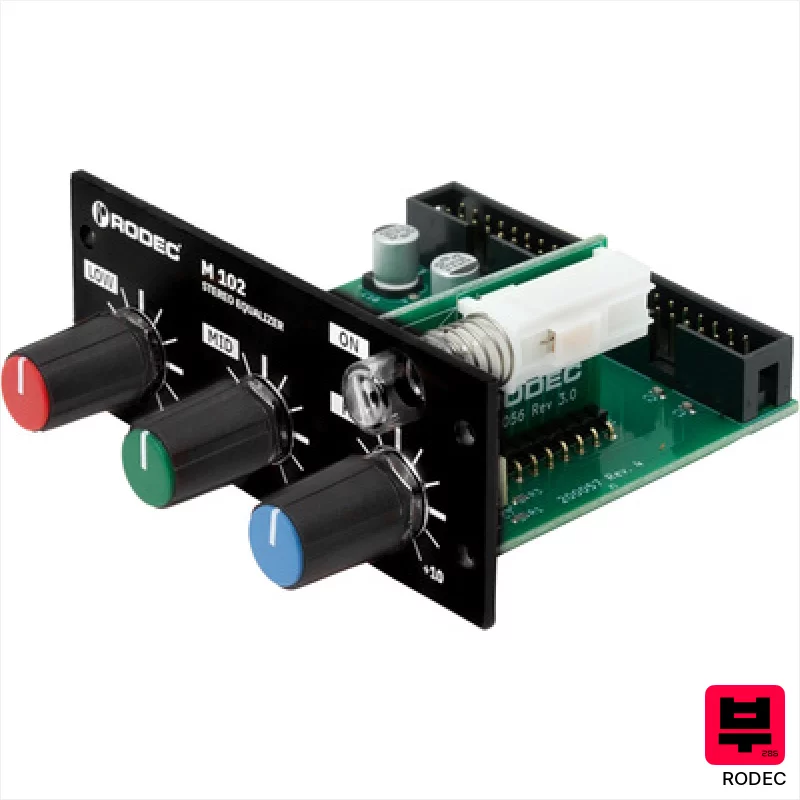
Rodec M 102 EQ
- • Rodec’s musical EQ curves are genuinely pleasing and usable.
- • Solid build quality; feels robust for a budget-friendly module.
- • Simple, intuitive controls make quick adjustments a breeze.
- • Stereo operation expands its usefulness beyond mono applications.
- • Requires a Rodec K7 adapter, adding to the overall cost.
- • Limited frequency selection compared to more complex EQs.
- • The 3-band design isn't ideal for surgical EQ tasks.
How to Choose the Best 500 Series Components
Heritage & Design Philosophy
Rodec's roots are in high-end broadcast and studio consoles. This isn't about chasing trends; it's about building reliable, musical tools with a focus on sonic character. They're not trying to be 'transparent' - they're aiming for a specific, identifiable tone.
Transformer Saturation
This is the heart of the Rodec sound. Their modules utilize carefully selected transformers that impart a warm, harmonically rich saturation, especially when pushed. It's a fat midrange honk that sits beautifully in a mix without getting muddy - great for thickening vocals or adding some bite to a clean guitar amp.
EQ Characteristics
Rodec EQs tend to be musical and forgiving. They don't have the surgical precision of some modern EQs, but that's a good thing. They're fantastic for broad shaping and adding a vintage warmth, rather than pinpoint correction. Think less 'ice-picky' harshness, more 'smooth and creamy'.
Build Quality & Reliability
These are solid, well-built modules. The pots feel great, the construction is robust, and they're designed to handle the rigors of gigging and studio use. You're paying for that quality - and it shows.
Headroom & Dynamics
Rodec modules often have a surprisingly generous headroom, allowing you to push them into sweet saturation territory without clipping out prematurely. They react nicely to dynamics, adding a natural punch and weight to your signal - perfect for drums or bass that needs to cut through the mix.
Buying Guide
Don't expect Rodec to be the cheapest option; you're paying for that specific European tone and the build quality. If you're on a tight budget, there are certainly more affordable 500 series modules out there, but they often compromise on character or construction. Focus on the modules that align with your sonic goals - their EQ's are fantastic, but their compressors are a different beast entirely. Research which module is right for your application.
Our Methodology
We don't just look at spec sheets here at Audiofu. We put these modules through the ringer: tracking guitars and vocals, layering them into full band mixes, and running them live through PA systems. We A/B them against comparable gear - classic EQs, compressors, and preamps - to see if the hype matches the reality. It's about hearing the difference, not just reading about it.

