AudioFu
AudioFu Chart · October 2026
Best 500 Series Components for Advanced 2026
The top pick is Cranborne Audio 500R8 USB Audio Interface with 8-Slot 500-Series Rack ($2,128). WesAudio DIONE ng500 500 Series Stereo Bus Compressor gives you the most for the money at $1,265. Ranked by the AudioFu Index from 166 models across 38 brands, prices checked every night.
Last updated: October 12, 2026
Top 10
Full detail for the 10 highest AudioFu Index scores. Every other model is listed below.
-
Cranborne Audio 500R8 USB Audio Interface with 8-Slot 500-Series Rack
500R8 · Cranborne Audio
13 for sale on Reverb1 finish at Thomann
- Weight7 kg
The Cranborne 500R8 is a powerhouse rack – a genuinely impressive combination of a high-quality USB interface, discrete summing mixer, and monitor controller all in one. It's ideal for engineers and producers who want a streamlined, professional workflow, especially those focused on analog summing and pristine audio quality, and who are willing to invest in a premium solution.
Pros
- Exceptional AD/DA conversion rivals dedicated high-end interfaces.
- C.A.S.T. system provides remarkably clean, long-distance analogue signal transfer.
- Discrete summing mixer delivers a noticeably cohesive and 'glued' sound.
Cons
- Premium-priced, representing a significant investment for most studios.
- C.A.S.T. system requires compatible cabling and setup considerations.
63AudioFu
Index↓ 5.0%since Aug 14 · lowest so far$2,240 · Aug 14$2,128 now$2,128€1,899 at Thomann · in stockCheck price ↗ -
Cranborne Audio 500ADAT ADAT Expander with 8-Slot 500-Series Rack
500ADAT · Cranborne Audio
12 for sale on Reverb1 finish at Thomann
- Weight6.4 kg
The Cranborne 500ADAT is a seriously impressive piece of kit for engineers and producers wanting a streamlined 500 series workflow. It combines a high-quality ADAT interface, discrete summing, and the clever C.A.S.T. system – perfect for those seeking flexible analogue routing without the usual signal chain headaches.
Pros
- Exceptional dynamic range delivers pristine clarity and detail
- Integrated ADAT expander streamlines workflow, reducing cable clutter
- C.A.S.T. system offers unique, low-latency analogue routing flexibility
Cons
- Premium-priced, a significant investment for smaller studios
- Limited to 500-series modules, restricting module choice
61AudioFu
Index↓ 3.1%since Aug 14 · lowest so far$1,970 · Aug 14$1,908 now$1,908€1,703 at Thomann · in stockCheck price ↗ -
WesAudio RHEA ng500 500 Series Stereo Vari-Mu Tube Compressor
Rhea · WesAudio
11 for sale on Reverb1 finish at Thomann
The Rhea is a serious contender for anyone wanting that classic, polished Vari-Mu vibe in their stereo mixes. WES Audio's choice of Carnhill transformers really delivers that sought-after warmth, and the recall function is a huge time-saver for tracking and mixing engineers. It's a high-end tool, but the results are undeniably impressive.
Pros
- Carnhill transformers deliver a signature, warm, vintage-style compression.
- Digital recall significantly streamlines workflow for studio engineers.
- Flexible sidechain filters offer precise control over compression behavior.
Cons
- Premium-priced, limiting accessibility for smaller studios or hobbyists.
- 500-series format restricts integration without a compatible rack.
58AudioFu
Index↓ 9.2%since Aug 14 · lowest so far$1,590 · Aug 14$1,444 now$1,444€1,289 at Thomann · in stockCheck price ↗ -
Heritage Audio Grandchild 670 500 Series Compressor Module
Grandchild 670 · Heritage Audio
5 for sale on Reverb1 finish at Thomann
- Weight1.12 kg
The Grandchild 670 nails that sought-after Fairchild vibe – it’s got a gorgeous, smooth compression that's perfect for vocals, bass, and anything needing a touch of vintage glue. If you’re chasing that classic studio sound and have the space in your rack, this is a serious contender for a flagship compressor.
Pros
- NOS 6BA6 tubes deliver a creamy, classic Vari-Mu warmth.
- Custom-wound transformers impart a distinct, vintage color and character.
- Flexible attack/release times and variable slope offer tonal shaping.
Cons
- Premium-priced, a significant investment for a 500 series module.
- Relatively high power draw may strain some power supplies.
53AudioFu
IndexStableno change since Aug 14Aug 14$2,240 now$2,240€1,999 at Thomann · in stockCheck price ↗ -
WesAudio HYPERION ng500 500 Series Parametric EQ Module
Hyperion · WesAudio
6 for sale on Reverb1 finish at Thomann
The Hyperion is a seriously powerful parametric EQ, offering a level of control and recall rarely found in 500 modules. It's a fantastic tool for engineers and mixers who need surgical precision and flexible stereo processing – think modern pop, electronic music, or anyone wanting to really dial in their sound with detailed automation. The build quality feels rock solid, too.
Pros
- Exceptional headroom (+24 dBu) allows for aggressive processing without harshness
- Comprehensive band controls offer incredible tonal sculpting flexibility
- Touch-sensitive encoders facilitate precise automation and recall
Cons
- Premium-priced, representing a significant investment for many studios
- The physical size (6.1 x 5.3 x 6.3 in) can be restrictive in tight 500 racks
54AudioFu
Index↓ 13.7%since Aug 14 · lowest so far$1,523 · Aug 14$1,314 now$1,314€1,173 at Thomann · in stockCheck price ↗ -
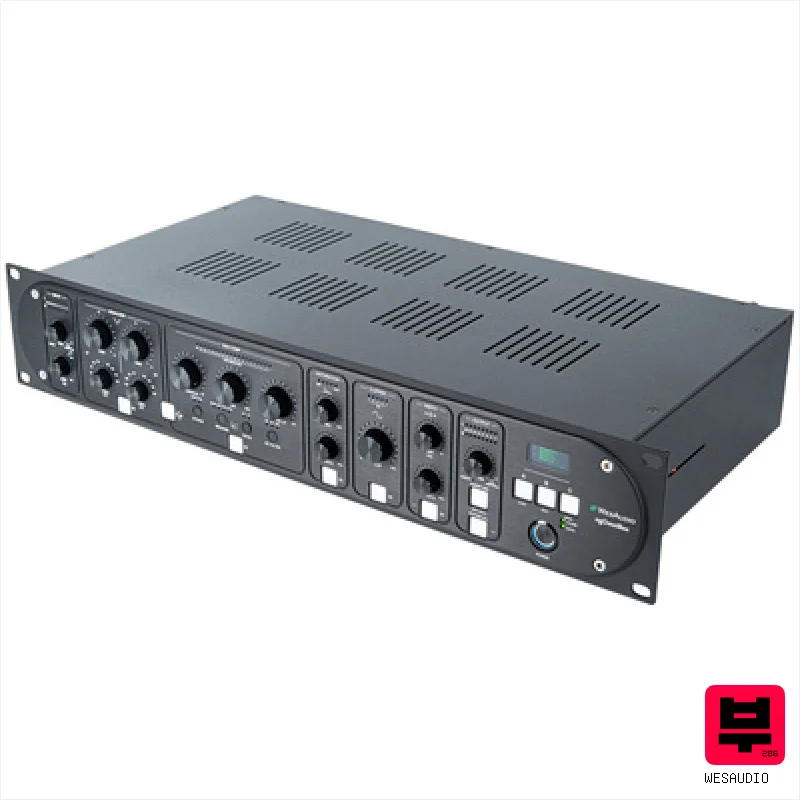
WesAudio DIONE ng500 500 Series Stereo Bus Compressor
Dione · WesAudio
10 for sale on Reverb1 finish at Thomann
The WES Audio Dione is a seriously impressive bus compressor, especially if you're deep in a DAW-centric workflow. The GCon integration is a game-changer, letting you automate everything directly within your plugin. It's perfect for engineers and producers who want surgical control over their mixes and don’t mind paying for top-tier performance.
Pros
- Exceptional dynamic range control, surpassing typical 500 modules.
- GCon protocol offers unparalleled DAW integration and workflow.
- Digitally controlled circuitry delivers precise, repeatable compression.
Cons
- Premium-priced, limiting accessibility for budget-conscious studios.
- Limited to two channels, restricting bus compression flexibility.
56AudioFu
Index↓ 5.8%since Aug 14 · lowest so far$1,344 · Aug 14$1,265 now$1,265€1,129 at Thomann · in stockCheck price ↗ -
WesAudio _Pandora Multiband Compressor 500-Series Module
Pandora · WesAudio
4 for sale on Reverb1 finish at Thomann
The WES Audio Pandora is a seriously powerful multi-band compressor, offering incredible sonic shaping capabilities. It's designed for engineers and producers who want precise control over their mixes, especially those working in genres like electronic music, hip-hop, or anything needing detailed dynamic management. The DAW integration is a real game-changer for recall and automation.
Pros
- Exceptional flexibility with individually switchable bands and soloing.
- Analog circuitry delivers a warm, musical compression character.
- DAW integration via USB plugin streamlines workflow significantly.
Cons
- Premium-priced, a significant investment for most home studios.
- Complex interface demands a learning curve to fully exploit capabilities.
50AudioFu
Index↓ 13.0%since Aug 14 · lowest so far$1,568 · Aug 14$1,364 now$1,364€1,217 at Thomann · in stockCheck price ↗ -
The API 525 is a seriously cool piece of gear – it nails that classic API vibe, especially on drums and vocals. If you’re chasing that vintage, punchy sound and already have an API rack, this is a no-brainer. It’s a workhorse for rock, pop, and anything needing a bit of glue.
Pros
- Authentic API 70s compression character, instantly recognizable and musical
- Discrete circuit delivers punch and transient control, superb for drums
- VU meter provides accurate gain reduction feedback for precise settings
Cons
- Requires an API 500 series rack, adding to the overall investment
- Can be a bit aggressive for subtle, transparent compression needs
45AudioFu
Index↓ 15.6%since Aug 14 · lowest so far$1,657 · Aug 14$1,400 now$1,400€1,249 at Thomann · in stockCheck price ↗ -
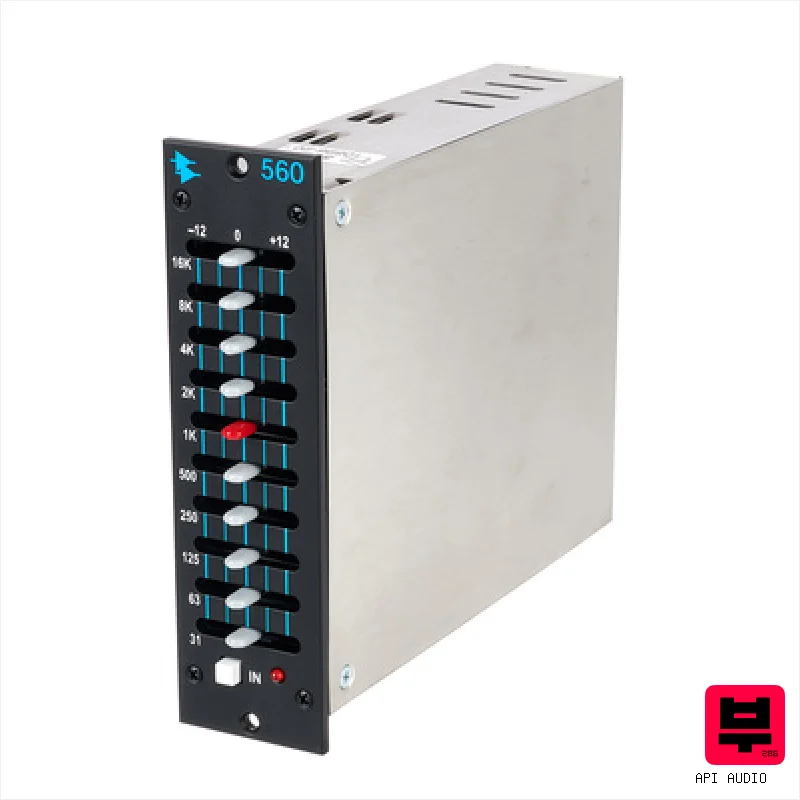
The API 550A is a workhorse for a reason. It delivers that iconic API sound – tight, punchy, and instantly recognizable. Perfect for tracking vocals, guitars, or anything needing that classic analog polish, it's a premium-priced tool that justifies its cost with its sonic character and build.
Pros
- Classic API tone: punchy, defined, and incredibly musical
- Discrete circuitry delivers a wider dynamic range and clarity
- Flexible shelving/peak options offer shaping versatility
Cons
- Pricey; a significant investment for a single EQ module
- Limited to three bands; not ideal for complex surgical EQ
44AudioFu
Index↓ 13.1%since Aug 14 · lowest so far$1,624 · Aug 14$1,411 now$1,411€1,259 at Thomann · in stockCheck price ↗ -
Chandler Limited EMI TG Opto 500 Series Compressor Module
TG Opto Compressor · Chandler Limited
9 for sale on Reverb1 finish at Thomann
This is a fantastic recreation of the legendary TG1 Limiter from Neve consoles. It imparts a gorgeous, gluey warmth to tracks, especially drums and vocals, and is perfect for engineers chasing that classic analog vibe. It's a real character piece, not a transparent compressor.
Pros
- Authentic TG1 Limiter character, beautifully recreating a classic console sound
- Smooth, musical compression even at high gain reduction levels
- Excellent build quality with robust metal chassis and high-grade components
Cons
- Two 500-series slots require significant rack space for a single channel
- Opto compression can be less precise than VCA or FET designs
42AudioFu
Index↑ 13.6%since Aug 14$1,568 · Aug 14$1,781 now$1,781€1,589 at Thomann · in stockCheck price ↗
All 166 500 series components
Same index, same nightly prices — compact. Colour options of one model share a row. Tap a photo to zoom.
- 11
Rupert Neve Designs 535 500 Series Diode Bridge Compressor Module535 · Rupert Neve Designs65↓ 16.5%$1,019€909$1,019€909Check ↗
- 12
API Audio 527A Compressor LimiterAPI Audio41↓ 6.0%$1,400€1,249$1,400€1,249Check ↗
- 13
WesAudio Mimas GeminiWesAudio41↓ 8.2%$2,016€1,799$2,016€1,799Check ↗
- 14
Rupert Neve Designs Portico 542 500 Series Tape Emulator Module542 · Rupert Neve Designs62↑ 3.3%$1,041€929$1,041€929Check ↗
- 15
Rupert Neve Designs 551 500 Series Inductor EQ Module551 · Rupert Neve Designs60↓ 3.7%$1,063€949$1,063€949Check ↗
- 16
API Audio 550b Discrete 4 Band EQAPI Audio40↓ 5.6%$1,512€1,349$1,512€1,349Check ↗
- 17
API Audio 512v PreampAPI Audio43↓ 11.6%$1,288€1,149$1,288€1,149Check ↗
- 18
Rupert Neve Designs 543 500 Series Compressor / Limiter Module543 · Rupert Neve Designs61↓ 7.0%$1,041€929$1,041€929Check ↗
- 19
WesAudio _Prometheus 500 Series Stereo Equalizer ModulePrometheus · WesAudio39↓ 13.0%$1,364€1,217$1,364€1,217Check ↗
- 20
AMS RMX16 Digital Reverberation SystemRMX16 · AMS39↓ 5.1%$1,456€1,299$1,456€1,299Check ↗
- 21
WesAudio Titan 10-Slot Powered ng500 / 500 Series RackTitan · WesAudio46Stable$1,232€1,099$1,232€1,099Check ↗
- 22
Heritage Audio OST-8 ADAT 8-Slot 500-Series Rack FrameOST-8 ADAT · Heritage Audio49↓ 2.8%$1,187€1,059$1,187€1,059Check ↗
- 23
API Audio 525AAPI Audio38Stable$1,444€1,289$1,444€1,289Check ↗
- 24
Heritage Audio i73 Pro Edge USB-C Audio Interface73 EQ Jr. · Heritage Audio60↓ 1.1%$1,025€915$1,025€915Check ↗
- 25
API Audio 500VPRAPI Audio45↓ 19.2%$1,221€1,090$1,221€1,090Check ↗
- 26
Rupert Neve Designs Portico 517 500 Series Mic Pre / Compressor / DI…517 · Rupert Neve Designs56↑ 2.1%$1,075€959$1,075€959Check ↗
- 27
Rupert Neve Designs R10 10-Slot Powered 500 Series RackR10 · Rupert Neve Designs48↓ 8.6%$1,176€1,049$1,176€1,049Check ↗
- 28
Black Lion Audio PBR-8 Patchbay Rack 8 Powered 500 Series Frame with…PBR 8-500 · Black Lion Audio56Stable$1,063€949$1,063€949Check ↗
- 29
Neve 88R LBEQNeve · 2 finishes48Stable$1,164€1,039$1,164€1,039Check ↗
- 30
WesAudio MIMAS ng500 500 Series FET Compressor ModuleMimas · WesAudio55↓ 5.0%$1,063€949$1,063€949Check ↗
- 31
Harrison Audio D510r Chassis DANTE BundleHarrison Audio · 3 finishes35Stable$1,971€1,759$1,971€1,759Check ↗
- 32
Chandler Limited TG2 500 PreampChandler Limited33↑ 2.6%$1,332€1,189$1,332€1,189Check ↗
- 33
Hazelrigg Industries DLCHazelrigg Industries33Stable$1,545€1,379$1,545€1,379Check ↗
- 34
Hazelrigg Industries DNEHazelrigg Industries33Stable$1,545€1,379$1,545€1,379Check ↗
- 35
Hazelrigg Industries DVAHazelrigg Industries33Stable$1,545€1,379$1,545€1,379Check ↗
- 36
Zähl EQ1Zähl33Stable$2,128€1,899$2,128€1,899Check ↗
- 37
Zähl IM1Zähl33Stable$2,195€1,959$2,195€1,959Check ↗
- 38
Chandler Limited TG12345 MKIV EQChandler Limited32↑ 4.6%$1,545€1,379$1,545€1,379Check ↗
- 39
Elysia xmax 500Elysia36↓ 0.9%$1,265€1,129$1,265€1,129Check ↗
- 40
MÄAG EQ4-500MÄAG31↑ 1.5%$1,534€1,369$1,534€1,369Check ↗
- 41
DOCtron IMC-500DOCtron31↓ 1.3%$1,657€1,479$1,657€1,479Check ↗
- 42
Dangerous Music BAX 500Dangerous Music31Stable$1,792€1,599$1,792€1,599Check ↗
- 43
IGS Audio ONE LA 500 Tube Optical Compressor ModuleOne LA 500 · IGS Audio55↓ 12.4%$981€875$981€875Check ↗
- 44
Neve 2264ALB Mono Li/Comp 500er APINeve28↑ 16.7%$1,568€1,399$1,568€1,399Check ↗
- 45
API Audio 512c Mic PreAPI Audio43↓ 10.7%$1,119€999$1,119€999Check ↗
- 46
WesAudio ng500 Recording & Mix BundleWesAudio27Stable$8,515€7,599$8,515€7,599Check ↗
- 47
Chandler Limited GERM 500 MKIIChandler Limited34Stable$1,232€1,099$1,232€1,099Check ↗
- 48
Millennia Media HV-35 500 Series Mic Preamp ModuleHV-35 · Millennia37Stable$1,187€1,059$1,187€1,059Check ↗
- 49
AEA RPQ503 500-Series Microphone PreampRPQ503 · AEA46Stable$1,041€929$1,041€929Check ↗
- 50
IGS Audio Rubber Bands 500 Mastering EQIGS Audio37Stable$1,142€1,019$1,142€1,019Check ↗
- 51
Heritage Audio 73JR II 500 Series Microphone Preamp Module73 Jr. II · Heritage Audio47Stable$1,007€899$1,007€899Check ↗
- 52
Rupert Neve Designs 545 Primary Source Enhancer 500-Series Module545 · Rupert Neve Designs48Stable$985€879$985€879Check ↗
- 53
WesAudio Phoebe NG500 Microphone Preamp ModulePhoebe · WesAudio51↓ 4.6%$929€829$929€829Check ↗
- 54
Zähl Rack 500 DualZähl33Stable$1,164€1,039$1,164€1,039Check ↗
- 55
Empirical Labs Pump 500-Series Compressor ModulePump · Empirical Labs47↓ 4.5%$963€859$963€859Check ↗
- 56
SSL 500-Series Bus Comp. MKIIISSL36↓ 1.0%$1,108€989$1,108€989Check ↗
- 57
API Audio 312 Mic PreAPI Audio42↓ 10.0%$1,007€899$1,007€899Check ↗
- 58
WesAudio CalypsoWesAudio37Stable$1,063€949$1,063€949Check ↗
- 59
Neve 1073LB Preampmodule 500er APINeve35Stable$1,075€959$1,075€959Check ↗
- 60
Rodec M 501 PreampRodec40Stable$1,007€899$1,007€899Check ↗
- 61
Elysia xpressor neo 500Elysia37↓ 2.1%$1,041€929$1,041€929Check ↗
- 62
Burl Audio B1D Mic PreBurl Audio31Stable$1,119€999$1,119€999Check ↗
- 63
Neve 1073LBEQ Module 500er APINeve34↑ 2.2%$1,052€939$1,052€939Check ↗
- 64
IGS Audio Panzer 10-Slot 500 Series Rack with PSUPanzer 500 · IGS Audio37↑ 8.4%$1,007€899$1,007€899Check ↗
- 65
WesAudio Supercarrier II 11-Slot Powered 500 Series RackSupercarrier II · WesAudio41Stable$929€829$929€829Check ↗
- 66
IGS Audio Tube Core 500IGS Audio34↑ 5.9%$1,007€899$1,007€899Check ↗
- 67
Roger Schult V2359j amp4ribbonRoger Schult34Stable$985€879$985€879Check ↗
- 68
MÄAG EQ2-500MÄAG32Stable$996€889$996€889Check ↗
- 69
Roger Schult W2377 MK2Roger Schult34↑ 22.1%$929€829$929€829Check ↗
- 70
Rupert Neve Designs R6 6-Slot Powered 500 Series FrameR6 · Rupert Neve Designs69↓ 7.9%$783€699$783€699Check ↗
- 71
Fredenstein Bento 6S 6-Slot Powered 500 Series FrameBento 6SB · Fredenstein · 4 finishes68↓ 4.6%$373€333$373€333Check ↗
- 72
Rupert Neve Designs Portico 511 500-Series Mic Pre Module with Silk511 · Rupert Neve Designs68↓ 7.2%$862€769$862€769Check ↗
- 73
Black Lion Audio Bluey 500 500-Series Limiter ModuleBluey-500 · Black Lion Audio62↓ 11.4%$783€699$783€699Check ↗
- 74
Heritage Audio OST-6 V2.0 6-Slot 500 Series Powered RackOST-6 V2 · Heritage Audio60Stable$671€599$671€599Check ↗
- 75
Lindell Audio PEX-500 Passive EQ 500 Series ModulePEX-500 · Lindell Audio · 2 finishes59↓ 5.3%$402€359$402€359Check ↗
- 76
Lindell Audio 510 Power Mk2 10-Space 500 Series Rack510 Power MKII · Lindell Audio58↓ 6.9%$604€539$604€539Check ↗
- 77
Cranborne Audio Camden 500 Series Microphone PreampCamden 500 · Cranborne Audio57↓ 1.0%$443€395$443€395Check ↗
- 78
Elysia mpressor 500 Mono 500 Series Compressor Modulempressor 500 · Elysia57↓ 9.1%$671€599$671€599Check ↗
- 79
Elysia skulpter 500 Discrete 500 Series Class-A Mic Preamp Moduleskulpter 500 · Elysia56↓ 6.7%$783€699$783€699Check ↗
- 80
Elysia nvelope 500 Stereo / Dual-Mono 500 Series Impulse Shaper /…nvelope 500 · Elysia55↓ 11.1%$816€728$816€728Check ↗
- 81
SPL 1505 BiG 500-Series Stereo Image Bigger Maker ModuleBiG · SPL54Stable$543€485$543€485Check ↗
- 82
Harrison Audio Comp 500 Series Compressor ModuleComp · Harrison Audio53↓ 44.3%$268€239$268€239Check ↗
- 83
Harrison Audio 32Cpre+ 500 Series Microphone Preamp Module32Cpre+ · Harrison Audio53↓ 42.5%$470€419$470€419Check ↗
- 84
Elysia karacter 500 2-Channel 500 Series Saturator Modulekaracter 500 · Elysia53↓ 6.1%$862€769$862€769Check ↗
- 85
Fredenstein Bento 2 Horizontal 2-Slot Powered 500 Series RackBento 2 · Fredenstein52Stable$275€245$275€245Check ↗
- 86
Heritage Audio Lang 312L 500-Series Microphone PreampLANG 312L · Heritage Audio52Stable$447€399$447€399Check ↗
- 87
Radial Engineering Workhorse The CubeRadial Engineering52Stable$582€519$582€519Check ↗
- 88
Lindell Audio 6X-500 Mic Pre / EQ 500 Series Module6X-500 · Lindell Audio50↓ 5.4%$391€349$391€349Check ↗
- 89
Heritage Audio OST-4 V2.0 4-Slot 500 Series FrameOST-4 V2 · Heritage Audio50Stable$414€369$414€369Check ↗
- 90
Fredenstein Bento 8 Pure Analog 8-Slot 500 Series RackBento 8 Pure Analog · Fredenstein50Stable$481€429$481€429Check ↗
- 91
AEA SnaqBox 2-Slot 500-Series RackSnaqbox Orange · AEA · 2 finishes50Stable$559€499$559€499Check ↗
- 92
Cranborne Audio Carnaby Harmonic EQ 500-Series Equalizer ModuleCarnaby 500 · Cranborne Audio50↓ 1.7%$660€589$660€589Check ↗
- 93
Heritage Audio OST-10 V2 10-Space 500 Series Rack FrameOST-10 V2 · Heritage Audio50Stable$895€799$895€799Check ↗
- 94
Elysia xfilter 500 Stereo 500 Series Equalizer Modulexfilter 500 · Elysia49Stable$880€785$880€785Check ↗
- 95
Radial Engineering Workhorse SixPackRadial Engineering49Stable$894€798$894€798Check ↗
- 96
Lindell Audio 7X-500 500 Series FET Compressor Module7X-500 · Lindell Audio48Stable$402€359$402€359Check ↗
- 97
Lindell Audio 7X500VIN Vintage Series 500 Series Compressor Module7X-500 Vintage Edition · Lindell Audio48↓ 4.8%$447€399$447€399Check ↗
- 98
Fredenstein Artistic Comp Plus 500 Series FET Compressor ModuleArtistic Comp Plus · Fredenstein46↓ 3.1%$249€222$249€222Check ↗
- 99
IGS Audio 576 Blue Stripe 500 Series FET Compressor Module576 Blue Stripe · IGS Audio46Stable$895€799$895€799Check ↗
- 100
API Audio 500-8P LunchboxAPI Audio45Stable$895€799$895€799Check ↗
- 101
Drawmer MQ-2Drawmer44↓ 3.9%$559€499$559€499Check ↗
- 102
SSL 500-Series 611 DYNSSL · 2 finishes44↓ 8.0%$659€588$659€588Check ↗
- 103
IGS Audio Alter 500 FET Compressor LimiterAlter 500 · IGS Audio44Stable$851€759$851€759Check ↗
- 104
AEA TRP500 500-Series Ribbon Microphone PreampTRP 500 · AEA44Stable$895€799$895€799Check ↗
- 105
Fredenstein Blank Panel GoldFredenstein · 2 finishes43Stable$19€17$19€17Check ↗
- 106
Harrison Audio MR3eq 500 Series Equalizer ModuleMR3eq · Harrison Audio43↓ 44.3%$268€239$268€239Check ↗
- 107
SPL DeS 500-Series De Esser ModuleDeS · SPL43Stable$414€369$414€369Check ↗
- 108
Lindell Audio 506 Power Mk2 6-Space 500 Series Rack506 Power MKII · Lindell Audio43↓ 11.1%$447€399$447€399Check ↗
- 109
thingyfab Blank Panel 500 Rosewoodthingyfab42↓ 23.3%$11€10$11€10Check ↗
- 110
Fredenstein Artistic MicPre Plus 500 Series Microphone Preamp ModuleArtistic MicPre SE · Fredenstein42Stable$111€99$111€99Check ↗
- 111
Drawmer MQ-1Drawmer42Stable$391€349$391€349Check ↗
- 112
Drawmer OC1 Opto CompressorDrawmer42Stable$447€399$447€399Check ↗
- 113
Drawmer FC1 FET CompressorDrawmer42Stable$447€399$447€399Check ↗
- 114
SSL 500 B-Series Dynamic ModuleSSL42↓ 13.9%$626€559$626€559Check ↗
- 115
Cranborne Audio Brick Lane 500Cranborne Audio42↓ 21.2%$750€669$750€669Check ↗
- 116
Midas Microphone Preamplifier 502 V2Midas41↓ 18.9%$154€137$154€137Check ↗
- 117
SPL HPmSPL41Stable$414€369$414€369Check ↗
- 118
Fredenstein Bento 8 Pro Pure AnalogFredenstein41↑ 10.7%$582€519$582€519Check ↗
- 119
Lindell Audio PEQ-501ALindell Audio41↓ 8.8%$582€519$582€519Check ↗
- 120
Fredenstein Bento 2 Pure Analog 2-Slot 500-Series FrameBento 2 Pure Analog · Fredenstein40↓ 3.3%$324€289$324€289Check ↗
- 121
HLABS EQ169HLABS40Stable$402€359$402€359Check ↗
- 122
Lindell Audio 6X-500 VIN "Vintage Edition" Mic Pre / EQ 500 Series…6X-500 Vintage Edition · Lindell Audio40↓ 4.9%$436€389$436€389Check ↗
- 123
HLABS PRE169HLABS40Stable$862€769$862€769Check ↗
- 124
Fredenstein Artistic Mic Pre PlusFredenstein39↓ 1.8%$241€215$241€215Check ↗
- 125
Midas L10 Legend 10-Slot Rackmount 500 Series ChassisLegend L10 · Midas39↓ 3.7%$289€258$289€258Check ↗
- 126
Lindell Audio 503 PowerLindell Audio39↓ 5.1%$335€299$335€299Check ↗
- 127
API Audio 565 Filter BankAPI Audio39↓ 2.8%$871€777$871€777Check ↗
- 128
API Audio 505 Di Direct InputAPI Audio39↓ 2.8%$871€777$871€777Check ↗
- 129
Lindell Audio 77X-500 Stereo Compressor / Limiter 500 Series Module77X-500 · Lindell Audio39↓ 3.6%$895€799$895€799Check ↗
- 130
API Audio Blank Panel 500er 5B1API Audio38Stable$25€22$25€22Check ↗
- 131
IGS Audio S-Type 500 VUIGS Audio38↓ 1.2%$807€720$807€720Check ↗
- 132
IGS Audio NE573IGS Audio38↓ 1.3%$828€739$828€739Check ↗
- 133
IGS Audio Photon 500 Series Opto Compressor ModulePhoton · IGS Audio38Stable$839€749$839€749Check ↗
- 134
API Audio Select SV14 4-Band EQAPI Audio38Stable$839€749$839€749Check ↗
- 135
Fredenstein Bento 2 Pure Analog ExtensionFredenstein37↑ 2.1%$223€199$223€199Check ↗
- 136
Midas L6 Legend 6-Slot Powered 500 Series FrameLegend L6 · Midas37Stable$224€200$224€200Check ↗
- 137
SSL 500-Series SiX ChannelSSL37↓ 2.9%$369€329$369€329Check ↗
- 138
IGS Audio IQ505IGS Audio37Stable$705€629$705€629Check ↗
- 139
Neve 88RLB Preampmodule 500er APINeve37↓ 3.9%$828€739$828€739Check ↗
- 140
Behringer 73 500-Series Microphone Preamp73 · Behringer36↓ 10.0%$231€206$231€206Check ↗
- 141
Golden Age Audio Project Comp-554Golden Age Audio36↓ 7.0%$447€399$447€399Check ↗
- 142
SSL 500-Series UltraViolet EQSSL36Stable$526€469$526€469Check ↗
- 143
SSL 500-Series VHD+ PreampSSL36↓ 1.6%$694€619$694€619Check ↗
- 144
thingyfab Blank Panel 500 Bamboothingyfab35Stable$11€10$11€10Check ↗
- 145
thingyfab Blank Panel 500 Preampthingyfab35Stable$22€20$22€20Check ↗
- 146
thingyfab Blank Panel 500 Reverbthingyfab35Stable$22€20$22€20Check ↗
- 147
thingyfab Blank Panel 500 Vintage Comp.thingyfab35Stable$22€20$22€20Check ↗
- 148
Golden Age Audio Project Pre-573 MKIIIGolden Age Audio35↓ 4.7%$319€285$319€285Check ↗
- 149
Empirical Labs EL-DS-V Derresser VerticalEmpirical Labs35↓ 5.4%$667€595$667€595Check ↗
- 150
Roger Schult W2393 TiltBaxxEQRoger Schult35↓ 1.6%$705€629$705€629Check ↗
- 151
SPL TDxSPL34Stable$436€389$436€389Check ↗
- 152
Golden Age Audio Premier Pre-573Golden Age Audio34↓ 2.4%$458€409$458€409Check ↗
- 153
Tegeler MythEQTegeler34↓ 1.9%$746€666$746€666Check ↗
- 154
Tegeler Vocal LevelerTegeler34↓ 1.5%$761€679$761€679Check ↗
- 155
Roger Schult W2395cRoger Schult34Stable$871€777$871€777Check ↗
- 156
Radial Engineering X-AMP 500Radial Engineering33Stable$414€369$414€369Check ↗
- 157
IGS Audio RB500 Rubber Bands 500 Series Passive Equalizer ModuleRubber Bands 500 · IGS Audio33↓ 0.6%$756€675$756€675Check ↗
- 158
Tegeler MythVCA 500Tegeler33Stable$783€699$783€699Check ↗
- 159
Heritage Audio HABPNL 500 Series Blank PanelHABPNL · Heritage Audio32Stable$21€19$21€19Check ↗
- 160
Rodec K7 AdapterRodec32Stable$201€179$201€179Check ↗
- 161
Meris 500 Series Mercury 7 ReverbMeris32Stable$604€539$604€539Check ↗
- 162
Roadworx Blank Panel 500Roadworx31Stable$6€6$6€6Check ↗
- 163
Drawmer DS101 500 Series Noise Gate ModuleDS101 Noise Gate · Drawmer31Stable$559€499$559€499Check ↗
- 164
Cloud Microphones CL-520 True Blue 500-Series Microphone Preamp ModuleTrue Blue CL-520 · Cloud Microphones31Stable$884€789$884€789Check ↗
- 165
Meris 440 500 Series Mic Preamp Module500 Series 440 Mic Preamp · Meris30↓ 3.6%$593€529$593€529Check ↗
- 166
Fredenstein Rack-Kit Bento 6Fredenstein23Stable$44€39$44€39Check ↗
500 Series Components by the numbers
Measured across all 176 models we track, not a sample.
Median $839 — half of all 500 series components here cost less.
median of 18 models · 19"–19"
median of 24 models · 0.38 kg–6.4 kg
How to choose the best 500 series components
Complexity & Control
Advanced players want granular control - multiple voicing options, stepped controls for precise recall, and modulation capabilities. A simple EQ isn't enough; it needs to be a sound design tool.
Dynamic Response
It's not just about the tone you get at a specific setting; it's how the module reacts to your playing dynamics. Does it breathe with you? Does it add sustain or articulation when you dig in? A lifeless module will bury you in a band context.
Noise Floor
At this level, noise isn't an acceptable compromise. A pristine signal chain is essential for clean recordings and doesn't leave you fighting hiss on stage. Low noise is a baseline expectation, not a bonus.
Feature Set & Versatility
Can this module do more than one thing well? A compressor that also offers a subtle saturation stage, or a reverb that can be both lush and cavernous-that's the kind of versatility that unlocks new sonic territory.
Workflow & Integration
How does the module fit into your existing signal chain? Does it play well with other modules? A complex module is only useful if you can actually use it in a practical setting-not just as a theoretical exercise.
Buying guide
Alright, so you've moved past the basic 500 series rack - the impulse buys and the "sounds cool" deals. You're chasing something deeper now, something that'll really sculpt your tone and elevate your playing. This isn't about slapping a chorus on your amp; this is about surgically crafting sounds that cut through a live mix, inspire new ideas in the studio, and actually respond to your touch. Let's dive into the 500 series components that serious players demand.
Look, a lot of these modules aren't cheap. You're paying for quality components, thoughtful design, and a degree of sonic flexibility that you won't find in budget options. Don't fall for marketing hype; listen with your own ears.
The biggest trap is buying a module that's too complex without understanding the fundamentals-it'll just become a paperweight. Spend time learning the basics of compression, EQ, and modulation before dropping serious cash.
How the AudioFu Index works
Five measured signals and nothing else — no stars from strangers, no “tested by experts” we didn’t do. The weights are fixed and public. We don’t play these instruments; we measure the market around them.
This chart covers 176 500 series components from the Thomann catalogue. Before you buy, read hands-on reviews and, where you can, play it. Full methodology.
AudioFu earns a commission when you buy through our Thomann links. It never changes the order — the index does.
- Demand40%
How many of this exact model are for sale on Reverb right now — what musicians actually buy and resell.
- Lineup20%
How many finishes Thomann stocks — makers expand the models that sell.
- Price15%
Where the price has moved since we started tracking in August.
- Specs15%
How completely the maker documents it.
- Maker10%
How deep the brand’s range is in this category.
Questions
Are there any 'must-have' modules for a serious player?
Honestly, it depends on your sound and needs. A high-quality preamp like the Stam Audio SA-2A or a flexible EQ like the Klark Teknik KT-2A are solid starting points, but the 'must-have' is the one that inspires you to create.
What's the deal with 'stepped' controls?
Stepped controls give you precise recall-each knob click represents a specific value, making it easy to save and recreate settings. It's a huge time-saver in a live or studio environment where you need to quickly switch between sounds.
I'm overwhelmed by the options - where do I even start?
Start with a problem you're trying to solve. Is your bass lacking low-end thump? Maybe a saturator is the answer. Is your snare sounding lifeless? Try a transient shaper. Focus on a specific need, and then research modules that address it.
What about power supply noise? Is it a real issue?
Absolutely. A cheap power supply can inject noise into your signal chain, ruining an otherwise pristine module. Invest in a quality 500 series power supply from a reputable brand like Joey Electronics or Lynx Studio-it's worth it.
Can I really justify spending this much on a few modules?
If those modules unlock a new level of creativity, inspire better playing, and elevate your recordings, then yes. Think of it as an investment in your craft-a tool that helps you realize your artistic vision.