
Best Midas 500 Series Components 2026
Alright, so you're diving into the 500 series world? Smart move. But don't just grab any module - if you want that classic Midas sheen and punch, their 500 series components are seriously worth considering. They're not cheap, but they bring a certain DNA to your signal chain that's hard to replicate - that warmth and headroom you associate with their legendary consoles.
Last updated: July 15, 2026 • Next update: July 22, 2026
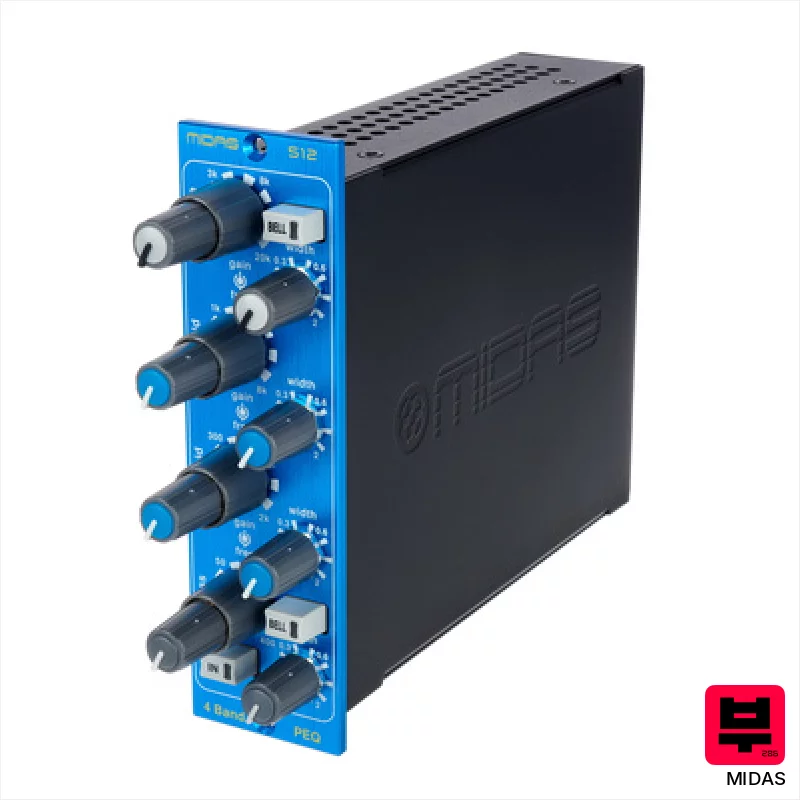
Midas Parametric Equaliser 512 V2
- • Heritage 3000 EQ character delivers a warm, classic analog tone
- • Solid build quality reflects Midas's professional audio pedigree
- • Intuitive controls provide precise EQ shaping capabilities
- • 500 series format offers flexible integration into existing racks
- • Limited to four bands, restricting complex equalization tasks
- • Somewhat bulky for smaller 500 racks, consider space constraints
- • Lacks recallable presets, requiring manual adjustments each time

Midas Legend L6
- • Robust steel construction ensures long-term stability and durability
- • Midas power supply delivers exceptionally clean, low-noise operation
- • Well-spaced module slots simplify cabling and module access
- • Compact footprint maximizes rack space efficiency in smaller studios
- • Limited to six 500 series modules, restricting expandability
- • Lacks internal metering or power level indicators
- • Basic design offers no aesthetic customization options

Midas Compressor Limiter 522 V2
- • Solid Midas preamps deliver a clean, musical compression character
- • Sidechain filter cleans up low-frequency muddiness effectively
- • Auto settings provide a surprisingly usable starting point for quick gain reduction
- • Compact 500 format maximizes rack space efficiency
- • Limited control compared to more expansive compressor modules
- • Gain reduction metering can be a bit dim in brightly lit environments
- • Plastic knobs feel a little less premium than some competitors’ metal options

Midas Microphone Preamplifier 502 V2
- • Classic Midas XL4 preamp character delivers a warm, punchy sound
- • Discrete Class A circuitry provides clean gain and headroom
- • Robust metal chassis feels solid and well-built for studio use
- • Integrated XL4 filters offer subtle tonal shaping and vintage vibe
- • Limited channel count restricts use in complex, multi-mic recording scenarios
- • Lacks advanced metering or features found in more premium preamps
- • 500 series format requires a compatible frame for operation
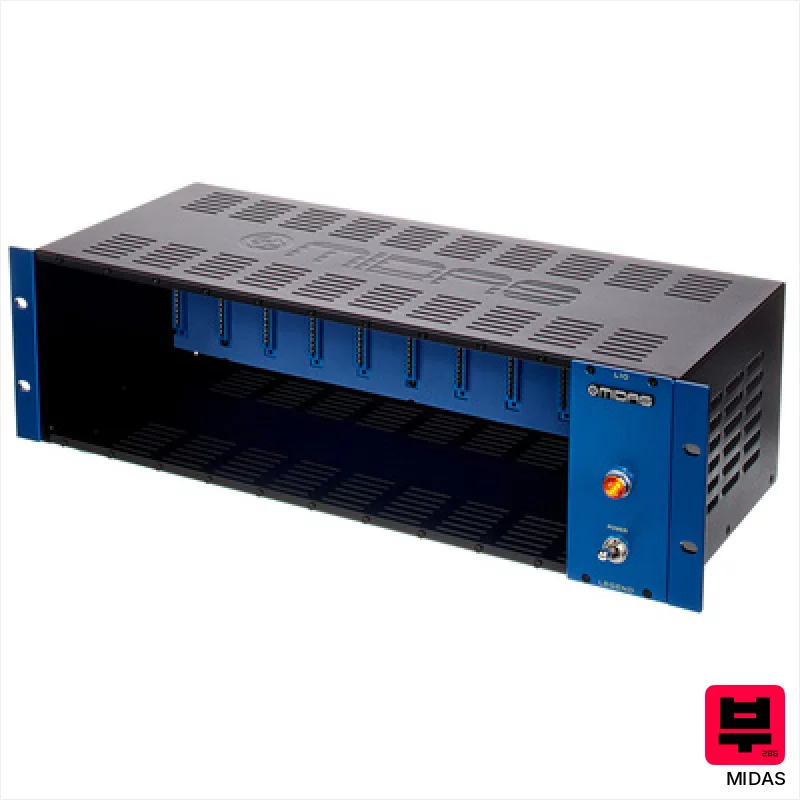
Midas Legend L10
- • Robust steel construction ensures long-term stability and durability
- • Midas power supply delivers exceptionally clean, low-noise operation for modules
- • Compact 4U rack height optimizes valuable studio space
- • Universal ±16V and +48V power rails accommodate a wide range of modules
- • Limited to 10 modules, restricting expandability for larger signal chains
- • Steel chassis adds significant weight, making transport cumbersome
- • No included modules; requires separate purchase of 500 series components
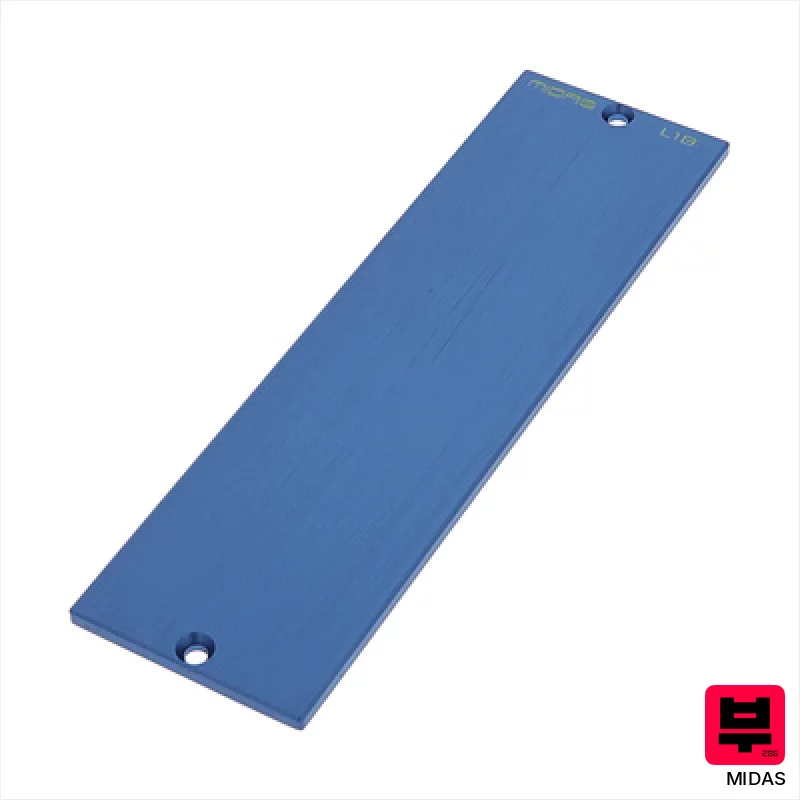
Midas Legend L1B
- • Provides a clean, professional seal for unused 500 slots.
- • Robust steel construction ensures long-term durability and stability.
- • Maintains consistent airflow within the rack, minimizing noise.
- • UK design and engineering reflects Midas's commitment to quality.
- • Limited functionality; purely a protective plate, no signal processing.
- • Requires a Midas Legend L6 or L10 frame to be useful.
- • While inexpensive, it's an added expense if slots remain empty.
How to Choose the Best 500 Series Components
Heritage & Sonic Signature
Midas built their name on console preamps - the 500 series modules carry that legacy. Expect a smooth, musical response with a slight emphasis on the lower mids, lending itself well to thickening up guitars or adding warmth to vocals without getting muddy. It's that 'expensive' sound, if you know what I mean.
Headroom & Clean Breakup
These modules have serious headroom. You can really push them without getting into unpleasant distortion, but when they do breakup, it's a controlled, pleasing saturation - not a brittle, harsh clipping. Great for adding subtle grit or a more aggressive drive when needed.
Build Quality & Reliability
Midas doesn't skimp on the build. The pots feel solid, the chassis is robust, and they're designed to take a beating on the road. This isn't some flimsy, plastic-feeling module - it's built to last, which is crucial when you're relying on it night after night.
EQ Characteristics
The EQ on the Midas modules is surgical yet musical. It's not overly aggressive, but it's incredibly effective at shaping tone and cutting through the mix. It's got a clarity and precision that can really elevate a vocal or a busy instrumental track.
Integration & Compatibility
While they're undeniably Midas in their sound, they integrate surprisingly well into a variety of 500 series ecosystems. You're not locked into a specific brand - they play nicely with other modules, allowing you to build a truly personalized signal chain.
Buying Guide
Look, these aren't impulse buys. They're an investment. The price reflects the quality and the pedigree. Don't expect a budget-friendly option - you're paying for that Midas sonic signature. Check the pot smoothness - occasionally you might get one with a scratchy feel, which is a minor annoyance, but not a dealbreaker if you're comfortable swapping pots yourself.
Our Methodology
We don't just look at specs here. We put these modules through the wringer: tracking drums, layering guitars, dialing in vocals - the whole shebang. A/B comparisons against other industry standards are key, and we're judging based on what sounds good in a real-world mix, not just what looks impressive on paper. Ultimately, it's about what translates to a gig or a finished track.

