AudioFu Chart · October 2026
Best 1/4 Violins for Intermediate 2026
The top pick is Gewa Allegro Violin Set 1/4 SC MB ($359). Karl Höfner H5G Violin 1/4 gives you the most for the money at $258. Ranked by the AudioFu Index from 38 models across 10 brands, prices checked every night.
Last updated: October 19, 2026
Top 10
Full detail for the 10 highest AudioFu Index scores. Every other model is listed below.
-
- FingerboardEbony fingerboard
- Size1/4 size
The Gewa Allegro is a solid entry-level option for younger students or beginners. The all-solid wood construction is a major plus at this price point, offering a better tone than many laminate alternatives. It's a well-rounded package that provides a good starting point for learning the violin.
Pros
- Solid European tonewoods deliver surprisingly warm, resonant tone.
- Hand-lacquered finish enhances the wood’s natural beauty and responsiveness.
- Aubert bridge contributes to improved projection and clarity.
Cons
- The Massaranduba bow, while decent, won’t match a premium Pernambuco bow.
- The case, while functional, is fairly basic and lacks advanced protection.
64AudioFu
IndexStableno change since Aug 17Aug 17$359 now$359€319 at Thomann · in stockCheck price ↗ -
- Size1/4 size
The Gewa Ideale is a solid choice for a beginner student, especially those starting around ages 7-9. The all-solid construction and decent components give it a better sound and feel than many entry-level instruments. It's a well-rounded package that provides a good foundation for learning the violin.
Pros
- Solid European tonewoods deliver a surprisingly resonant and warm tone.
- Hand-applied varnish enhances the wood's natural acoustics and appearance.
- Aubert bridge and Larsen Aurora strings contribute to a clear, focused sound.
Cons
- The carbon fiber bow, while functional, lacks the responsiveness of a higher-grade wood bow.
- The inlaid purfling, while visually appealing, is a detail that doesn’t impact sound quality.
54AudioFu
IndexStableno change since Aug 17Aug 17$401 now$401€356 at Thomann · in stockCheck price ↗ -
- Size1/4 size
This Klein Höfner 1/4 violin is built with a fully solid maple top that sounds bright and lively. The hand-applied varnish gives it a nice golden-brown look that holds up well over time. It is perfect for small children who need a sturdy instrument without extra gear costs.
Pros
- Fully solid wood body for strong resonance
- Slightly flamed maple adds visual appeal
- Shaded spirit hand-varnish ensures durability
Cons
- No pickup system mentioned for amplification
- No bow or case included in the box
53AudioFu
Index↓ 20.8%since Aug 17 · lowest so far$325 · Aug 17$258 now$258€229 at Thomann · in stockCheck price ↗ -
Alfred Stingl by Höfner AS 260 V1/
4 Violin Set Not on Reverb yet1 finish at Thomann
- Size1/4 size
This 1/4 size violin has a real solid spruce top and nice flamed maple body. It comes with a matching bow and case, ready for play. It's a solid choice for small kids looking for a sturdy instrument.
Pros
- Solid spruce top from Manchuria provides strong projection
- Beautifully flamed Himalayan maple back and sides
- Dark gold-brown hand-applied spirit varnish looks great
Cons
- No specific back or side wood type listed in description
- Ebony components only mentioned, no other wood details
47AudioFu
Index↓ 12.0%since Aug 17 · lowest so far$280 · Aug 17$246 now$246€219 at Thomann · in stockCheck price ↗ -
- Size1/4 size
This Gewa Pure set is a solid choice for beginners, especially younger students transitioning to a 1/4 size. The spruce top provides a pleasing, mature tone for a budget-friendly instrument, and the included accessories get them started right away. It’s a good foundation to build upon as they progress.
Pros
- Solid spruce top delivers a surprisingly resonant and warm tone.
- Ebony fingerboard and pegs contribute to improved playability and response.
- Massaranduba bow offers a decent starting point for tone production.
Cons
- The massaranduba bow will likely need replacing as skill develops.
- Solid maple back, while good, isn't as tonally complex as flamed maple.
46AudioFu
IndexStableno change since Aug 17Aug 17$263 now$263€234 at Thomann · in stockCheck price ↗ -
- Size1/4 size
The Gewa Allegro 1/4 is a solid starter violin, especially for younger students just beginning their musical journey. The European tonewoods provide a surprisingly good sound for its price point, and the ebony fittings contribute to a refined feel. It's a well-balanced instrument offering decent value for the budget-conscious family.
Pros
- Solid European spruce top delivers a surprisingly resonant tone.
- Ebony fingerboard and pegs offer a smooth playing experience.
- Hand-applied varnish enhances the wood's natural beauty and projection.
Cons
- The spirit varnish, while attractive, can be a bit thick for advanced players.
- The included bow is serviceable but a worthwhile upgrade for serious students.
46AudioFu
IndexStableno change since Aug 17Aug 17$280 now$280€249 at Thomann · in stockCheck price ↗ -
- Size1/4 size
The Gewa Ideale 1/4 is a solid entry point for young violinists. The all-solid construction and quality fittings provide a surprisingly mature sound for an instrument in this class, making it a great choice for students transitioning from fractional sizes or beginners who want a more refined feel and tone than a beginner laminate instrument.
Pros
- Solid European spruce top delivers a surprisingly resonant, mature tone.
- Hand-applied varnish enhances the wood's natural acoustic properties.
- Ebony fittings offer excellent durability and a smooth playing experience.
Cons
- The red-brown varnish can appear a bit heavy or 'orange' under certain lighting.
- While solid wood, the tonewoods are likely sourced from managed forests, not old-growth.
46AudioFu
IndexStableno change since Aug 17Aug 17$325 now$325€289 at Thomann · in stockCheck price ↗ -
- Size1/4 size
This 1/4 size violin uses solid spruce and maple, giving it a bright yet warm sound perfect for young beginners. It comes with a real hair bow and a sturdy case, making it a ready-to-play set. Ideal for children starting their string journey, it offers good value without extra electronics.
Pros
- Solid European spruce top for strong projection
- Solid European maple back and sides for warmth
- Includes a Massaranduba bow with natural hair
Cons
- No electronic pickups for amplification
- Missing a bow hair winder tool
46AudioFu
IndexStableno change since Aug 17Aug 17$393 now$393€349 at Thomann · in stockCheck price ↗ -
- Size1/4 size
The Gewa Maestro 1 1/4 is a solid starter violin for younger students or those just beginning their musical journey. The European tonewoods and hand-applied varnish give it a surprisingly mature voice for its price point. It's a dependable option that provides a good foundation for developing technique.
Pros
- Solid European spruce top delivers a responsive, clear, and balanced tone.
- Well-flamed maple back and sides add warmth and complexity to the sound.
- Aubert 'Mirecourt' bridge offers excellent transfer of string vibration for projection.
Cons
- Hand-applied varnish, while beautiful, might exhibit slight inconsistencies.
- 1/4 size is best suited for younger or smaller players, limiting its long-term use.
46AudioFu
IndexStableno change since Aug 17Aug 17$415 now$415€369 at Thomann · in stockCheck price ↗ -
Alfred Stingl by Höfner AS200 V1/
4 SE Violin Set Not on Reverb yet1 finish at Thomann
- Size1/4 size
This Alfred Stingl set is a solid, bright-sounding 1/4 violin built for young players. The spruce top and maple body deliver a clear tone, while the included case offers great storage space. It suits beginners who want a reliable instrument without needing electronics.
Pros
- Solid spruce top provides a responsive, bright playing voice.
- Lightly flamed maple back and sides add visual appeal and resonance.
- Tailpiece includes fine tuners for precise pitch control.
Cons
- Lacks electronic pickups for amplified sound or recording.
- No internal sound hole or f-hole design for acoustic projection.
42AudioFu
IndexStableno change since Aug 17Aug 17$269 now$269€239 at Thomann · in stockCheck price ↗
All 38 1/4 violins
Same index, same nightly prices — compact. Colour options of one model share a row. Tap a photo to zoom.
- 11
Stentor SR1542 Violin Graduate 1/4Stentor41Stable$291€259$291€259Check ↗
- 12
Stentor SR1550 Conservatoire 1/4Stentor41Stable$387€344$387€344Check ↗
- 13
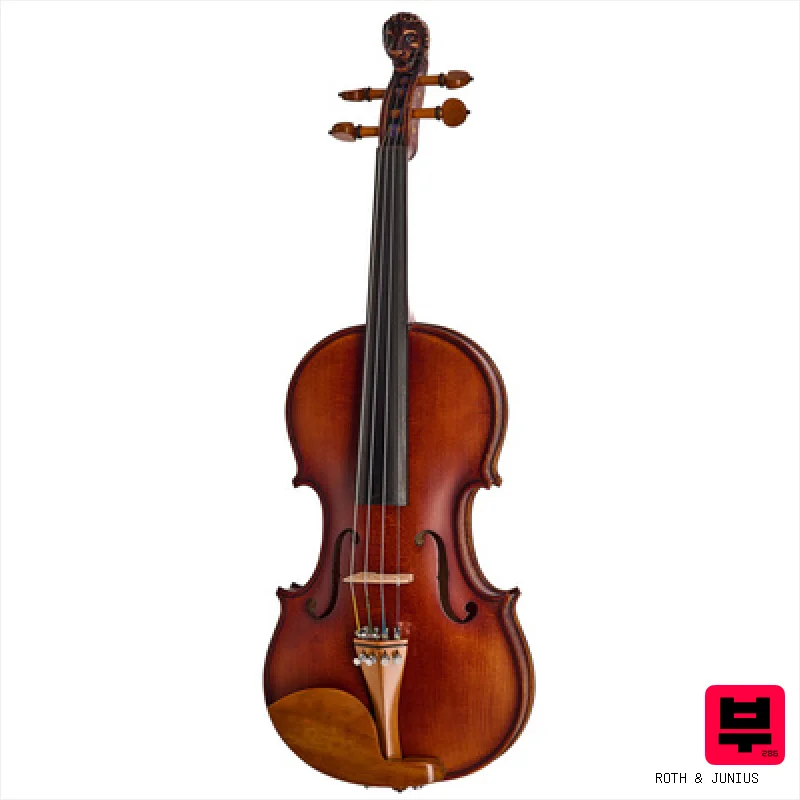
Roth & Junius Estudio Violin Set 1/4Roth & Junius39Stable$246€219$246€219Check ↗
- 14
Hidersine Vivente Violin Set 1/4Hidersine35↑ 8.7%$280€249$280€249Check ↗
- 15
Alfred Stingl by Höfner AS185 V1/4 Violin Set A.S.Alfred Stingl by Höfner47↓ 11.2%$179€159$179€159Check ↗
- 16
Gewa Pure Violinset HW 1/4Gewa43↑ 5.8%$185€164$185€164Check ↗
- 17
Stentor SR1400 Violinset 1/4Stentor42↓ 2.4%$186€165$186€165Check ↗
- 18
Hamaril Violin Set 1D 1/4Hamaril45Stable$168€149$168€149Check ↗
- 19
Alfred Stingl by Höfner AS060 V1/4 Violin SetAlfred Stingl by Höfner42Stable$168€149$168€149Check ↗
- 20
Alfred Stingl by Höfner AS160 V1/4 ViolinsetAlfred Stingl by Höfner45↓ 6.7%$156€139$156€139Check ↗
- 21
Hidersine Uno Violin Set 1/4Hidersine39Stable$168€149$168€149Check ↗
- 22
Stentor SR1018 Violinset 1/4Stentor41Stable$156€139$156€139Check ↗
- 23
Thomann Classic Violinset 1/4Thomann38Stable$156€139$156€139Check ↗
- 24
Gewa Maestro 2 Violin 1/4Gewa46Stable$472€419$472€419Check ↗
- 25
Gewa Sonata Violin Set SC / MB 1/4Gewa46Stable$505€449$505€449Check ↗
- 26
Gewa Sonata Violin Set SC / CB 1/4Gewa46Stable$528€469$528€469Check ↗
- 27
Gewa Sonata Violin Set OC / MB 1/4Gewa46Stable$560€498$560€498Check ↗
- 28
Gewa Sonata Violin Set OC / CB 1/4Gewa46Stable$584€519$584€519Check ↗
- 29
Gewa Maestro 1 Violin Set 1/4 OC CBGewa46Stable$591€525$591€525Check ↗
- 30
Gewa Maestro 6 Antiqued Violin 1/4Gewa46Stable$595€529$595€529Check ↗
- 31
Gewa Maestro 2 Violin Set 1/4 OC CBGewa46Stable$618€549$618€549Check ↗
- 32
Yamaha V5 SA14 Violin Set 1/4Yamaha · 2 finishes45Stable$448€398$448€398Check ↗
- 33
Alfred Stingl by Höfner AS-190-V Violin Set 1/4Alfred Stingl by Höfner42Stable$448€398$448€398Check ↗
- 34
Karl Höfner H7-V Violin Set 1/4Karl Höfner41Stable$560€498$560€498Check ↗
- 35
Karl Höfner H11-V Violin 1/4Karl Höfner41Stable$673€598$673€598Check ↗
- 36
Yamaha V7 SG14 Violin 1/4Yamaha40Stable$888€789$888€789Check ↗
- 37
Roth & Junius Europe Antiqued Violin Set 1/4Roth & Junius39Stable$505€449$505€449Check ↗
- 38
Artino European Wood Violin Set 1/4Artino38Stable$595€529$595€529Check ↗
1/4 Violins by the numbers
Measured across all 45 models we track, not a sample.
Median $393 — half of all 1/4 violins here cost less.
most common · 45 models
How to choose the best 1/4 violins
Playability (Action & Neck Profile)
This is paramount. A high action (string height) will make it a struggle to play cleanly, especially as you start to develop vibrato. A comfortable neck profile - not too thick, not too thin - is essential for smooth transitions and avoiding hand fatigue. We're looking for something that allows for decent articulation without excessive pressure.
Tone & Response
A beginner violin often sounds... well, beginner-ish. Intermediate players need something with a bit more character - a warmer tone that doesn't sound boxy, and a responsiveness that allows for dynamic variation. We're listening for a balanced sound across the strings, not just a bright, thin tone that cuts through poorly in a group setting.
Construction Quality (Varnish & Sealer)
Thin, brittle varnish is a common sign of cheaper instruments. It can negatively affect the tone and make the instrument more susceptible to cracking. A good sealer helps prevent moisture from warping the wood, which impacts stability and tuning. Look for a varnish that's relatively even and doesn't feel gummy.
Setup & Adjustability
Can a luthier easily adjust the bridge, soundpost, and pegs? A poorly set-up violin, even a decent one, will fight you every step of the way. A violin that allows for adjustment offers the potential to dial in the perfect response for your playing style.
Overall Resonance & Sustain
A 1/4 violin should have a noticeable sustain - the ability to hold a note. It shouldn't just die out immediately. Resonance is also key; you want a violin that vibrates freely and projects well, giving you a fuller, richer sound - especially important if you're playing with others or recording.
Buying guide
So, you're moving past the beginner 1/8 or 1/2 violin and ready to step up your game? A 1/4 size is a crucial transition point, and grabbing the wrong one can really stall your progress. It's not just about bigger - it's about finding an instrument that has enough responsiveness and nuance to handle more complex pieces and still feel manageable. Let's cut through the noise and find a 1/4 violin that won't leave you frustrated.
Don't be swayed by flashy finishes or inflated marketing claims. The biggest corner cut on cheaper 1/4 violins is almost always the wood quality and varnish application - it'll sound thin and lifeless. Paying a bit more for a violin that's been properly set up by a luthier is worth it; a good setup can make a huge difference.
Ultimately, try before you buy if possible; feel how it sits in your hands and listen carefully to the tone.
How the AudioFu Index works
Five measured signals and nothing else — no stars from strangers, no “tested by experts” we didn’t do. The weights are fixed and public. We don’t play these instruments; we measure the market around them.
This chart covers 45 1/4 violins from the Thomann catalogue. Before you buy, read hands-on reviews and, where you can, play it. Full methodology.
AudioFu earns a commission when you buy through our Thomann links. It never changes the order — the index does.
- Demand40%
How many of this exact model are for sale on Reverb right now — what musicians actually buy and resell.
- Lineup20%
How many finishes Thomann stocks — makers expand the models that sell.
- Price15%
Where the price has moved since we started tracking in August.
- Specs15%
How completely the maker documents it.
- Maker10%
How deep the brand’s range is in this category.
Questions
What's the difference between a 'student' and 'intermediate' 1/4 violin?
'Student' models are often built with lower-grade materials and less attention to detail, prioritizing affordability. Intermediate violins generally use better wood, have a more refined varnish, and benefit from a more careful setup - resulting in better tone and playability.
My child is growing quickly - should I just get the biggest size possible?
Absolutely not! Forcing a larger size will lead to poor posture, tension, and ultimately, slower progress. A properly sized 1/4 violin allows for better control and a more enjoyable playing experience.
What about electric violins? Are those a good option for an intermediate player?
They can be, but consider the trade-offs. Electric violins offer versatility and the ability to experiment with different pickup voicings, but the acoustic tone is often lacking. If you're serious about developing a traditional tone, a purely acoustic 1/4 violin is the better choice.
How important is the bow?
Hugely important! A cheap bow can make even a good violin sound terrible. Look for a bow with decent hair quality and a smooth, responsive action. Don't skimp here - it's a critical component.
Can I improve a cheap violin with upgrades?
You can improve it somewhat with things like a better bridge or strings, but there's a limit. The fundamental wood quality and construction will always hold it back. It's usually more cost-effective to invest in a better instrument from the start.