AudioFu Chart · October 2026
Best 1/4 Violins for Advanced 2026
The top pick is Gewa Maestro 1 Violin Set 1/4 OC CB ($591). Yamaha V7 SG14 Violin 1/4 leads the high end. Ranked by the AudioFu Index from 38 models across 10 brands, prices checked every night.
Last updated: October 19, 2026
Top 10
Full detail for the 10 highest AudioFu Index scores. Every other model is listed below.
-
- Size1/4 size
The Gewa Maestro 1 is a nicely appointed student outfit. The European tonewoods and hand-applied varnish give it a surprisingly mature sound for a beginner instrument, and the included bow and case make it a complete package. This is an excellent choice for young players transitioning from smaller sizes, or those just starting their musical journey.
Pros
- Solid European maple back offers warmth and resonance
- Hand-applied varnish enhances tonal complexity and beauty
- Aubert bridge provides excellent string transmission and tone
Cons
- Varnish finish, while beautiful, can be susceptible to minor scratches
- 1/4 size is best suited for younger or smaller players; may outgrow quickly
46AudioFu
IndexStableno change since Aug 17Aug 17$591 now$591€525 at Thomann · in stockCheck price ↗ -
- Size1/4 size
The Gewa Maestro 6 is a really solid option for younger players stepping up from a beginner instrument. The spruce top gives it a surprisingly mature tone, and the ebony fittings contribute to a good playing experience. It's a well-built violin that offers excellent value for the price, especially for students or those looking for a reliable, affordable instrument.
Pros
- Solid spruce top delivers a surprisingly resonant and clear tone
- Ebony fingerboard and pegs offer smooth playability and consistent tuning
- The hand-varnished finish enhances the wood's natural acoustic properties
Cons
- The antiqued finish might appear overly stylized to some purists
- Larsen strings are decent, but an upgrade would significantly improve the sound
46AudioFu
IndexStableno change since Aug 17Aug 17$595 now$595€529 at Thomann · in stockCheck price ↗ -
- Size1/4 size
The Gewa Maestro 2 is a really solid step-up instrument for young players transitioning from a beginner violin. The European tonewoods and decent fittings offer a noticeably richer tone than many budget options, and the included bow and case make it a complete package. It’s a well-rounded choice for students serious about developing their playing.
Pros
- Solid European spruce top delivers a responsive, bright tone.
- Well-flamed maple back/sides offer warmth and projection.
- Aubert 'Mirecourt' bridge enhances clarity and sustain.
Cons
- Hand-applied varnish, while beautiful, may exhibit slight inconsistencies.
- Ebony fittings, while standard, aren't necessarily the highest grade available.
46AudioFu
IndexStableno change since Aug 17Aug 17$618 now$618€549 at Thomann · in stockCheck price ↗ -
- Size1/4 size
This is a solid choice for a young player who wants genuine European craftsmanship. The hand-varnished maple back and spruce top deliver a warm, traditional tone right out of the box. It comes with a full set including a carbon bow and a sturdy case, making it ready to play immediately.
Pros
- Handmade European maple back and ribs
- Solid spruce top for bright tone
- Includes professional carbon bow
Cons
- Hand-varnished finish causes slight color changes
- Limited sound customization options
46AudioFu
IndexStableno change since Aug 22Aug 22$584 now$584€519 at Thomann · in stockCheck price ↗ -
- Size1/4 size
This Höfner H11-V is a solid starting point for young violinists. The all-solid construction provides a richer tone than many entry-level options, and the fine tuners make it easier to learn intonation. It’s a great choice for a student who's committed to learning and wants a violin that will grow with them.
Pros
- Solid spruce top delivers a surprisingly resonant and bright tone.
- Flame maple back and sides add warmth and complexity to the sound.
- Wittner fine tuners allow for precise intonation adjustments, crucial for beginners.
Cons
- The 1/4 size can feel a little cramped for older or larger children.
- Solid wood construction means it requires more careful humidity control than laminate instruments.
41AudioFu
IndexStableno change since Aug 17Aug 17$673 now$673€598 at Thomann · in stockCheck price ↗ -
- Size1/4 size
This is a solid European spruce violin built by hand in the Gewa workshops. It comes with a massaranduba bow and a sturdy case, making it ready to play right away. While the hand-varnished finish might show slight color changes, the ebony fittings and flamed maple give it a classic feel. It is a great choice for young players who want a traditional instrument without electronics.
Pros
- Handmade in European workshops for quality craftsmanship.
- Solid European spruce top and flamed maple back.
- Includes a massaranduba bow for immediate playability.
Cons
- Hand-varnished finish may cause slight color deviations.
- Lacks electronic pickups for amplification or recording.
46AudioFu
IndexStableno change since Aug 22Aug 22$560 now$560€498 at Thomann · in stockCheck price ↗ -
- Size1/4 size
The Yamaha V7 SG14 is a fantastic starter violin for serious young students. The all-solid wood construction is a significant step up from beginner instruments with laminated backs and sides, offering a richer, more mature tone. It's a well-rounded package, setting a strong foundation for a budding violinist.
Pros
- Solid wood construction provides excellent tonal resonance and projection
- Hand-carved spruce top offers a warm, focused sound ideal for developing ears
- Ebony fingerboard and fittings enhance playability and durability
Cons
- The included bow is serviceable but a higher-quality bow would significantly improve tone
- The oil varnish finish, while beautiful, is more delicate than a French polish
40AudioFu
IndexStableno change since Aug 17Aug 17$888 now$888€789 at Thomann · in stockCheck price ↗ -
- Size1/4 size
This violin uses real European spruce and maple for a bright, clear sound. It comes with high-quality strings and a solid bow, making it ready to play. It is a great choice for a young student or beginner needing a reliable, acoustic instrument without extra tech.
Pros
- Solid European spruce top ensures strong acoustic projection
- Well-seasoned European maple back and sides for stable tuning
- Premium Otto Musica tailpiece and Thomastik strings included
Cons
- No electronics or pickup system for recording or amplifying
- No electronic tuner or digital features listed in the kit
38AudioFu
IndexStableno change since Aug 17Aug 17$595 now$595€529 at Thomann · in stockCheck price ↗ -
- Size1/4 size
The Yamaha V5 SC14 is a solid entry-level violin for young students. The all-solid construction gives it a surprisingly mature sound, and the included accessories make it a complete package. It's a great starting point for a serious young musician who's ready to commit to learning.
Pros
- Solid spruce top delivers a surprisingly rich, resonant tone.
- Hand-carved construction offers improved projection and responsiveness.
- Ebony fingerboard provides a smooth, consistent playing surface for young fingers.
Cons
- The included bow is serviceable but a significant upgrade would improve tone.
- Oil-based finish, while attractive, may require more careful maintenance to prevent stickiness.
-
- Size1/4 size
This little 1/4 violin comes in a solid wood kit with a pretty flamed maple top. The hand-applied varnish and gold finish give it a nice look. It is great for young kids who need something sturdy and simple. You get the bow and a case with straps to carry it easily.
Pros
- Built entirely from solid wood for better resonance
- Features slightly flamed maple top with nice grain
- Shaded hand-applied spirit varnish adds depth to tone
Cons
- No specific brand of wood listed for back and sides
- Sound character is not described in the text
41AudioFu
IndexStableno change since Aug 17Aug 17$560 now$560€498 at Thomann · in stockCheck price ↗
All 38 1/4 violins
Same index, same nightly prices — compact. Colour options of one model share a row. Tap a photo to zoom.
- 11
Gewa Sonata Violin Set SC / CB 1/4Gewa46Stable$528€469$528€469Check ↗
- 12
Gewa Sonata Violin Set SC / MB 1/4Gewa46Stable$505€449$505€449Check ↗
- 13
Gewa Ideale Violin Set 1/4 OC CBGewa · 3 finishes54Stable$438€389$438€389Check ↗
- 14
Gewa Maestro 2 Violin 1/4Gewa46Stable$472€419$472€419Check ↗
- 15
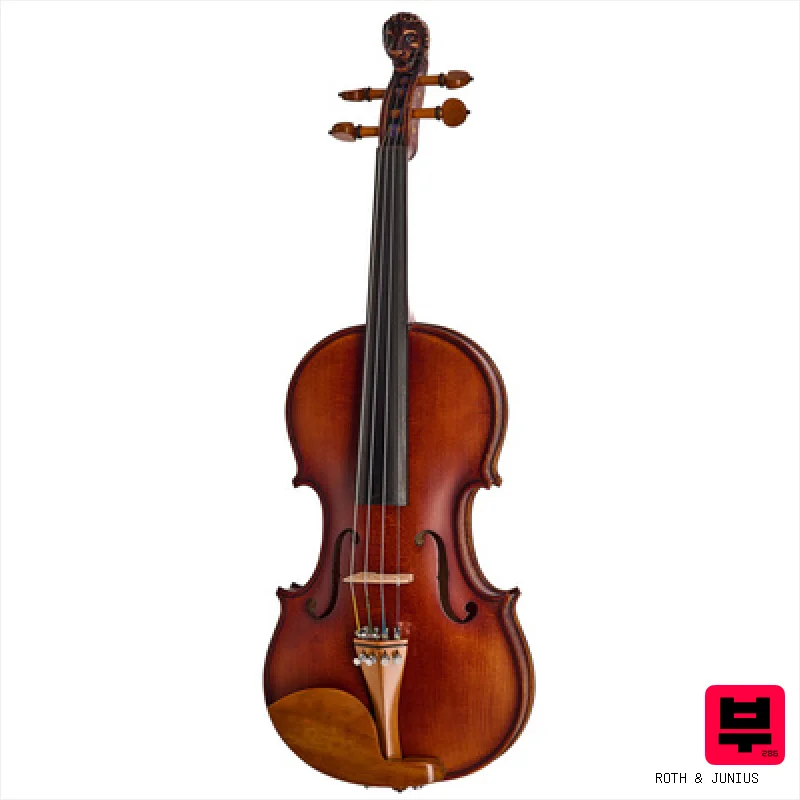
Roth & Junius Europe Antiqued Violin Set 1/4Roth & Junius39Stable$505€449$505€449Check ↗
- 16
Alfred Stingl by Höfner AS-190-V Violin Set 1/4Alfred Stingl by Höfner42Stable$448€398$448€398Check ↗
- 17
Gewa Allegro Violin Set 1/4 SC MBGewa · 4 finishes64Stable$359€319$359€319Check ↗
- 18
Karl Höfner H5 V Violine 1/4Karl Höfner · 2 finishes53↓ 26.9%$123€109$123€109Check ↗
- 19
Alfred Stingl by Höfner AS185 V1/4 Violin Set A.S.Alfred Stingl by Höfner47↓ 11.2%$179€159$179€159Check ↗
- 20
Alfred Stingl by Höfner AS 260 V1/4 Violin SetAlfred Stingl by Höfner47↓ 12.0%$246€219$246€219Check ↗
- 21
Gewa Pure Violinset EW 1/4Gewa46Stable$263€234$263€234Check ↗
- 22
Gewa Allegro Violin 1/4Gewa46Stable$280€249$280€249Check ↗
- 23
Gewa Ideale Violin 1/4Gewa46Stable$325€289$325€289Check ↗
- 24
Gewa 100th Anniversary Violin 1/4Gewa46Stable$393€349$393€349Check ↗
- 25
Gewa Maestro 1 Violin 1/4Gewa46Stable$415€369$415€369Check ↗
- 26
Alfred Stingl by Höfner AS160 V1/4 ViolinsetAlfred Stingl by Höfner45↓ 6.7%$156€139$156€139Check ↗
- 27
Hamaril Violin Set 1D 1/4Hamaril45Stable$168€149$168€149Check ↗
- 28
Gewa Pure Violinset HW 1/4Gewa43↑ 5.8%$185€164$185€164Check ↗
- 29
Alfred Stingl by Höfner AS060 V1/4 Violin SetAlfred Stingl by Höfner42Stable$168€149$168€149Check ↗
- 30
Stentor SR1400 Violinset 1/4Stentor42↓ 2.4%$186€165$186€165Check ↗
- 31
Alfred Stingl by Höfner AS200 V1/4 SE Violin SetAlfred Stingl by Höfner42Stable$269€239$269€239Check ↗
- 32
Stentor SR1018 Violinset 1/4Stentor41Stable$156€139$156€139Check ↗
- 33
Stentor SR1542 Violin Graduate 1/4Stentor41Stable$291€259$291€259Check ↗
- 34
Stentor SR1550 Conservatoire 1/4Stentor41Stable$387€344$387€344Check ↗
- 35
Hidersine Uno Violin Set 1/4Hidersine39Stable$168€149$168€149Check ↗
- 36
Roth & Junius Estudio Violin Set 1/4Roth & Junius39Stable$246€219$246€219Check ↗
- 37
Thomann Classic Violinset 1/4Thomann38Stable$156€139$156€139Check ↗
- 38
Hidersine Vivente Violin Set 1/4Hidersine35↑ 8.7%$280€249$280€249Check ↗
1/4 Violins by the numbers
Measured across all 45 models we track, not a sample.
Median $393 — half of all 1/4 violins here cost less.
most common · 45 models
How to choose the best 1/4 violins
Tonewood Quality
Forget about 'select spruce' marketing - we're listening for that focused, clear fundamental, with a bit of warmth and a surprising amount of headroom. Cheap violins often use wood that's too soft, resulting in a muddy low-end and a lack of sustain. It's gotta vibrate freely.
Bass Bar and Soundpost Placement
This is where a lot of the magic happens. A poorly placed soundpost will choke the instrument, killing its resonance. We're listening for a balanced response across all strings, with good projection without sounding harsh. It's the difference between a violin that 'sounds' and one that speaks.
Neck Profile and Setup
A comfortable neck is crucial for advanced players who need to execute fast passages and intricate fingerings. A sharp neck profile or high action will just slow you down. We're looking for a consistent, comfortable feel that allows for effortless movement and precise articulation.
Varnish and Finish
A thick, gummy varnish can dampen the instrument's natural resonance. A thinner, more traditional varnish allows the wood to breathe, resulting in a more vibrant and responsive tone. It's subtle, but it's there - listen for that extra bit of clarity and sustain.
Bridge Quality and Cut
A poorly cut bridge can negatively impact intonation and tone. We're looking for a bridge that's properly graduated and fits the instrument's arching, allowing for accurate string spacing and optimal vibration transfer. A bad bridge can make even a decent violin sound off.
Buying guide
Alright, so you've outgrown the 1/2 size and are looking at a 1/4 violin. That's a big step, and it's not just about fitting the instrument - it's about unlocking a new level of responsiveness and tonal complexity. A lot of beginner 1/4s are... well, they're just fine. But you're not a beginner anymore, and you need something that won't hold you back from really digging into those advanced techniques and nuanced phrasing. Let's find you something that sings.
Don't be fooled by flashy aesthetics. A beautiful violin isn't necessarily a good violin. Advanced players will quickly spot a poorly made instrument - it'll feel stiff, lack projection, and have a muddy tone.
Spending a bit more on a violin with better tonewood, a proper setup, and a thinner varnish will pay dividends in terms of playability and tone. It's about finding an instrument that responds to your touch and allows you to express your musicality.
How the AudioFu Index works
Five measured signals and nothing else — no stars from strangers, no “tested by experts” we didn’t do. The weights are fixed and public. We don’t play these instruments; we measure the market around them.
This chart covers 45 1/4 violins from the Thomann catalogue. Before you buy, read hands-on reviews and, where you can, play it. Full methodology.
AudioFu earns a commission when you buy through our Thomann links. It never changes the order — the index does.
- Demand40%
How many of this exact model are for sale on Reverb right now — what musicians actually buy and resell.
- Lineup20%
How many finishes Thomann stocks — makers expand the models that sell.
- Price15%
Where the price has moved since we started tracking in August.
- Specs15%
How completely the maker documents it.
- Maker10%
How deep the brand’s range is in this category.
Questions
What's the difference between a 'student' and an 'intermediate' 1/4 violin?
'Student' models are generally built with cheaper materials and less attention to detail. 'Intermediate' models will usually have better tonewood, a more refined setup, and a more comfortable neck profile - they're built to handle more demanding playing.
My hands are still small, is a 1/4 violin too small?
It depends. While a 1/4 is smaller, the increased string spacing and neck length require more finger dexterity. If you're comfortable with a full-size instrument's neck width, a 1/4 shouldn't be a problem. Try before you buy.
How important is the setup?
Critically important. Even a good violin can sound terrible with a poor setup. Make sure the action is comfortable, the soundpost is properly placed, and the bridge is correctly cut. A professional setup is worth the investment.
Can I upgrade the strings later?
Absolutely. Strings are a huge factor in tone. Experiment with different brands and tensions to find what works best for your playing style and the violin's characteristics. Pirastro Tonica or D'Addario Croeso are good starting points.
I'm planning on playing in a chamber orchestra. What should I look for?
Projection is key. You need an instrument that can cut through the mix without sounding harsh. Listen for a balanced tone across all strings and a good amount of sustain. A darker, warmer tone often blends better in orchestral settings.